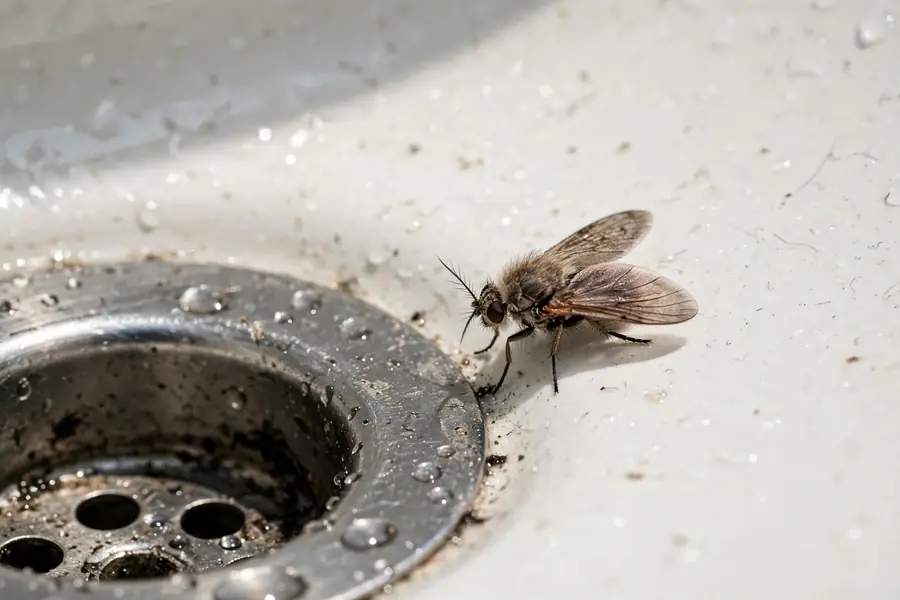
Drain fly larvae are tiny, worm-like larvae that live in the slimy film inside drains. They hatch from eggs laid by drain flies, which are the small, fuzzy, moth-like flies you see near sinks and showers. The larvae feed on the gunk coating the pipe, so the fix is to scrub that film away, not to pour bleach or vinegar down the drain. Once the film is gone, the larvae have nothing to eat.
Drain fly larvae at a glance
| Question | Short answer |
|---|---|
| What are they? | The larval stage of drain flies, also called moth flies |
| What do they look like? | Worm-like, about 1/4 to 3/8 inch, pale middle with darker ends |
| Where do they live? | In the slimy film inside drains and pipes |
| Are they harmful? | Low risk. They do not bite, and rare cases of accidental infestation exist |
| Does bleach kill them? | Not reliably, and it does not remove the film they live in |
| What works? | Scrub the pipe, then use an enzyme cleaner |
| How long to clear them? | Plan on at least two weeks of cleaning |
What do drain fly larvae look like?
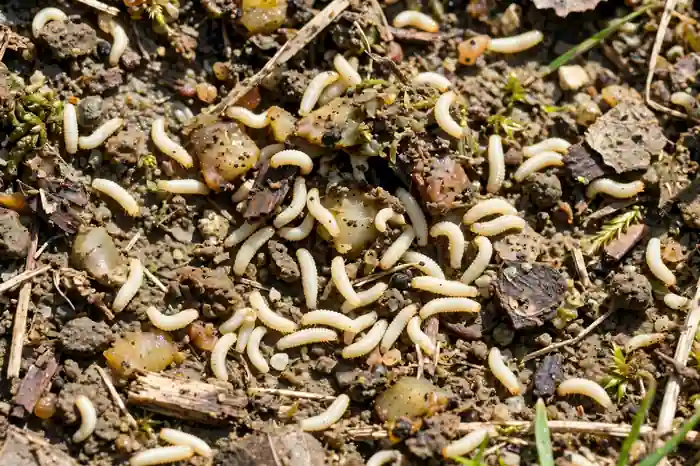
They are small, legless and worm-like, with a pale middle and darker ends. They are usually about 1/4 to 3/8 inch long and have a short breathing tube at the rear. You may see them as thin gray, brown or whitish "worms" in a drain, on the wall of a shower or in the bowl of a toilet. They can look black or dark brown in poor light.
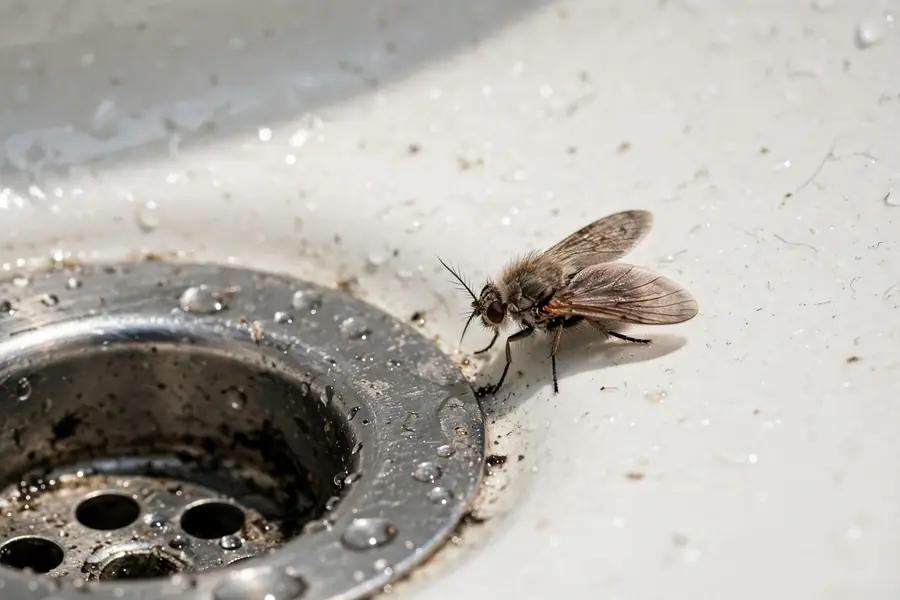
| Larva | Looks like | Where you find it |
|---|---|---|
| Drain fly larva | Worm-like, pale center, darker ends | Pipe slime, drains, wet film |
| Maggot | Legless, tapered, cream or white | Trash, rotting food, dead animals |
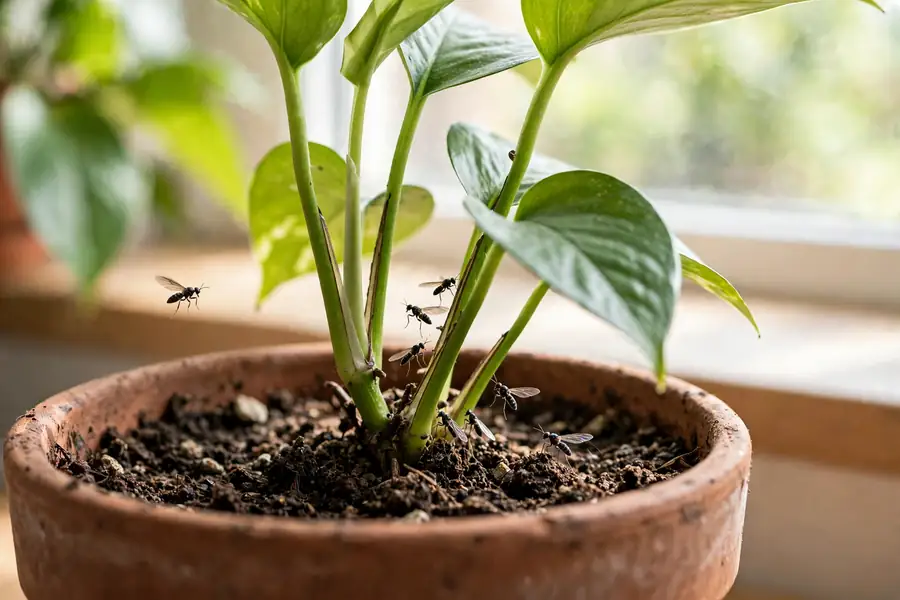
| Fungus gnat larva | Thin, pale, with a dark head | Damp potting soil |
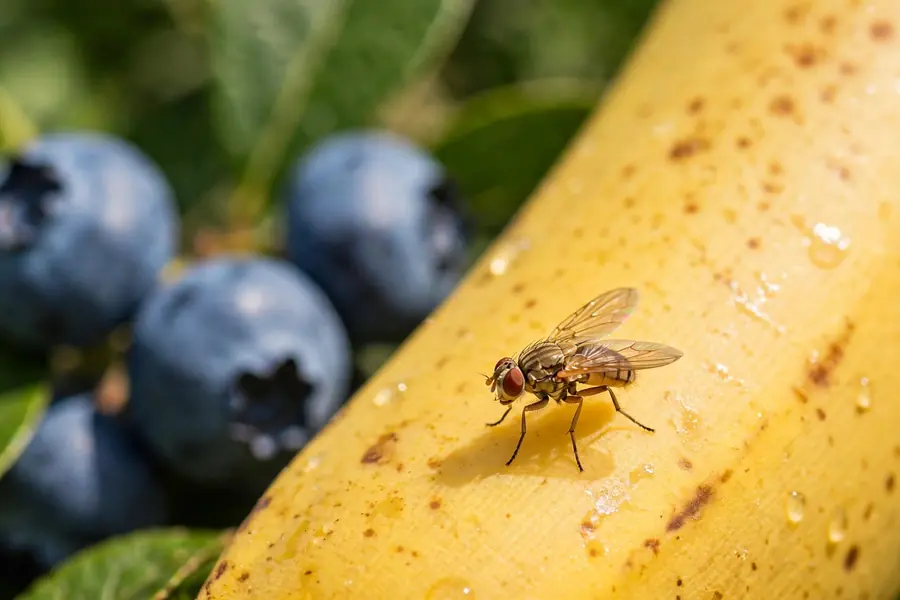
| Fruit fly larva | Tiny, cream, legless | Rotting fruit, wet kitchen waste |
Location is the best clue. Larvae in drain gunk are almost always drain fly larvae. For maggots, see where maggots come from.
Where do drain fly larvae come from?
From eggs laid in drain slime. A female drain fly lays eggs in the wet film that builds up on the inside of drains and pipes. The film is made of bacteria, soap scum, hair and food bits, and it is both a nursery and a food supply. Eggs hatch in a day or two, and the larvae feed in the slime for about one to two weeks.
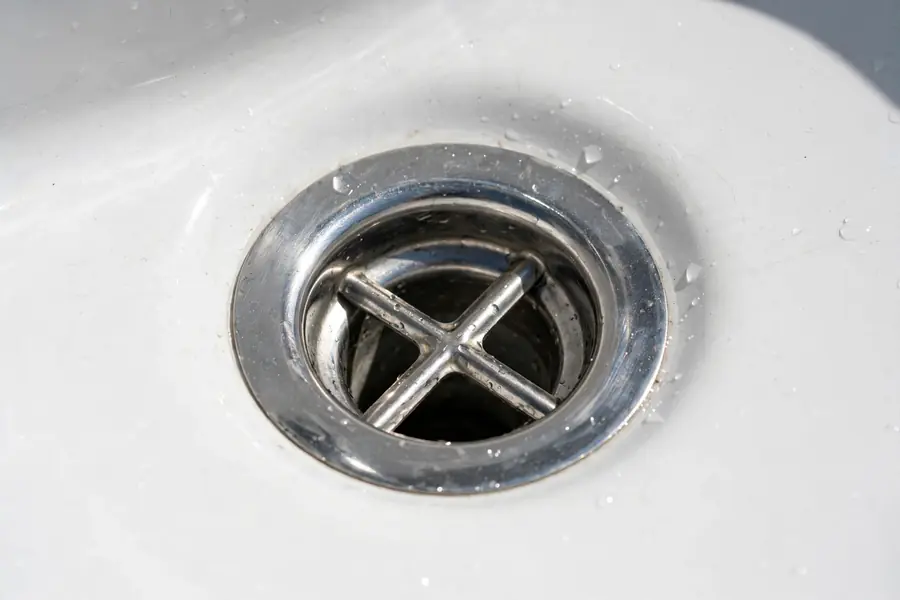
Seeing adult drain flies usually means a slow or dirty drain somewhere nearby. For the flies themselves and how they differ from fruit flies and fungus gnats, see how to get rid of gnats.
Where do you find drain fly larvae in the house?
Anywhere wet, slimy and undisturbed. The sink and shower drains are the most common, but the larvae can also grow in less obvious spots.
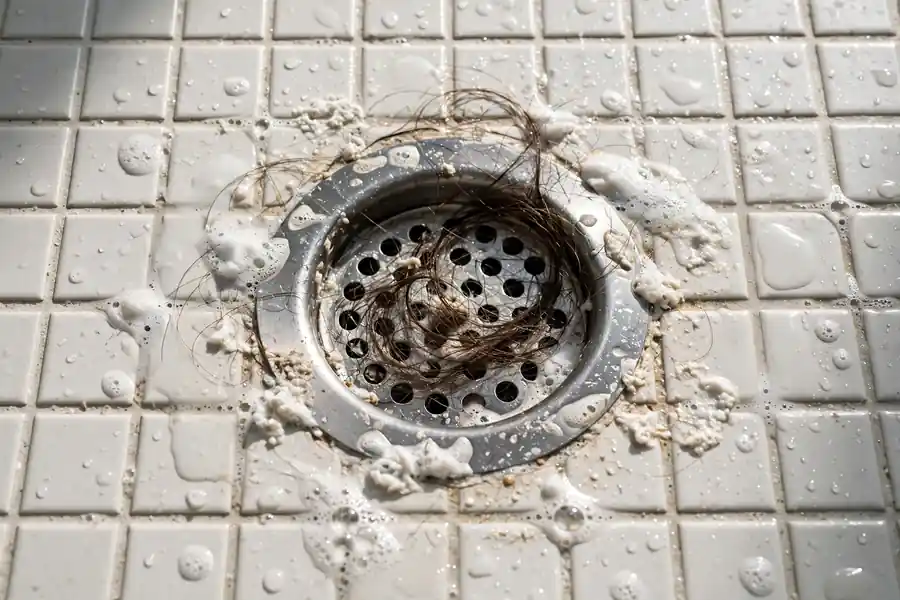
- Shower and tub drains: hair and soap scum build a thick film.
- Sink drains and overflow holes: the small hole near the rim can hold a hidden layer.
- Toilet bowls: film in the bowl or the overflow tube can host larvae. If the toilet is clean and you still see "worms", check the nearby floor drain and the bathroom sink.
- Floor drains and basement drains: these dry out or stay slimy if rarely used.
- Pet fountains and aquariums: a slimy reservoir, hose or filter can grow them. Clean the parts and change the water often.
Are drain fly larvae harmful?
Mostly no. Drain flies do not bite, and the larvae feed on slime, not on people. The main concerns are small: large infestations can add allergens from shed body scales for sensitive people, and the flies can carry germs from drains onto surfaces. Wash your hands after touching a drain, and keep food covered.
Can drain fly larvae get in your skin or inside you?
It is extremely rare. A few medical reports describe accidental infestations, usually from swallowing food or water contaminated with larvae. These cases are uncommon and generally have little effect on health. Cover food and drinks, keep drains and nearby surfaces clean, and see a doctor if you have unexplained symptoms after contact with larvae.
Are drain fly larvae harmful to cats and dogs?
There is no sign that they are a significant risk. Keep pet water bowls and fountains clean and fresh, since slimy reservoirs are where larvae can grow. Call your vet if a pet seems unwell.
What kills drain fly larvae?
Scrubbing the film kills them by removing their home and food. Larvae die or are rinsed away once the slime is gone. Chemicals that skip past the film do not do much.
| Method | Does it work? |
|---|---|
| Stiff brush on the opening and pipe wall | Yes. The key step |
| Enzyme or bio drain cleaner | Helps. Digests film the brush cannot reach. Best after scrubbing |
| Boiling water | Softens buildup, but does not remove all of it, and it can harm PVC. Use very hot tap water instead |
| Bleach | Not shown to remove the film. Never mix it with ammonia or vinegar |
| Vinegar | No reliable evidence that it kills larvae |
| Drain gels and foams | Can reach vertical walls. Follow the label |
How do you get rid of drain fly larvae?
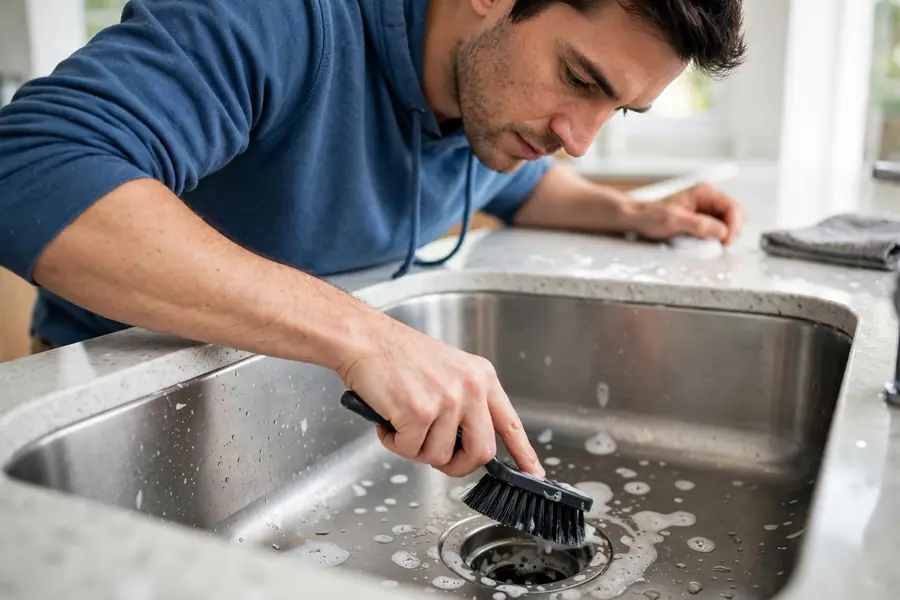
Find which drains have larvae, scrub them, use an enzyme cleaner and keep going for two weeks. Doing it once is rarely enough, because eggs and pupae survive the first round.
- Find the source drain. Tape clear plastic wrap over a drain overnight. Flies or larvae stuck under it show where they breed.
- Scrub. Use a long, flexible drain brush on the pipe and a small brush on the stopper, flange and overflow hole.
- Use an enzyme cleaner, as the label directs, usually overnight when the drain is not in use.
- Refill dry traps. Pour water into floor and guest-bathroom drains that are rarely used.
- Fix leaks and slow drains. A slow drain keeps film wet and growing.
- Repeat weekly for a few weeks. Keep going until you see no larvae or flies.
How do you get rid of drain fly larvae in the shower or tub?
Pull the stopper or strainer, scrub it and the drain opening, and clean the overflow plate. Hair and soap scum are their food, so remove them. Run an enzyme cleaner overnight, and rinse the next morning.
How do you get rid of drain fly larvae in the toilet?
Scrub the bowl and the rim, flush, and check nearby drains. If larvae keep appearing, a nearby floor drain, shower drain or sink is usually the real source. A plumber can check for a slow drain, a dry trap or a leak.
What about larvae in a pet fountain or aquarium?
Empty and clean the whole thing. Take the fountain apart, scrub the reservoir, pump and hoses, and replace filters on schedule. For an aquarium, clean the filter and any drain hoses, and do not put drain cleaners or enzyme products in the tank.
How long does it take to get rid of drain fly larvae?
Plan for at least two weeks. The cycle from egg to adult takes about two to four weeks in many homes, and warm bathrooms speed it up. Scrub weekly so a new batch does not grow.
When should you call a plumber?
Call a plumber if the problem keeps returning after two or three rounds of scrubbing. A slow drain, sewer smell, gurgling pipes or a floor drain with standing water can point to a clog or a trap that needs repair.
Quick answers to common questions
What do drain fly larvae look like?
Small, worm-like larvae about 1/4 to 3/8 inch long, with a pale middle and darker ends, found in drain slime.
Are drain fly larvae harmful?
Low risk. They do not bite, and rare accidental infestations are reported. Keep drains clean and food covered.
Does bleach kill drain fly larvae?
Not reliably. It does not remove the slime film they live in. Scrubbing and an enzyme cleaner work better.
How do you get rid of drain fly larvae?
Scrub the pipe, use an enzyme cleaner overnight, refill dry traps and repeat weekly for two weeks.
Where do drain fly larvae come from?
From eggs that drain flies lay in the slime inside drains.
Keep reading: how to get rid of gnats, where maggots come from and more pest control guides.
Is it hard to get rid of drain fly larvae for good?
Not once you remove the film. To get rid of drain fly larvae, scrub every drain they can reach, use an enzyme cleaner, refill dry traps and keep it up for two weeks. A clean, flowing drain gives them nothing to eat, and the flies stop coming back.