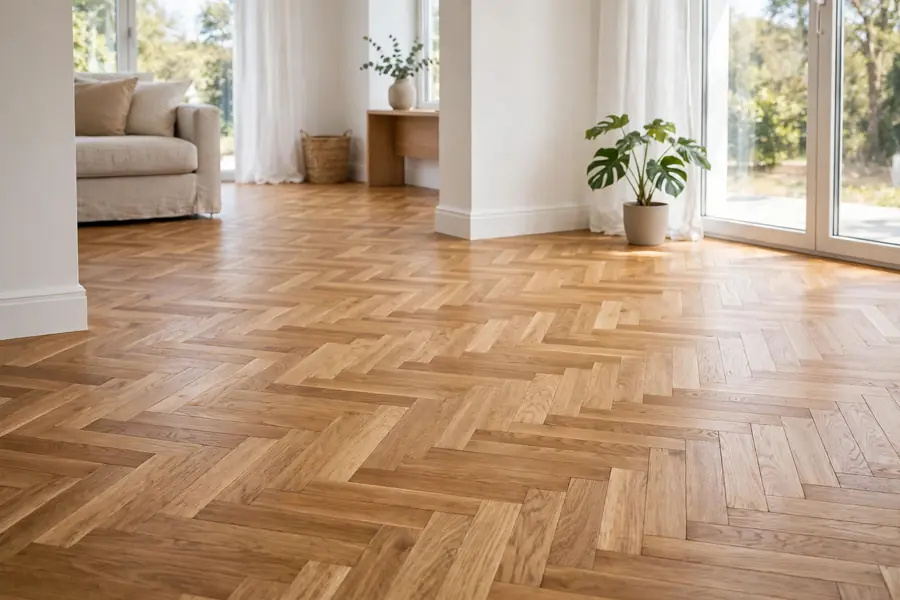
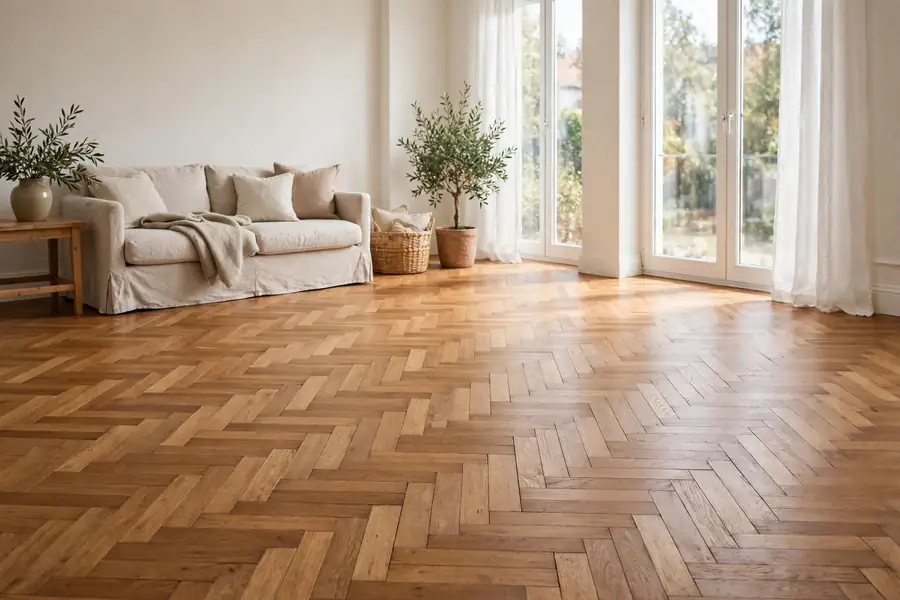
Parquet flooring is wood flooring made of small pieces of wood laid in a geometric pattern, such as herringbone, chevron or basket weave. It is hardwood, but the pieces are short and the layout is the point, so the floor looks like a design instead of a row of planks. Parquet costs more to install than plain planks, comes in solid and engineered forms, and has a long history that began in France.
Parquet flooring at a glance
| Feature | What to know |
|---|---|
| What it is | Small wood pieces laid in a repeating geometric pattern |
| Common patterns | Herringbone, chevron, basket weave, block and mosaic |
| Types | Solid parquet and engineered parquet |
| Installation | Often glued down, and slower than plain planks |
| Cost | Pattern work can add about 30 to 60% to labor, plus extra waste |
| Refinishing | Solid parquet can be refinished the most |
| Best for | Entries, living rooms, dining rooms, statement spaces |
What does parquet flooring look like?
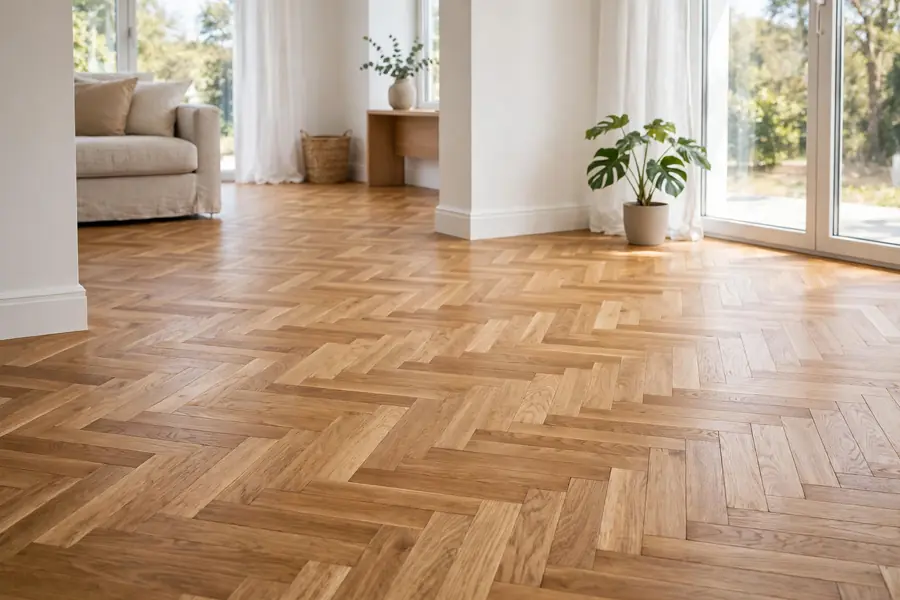
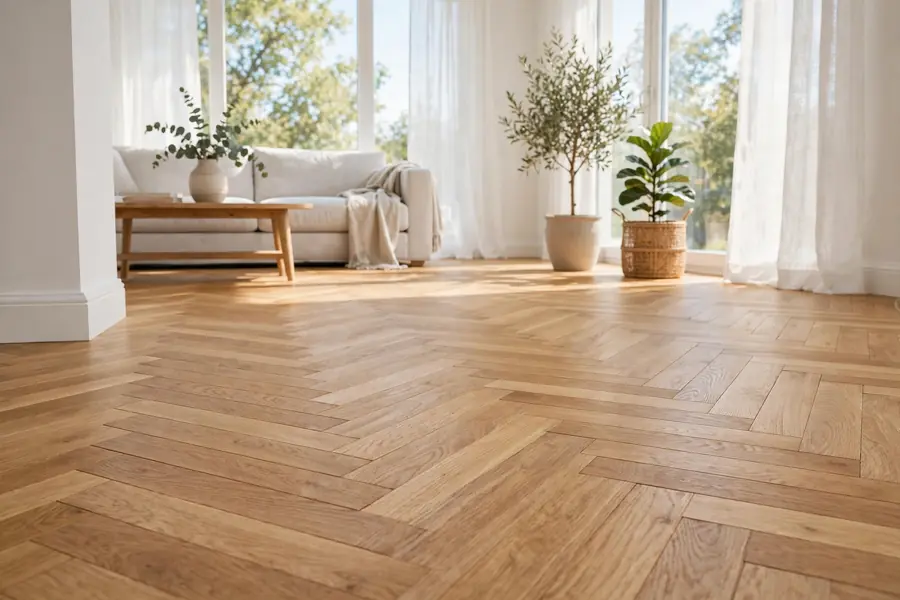
Parquet looks like a pattern made of wood. Instead of long planks in rows, it uses short pieces arranged so the grain and color shift across the floor. The classic patterns are herringbone, chevron and basket weave, and each reads differently in a room.
What are the main parquet patterns?
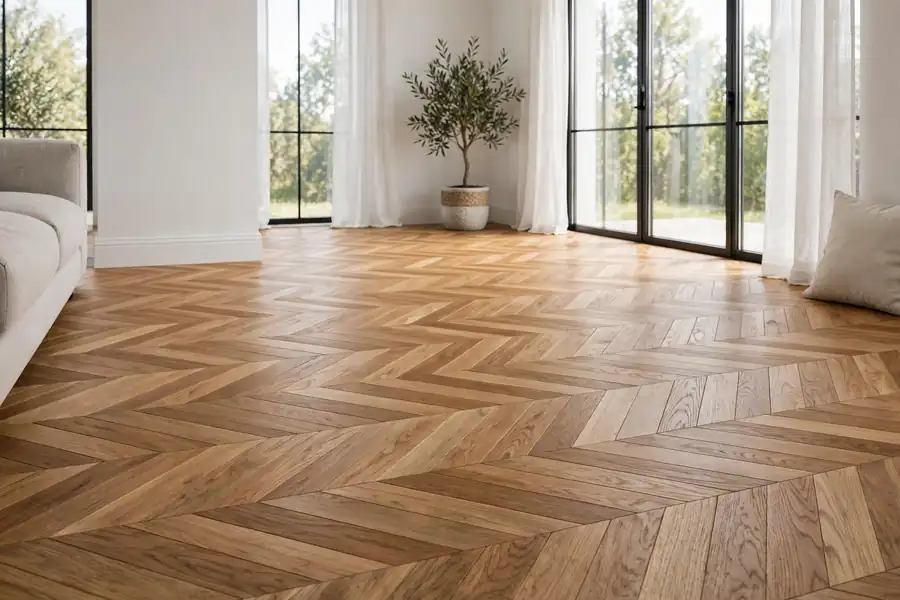
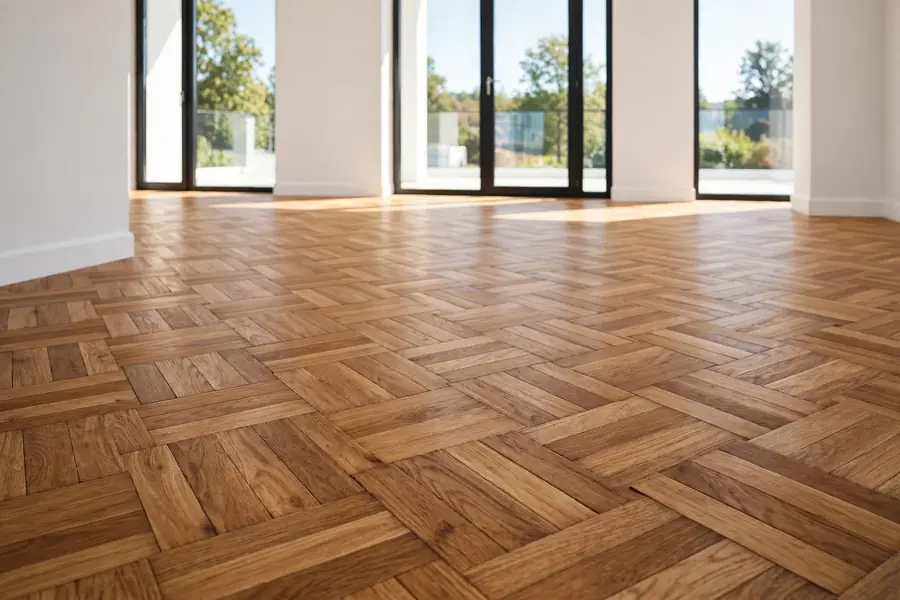
The main patterns are herringbone, chevron and basket weave. Herringbone is the most popular and classic. Chevron is a sharper cousin, with the plank ends cut at an angle so they meet in a V. Basket weave looks woven, and some sources date it back to Tudor times. Larger, open rooms also suit patterns such as Versailles, which uses larger panels.
| Pattern | Look | Notes |
|---|---|---|
| Herringbone | Zigzag of rectangles with square ends | The most popular and the most forgiving to lay |
| Chevron | Continuous V shapes | Ends are mitered, so it takes more skill and has more waste |
| Basket weave | Squares of slats turning 90 degrees | Woven, traditional look |
| Block and mosaic | Small blocks in repeating panels | Classic, often in older homes |
What is the difference between herringbone and chevron?
Herringbone pieces have square ends and meet at 90 degrees, while chevron pieces are cut at an angle, often 45 degrees, so they meet in a clean V. Herringbone is more forgiving to install, and chevron needs precise cuts. Chevron also costs more.
Where does parquet flooring come from?
Parquet began in France, with sources placing its origin in the 16th century. It was a luxury floor in palaces and grand houses, and it spread through Europe. Today, designers use it in modern homes as well as traditional ones, and it is part of the current interest in patterned floors. See popular flooring trends.
What is the difference between solid and engineered parquet?
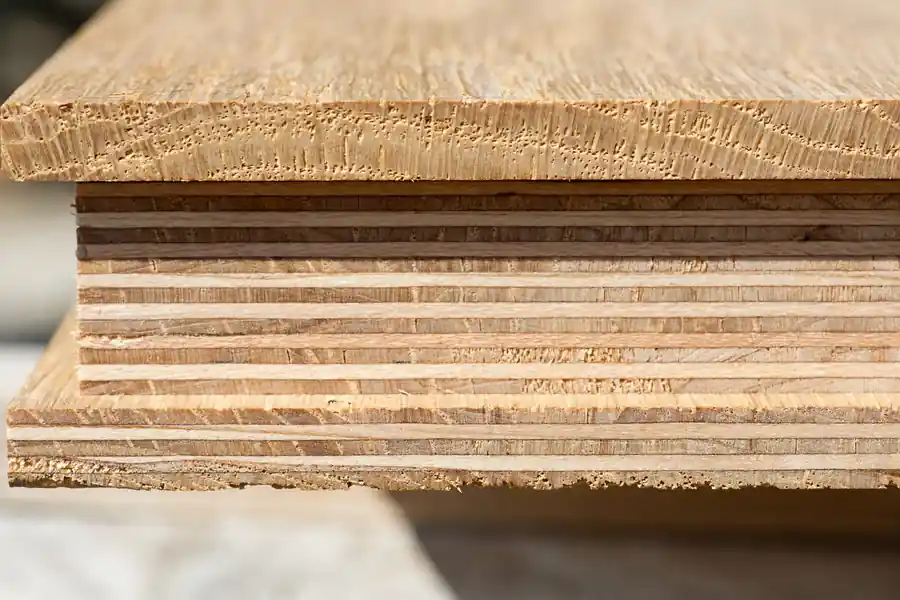
Solid parquet is solid wood, and engineered parquet has a real wood top layer over a plywood or softwood core. Solid parquet can be sanded and refinished the most, and engineered parquet is more stable when humidity changes, and suits underfloor heating. How many times engineered parquet can be refinished depends on the thickness of its wood layer.
Read more about engineered hardwood and how veneer thickness affects refinishing.
How is parquet flooring installed?
Parquet is usually glued down, because small pieces do not suit click-lock joints, and patterns take longer to lay than straight planks. Expect pattern installs to take two to three times as long as a plain lay, with more cutting. Some parquet comes in panels or tiles that are easier to fit. Hire an installer who has laid your pattern before.
How much does parquet flooring cost?
Parquet costs more than a plain plank floor, because the wood, the cutting and the labor all cost more. One retailer lists material-only European oak at about $18 to $26 per square foot for English herringbone, $20 to $28 for French herringbone and $22 to $32 for chevron. Pattern labor can add about 30 to 60% over a straight plank, and waste runs about 15 to 20%. These are retailer figures, so use them as a rough guide.
For comparison, plain solid hardwood is about $6 to $25 per square foot installed in many cost guides. See how much hardwood flooring costs.
What are the pros and cons of parquet flooring?
| Pros | Cons |
|---|---|
| A distinctive, high-end look | Costs more than plain planks |
| Real wood that can be refinished | Slower and harder to install |
| Adds character to entries and living rooms | More cutting waste |
| Many patterns and wood species | Solid wood moves with humidity |
| Works with radiant heat when engineered | Needs a skilled installer |
Can you get the parquet look for less?
Yes. Parquet-look planks and tiles are sold in vinyl, laminate and porcelain, and they give the pattern without the cost of real wood. They are easier to install and cheaper, though they are not real wood and cannot be refinished. Check how each product installs before you buy.
Which parquet pattern should you choose?
Choose by the look you want and the budget you have. Herringbone is the safest classic, chevron suits a sharp modern room, basket weave suits a woven, vintage look, and parquet-look planks give the idea on a budget.
Quick answers to common questions
What is the difference between parquet and hardwood flooring?
Parquet is a type of hardwood flooring made of short pieces in a pattern. Standard hardwood flooring uses long planks in straight rows.
What is the difference between herringbone and chevron?
Herringbone pieces have square ends and form a zigzag. Chevron pieces have angled ends that meet in a V.
Is parquet flooring expensive?
Yes, it costs more than plain planks because of the wood, the cutting and the labor.
Can parquet flooring be refinished?
Solid parquet can be refinished many times. Engineered parquet depends on the thickness of its wood layer.
Is parquet flooring in style?
Yes. Patterned floors, especially herringbone in soft tones, are popular right now.
Is parquet flooring worth it?
Parquet flooring is worth it when you want a floor with real character and are happy to pay for the wood and the skilled installation. Choose herringbone for a classic look, check the wear layer on engineered parquet, and hire an installer who knows your pattern. For a lower-cost option, consider parquet-look planks.