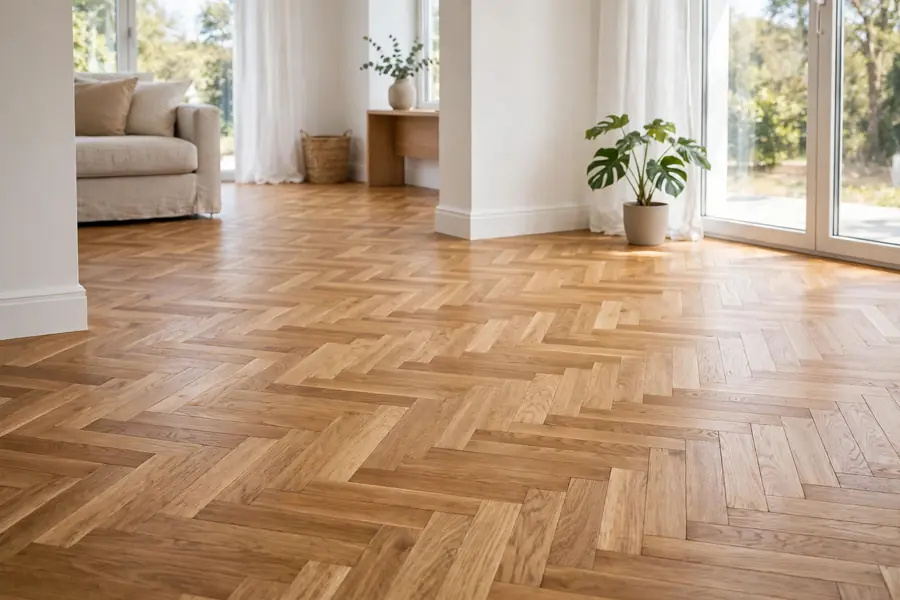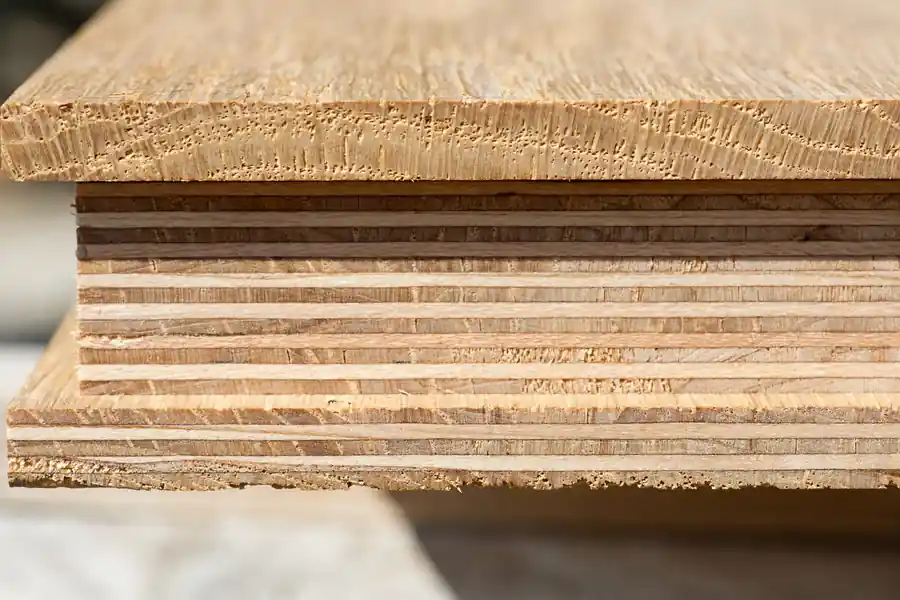
Engineered hardwood flooring is a plank with a real wood surface glued to a plywood core. The top layer, called the veneer, is genuine hardwood such as oak or maple, and the cross-layered core underneath keeps the board stable when humidity changes. It looks like solid hardwood, handles moisture and heat better, and works in rooms where solid wood is risky, such as over a concrete slab.
Engineered hardwood at a glance
| Feature | What to know |
|---|---|
| Surface | Real hardwood veneer, about 0.6 to 6 mm thick |
| Core | Plywood or another layered wood core |
| Stability | Better than solid wood when humidity changes |
| Refinishing | Depends on the veneer. Thin ones can only be recoated |
| Installation | Floating, glue-down or nail-down |
| Material cost | About $3 to $15 per square foot, and many floors fall at $4 to $7 |
| Lifespan | About 10 to 15 years for thin veneers, and 20 to 30 or more for thick ones |
What is engineered hardwood made of?
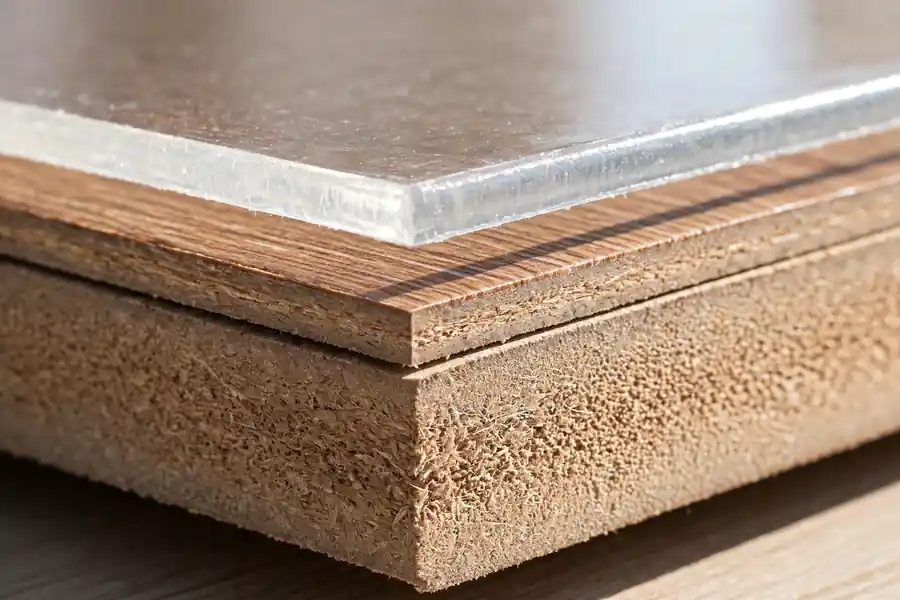
Engineered hardwood is made of three layers. A real wood veneer sits on top, a plywood core of crossed layers sits in the middle, and a thin backing layer balances the board. Because the layers run in different directions, the plank resists the swelling and shrinking that bends solid boards.
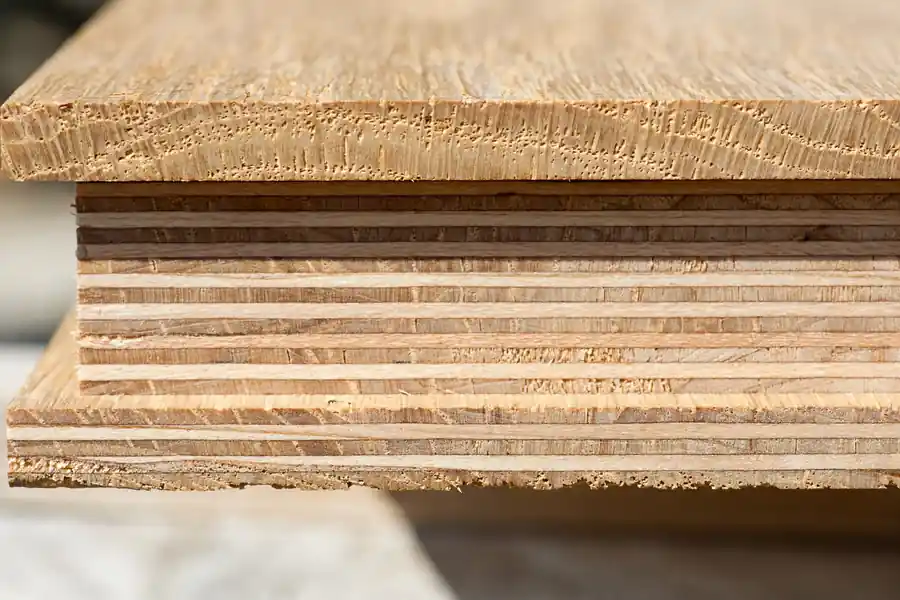
| Layer | What it is | What it does |
|---|---|---|
| 1. Veneer | A sliced layer of real hardwood with a finish | The surface you see and walk on |
| 2. Core | Plywood or layered wood, with the grain crossed | Gives strength and keeps the board stable |
| 3. Backing | A thin layer of wood | Balances the board so it stays flat |
Engineered wood flooring and engineered hardwood are used to mean the same thing. Some brands also sell engineered planks with a softwood veneer or a bamboo surface, so check the species on the box.
How does engineered hardwood compare with solid hardwood?
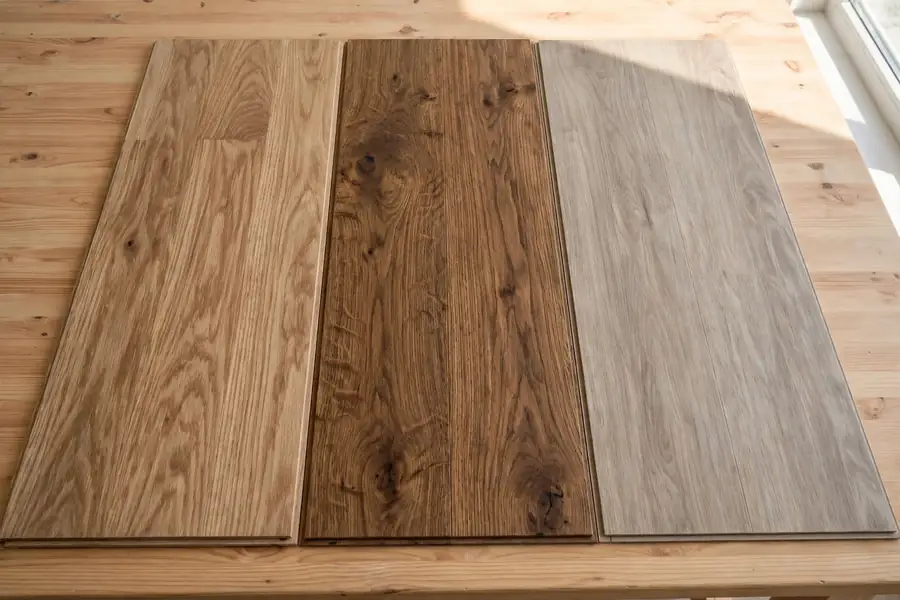
Engineered hardwood is more stable, and solid hardwood can be refinished many more times. Solid wood is a single piece of hardwood, usually nailed to a wood subfloor, and most makers do not approve it below grade or on a concrete slab. Engineered planks are often approved for slabs, radiant heat and some basements.
| Engineered hardwood | Solid hardwood | |
|---|---|---|
| Made of | Veneer on plywood core | One piece of wood |
| Refinishing | Depends on veneer, usually fewer | Many times |
| Humidity | More stable | More movement |
| Over a slab | Often yes, if approved | Usually not |
| Typical cost | Low to high | Mid to high |
| Lifespan | 20 to 30 years, or more with a thick veneer | Decades |
Can you refinish engineered hardwood?
Yes, if the veneer is thick enough. The wear layer decides how many times a floor can be sanded. A veneer about 0.6 to 1 mm thick can only be recoated, one about 2 to 3 mm often takes one or two refinishes, and one about 4 to 6 mm can take several. A rough rule of thumb is that each professional sanding removes about 0.5 mm. These are estimates, not specs.
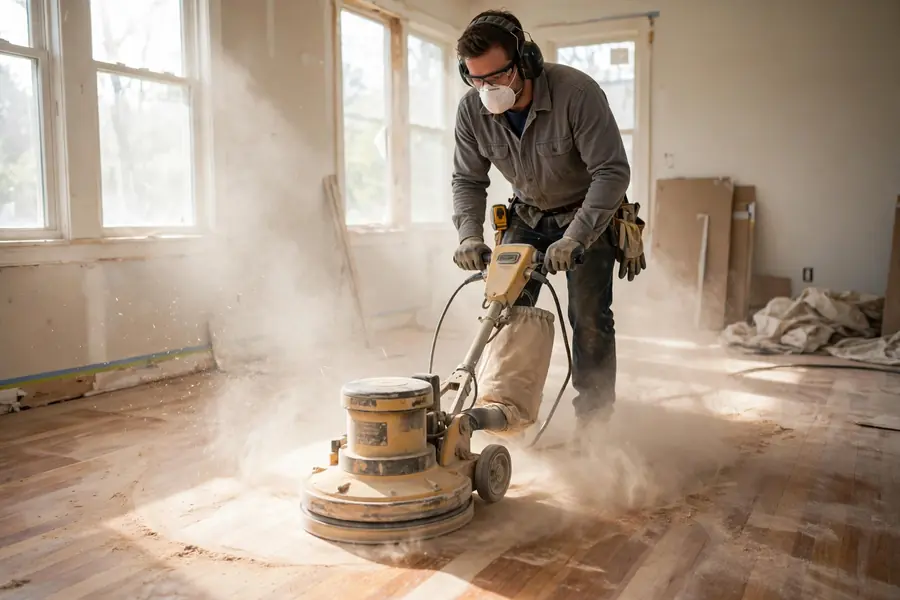
Sand too hard in one spot and you can cut through to the plywood, which ruins the plank. Ask a flooring pro to inspect the floor before sanding it. Professional refinishing runs about $3 to $8 per square foot for labor and materials.
What are the pros and cons of engineered hardwood?
| Pros | Cons |
|---|---|
| Real wood look and feel | Costs more than laminate and vinyl |
| More stable than solid wood | Thin veneers cannot be refinished |
| Works over slabs and with many radiant systems | Quality varies a lot between brands |
| Several installation methods | Scratches and dents like any real wood |
| Often faster to install than solid wood | Water damage still ruins the surface |
| Lasts decades with a thick veneer | Cheap products can have a thin, peeling veneer |
Is engineered hardwood waterproof?
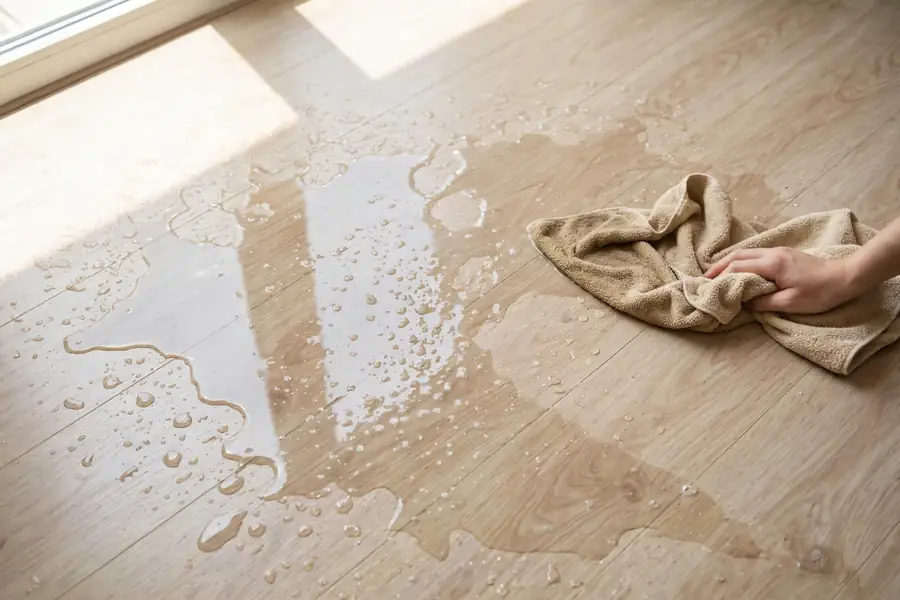
No. Engineered hardwood is more stable in humidity than solid wood, but it is still wood. Standing water can swell the plank and damage the finish. It copes with humidity better than solid hardwood, so it is a common choice for basements and kitchens, but wipe up spills quickly and avoid wet mopping.
How much does engineered hardwood cost?
Materials typically run about $3 to $15 per square foot, and many floors land in the $4 to $7 range. Cheaper planks have thin veneers, while higher prices buy thicker veneers and wider boards. Installation adds labor, and sanding and refinishing a floor later adds about $3 to $8 per square foot.
| Item | Estimate (2026) | For a 300 sq ft room |
|---|---|---|
| Material, common range | $4 to $7 per sq ft | $1,200 to $2,100 |
| Material, full range | $3 to $15 per sq ft | $900 to $4,500 |
| Refinishing later | $3 to $8 per sq ft | $900 to $2,400 |
These are estimates, not quotes, and sources vary. Ask local installers for written prices.
How is engineered hardwood installed?
Engineered hardwood can be floated, glued down or nailed down. Floating planks lock together over a pad and are often used over radiant heat. Glue-down planks are bonded to the floor, which gives a firm feel and is often used on concrete. Nail-down planks are fastened to a wood subfloor only.
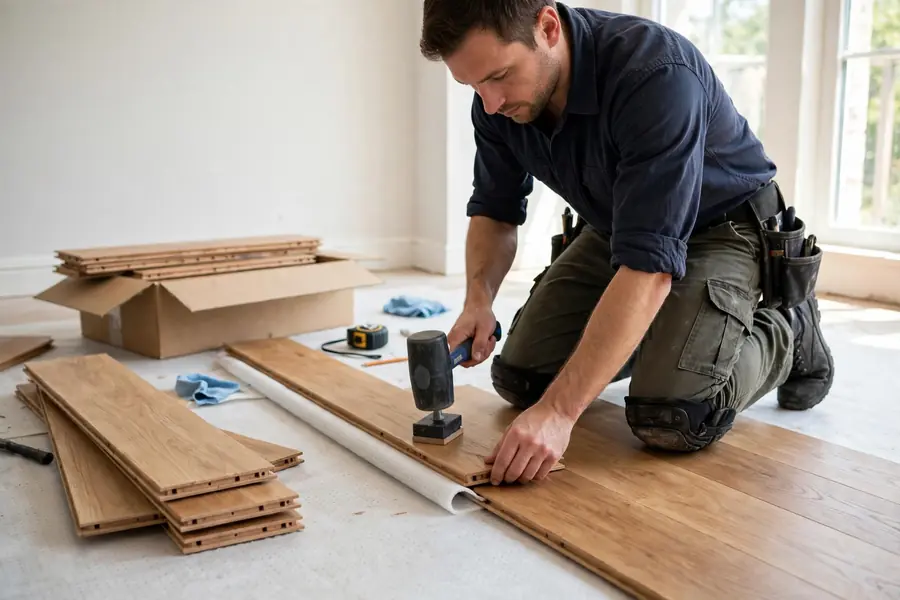
Your maker decides which methods are allowed. Check the instructions before you buy, especially for slabs, below-grade rooms and radiant heat.
Can you use engineered hardwood over radiant heat?
Often, if the maker approves it. Many makers limit the surface temperature and require a layer between the floor and the heating elements. Some do not approve their floors over electric radiant systems, and only allow water-based systems. Floating installs are often used over radiant heat, because some adhesives become brittle with heat over time.
Quick answers to common questions
Is engineered hardwood real wood?
Yes, the top layer is real hardwood and the core is layered wood. It is not solid all the way through.
Is engineered hardwood better than solid hardwood?
It is more stable and works in more rooms. Solid hardwood can be refinished many more times. The right one depends on the room and your plans.
Can engineered hardwood be refinished?
If the veneer is about 2 mm or thicker, often once or twice. Very thin veneers can only be recoated.
Can you put engineered hardwood in a basement?
Often yes, if the maker approves it and the slab is dry and has a vapor barrier. Test the slab for moisture first.
How long does engineered hardwood last?
About 10 to 15 years with a very thin veneer, and 20 to 30 years or more with a thicker one, by common estimates.
Keep reading: what hardwood flooring costs, parquet flooring and the best types of flooring for homes.
Is engineered hardwood flooring worth buying?
Engineered hardwood flooring is worth buying when you want real wood in a room where solid hardwood is risky, such as a basement, a slab-on-grade home or a room with radiant heat. Check the veneer thickness on the spec sheet, because it decides how long the floor will last and how often you can refinish it. Order a sample and confirm the install method your maker allows.