Laminate flooring is a floating plank floor with a photo of wood or stone printed on top of a pressed wood-fiber core. A hard clear coating protects the picture, and the planks click together without glue. It is not solid wood and it is not vinyl. It looks like hardwood for a fraction of the price, but the core swells if water gets into it, so it suits dry rooms best.
Laminate at a glance
| Feature | What to know |
|---|---|
| Core | High-density fiberboard (HDF), made of wood fibers and resin |
| Top surface | A printed image under a hard clear wear layer |
| Total thickness | About 6 to 12 mm |
| Installation | Click-lock floating floor |
| Wear rating | AC1 to AC5, where AC2 and AC3 suit most homes |
| Water | Surface spills are fine. Standing water ruins the core |
| Material cost | About $1 to $4 per square foot in 2026 estimates |
| Refinishing | Not possible, the planks are replaced instead |
What is laminate flooring made of?
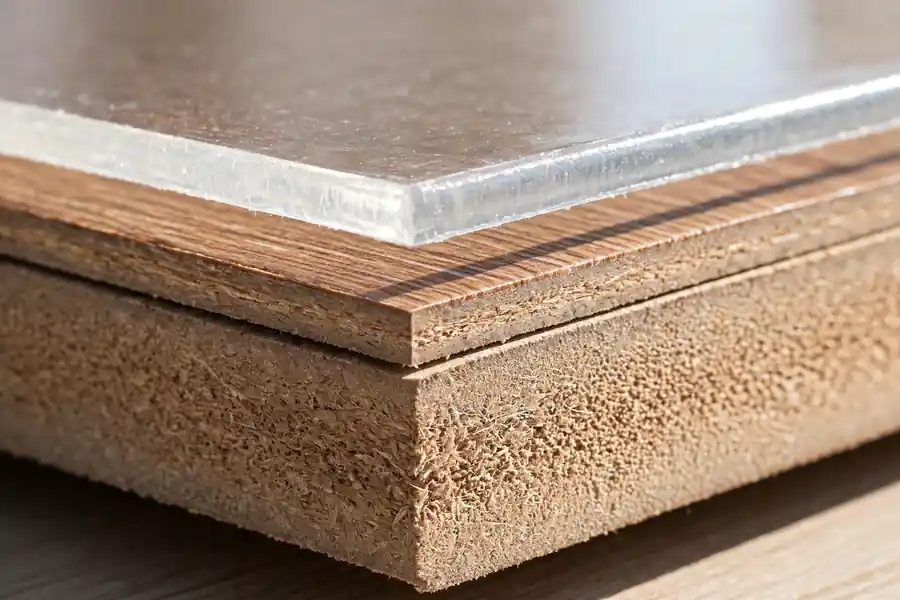
Laminate flooring is made of four bonded layers. From top to bottom, they are a clear wear layer, a printed decorative layer, a core of high-density fiberboard (HDF), and a backing layer. The core is a wood product, but the planks are not wood all the way through.
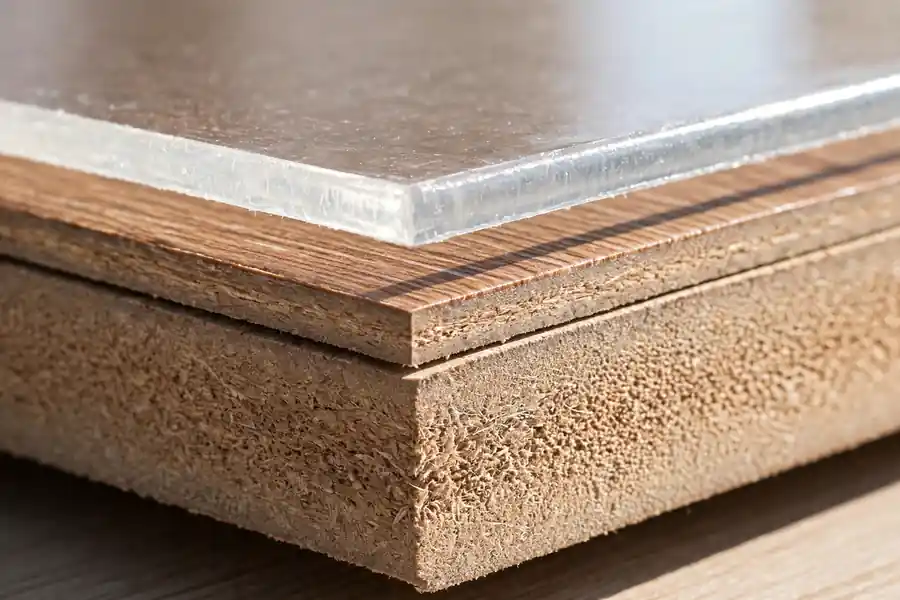
| Layer | What it is | What it does |
|---|---|---|
| 1. Wear layer | A hard, clear resin coating, often with aluminum oxide | Resists scratches, scuffs and stains |
| 2. Decorative layer | A printed photo of wood, stone or tile | Gives the floor its look and texture |
| 3. Core | HDF: wood fibers pressed with resin under high pressure | Gives the plank its strength and holds the click joint |
| 4. Backing | A melamine or paper sheet | Keeps the plank flat and resists moisture from below |
Because the image is printed, the pattern repeats. Better brands print many different plank faces, so the floor looks less repetitive.
How does laminate compare with vinyl and hardwood?
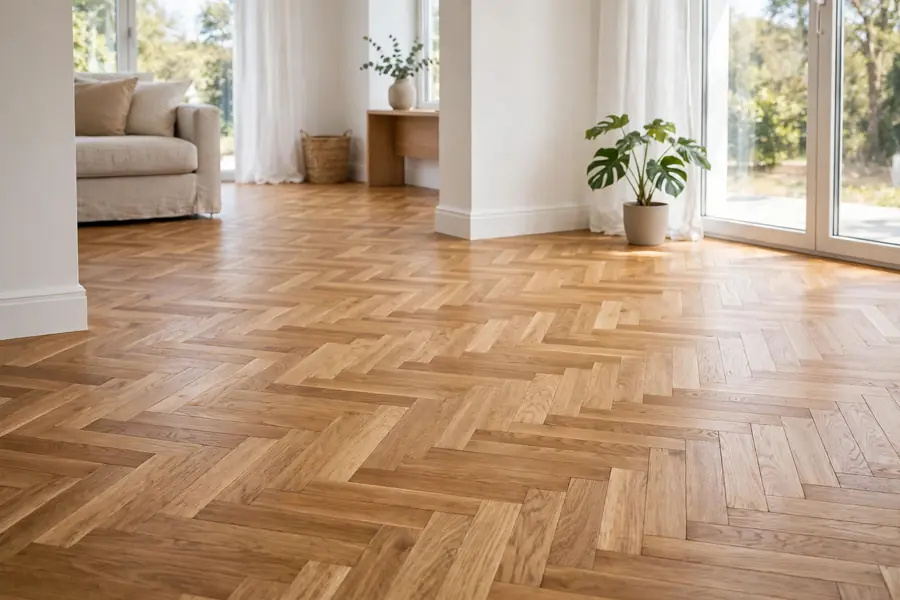
Laminate sits between vinyl and hardwood on price and looks. It is harder and stiffer underfoot than vinyl, and it handles water much worse. Compared with hardwood, it costs less and resists scratches better, but it cannot be sanded or refinished.
| Laminate | Vinyl plank | Solid hardwood | |
|---|---|---|---|
| Made of | HDF core, printed top | PVC, printed top | Solid wood |
| Water | Poor | Good | Poor to fair |
| Scratch resistance | Good | Fair to good | Fair |
| Feel underfoot | Hard | Softer | Warm, firm |
| Refinish | No | No | Yes, several times |
| Typical cost | Low | Low to mid | High |
What do AC ratings mean?
The AC rating tells you how well a laminate floor resists wear. The scale runs from AC1 to AC5. AC1 to AC3 are meant for homes, and AC4 and AC5 are meant for shops, offices and other busy commercial spaces. A floor's grade is set by the lowest score it gets across its tests.

For most homes, AC2 or AC3 is plenty. Pick AC3 or higher for hallways, kitchens and families with pets. A higher AC grade usually costs more, so there is no need to buy commercial grade for a bedroom. The industry body NALFA also runs a separate certification program for laminate quality, and the AC scale itself comes from European producers.
Is laminate waterproof?
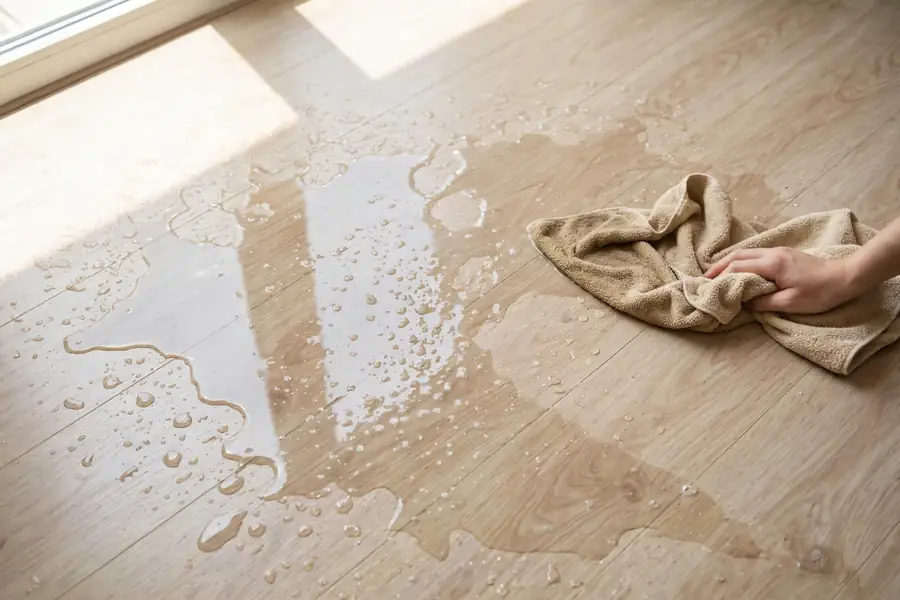
Standard laminate is not waterproof. The coating sheds a spill for a short time, but the HDF core soaks up water that reaches a seam or an edge. Once the core swells, it does not shrink back, so the edges stay raised and the planks may buckle.
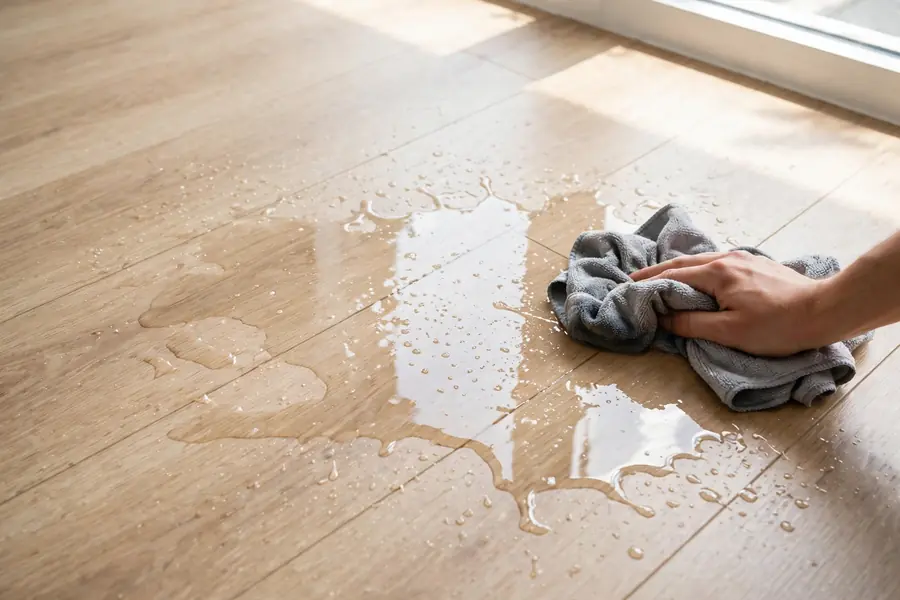
Some brands sell "water-resistant" laminate with sealed edges or a treated core. These last longer in a spill, but they are not made for standing water. Wipe spills quickly, keep the mop damp rather than wet, and choose vinyl or tile for bathrooms and laundry rooms.
What are the pros and cons of laminate?
| Pros | Cons |
|---|---|
| Costs much less than hardwood | The core swells if water gets in |
| Resists scratches, dents and fading | Cannot be refinished |
| Click-lock installation suits DIYers | Can sound hollow without good underlayment |
| Wide range of wood and stone looks | Cheap lines can look repetitive |
| Easy to clean and care for | Damaged planks must be replaced |
| Floats over most flat, dry subfloors | Feels harder than vinyl underfoot |
How much does laminate cost?
Materials usually run about $1 to $4 per square foot in 2026 estimates, with thin budget lines at the low end and thicker, premium lines at the top. Installed prices run higher, about $5 to $12 per square foot depending on your area and what you remove first.
| Item | Estimate (2026) | For a 300 sq ft room |
|---|---|---|
| Material | $1 to $4 per sq ft | $300 to $1,200 |
| Installed | $5 to $12 per sq ft | $1,500 to $3,600 |
These are estimates, not quotes. Underlayment, trim, and removing the old floor can add to the total.
How long does laminate last?
A well-made laminate floor in a dry home often lasts 15 to 25 years, based on common seller estimates. These are not lab results. The wear layer, the AC rating, and how dry you keep the floor matter most. Because the surface cannot be sanded, a worn spot means replacing planks rather than refinishing.
Where does laminate work best?

| Space | Fit |
|---|---|
| Bedrooms and living rooms | Very good |
| Hallways and stairs areas | Good, choose AC3 or higher |
| Kitchen | Fair, with fast spill cleanup |
| Basement | Only on a dry slab, with a vapor barrier |
| Bathroom and laundry | Not recommended |
How is laminate installed?
Most laminate is a click-lock floating floor. Test the subfloor for moisture, let the planks adjust to the room, lay underlayment, leave a gap at every wall, and click the rows together with staggered joints. Follow your product's instructions, because the locking profile differs by brand.
Quick answers to common questions
Is laminate flooring real wood?
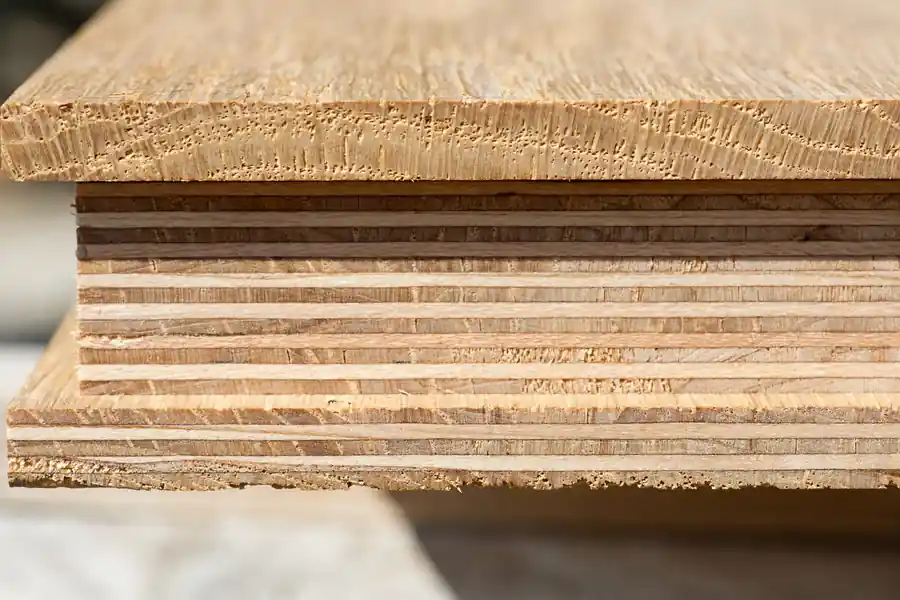
No. The core is made of wood fibers pressed with resin, but the top is a printed picture under a clear coating. It is a manufactured product, not solid or engineered wood.
Is laminate flooring waterproof?
No. Standard laminate resists surface spills for a short time, but water in the seams swells the core. Water-resistant lines help, but they are not made for standing water.
How long does laminate flooring last?
Often 15 to 25 years in a dry home, based on common seller estimates. A higher AC rating and careful cleaning help it last longer.
Can laminate flooring be refinished?
No. The wear layer is a thin factory coating, so sanding removes the picture. Damaged planks are replaced.
Is laminate cheaper than vinyl?
Usually it is similar or slightly cheaper for the plank itself. Vinyl plank costs a little more in many lines, but it also handles water far better, so compare the room before the price.
Keep reading: whether laminate flooring is waterproof, how to install laminate flooring and the difference between laminate and vinyl.
Is laminate flooring worth buying?
Laminate flooring is worth buying for dry rooms where you want a hardwood look on a budget and a floor that resists scratches. It is not the right pick for bathrooms, laundry rooms or damp basements, where vinyl or tile is safer.
Choose an AC rating that fits your traffic, keep the floor dry, and order a sample before you buy. If you want a floor you can sand and refinish, choose real hardwood instead.