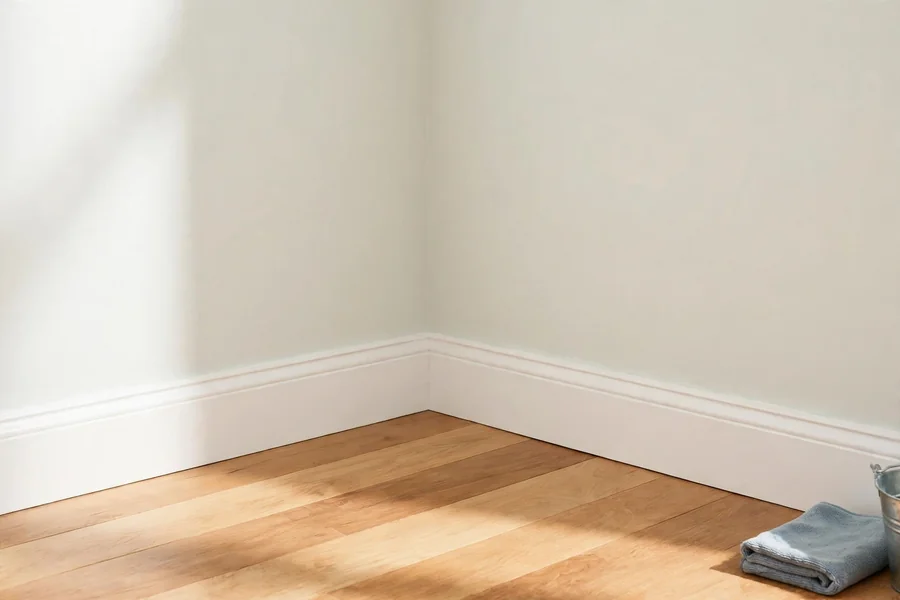
How to clean baseboards comes down to three moves: dust first, wash with a few drops of dish soap in warm water, and dry each section at once. Dust is the main enemy, and water left standing is the main risk. Get the dust off while it is dry, keep the cloth wrung out so it is damp and not wet, and dry behind yourself as you go.
Paint sheen decides how hard you can scrub. Satin, semi-gloss, and gloss paint tolerate a full wash. Flat and matte paint do not, and they need a dry or barely damp touch instead. The sections below sort every case by soil level and by finish, so the method fits the board in front of you.
At a glance
| Job | Method | What to watch |
|---|---|---|
| Dusty boards, routine pass | Dry dust or vacuum with a brush attachment | Dust first, or it turns to mud when wet |
| Light grime | Damp cloth with a few drops of dish soap | Wring the cloth nearly dry, dry at once |
| Scuffs | Soft sponge and soap, gentle pressure | Test a hidden spot; abrasive pads dull paint |
| Greasy kitchen film | Soap wash, then a second pass | Change the water when it turns gray |
| Mold spots | Fix the moisture source, then detergent and water | Homeowner limit near 10 sq ft; never mix bleach |
| Heater covers | Power off, cool down, vacuum inside | No water inside the unit |
What is the fastest way to clean baseboards?
Run a vacuum brush attachment along the boards, then wipe with a damp microfiber cloth, and dry with a second cloth right behind it. One average room takes minutes this way, and it handles dust plus light grime in a single pass. The order matters more than the product: dry dust first, damp wipe second, dry third. Wetting dusty boards first smears the dust into streaks that dry into a film, and that film takes a second wash to remove.
Work one wall at a time so no section sits wet while you move on. Pull furniture a few inches out from the wall where you can reach, and leave the rest: if you can see grime behind a piece of furniture, clean that stretch, and skip what stays hidden.
What tools do you need?
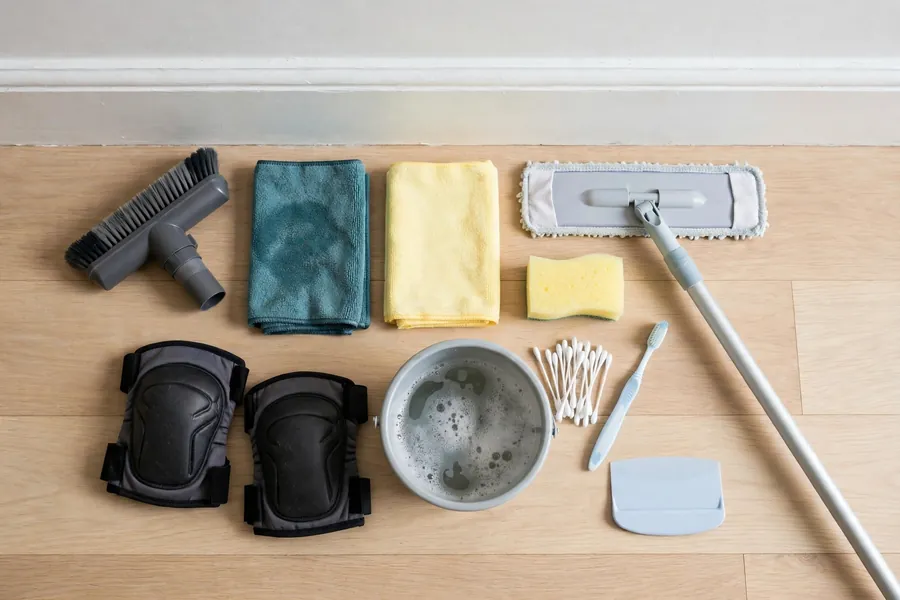
| Tool | Job | What to avoid |
|---|---|---|
| Vacuum with brush attachment | Dry dust, top edge, floor seam | A beater bar head, which scuffs paint |
| Microfiber cloths, at least two | One damp for washing, one dry for drying | Paper towels, which shed lint |
| Soft sponge | Scuffs and grime | Abrasive scouring pads and steel wool |
| Bucket of warm water | Holds the wash water | A bucket so small the water turns gray after one wall |
| Cotton swabs or a soft toothbrush | Corners, grooves, caulk lines | Stiff brushes, which gouge caulk |
| Long-handled flat mop | Washing and dusting without bending | A dripping mop head |
| Knee pads or a low stool | Comfort at floor level | Kneeling on a hard floor for a whole house |
| Plastic scraper | Dried paint splatter | Metal blades, which cut paint |
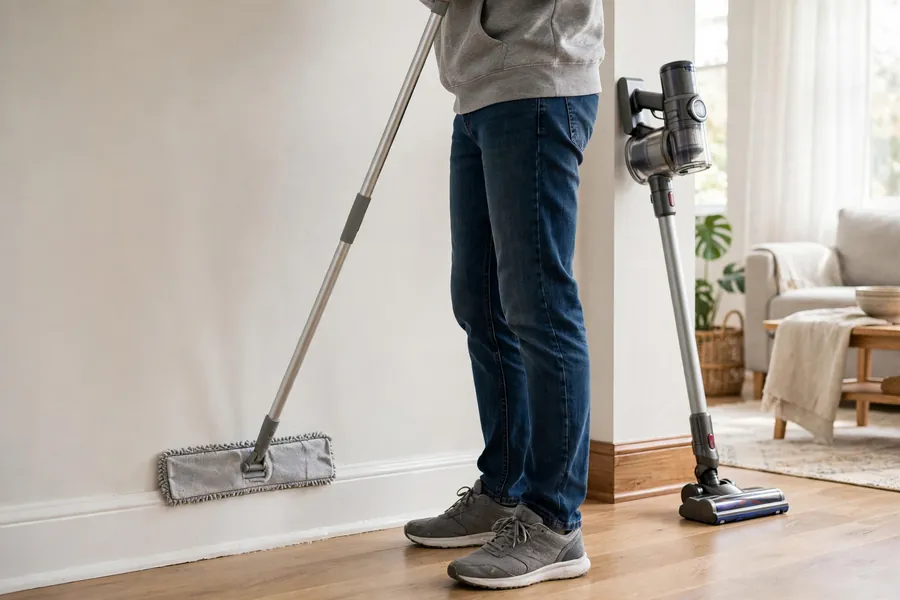
A vacuum with an extension wand and a flat mop with a removable microfiber pad cover most of the job from a standing position. Keep a dry cloth in your pocket or on the mop handle so drying never lags behind washing.
How do you clean baseboards step by step?
Follow this order, and do not skip the drying step at the end of each wall.
- Clear the edges. Move furniture, baskets, and cords a few inches from the wall. Vacuum the floor along the boards so loose dirt does not get pushed back onto wet paint.
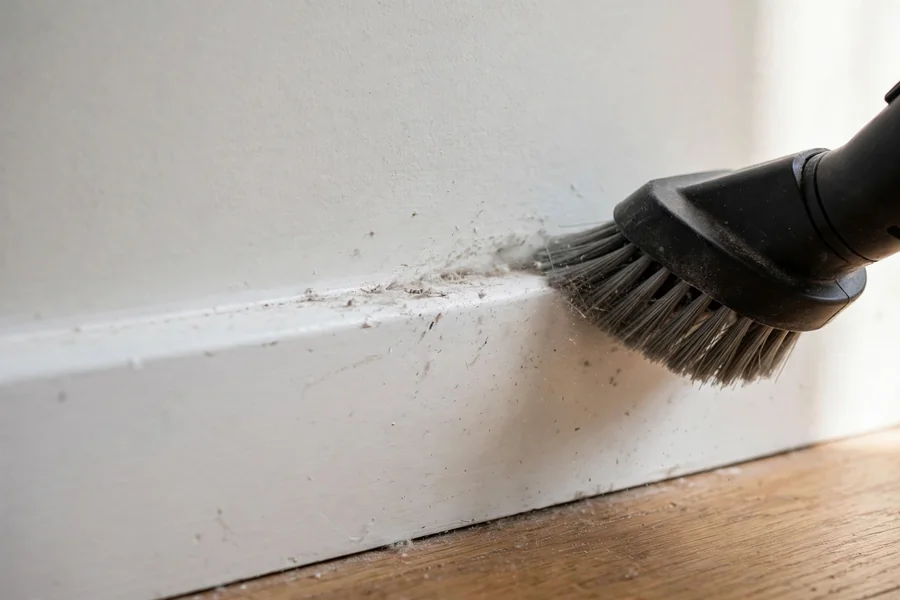
- Dust dry. Run the brush attachment along the top edge, the face, and the seam where the board meets the floor. A dry microfiber cloth does the same job where a vacuum cannot reach.
- Wash one wall at a time. Dip a microfiber cloth in warm water with a few drops of dish soap, wring it until it is barely damp, and wipe the top edge first, then the face, then the floor seam. Rinse the cloth often, and change the water when it turns gray.
- Treat scuffs and corners. Rub scuffs gently with a soft sponge and a drop of soap. Work corners and grooves with a cotton swab or soft toothbrush dipped in the same solution.
- Dry at once. Run the dry cloth over each section right after washing it. Water left on the top edge or in the floor seam can dull paint, swell MDF, and reach wood floors.
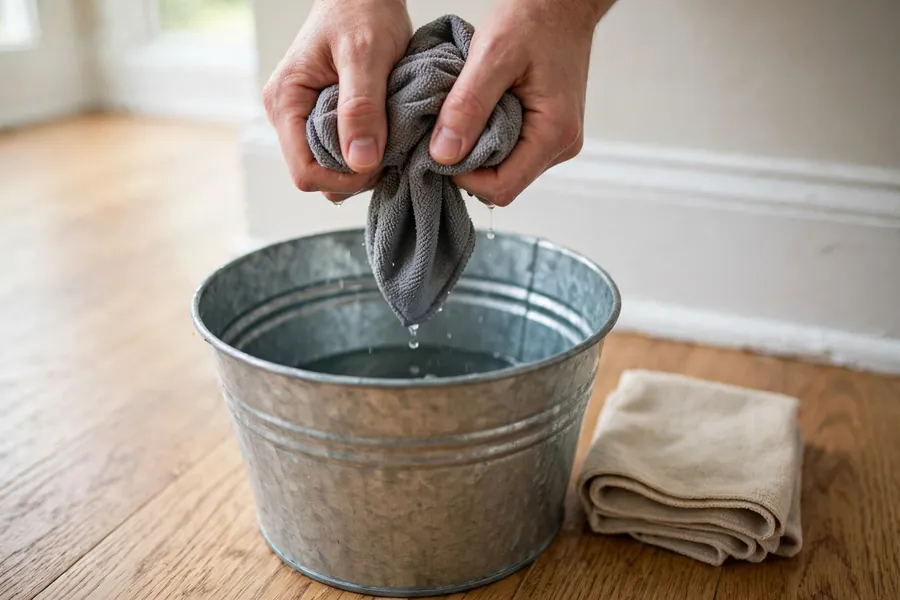
Sherwin-Williams cleaning guidance, read in full on October 28, 2026, gives the same sequence for painted surfaces: dust first, wash with a soft cloth or sponge and mild soapy water, rinse with a clean damp cloth, and wring the cloth out well, since too much water can ruin a paint finish.
How to clean baseboards without bending over?
Use a long-handled flat mop with a damp microfiber pad for the wash, and a vacuum with an extension wand and brush attachment for the dusting. Both keep you upright, and both reach the top edge and the floor seam without kneeling. A sock slipped over a yardstick or broom handle dusts boards the same way, and a microfiber sock picks up fine dust better than cotton or wool.
If bending is hard but kneeling is fine, use knee pads or a folded towel and work sitting back on your heels, one wall at a time. If kneeling is the problem, sit on a low stool and work sideways along the wall, moving the stool instead of your body. Split the house across days when a bad back sets the pace: one or two rooms a day beats one long session that leaves you sore and the last rooms half done. Keep the bucket on a stool or a chair at waist height so you are not lifting a full bucket from the floor.
How do you dust baseboards between washes?
Wipe the top edge and face with a dry microfiber cloth, or run the vacuum brush attachment along the boards, once a week in busy rooms and every few weeks elsewhere. The top edge collects the most dust, since it is a flat shelf facing up, and pet hair and lint settle there first. Dust the boards before vacuuming the floor, so anything knocked loose lands on the floor and gets vacuumed after.
A dry dusting pass keeps light soil from turning into the gray film that needs a full wash. Skip wet methods between washes: a damp cloth used weekly on flat paint wears the finish faster than a dry cloth does, and it adds nothing when the boards hold dust only.
How do you clean really dirty baseboards?
Wash twice. The first wash lifts the loose layer, and the second wash, with fresh water, takes the film that the first pass loosened. Lay a damp soapy cloth over a badly grimed stretch for a few minutes before wiping, which softens the grime so it wipes off instead of needing hard scrubbing. Change the wash water as soon as it turns gray, since dirty water puts grime back on the next stretch.
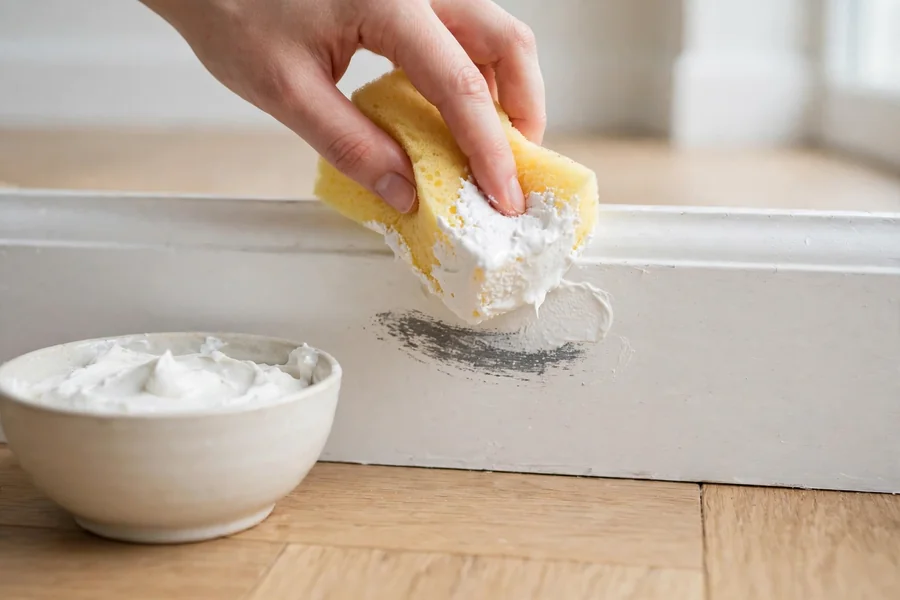
For stains that survive two soap washes, mix baking soda with a little water into a paste, rub it gently over the spot, then rinse with a clean damp cloth and dry. Sherwin-Williams spot-cleaning guidance, read in full on October 28, 2026, recommends a baking soda and water paste for scuffs and stains on painted surfaces, with a rinse and a dry cloth after. Grease near a range or an entry door may need a third pass with fresh soapy water and a soft sponge. Pressure is not the fix: if a spot will not lift with gentle rubbing, it is a paint problem, not a dirt problem, and scrubbing harder only wears the finish.
How do you keep white baseboards white?
Wash with mild soap and water, dry at once, and keep harsh chemicals off the paint. Surface yellowing from dust, smoke, and cooking grease washes off with the standard soap method. Yellowing inside the paint film does not wash off: sunlight, cigarette smoke, and some oil-based paints yellow the paint itself as it ages, and that color change sits in the coating, not on it. No cleaner reverses it, and the fix is repainting with a paint that resists yellowing.
Avoid bleach and ammonia-based cleaners on white paint. Bleach can yellow some finishes and damage the paint film, and ammonia dulls gloss. Abrasive pads leave dull patches that read as gray or yellow against the rest of the board. Test any new cleaner on a hidden stretch first, and check the spot after it dries: if the paint still looks bright and no marks show, the cleaner is safe for that finish.
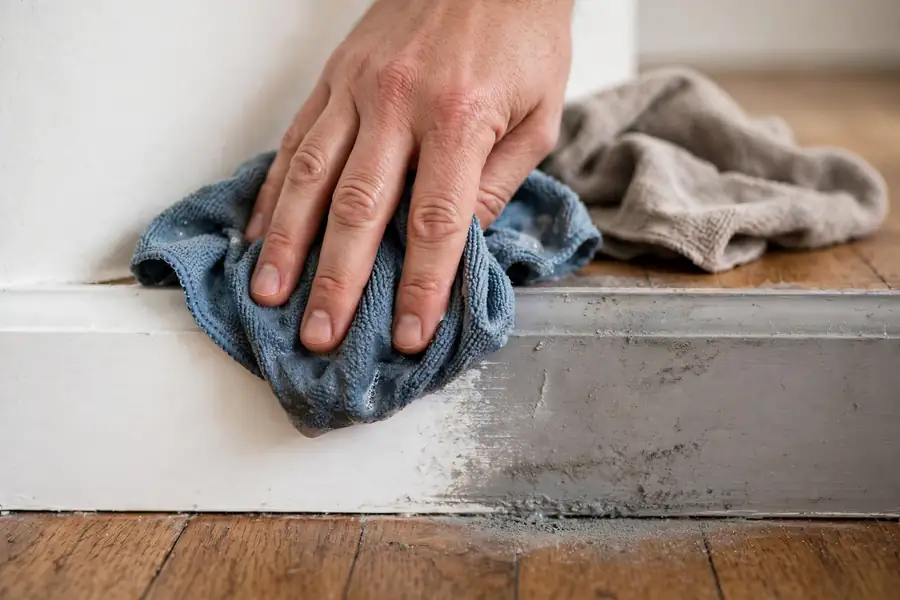
How do you clean painted baseboards without removing the paint?
Match the method to the sheen. Satin, semi-gloss, and gloss paint cure into a harder, sealed surface that tolerates washing with mild soap and water. Flat and matte paint stay porous, so they absorb water and cleaner along with the dirt, which lifts pigment and leaves dull patches. On flat paint, dust only, spot-clean with a barely damp cloth, and plan to repaint scuffed stretches instead of scrubbing them.
Use a soft cloth or sponge, mild soapy water, and gentle pressure in a circular motion, following Sherwin-Williams guidance read in full on October 28, 2026. Rinse with a clean damp cloth to remove leftover cleaner, and dry with a soft cloth. Always test the cleaner and the technique on a hidden spot first. Wait at least two weeks after painting before using any water or cleaner on new paint, per the same guidance. Never use abrasive pads, steel wool, or stiff brushes on painted trim: each one removes paint along with the dirt.
How do you clean wood baseboards?
Treat finished wood like gloss paint: wipe with a barely damp cloth and a little mild soap, then dry at once. Keep water out of joints and off cut ends, where it soaks in and darkens the wood. Never soak stained wood, never steam it, and never use an abrasive pad on varnish or lacquer, since the finish scratches show as dull streaks that only refinishing removes.
For stained wood with no clear finish, or for raw oak, use a dry or barely damp cloth only. Water left sitting on raw oak leaves dark tannin stains that sanding alone may not remove. Use a cleaner made for wood finishes when soap and water do not lift the grime, test it on a hidden spot, and follow the product label. Old wood baseboards with cracked or flaking finish need the finish repaired before any wet washing, since water gets under loose finish and lifts more of it.
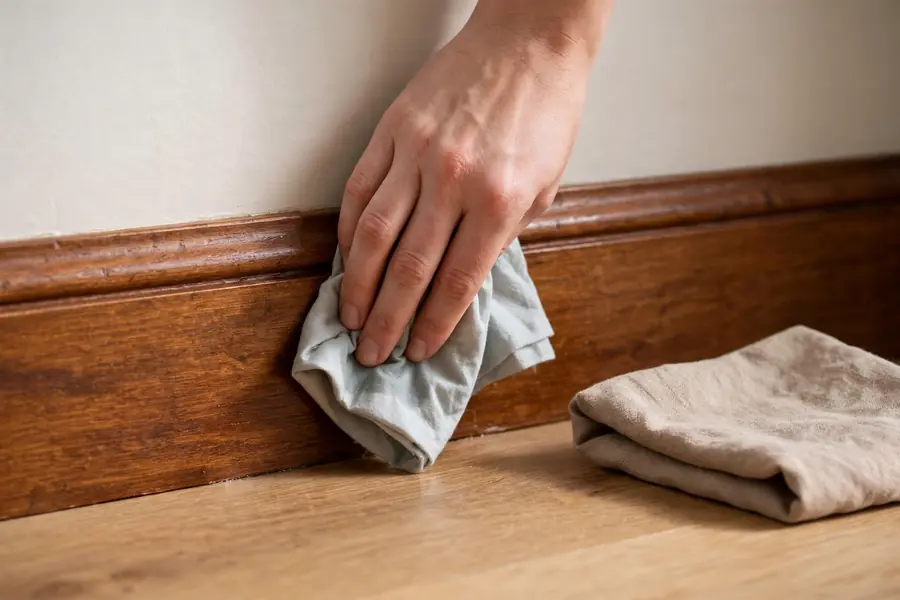
What about MDF, rubber, and vinyl baseboards?
| Material | Wash rule | Hard limit |
|---|---|---|
| MDF, painted | Barely damp cloth, dry at once | Never soak, never steam; water swells cut edges for good |
| MDF, unpainted | Dry dust only | Any wet wash swells the fibers |
| Rubber baseboards | Mild soap and water, rinse, dry | No solvents; solvents soften rubber |
| Vinyl baseboards | Mild soap and water, rinse, dry | No abrasive pads; they dull the surface |
MDF is compressed fiber, and its cut edges drink water. A damp cloth wrung nearly dry is safe on painted MDF, but a wet cloth left sitting on a cut edge or a joint swells the board, and the swelling does not reverse when it dries. Rubber and vinyl baseboards, common in basements and commercial rooms, tolerate a full soap wash, but solvents and abrasive pads damage them. When you cannot tell MDF from solid wood, treat the board as MDF: barely damp, dry at once.
How do you clean the top edge and corners?
The top edge is a dust shelf. Vacuum it with the brush attachment first, then wipe it with a damp cloth folded over one finger so the cloth reaches the full width of the ledge. Corners pack dust into a tight angle that a flat cloth cannot reach: work a cotton swab or a soft toothbrush dipped in soapy water into each corner, then follow with a dry swab so no moisture sits in the joint.
The seam where the board meets the floor collects grit that a cloth pushes along instead of picking up. Run the vacuum crevice tool along the seam before washing, then wipe the seam with the edge of a damp cloth and dry it. On carved or routed profiles, use the toothbrush lightly along each groove, and keep the pressure low so the bristles do not flick dirty water onto the wall above.
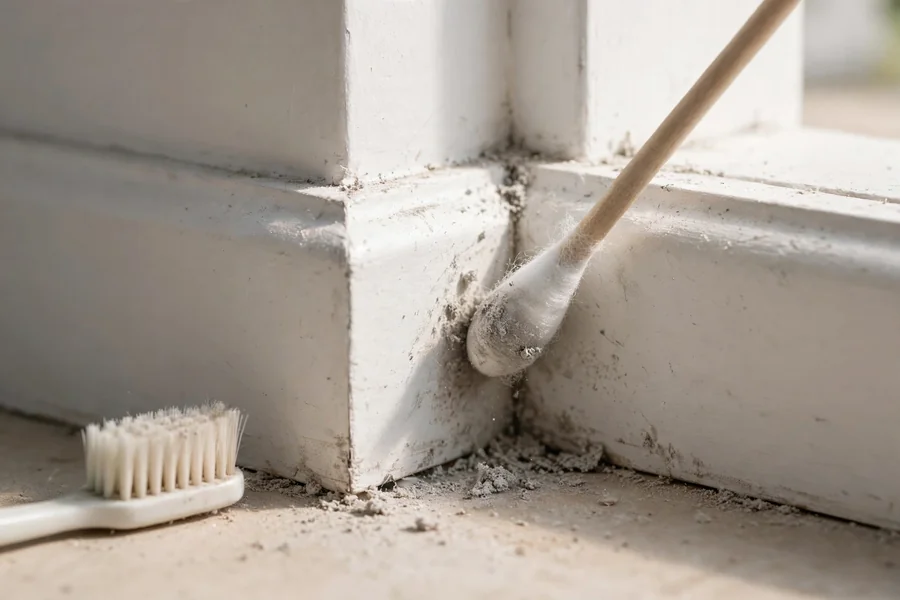
What do you do about dirty caulk lines?
Wash the caulk with a soft brush or toothbrush and soapy water, rinse with a damp cloth, and dry. Surface dirt, dust, and mildew stains on the caulk surface come off this way. If the caulk is cracked, pulling away from the wall or the board, or stained all the way through, cleaning will not fix it: the caulk has failed, and the fix is to cut it out and recaulk after the joint is clean and dry.
Do not gouge caulk with a scraper or a stiff brush while cleaning, since gouges open gaps that collect dirt faster. Paint over new caulk only after it cures, following the caulk label. A clean caulk line that still looks gray after washing is usually caulk that absorbed stains over years, and repainting the trim, not more scrubbing, is what restores it.
Should you use vinegar on baseboards?
Vinegar handles light stains and mineral spots, and it is a weak degreaser. Equal parts white vinegar and water in a spray bottle or bucket, applied to a cloth and followed by a rinse wipe, lifts stains that soap left behind, according to cleaning guidance from AspenClean quoted by Martha Stewart, read October 27, 2026. Keep vinegar off unsealed wood and stone, rinse after use, and dry the boards.
Sources disagree on whether vinegar belongs in the default wash. Some cleaning guides present a vinegar and water mix as the standard baseboard wash. The finish-first view is soap first, since dish soap cuts grease better, and vinegar only where a stain or a mineral spot needs it. Vinegar does not disinfect, and it does not replace soap on greasy kitchen boards. Use it as a spot treatment, not as the wash for a whole house.
Should you use a magic eraser on baseboards?
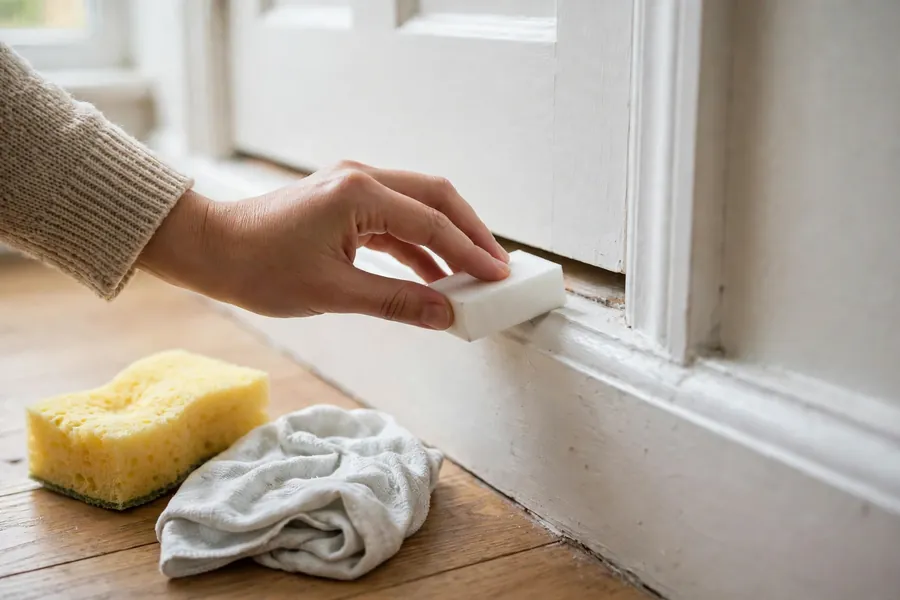
A magic eraser is melamine foam, and it cleans by wearing away a microscopically thin layer of the surface, like very fine sandpaper. That is why it lifts scuffs that soap cannot: it removes the mark along with a little of the finish. Mr. Clean warns against using the eraser on glossy and delicate surfaces, and trade summaries compare its abrasion to fine-grit sandpaper, a comparison read in secondary sources on October 27, 2026 and flagged here as summary-basis.
Use an eraser only on a scuff that soap and a soft sponge did not lift, with light pressure, on a small area, after a test on a hidden spot. Never use one on flat or matte paint, where it leaves a shiny patch, and never on dark paint, where any sheen change shows plainly. Wet the eraser, squeeze out the extra water, rub gently, then wipe the area with a clean damp cloth and dry it. If the test spot looks duller or lighter after drying, stop: the eraser is removing finish, not dirt.
Should you steam clean baseboards?
Skip the steam cleaner on baseboards. A Shark steam cleaner manual, read in full in a manual reproduction on October 28, 2026, says not to use steam on painted surfaces, and warns that heat, steam, and friction can remove the sheen. Steam also swells MDF and unfinished wood fibers and weakens glue lines in joints. Painted trim, MDF, and wood baseboards all sit in the group steam harms, and a damp cloth does the same cleaning with none of the risk.
A steam cleaner earns its place on sealed tile and grout, not on trim. If a baseboard sits beside a tile floor you plan to steam, keep the steam head off the board itself and wipe the board with a cloth instead. Test any steam use on a hidden spot first, as the manual directs, and expect that the test will tell you to put the steamer away.
Do dryer sheets keep baseboards clean?
A dryer sheet picks up dust in one pass, and the coating it leaves behind is said to cut static so fresh dust sticks less. That claim is the popular advice, and it is disputed. The coating is a residue: it can dull a paint finish, and it must be washed off before any repainting, since new paint may not bond over it. No controlled test shows boards staying cleaner longer after a dryer sheet pass, and one contrarian source argues the film attracts more dust instead.
The residue-free choice is a dry microfiber cloth, which picks up dust without leaving anything behind. If you use dryer sheets, use them only on fully cured gloss or semi-gloss paint, never on flat paint, and wash the boards with soap and water before repainting. Do not use fabric softener mixed into wash water for the same reason: the softening agents coat the paint and interfere with the next coat.
How do you clean baseboards and walls together?
Work top down, and clean the baseboards last in each room. Dust the ceiling and walls first, then wash the walls where the sheen allows it, then dust and wash the baseboards. Baseboards catch the dust that falls from everything above them, so cleaning them first means cleaning them twice.
Walls follow the same sheen rules as trim: dust flat and matte paint, wash satin, semi-gloss, and gloss with mild soap and water. Keep the wash cloth wrung out near the top of the baseboard so dirty water does not run onto the wall above or pool on the floor below. Doors and door frames get the same treatment as baseboards, since they share the same paint, and they collect hand grime at handle height that baseboards never see.
How do you clean baseboards before painting?
Wash with mild soap and water, rinse with a clean damp cloth, and let the boards dry fully. Grease, dust, and grime stop new paint from bonding, and a soap wash removes all three. Scuff glossy paint lightly with fine sandpaper only if the paint label calls for it, then wipe the dust off with a tack cloth. Caulk gaps after cleaning, once the joint is dry, and let the caulk cure before painting over it.
Keep this step to cleaning and prep. Degreasing matters most in kitchens, where cooking film coats the boards, and in rooms with heavy dust. If the old paint is flaking or chalking, cleaning alone will not make new paint stick, and the loose paint needs scraping and spot priming first.
How do you clean mold off baseboards?
Fix the moisture source first, then clean the mold. Mold on baseboards grows where water keeps arriving: a leak, condensation, or a damp bathroom floor. EPA mold guidance, read in full on October 28, 2026, sets the same rules used in the bathroom and window guides: keep indoor humidity below 60 percent, ideally between 30 and 50 percent, dry wet materials within 24 to 48 hours, and scrub hard surfaces with detergent and water, then dry them fully.
A homeowner can usually handle a moldy area under about 10 square feet, wearing gloves, eye protection, and a mask rated N-95 or better. Do not paint or caulk over mold, and never mix bleach with ammonia or any other cleaner. The EPA does not recommend bleach as a routine part of mold cleanup. Larger areas, mold inside a wall, sewage water, or mold in heating and cooling equipment call for a remediation pro. Color says nothing about the type of mold or the risk, and no home test settles that question.
How do you clean heating and hot-water baseboards?
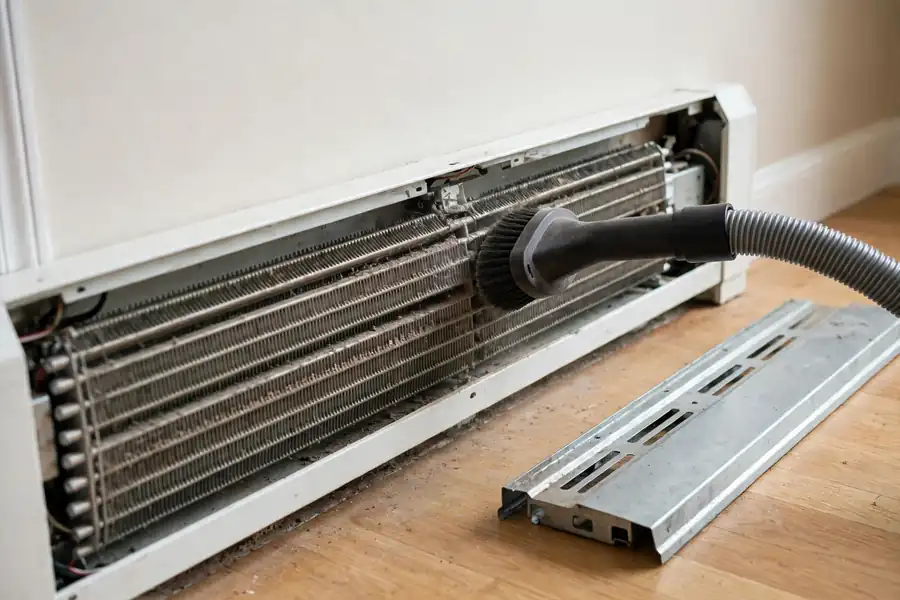
Turn the heat off and let the unit cool fully before touching it. For electric baseboard heaters, switch the unit off at the breaker as well as at the thermostat. Remove the covers, vacuum dust from the fins and the inside of the unit with a brush attachment, wipe the covers with a damp cloth, dry them, and put them back. Never pour water into the unit or spray cleaner inside it, and never push a cloth between hot fins.
This is a different job from cleaning painted trim, and it needs care that trim cleaning does not. Keep curtains, furniture, and bedding clear of the heater, and call a pro for bent fins, damaged elements, or any wiring concern. Dust the covers during the regular baseboard routine, and clean inside the unit when the heat comes off for the season.
How do you remove paint splatter and pet urine from baseboards?
Let latex paint splatter dry, then lift it with the edge of a plastic scraper or a credit card, working from the edge of the spot inward. Soften what stays behind with warm soapy water on a cloth, and wipe it off. Never use a metal blade on painted trim: it cuts the paint under the splatter and leaves a gouge that shows after repainting. Dried oil-based paint needs a pro or a repaint, since solvents that remove it also damage the finish under it.
For pet urine, blot up what is wet, then apply an enzyme cleaner made for pet stains, following the product label, and test it on a hidden spot first. Enzyme cleaners break down the compounds that hold the odor, and plain soap does not. Wipe dry after the dwell time on the label. If the odor stays, or the finish is soft, discolored, or lifting, the urine reached raw wood or failed finish, and a pro needs to judge whether the board can be saved.
How do you clean carpet edges along baseboards?
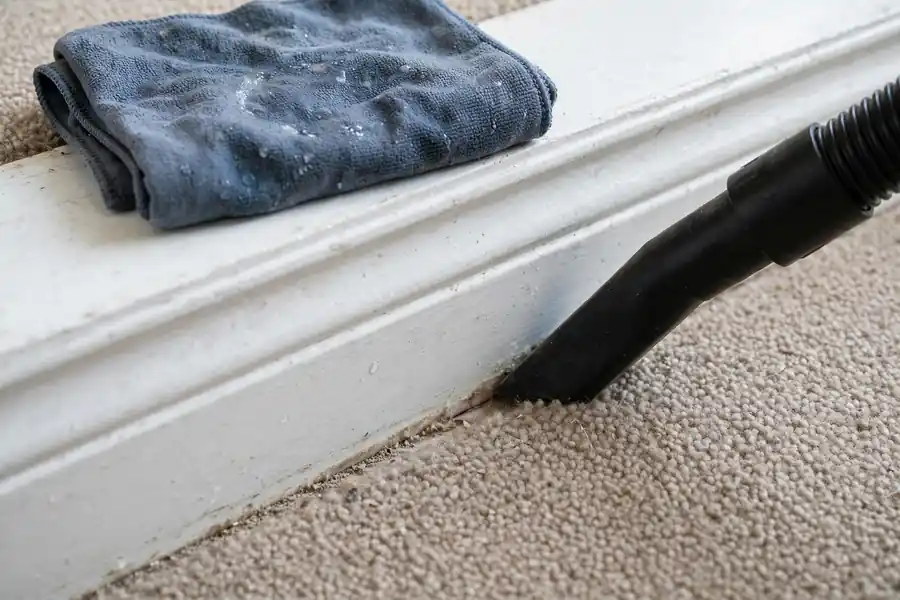
Vacuum the carpet edge with the crevice tool, running it slowly along the seam so it lifts the dust line that collects where carpet meets trim. Wipe the baseboard itself with a damp cloth, and keep the cloth off the carpet: soaking a carpet edge drives moisture into the backing and the tack strip, where it dries slowly and feeds mold. Carpet fibers stuck to the paint lift with the vacuum, not with scraping, which pulls paint off the board.
When a carpet edge looks gray after vacuuming, the gray is usually dust ground into the fibers at the seam, and a carpet cleaner with an edge tool handles it. Keep baseboard wash water off the carpet in the first place by wringing the cloth out well and drying the floor seam as you go.
How often should you clean baseboards?
| Situation | Dusting | Full wash |
|---|---|---|
| Pets, kids, or high traffic | Weekly | Every 1 to 2 months |
| Average home, no pets | Every 2 to 4 weeks | Every few months |
| Low-traffic rooms | Monthly | Twice a year |
| Kitchens and bathrooms | Weekly | Monthly |
| Before painting | Dust, then wash | Always wash before painting |
These bands are planning guidance from cleaning pros' published routines, read in excerpts on October 27, 2026 and flagged here as summary-basis. Adjust by what you see: when the top edge shows a visible dust line, it is time to dust, and when a damp cloth comes away gray, it is time to wash. Homes near busy roads, with forced-air heat, or with shedding pets sit at the frequent end of every band.
When should you hire a pro, and what does it cost?
Hire a pro for a whole-house deep clean, for mold past the homeowner limit, for heater internals, or for paint that predates 1978, where disturbing the paint falls under lead paint rules and hired work must follow EPA Renovation, Repair, and Painting requirements. Baseboards do not come as a standalone service: they arrive inside a deep clean, which also covers fans, fixtures, door frames, and inside appliances.
Angi deep cleaning cost data, updated September 29, 2026 and read in full on October 28, 2026, puts a professional deep clean at an average of $260, with most homeowners paying $180 to $375, at $25 to $70 per hour or $0.10 to $0.30 per square foot. Those figures move with home size, soil level, and region. Get two quotes, confirm baseboards, tracks, and inside appliances are in the quote, and confirm insurance before anyone starts.
The routine that keeps baseboards clean
How to clean baseboards stays a small job when dusting happens weekly and washing happens before grime hardens. Dust the top edges during the regular vacuum pass, wash one or two rooms at a time with a wrung-out cloth, and dry each section before moving on. Treat scuffs while they are fresh, keep water off MDF edges and out of heater units, and wash the boards before any repainting. That routine keeps the trim bright without a day-long scrubbing session.
Quick answers to common questions
Can you clean baseboards with vinegar and water?
Yes, for light stains and mineral spots. Mix equal parts white vinegar and water, apply it to a cloth, wipe the spot, then rinse with a clean damp cloth and dry. For a full wash, mild soap and water works better, since dish soap cuts grease that vinegar leaves behind.
Will a magic eraser damage painted baseboards?
It can. Melamine foam removes scuffs by wearing away a thin layer of the surface, so it dulls flat and matte paint and can change the sheen on gloss paint. Test a hidden spot first, use light pressure, and stop if the test spot looks duller after drying.
How often should baseboards be dusted?
Weekly in homes with pets, kids, or heavy foot traffic, and every two to four weeks in an average home. Dust the top edge and face with a dry microfiber cloth or a vacuum brush attachment, before vacuuming the floor.
Can you use a steam cleaner on baseboards?
No. Steam can remove the sheen from painted surfaces, swell MDF and unfinished wood, and weaken glue lines in joints. A damp cloth with mild soap cleans baseboards fully, with none of the heat and moisture risk.
Why do white baseboards turn yellow?
Sunlight, cigarette smoke, cooking grease, and aging paint yellow the paint film itself, and that color change does not wash off. Surface yellowing from dust and grease does wash off with mild soap and water. When washing no longer restores the white, repainting is the fix.