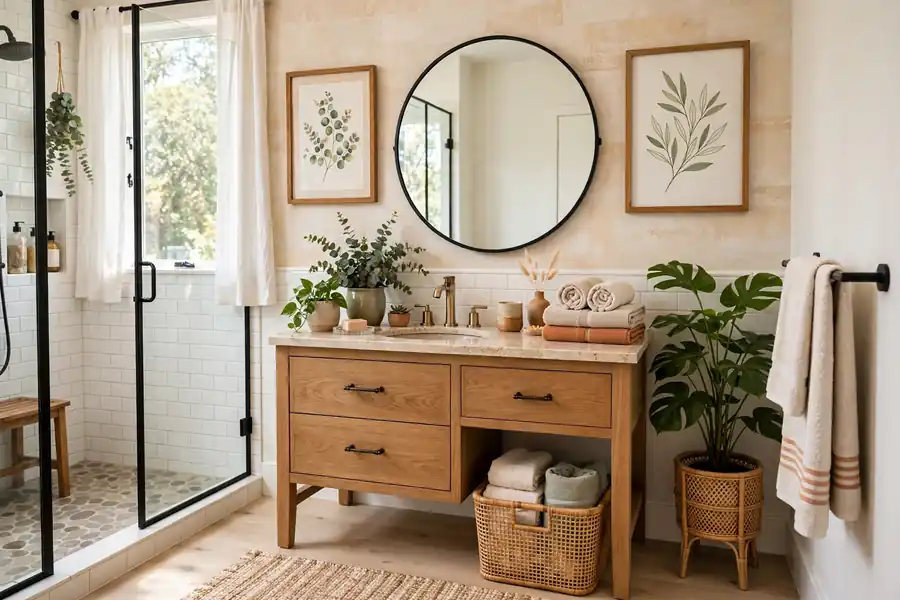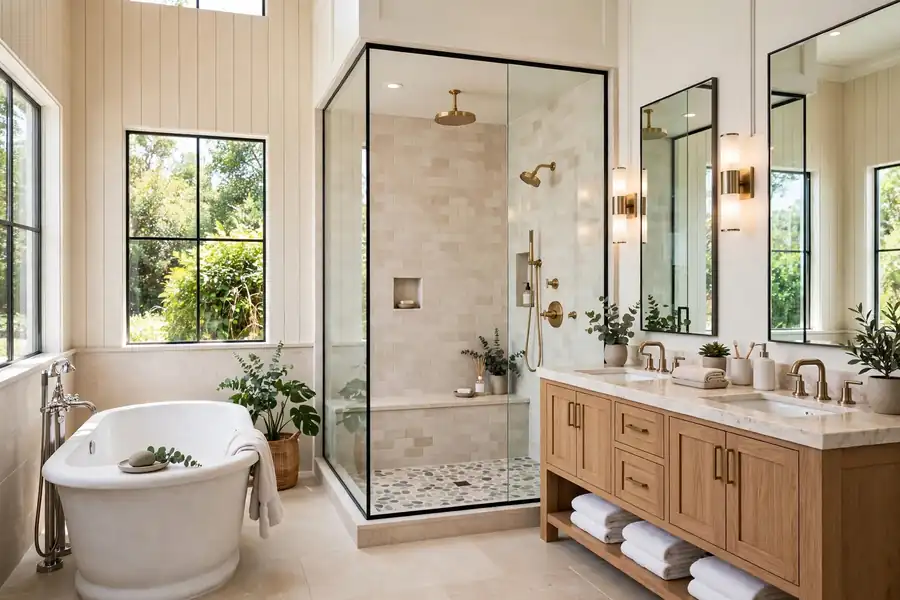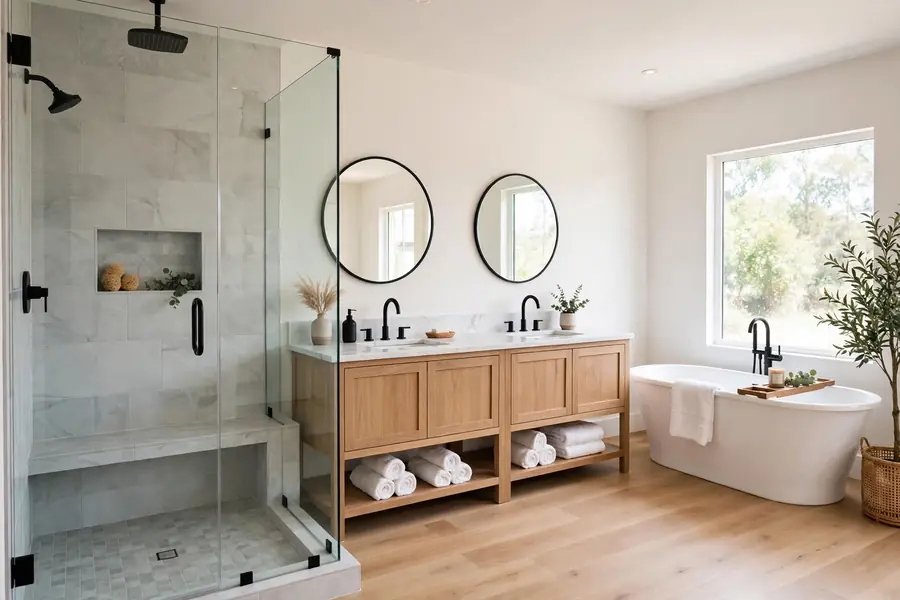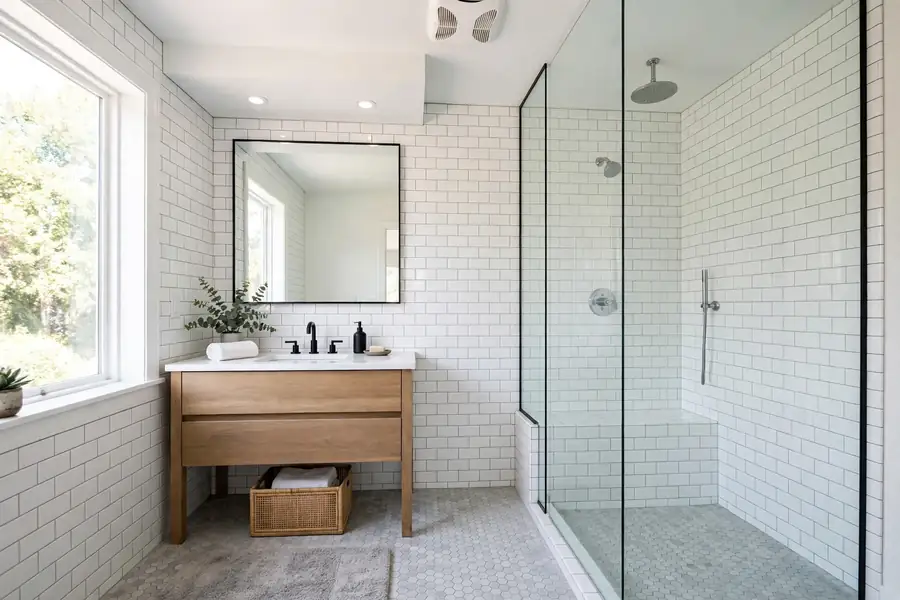
A slick bathroom floor, a shower wall that stains in a year, and grout that never looked right all trace back to one mistake: picking tile by color first. The best bathroom tile ideas start the other way around. Pick the floor tile by its wet slip rating, pick the wall tile by how it handles constant water, and pick the grout by how much cleaning you will actually do. Color and pattern come last.
Bathroom tile at a glance
| Decision | Rule | Where it goes wrong |
|---|---|---|
| Floor tile | Wet DCOF 0.42 or higher, matte finish | Polished wall tile on a floor stays slick |
| Shower floor | Mosaic, 2 inches or smaller | Large tile bridges the slope and ponds water |
| Shower walls | Porcelain or glazed ceramic | Unsealed porous stone stains and holds soap |
| Grout | Epoxy in the shower, sealed cement grout elsewhere | White cement grout in a shower turns blotchy |
| Stone | Neutral cleaner only, test the sealer first | Acid cleaner etches marble on first use |
What tile should you use on a bathroom floor?
Porcelain is the default bathroom floor tile: dense, hard, and nearly waterproof. Certified porcelain absorbs 0.5 percent or less of its weight in water under ASTM C373, according to the ASTM standards summary read October 27, 2026, which is why porcelain needs no sealer. Glazed ceramic costs less and suits a powder room, but its softer body chips sooner.
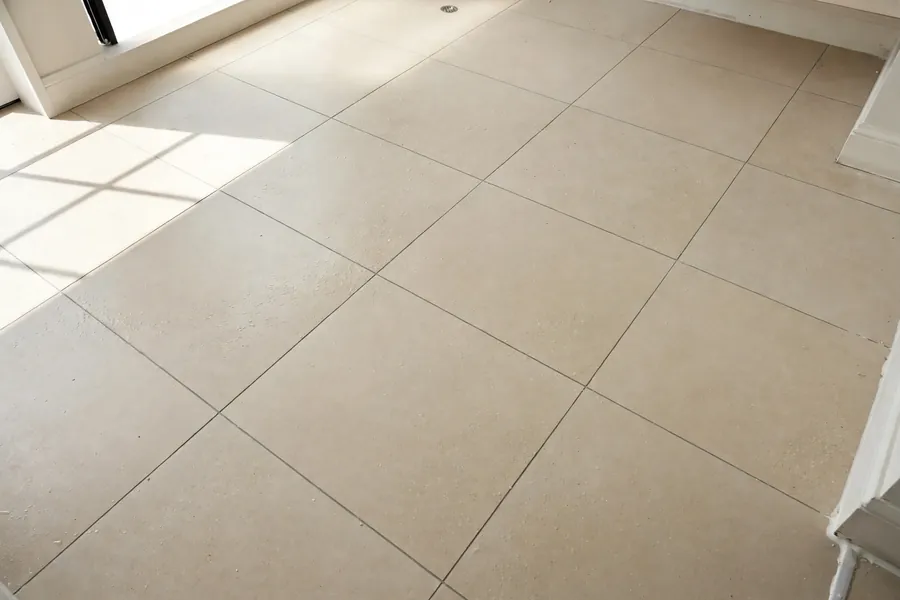
Slip resistance decides the finish, not the color. ANSI A326.3 requires tile flooring products to have a wet dynamic coefficient of friction, or DCOF, of 0.42 or greater when recommended for level interior floors walked on when wet, as stated on the Crossville tile maker page read in full October 27, 2026. Ask for the wet DCOF figure before buying, and treat 0.42 as the floor, not the goal, where footing is unsteady. A matte finish usually clears the bar, while a high polish tile can fail it. The standard sets no minimum DCOF for shower floors.
A 12 by 24 inch tile leaves few joints, but it needs a flat substrate and a skilled setter to avoid lippage, the raised edge where one tile sits higher than its neighbor. A 12 by 12 inch tile forgives small dips and suits most rooms. Mosaic under 2 inches grips bare feet and flexes over the slope to the drain. Underfloor heating suits tile well, but the mat goes in before tile, and the maker must list the tile as suited for heated floors.
How do you choose shower tile for walls and floor?
Shower walls take the most water in the house, so the tile must be impervious or glazed, and the assembly behind it must be waterproof. Porcelain and glazed ceramic cover nearly every shower wall well. Natural stone works only with a sealer and a cleaning plan. The membrane, the slope, and the drain decide whether the shower lasts.
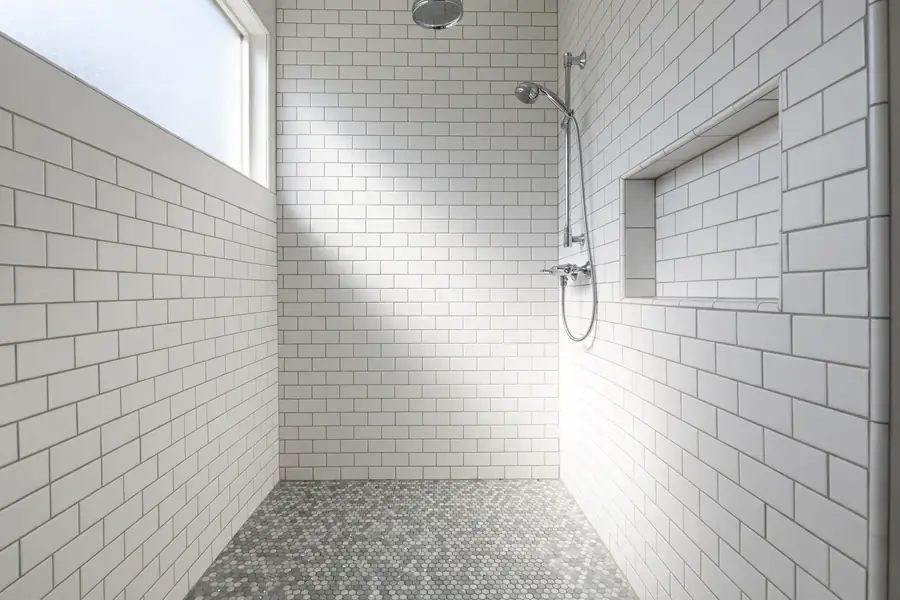
The shower floor follows the slope, so size is a performance choice before it is a style choice. The Tile Council of North America Handbook calls for the shower floor to slope 1/4 inch per foot toward the drain, with the sloped fill under the membrane, according to the Ceramic Tile Foundation summary read October 27, 2026. Mosaic in 1 inch or 2 inch sizes bends over that slope and gives bare feet joints to grip. Large tile cannot follow the slope, so water ponds and tile corners catch toes. A linear drain lets slightly larger tile work, since the floor slopes one way only.
Niches, benches, curbs, and sills need the same thinking as the floor. A niche back in mosaic hides edge cuts. A bench top needs tile that grips when wet, sloped to the drain. Every ledge, seat, sill, and curb must slope toward the drain, following ANSI A108.01 and the TCNA Handbook note quoted in the Ceramic Tile Foundation summary read October 27, 2026. Inside corners and changes of plane get flexible sealant matched to the grout color, not grout, since grout cracks as the house moves.
What tile works around a bathtub?
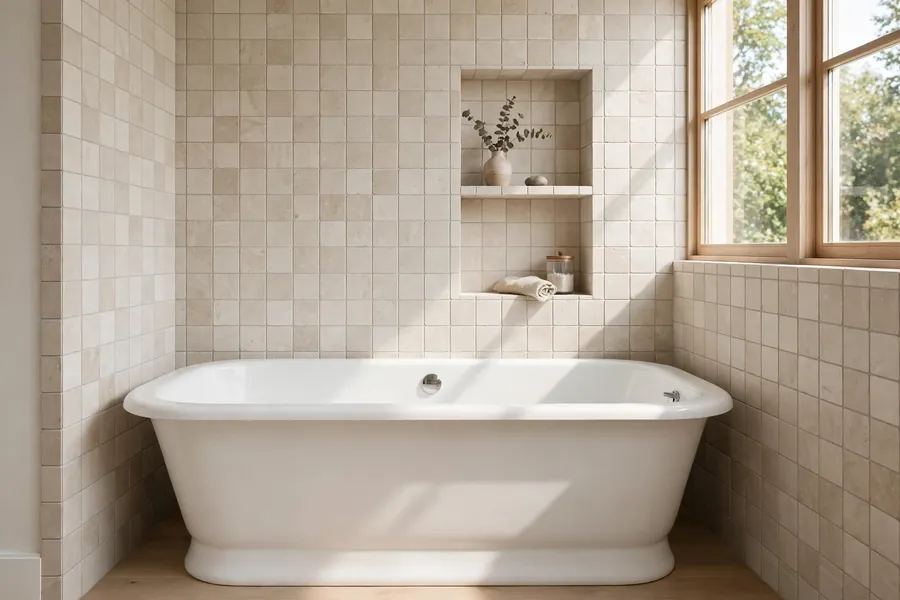
A tub surround needs tile that handles splashing, steam, and overflow, and the wall behind it needs the same waterproofing as a shower wall. Porcelain and glazed ceramic are the safe defaults, in the same tile as the shower walls where tub and shower share a wall. A tub deck, the flat rim around a drop-in tub, needs tile with a sealed edge and grout that tolerates standing water. Tile to the ceiling above a tub with a shower head is not optional styling: steam condenses overhead, and an untiled ceiling grows mold at the corners. A freestanding tub with no shower head needs tile only where water lands, the floor around it and the wall behind the filler, with one course behind the taps.
Should bathroom walls be tiled floor to ceiling?
Full-height tile suits a shower, a wet room, and any wall that takes direct spray, and it suits small rooms, since one surface floor to ceiling removes the break that chops a small room in half. Reserve full height for wet walls; it can feel cold in a large room. A half wall, tile to chair rail height with paint above, suits a powder room and a traditional room; its chair rail needs a finished edge, since a raw cut edge chips. An accent wall works when it is one wall only: the shower wall or the wall behind the vanity. A border tile dates fast when busy. Tile wainscoting suits a traditional bathroom, but it adds many cuts.
What tile belongs at the vanity backsplash?
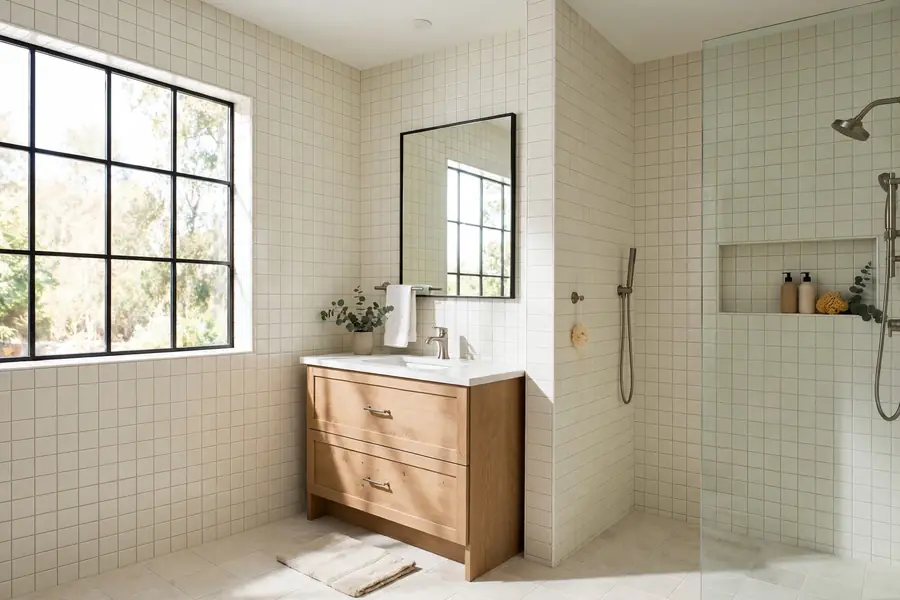
A vanity backsplash stops water where it splashes every day: the wall behind the taps. One course of tile covers the splash zone in most rooms; a full backsplash to the mirror suits high taps and kids. Match the backsplash tile to the wall tile or the floor tile, not to a third pattern. Tell the electrician the tile thickness before outlet boxes are set, so covers sit flush. A side splash stops water where a vanity meets a side wall, and a vessel sink splashes higher than an undermount sink, so its backsplash runs taller.
Can you tile a bathroom ceiling?
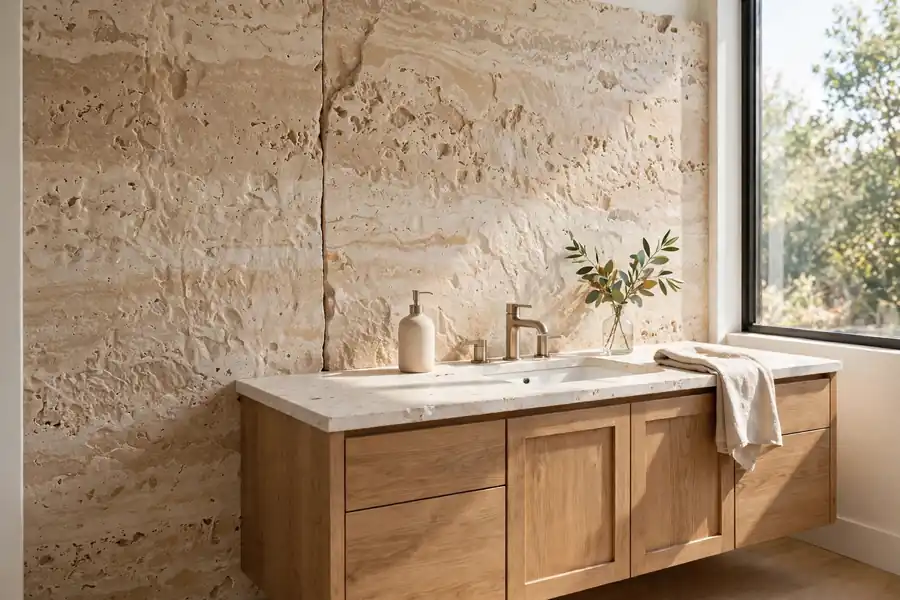
Tile on a ceiling suits a steam shower and a small wet room where the ceiling is part of the wet zone. Everywhere else it is weight and labor for no gain: bath-rated paint handles steam in a ventilated room, and tile overhead adds a falling hazard if the bond ever fails. A tiled ceiling needs small, light tile, a substrate rated for overhead tile, and a mortar the maker lists for ceilings. A steam shower ceiling also needs slope, so condensate runs to the walls instead of dripping on the bather.
Which tile material suits each bathroom surface?
Material decides water behavior, stain behavior, and cleaning rules, so pick the material by surface before picking its color. The table below states each material once.
| Material | Behavior | Best surface | Care |
|---|---|---|---|
| Porcelain | Absorbs 0.5 percent or less, stain resistant | Floors, shower walls and floors | Neutral cleaner, no sealer |
| Glazed ceramic | Glaze resists water, softer body chips | Walls, backsplash, light-use floors | Neutral cleaner |
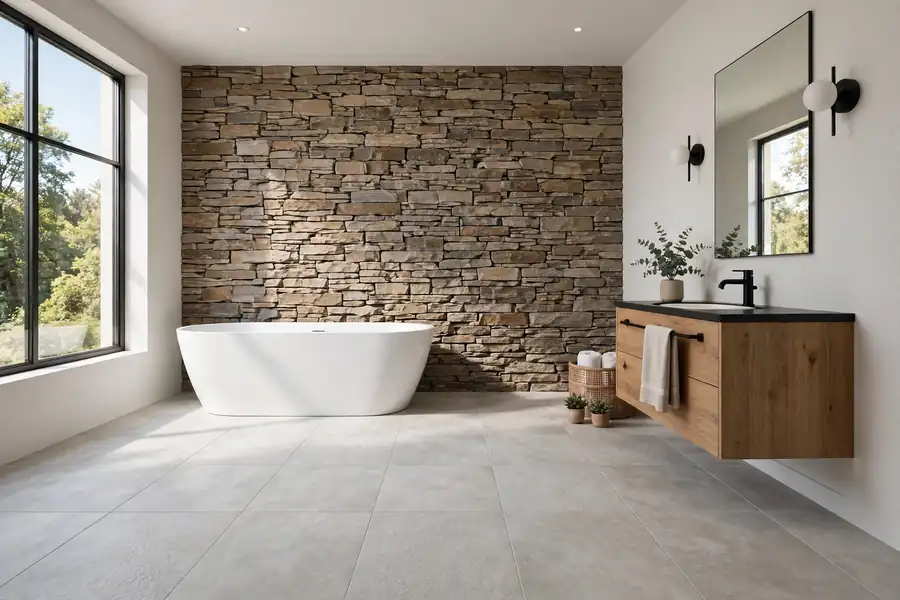
| Marble | Porous, acid sensitive, veins vary | Walls, feature walls, sealed floors | Neutral cleaner only, test sealer |
| Travertine | Porous, pits hold water and soap | Walls, filled and sealed floors | Neutral cleaner only, sealer required |
| Limestone | Soft, porous, acid sensitive | Walls, honed low-traffic floors | Neutral cleaner only, sealer required |
| Granite | Dense, hard, less acid sensitive | Floors, shower walls, tub decks | Neutral cleaner, sealer only if supplier says so |
| Slate | Layered texture, grip varies by finish | Floors with a wet-rated finish | Neutral cleaner, sealer if supplier says so |
| Terrazzo | Cement or resin body with stone chips | Floors, shower walls with slip rating checked | Maker care guide |
| Glass | Waterproof, scratches show | Shower walls, niches, backsplash | White mortar behind pale glass |
| Zellige | Handmade glazed clay, uneven, wall only | Shower walls, vanity walls, niches | Neutral cleaner, test grout color |
| Terracotta and saltillo | Very porous, stains fast unsealed | Sealed floors and walls, rustic rooms | Sealer before and after grout |
| Pebble and river rock | Many joints, strong grip | Shower floors, accent strips | Epoxy grout suits the joint count |
| Wood-look porcelain | Porcelain body, printed wood pattern | Floors, shower walls, wet rooms | Same as porcelain, check wet DCOF |
| Metal and mother-of-pearl | Decorative only, can tarnish or scratch | Accent strips, niche backs, borders | Maker care guide, no floor traffic |
Stone needs one more decision before it is bought: the sealer test. Natural Stone Institute guidance, read via summaries quoting the Institute on October 27, 2026, treats sealers as impregnators that improve stain resistance without making stone stain proof or waterproof; consult the supplier and sealer maker for product and interval. Test the sealer on a spare tile first. Seal porous stone before grouting and again after the grout cures. Many granite countertops need no sealer at all: the supplier, not a habit, decides.
What tile size and pattern should you pick?
Size and pattern change how big the room feels, how much grout you clean, and how well the floor drains. The table below states each format and pattern once.
| Format or pattern | Size and shape | Best use | Cost |
|---|---|---|---|
| Subway | 3 by 6 or 4 by 8 inch rectangle | Shower walls, backsplash | Many joints to clean |
| Penny round | Small round mosaic on a sheet | Shower floors, borders, niches | Heavy grout share |
| Hexagon and honeycomb | Six-sided, 1 inch to 8 inches | Shower floors, feature floors | Cuts at every wall edge |
| Mosaic | Small tile on mesh sheets, 1 or 2 inch | Shower floors, niches, curves | Most grout per square foot |
| Large format | 12 by 24 inch and larger | Floors, shower walls | Needs flat substrate, leveling |
| Plank | Long narrow rectangle, 6 by 24 inch and longer | Floors, stacked shower walls | Lippage risk on long edges |
| Arabesque and fish scale | Curved lantern or scallop shapes | Accent walls, niche backs | High price per square foot |
| Basket weave | Small rectangles woven with squares | Floors, borders, classic rooms | Fussy layout, many cuts |
| Octagon | Eight-sided tile with square dots | Vintage floors | Dots add a second material |
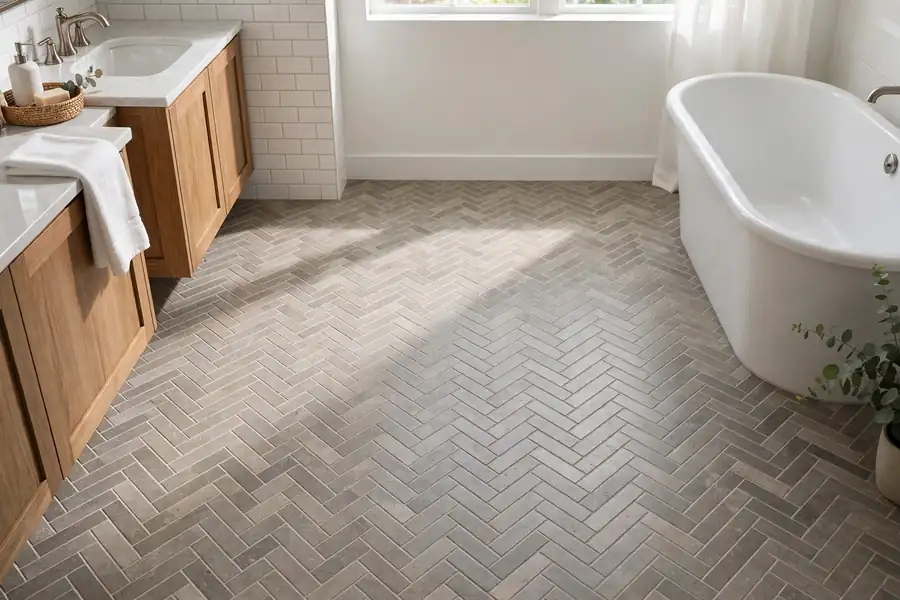
| Herringbone | Rectangles at 45 degrees in a zigzag | Floors, shower walls, feature walls | High waste and labor |
| Wavy and fluted | Rippled or ribbed surface | Accent walls, shower walls | Texture holds soap film |
| Ribbon | Narrow stacked strips | Accent walls, niche sides | Many thin cuts |
| Metro | Longer subway, often beveled | Walls, backsplash | Joints read strong |
A brick offset hides variation, but plank offsets stay at a third or less. A vertical stack draws the eye up, while a horizontal run widens a narrow room. Keep the tile count low: one floor tile, one wall tile, and one accent.
What grout color and joint width should you choose?
Grout color changes the tile more than any other single choice, so decide it with a sample board, not a chart. Contrasting grout shows every uneven joint, so it needs a careful setter. A mid-tone gray, beige, or greige grout defines the tile, hides stains better than white, and shows less soap film than black. Test the grout color wet and against the actual tile.
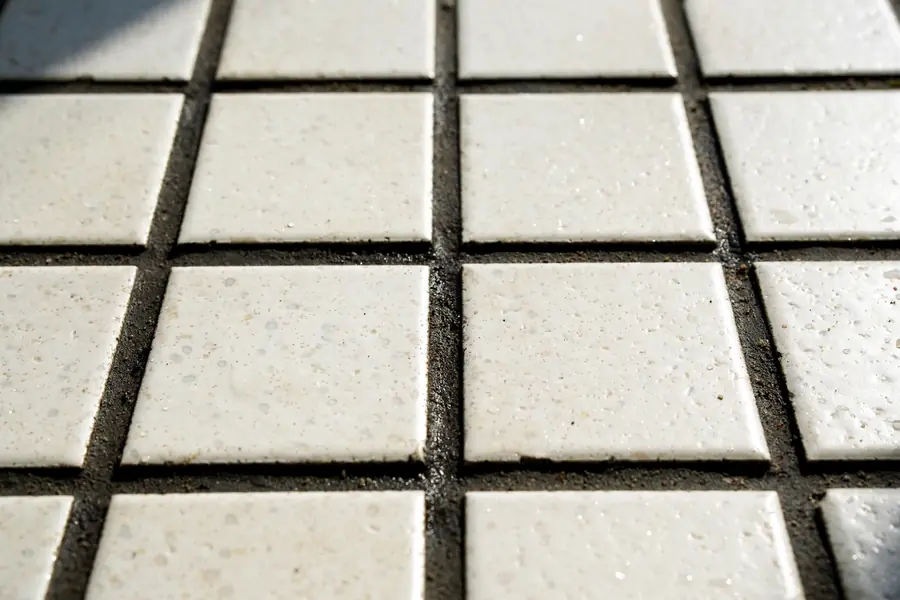
Rectified tile takes joints of 1/8 inch or wider. Standard pressed tile takes 1/8 inch as the common width. Handmade and irregular stone often take 1/4 inch or wider, very irregular stone up to 1/2 inch. Mosaic sheets carry their own joint width, usually 1/8 inch to 3/16 inch. These widths follow grout maker and trade guidance read via summaries on October 27, 2026; the maker guidance for the exact tile governs. Sanded cement grout suits joints 1/8 inch and wider, unsanded suits narrower joints and soft tile, and epoxy grout suits showers, since it cures nonporous. Cement grout is porous, so seal it where the grout maker says so.
What tile colors work in a bathroom?
Judge a tile color wet, under the room's own light, and next to its grout. White stays the safest base, but white grout with white tile shows stains first, so pair white tile with a mid-tone grout. Black suits floors and feature walls with good lighting, not every surface of a windowless room. Black and white together, in checkerboard or hex patterns, reads classic, so the rest of the room stays plain. Gray, from warm greige to cool charcoal, hides water spots better than white and shows less soap film than black. Beige, cream, tan, and taupe warm a room and pair with wood vanities and brass better than cool gray does.
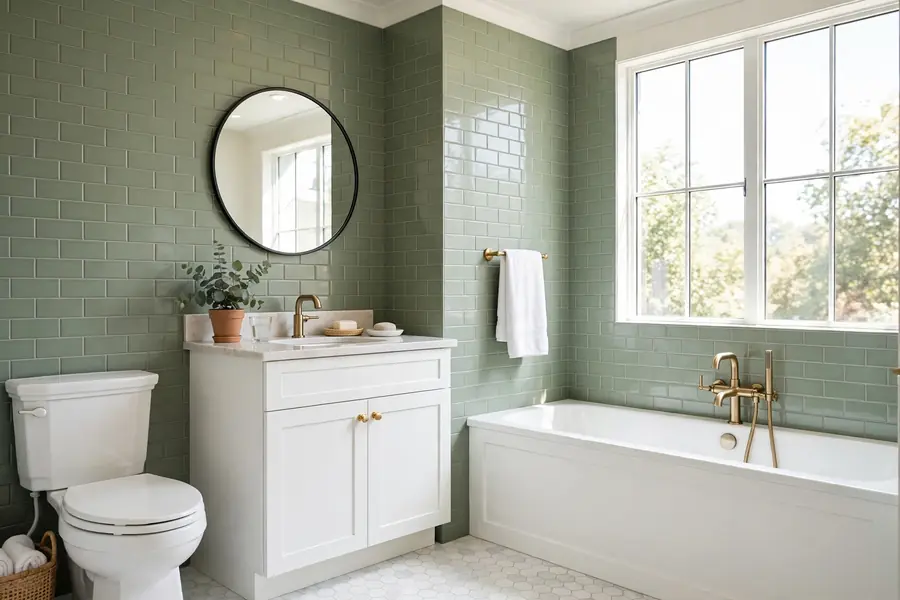
Blue runs from pale powder blue to deep navy, and blue subway tile with white grout suits nearly every style. Green runs from soft sage to deep emerald: sage reads quiet with warm wood, emerald reads bold and needs strong light. Teal, aqua, and turquoise suit coastal and retro rooms; keep them to one wall. Vintage pink suits a room decorated around it, while new blush pink suits a powder room accent wall. Yellow warms a dim room, but strong yellow on every wall tires fast, so use it on the floor or one wall. Red belongs in small doses, a border or a niche. Purple is rare and reads as a deliberate accent only, so keep it to a feature strip. Earth tones suit rustic, Mediterranean, and spa rooms, and hide water spots well. Neutrals mixed with texture rather than color suit a room that must last through several decor changes. Two-tone combinations work when the darker tone sits low and the lighter tone sits high. A colorful room works when one color leads: pick the lead tile first, then choose every other tile to sit quieter.
Which tile style fits the bathroom you want?
Style is a set of tile decisions made together. The table below states each style once.
| Style | Tile choices that carry it | What breaks it |
|---|---|---|
| Modern | Large format porcelain, matte, stacked, matched grout | Busy patterns |
| Farmhouse | Subway, penny floor, wood-look plank, warm neutrals | Glossy tile against wood |
| Modern farmhouse | White subway, black hexagon floor, matte black trim | Too many rustic textures |
| Coastal and beach house | Pale blue glass, sand tones, pebble floor | Dark heavy tile |
| Vintage and retro | Hexagon or penny floors, subway walls, checkerboard | New tile, no patina |
| 1920s and Victorian | Basket weave, octagon and dot, marble borders | Large format tile |
| Mid-century | Square tile, bold color blocks, terrazzo look | Ornate patterns |
| Timeless and classic | White subway, marble-look porcelain, hexagon floor | Trend color everywhere |
| Traditional | Marble, subway, chair rail tile, framed panels | No edge detail |
| Contemporary | Large slabs, book-matched veining, minimal joints | Visible grout grids |
| Rustic | Slate, terracotta, tumbled stone, earth tones | Polished tile |
| Spa-like | Large format stone look, warm neutrals, matte | High gloss, strong contrast |
| Luxury | Marble or calacatta porcelain, full-height walls | Cheap-look grout, visible lippage |
| Mediterranean, Spanish, and Mexican | Terracotta, saltillo, patterned cement look | Cool gray tile |
| Moroccan | Zellige, star and cross patterns, bold color | Pattern on every surface |
| Scandinavian | Pale wood look, white subway, soft gray, matte | Dark tile, busy pattern |
| Art deco | Black and white geometry, fan shapes, brass trim | Muted matte, no contrast |
| Country and cottage | Beadboard-look tile, soft colors, penny floors | Large cold slabs |
Which bathroom tile ideas work in a small bathroom?
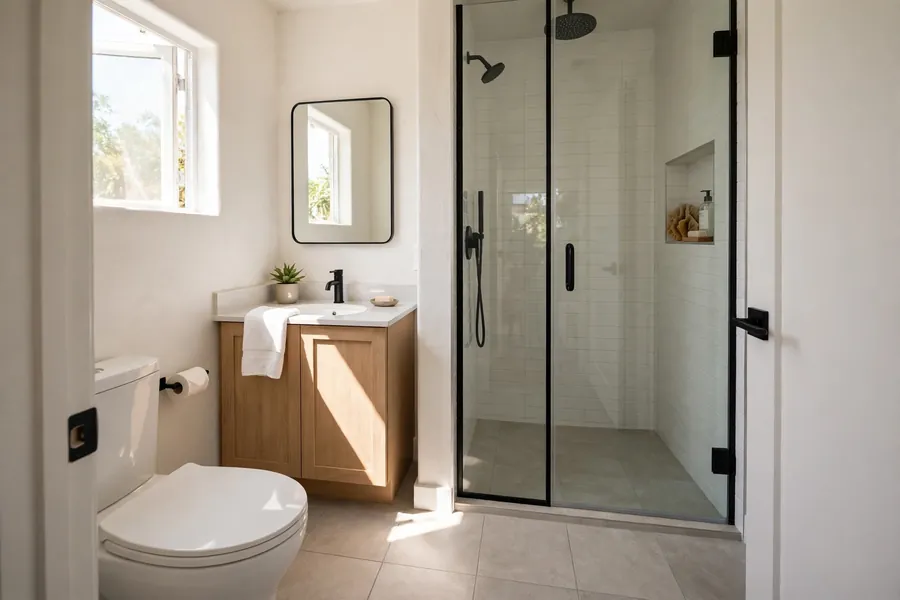
A small bathroom needs fewer tile decisions, made larger. Run one floor tile across the whole floor and into a curbless shower, so the floor reads as one plane. Use large format tile on the floor, 12 by 24 inch where the room allows it, and the same tile on the walls. Stack wall tile vertically, and run it to the ceiling in the shower. Limit the room to three tile types at most, and let the accent live in one place, the niche or the floor border, not both. Light colors help, but a pale room with four patterns still reads busy, while a dark room with one pattern reads calm.
How does tile change for a half bath, guest bath, or kids bath?
A half bath, with no shower, frees tile from wet-room rules and lets pattern lead. The floor still needs a wet DCOF of 0.42 or higher, but the walls can carry bold pattern or a full accent wall. A guest bath sits between the two: porcelain on the floor, glazed ceramic on the shower walls, and one pattern moment. A kids bath needs grip first: mosaic on the shower floor, matte tile on the main floor, and color at the level children see, while upper walls stay plain. A girls bath and a boys bath differ only in color and pattern choice.
What tile suits a primary bathroom?
A primary bathroom earns zoning: different tile marking the shower, the tub, and the vanity as separate areas inside one room. Run the shower tile full height, run a feature wall behind a freestanding tub in stone-look porcelain or zellige, and keep the vanity wall quieter. Larger formats suit larger rooms: 24 by 24 inch floor tile, 12 by 24 inch wall tile, and slab-look porcelain behind the tub. Heated floors pay off here.
What tile fits a 5 by 8 foot bathroom?
A 5 by 8 foot bathroom takes one floor tile, one wall tile, and one accent, with the tub or shower on the end wall. Run the floor in 12 by 24 inch or 12 by 12 inch porcelain, the shower walls in the same tile or a matching subway tile, and spend the accent on the shower floor mosaic or the niche back. Keep the grout color matched to the wall tile. A tub takes tile on the surround walls to the ceiling on the shower end, and the wall opposite the tub stays painted. Keep the floor tile plain near the door.
How do you decorate around old pink, blue, or yellow tile?
Old colored tile is usually in better shape than it looks, so the first decision is whether the tile is sound. Sound tile with solid grout is a candidate to keep: white walls, black or deep green accents, and plain fixtures let the old color read as a deliberate choice. Pink pairs with white, black, and deep green, and fights with peach and beige, which muddy it. Blue pairs with white, gray, and chrome, and fights with warm wood, which turns it green in lamplight. Yellow pairs with white, black, and warm wood, and fights with cool gray, which turns it sallow. Brown pairs with cream, warm white, and brass, and fights with cool white, which makes it look dirty. Regrout before replacing: fresh mid-tone grout can make old tile read twenty years newer.
What changes for a basement, cabin, or commercial bathroom?
A basement bathroom needs a moisture test on the slab before tile. A cabin bathroom needs tile rated for freeze and thaw where the cabin goes unheated. A commercial bathroom needs a slip rating and a maintainable grout: a specification job, covered here only in this paragraph.
Should you paint tile or use peel-and-stick tile instead of replacing it?
Paint, peel-and-stick tile, stencils, and cover-up panels all postpone replacement, and none equals new tile in a wet area. Tile paint, a two-part epoxy coating, holds on walls and backsplashes that get splashed but not soaked, and fails first in showers and on floors, where it peels at edges and chips underfoot. Preparation decides the result: clean, degrease, sand dull, and prime as the maker specifies. Peel-and-stick tile suits a rental backsplash and a dry wall accent, and fails in showers and on floors. A stencil suits a lightly trafficked floor, and wears at the traffic path first. Cover-up panels suit a wall that is flat and dry behind, and trap moisture over a leaking wall. Use these options where replacement is truly out of reach, budget the work as temporary, and replace the tile properly when the coating or stick-on layer starts to lift.
What should you check before tile goes up?
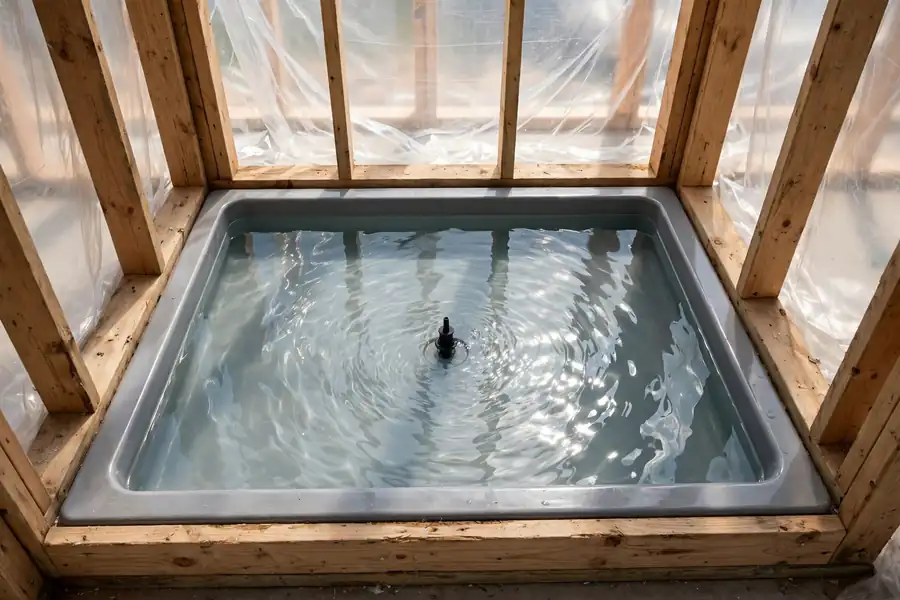
The substrate must be flat within the tolerance the tile maker states, since large format tile shows every dip as lippage. Wet areas need a waterproofing membrane that meets ANSI A118.10, applied as a system. Stone floors need a stiffer floor than ceramic: TCNA Handbook guidance limits deflection to L/720 for natural stone, twice as stiff as the L/360 allowed for ceramic tile, according to the summary read October 27, 2026. Flood test the shower pan for 24 hours before tile goes up, as Schluter calls typical for its system. Where tile meets a wood floor, the transition needs a reducer or threshold, with the tile edge finished by a metal profile or a stone saddle, never a raw cut edge. A licensed tile setter who can name the TCNA method number is worth the call for a shower, stone, or large format tile.
How do you keep tile costs in order?
Waterproofing and the floor tile come first, since both sit under everything else and cost the most to redo. The shower wall tile comes next, since it covers the largest area. The accent tile comes last, since it covers the smallest area and carries the highest price per square foot, so a small accent budget buys a strong effect in the niche. Buy all the tile for one room from one dye lot at one time, and keep spare tiles from the same lot for repairs. Compare quotes by scope, not by tile price alone: two quotes differ in substrate work, waterproofing, and grout type. Expect setting labor to rise with pattern complexity, large format size, and mosaic count. One dated note: searches for tile styles ran from 2020 through 2026, and this guidance is current as of October 2026, with zellige, large format porcelain, warm neutrals, and fluted texture the styles that held.
Start with the floor rating, then the wall tile
The order that holds up is simple: floor tile by wet slip rating, shower tile by water behavior, wall tile by light, grout by cleaning time, and color last. These bathroom tile ideas work because each decision answers the surface it covers, and no tile is asked to do a job its material cannot do. Measure the room, check the DCOF figure and absorption rating, and order from one lot with spares. The room that follows that order reads calm on day one and ten years later.
Quick answers to common questions
What is the best tile for a bathroom floor? Porcelain with a wet DCOF of 0.42 or higher and a matte or textured finish, in 12 by 12 inch or 12 by 24 inch sizes for the main floor and mosaic tile in the shower. Glazed ceramic suits a light-use powder room floor, and natural stone suits a floor only with a sealer and a care plan.
Can you use large tiles in a small bathroom? Yes, large format tile suits a small bathroom floor and walls, since fewer joints read calmer, as long as the substrate is flat and the shower floor still uses mosaic tile to follow the slope. Keep the room to three tile types at most.
Does a shower floor need small tile? Yes, in most showers. Mosaic tile of 2 inches or smaller follows the 1/4 inch per foot slope to the drain and gives bare feet joints to grip. A linear drain lets slightly larger tile work, since the floor slopes one way only.
Do you need to seal bathroom tile? Glazed porcelain and glazed ceramic tile need no sealer on the tile itself. Natural stone, unglazed tile, and cement grout need sealer where the stone supplier or grout maker says so, tested on a spare tile first, since sealers improve stain resistance without making stone stain proof.
Can you paint bathroom tile? Tile paint holds on walls and backsplashes that get splashed but not soaked, and it fails in showers and on floors, where water lifts edges and traffic chips the coating. Treat paint as a temporary fix, prepare the tile exactly as the coating maker specifies, and plan a proper replacement when it starts to lift.