
A slow bathroom sink clears in a fixed order. This is how to unclog bathroom sink drains without chemicals first: pull and clean the stopper, plunge with the overflow sealed, run a hand snake, and only then open the P-trap. Most bathroom sink clogs sit in the stopper or the trap, both within arm's reach.
At a glance
| Symptom | Likely spot | First move |
|---|---|---|
| Drains slowly, basin empties in minutes | Hair and soap scum on the stopper | Remove and clean the stopper |
| Water stands and will not move | Solid plug at the stopper or trap | Bail out water, then plunge with the overflow sealed |
| One basin of a double sink backs up | Clog past the shared drain | Seal the second drain, then plunge the slow basin |
| Gurgling from the drain or a nearby fixture | Air trapped by a partial blockage, or a vent problem | Clear the sink clog, then call a plumber if gurgling stays |
| Rotten egg smell with a slow drain | Biofilm and trapped debris in the trap | Clean the stopper and the trap, refill the trap with water |
| Several fixtures backing up at once | Blockage past the bathroom branch line | Stop and call a plumber |
What clogs a bathroom sink drain?
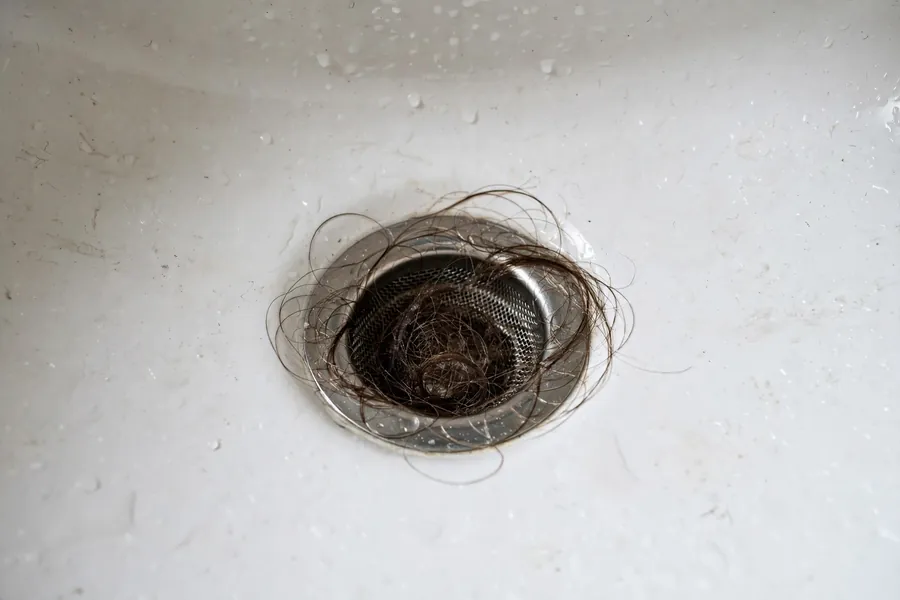
Hair, soap scum, and toothpaste paste form nearly every bathroom sink clog, and the three bind together into a mat that water cannot pass. Hair sheds into the basin every day, soap residue coats it, and toothpaste adds a sticky paste that holds the mat against the stopper and the trap walls. Shaving stubble, cotton swabs, dental floss, and small bits of paper add bulk to the same mat, and grease from skin products coats pipe walls and catches more hair as it passes. A thin mat across the drain opening slows the basin first, then seals it as the mat thickens.
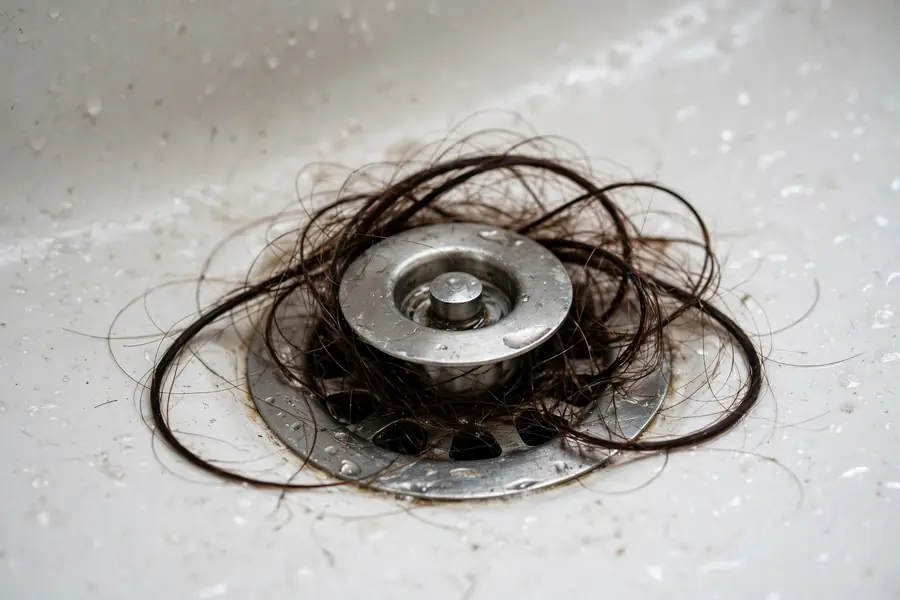
The symptom points to the spot. A basin that drains slowly but still empties holds a partial clog at the stopper or in the first inches of pipe. Standing water points to a solid plug at the stopper, in the trap, or just past it. Gurgling from a tub or toilet when the sink drains points past the bathroom branch line. A rotten egg smell with a slow drain points to biofilm and trapped debris in the trap. Water rising in the second basin of a double sink means the clog sits past the point where the two drains join. Several fixtures backing up at once, or sewage in a low fixture, means the blockage is in a main line, and no sink method below is the right fix for that.
What should you do before you start?
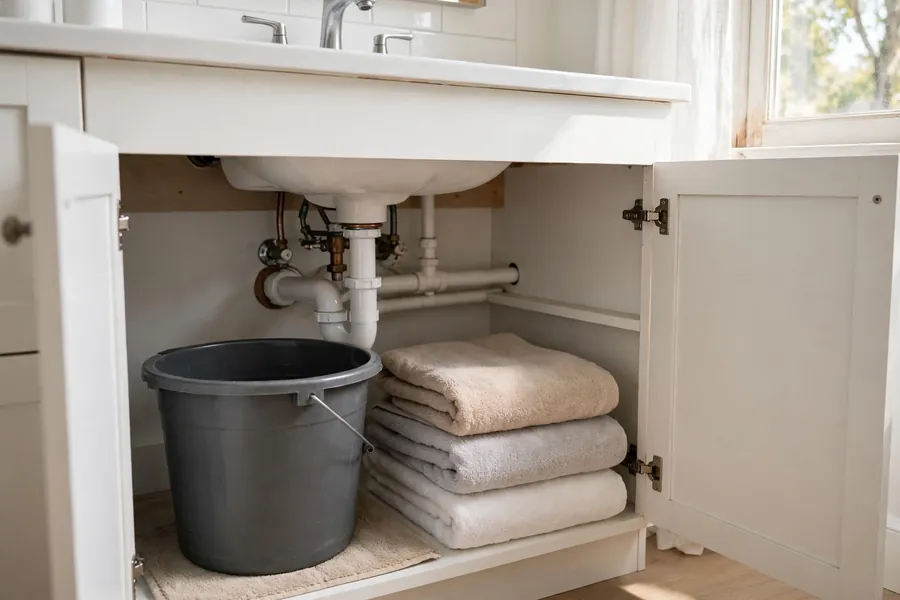
Set up for dirty water and unknown chemicals in the drain. Put on rubber gloves and eye protection, open a window or run the exhaust fan, and lay towels on the cabinet floor with a bucket under the trap. Ask whether anything was poured down the drain already, since a chemical cleaner sitting in standing water changes every step that follows. West Virginia University Extension home cleaning guidance read in full on October 27, 2026 warns that mixing bleach with vinegar or ammonia creates toxic fumes that cause coughing, shortness of breath, and chest pains. US Environmental Protection Agency household hazard guidance read through search excerpts on October 27, 2026 states the rule in full: never mix chlorine bleach with any other household or cleaning product, since poisonous gases can result. If a product was already poured in and the drain is still blocked, do not plunge, since plunging can splash the chemical back up, and do not add anything else. Bail the water out with a cup, keep the room ventilated, and call a plumber, telling the plumber exactly what was poured in. If fumes are strong or anyone has trouble breathing, leave the room, get fresh air, and call Poison Control at 1-800-222-1222.
Which tools clear a bathroom sink clog?
Four tools handle nearly every bathroom sink clog, and each one reaches a different depth. A cup plunger moves water pressure against a plug near the drain opening. A hand snake or a small plastic zip tool reaches past the trap to pull out hair. Adjustable pliers and a bucket handle the trap itself.
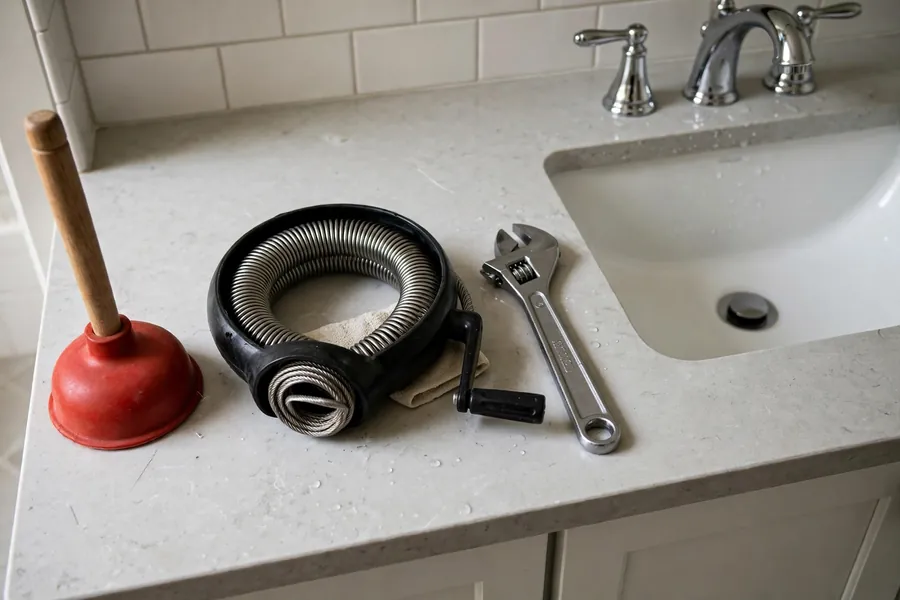
| Tool | What it reaches | When to use it |
|---|---|---|
| Cup plunger, sink size | The drain opening and the first inches of pipe | Slow drain or standing water, overflow sealed |
| Plastic zip tool | Hair at the stopper and drain opening | Hair visible at the opening, or a clog that returns fast |
| Hand snake, 15 to 25 feet | Past the trap and into the wall drain | Plunging failed and the trap is clear |
| Bucket, 2 gallon or larger | The trap and the pipe below it | Before opening any slip nut |
| Adjustable pliers or channel lock pliers | Slip nuts on the trap | Trap removal only, grip gently |
| Towels and rubber gloves | The cabinet floor and your hands | Every step |
| Wet and dry vacuum | Standing water in the basin | A basin too full to bail by cup |
A toilet plunger does not seal a flat sink basin, so use a cup plunger with a flat rim. A power drill attachment snake is too aggressive for the thin trap and wall pipe under a bathroom sink, and a hand snake gives the control the job needs.
How do you remove and clean the stopper?
Pull the stopper first, since the clog is usually wrapped around it. Lift the stopper out of the drain opening and look at its underside and stem. Hair winds around the stem in a dark ring, and soap scum coats the seal, and both come off with gloved fingers or an old toothbrush under running water. Scrub the drain opening with the same brush, then run hot tap water for a full minute with the stopper out and watch the flow. A basin that drains freely with the stopper out had a stopper clog.
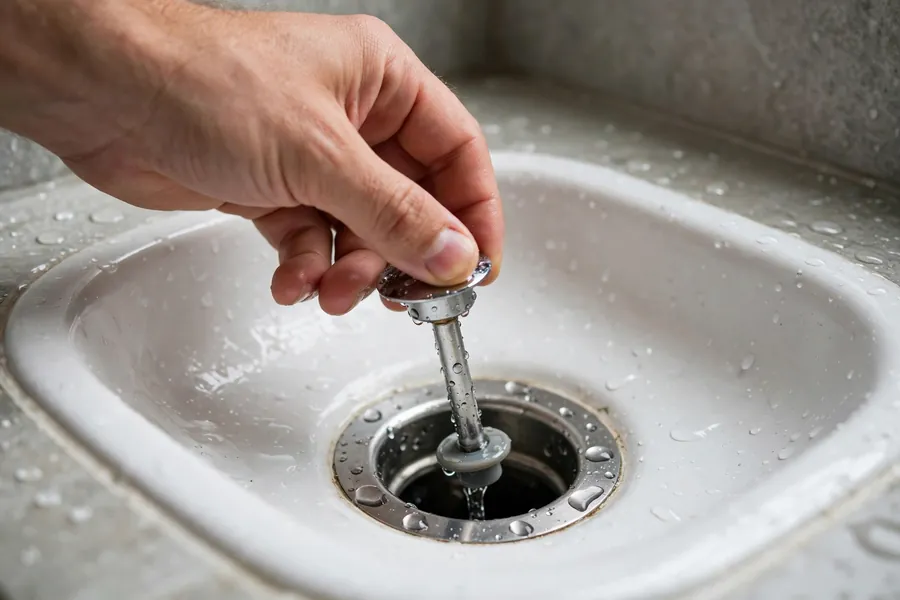
Stopper types come out in different ways, and forcing the wrong one breaks the linkage. A push button stopper, also called a clicker, lifts out with a firm upward pull and a slight twist. A lift rod stopper has a rod behind the faucet that connects to a pivot rod under the sink, and the pivot rod must be unclipped or unscrewed at the retaining nut before the stopper lifts out, setting the clip and nut aside in the basin. A grid strainer has no moving stopper and unscrews from the drain opening with fingers or pliers, with a cloth wrapped around the jaws to protect the finish. A rubber plug stopper pulls straight out. Note the order parts came off, since the lift rod linkage goes back in the same order. Test the stopper with the basin half full, and adjust the clip until the basin holds water and drains fully.
How to unclog bathroom sink drains with a plunger?
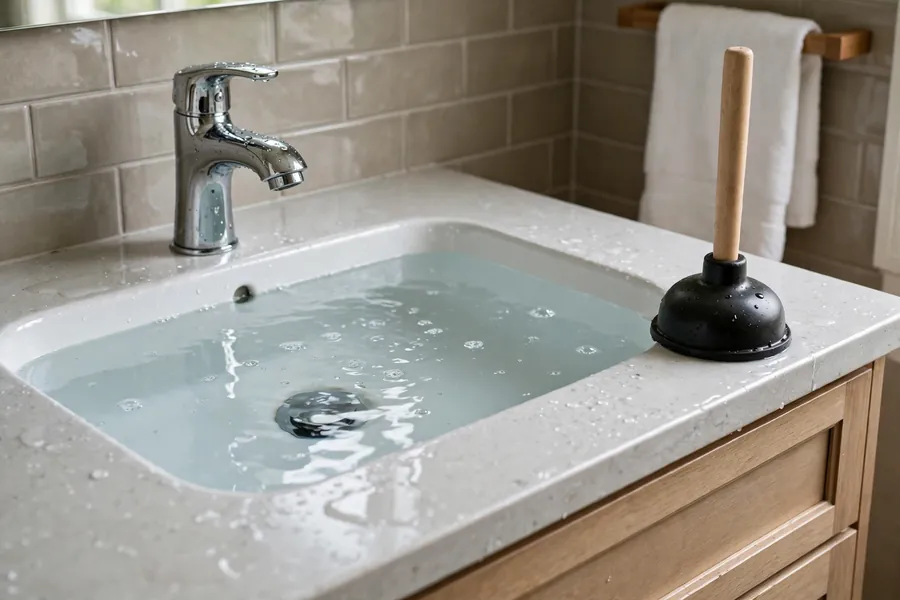
Plunge with the overflow hole sealed, since an open overflow vents the pressure into the room instead of against the clog. A cup plunger needs two or three inches of water in the basin to seal, so add water if the basin is dry and bail water out if it is near the rim. Press a wet cloth firmly over the overflow opening, or tape it closed with duct tape, and hold it in place for the whole attempt. Set the cup over the drain opening, press down to seat the rim flat, and push down and pull up in firm strokes for 15 to 20 seconds without breaking the seal. Lift the cup and watch the water. A sudden swirl and a fast drop means the plug moved.
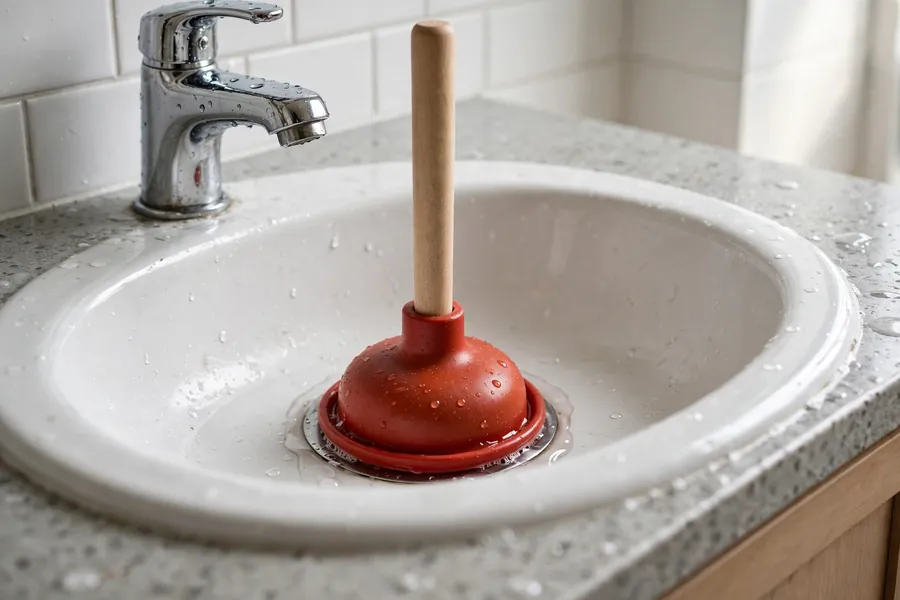
A plunger fails for two fixable reasons. An unsealed overflow bleeds off the pressure, so recheck the cloth before blaming the clog. A cup that rocks on a curved basin bottom never seals, so press the rim down and start the strokes from a compressed cup. If no plunger is in the house, skip this step and move to the snake or the trap.
Does baking soda and vinegar clear a clogged sink?
Baking soda and vinegar clear light buildup and freshen a drain, and they do not clear a solid hair clog. The fizz comes from carbon dioxide gas forming when an acid meets a base, and the bubbles stir loose film on pipe walls without dissolving a mat of hair. No government agency or drain cleaner maker endorses the mixture as a clog remover, and no primary source page verified on October 27, 2026 gave a tested amount or wait time for it, so treat the recipe below as the commonly used home method, not a tested fix. Pour half a cup of baking soda into the drain, follow it with one cup of white vinegar, cover the opening with a cloth, and wait 15 to 30 minutes before flushing with hot tap water for a full minute.
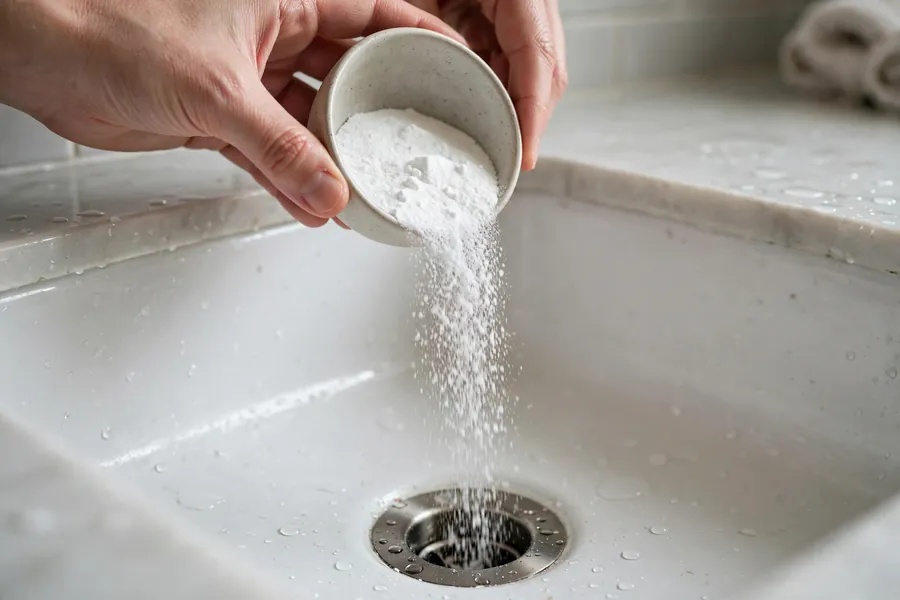
Use the mixture as a maintenance rinse only, never for standing water. Standing water dilutes the mixture before it reaches the clog. Where the basin drains slowly after the stopper is clean, one round of the mixture followed by a hot water flush is a fair test, and a drain that stays slow after that test needs the snake or the trap.
How do you snake a bathroom sink drain?
Feed a hand snake past the trap only after the stopper is out and plunging has failed, since the snake reaches what the plunger cannot. Remove the stopper, feed the cable end into the drain opening, and turn the handle clockwise while pushing gently, letting the cable find its path around bends. Resistance that gives way with steady turning is usually the clog, and the cable should be worked back and forth through that spot three or four times to break the mat apart. Pull the cable out slowly, wiping hair off with a paper towel, and run hot tap water for a full minute. A zip tool works the same way at a shorter reach: push, twist, pull out with the hair on it, then discard it.
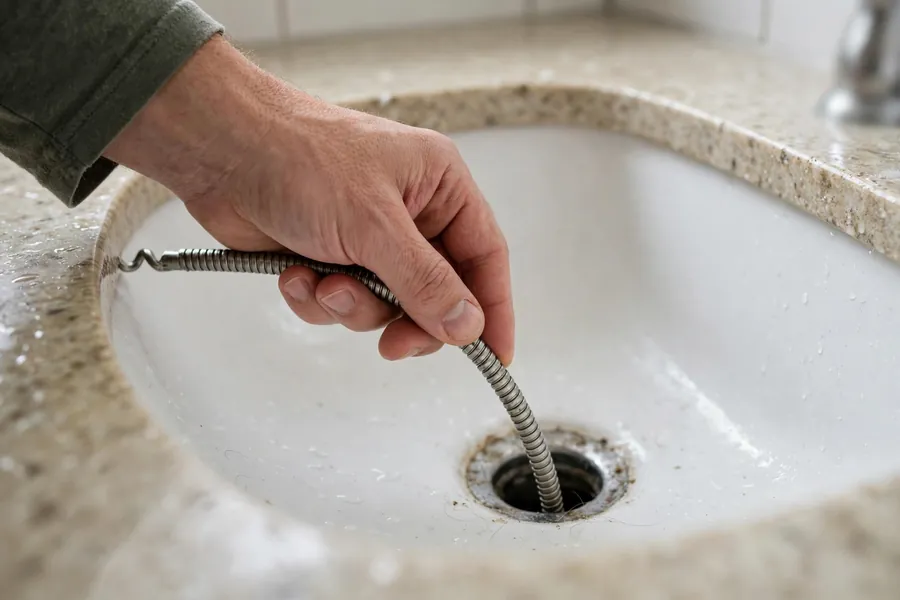
Stop and reassess when the cable will not advance after several gentle tries, when it binds hard and will not turn, or when it has fed more than 15 feet without meeting resistance. Forcing the cable can crack a plastic trap, punch through a corroded joint, or kink the cable inside the pipe. A clog past the wall drain takes a longer snake fed through the trap arm or a cleanout, and that step belongs to a plumber where no cleanout is visible under the sink.
How do you remove and clean the P-trap?
Open the trap when the clog sits in the bend itself, since the trap is the first place hair and debris settle after the stopper. The P-trap is the U shaped bend under the sink, and the water held in its curve forms a seal that blocks sewer gas from rising into the room. Plumbing code summaries read on October 27, 2026 state the trap seal must measure 2 to 4 inches deep, and the vent stack through the roof keeps pressure even so the seal is not siphoned out. Run water after reassembly so the bend refills.
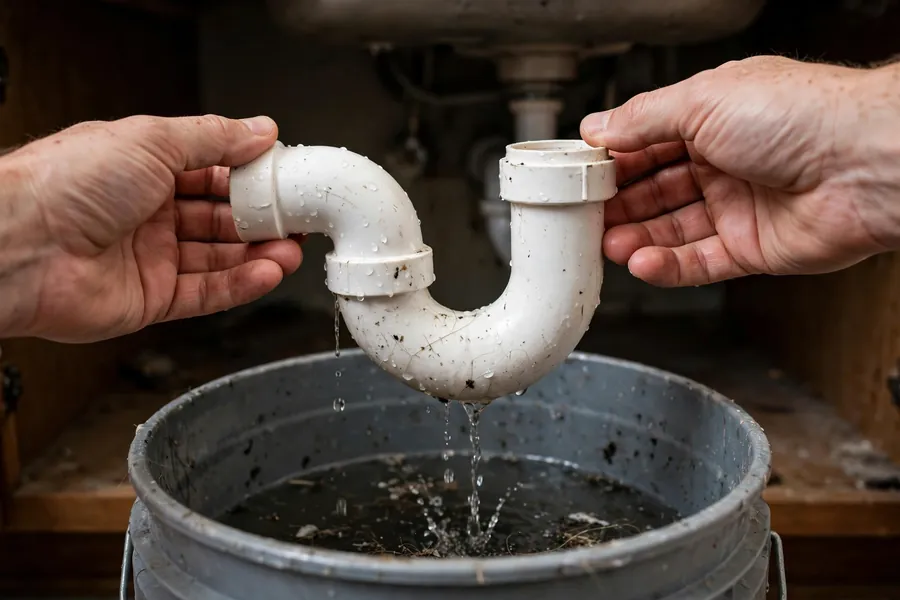
Set the bucket directly under the trap, lay towels on the cabinet floor, and put on gloves. Loosen the two slip nuts at each end of the trap by hand, turning counterclockwise, and use pliers only if a nut will not move, gripping gently so a plastic nut does not crack. Support the trap as the second nut loosens, and lower it into the bucket. Empty the trap, rinse it in the bucket, and push a bottle brush or a zip tool through each opening to clear the coating on the walls. Clear any hair inside the tailpiece above the trap and the trap arm with gloved fingers. Check the slip nut washers, since a flattened or cracked washer leaks after reassembly and needs a matching replacement before the trap goes back. Reassemble in the same order, hand tighten both slip nuts, then give each a quarter turn with pliers, no more. Run water for a full minute, hold a dry paper towel under each joint, and tighten a weeping joint an eighth of a turn at a time until the towel stays dry. A joint that keeps leaking after two small adjustments has a bad washer or a misaligned pipe.
How do you unclog a bathroom sink full of standing water?
Bail first, then plunge, then open the trap, in that order. Bail the basin down to two or three inches, since a full basin overflows the moment the plug moves. Remove the stopper and check it for the hair mat, then plunge with the overflow sealed. A basin that drops fast still needs a hot water flush for a full minute to carry the broken clog past the trap. A basin that stays full after two rounds of plunging holds a plug at or past the trap, and the trap comes off next. A wet and dry vacuum clears a basin faster than a cup where one is available. Never add a chemical cleaner to standing water.
How do you unclog a double bathroom sink?
Seal the second drain before plunging the slow one, since pressure escapes through the open basin. A double sink shares one drain line past the point where the two tailpieces join, and plunging one basin with the other open pushes water up into the second basin instead of against the clog. Press a wet cloth firmly over the second drain and hold it, or weigh a stopper down with a full cup, then plunge the slow basin with its overflow sealed. Check the second basin for standing water first, since water rising there while the first basin drains slowly confirms the clog sits past the join. Where both basins stand full, bail both down to two or three inches, seal the basin that drains better, and plunge the worse one. With two traps, open only the one under the slow basin. Tell a plumber both basins are affected, since a shared line clog changes the tool the plumber brings.
Why does a bathroom sink drain slowly after plunging?
A drain that improves but stays slow holds a partial clog or a coating the plunger loosened without removing. Hair on the stopper linkage below the drain opening survives plunging, since the plunger moves water past it without pulling it out, and the stopper must come out to check it. Biofilm, the slick coating of soap, toothpaste, and bacteria on pipe walls, narrows the pipe and catches new hair, and it comes off only when the trap is opened and brushed or when a snake scrapes the wall. Sediment in the trap narrows the channel a full basin overwhelms. A blocked overflow channel slows the basin in a different way, since the overflow lets air into the drain as water leaves; clean it by running water into the overflow opening with the stopper out and scrubbing the opening with a bottle brush. Slow draining plus gurgling at other fixtures points to a vent problem, and a vent blocked on the roof needs a plumber.
Are chemical drain cleaners safe for a bathroom sink?
Chemical drain cleaners are a last resort for a bathroom sink, and the mechanical methods above clear the same clogs without their risks. Safety data sheet excerpts read through search results on October 27, 2026 classify a typical granular drain cleaner as corrosive to metals, a cause of serious eye damage, and a cause of severe skin burns, with gloves, eye protection, and locked storage required on the label. Plumber guidance summaries read on October 27, 2026 warn that the heat can soften and warp PVC pipe and that repeated use corrodes metal pipe. The US Environmental Protection Agency advises avoiding chemical drain openers for a clogged drain on a septic system, since pouring toxins down the drain can kill the organisms that digest and treat household waste. A cleaner that fails to clear the clog sits in the pipe and keeps working on the pipe, and the next person to open the trap meets caustic liquid.
Bleach has no action on a hair mat, so pouring it into a slow drain only adds a chemical hazard. Enzyme cleaners are the gentler chemical option, and they work slowly on organic film over hours or overnight, which suits a slow drain as maintenance, not a blocked basin that needs to drain now. Read the label before use, and never use two products in the same drain in one session. If a chemical cleaner was already poured in and the drain is still blocked, do not plunge, do not snake, and do not open the trap. Call a plumber and name the product poured in, the amount, and the time, so the plumber arrives with the right protection.
What should you never do to a clogged bathroom sink?
Six mistakes turn a simple clog into a repair. Boiling water cracks porcelain and stresses old joints, so use hot tap water only. Forcing a snake cracks plastic traps and punches corroded joints. Overtightening slip nuts cracks the nut or splits the washer, and a leak follows. Mixing chemicals creates toxic fumes. A toilet plunger cannot seal a sink basin. Grease, wipes, cotton swabs, and dental floss belong in the trash, since each one adds to the mat or snags in the trap.
| Mistake | What it damages | What to do instead |
|---|---|---|
| Boiling water in a porcelain basin | Porcelain and old joints, heat shock cracks | Hot tap water, full flow, one minute |
| Forcing a hand snake | Plastic trap, corroded joints, kinked cable | Gentle turning, stop at hard binding |
| Overtightening slip nuts | Cracked nut, split washer, slow leak | Hand tight plus a quarter turn |
| Mixing bleach, vinegar, ammonia, or drain cleaners | Lungs and eyes, toxic fumes | One product at a time, rinse between, ventilate |
| Using a toilet plunger on a sink | Nothing, it only fails to seal | Cup plunger with a flat rim |
| Pouring grease or flushing wipes | Pipe walls and the trap, new clogs form faster | Trash can for grease, wipes, swabs, and floss |
When should you call a plumber?
Call a plumber when the clog is past the sink, when water is unsafe, or when a joint will not seal. Several fixtures backing up at once, sewage in a low fixture, or a strong sewage smell that stays after the trap is cleaned all point past the bathroom branch line. A leak that continues after the trap is reassembled with a sound washer points to a misaligned or cracked pipe, and tightening further only cracks the nut. No cleanout and no access to the wall drain means the snake cannot reach the clog from under the sink, and a plumber feeds a longer cable from a cleanout or the roof vent. A chemical cleaner already in the drain means the plumber needs to know the product name before arriving. Galvanized or cast iron pipe, or a trap that crumbles when touched, needs a plumber before a homeowner opens it, since brittle pipe breaks under hand pressure. Describe the symptom, steps tried, and pipe material when booking.
How much does it cost to unclog a bathroom sink?
Most sink clogs cost nothing beyond tools already in the house, and the price rises with the depth of the clog and the state of the pipes. A stopper clean, a plunge, and a trap removal need only gloves, a bucket, and a plunger or snake, and those tools serve every future clog too. A plumber visit for one accessible sink clog sits at the low end of plumbing work, while a clog past the wall, a leak repair, or a pipe replacement sits higher because the job opens walls or replaces parts. What changes the price is access, pipe material, time of day, and whether the visit finds a second problem, such as a corroded trap arm or a failed washer. No national price holds, since rates vary by region, and the only firm figure is the one quoted before work starts. Ask for the visit fee, the rate after the first hour, and whether parts are included, and get the quote in writing for any work past the trap.
| Route | Typical depth of clog | Price band |
|---|---|---|
| Stopper clean and plunge, DIY | Stopper and drain opening | Tools on hand, no visit fee |
| Hand snake, DIY | Past the trap, before the wall | A hand snake bought once, reused |
| Trap removal, DIY | The trap bend itself | A replacement washer if the old one is cracked |
| Plumber visit, one sink | Past the trap or no cleanout access | Low end of plumbing visit fees, quote first |
| Plumber visit, wall or main line | Past the bathroom branch | Higher, wall access or longer cable work |
How do you keep a bathroom sink from clogging again?
Stop hair before it reaches the drain. A mesh hair catcher over the drain opening catches most shed hair, and it empties into the trash after each use, which takes seconds and removes the main clog material. Pull the stopper and scrub it every month, since a monthly scrub removes the film before it binds into a mat. Run hot tap water for a full minute after heavy use, such as after shaving, so soap and paste flush past the trap instead of coating it. Keep grease, thick creams, wipes, cotton swabs, dental floss, and contact lenses out of the drain, since each one either coats the pipe or snags and starts a mat. A monthly enzyme cleaner treatment suits a drain that flows well, used by the label directions overnight. A drain that slows every few weeks despite a catcher and monthly cleaning needs a plumber check.
What about clogs in other bathroom fixtures?
Each fixture takes its own method. A kitchen sink clog is usually grease and food, and it needs a different approach, since a garbage disposal and a dishwasher connection change the steps and the trap layout. A toilet clog takes a flange plunger made for the bowl shape, never a sink plunger, and a toilet that backs up when the sink drains points to a shared line. A tub or shower drain clog is usually hair past a strainer, and it takes a strainer lift and a zip tool rather than trap removal, since tub traps are rarely accessible. A sink that clogs after vomiting needs the basin bailed, the stopper cleaned, and the trap checked for solid matter, with gloves on throughout.
Start at the stopper, not the bottle
The fastest fix is the most direct one: pull the stopper, seal the overflow, plunge, snake, and open the trap, with gloves on and no chemicals in the drain. That sequence is how to unclog bathroom sink drains of hair, soap scum, and toothpaste without risking pipes, lungs, or a second visit for damage done by the first fix. The label on any product in hand wins over any general rule.
Quick answers to common questions
Can baking soda and vinegar clear a hair clog?
No. The mixture stirs loose film and freshens a drain that already flows, and it does not dissolve a mat of hair. A hair clog needs the stopper pulled, a snake, or the trap opened.
Is it safe to plunge a sink after pouring in a chemical cleaner?
No. Plunging can splash caustic liquid out of the basin and onto skin and eyes. Bail the water out, ventilate the room, and call a plumber, naming the product that was poured in.
Why does a bathroom sink smell after the clog clears?
A stale trap seal or biofilm left on the trap walls causes the smell. Run water for a full minute to refill the trap, and clean the stopper and the overflow opening, since film in both places holds odor after the clog is gone.
How often should a bathroom sink stopper be cleaned?
Once a month suits most bathrooms. Households with long hair or heavy product use may need a stopper scrub every two weeks, and a mesh hair catcher stretches the interval.
Will a chemical drain cleaner damage plastic pipes?
It can. The heat from caustic cleaners can soften and warp PVC, and repeated use corrodes metal pipe and roughens the inside so clogs form faster. Mechanical methods clear the same clogs without that risk.