
Mold in bathroom corners is a moisture report, not a cleaning failure. Growth appears where water sits long enough for spores to settle and feed, which in a bathroom means a fan that runs too little, grout that stays wet, a slow leak, or a ceiling that collects steam. The fix has two parts that must happen together: remove the visible growth, and take away the water that fed it. The United States Environmental Protection Agency states the rule plainly in its guide "A Brief Guide to Mold, Moisture and Your Home," read October 27, 2026: clean up the mold promptly and fix the water problem, because mold spores will not grow if moisture is not present.
At a glance
| Situation | First move | Stop and get help |
|---|---|---|
| Spots under about 10 square feet on a hard surface | Scrub with detergent and water, dry fully | Growth covers more than 10 square feet |
| Stained grout that stays dark after scrubbing | Scrub, dry, seal cement grout once clean | Grout crumbles or tiles feel loose |
| Pink or orange film on shower surfaces | Scrub, dry the surface | Film on drywall or a ceiling |
| Musty smell, no visible growth | Check the fan, the trap, behind the toilet | Smell stays after cleaning and drying |
| Soft drywall, warped trim, or mushroom-like growth | Do not disturb it | Any soft or warped material |
| Water damage from sewage or a flooded floor | Do not clean it yourself | Any sewage contamination |
What feeds mold in a bathroom?
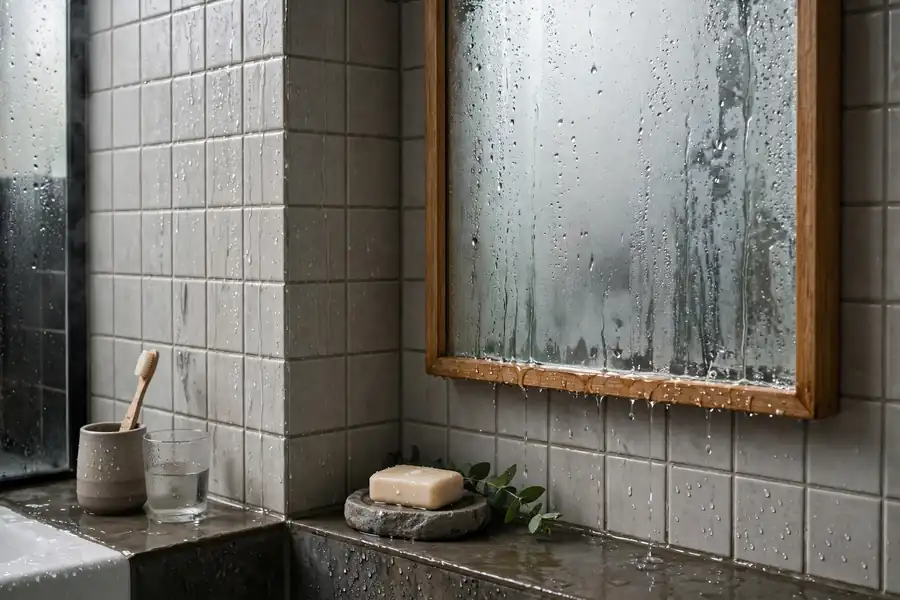
Mold needs four things, and a bathroom supplies three of them without trying. Spores float in indoor and outdoor air, the room runs warm, and soap film, skin cells, dust, and drywall paper all serve as food. The one factor a homeowner controls is water. The EPA states that mold may begin growing indoors when spores land on surfaces that are wet, and that none of the many types of mold will grow without water or moisture. Drying a wet area within 24 to 48 hours usually prevents growth from starting. Control the water and the growth stops.
How can you tell mold from mildew?
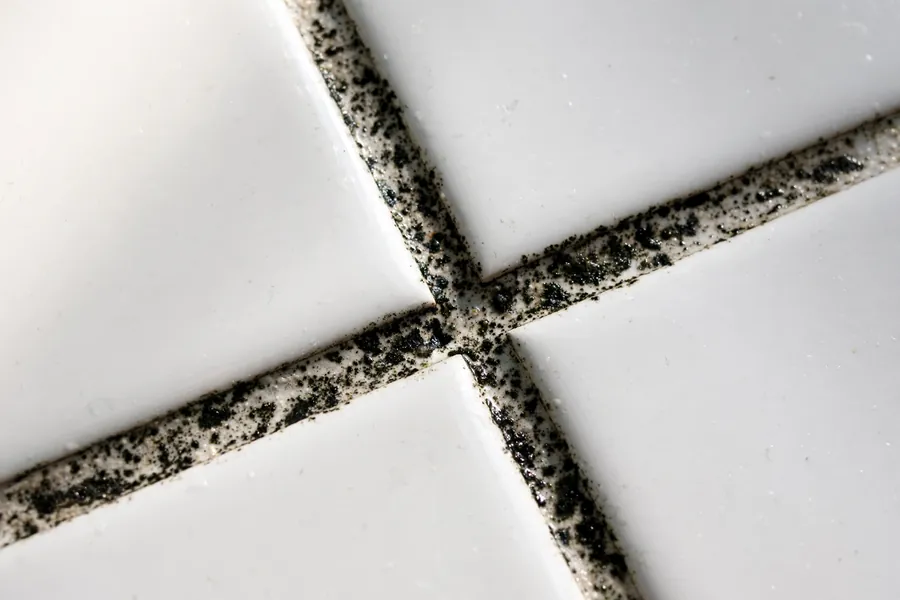
Mildew sits on the surface and mold goes deeper, and the difference decides the method. Mildew shows as a flat, powdery surface film on shower walls, grout lines, and caulk, and it wipes off a hard surface with a cloth and a mild cleaner. Mold shows as fuzzy or slimy patches, and it roots into grout pores, caulk, drywall paper, and wood. Surface mildew on tile usually clears with one scrub and a dry surface. Growth that returns to the same grout line within days, or that stains drywall, has depth, and scrubbing the face of it leaves the roots in place. Clean the spot, dry the area fully, and watch it for two weeks with the fan running. A surface film that stays away was mildew. A patch that returns to the same place is mold with a water supply behind it.
What do mold colors mean?
Color describes what the growth looks like, and nothing more. No color identifies a species, and no color proves a patch is harmless or dangerous. Only laboratory testing can name a species.
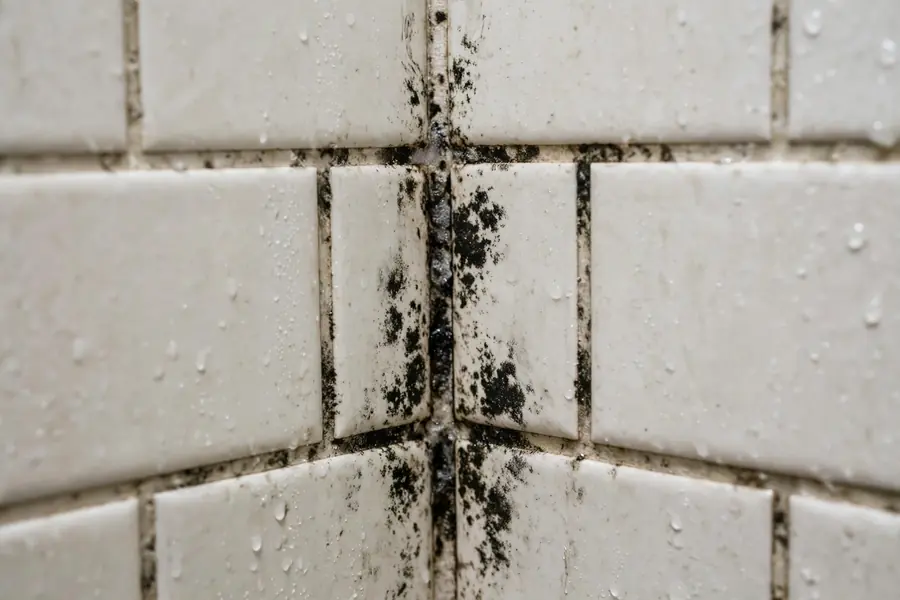
| Color or form | What it usually is | Move |
|---|---|---|
| Black or dark green spots | Mold on grout, caulk, drywall, or silicone | Scrub, replace stained caulk, check for a leak |
| Pink or salmon film | Surface film on soap residue, not a fungus | Scrub, rinse, dry |
| Orange or yellow slime | Bacterial film, or iron staining in the water | Scrub and dry; surviving stains suggest minerals |
| White or light gray powder | Mildew or mineral deposits | Wipe off, dry, watch for return |
| Green patches | Mold on damp grout and window frames | Scrub, dry, find the water source |
| Brown ceiling spots | Water staining, with growth possible under the paint | Find the leak above first |
| Red patches | Growth, species unknown from color alone | Remove and dry |
| Blue or blue green patches | Mold on damp wood or grout | Remove, dry, check wood for softness |
| Fuzzy or mushroom-like growth | Advanced growth on wet wood or drywall | Do not disturb it, call a professional |
Pink film misleads twice: it looks like mold and behaves like a cleaning problem. North Dakota State University Extension identifies the pink slime found in showers as Serratia marcescens, a bacterium that grows where soap residue and fatty substances collect, and it comes off with a scrub and a cleaner that contains bleach. A patch on drywall or a ceiling points to a moisture problem behind the surface.
What does mold look and smell like?
Mold announces itself in two ways, and either one alone is enough to act. Visually, it shows as spots, blotches, or fuzzy patches that may be flat or raised, in any of the colors in the table above. Early growth looks like dirt that will not wipe off, a gray shadow in a grout line, or a dark edge on caulk. Older growth looks fuzzy, slimy, or crusty. By smell, it gives a musty, earthy odor that strengthens when the room is closed up and weakens when a window opens. A smell with no visible patch still counts: growth hides behind drywall, under wallpaper, on the back of a vanity, inside a fan housing, and on the top side of ceiling tiles. A smell that survives a full clean and a dry room means the source is hidden, and opening walls to hunt for it belongs to a professional.
What causes mold to keep growing?
Five causes cover nearly every bathroom case, and each one leaves its own evidence. A fan that is too small, switched off early, or vented into an attic instead of outside leaves steam in the room after every shower. A slow leak at a supply line, a trap, or a toilet base feeds one corner without showing a puddle. Cracked grout lets water behind tile, and a caulk bead pulled away from a tub edge lets water into the wall with every bath. Condensation on a window, an outside wall, or a cold water pipe wets the same strip every morning. Habits add the rest: bunched towels, a folded wet curtain, and mats that never dry. A patch that returns to the same place after a good clean is reporting one of these five.
Where does mold hide in a bathroom?
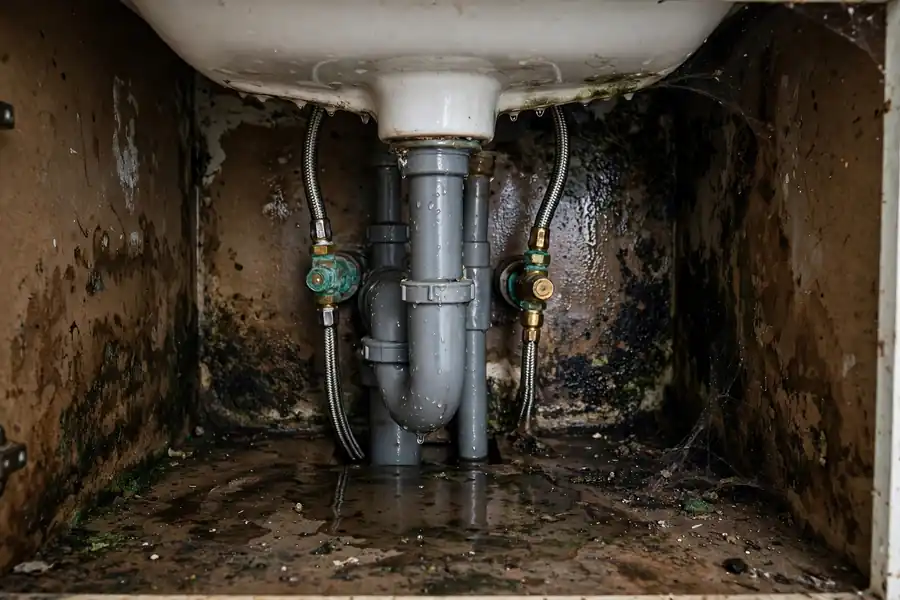
Growth favors the places that stay wet longest and get cleaned least. Check each place with dry hands and a flashlight, and press gently on drywall and trim: soft or crumbling material means water has been there a while.
| Place | Why it stays wet |
|---|---|
| Ceiling | Steam collects near the fan and above the shower |
| Walls and drywall | Leaks from above, condensation on outside walls |
| Grout lines | Pores hold water after the tile face dries |
| Caulk beads | Water sits underneath once the seal breaks |
| Shower | Grout, curb, door track, behind a loose tile |
| Tub | Under the rim, behind a front panel |
| Sink drain and overflow | Water and toothpaste sit in the channel |
| Vent and exhaust fan | Steam never fully leaves the grille and housing |
| Fan duct and attic | A duct ending in an attic grows mold there |
| Floors | Under a loose tile, under linoleum, along baseboards |
| Windows | Condensation pools on sills and in tracks |
| Cabinets | Slow drip under a sink runs for months |
| Wallpaper | Growth hides on the back side |
| Popcorn ceiling | Texture holds growth and cannot be scrubbed flat |
Is mold in a bathroom dangerous?
Whether mold affects health runs through who is exposed rather than what color the patch is. The EPA states that molds produce allergens, irritants, and in some cases potentially toxic substances, and that inhaling or touching mold or mold spores may cause allergic reactions in sensitive individuals, with hay fever type symptoms. Molds can also trigger asthma attacks in people with asthma who are allergic to mold, and mold exposure can irritate the eyes, skin, nose, throat, and lungs of both allergic and non-allergic people. The CDC adds that people with asthma, allergies, chronic lung conditions, or weakened immune systems face higher risk, and advises anyone with symptoms to see a health care provider. No color or smell can prove a patch is safe. Anyone with breathing trouble, a chronic lung condition, a weakened immune system, or symptoms that appear in the room should stay out of the cleanup and see a clinician. Children should not take part in mold cleanup.
How do you test for mold?
Testing rarely changes what a homeowner should do, and the EPA says so directly. In most cases, when visible growth is present, sampling is unnecessary, because no federal limits exist for mold or mold spores, so a sample cannot prove a building passes or fails a standard. A visual check plus a moisture check answers what matters: patch size, dampness, and whether the water source is still active. A moisture or humidity meter, priced by the EPA at roughly 10 to 50 dollars, shows whether a wall or floor is still damp. Home test kits grow whatever lands on a dish and name no species. Laboratory testing can name a species, but a species name does not change the cleanup for a small visible patch: removal plus moisture control. Testing earns its cost in three narrow cases: a real estate dispute, a health concern a clinician wants documented, or a remediation job that needs proof the area is clean afterward.
What removes mold in bathroom grout, caulk, and tile?
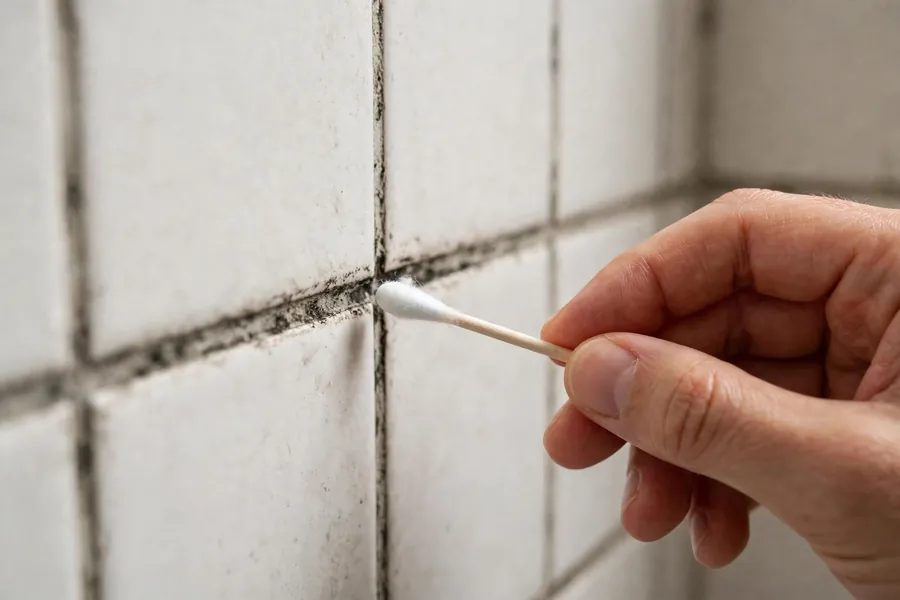
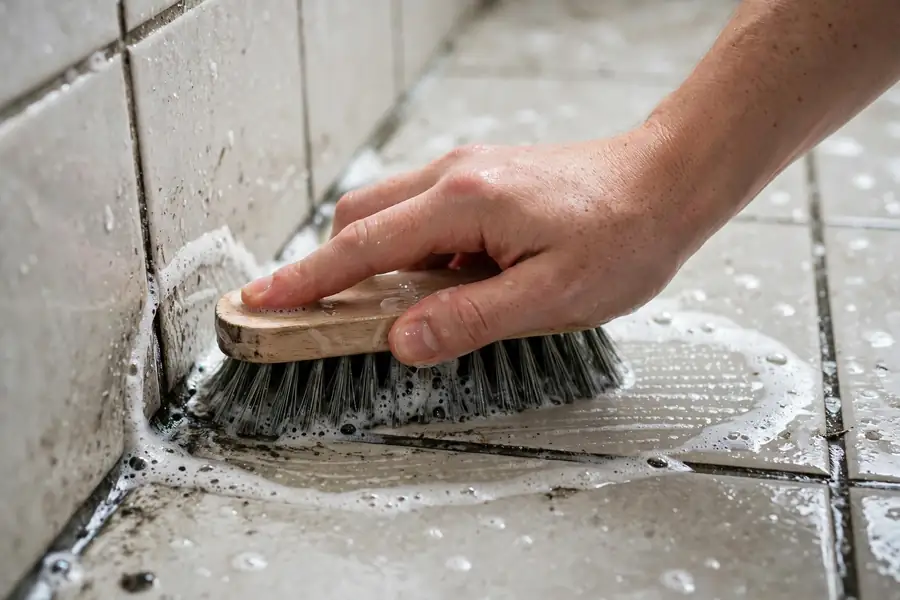
Grout, caulk, and tile need different handling because each one holds growth at a different depth. Tile faces scrub clean with detergent and water. Cement grout is porous, and growth roots into the pores, so a grout line that stays dark after scrubbing has growth below the surface. Scrub the line with a narrow grout brush and detergent and water, rinse, and dry with a towel followed by fan air. If the line stays dark, the options narrow to regrouting the line or living with a stain that no longer grows. Epoxy grout needs no sealer because it is nonporous. Cement grout, once clean and dry, takes a penetrating sealer that slows water uptake, reapplied on its maker's schedule. Caulk is a different case again. Growth on a caulk bead usually means growth under the bead, since the seal has failed. Cut the bead out, clean and dry the joint fully, and lay a fresh bead of silicone caulk made for wet areas. Paint over a stained grout line hides the color and leaves the growth in place, which is why the EPA tells homeowners not to paint or caulk moldy surfaces.
How do you clean mold off a ceiling?
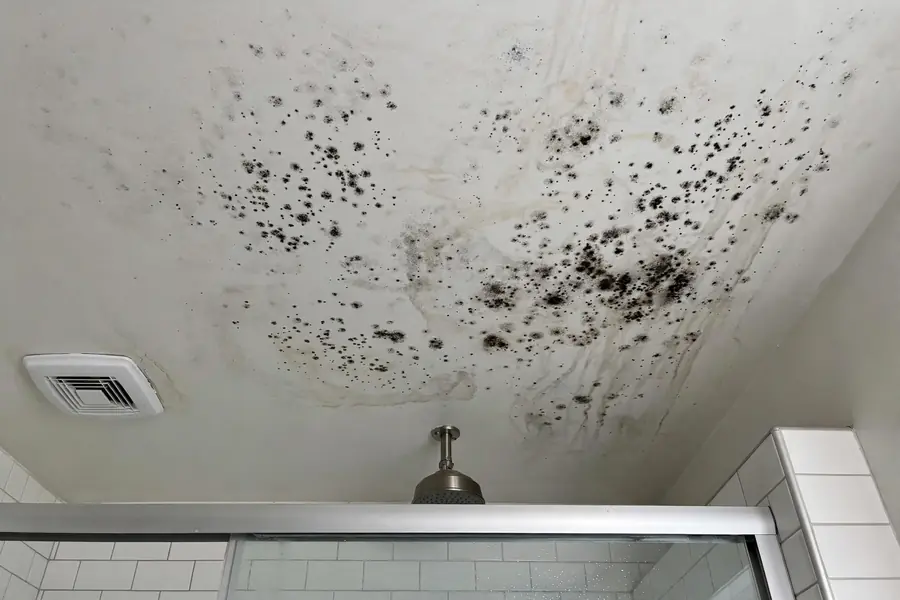
A ceiling gets cleaned from dry to wet, and the leak above gets found before any scrubbing starts. Brown spots usually mean water came from above, and scrubbing without fixing the source wastes the work. Find the source first: check the room above, the plumbing lines, and the fan duct. Once the ceiling is dry, put on protective gear, open a window or run the fan, and scrub the spot with detergent and water using a sponge on a pole, working from the edges inward. Rinse, and dry with fan air. Do not soak a drywall ceiling: a sponge wrung nearly dry does the job. A flat painted ceiling that stays stained can be sealed with a stain-blocking primer and repainted only once fully dry and the water source is fixed. A stained popcorn ceiling with growth usually means cutting out the affected section, which is professional work when the area is large.
How do you clean mold off walls and drywall?
Walls divide into two cases, and the material decides which one applies. A hard wall surface, such as tile, glass, or sealed paint on plaster, scrubs clean with detergent and water followed by full drying. Drywall is porous, and growth on its paper facing usually means growth inside the board. Scrub a small, firm drywall patch the same way, with a barely damp sponge, and dry it at once. If the drywall feels soft, crumbles, bows, or shows a spreading stain, the board is wet inside and scrubbing cannot reach the colony. Cut out the damaged section, dry the cavity, fix the leak, and fit a new board. Use moisture-resistant board in a wet area, with seams sealed before tiling or painting. Never sand a moldy wall dry: dry sanding throws spores into the air.
How do you clean mold from a shower, sink drain, vent, and window?
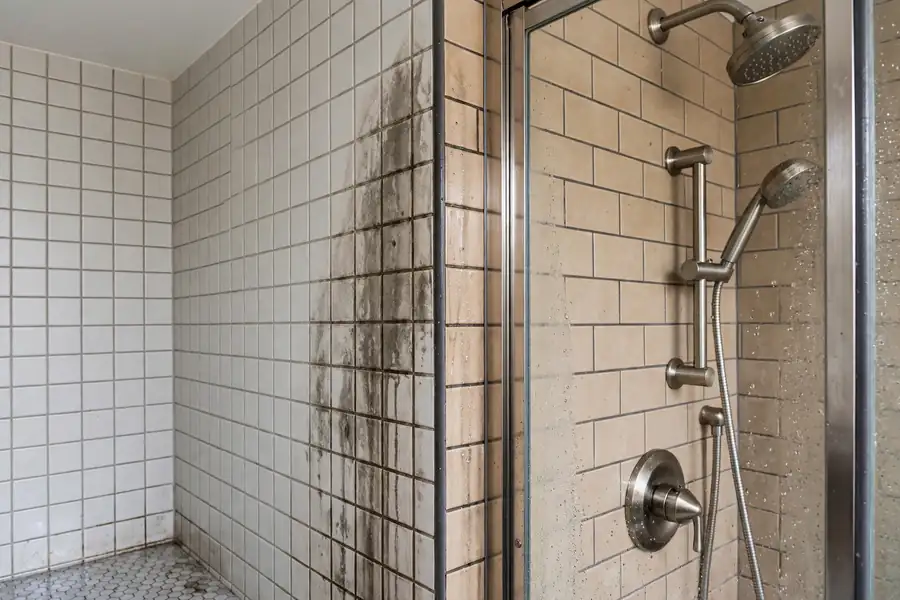
The shower, the sink drain, the vent, and the window each hold water in a different way, so each one gets its own pass. In the shower, scrub tile faces, grout lines, the curb, the door track, and the drain rim with detergent and water, rinse fully, and squeegee the walls dry. Wash a stained shower curtain liner on the warmest setting its label allows, or replace it. The sink drain grows a dark ring in the overflow channel and around the stopper. Pull the stopper, scrub it and the drain opening with a bottle brush and detergent, flush with hot water, and dry the basin. A drain that smells after scrubbing may hold a biofilm deeper in the trap, and clearing a slow or blocked trap is a separate drain job. The vent grille comes off with the power switched off at the breaker, and the grille washes in mild soap and water while the housing gets wiped with a damp cloth, keeping water off the motor. A fan that rattles, runs slowly, or never clears the mirror is not moving air, and cleaning its grille will not fix it. Wipe the window sill and tracks dry, and wipe condensation each morning in cold weather.
What cleaner kills mold, and what only removes the stain?
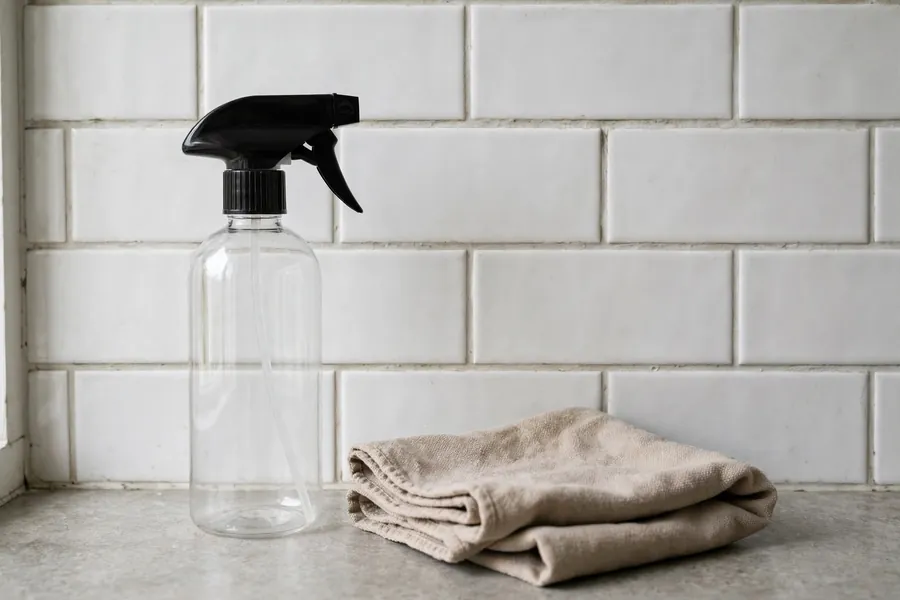
The EPA draws a line most product labels blur: killing growth is not the same as removing it, and dead mold can still cause allergic reactions, so growth must be physically removed, not merely bleached pale. Detergent and water, applied with scrubbing, removes growth from hard surfaces. Disinfectants and biocides are not routine practice during cleanup in the EPA guide.
| Cleaner or method | What it does | Limits |
|---|---|---|
| Detergent and water, scrubbed | Removes growth from hard surfaces | Does not reach growth in porous grout or drywall |
| Diluted bleach, CDC disinfection mix | Disinfects hard surfaces after cleaning | Lightens stains without removing pore growth; never mix with other cleaners |
| White vinegar, undiluted | Loosens surface film on hard surfaces | No disinfection standard; never mix with bleach |
| Baking soda paste | Mild abrasive, lifts surface staining on grout | Does not reach deep growth or disinfect |
| Store-bought mold cleaner | Formulated for bathroom surfaces | Follow the label; ventilate; keep off stone unless allowed |
| UV light | No reliable removal of growth | Does not scrub, dry, or fix the water source |
| Paint or stain blocker | Hides the color | Never use over growth; growth continues underneath |
The bleach dilution for disinfecting a hard, nonporous surface after scrubbing follows CDC disinfection guidance: 5 tablespoons, or one third of a cup, of regular unscented household bleach at 5 to 9 percent sodium hypochlorite per gallon of room temperature water, or 4 teaspoons per quart. Keep the surface visibly wet for at least 1 minute, ventilate the room, wear gloves and eye protection, and mix a fresh batch daily. Never mix bleach with ammonia, vinegar, or any other cleaner. Bleach never goes on a porous surface: it lightens the stain while the colony stays in the pores, and it can damage stone, colored grout, and metal. Undiluted white vinegar loosens surface film on glass and tile, but it does not disinfect to a standard, does not reach growth in grout pores, and must never share a bucket or surface with bleach.
What should you wear when cleaning mold?
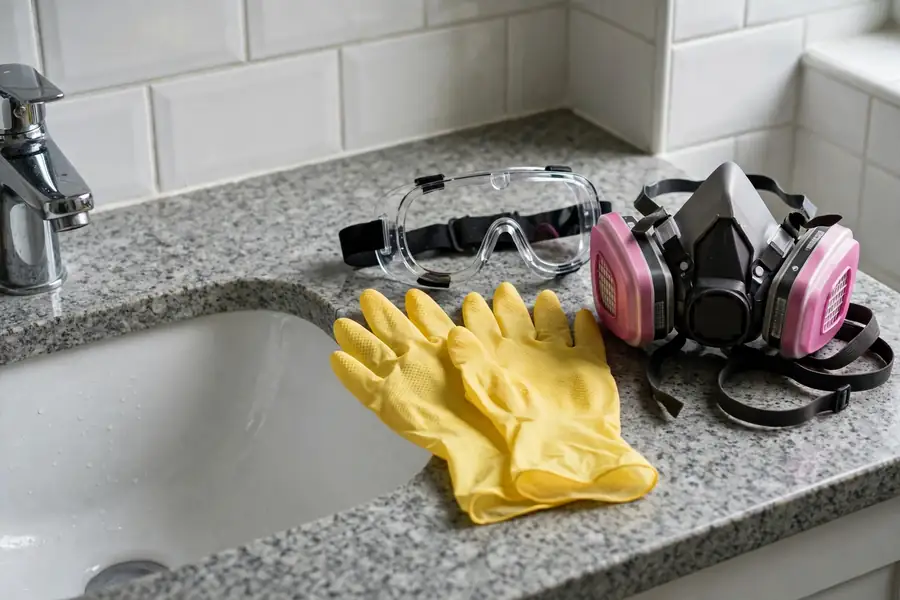
Protective gear goes on before the first scrub, and the EPA lists exactly three items. Wear an N-95 respirator that fits properly, following the fitting instructions on its package. Wear goggles without ventilation holes. Wear long gloves that reach the middle of the forearm, choosing natural rubber, neoprene, nitrile, polyurethane, or PVC gloves when using a disinfectant or bleach, and ordinary household rubber gloves for detergent and water. Open a window or run the fan, and keep children and pets out until the area is clean and dry. Anyone with asthma, a chronic lung condition, a weakened immune system, or symptoms that worsen near the patch should not do the cleanup at all. Gear does not raise the 10 square foot limit: a large patch needs a professional even with a respirator on.
When should a professional handle bathroom mold?
Five situations belong to a professional. Growth covering more than about 10 square feet, roughly a 3 foot by 3 foot patch, exceeds the homeowner limit the EPA sets. Hidden growth behind walls or under flooring needs contained removal. Contamination in the heating, ventilation, and air conditioning system can spread spores through the whole home, and the EPA advises against running the system when contamination is known or suspected. Water or mold damage caused by sewage or other contaminated water needs a contractor experienced with contaminated water. Health concerns in the household, including asthma, chronic lung conditions, and weakened immune systems, mean the work should be hired out and the clinician consulted first. Mushroom-like growth on wood or drywall, and any material that feels soft or warped, push the same way. A professional should hold experience cleaning up mold, be able to show references, and follow EPA remediation guidance. Get the scope in writing: the water source fixed, the affected material removed or cleaned, the area dried, and a revisit after drying.
How do you prevent mold from coming back?
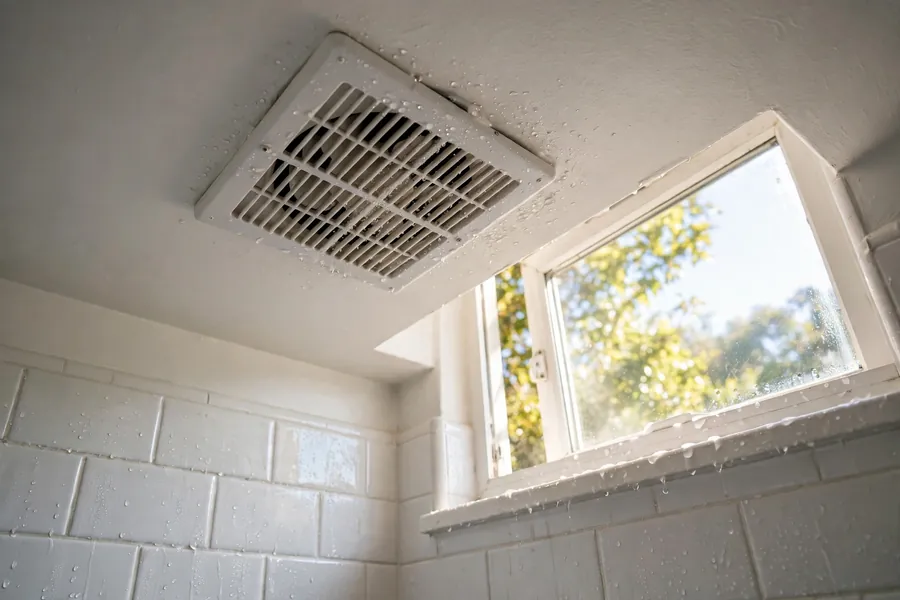
Prevention is a short list done every day, and the fan carries most of it. Size the fan to the room: Home Ventilating Institute guidance calls for 1 cubic foot per minute of airflow per square foot of floor area in bathrooms from 50 to 100 square feet, with a 50 cubic foot per minute minimum for bathrooms under 50 square feet, and in bathrooms over 100 square feet, 50 cubic feet per minute for each toilet, shower, and bathtub and 100 cubic feet per minute for a jetted tub. Run the fan during every shower and for 20 minutes after, or fit a timer switch so the run time does not depend on memory. Keep indoor humidity below 60 percent, and ideally between 30 and 50 percent, the range the EPA names. Squeegee shower walls after the last shower of the day, hang towels spread out, and fix leaks at once, including slow ones at a toilet base and under a sink. Seal cement grout once it is clean and dry, and renew caulk beads as soon as they pull away from an edge. In a room with no fan, open a window during and after showers, wipe condensation off glass and sills, and leave the door open. A dehumidifier lowers humidity, but it removes no growth and cannot dry a leak, so it supports the fan rather than replacing it. Houseplants do not prevent growth, and UV lights neither scrub a surface nor fix a water source. Prevention succeeds when the room dries between uses.
Can you paint over mold in a bathroom?
No. Paint over growth traps the colony under a film, the paint peels as moisture pushes through, and the growth continues underneath. The EPA states the rule directly: do not paint or caulk moldy surfaces. The CDC says the same: do not cover it, remove it, and fix the water problem completely before painting or caulking. The correct order runs: fix the water source, remove the growth, dry the surface fully, then prime and paint. A stain-blocking primer suits a cleaned ceiling that still shows a water stain. Neither product treats growth that is still present.
Why does mold keep coming back after cleaning?
Return growth reports an unfinished job, and the cause is almost always water rather than cleaner. The water problem was never fixed: a leak still drips, a fan still vents into an attic, or grout still holds water behind tile. The drying step was skipped: surfaces were scrubbed and left damp, so spores resettled on wet grout the same day. The material is porous: growth inside drywall, grout pores, or a caulk bead survives a surface scrub. The room never dries between uses: a fan switched off at the end of a shower leaves steam in the room for hours. The hidden source was missed: a slow pipe leak inside a wall, a failed shower pan, or a duct that ends in the attic feeds the same corner from behind. A patch that returns a third time after those steps needs a professional with a moisture meter and, when the wall must open, containment.
What should renters do, and does insurance cover mold removal?
Renters hold two duties, and both protect them. Report plumbing leaks and moisture problems to the building owner, manager, or superintendent at once, in writing, with the date, and keep a copy. The EPA gives renters exactly that instruction, and adds that persistent water problems left unaddressed can be raised with local, state, or federal health or housing authorities. Photograph the patch and the water source, note the dates, and do not paint over the growth. Insurance answers vary by policy and by cause. A sudden pipe burst is commonly treated differently from a leak left for months, and many policies exclude long-term moisture damage or cap mold cleanup. Read the policy wording and report promptly. Cost drivers are the size of the affected area, the material that must come out, the drying time, and access. A small surface cleanup costs far less than cutting out and replacing wet drywall, and any quote that promises to kill growth without fixing the water source is a quote to read twice. Get two or three written quotes naming the water fix, the removal scope, and the drying step.
Quick answers to common questions
Is black mold in a bathroom dangerous?
Color alone cannot tell whether a patch is dangerous, and only laboratory testing can name a species. The EPA states that mold can cause allergic reactions and asthma attacks in sensitive people, and can irritate the eyes, skin, nose, throat, and lungs of allergic and non-allergic people alike. Anyone with symptoms, asthma, a chronic lung condition, or a weakened immune system should see a clinician and leave the cleanup to a professional.
Does bleach kill mold in a bathroom?
Bleach disinfects hard, nonporous surfaces, but it does not remove growth from pores, and dead growth can still cause allergic reactions, so scrubbing with detergent and water comes first. The CDC disinfection mix is 5 tablespoons, or one third of a cup, of regular bleach per gallon of water, kept visibly wet for at least 1 minute, mixed fresh daily. Never mix bleach with ammonia, vinegar, or any other cleaner.
What kills mold permanently in a bathroom?
Nothing kills it permanently without taking away its water. Remove the visible growth, fix the leak or the ventilation fault that fed it, dry the room fully, and keep humidity below 60 percent. A patch cleaned without a water fix returns, because spores are always present in indoor air and only need a wet surface to grow.
Can you paint over mold in a bathroom?
No. The EPA and the CDC both state that paint and caulk must not go over growth, and that the growth must be removed and the surface dried before painting. Paint over a patch peels and hides growth that continues underneath. Use a stain-blocking primer and a bathroom paint only on a surface that is clean, dry, and fixed at its water source.
How do you prevent mold in a bathroom without a fan?
Open a window during and after every shower, squeegee the walls dry, hang towels spread out, wipe condensation off glass and sills, and fix any leak at once. A portable dehumidifier helps lower humidity, but it removes no growth and cannot dry a leak. If the room stays damp despite those steps, fitting a fan that vents outside is the fix that holds.
Start with the water, not the spray bottle
Mold in bathroom grout, ceilings, and caulk lines is a report on water, and the report closes when the water stops. Measure the patch first: under about 10 square feet on a hard surface is a homeowner job with detergent, water, protective gear, and full drying, while anything larger, hidden, or sewage-related belongs to a professional. Scrub the growth off, never merely bleach it pale, and dry every surface before the next shower. Run the fan until the room dries between uses, seal grout once clean, renew caulk when it pulls away, and fix leaks the day they appear. The room stays clean because it stays dry.