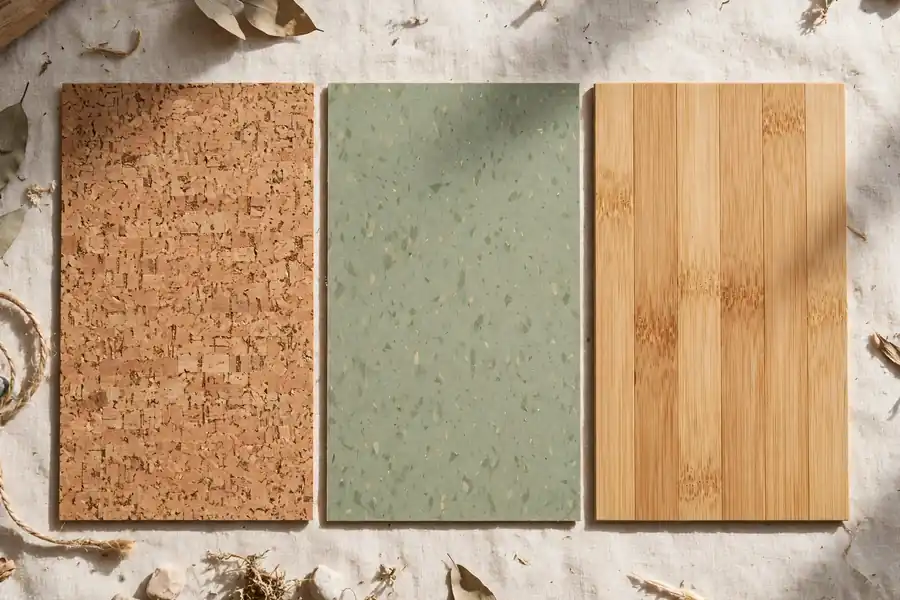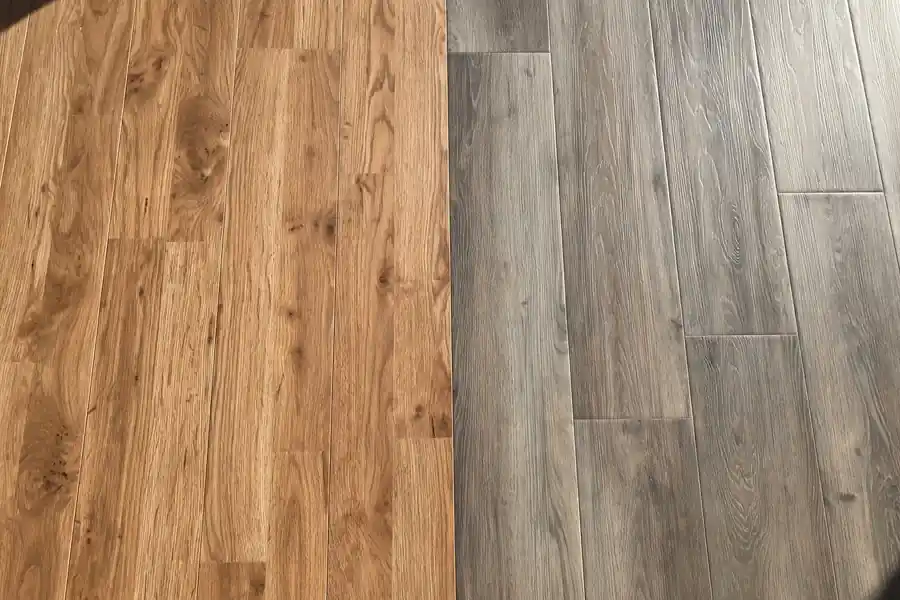
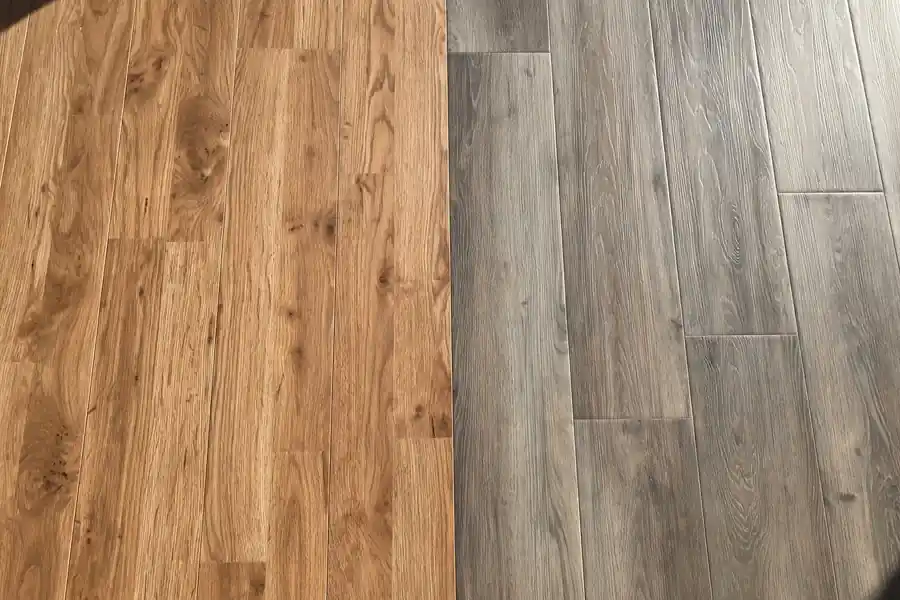
The difference between laminate and vinyl flooring is the core. Laminate has a wood-fiber core that swells and stays swollen when it gets wet, and vinyl has a plastic core with no wood fiber, so it resists water. Both are layered planks with a printed picture on top, and both click together. Choose vinyl for kitchens, baths and basements, and laminate for dry rooms where you want a hard, wood-like feel.
Laminate vs vinyl at a glance
| Laminate | Vinyl | |
|---|---|---|
| Core | High-density fiberboard (wood fibers and resin) | PVC, flexible or rigid |
| Water | Poor, the core swells | Good, the plank resists water |
| Feel | Harder underfoot | A little softer, with some give |
| Cost (installed, 2026) | About $5 to $12 per sq ft | About $3 to $9 per sq ft |
| Lifespan | About 15 to 25 years | About 15 to 25 years for luxury vinyl |
| Repair after water | Replace the planks | Dry the subfloor, replace damaged pieces |
| Best in | Dry rooms | Wet and dry rooms |
What is laminate flooring made of?
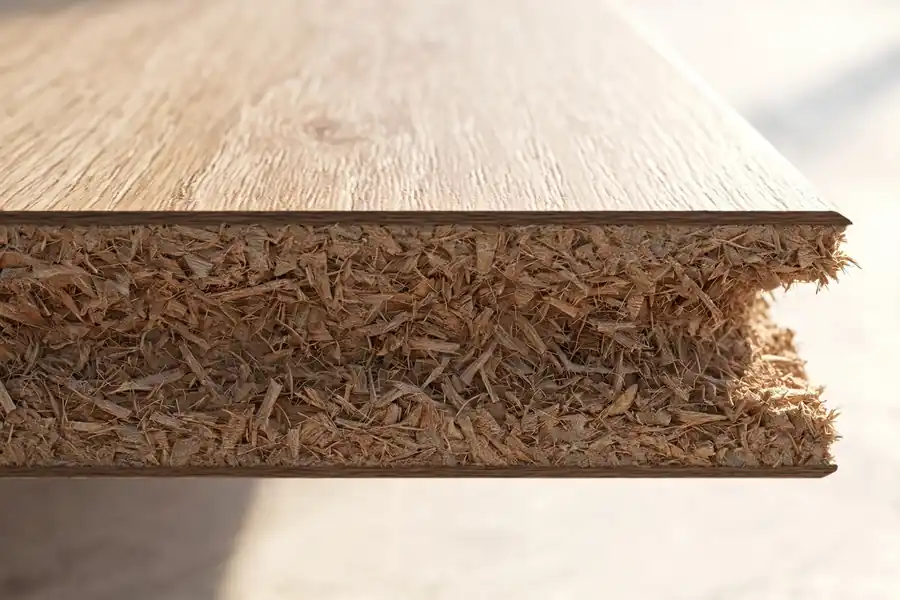
Laminate is made of four layers: a clear wear layer, a printed picture, a core of high-density fiberboard and a backing. The fiberboard is wood fibers pressed with resin. See what is laminate flooring for the full breakdown.
What is vinyl flooring made of?
Vinyl is made of layers too, with a clear wear layer, a printed picture and a core of PVC plastic. In rigid-core vinyl, the core is a stiff stone or wood composite instead of soft PVC. See what is vinyl flooring and what is luxury vinyl flooring.
Which is more water-resistant?
Vinyl, by a wide margin. Vinyl has no wood fiber in the core, so spills and humidity do not swell it. Laminate handles everyday spills, but its core absorbs water that reaches a seam or edge, and the swelling does not reverse. Vinyl is not fully waterproof either, because water can pass through seams and sit on the subfloor. Read is laminate flooring waterproof and is vinyl flooring waterproof.
Which feels better underfoot?
Sources differ, and it depends on the product. Vinyl usually has a little give and feels softer and quieter, while laminate usually feels harder and a bit more like wood. Some people find laminate more comfortable, and both can feel good with a good underlayment. Compare samples, and check whether the planks have an attached pad.
Which costs less?
They are close, and price depends more on product grade than on the material. Laminate is often the cheapest wood look at the budget end, and vinyl plank is often cheaper to install in a typical home. In 2026 estimates, vinyl runs about $3 to $9 per square foot installed and laminate about $5 to $12.
Which lasts longer?
They last about the same when well cared for. Laminate commonly lasts about 15 to 25 years in a dry home, and thicker luxury vinyl lasts up to about 25 years. A poorly maintained laminate floor can fail in far less time, especially if it gets wet. Water-damaged laminate generally cannot be repaired and needs replacing.
Which is better for each room?
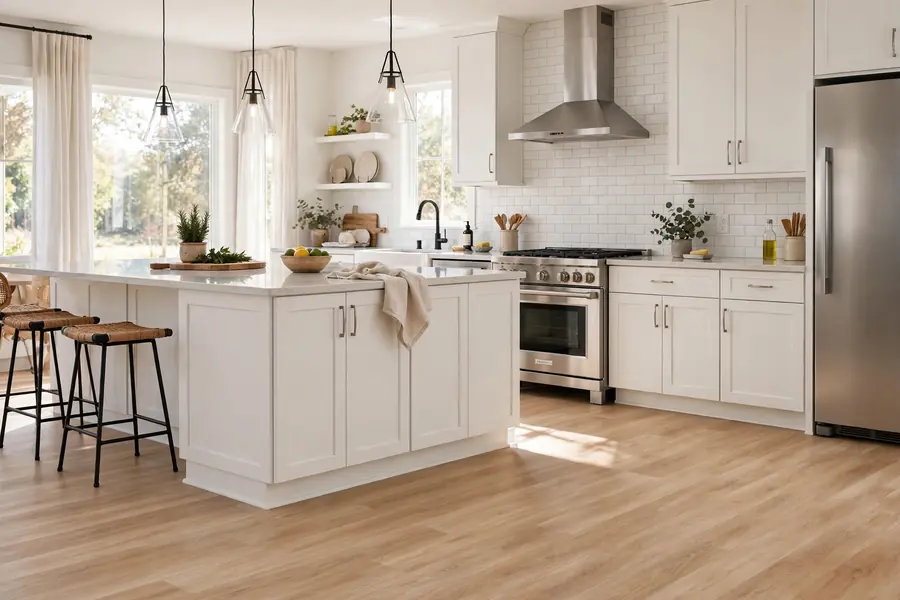
Vinyl wins in wet rooms, and both work in dry ones.
| Room | Better choice |
|---|---|
| Kitchen | Vinyl, laminate only with fast spill cleanup |
| Bathroom and laundry | Vinyl |
| Basement | Vinyl, after a moisture test |
| Bedroom and living room | Either |
| Hallway and entry | Either, with a thick wear layer or high AC rating |
How do the wear ratings compare?
Vinyl uses a wear layer measured in mils, and laminate uses an AC rating. Choose 12 mil for most homes and 20 mil for busy ones in vinyl, and AC3 or higher in laminate. See the most durable flooring for how these compare.
How can you tell laminate from vinyl?
Look at the edge, bend a spare piece, and check the box. Laminate shows a brown fiber core at a cut edge and snaps if you bend it, while vinyl shows plastic and flexes. The box or spec sheet names the core and the layers.
Which should you choose?
Choose by room, water risk and budget.
Quick answers to common questions
Is laminate or vinyl better for kitchens?
Vinyl. Laminate can work with fast spill cleanup, but its core swells in water.
Is vinyl flooring cheaper than laminate?
Often, in 2026 estimates of installed cost, but the ranges overlap and depend on the product.
Which lasts longer, laminate or vinyl?
About the same, 15 to 25 years with care. Laminate fails faster when wet.
Is laminate or vinyl more comfortable to walk on?
Vinyl usually feels a little softer. Laminate feels harder. Underlayment and an attached pad change it.
How can you tell laminate from vinyl?
Check the edge for a brown fiber core, bend a spare piece, and read the box.
So, which is better, laminate or vinyl?
Vinyl is better for any room that might get wet, and either works in dry rooms. The difference between laminate and vinyl flooring comes down to the core: wood fiber that swells, or plastic that does not. Order samples of both, prepare the subfloor, and choose the one that fits the room.