SPC flooring is a rigid vinyl floor whose core is a dense mix of limestone powder, PVC and stabilizers. SPC stands for stone plastic composite. A printed wood or stone look sits on top, and the planks click together without glue. The stone core makes it hard, stable and resistant to dents, and it does not swell in water. It also feels firm and cool underfoot.
SPC at a glance
| Feature | What to know |
|---|---|
| Full name | Stone plastic composite |
| Core | Limestone powder, PVC and stabilizers |
| Total thickness | About 5 to 7 mm, often with a pad attached |
| Wear layer | 12 mil for most homes, 20 mil for busy ones |
| Installation | Click-lock floating floor |
| Water | The core resists water. Seams and the subfloor are the weak points |
| Cost | About $3.50 to $7 per square foot for the material in 2026 estimates |
| Feel | Firm and cool, softer with an attached pad |
What is SPC flooring made of?
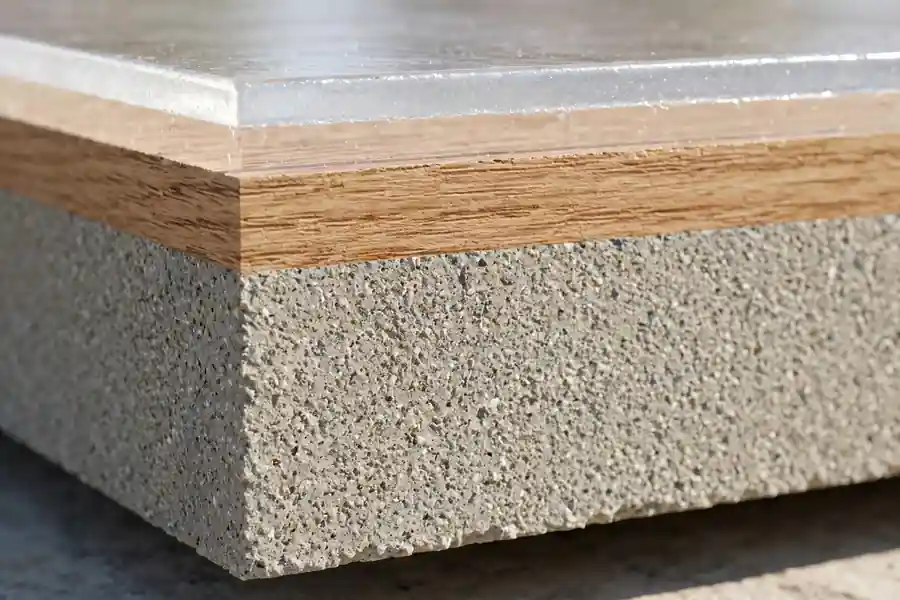
SPC flooring has four layers. From top to bottom, they are a clear wear layer, a printed decorative layer, the SPC core, and often an attached foam pad. The core is the part that makes it SPC: a dense board of limestone powder bound with PVC.
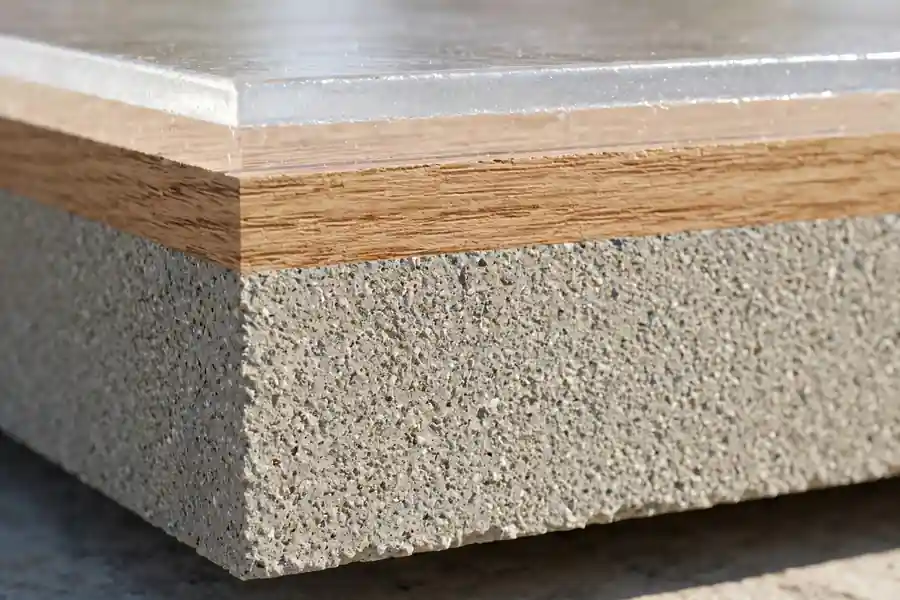
| Layer | What it is | What it does |
|---|---|---|
| 1. Wear layer | A clear protective film, often with a UV coating | Resists scratches, scuffs and stains |
| 2. Decorative layer | A printed photo of wood or stone | Gives the look and texture |
| 3. SPC core | Limestone powder, PVC and stabilizers | Gives stiffness and stability, and keeps water out of the core |
| 4. Attached pad | Foam, often IXPE | Adds comfort and cuts sound |
SPC is one of the two main cores sold as hybrid or rigid core vinyl. The other is WPC.
How is SPC different from WPC?
SPC is denser and harder than WPC, and WPC is softer and warmer. SPC resists dents and handles temperature swings better. WPC has a foamed core that feels more cushioned and quieter, but it dents more easily under heavy weight.
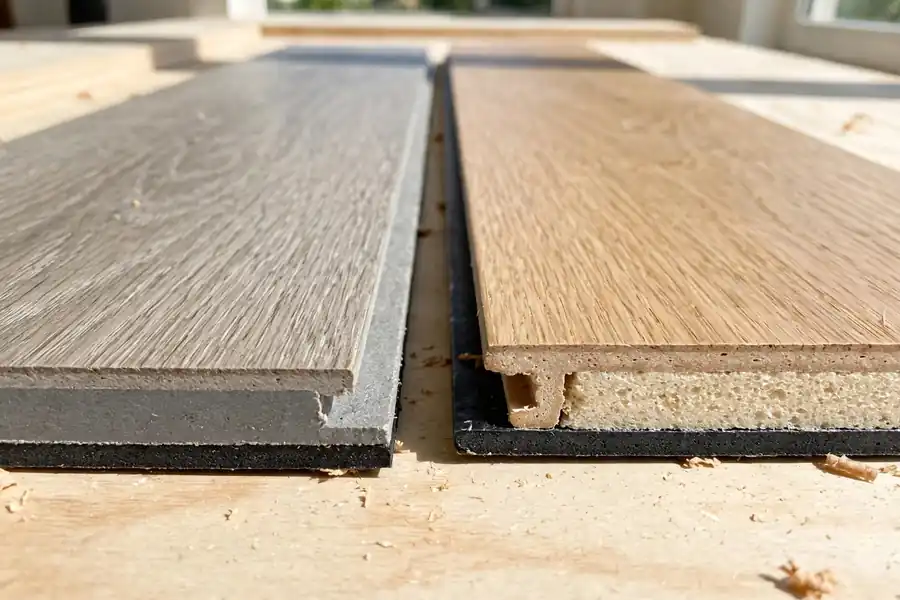
| SPC | WPC | |
|---|---|---|
| Core | Limestone powder and PVC | Wood-type filler, PVC and foam |
| Typical thickness | About 5 to 7 mm | About 6 to 8 mm |
| Dent resistance | Better | Weaker |
| Feel underfoot | Firm | Softer and warmer |
| Temperature swings | More stable | More sensitive |
| Often chosen for | Kitchens, baths, busy rooms | Bedrooms |
Sources disagree on which one feels colder, and brands vary a lot. Compare samples of the exact products you are considering.
What are the pros and cons of SPC flooring?
| Pros | Cons |
|---|---|
| Core does not swell from surface water | Hard and cool underfoot without a pad |
| Resists dents better than most vinyl and WPC | The look is still vinyl, not real wood |
| Stable when temperatures change | Costs more than laminate and basic vinyl |
| Click-lock installation suits many DIYers | Direct sun can fade low-end products |
| Forgives small subfloor flaws more than thin vinyl | A cheap click joint can fail over time |
| Pad adds comfort and sound control | Limited recycling options |
SPC is a better fit for subfloors with small flaws than thin, flexible vinyl, but it still needs a flat, clean, dry base.
Is SPC flooring waterproof?
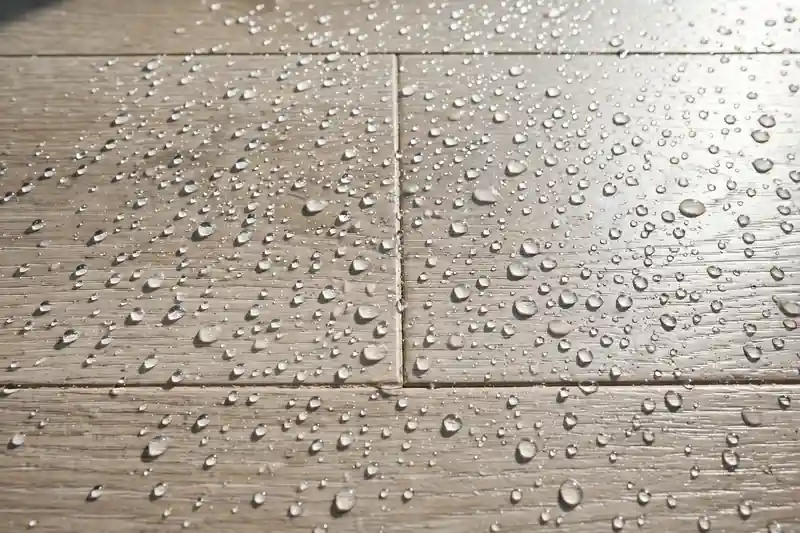
The SPC core resists water and does not swell the way a fiberboard core does. The whole floor is a different matter, because water can run through the seams and sit on the subfloor. Wipe up spills, dry the subfloor after a leak, and treat "100% waterproof" as marketing language about the plank, not a promise about your home.
How much does SPC flooring cost?
SPC runs about $3.50 to $7 per square foot for the material in 2026 estimates, and premium lines with thicker wear layers can reach about $10. Laminate typically runs about $1 to $5. Professional labor often adds roughly $1.50 to $3 per square foot, so installed prices run higher.
| Item | Estimate (2026) | For a 300 sq ft room |
|---|---|---|
| Material | $3.50 to $7 per sq ft | $1,050 to $2,100 |
| Labor, typical | $1.50 to $3 per sq ft | $450 to $900 |
These are estimates, not quotes, and sources differ. Ask local installers for written prices.
What should you check before you buy SPC?
- Wear layer. 12 mil suits most homes and 20 mil suits pets, kids or heavy traffic.
- Attached pad. If it has one, skip a second underlayment.
- Click joint. Lock two sample pieces together and test the joint.
- UV coating. Ask whether the surface resists fading if the room is sunny.
- Certification. FloorScore is a voluntary indoor air quality label. Lower-quality products without certification may release more chemicals.
- Warranty. Compare residential and commercial coverage and what voids it.
Where does SPC flooring work best?
| Space | Fit |
|---|---|
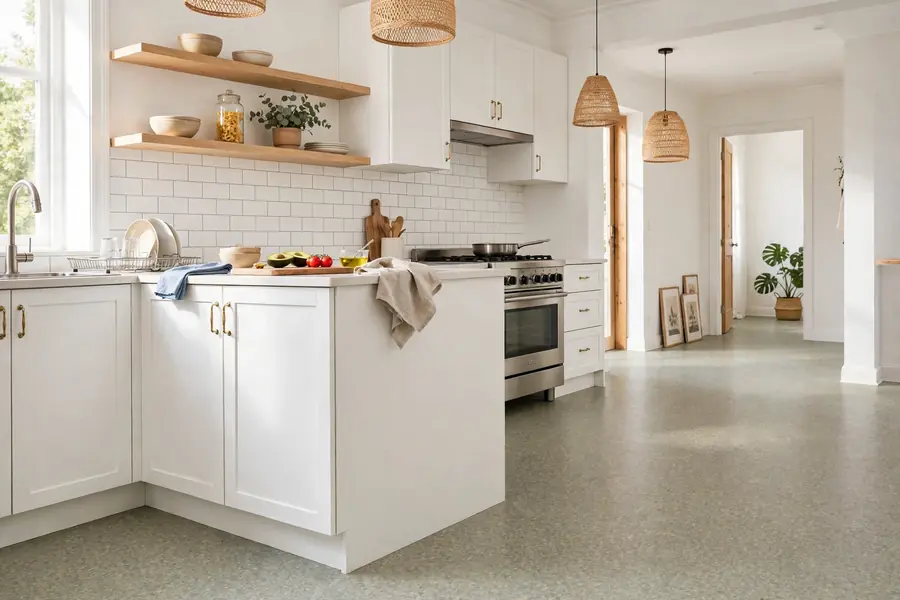
| Kitchen and laundry | Very good, with a dry subfloor |
| Bathroom | Good, with sealed edges and no standing water |
| Basement | Good after a moisture test on the slab |
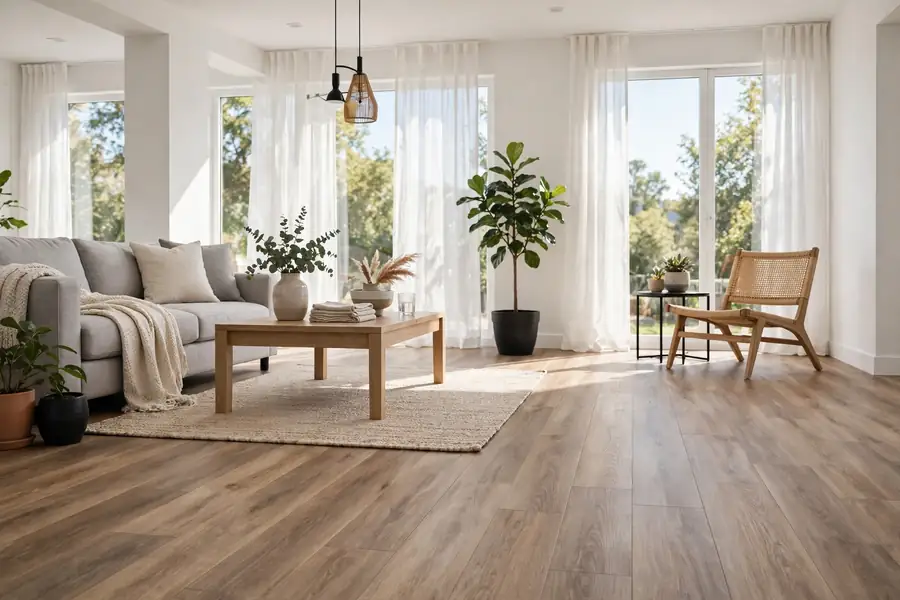
| Living areas | Very good |
| Bedrooms | Good, or consider WPC for a softer feel |
| Sunrooms | Check the maker's limits for heat and sun |
How is SPC flooring installed?
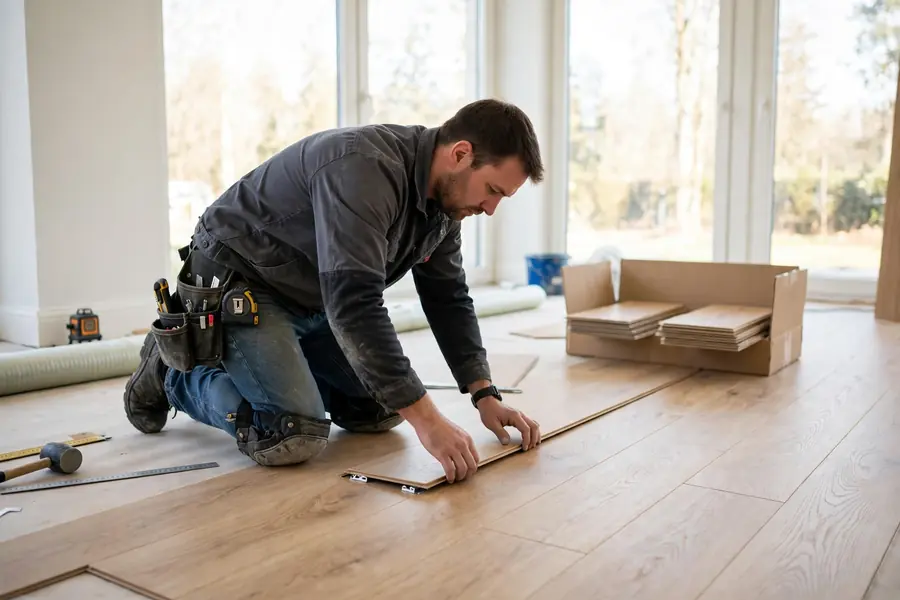
SPC is a click-lock floating floor. Prepare a flat, clean, dry subfloor, let the planks adjust to the room if your maker asks, leave a gap at every wall, stagger the end joints, and cut the last row to fit. It can go over concrete or plywood and often over sound existing tile. Follow your product's instructions, because the locking profile differs by brand.
Quick answers to common questions
Is SPC flooring waterproof?
The core resists water, but the floor is only as waterproof as its seams and subfloor. Wipe up spills and dry the subfloor after a leak.
Is SPC flooring better than laminate?
In kitchens, baths and basements, yes, because laminate's core swells in water. In a dry room, laminate can be cheaper and look more like wood, so compare samples.
Is SPC flooring better than WPC?
For dent resistance and stability, yes. For a soft, warm and quiet feel, WPC is often preferred. The right pick depends on the room.
Does SPC flooring fade in sunlight?
It can, especially lower-end products without a UV coating. Use window coverings in sunny rooms and ask about UV protection.
Can SPC flooring go over concrete?
Yes, if the slab is flat, clean and dry. Test the slab for moisture first, and follow your maker's rules.
Keep reading: hybrid flooring, what LVP flooring is and whether vinyl flooring is waterproof.
Is SPC flooring worth buying?
SPC flooring is worth buying for kitchens, baths, basements and busy family rooms where you want a wood look, a stable core and good dent resistance. Choose WPC for a softer feel, laminate for a dry room on a tight budget, and real hardwood if you want a floor you can refinish. Read the spec sheet and order a sample first.