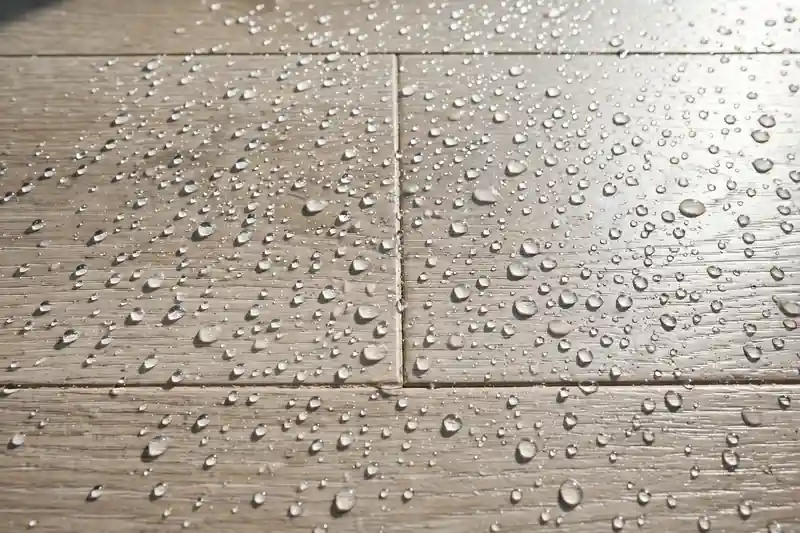
Mostly, but not completely. The vinyl itself is waterproof, so spills, mopping and humidity will not swell or rot it the way they ruin wood or laminate. The floor as a system is not: water can run through the seams and the gap at the walls and sit on the subfloor, where the vinyl traps it. That is why a vinyl floor survives a spill easily and can still hide mold after a leak.
Vinyl flooring and water at a glance
| Question | Short answer |
|---|---|
| Does the vinyl surface absorb water? | No |
| Is a quick spill a problem? | No, if you wipe it up |
| Can water get under it? | Yes, through seams and the wall gap |
| Is the subfloor protected? | No |
| Best type for wet rooms | Sheet vinyl with few seams, or SPC planks, with sealed edges |
| Hardest hit by trapped water | Glue-down floors and wood subfloors |
| After a leak | Lift the pieces, dry the subfloor, check for mold |
What does waterproof really mean for vinyl?
"Waterproof" on a vinyl label means the flooring itself will not absorb water or break down when it gets wet. It does not mean the whole floor, including the seams, the edges, the pad and the subfloor, is protected. Some warranties define it this narrowly and exclude floods, leaks and damage to the subfloor.
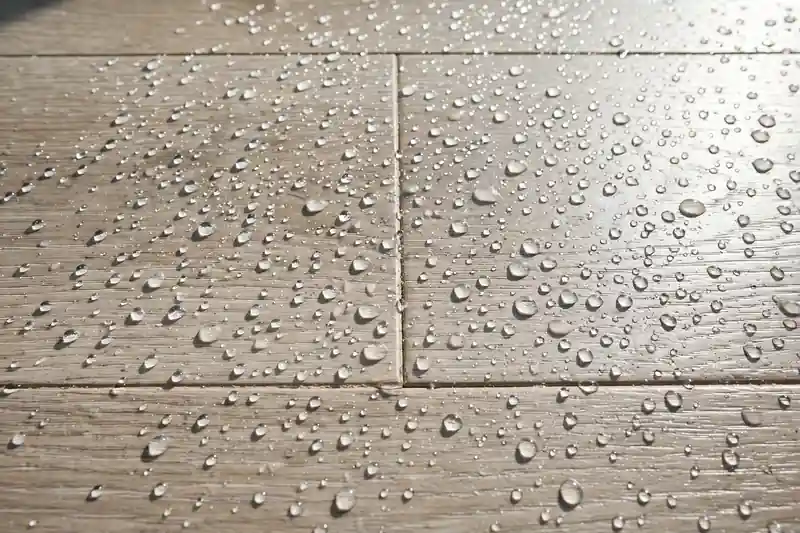
Treat "100% waterproof" as a statement about the plank. Your floor is only as waterproof as the seams, the edges and the subfloor beneath it.
Is every type of vinyl equally waterproof?
No. The type of vinyl changes where water can get in and how it dries.
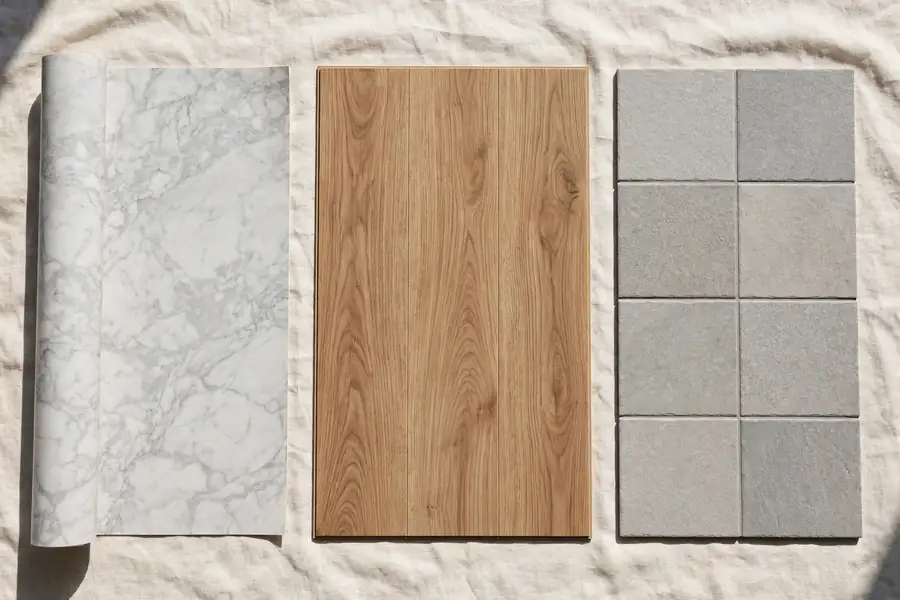
| Type | Water behavior | Watch out for |
|---|---|---|
| Sheet vinyl | Few seams, usually only at the room edges | Seal the edges and use enough adhesive |
| SPC plank | Dense core that does not absorb water | Water can still pass through the seams |
| WPC plank | Foamed core, a little more sensitive to long soaking | Standing water over time |
| Glue-down vinyl | Adhesive seals the vinyl to the floor | It can trap moisture against the subfloor |
| Click-lock floating | Dries more easily underneath | Water enters through the seams |
If water is the biggest worry, sheet vinyl with few seams or SPC planks with sealed edges are the safest picks.
What happens if water gets under vinyl flooring?
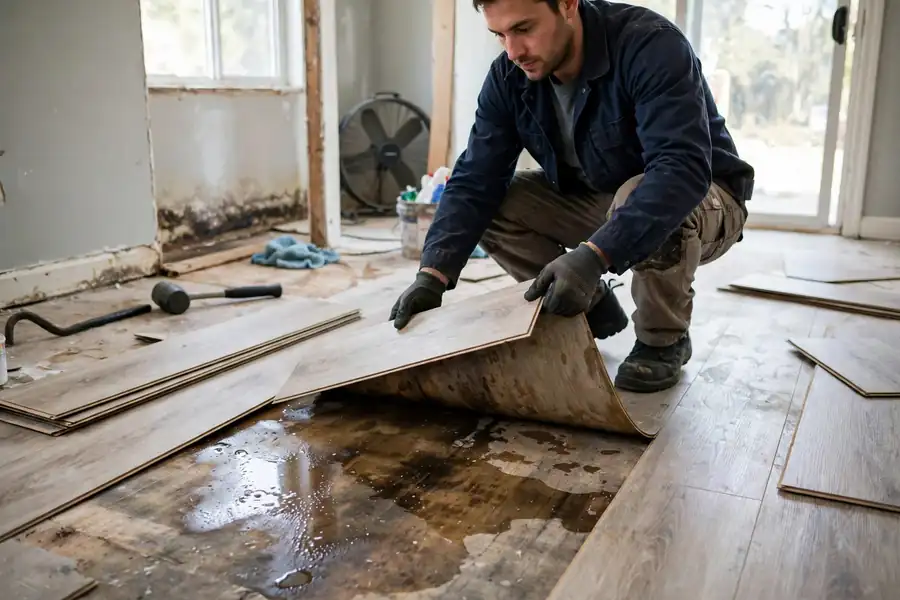
Water that gets under vinyl cannot evaporate easily, because the vinyl seals the top. A wet wood subfloor can swell or rot, and a damp concrete slab can stay wet for days. Mold can start to grow within about 24 to 48 hours, even when the surface looks dry, and by the time you see signs, the damage underneath can be well under way.
Warning signs include a musty smell, planks that lift or peak, discoloration at the seams, and a floor that feels soft in spots.
What should you do after a leak or flood?
Stop the water, lift the affected pieces, dry everything and check for mold before you cover it again. Restoration pros work to a drying standard, IICRC S500, and it applies even to floors sold as waterproof.
- Stop the source. Shut off the water and remove the standing water.
- Lift the affected pieces. Pull up planks or tiles near the leak so the subfloor and the underside can dry.
- Dry everything. Use fans and a dehumidifier. For a big leak, call a water-damage pro.
- Check for mold. Look under the pieces and along the walls, and smell for dampness.
- Reinstall only when dry. Covering a damp subfloor traps the problem.
How can you make a vinyl floor more water-safe?
Seal the edges, keep the seams tight and fix the subfloor. In wet rooms, leave the expansion gap your maker requires, and fill it with a premium 100% silicone caulk instead of leaving it open. Make sure the subfloor is flat, dry and sealed if it is concrete, and wipe up standing water promptly.
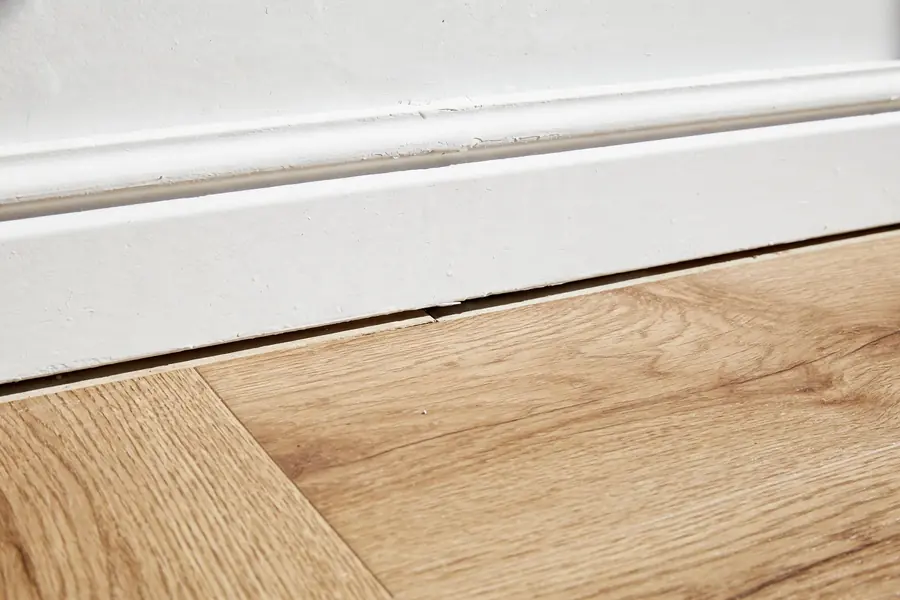
Many makers specify about a 1/4 inch gap around the walls and fixed objects. Some require silicone in wet areas, and many warranties exclude shower areas or flooding. Always read the installation guide for your exact product.
Where can you use vinyl flooring?
Vinyl suits kitchens, laundry rooms, entries and bathrooms, and it works in basements after a moisture test. It is not made for rooms that flood or for soaking. Keep floors out of spaces without climate control if your warranty requires a set range of temperature and humidity.
How long can water sit on vinyl flooring?
Wipe it up promptly. Makers do not give a standard number of hours, and warranties usually say to remove standing water right away. A spill that sits on top of a tight, sealed floor for a short while rarely hurts. Water that sits in the seams or under the floor is the problem.
Is vinyl better than laminate for water?
Yes, by a wide margin. Laminate has a wood-fiber core that swells and cannot recover when it gets wet, while vinyl has no wood fiber in the plank. Even so, laminate and vinyl share one weakness: water that gets under them is trapped.
Quick answers to common questions
Can vinyl flooring get wet?
Yes. The vinyl handles spills, mopping and humidity well. Wipe up standing water and keep it out of the seams.
Is vinyl plank flooring waterproof?
The plank is, but the floor is not. Seams, the wall gap and the subfloor can let water in.
Can you use vinyl flooring in a bathroom?
Yes, especially sheet vinyl with few seams, or SPC planks, with sealed edges. Keep standing water off the floor.
How long can water sit on vinyl flooring?
There is no standard limit. Wipe up water promptly, and dry the subfloor if water gets under the floor.
Is waterproof vinyl flooring really waterproof?
The material is. The floor's seams, edges and subfloor are not, so a leak can still cause damage underneath.
Keep reading: vinyl flooring, SPC flooring and whether laminate flooring is waterproof.
So, is vinyl flooring waterproof enough for your home?
Vinyl flooring is waterproof enough for kitchens, baths, laundry rooms and most busy family spaces, as long as you treat it as water-resistant at the seams and edges. Choose the type that fits the room, seal the perimeter in wet areas, test a slab before you install, and act fast after a leak.