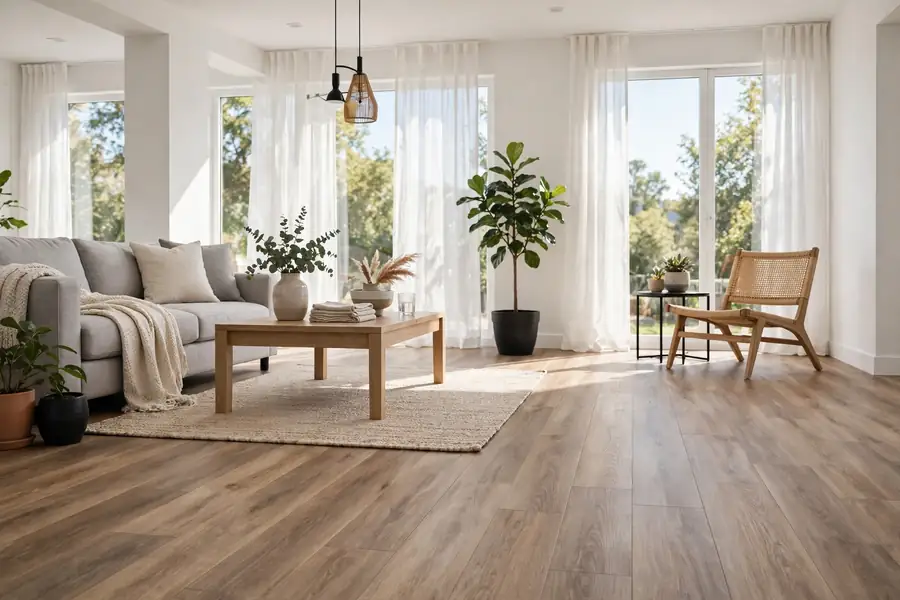
LVP flooring, short for luxury vinyl plank, is a layered vinyl floor made in long planks that copy the look of hardwood. A printed image of wood grain sits under a clear protective layer, on top of a PVC-based core. The result looks like wood but handles spills and humidity far better, and it usually costs less. Many LVP products click together without glue.
LVP at a glance
| Feature | What to know |
|---|---|
| Full name | Luxury vinyl plank |
| Material | Layered vinyl (PVC) with a printed wood-look image |
| Plank size | Usually 6 to 9 inches wide and 36 to 72 inches long |
| Total thickness | About 2 to 8 mm, depending on the core |
| Wear layer | 6 to 28 mil in most homes |
| Water | The plank resists water. Seams and the subfloor are the weak points |
| Installed cost | Roughly $3 to $9 per square foot in 2026 estimates |
| Lifespan | Sellers commonly say 15 to 25 years |
What does LVP stand for, and what is it made of?
LVP stands for luxury vinyl plank. It is a type of resilient flooring, which means a manufactured floor that gives slightly underfoot instead of staying hard like tile. The main ingredient is PVC (polyvinyl chloride), a plastic that chemist Waldo Semon first made flexible in 1926.
"Luxury" is a sales word, not a grade. It is an industry term, not a standard. Two planks sold as LVP can differ a lot in thickness, strength and price. That is why the specs matter more than the name.
You will also see a few related names:
- LVF (luxury vinyl flooring) is the umbrella term.
- LVT (luxury vinyl tile) usually means stone-look or ceramic-look tiles.
- EVP (engineered vinyl plank) is a wood-look product that some brands sell with a rigid core. It overlaps heavily with LVP.
What are the layers of LVP?
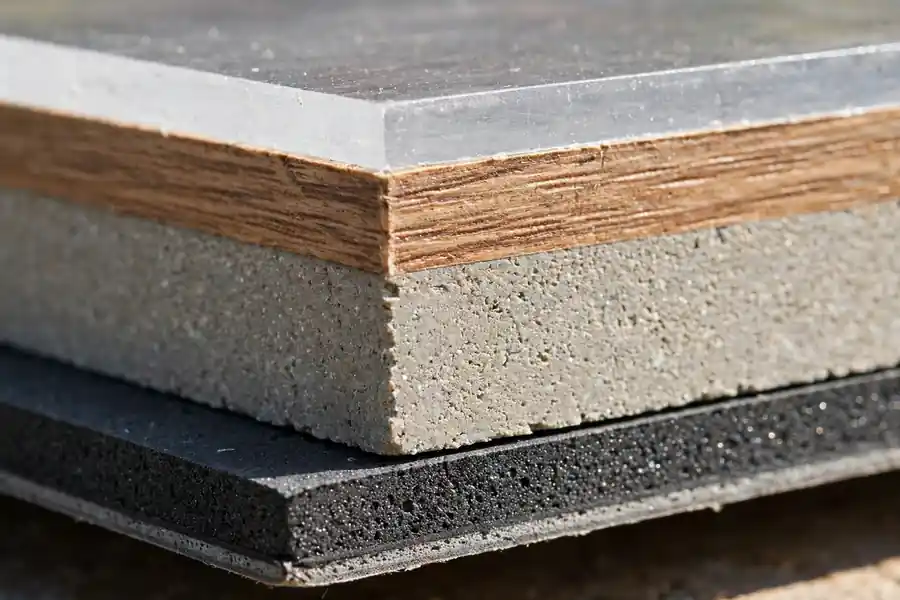
Most LVP has four or five layers. From top to bottom, they do these jobs:
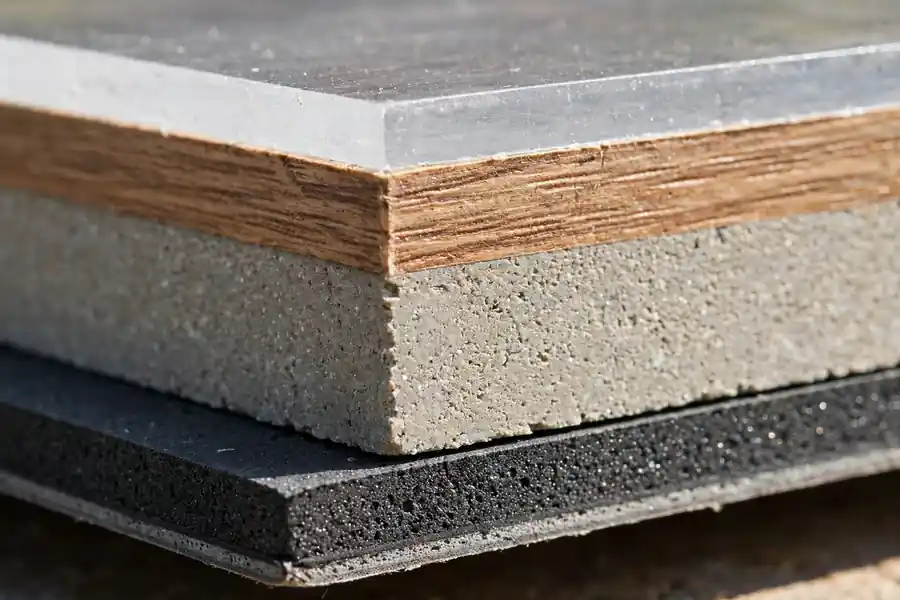
| Layer | What it does |
|---|---|
| Top coat | A UV-cured urethane finish that resists scuffs, stains and scratches |
| Wear layer | A clear vinyl film that takes the daily wear. Its thickness is measured in mils |
| Decor layer | A printed photo of wood grain and color |
| Core | The structural body of the plank: flexible PVC, WPC or SPC |
| Backing (optional) | An attached pad, often foam or cork, for comfort and sound |
Some makers combine the top coat and wear layer in their descriptions. The order stays the same. Cheaper planks often skip the attached pad, so you buy underlayment separately.
What are the types of LVP core: flexible, WPC and SPC?
The core decides how the plank feels and how it holds up. Three types cover most of the market.
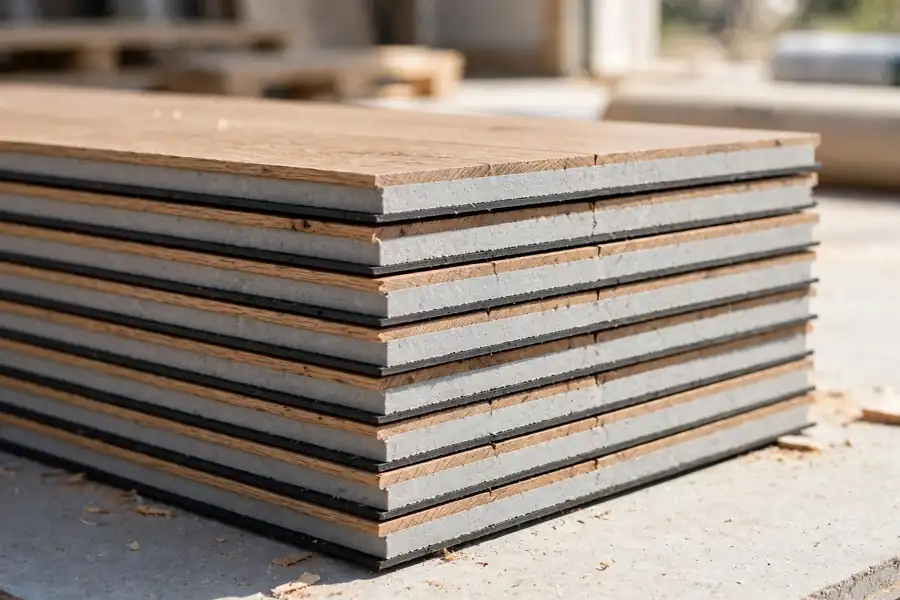
| Core | Made of | Typical thickness | How it behaves |
|---|---|---|---|
| Flexible vinyl | PVC | About 2 to 4 mm | Thin and bendy. Needs a very smooth subfloor |
| WPC (wood plastic composite) | Wood flour and PVC, often foamed | About 5 to 8 mm | Softer and quieter underfoot. More forgiving on uneven floors. Dents more easily under heavy weight |
| SPC (stone plastic composite) | Limestone powder and PVC | About 3 to 7 mm | Dense and rigid. Resists dents and holds its shape through temperature changes |
Thickness ranges vary by brand, so check the spec sheet for any product you are considering.
If you want a floor that shrugs off dropped pans and rolling chairs, SPC is the usual pick. If you want a softer feel and your subfloor is not perfectly flat, WPC is worth a look.
What is the difference between LVP and LVT?
LVP is the plank version and LVT is the tile version of the same kind of floor. LVP tends to be thicker and often clicks together, while LVT is more often glued down.
| LVP | LVT | |
|---|---|---|
| Shape | Long planks | Squares or rectangles |
| Common look | Hardwood | Stone or ceramic tile |
| Usual install | Click-lock floating floor | Often glued down |
| Best for | Living areas, bedrooms, kitchens | Bathrooms, entryways, tile-look spaces |
The names overlap in stores. Some sellers call every luxury vinyl product LVT. Read the product description for the real shape and core.
How thick should the wear layer be?
For most homes, a 12 mil wear layer is a practical minimum, and 20 mil is a better choice if you have pets, kids or heavy traffic. A mil is one thousandth of an inch, so 12 mil is 0.3 mm and 20 mil is about 0.5 mm.
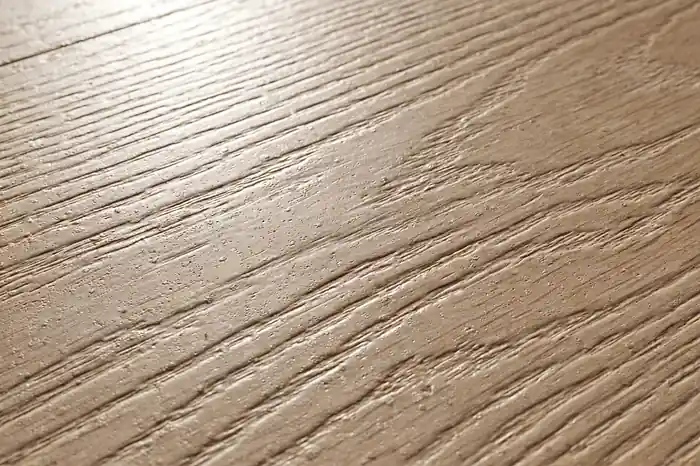
Sellers do not agree on exact cutoffs. This table shows the ranges that appear most often.
| Wear layer | Typical use |
|---|---|
| 6 to 12 mil | Bedrooms and light traffic. Often the budget range |
| 12 to 20 mil | Living rooms, hallways and kitchens in most homes |
| 20 to 28 mil | Busy households and light commercial use |
| 28 mil and up | Commercial spaces |
Budget planks are often 6 to 12 mil and premium ones 20 to 28 mil. Some sellers call 12 mil enough for a home and keep 20 mil for commercial use. Treat 12 and 20 as the two numbers to remember.
A thicker wear layer lasts longer against scratches. It does not make the plank stronger overall. The core still decides dent resistance.
Is LVP waterproof?
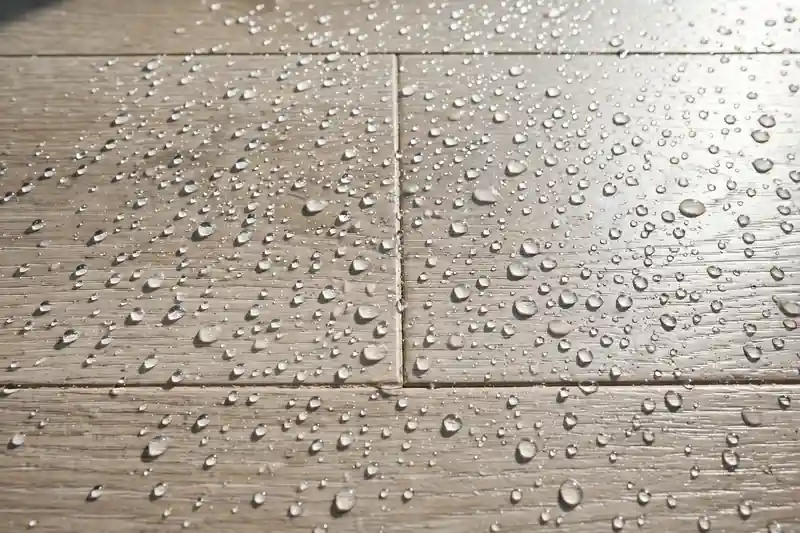
The plank itself resists water, and most modern LVP will not swell or rot when it gets wet. The whole floor is a different story. Water can get through the seams between planks and sit on the subfloor underneath, and the vinyl on top then traps it there.
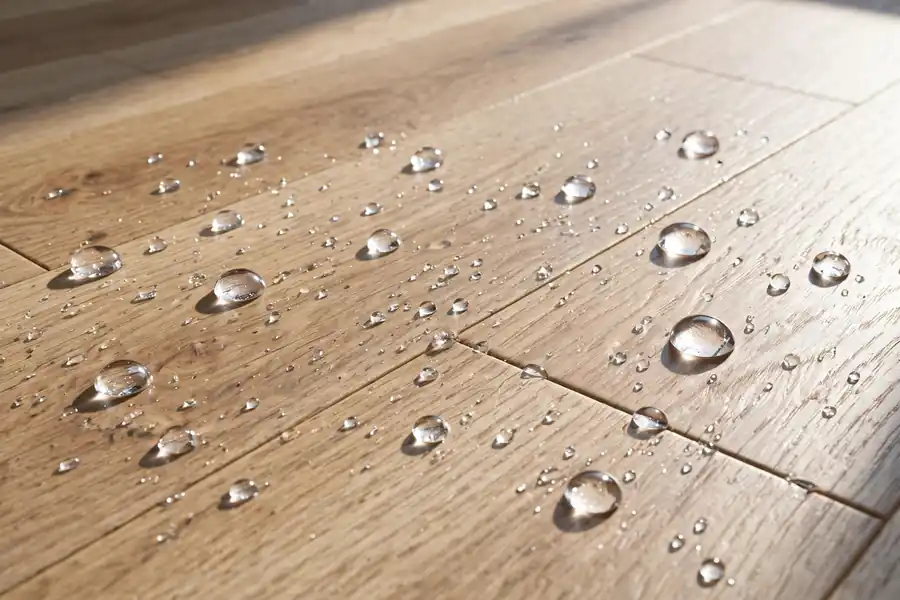
Here is where the risk sits:
- Seams. Water can seep between planks if they are not installed tightly or if water stands for a long time.
- Subfloor. A sealed vinyl floor slows drying, so moisture underneath can lead to mold. Mold can start forming within days of a leak.
- Core type. SPC is the most stable when wet. WPC contains wood material that can absorb moisture under extreme conditions.
- Install method. Click-lock floors usually handle water better than glue-down floors, because the seams are tighter and the adhesive can hold moisture against the subfloor.
Wipe up spills fast. After a leak or flood, check the subfloor and have it dried properly. Water-damage professionals work to an industry drying standard called IICRC S500, and it applies even to floors sold as waterproof. A label like "100% waterproof" is marketing language, not a guarantee about your subfloor.
How long does LVP last?
LVP is commonly said to last 15 to 25 years in a home. Some sellers give a lower range of 10 to 20 years, and premium commercial-grade planks are said to pass 30. These are seller estimates, not lab results, so treat them as a guide.
Three things move the number most:
- Wear layer thickness. Thicker layers resist scratches longer.
- Subfloor preparation. Early failures often trace back to a poor subfloor and stressed locking joints rather than the wear layer.
- Install quality. Gaps, uneven spots and missing expansion space shorten life.
Warranties for residential LVP generally run from 15 years to lifetime, depending on the brand and wear layer. Read what voids the warranty, such as moisture problems or the wrong install method. Luxury vinyl also generally lasts less long than tile, stone or wood.
How much does LVP cost?
Most quality LVP costs about $2 to $5 per square foot for the material, and premium lines run $5 to $8 in 2026. Installed prices vary more, because labor, subfloor repair and your region all change the total.
| Item | Estimate (2026) |
|---|---|
| Material, quality LVP | $2 to $5 per sq ft |
| Material, premium LVP | $5 to $8 per sq ft |
| Installed, typical range | $3 to $9 per sq ft |
| Installed, low and high extremes | $2 to $12 per sq ft |
| Separate underlayment | $0.25 to $0.50 per sq ft |
Here is a simple example. A 300 square foot living room at $3 to $9 installed would cost about $900 to $2,700. These are estimates, not quotes. Ask two or three local installers for written prices before you decide.
What pushes the price up: a thicker wear layer, an SPC core, an attached pad, and any work needed to level or dry the subfloor.
What are the pros and cons of LVP?
LVP is a strong choice for wet and busy rooms, with real limits on repair and long-term value.
| Pros | Cons |
|---|---|
| Handles spills and humidity better than hardwood or laminate | Can dent or scratch, and cannot be sanded and refinished like hardwood |
| Realistic wood looks in many colors | The wear layer slowly wears down |
| Often comfortable and quieter than tile, especially with an attached pad | Some sellers say it adds less resale value than hardwood |
| Click-lock planks suit many DIY installers and can be replaced one at a time | A bumpy subfloor can show through thin planks |
| Lower material cost than hardwood | Limited recycling options for PVC |
| Many styles to choose from | Radiant heat is limited, commonly to about 85°F (29°C) at the floor surface |
Quality varies widely under the same name, which is the biggest hidden con. A cheap plank and a good plank can look identical in a photo.
Where does LVP work best, and where should you skip it?
LVP works best in rooms that see moisture and daily traffic, as long as the subfloor is flat and dry. It is a weaker fit where the floor or subfloor stays wet or swings between hot and cold.
Good fits:
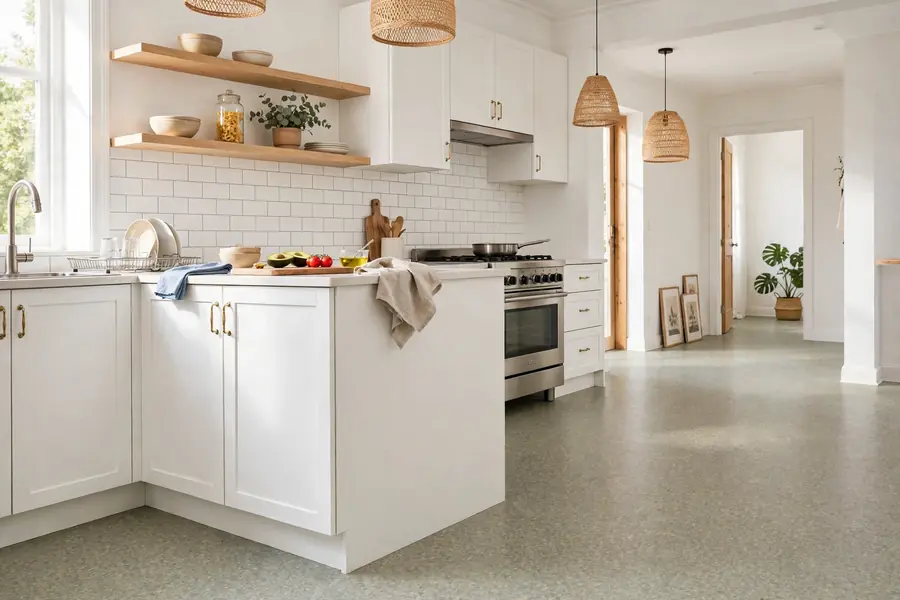
- Kitchens, where spills are common
- Bathrooms and laundry rooms, with tight seams and a dry subfloor
- Basements, once you have checked for moisture
- Living rooms, hallways and bedrooms
- Rental units, where a durable floor needs to look good
Think twice:
- Over a damp, uneven or cracked subfloor you have not fixed
- Sunrooms and uninsulated porches where floor temperatures swing widely. Ask the manufacturer for the temperature limits first
- Anywhere you want a floor you can sand and refinish many times
How is LVP installed?
Most LVP is installed one of three ways. Click-lock planks float over the subfloor and lock together at the edges. Glue-down planks are stuck to the subfloor with adhesive. Loose-lay planks rely on grip and weight with little or no glue.
Click-lock is the most common for homes, and many homeowners do it themselves. The hard part is usually subfloor prep, not the planks. The subfloor needs to be flat, clean and dry before you start, and you should leave the expansion gap at the walls that the manufacturer specifies. Follow the product's own instructions, because they affect the warranty.
What should you check before you buy LVP?
Check these six things on the spec sheet before you order:
- Wear layer. Look for 12 mil or more for a typical home, and 20 mil for heavy use.
- Core type. SPC for dent resistance and stability, WPC for a softer feel.
- Total thickness. Note whether it includes an attached pad.
- Underlayment. If the plank has no pad, add the cost and ask if the maker requires one.
- FloorScore certification. FloorScore is a voluntary indoor air quality label run by the Resilient Floor Covering Institute with SCS Global Services. It means independent testing showed the product's VOC emissions meet California's Section 01350 criteria.
- Warranty terms. Compare residential and commercial coverage, and see what voids it.
Then order a sample. Look at it in your own light, next to your walls and cabinets, before you commit to a full order.
Quick answers to common questions
Is LVP the same as vinyl plank flooring?
Mostly yes. Vinyl plank is the general term and "luxury" is a marketing label, so stores often use the two names for the same product. Compare the wear layer in mils and the core type instead of trusting the word "luxury."
Is LVP better than laminate?
It depends on the room. In kitchens, bathrooms and basements, LVP is the safer pick because laminate's wood-fiber core is more likely to swell when it gets wet. In dry rooms, laminate can be a good value, so compare samples and prices for your space.
Can you put LVP over radiant floor heating?
Often yes, with limits. Each manufacturer sets its own cap on floor surface temperature, commonly around 85°F (29°C), and some want the heat raised slowly. Check your product's instructions first, because going over the limit can void the warranty.
Is LVP flooring safe to have indoors?
Reputable LVP is made to be used in homes, and many products carry a low-emission label. Look for FloorScore certification, ventilate the room during and after installation, and ask the seller for emission test details. For health concerns, talk to your doctor.
Can you refinish LVP flooring?
No. You cannot sand vinyl and apply a new finish the way you can with solid hardwood. Light scuffs can often be cleaned, and a badly damaged click-lock plank can be swapped out. Keep a few spare planks from your original order for repairs.
Keep reading: luxury vinyl flooring, how to install vinyl plank flooring and whether vinyl flooring is waterproof.
Is LVP flooring right for your home?
LVP flooring is a good fit if your floors face spills, pets and daily traffic and your budget sits below hardwood. A 12 to 20 mil plank with an SPC core is a sensible place to start for most homes, and a flat, dry subfloor matters as much as the plank itself.
Choose something else if you want a floor you can sand and refinish for decades, or if you cannot fix a moisture problem under the room. In those cases, hardwood or tile may serve you better.