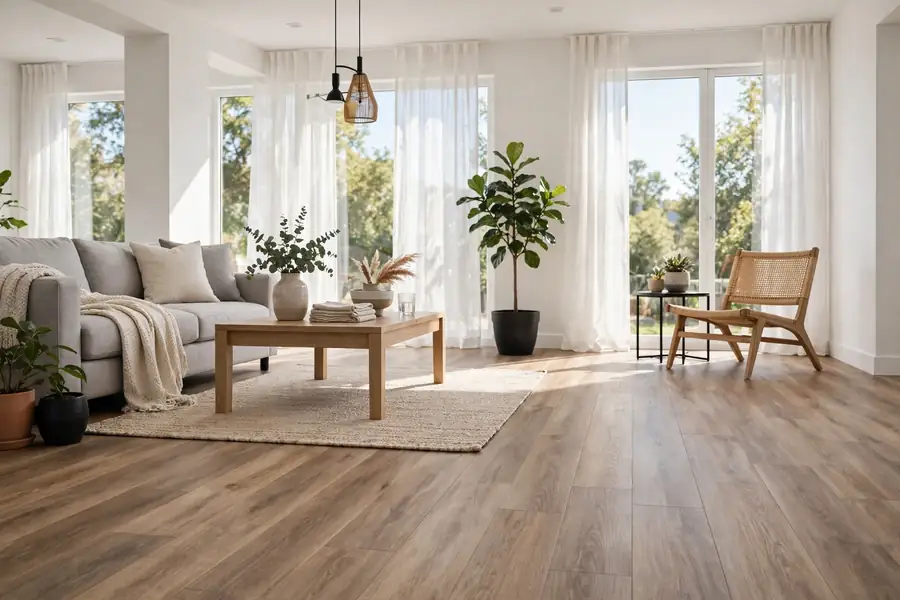
Hybrid flooring is a rigid-core floating plank: a printed wood or stone look on top of a stiff board made of vinyl and mineral or wood filler. The stiff core is what separates it from classic luxury vinyl plank, which has a soft flexible core. It looks like wood, it clicks together without glue, and its core does not swell when it gets wet. In the US you will also see it called rigid core vinyl or hybrid resilient flooring.
Hybrid at a glance
| Feature | What to know |
|---|---|
| Also called | Hybrid resilient flooring (HRF), rigid core vinyl, SPC or WPC flooring |
| Core | Stone plastic composite (SPC) or wood plastic composite (WPC) |
| Total thickness | About 5 to 8 mm, often with a pad attached |
| Wear layer | 12 mil is typical for homes, 20 mil for busy homes |
| Installation | Click-lock floating floor |
| Water | The plank resists water. Seams and the subfloor are still weak points |
| Material cost | About $3 to $8 per square foot in 2026 estimates |
| Lifespan | Sellers claim 20 to 30 years for SPC |
What is hybrid resilient flooring?
Hybrid resilient flooring is the industry name for the same product. "Resilient" means a manufactured floor that gives slightly underfoot, like vinyl. The US standard ASTM F3261 describes this category as tile or plank flooring with a printed surface, a clear wear layer and a rigid polymeric core, sometimes with a pad attached.
The names vary by country and by store. In Australia and parts of Asia, "hybrid" is the everyday word. In North America and Europe, sellers usually say SPC or rigid core vinyl. The product is often the same, so look at the core and the specs, not the label.
| Name you will see | What it usually means |
|---|---|
| Hybrid flooring | A rigid-core plank sold under the "hybrid" label |
| Hybrid resilient flooring (HRF) | The industry term for rigid-core planks and tiles |
| Rigid core vinyl | A vinyl plank with a stiff core |
| SPC | A rigid core made with limestone powder |
| WPC | A rigid core made with wood-type filler and foam |
| Classic LVP | Luxury vinyl plank with a flexible core, not a hybrid |
Some sellers describe hybrid as a blend of vinyl and laminate. That is a marketing shorthand. It borrows the stiff board feel of laminate and the water tolerance of vinyl, but the core is not fiberboard, so it behaves differently from laminate.
What is a hybrid plank made of?
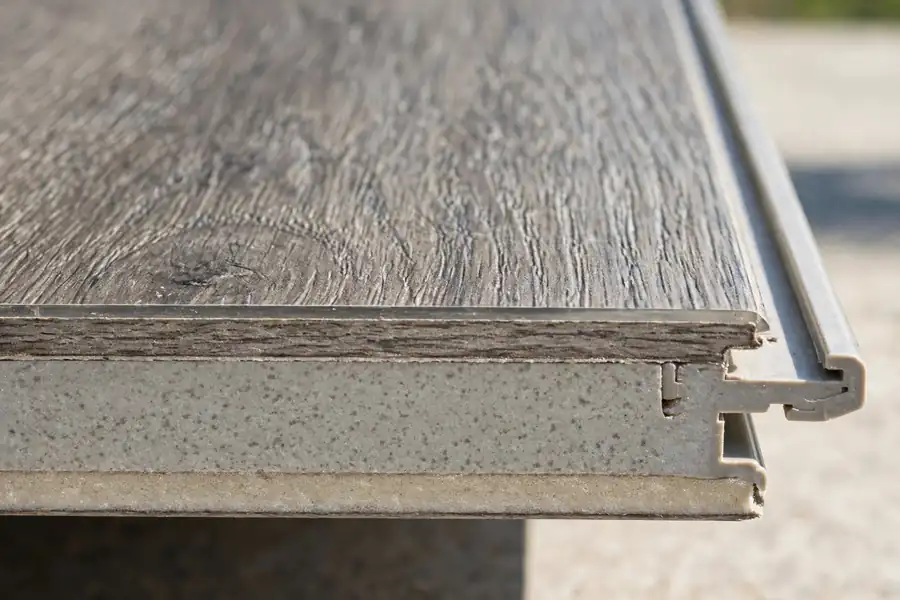
Most hybrid planks have four layers. From top to bottom, they are a UV-coated wear layer, a printed decorative layer, a rigid core, and often an attached underlay of foam, commonly IXPE or EVA, for comfort and sound. The core is what makes the floor hybrid.
| Core | Made of | Feels like | Strengths | Watch out for |
|---|---|---|---|---|
| SPC (stone plastic composite) | Limestone powder and PVC | Hard and firm | Resists dents, stable when temperatures change | Cold and loud without a pad |
| WPC (wood plastic composite) | Wood-type filler, PVC and foam | Softer and warmer | Comfortable and quieter | Dents more easily, more sensitive to heat |
Typical thickness is about 5 to 7 mm for SPC and 6 to 8 mm for WPC, based on vendor guides. A thicker plank is not always a better one. The core and the click joint matter more than the number of millimeters.
Some brands sell cores under other names, such as EPC (engineered plastic core), IPC (infused polymer core) or MGO (magnesium oxide). These are brand terms, and the names are not standard. Ask what the core is made of and look for a spec sheet.
How does hybrid compare with LVP and laminate?
Hybrid sits between classic LVP and laminate. It is stiffer than classic LVP, so it resists dents better and copes with small subfloor flaws more easily than thin, flexible vinyl. It handles water far better than laminate, whose fiberboard core swells when it gets wet.
| Laminate | Classic LVP | Hybrid | |
|---|---|---|---|
| Core | Fiberboard | Flexible PVC | Rigid SPC or WPC |
| Wet rooms | Poor | Good | Good |
| Feel underfoot | Hard | Soft | SPC hard, WPC softer |
| Dent resistance | Good | Fair | SPC good, WPC fair |
| Subfloor flaws | Shows | Shows through | More forgiving, but still needs a flat floor |
| Typical cost | Lowest | Low to mid | Usually higher than classic LVP |
Hybrid is usually more expensive up front than classic LVP, and laminate is cheaper than both.
What are the pros and cons of hybrid planks?
| Pros | Cons |
|---|---|
| Core does not swell from surface water | Costs more than classic LVP and laminate |
| Stiff and stable, with good dent resistance (SPC) | A cheap click joint can fail over time |
| Click-lock installation suits many DIYers | WPC dents more easily, and SPC feels hard and cold |
| Attached underlay adds comfort and cuts noise | Seams and subfloor can still let water through |
| Many wood and stone looks | Limited recycling options for PVC-based products |
| Often allowed over radiant heat within limits | Quality varies a lot between brands |
Is a hybrid floor waterproof?
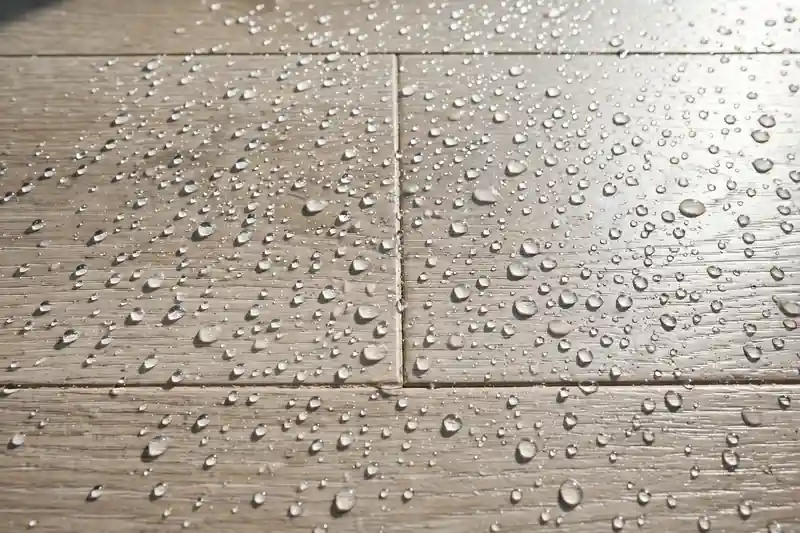
The planks resist water, and a rigid core does not swell the way a fiberboard core does. That does not make the whole floor waterproof. Water that sits in the seams for a long time can get under the floor, and the subfloor can stay wet beneath the planks. Wipe up spills, and treat "100% waterproof" as marketing language about the plank, not a promise about your subfloor.
What should you check on a spec sheet?
Compare these specs before you buy, and order a sample. Two floors that look the same can differ a lot in the details.
- Wear layer. Look for 12 mil for a typical home and 20 mil with pets, kids or heavy traffic.
- Core type. SPC for dent resistance and stability, WPC for a warmer, quieter feel.
- Total thickness. Note whether it includes the attached pad.
- Attached pad. If there is one, do not add a second layer of underlayment.
- Click joint. Test the sample. Lock two pieces together and see how tight and strong the joint is.
- Certification. FloorScore is a voluntary indoor air quality label for resilient flooring.
- Warranty. Compare residential and commercial coverage, and what voids it.
How much do hybrid floors cost?
Materials usually run about $3 to $8 per square foot in 2026 estimates, with SPC from about $3 to $7 and WPC from about $3 to $8. Installed prices run higher, with one estimate averaging about $5.50 to $9.50 per square foot.
| Item | Estimate (2026) | For a 300 sq ft room |
|---|---|---|
| Material, SPC or WPC | $3 to $8 per sq ft | $900 to $2,400 |
| Installed, average | $5.50 to $9.50 per sq ft | $1,650 to $2,850 |
These are estimates, not quotes. Hybrid usually costs more than classic LVP, so compare prices for similar wear layers.
How long do hybrid floors last?
Sellers claim 20 to 30 years for SPC, and many offer long residential warranties. These are seller estimates, not lab results. The wear layer, the quality of the click joint and the installation matter most. A flat, dry subfloor and a properly spaced wall gap protect the floor for the long term.
Where do hybrid floors work best?
| Space | Fit |
|---|---|
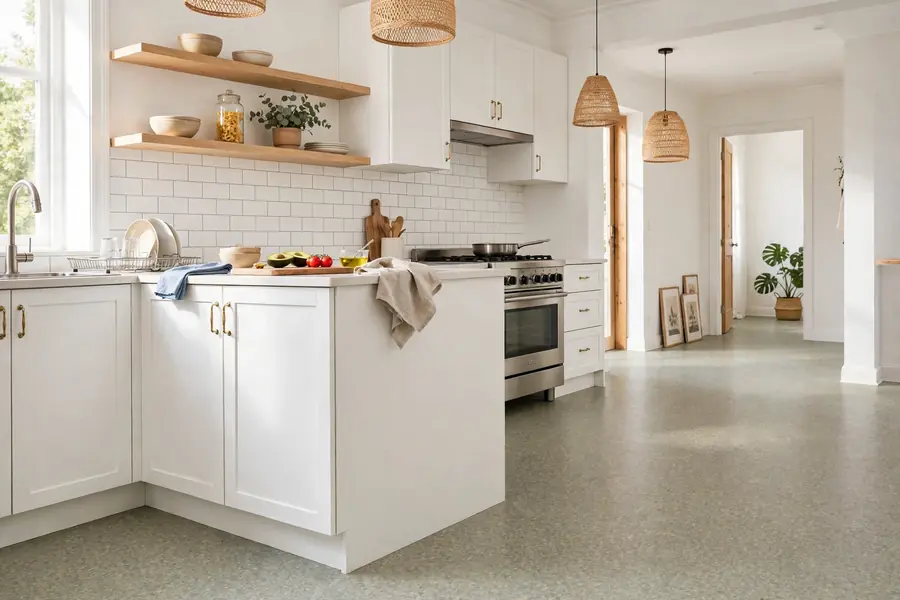
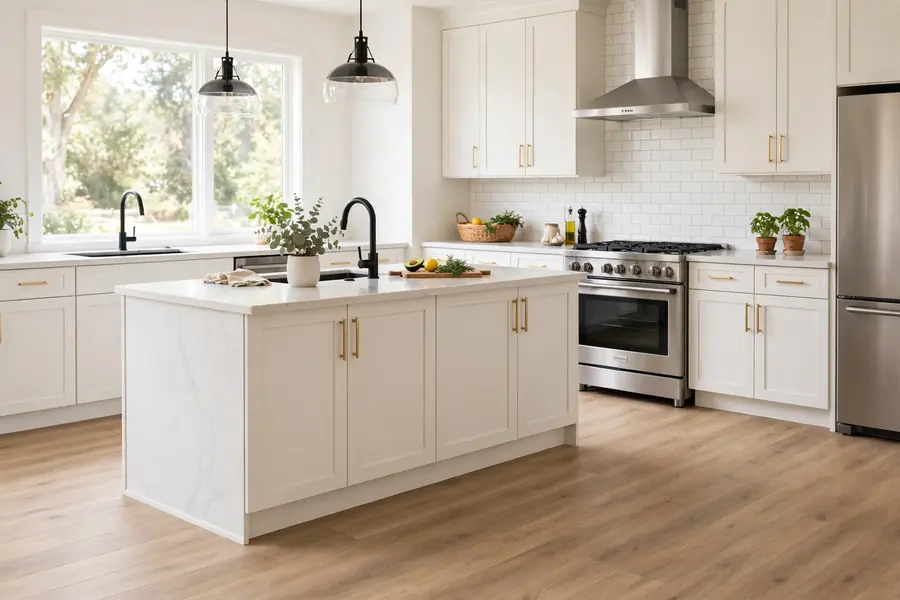
| Kitchen and laundry | Good, with a dry subfloor |
| Bathroom | Good, with sealed edges and no standing water |
| Basement | Good after a moisture test on the slab |
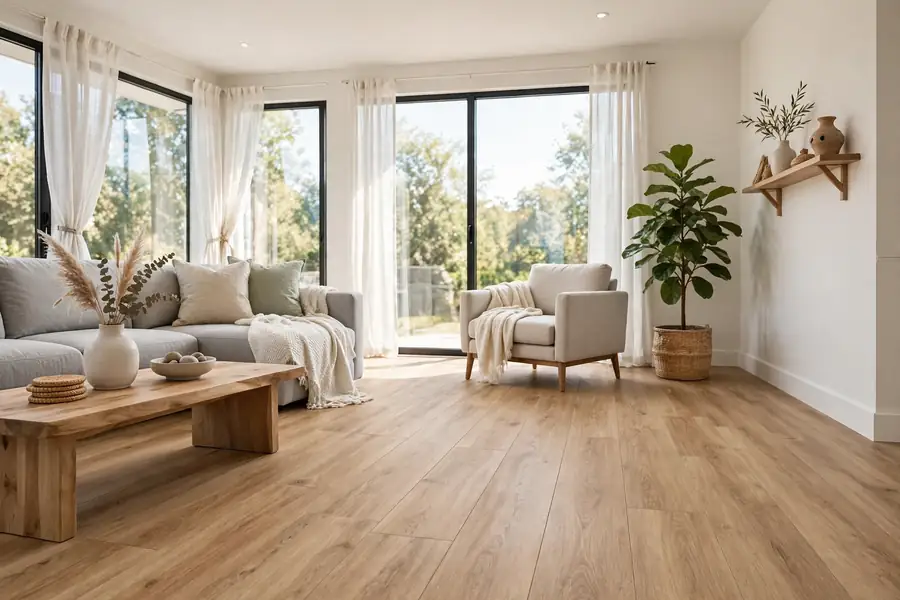
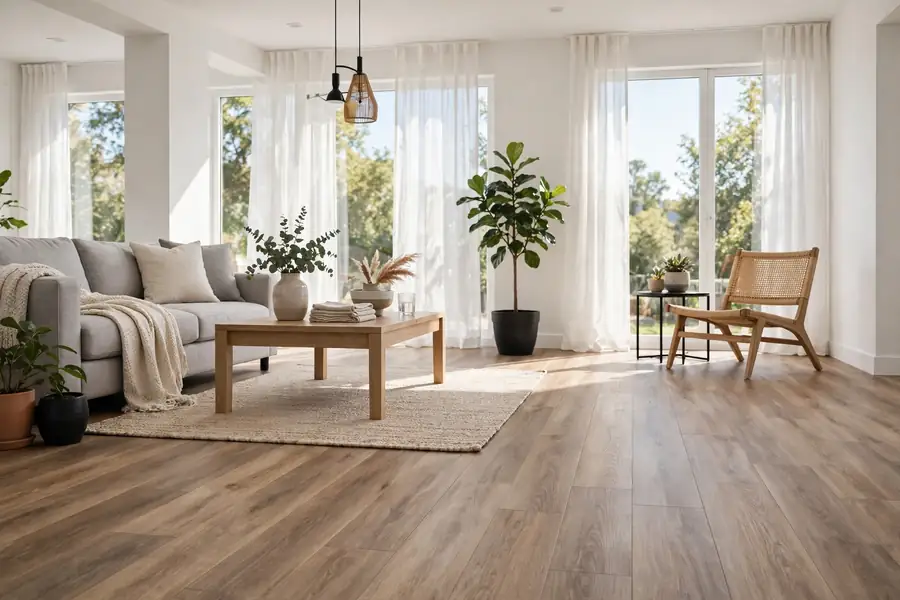
| Living room and bedrooms | Good |
| Over radiant heat | Often fine within the maker's temperature limit. SPC copes better than WPC |
| Sunrooms with strong heat | Check the maker's limits first |
How are hybrid floors installed?
Most hybrid planks are click-lock floating floors, installed much like other floating planks. Prepare a flat, clean, dry subfloor, leave the expansion gap the maker asks for, stagger the end joints, and cut the last row to fit. Follow your product's instructions, because the locking profile differs by brand.
Quick answers to common questions
Is hybrid flooring the same as SPC?
Not exactly. Hybrid is the broader category of rigid-core planks, and SPC is one of the two main cores sold under the hybrid label. The other is WPC. In the US, many stores simply call the product SPC.
Is hybrid flooring waterproof?
The core resists surface water, but the floor is only as waterproof as its seams and subfloor. Wipe up spills, and have the subfloor dried if water gets under the planks.
Is hybrid flooring better than laminate?
In kitchens, bathrooms and basements, yes, because laminate's fiberboard core swells in water. In dry rooms, laminate can be good value. Compare samples and prices for your own space.
Does hybrid flooring scratch easily?
The wear layer decides that. A 12 mil layer handles most homes, and 20 mil is better with pets or heavy traffic. WPC dents more easily than SPC, so protect it with felt pads under furniture.
Can you install hybrid flooring over tile?
Often, if the tile is sound, flat and clean. Fill deep grout lines first, and check your maker's rules. Hybrid is more forgiving than thin vinyl, but a bumpy floor can still show through.
Keep reading: SPC flooring, what LVP flooring is and resilient flooring.
Is hybrid flooring worth buying?
Hybrid flooring is a good choice for kitchens, bathrooms, basements and busy family rooms where you want a wood look and a core that does not swell in water. It costs more than classic LVP, so it pays off most where water, dents or an uneven subfloor are a worry.
Choose laminate or classic LVP if you have a dry room and a tight budget, and choose real hardwood if you want a floor you can sand and refinish. Whichever you pick, read the spec sheet and order a sample first.