A dull knife crushes a tomato instead of slicing it, and it needs more force, which is when cuts happen. To fix that, you need to know how to sharpen kitchen knives at the right angle for the knife in your hand, with a whetstone for a full edge reset and a honing steel for upkeep between sharpenings. Most home cooks need a combination whetstone, a steel or ceramic rod, a damp towel, and ten minutes of steady practice. This guide gives one method per tool, the angles the makers state, and the cases where a knife should go to a professional instead.
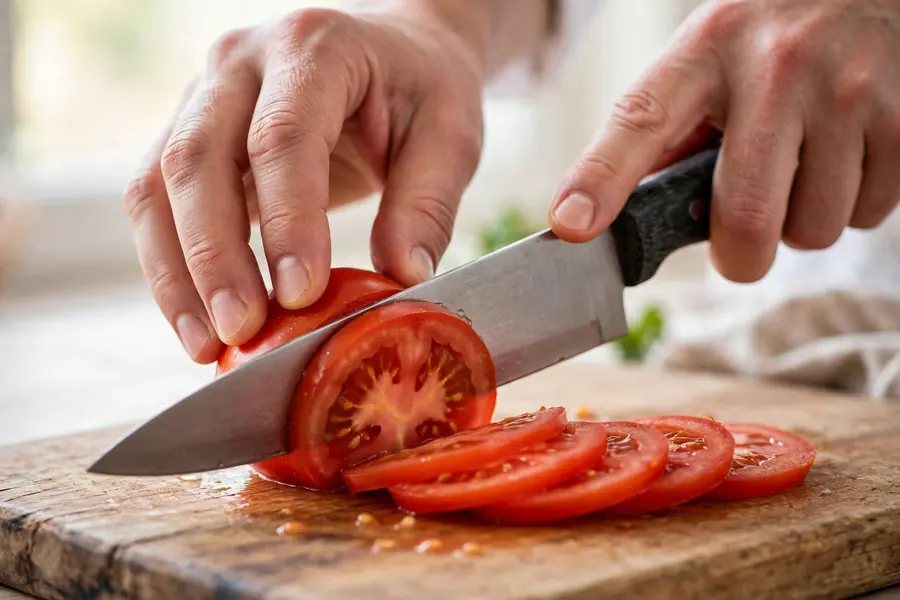
Kitchen knives at a glance
| Method | What it does | Best for | Effort |
|---|---|---|---|
| Whetstone | Grinds steel off to form a new edge | A dull knife that honing no longer helps | 10 to 20 minutes, plus practice |
| Honing steel or ceramic rod | Straightens the edge without grinding a new one | Upkeep before cooking | Under a minute |
| Pull-through sharpener | Grinds with fixed slots | A cheap, soft steel knife in a hurry | Under a minute, with more steel removed |
| Electric sharpener | Grinds with motor driven wheels | A dull knife when speed matters more than edge life | A few minutes, with more steel removed |
| Unglazed mug or plate | Acts as a rough ceramic surface | A quick touch-up when no sharpener is in the house | A few minutes, light touch only |
| Professional service | Grinds, repairs, and resets edges with shop equipment | Serrated knives, ceramic knives, chips, and single-bevel blades | Drop off or mail in, per knife pricing |
How do you tell if a knife needs sharpening or only honing?
A knife that needs honing still has an edge, but the edge has folded over in tiny bends from use, so it feels dull and drags. A knife that needs sharpening has lost steel from the edge, so straightening it changes nothing. Wusthof describes the difference the same way in its sharpening guide, read October 27, 2026: honing realigns the edge, while sharpening takes a small amount of steel off to create a new edge.
Test the knife before you pick a tool. Hold a sheet of printer paper by its top edge and slice down from the heel of the blade. A sharp knife cuts cleanly. A knife that tears the paper or catches needs sharpening. A knife that cuts paper but drags on a tomato skin, and has not been honed in a while, often needs honing only. Hone first. If the knife still tears paper after honing, sharpen it.
What angle should you sharpen a kitchen knife at?
The angle is the tilt between the blade and the stone, measured per side, and it must match the bevel the maker ground into the knife. A steeper angle cuts longer between sharpenings but feels less keen. A lower angle slices more easily but chips more readily. Use the maker's own number for the knife you own, not a single number for every knife.
| Knife maker | Guidance stated by the maker |
|---|---|
| Wusthof, standard blades | 14 degrees per side, from the Wusthof sharpening guide read October 27, 2026 |
| Wusthof, Asian style blades | 10 degrees per side, from the same guide |
| Shun | 16 degrees per side, as stated in Shun knife care guidance |
| Global | 10 to 15 degrees to the stone, as stated in Global knife care guidance |
| Victorinox | 20 degrees, as stated in Victorinox knife care guidance |
If you cannot find the maker's number, use the marker method. Color the bevel with a permanent marker, make one light pass on the stone, and look at where the marker wore off. Marker gone from the whole bevel means the angle matches. Marker gone only at the edge means the angle is too low. Marker gone only at the top of the bevel means the angle is too high. Adjust and test again. Keep the same angle on every stroke, on both sides.
How to sharpen kitchen knives with a whetstone?
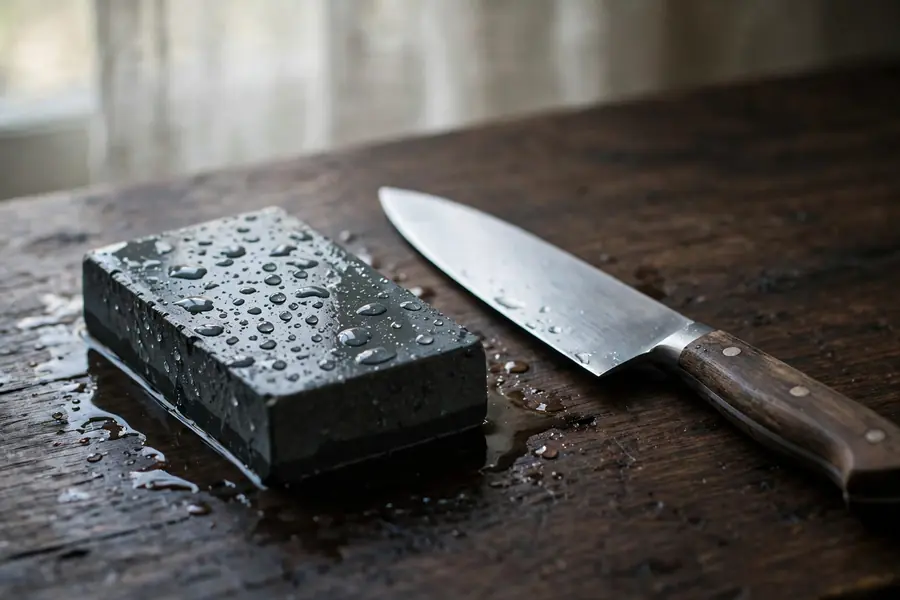
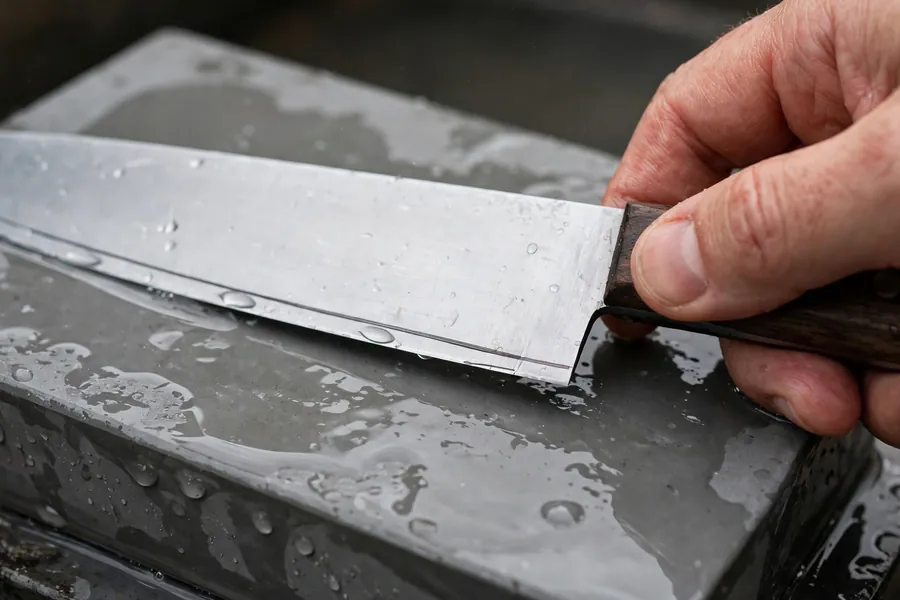
A whetstone gives the most control, and it is the method the makers of Japanese knives point to first. Start with a combination stone, coarse on one side and fine on the other. A 1000 grit coarse side with a 6000 grit fine side suits most kitchen knives. Soak a water stone for about 10 minutes, until it stops releasing bubbles, then set it on a damp towel so it cannot slide. Keep your fingers behind the blade path, work slowly, and keep the stone wet through the whole job.
- Set the stone coarse side up. Hold the knife by the handle with one hand and rest the fingers of the other hand lightly on the flat of the blade, clear of the edge.
- Place the heel of the blade on the stone at the bevel angle. Push the blade forward and across the stone, as if slicing a thin layer off its top, sweeping from heel to tip in one smooth stroke.
- Repeat on the same side until you feel a burr, a tiny ridge of metal, along the whole edge on the opposite side. Check by running a fingernail gently from the spine toward the edge, never along it.
- Flip the knife and repeat on the other side until the burr forms on the first side.
- Alternate sides with fewer strokes each time, and lighten the pressure, until the burr is gone from both sides.
- Flip the stone to the fine side. Repeat the same strokes with light pressure, a few passes per side, to refine the edge.
- Wash the knife by hand with soap and water, dry it at once, and wipe the stone clean.
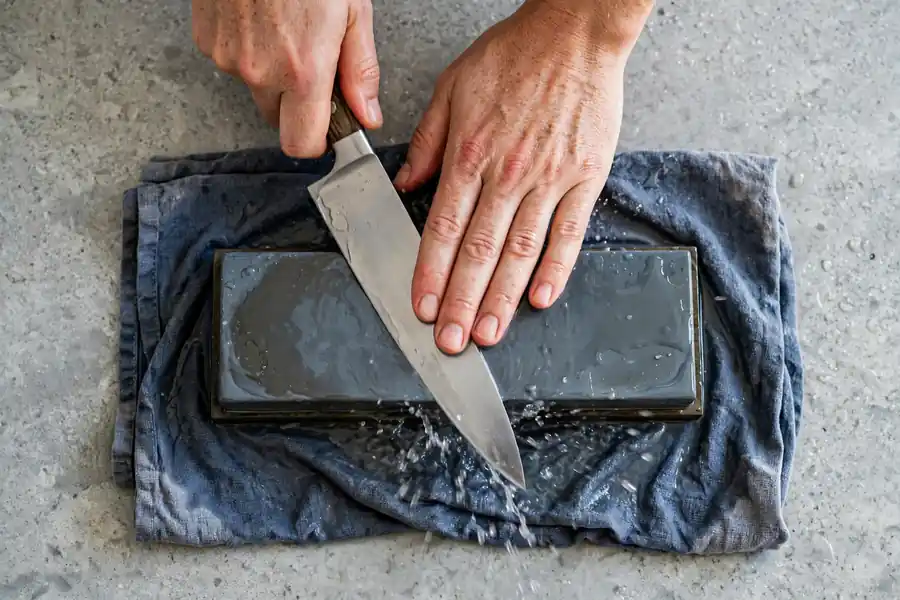
A whetstone removes steel, so a full sharpening shortens the life of the blade a little each time. That is normal, and it is why a whetstone job is a reset, not a daily task. Do not press hard to speed it up. Heavy pressure heats the edge, gouges the stone, and makes the angle wander.
How do you use a honing steel or rod?
A honing steel does not sharpen. It pushes a folded edge back straight, which is why a knife can feel sharp again after a few passes and then feel dull again soon after. Use it for upkeep, not as a substitute for a stone. A smooth steel suits most Western knives. A ceramic rod is harder and suits harder Japanese steel, and it removes a very small amount of metal as it straightens the edge. A diamond rod is coarser still, and it belongs on a very dull knife, not on a knife that only needs upkeep.
- Set the tip of the steel on a cutting board or a folded towel, holding the steel upright and steady.
- Hold the knife at the bevel angle against the steel, heel at the top of the steel.
- Draw the blade down and across the steel, heel to tip, with light pressure.
- Repeat on the other side. Wusthof's guide, read October 27, 2026, gives 6 to 8 alternating passes for its knives.
- Wash the knife by hand after honing to remove loose steel particles.
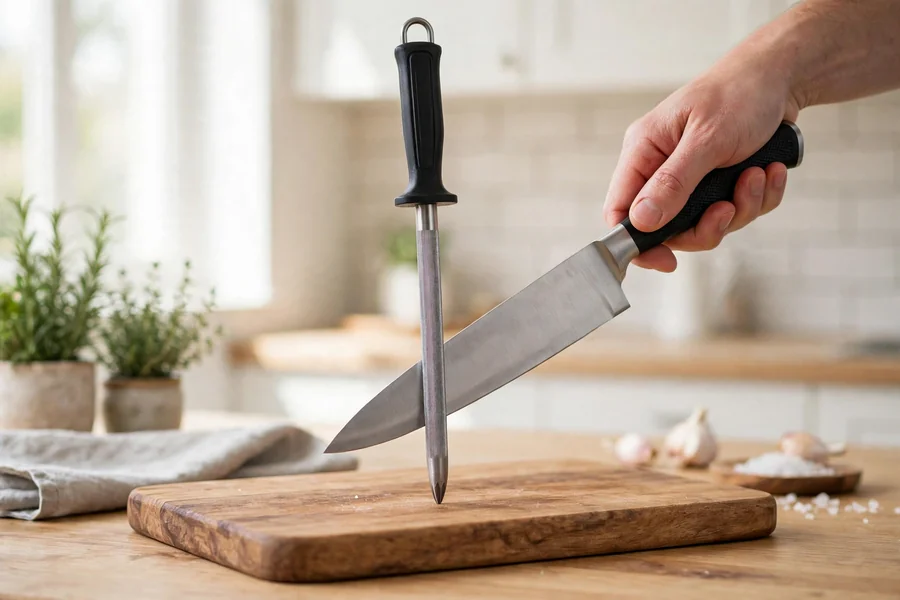
Hone before you cook, or a few times a week for a knife you use daily. When honing stops bringing the edge back, the knife needs the whetstone. A steel cannot fix a chipped edge, a rolled edge that will not straighten, or an edge that has lost its bevel.
How do you sharpen kitchen knives without a sharpener?
A rough, unglazed ceramic surface can stand in for a stone for a light touch-up. Turn a ceramic mug upside down and use the unglazed ring on its base, or use the unglazed ring on the base of a ceramic plate. The surface must be rough to the touch. A fully glazed base will do nothing.
- Set the mug upside down on a damp towel so it cannot move.
- Hold the knife at the bevel angle against the rough ring.
- Draw the blade across the ring from heel to tip, with light pressure, a few passes per side.
- Wash the knife by hand and dry it at once.
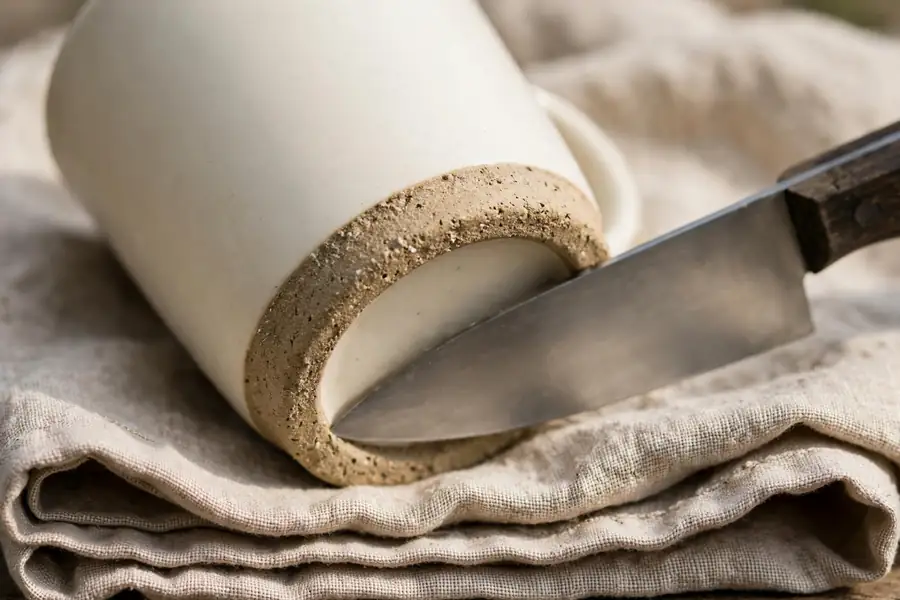
This method suits a standard stainless steel chef's knife that has gone slightly dull. It does not suit a serrated knife, a ceramic knife, or a hard Japanese knife, which need their own tools. It also cannot repair a truly dull or damaged edge. Treat it as a stopgap until you can use a stone or send the knife to a professional.
How do you sharpen serrated kitchen knives?
A serrated knife cuts with teeth, and each tooth has its own small curved edge. Grinding the flat back of the blade or running it through a pull-through sharpener flattens those teeth and ruins the cut. Do not sharpen a serrated knife the way you sharpen a straight edge.
Sharpen only the beveled side, which is usually the side with the visible serrations ground into it, and work one gullet at a time. Use a tapered ceramic or diamond rod that fits the curve of a gullet. Seat the rod in one gullet, hold the angle of that curve, and push the rod through with a few short strokes. Move to the next gullet and repeat down the whole blade. Then lay the flat side of the blade almost flat on a fine stone and make one or two very light passes to remove the burr. Wusthof's guidance for its serrated bread knives, read October 27, 2026, is to leave a full sharpening to a professional, and to use a honing steel lightly along the edge only to straighten a bent serration.
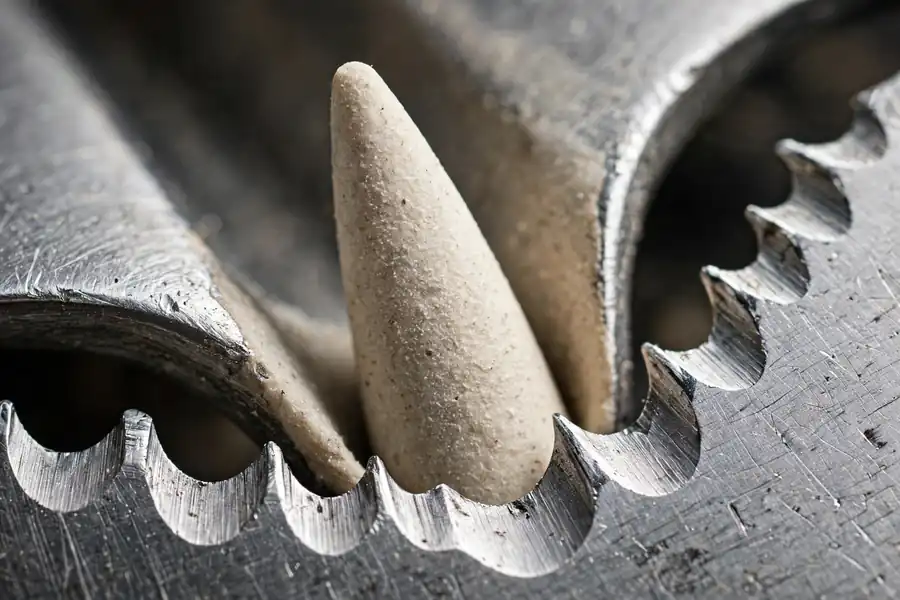
A bread knife that still saws through crust cleanly does not need this work. When it starts tearing the crust or crushing the loaf, sharpen it, or send it out. Most owners are better off sending a serrated knife to a professional once it is truly dull, because matching every gullet by hand takes patience and a rod of the right size.
How do you sharpen ceramic kitchen knives?
A ceramic knife is made from zirconium oxide, which is far harder than steel. A steel whetstone, a honing steel, and a pull-through sharpener cannot cut it, and pressing harder only risks chipping the blade. Ceramic knives need a diamond stone or diamond rod, or the maker's own sharpening service.
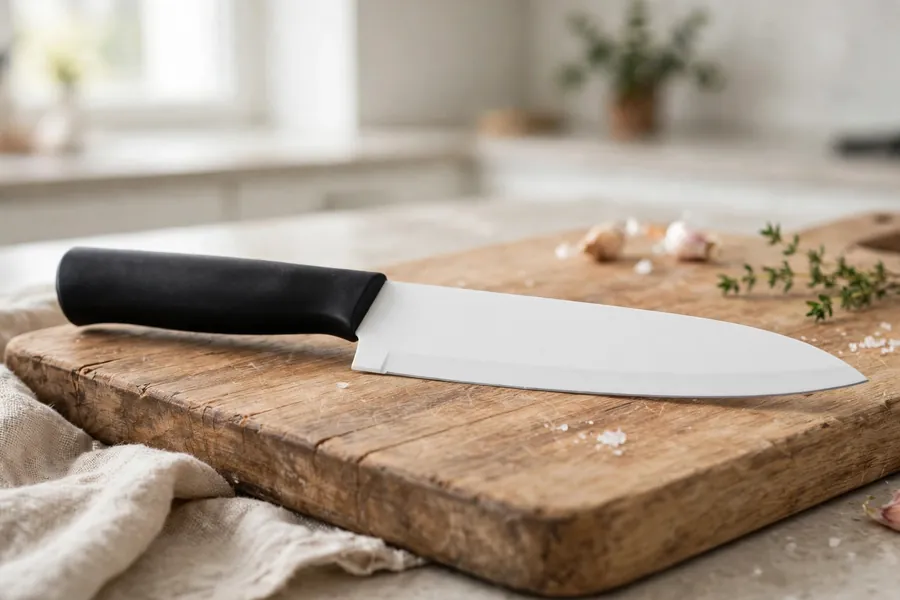
Do not use a honing steel on a ceramic knife. Do not run it through a carbide pull-through slot. If the knife has a chip, do not try to grind the chip out at home. Send it to the maker or to a sharpener who states plainly that they handle ceramic blades. A ceramic knife holds its edge far longer than a steel knife, so it needs this service far less often, but it is also more brittle, so it must never pry, twist, or cut frozen food.
How do you sharpen Japanese kitchen knives?
A Japanese knife needs a lighter hand than a Western knife, because its steel is harder and its edge is thinner. Most Japanese kitchen knives are double-bevel, ground on both sides, and a whetstone at the maker's angle is the right tool. A single-bevel knife, such as a yanagiba for slicing raw fish, is ground mostly on one side, with a slight hollow on the other, and it must be sharpened mostly on the ground side, with only a light pass on the back to remove the burr. Sharpening a single-bevel knife equally on both sides changes its shape.
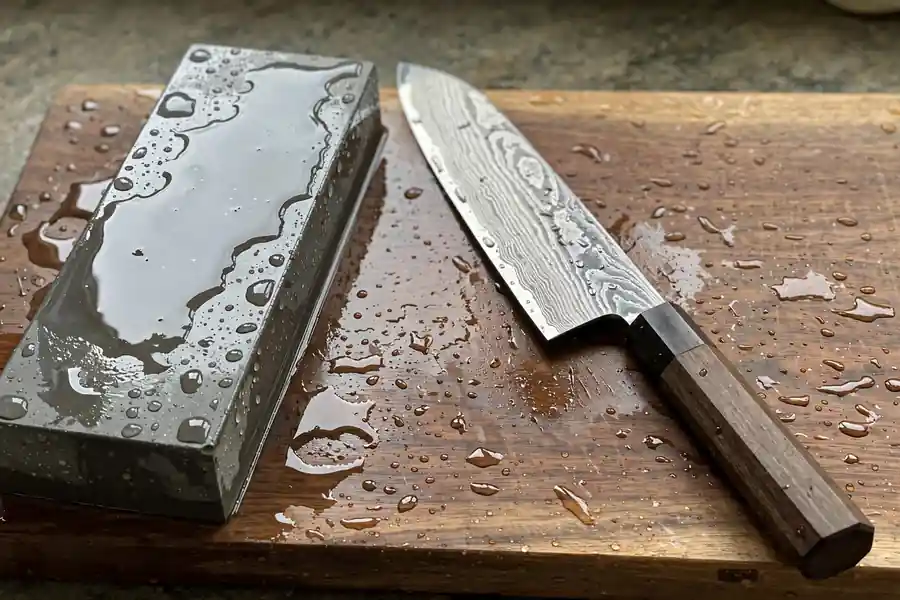
Keep three rules for any Japanese knife. First, use a water stone and light pressure, and let the stone do the work. Second, never use a carbide pull-through sharpener or an electric sharpener with fixed slots, because those slots are set for a wider Western angle and will tear the thinner edge. Third, store the knife in a block, on a magnetic strip, or in a sheath, never loose in a drawer, because hard steel chips when it knocks against other metal. Shun states a 16 degree angle per side for its knives, and Global states 10 to 15 degrees to the stone, so check the maker before you start, and do not guess.
How often should you sharpen kitchen knives?
Frequency follows use, not the calendar. A home cook who uses a chef's knife most days should hone it before cooking and expect a whetstone sharpening every 3 to 6 months. A knife used once a week can go a year between sharpenings. A knife used on bones, frozen food, hard squash, or a glass board will need sharpening sooner, because those jobs fold and chip the edge.
Watch for signs instead of counting months. A knife needs sharpening when honing no longer restores it, when it slides off an onion skin instead of biting, when it tears paper after honing, or when you find yourself pressing harder to make a cut. A knife that still bites and slices cleanly after honing is not due. Sharpening a knife that is already sharp only removes steel for no gain.
What mistakes ruin a knife edge?
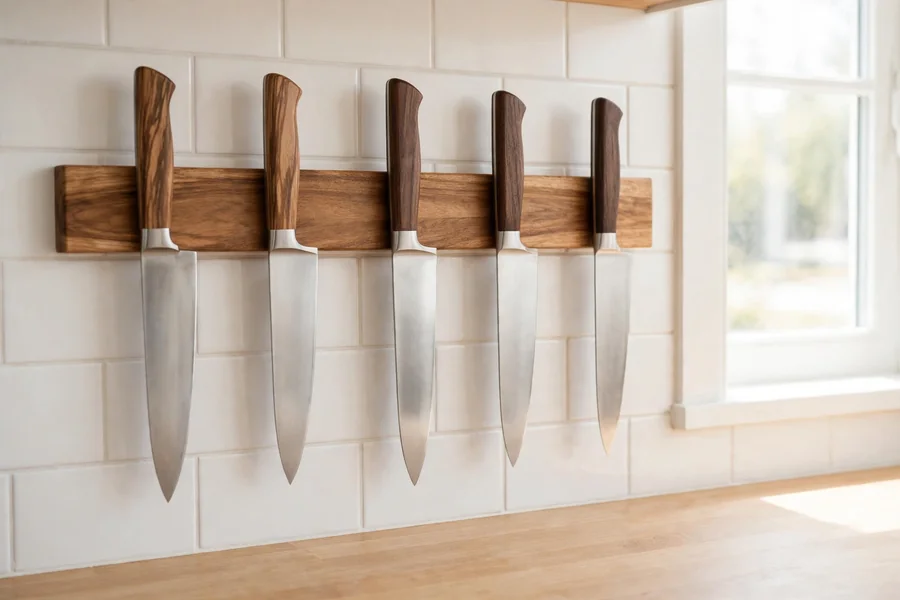
The fastest way to dull a knife is the surface under it. Glass, ceramic, marble, and granite boards blunt an edge with every cut. Use wood or plastic boards, and keep a separate board for raw meat. The second fastest way is storage. A knife loose in a drawer knocks its edge against other tools and chips it. A block, a magnetic strip, or a sheath keeps the edge clear.
Dishwashers damage knives in two ways: the blade knocks against other items, and the hot, damp cycle spots and stains steel. Hand wash and dry at once. Cutting frozen food, bones, and hard pits with a chef's knife folds and chips the edge, so use a cleaver or a saw for those jobs. Pressing hard through food instead of sharpening is a safety risk as well as an edge risk, because a dull knife slips. Finally, sharpening at a wandering angle, or running a hard Japanese knife through a fixed angle pull-through slot, grinds a new bevel that fights the maker's geometry. Hold one angle, use light pressure, and stop when the burr is gone.
When should a professional sharpen your knives instead?
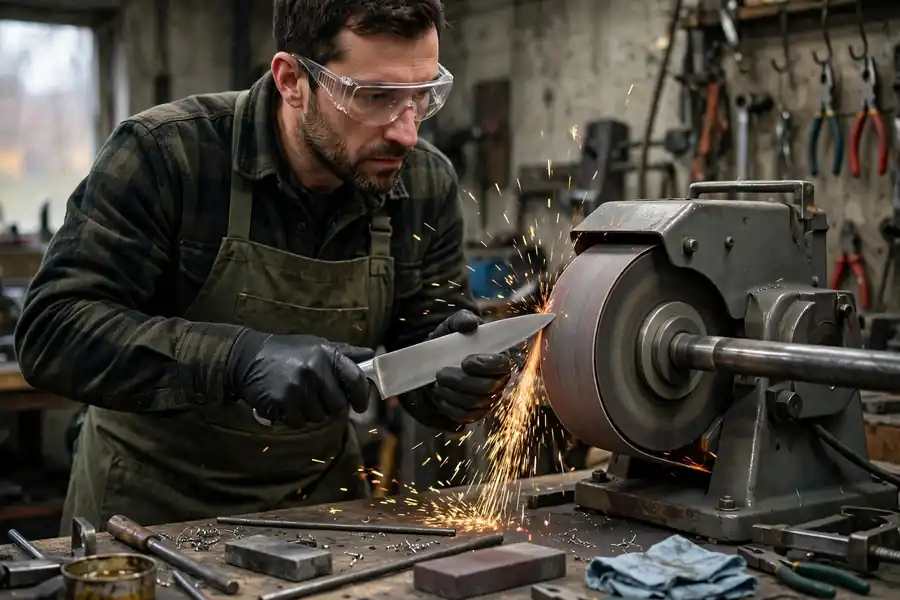
A professional with shop equipment is the right call when the knife needs more than a fresh edge. Send the knife out when it has chips, a broken tip, a bent blade, a single-bevel grind, a ceramic blade, or a serrated edge that is truly dull. A professional can also reset an edge that has been ground at the wrong angle, which a home stone job will only make worse if the wrong angle is repeated.
If you know how to sharpen kitchen knives and still reach for a professional, that is a sound choice for a knife you value, not a failure of skill. A good service sharpens on stones or belts, states its per knife pricing before it starts, and returns the knife washed and dry. Ask whether it handles the exact knife you own, serrated, ceramic, or single-bevel, before you hand it over. For a full set, a mobile or mail in service can be worth the cost in time saved, and it keeps every knife on the same bevel. The Kitchen chapter will gather more guides on kitchen tools and their care as they are published.
Quick answers to common questions
Can a pull-through sharpener damage a knife? Yes, if it is used on the wrong knife. Its carbide slots are fixed at one angle and remove steel fast, so they can tear a thin Japanese edge and shorten the life of any blade. They suit a cheap, soft steel knife used occasionally. For a knife you value, use a whetstone.
How long does it take to sharpen a kitchen knife? A first whetstone job takes 20 to 30 minutes, including soaking the stone and learning the angle. A later touch-up on a stone that only needs a fresh edge takes 5 to 10 minutes. Honing takes under a minute.
Should you sharpen a brand new knife? No, not as a rule. A new knife leaves the maker sharp. Hone it lightly before first use if it has sat in a drawer, and sharpen it only when honing stops restoring the cut. Sharpening a new edge removes steel for no gain.
What is the difference between a whetstone and a wet stone? They are the same tool, spelled two ways. The word whet means to sharpen, so a whetstone is a sharpening stone, whether it is used wet or dry. Most kitchen whetstones are water stones, and they must be soaked before use.
How much does professional knife sharpening cost? Costs vary by region, by knife type, and by whether the service is local, mobile, or mail in. Most services price per knife, and serrated, ceramic, and repair work costs more than a straight edge. Ask for the per knife price and the turnaround time before you send a knife, and do not pay for a service that will not state its price first.