A bad set tells on itself on day one. Chairs bang the wall when they pull out, knees hit a leg, or a table that looked right in the store eats the whole kitchen and leaves no path to the stove. Judge any kitchen table and chairs from the room first: the floor left once chairs pull out, the people who eat there on an ordinary weekday, and the height that puts feet flat and forearms level. Fix those three numbers before you look at shape, material, or style, and the rest of the choice stops being guesswork.
Kitchen tables at a glance
| Choice | Pick this when | Trade-off to accept |
|---|---|---|
| Rectangular table | The room is long, or six or more people eat together | Corners catch hips in a tight room |
| Round table | The room is square, or conversation matters most | Less surface for serving dishes at eight seats |
| Oval table | You want round-table flow with rectangular length | Fewer stock sizes, often a higher price |
| Drop-leaf or extendable table | Weekday seats are two to four, weekends are more | A seam, and leaves that need storage |
| Bench seating | A wall or nook holds one side of the table | The person in the middle slides out last |
| Counter-height set | The table must match a kitchen island | Taller seats suit adults better than small children |
What size table fits your room?
Size from the room inward, never from the seat count outward. Allow 24 inches of table edge for each person, and at least 36 inches of clear floor from the table edge to a wall or other furniture on every side, so a chair pulls out and a person stands behind it. Those two figures come from the Viridian Furniture sizing guide, read October 27, 2026. To find the largest table a room can take, subtract 72 inches, 36 inches per side, from the length and width of the space.
Count the people who eat at the table on a normal week, and let a leaf or an extra chair handle holidays. A table bought for a twice-a-year gathering stays oversized for the other 363 days, and an oversized table in a small kitchen pushes chairs into walls and blocks cabinet doors. Measure the chairs too, since wide armchairs need more edge space than the 24 inch figure allows.
| Seats, everyday | Rectangular table | Round table | Minimum room, with 36 inch clearance |
|---|---|---|---|
| 2 | 36 to 48 inches long | 30 to 36 inches across | 8 feet by 8 feet |
| 4 | 48 to 60 inches long | 36 to 44 inches across | 9 feet 6 inches by 9 feet 6 inches |
| 6 | 60 to 72 inches long | 48 to 54 inches across | 11 feet by 9 feet 6 inches |
| 8 | 78 to 96 inches long | 60 to 72 inches across | 13 feet by 10 feet |
Width matters as much as length. A rectangular table narrower than 36 inches leaves no middle ground for serving dishes once two place settings face each other, and a table wider than 48 inches makes talk across it feel distant and passing food a stretch. Do not buy width for looks; buy it for the dishes that must sit between two settings.
Which table shape suits the room?
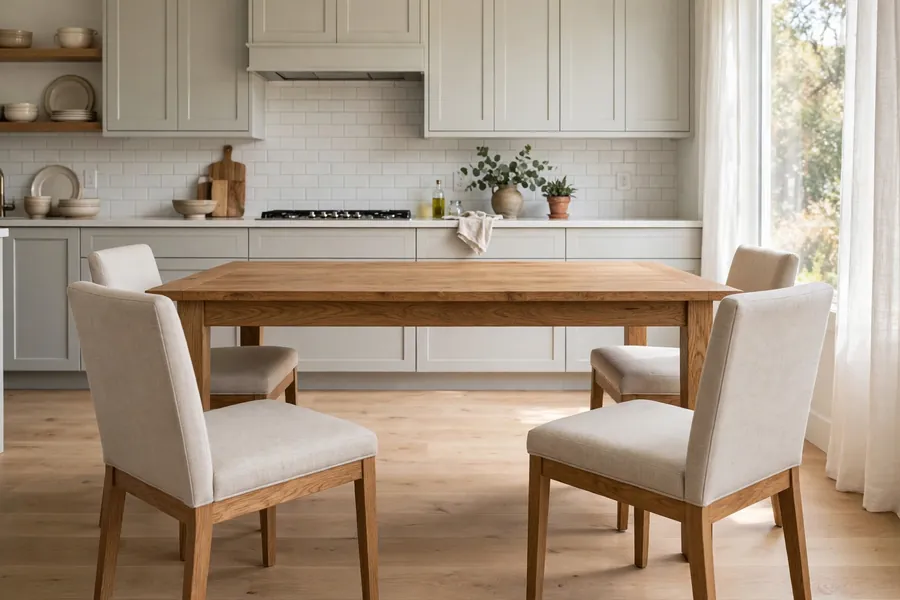
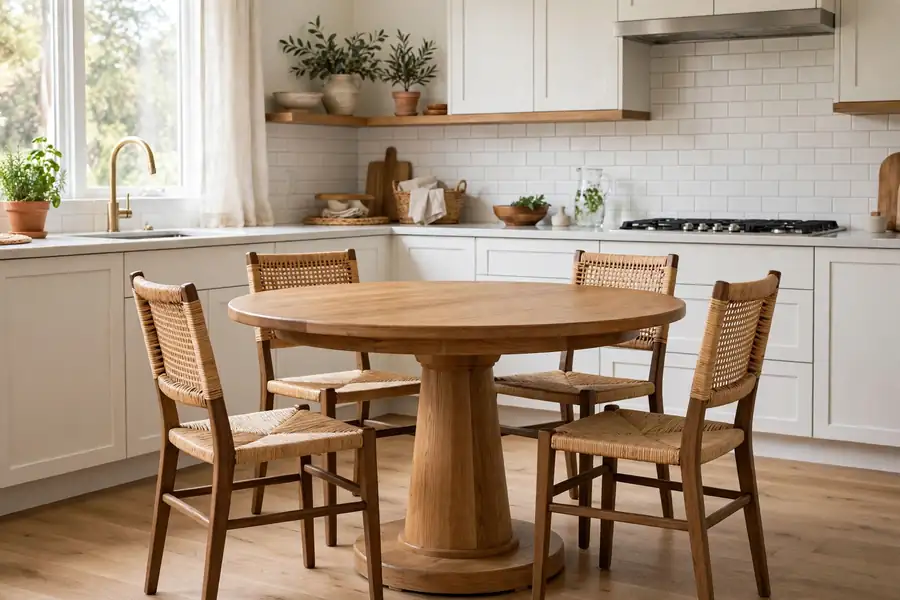
Match shape to the room plan, not to a photo. A rectangular table suits a long room and a household that eats together in a line, and it seats the most people for its length when chairs sit along both long sides. Its corners are the cost: in a small kitchen, a corner sits exactly where a hip turns from the stove to the sink, and a sharp corner at child height is a bruise waiting to happen. A square table suits a square room and four people. A round table suits a square room, a bay window, and a household that talks across the meal, since every seat faces the center and no one sits at a head or a foot. Round tables seat more people in less floor space at four to six seats, and they lose that edge past eight, when the diameter grows so large that the center goes out of reach. An oval table keeps the soft corners of a round table and the length of a rectangular one, so it fits a long room without hard corners. Oval tables come in fewer stock sizes, so measure the exact piece, not a catalog category, and check that the base lets chairs slide in at the curved ends.
The base decides legroom as much as the shape does. Four legs sit at the corners and steal the seats nearest them, so a person at a corner seat straddles a leg or sits angled. A single pedestal base frees every side, but a heavy top on a narrow pedestal can tip, so check the base width against the top before you pay. A trestle base, with two wide supports joined by a stretcher, holds a long top steady and leaves the middle of each long side clear, while the stretcher can catch feet at the ends. Press down on one edge, sit at each seat, and slide the chair in and out. A base that fails that test in the store fails harder at home.
How do you choose kitchen table and chairs for a small kitchen?
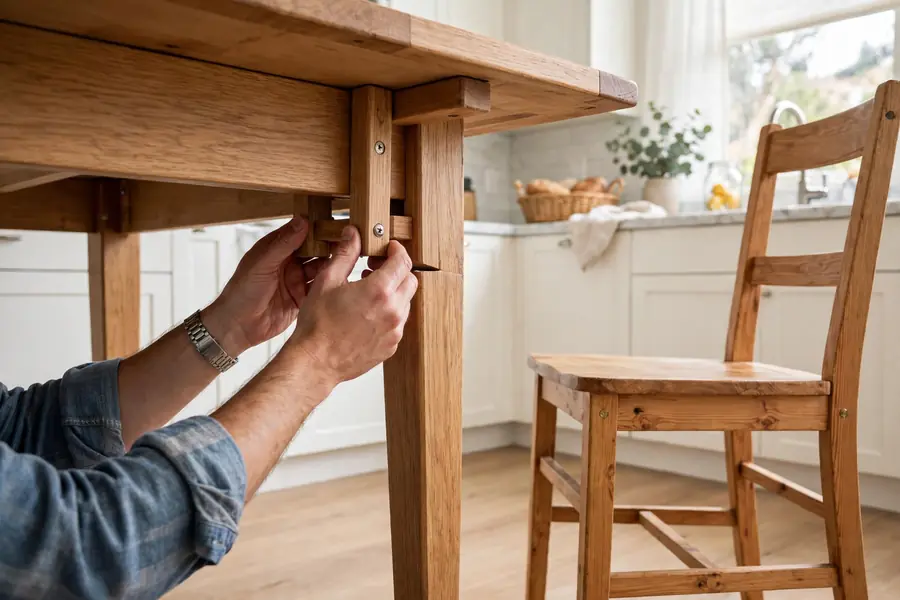
A small kitchen needs a set that shrinks when the meal ends. A drop-leaf table folds one or both leaves down and hugs the wall, a folding table mounts to the wall and drops flat, and an extendable table stays short on weekdays and gains a leaf for guests. The leaf needs a storage spot, since a leaf leaning in a closet gets damaged and stays unused. Open and close the mechanism twice before you buy, and look for a seam that sits flush when closed. A stiff hinge or a proud seam on day one only gets worse with grease and daily use.
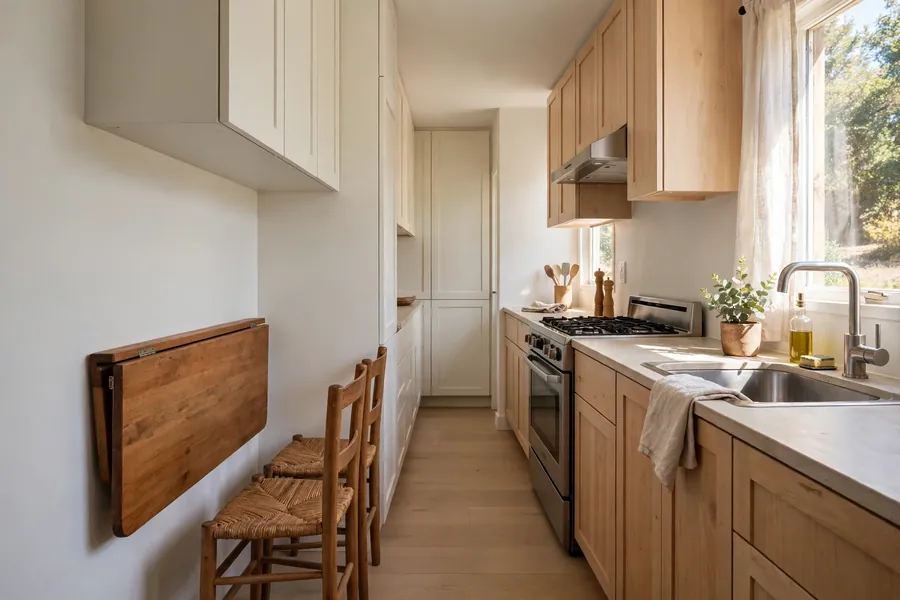
A bistro set, a small round table of 30 to 36 inches with two chairs, fits a corner for two and leaves the rest of the floor for cooking. A narrow table, 30 to 34 inches wide, fits a galley kitchen against one wall, with chairs on one side only and the wall side left for a bench or for serving. Stacking chairs and folding chairs earn their keep in a small kitchen, since they hang on wall hooks or stack in a closet, while four fixed chairs left around a small table block the path all day.
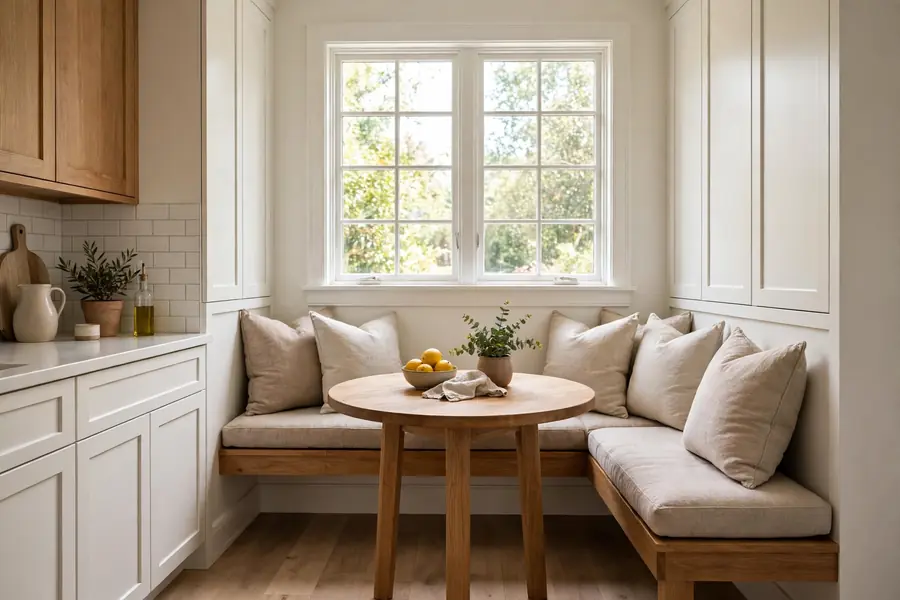
A corner nook turns dead space into seats. Built-in benches along two walls, 18 to 20 inches deep, with a small round or rectangular table in front, seat four in a footprint that chairs alone cannot match. Bench figures come from nook layout guidance by A Grateful Kitchen, read October 27, 2026: leave at least 36 inches of walkway between the nook and any counter or appliance, and 24 to 30 inches of foot space between the front of the bench seat and the table. The person in the middle of a bench must ask others to slide out, so a trestle or pedestal base helps, and a bench that pulls out on rails helps more.
Should you choose standard, counter, or bar height?
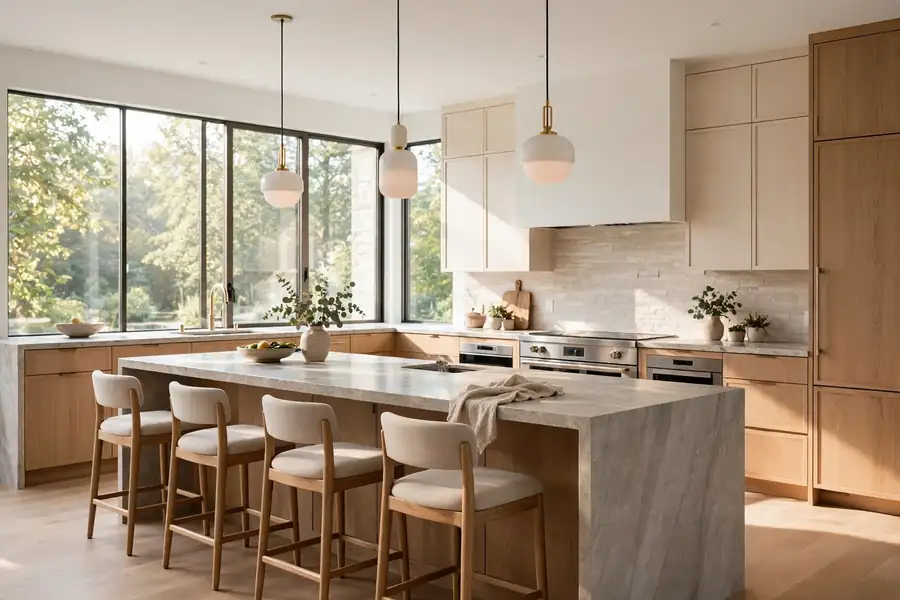
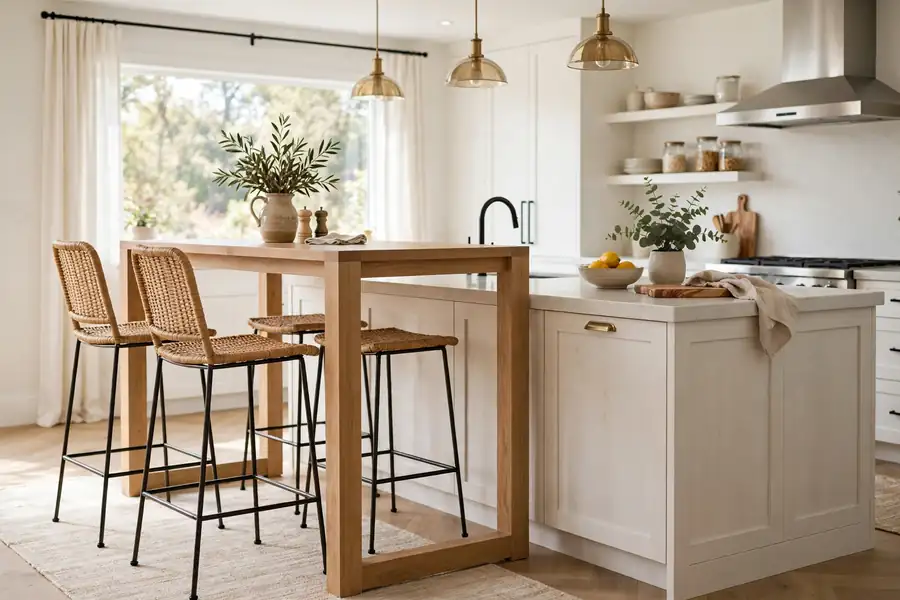
Standard height suits most kitchens and most people, so start there and change only for a clear reason. A standard table stands 28 to 30 inches high, paired with a chair seat 18 to 20 inches high, leaving 10 to 12 inches from the seat to the underside of the top for thighs and forearms. Counter height, 34 to 36 inches, pairs with stools 24 to 26 inches high and matches the height of a kitchen island, so a counter-height table can extend an island run and keep the cook in the same conversation. Bar height, 40 to 42 inches, pairs with stools 28 to 30 inches high and suits a home bar or a tall gathering spot better than daily family meals. Height figures come from the Kase Custom design guide, read October 27, 2026.
Height changes who sits well, so judge it by the shortest and oldest people who eat there daily. Small children climb a counter stool with effort and dangle their feet, older guests step down from a bar stool with care, and anyone with sore knees feels a tall seat every time they get on and off. A tall seat needs a footrest, since feet that hang with no support tire fast. Never mix heights in one set: a standard chair at a counter table leaves the diner reaching up, and a counter stool at a standard table leaves knees pressed against the apron. Measure seat height to the top of the compressed cushion, not the chair back, since a thick cushion changes the gap by an inch or more.
What makes a chair comfortable for a long meal?
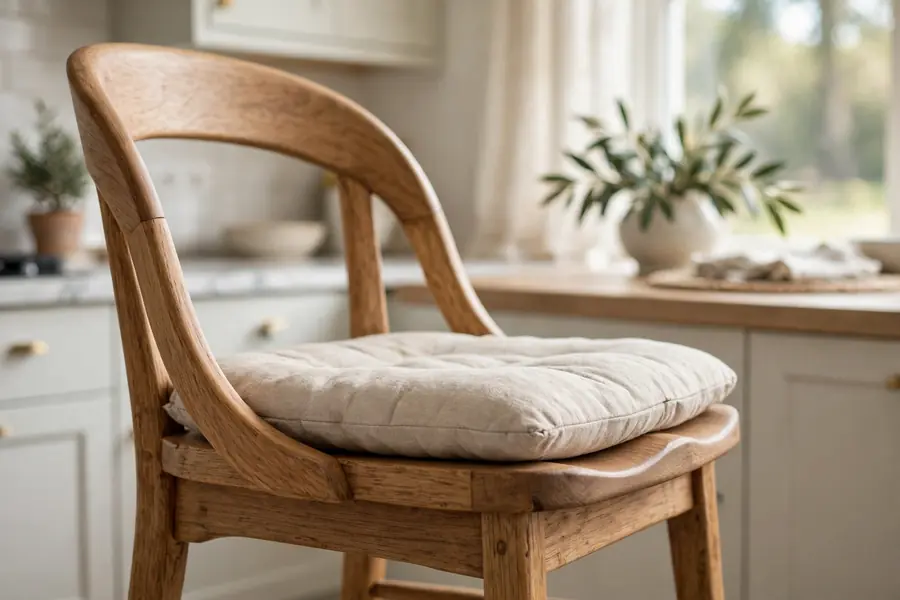
Seat height is only the start. Judge comfort by depth and width, not by looks. A seat 16 to 18 inches deep lets most adults sit with their back against the backrest and 2 to 4 inches of space behind the knees, while a deeper seat pushes shorter people forward until their feet leave the floor. A seat 16 to 20 inches wide fits most adults, and a chair with arms needs 2 to 3 inches more on each side than an armless chair, so armchairs at a four-seat table can crowd seats that armless chairs would fit. Seat figures come from the HERNEST chair height guide, read October 27, 2026. A curved backrest that supports the lower back holds a sitter through a long meal, while a flat ladder back tires the back sooner.
Upholstery changes comfort and cleaning in equal measure, so choose it for the mess the table actually sees. A padded seat with a firm foam core, dense enough to spring back when pressed, stays comfortable longer than soft foam that flattens in months. Fabric seats stain from tomato sauce, coffee, and grease, so choose a fabric that wipes clean or a seat cover that removes for washing, and keep a spare cover if the set eats daily meals with children. Leather and faux leather wipe clean and grow slick with use, wood and molded plastic wipe clean and feel hard after an hour. Sit in the chair for five minutes, feet flat and forearms on the table, and check for knees at a right angle, no pressure behind the thighs, and no wobble. A chair that rocks on a flat floor in the store will rock worse on an uneven kitchen floor at home.
Weight and grip matter in daily use. A chair light enough for a child or an older person to pull out with one hand gets used, while a heavy chair stays pushed in and gets dragged, which scars floors. Felt pads under every leg protect wood and tile, and pads that glue on fall off, so choose pads that screw or nail on, or plan to replace stick-on pads twice a year.
What table material holds up to daily use?
Solid wood holds up best for a table that takes daily meals, homework, and hot dishes, since it can be sanded and refinished when the surface scars. That is the material-first call for a hard-use table: buy the top you can repair. Oak is hard, heavy, and shows grain plainly, walnut is darker, softer than oak, and shows dents sooner, and pine and other softwoods dent under a dropped mug and suit a casual table that expects marks. Wood moves with humidity, so a solid wood top can gap in a dry winter and swell in a damp summer, and a finish that seals the top slows that movement without stopping it. Wipe spills at once, use trivets under hot pans and coasters under cold glasses, and keep the table out of direct sun.
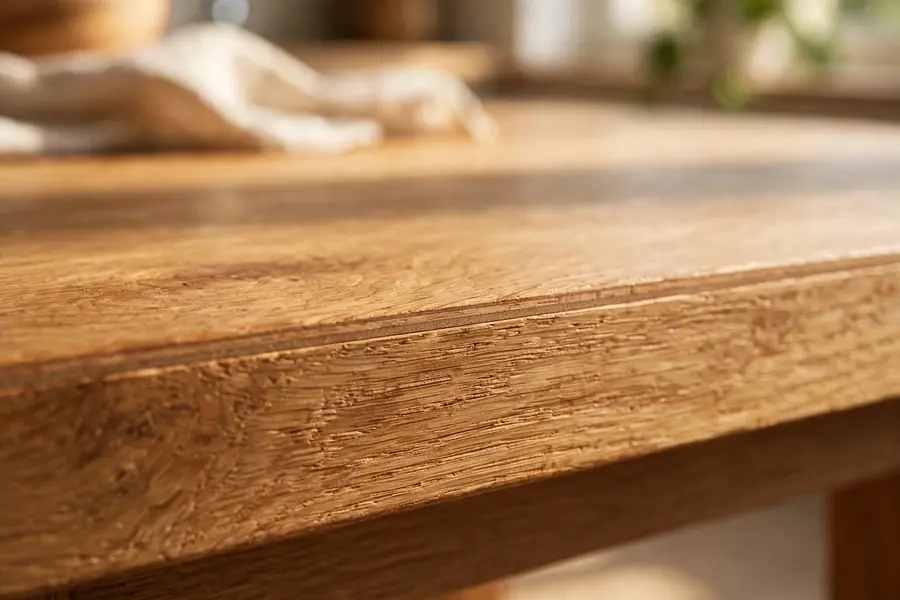
Wood veneer, a thin layer of real wood glued over plywood or MDF, costs less than solid wood, stays flatter in changing humidity, and looks the same when new. The trade-off is repair: veneer as thin as 0.6 millimeters cannot be sanded and refinished like solid wood, a deep scratch can show the core beneath, and veneer can peel at an edge in damp air, according to Tradesource Furniture guidance read October 27, 2026. A seam lifting at a corner is a sign to pass. Laminate, a printed layer over a core, wipes clean and costs least, and it chips at edges, swells when water reaches the core, and cannot be refinished, so it suits a low-use table better than a daily one.
Glass opens a small room, since the eye passes through it, and tempered glass cleans with a wipe. It shows every fingerprint, feels cold to forearms, and can chip from a sharp knock on an edge, so use placemats under stoneware. Stone and sintered stone tops resist heat, scratches, and stains, and they weigh a great deal and need a strong base, so check the base before the top. Natural marble stains and etches from citrus, wine, and vinegar unless sealed, while sintered stone and porcelain resist those marks with little upkeep, so read the care sheet for the exact stone, not for stone in general.
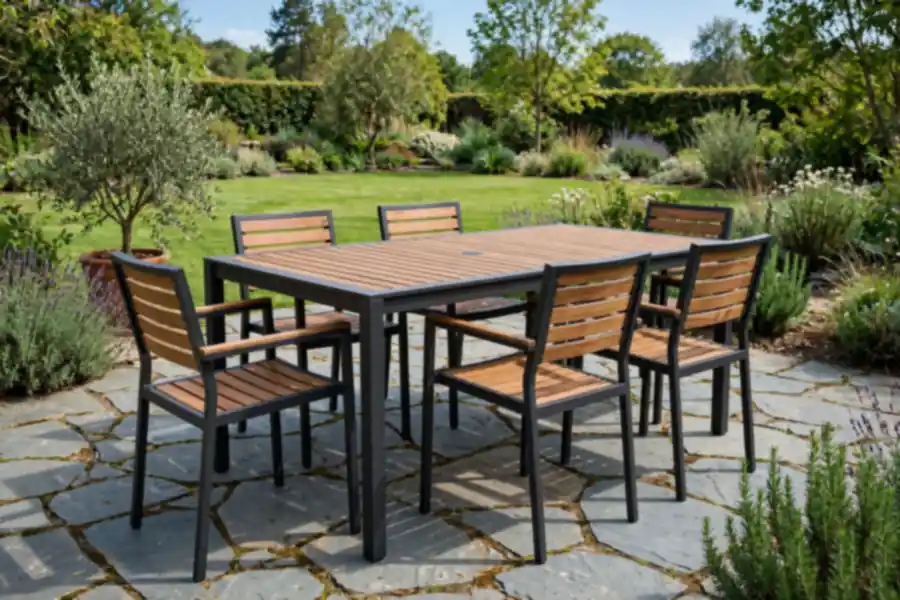
Outdoor-rated sets belong in one short note. A set rated for outdoor use uses powder-coated aluminum, teak, or marine-grade polymer, and it takes rain and sun that ruin an indoor set in one season. An indoor wood or veneer set left on a patio swells, peels, and rusts at its hardware, so keep indoor sets inside and buy a set rated for the weather when the table will live outside.
Which style fits the room you already have?
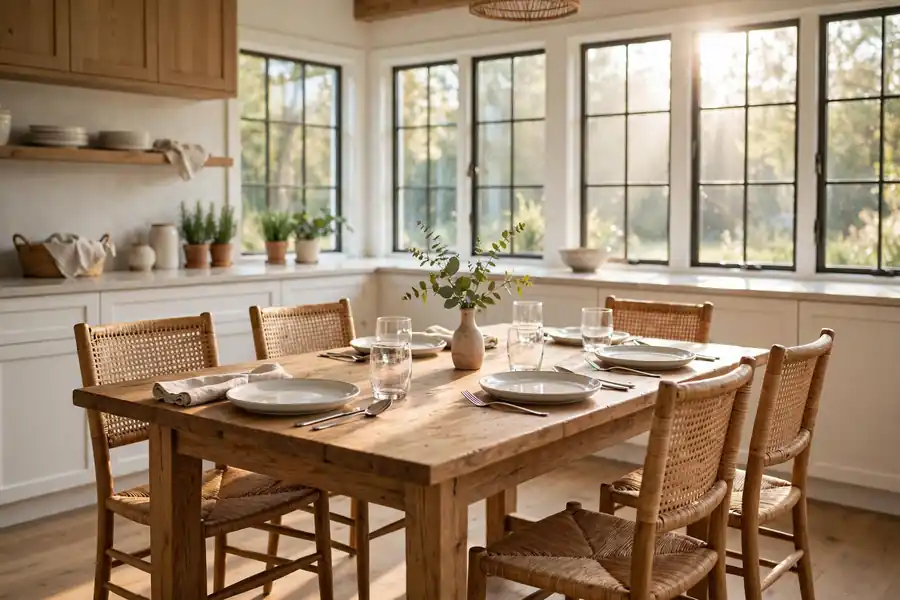
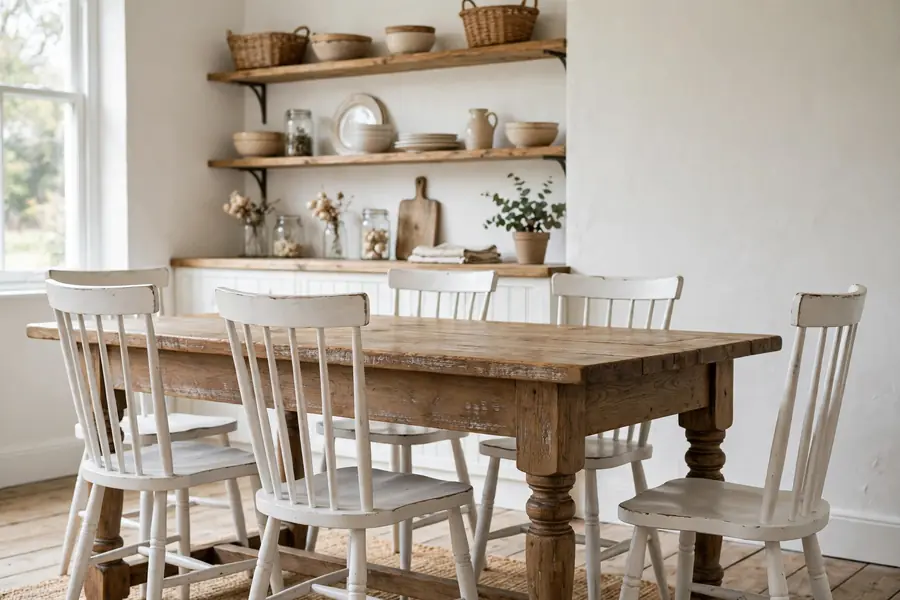
Style follows the room, not the catalog, so read what is already there before you shop. A modern set uses clean lines, slim legs, and plain surfaces in black, white, or pale wood, with little carving and no pattern on the chairs. A mid-century set uses tapered legs, a warm walnut or teak tone, and chairs with molded seats or spindle backs, and it suits rooms with low, simple furniture. A farmhouse set uses a thick plank top, turned legs, and a distressed or matte finish, often in white or natural oak, and it suits rooms with open shelving and plain walls. A traditional set uses turned legs, carved details, and a dark stain. A coastal set uses light wood, white paint, and woven or cane seats, and it suits bright rooms with pale floors. A vintage or retro set uses a chrome edge, a Formica-style top, or a 1950s shape, and it suits a kitchen that already carries that era in its cabinets or floor.
Matching a set exactly is safe and can look flat, while mixing chairs with a table works when one thing agrees: the tone of the wood, the color of the metal, or the weight of the pieces. A heavy oak table with slim wire chairs looks unbalanced, and a slim glass table with heavy carved chairs looks the same in reverse, so match visual weight first and finish second. Keep chair heights and seat depths the same across mixed chairs, since a mixed set with one chair an inch higher than the rest shows at every meal. One repeated accent, a black leg, a cane seat, or a brass foot, ties mixed pieces together without forcing every piece to match.
How do you buy a set that lasts?
Buy the table and the chairs as a working pair, not as two separate purchases. A set sold together guarantees the heights match, and a table bought alone needs chairs measured against it before they ship, since returns on furniture cost time and freight. Prices vary widely by region, material, size, and mechanism, so compare pieces with the same construction: solid wood against solid wood, veneer against veneer, and a leaf mechanism against a leaf mechanism. A low price on a large table often means a thin top, a veneer edge, or a base too light for the top, and that is where the money went.
Run the same checks on every set you consider, in the store or on delivery day. Press each corner, rock the table side to side, sit on each chair, open a leaf twice, and slide every chair under the apron. Look under the top for corner blocks and screws rather than staples alone, check that chair joints sit tight with no glue showing, and run a hand along every edge for a rough spot that snags cloth. Read the care sheet and warranty before you pay: cover for peeling finishes and joints signals a maker that expects the set to last. Keep the receipt, the care sheet, and the maker name together, since a finish question a year later needs all three.
A rug under the table needs room for chairs to stay on it when pulled out. Size the rug so it extends at least 24 inches past the table edge on every side, and choose a low pile that chair legs roll over without catching.
How do you paint or refinish a set you already own?
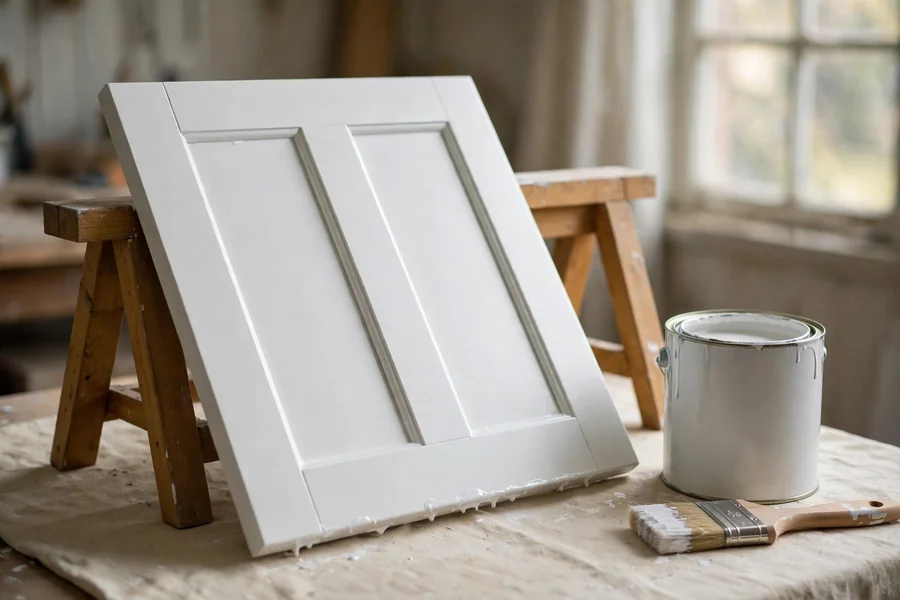
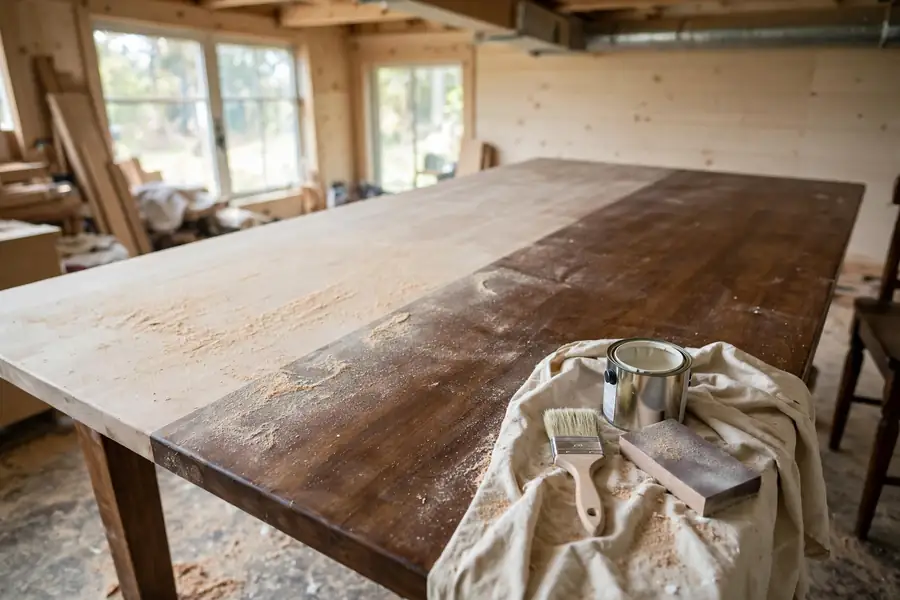
Paint suits a sound set with a tired finish, and refinishing suits a solid wood set whose grain is worth showing. That is the first call, and it decides the whole job. A set that wobbles at the joints, has a cracked leg, or a top that sags needs repair or replacement first, since paint hides none of those faults and adds weight to a weak joint. Test for lead before sanding any painted set that may predate 1978, since the US banned lead-based paint for homes in 1978 and the EPA Renovation, Repair and Painting Program warns that sanding and scraping old paint creates lead dust. Use an EPA-recognized test kit, and when the test is positive, do not dry sand, and hire a certified lead-safe professional or leave the paint sealed and intact.
Work in a ventilated space with the pieces taken apart as far as they come apart, and remove cushions, hardware, and glass before you start. Clean every surface with soap and water to cut kitchen grease, let it dry, and sand with the grain, using 120 grit to remove a failing finish and 220 grit to scuff a sound finish for paint. A veneer top needs only a light scuff, since heavy sanding cuts through veneer, and a laminate top needs a bonding primer made for slick surfaces, since ordinary primer peels from laminate. Fill dents with wood filler and sand it flush when dry.
- Clean, sand with the grain, and wipe away all dust.
- Prime bare wood and repaired spots with a primer suited to the surface, and sand the primer lightly when dry.
- Paint in thin coats with a brush or small roller, following the grain, and let each coat dry fully before the next.
- Sand lightly between coats with 220 grit and wipe dust away, so the next coat grips.
- Seal the top with two or three coats of a clear water-based polyurethane or a finish rated for tabletop use, and let it cure for the full time on the can before daily use.
Paint in thin coats rather than one thick coat, since a thick coat drips on chair spindles and dries soft on a tabletop. That single habit decides whether the finish lasts. A semi-gloss or satin paint cleans more easily than a flat paint on a surface that takes food and hands, and a clear topcoat protects the color from water rings and scrubbing.
Start with the room, not the set
Measure the room, count the weekday diners, and fix the height before you look at a single style, and the rest of the choice follows from those numbers. A tape outline on the floor, chairs pulled out, and a tray carried through the path tell the truth faster than any photo, and a set chosen that way fits the kitchen on the first try. The Kitchen chapter holds the other guides for the room, and the set that earns its floor space is the one that lets everyone sit, eat, and get up without a shuffle. Test a set you already own with the same checks: a sound frame with a tired finish may only need paint, while a wobbling frame needs replacing. That test, applied to any kitchen table and chairs on a shortlist, separates a set that lasts from a set that only looks right in the store.
Quick answers to common questions
What size table seats six people? A rectangular table 60 to 72 inches long seats six, with three chairs along each long side, and a round table 48 to 54 inches across seats six with room to talk. Work from 24 inches of edge per person, and use a leaf for larger gatherings instead of buying a table sized for them.
How much clearance do you need around a dining table? Keep at least 36 inches from the table edge to a wall or other furniture on every side, so a chair pulls out and a person stands behind it. Give a main walkway 48 inches, and leave 30 inches between the table and a sideboard so drawers open. A nook with bench seating needs 24 to 30 inches of foot space between the bench front and the table.
Can you mix chairs with a table from another set? Yes, when the heights match, the seat depths match, and one element agrees, such as wood tone, metal color, or visual weight. Measure seat height to the compressed cushion, check that arms clear the apron, and sit in each chair at the table first. A mixed set fails when one chair sits higher than the rest or when a heavy chair crowds a slim table.
Is solid wood better than veneer for a kitchen table? Solid wood is the better call for a table that takes daily use and may need repair, since it can be sanded and refinished when scarred, and it moves with humidity. Veneer costs less, stays flatter in changing humidity, and looks the same when new, but veneer as thin as 0.6 millimeters cannot be refinished, and a deep scratch can show the core. Choose solid wood for a long-term daily table and veneer for a lighter-use table or a tight budget.
How do you fix a wobbly table? Check the floor first: move the table to a flat spot and press each corner, since an uneven floor mimics a wobbly table. Tighten loose bolts and screws at the legs and apron, turn adjustable feet until all four legs bear weight, and replace a missing glide or felt pad. When a joint itself moves, glue and clamp it and let it cure fully. When a leg is cracked or a joint is split, replace the part or the table. Do not shim a moving joint and call it fixed.