The wrong size fails in two directions: a can that is too small overflows by midweek, and a can that is too big sits half full and starts to smell before collection day. The right kitchen trash can fits the floor space you have, holds a standard bag without slipping, and opens with the hands you have free while you cook. Measure the spot first, then pick a size, a lid, and a place, and most kitchens land on a 13 gallon tall can or a pull-out bin of about the same volume.
At a glance
| Type | Size | Best for | Watch out for |
|---|---|---|---|
| Freestanding tall can | 13 to 16 gallons | A family kitchen with open floor space | Lid clearance above and behind the can |
| Slim freestanding can | 8 to 13 gallons | A narrow gap beside a cabinet or fridge | Less room for bulky packaging |
| Pull-out single bin | 35 to 50 quarts | A can hidden inside one cabinet | Inside cabinet width, depth, and height |
| Pull-out double bin | Two 35 quart bins | Trash plus recycling in one cabinet | Each bin is smaller than a tall freestanding can |
| Under-sink small bin | 4 to 8 gallons | A second bin for food scraps | Pipes and the disposal cut the usable space |
| Dual compartment can | 13 to 16 gallons total | Trash and recycling in one footprint | Each side holds less than the total suggests |
What size kitchen trash can do you need?
Start at 13 gallons, then move up or down with the number of people cooking and how often the trash goes out. A household of one or two people who cook lightly can manage with 7 to 10 gallons, a household of three or four people who cook most days fits 13 to 16 gallons, and a large household or a kitchen that hosts often needs 16 to 20 gallons or a second bin. A manufacturer size guide read October 27, 2026 gives the same bands.
Cooking volume matters more than headcount alone. A household that cooks from scratch daily fills a can faster than one that eats out most nights, and weekly pickup needs a larger can than twice-weekly pickup. Size alone does not control smell: food waste still needs a sealed bag and a closed lid.
Measure before you shop, and measure the spot, not the can in a photo. Follow these steps in order:
- Measure the floor area where the base will sit: width and depth in inches.
- Measure from the floor to the lowest obstruction above the spot, such as a counter lip or a cabinet edge.
- Add room for the lid to open fully, including the swing behind the can, since a lid that hits a wall or a counter never opens all the way.
- Check the path to the spot: the can must roll or lift out for emptying without moving furniture or blocking a door.
A can that fits on paper but cannot open, cannot be pulled out, or blocks a walkway is the wrong can, whatever its gallon rating says.
How many gallons is a standard kitchen can?
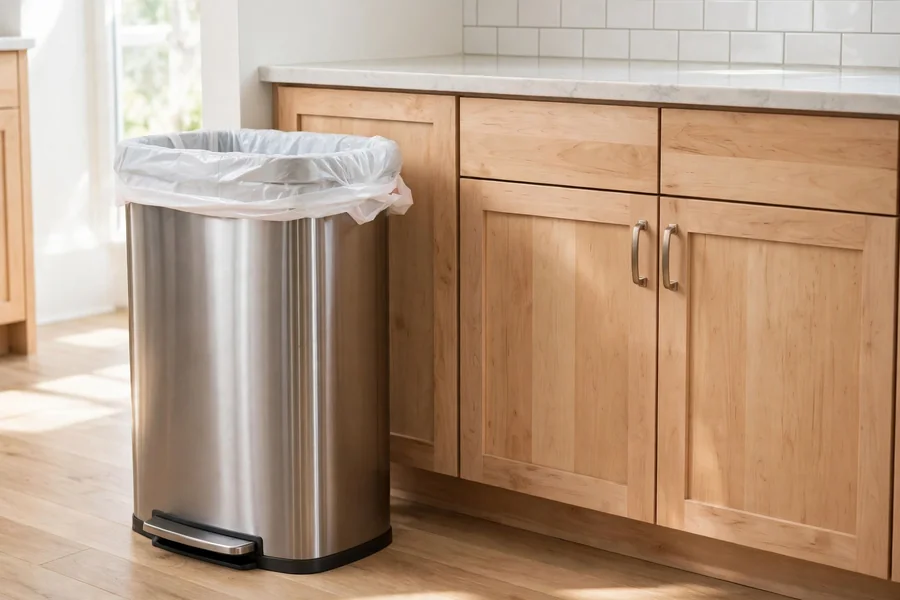
The standard can holds 13 gallons, which is 49.2 liters, and 1 US gallon is about 3.785 liters, according to a manufacturer size guide read October 27, 2026. Tall kitchen cans use that volume as the reference point for bags, so a bag labeled for tall kitchen use is sized for a 13 gallon can. The word tall describes the shape, not a separate size: a tall can is taller than it is wide, which keeps its footprint small while holding a full bag.
Manufacturer specification pages read October 27, 2026 put common 13 gallon tall cans at about 23 to 26 inches high with the lid closed, about 12 to 17 inches wide, and about 11 to 15 inches deep, with the lid open reaching about 32 to 35 inches high. Those are ranges across shapes, so the exact size must come from the specification page for the can you buy. Round cans of the same volume tend to be wider and shorter than rectangular cans, which is why two cans with the same gallon rating can fit very different spots.
| Size | Liters | Typical closed height | Typical footprint | Bag to buy |
|---|---|---|---|---|
| 7 to 8 gallons | 26 to 30 liters | 20 to 24 inches | 11 to 14 inches wide | Small or medium kitchen bag |
| 10 gallons | 37.9 liters | 22 to 25 inches | 12 to 15 inches wide | Standard kitchen bag |
| 13 gallons | 49.2 liters | 23 to 26 inches | 12 to 17 inches wide | Tall kitchen bag, 13 gallon |
| 16 gallons | 60.6 liters | 24 to 28 inches | 13 to 18 inches wide | Large kitchen bag |
| 20 gallons | 75.7 liters | 26 to 30 inches | 14 to 19 inches wide | Extra large kitchen bag |
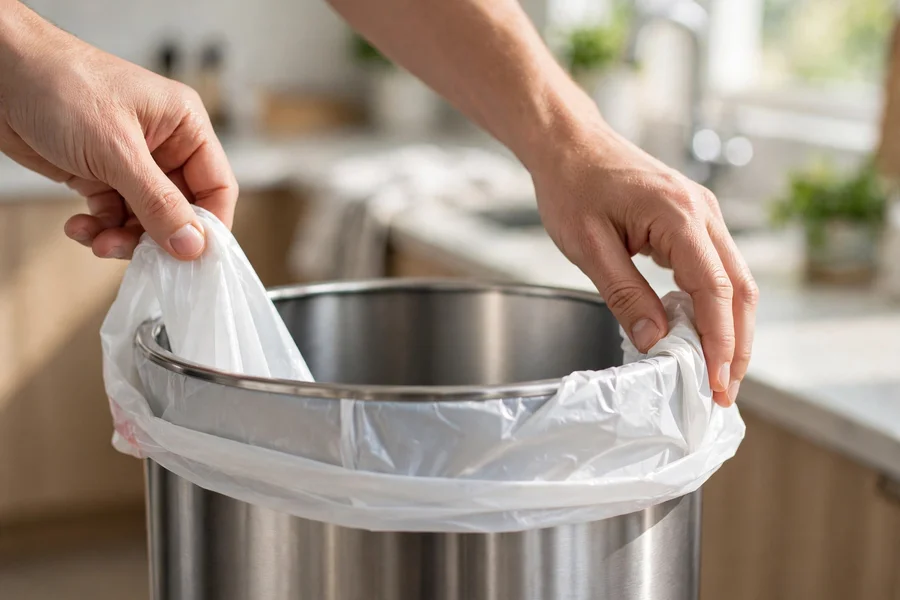
Bag fit follows the can, not the other way around. Tall kitchen bags are commonly about 23 to 24 inches wide and 35 to 39 inches long, which leaves enough length to fold over the rim and tie off when the bag is full, according to trash bag size guidance read October 27, 2026. A bag retention ring or liner lock keeps the bag from sliding down as waste goes in. Check the bag size on the can specification page before buying bags in bulk, since an unusual shape can need a different bag than its gallon rating suggests.
Quarts enter the picture with cabinet bins, and the conversion is simple: divide quarts by 4 to get gallons. A 35 quart bin holds 8.75 gallons, a 50 quart bin holds 12.5 gallons, and a 13 gallon can equals 52 quarts, according to cabinet hardware specification pages read October 27, 2026. That conversion explains why a 50 quart pull-out bin takes a standard 13 gallon bag while a 35 quart bin takes a smaller bag, and why two 35 quart bins hold less trash in total than one tall freestanding can.
Which lid type suits how you cook?
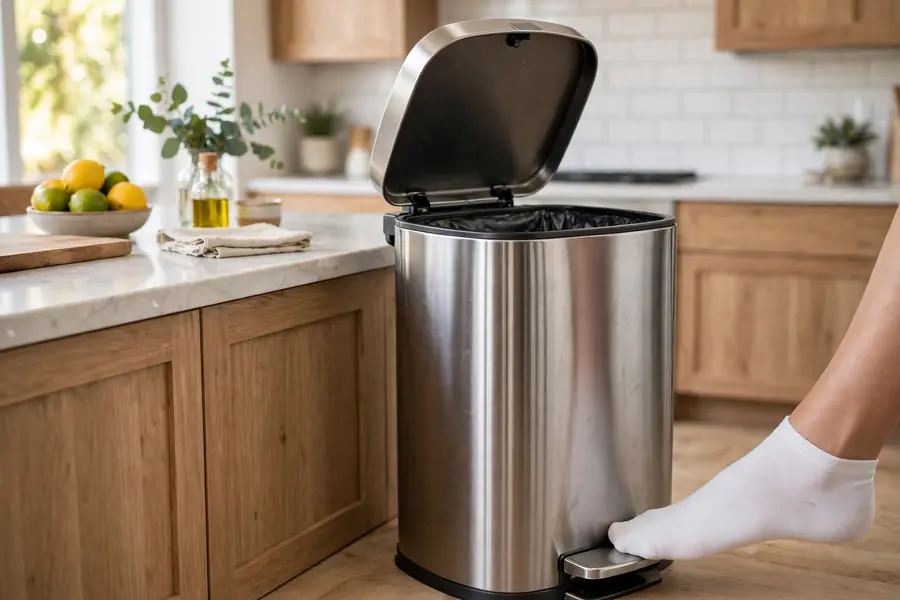
Start with a step-on lid for most kitchens, because a foot pedal opens the lid while both hands hold a plate, a cutting board, or a bag of scraps. The pedal is a moving part, so it needs a firm base and a pedal that feels solid underfoot, and a soft-close damper shuts the lid quietly instead of slamming. A stay-open mode helps during a long prep session or a big cleanup, and it should release with a light push.
A sensor lid opens with a wave of a hand, which suits raw meat prep and messy hands, and it closes on its own after a short delay. It needs power, from batteries or a plug-in adapter, and a clear sensor path, so it suits a spot with no shelf or towel above the sensor. When the batteries run low, the lid may open slowly or stop opening, so keep spare batteries with the cleaning supplies.
A flip-top or swing-top lid opens with a push and swings back on its own, which suits a can tucked under a counter edge where a hinged lid has no room to rise. It gives less of a seal than a hinged lid that closes flat, so it suits dry waste and recycling better than food scraps. An open-top can suits a busy prep station for a short session, but it leaves waste exposed, so it is a poor choice as the only can in a kitchen that holds food scraps overnight.
A locking lid or a sealed lid suits kitchens with dogs, small children, or strong cooking smells. A lid with a replaceable carbon filter suits a kitchen where the can sits close to the dining table, since the filter sits in the lid and traps odor as air passes out. Replace filters on the schedule the maker states, since a filter past its life does nothing.
What shape and footprint fits the spot?
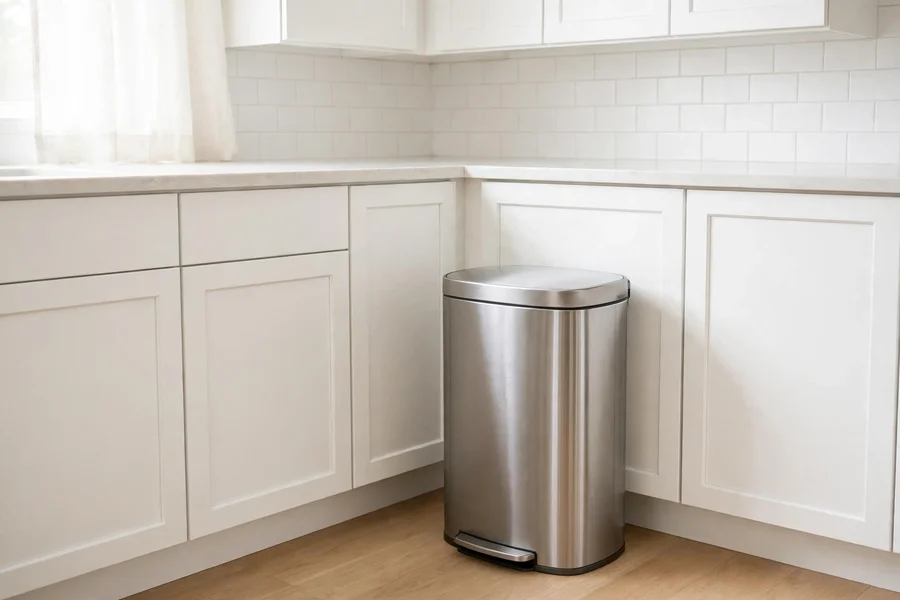
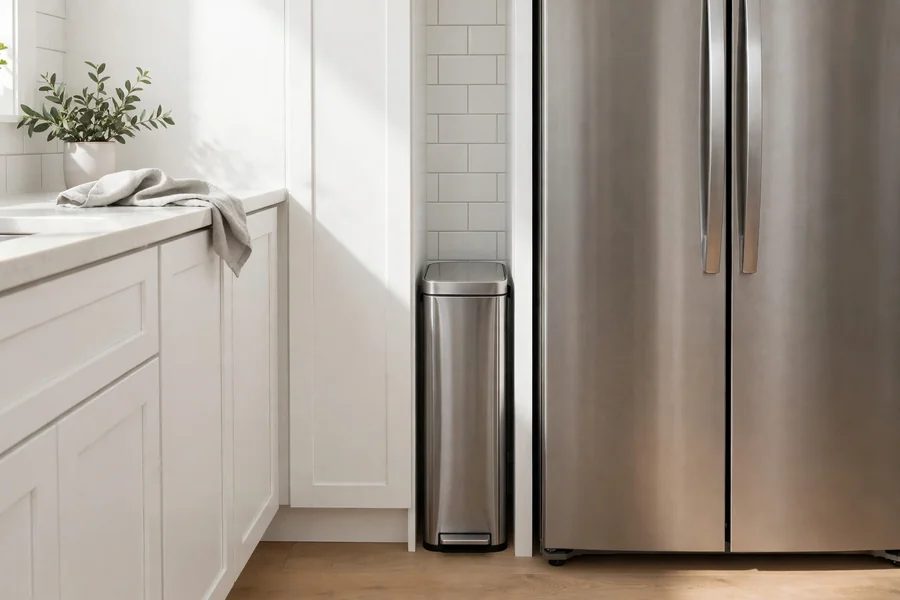
A rectangular or slim can fits best against a wall, at the end of an island, or in a galley kitchen, because its flat sides sit flush and waste little floor space. A slim can can be under 7 inches wide in its narrowest models, according to manufacturer specification pages read October 27, 2026, which lets it slide into a gap between a cabinet and a fridge. The trade-off is depth: a slim can is often deeper front to back, so check the depth against the gap.
A round can suits a freestanding spot in the open, such as the corner of a dining area, because it has no corners to catch a hip or a chair leg, and it turns easily for emptying. It wastes the corners of a square spot, so it fits poorly in a tight gap between cabinets. A semi-round or D-shape can splits the difference, with a flat back against the wall and a curved front that gives a wider opening. An oval can fits a corner or a tight spot beside an appliance, since its short front-to-back depth leaves more walkway clear.
A wall-mounted or hanging can suits a small kitchen only as a second bin, hung on a cabinet door or a wall for scraps during prep, since it holds far less than a floor can and swings when loaded unevenly.
A can on wheels suits a large can that must move to an outside door for emptying, and wheels help only on a hard, level floor; on a rug or an uneven floor, wheels catch and the can tips when pushed. A foldable can suits a temporary setup, not a daily kitchen can, since its frame flexes under a full bag.
What material and finish lasts in a kitchen?
Stainless steel suits a kitchen where the can stays in sight, because it wipes clean, resists stains, and matches most appliances. A fingerprint-proof finish stays cleaner in a house with children, while a plain brushed finish shows prints and needs a wipe with a damp cloth. Steel dents when hit hard, and a dent near the lid hinge can stop the lid from closing flat, so keep the can out of the main chair path.
Plastic suits a tight budget and a can that moves often, because it is light and easy to lift out for cleaning. Plastic scratches more easily than steel, and scratched plastic holds odor over time, since food residue settles into the scratches and survives a quick rinse. A plastic can that holds food scraps needs a full wash and a full dry on a regular schedule, and a can with a removable inner bucket is easier to wash than a one-piece can.
Painted metal and coated finishes suit a kitchen where color matters. Do not scrub a coated finish with a scouring pad, since the coating chips and the bare metal under it rusts. A wood sleeve suits a farmhouse or rustic kitchen as decoration on the outside of a metal or plastic can, not as the waste container itself, since wood absorbs liquid and odor. Match the finish to the room once, at the level of tone and sheen, and then leave it alone.
Where should you put the trash can?
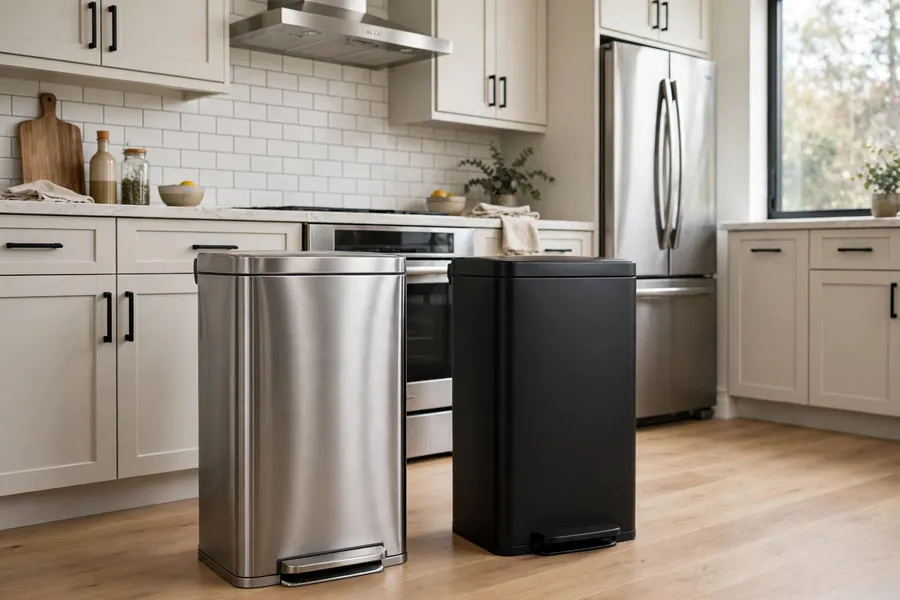
Put the can beside the prep zone, within a few steps of the sink and the main counter, so scraps go straight in while you cook. The can should sit out of the main walkway, clear of oven and fridge doors, and clear of the swing of a dishwasher door. Keep it near the door used for taking bags out, so a full bag travels the shortest path, and keep it away from direct heat, such as beside a range or a heating vent, since heat speeds up odor.
The end of an island is the most common freestanding spot, because it serves both the prep side and the serving side without blocking either. A spot beside the sink cabinet suits a small kitchen, since it keeps the can close to the water source used for rinsing containers. A spot inside a pantry suits a kitchen where the can must stay out of sight, but only when the pantry door opens easily with full hands. A can under a counter overhang has no room for a hinged lid, so it needs a pull-out bin or a flip-top lid.
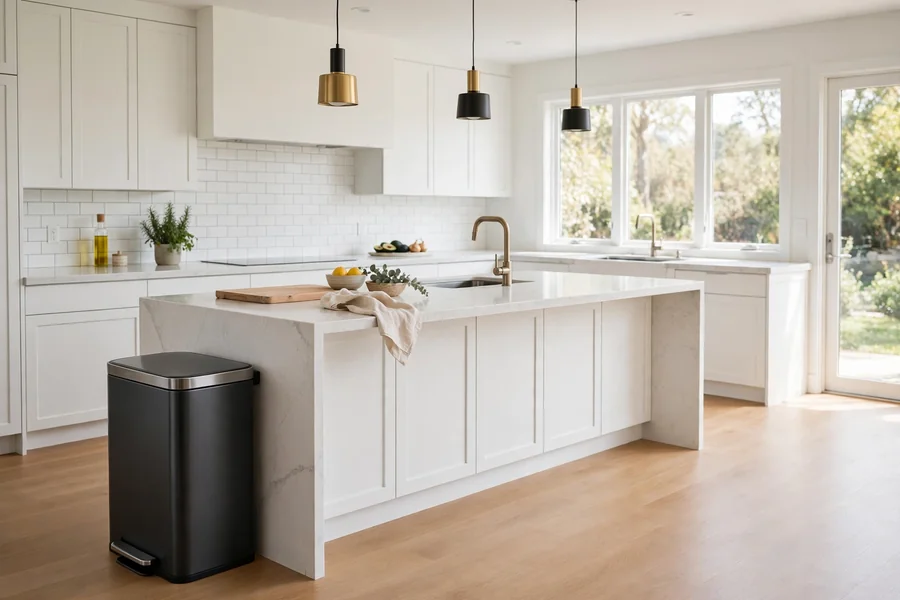
For a small kitchen, the best spot is often the narrow gap at the end of a cabinet run, fitted with a slim can, or inside the cabinet itself, fitted with a pull-out bin. A can under the sink works only as a small second bin, since pipes, a disposal, and cleaning supplies leave little room, and the bin must lift out past the pipes without spilling. Keep the bin clear of the disposal switch and any water shutoff valve.
For an outdoor kitchen, use a can rated for outdoor use with a fitted lid that stays shut in wind, keep it shaded so the sun does not heat the waste inside, and bring any fabric or paper liner indoors between cooks. An indoor can left outside rusts, fades, and lets rain in, so the outdoor can is a separate purchase, not a spare indoor can moved outside.
How does a pull-out cabinet trash can work?
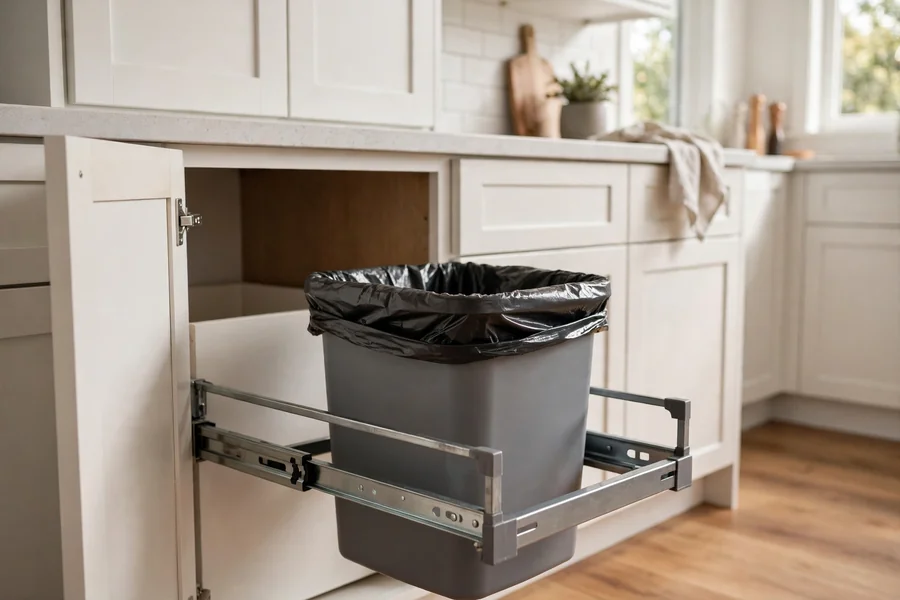
A pull-out bin hides inside a base cabinet and slides out on rails when the cabinet door opens, so the can stays out of sight and out of the walkway. The cabinet door usually mounts to the front of the pull-out frame, so opening the door pulls the bin out in one motion, and soft-close rails shut the bin quietly. Some frames mount to the cabinet floor and some mount to the door, so the frame specification page for the exact cabinet must be checked before ordering.
Cabinet width decides the bin layout. A 15 inch base cabinet fits one bin, and an 18 inch base cabinet fits two 35 quart bins side by side for trash and recycling, according to cabinet hardware specification pages read October 27, 2026. A single 50 quart bin needs a full-height door cabinet with no top drawer, since the taller bin needs the full height of the cabinet box. A cabinet with a working drawer above the bin fits a 35 quart bin, not a 50 quart bin, and that height limit is the most common reason a pull-out order comes back wrong.
Measure the inside of the cabinet, not the outside. Measure the tightest width between hinges and frame, the depth from the front frame to the back panel, and the height to the underside of any drawer or shelf, and compare each number with the frame specification page. Allow room for the rails and the bag folded over the rim, since a bin that fits the cabinet but cannot take a bag over its rim is useless. Place the pull-out beside the sink or the prep counter, not in a corner cabinet, since a corner pull-out swings into the adjoining cabinet.
Should trash and recycling share one can?
A dual compartment can suits a kitchen with no room for two separate cans, because it holds trash on one side and recycling on the other in a single footprint. Each side holds less than the total capacity printed on the can, so a 16 gallon dual can may hold about 8 gallons per side. Check the split before buying: some dual cans split evenly and some give trash the larger share, and the right split follows which stream fills faster in your house.
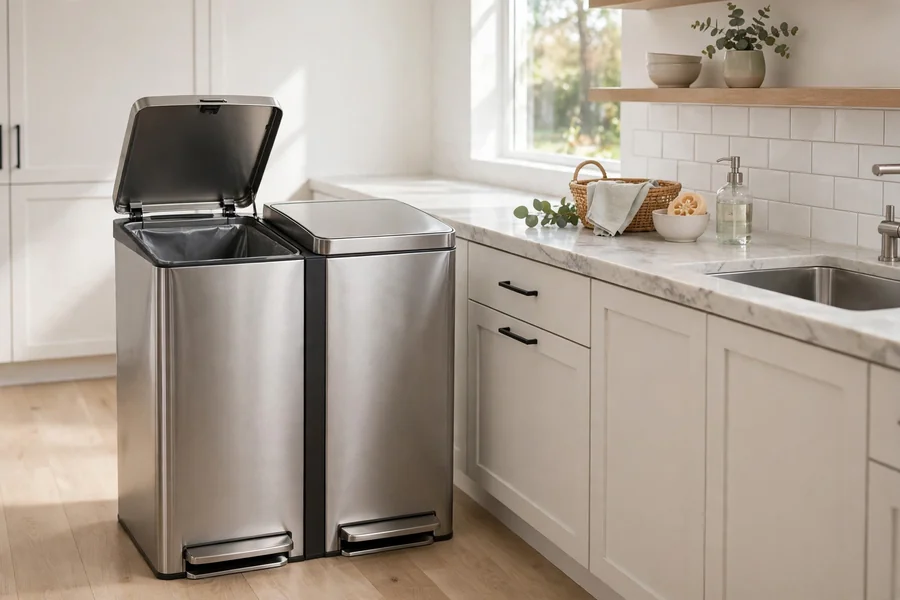
Two separate cans suit a kitchen with floor space to spare, since each can takes a standard bag and empties on its own schedule. Rinse containers and let them dry before they go in, and check local collection rules for what your program accepts, since rules differ by town and a can that mixes streams can contaminate a whole load.
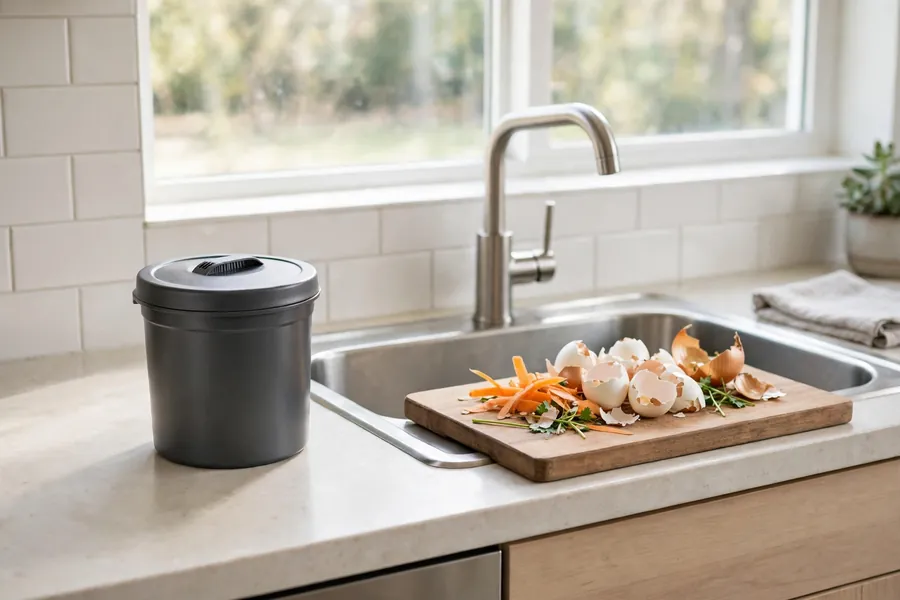
A compost pail sits beside the trash can, not inside it, and it holds fruit and vegetable scraps, coffee grounds and filters, tea, and eggshells in a closed container. The US EPA home composting guidance read October 27, 2026 says to keep meat, fish, bones, dairy, eggs other than shells, and fats and oils out of a home pile, since they create odor and attract pests, and to bury fruit and vegetable waste under compost material. A small pail with a tight lid suits a kitchen counter or the cabinet beside the sink, and it empties into an outdoor pile or a collection program before it fills.
How do you keep the trash can from smelling?
Empty the can before food waste sits long enough to smell, tie the bag shut, and rinse food containers before they go in, since a sealed bag and clean containers do more than any filter. A lid that closes flat, a bag that fits without gaps at the rim, and a can emptied on collection day keep odor inside the can. Scented bags mask odor for a day and do nothing about the residue left in the can, so they are a cover, not a fix.
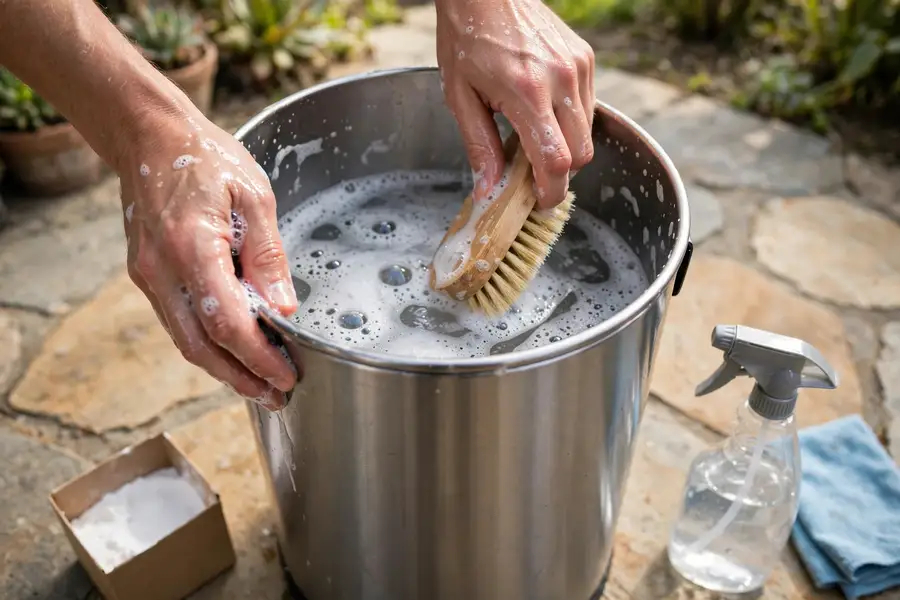
Wash the can when it smells after emptying, and wash it outside or in a tub, not at the kitchen sink. Follow these steps in order:
- Empty the can, remove the bag, and shake out any loose debris.
- Rinse the inside and outside with a hose or in a tub.
- Spray all-purpose cleaner or disinfectant inside and out, sprinkle about half a cup of baking soda inside, and let it sit for 5 to 10 minutes, following manufacturer cleaning guidance read October 27, 2026.
- Scrub the inside, the rim, the lid, and the pedal or sensor area with a brush or sponge.
- Rinse again, towel dry, and let the can air dry fully before putting in a new bag, since a damp can grows mold under the liner.
Between washes, wipe the rim and lid each time the bag changes, dust a little baking soda into the bottom of the new liner, and replace a carbon filter on schedule when the lid has one. Take the trash out every night when it holds dinner scraps, and take smelly waste straight outside when the can is not full.
How do you keep dogs, kids, and pests out of the trash?
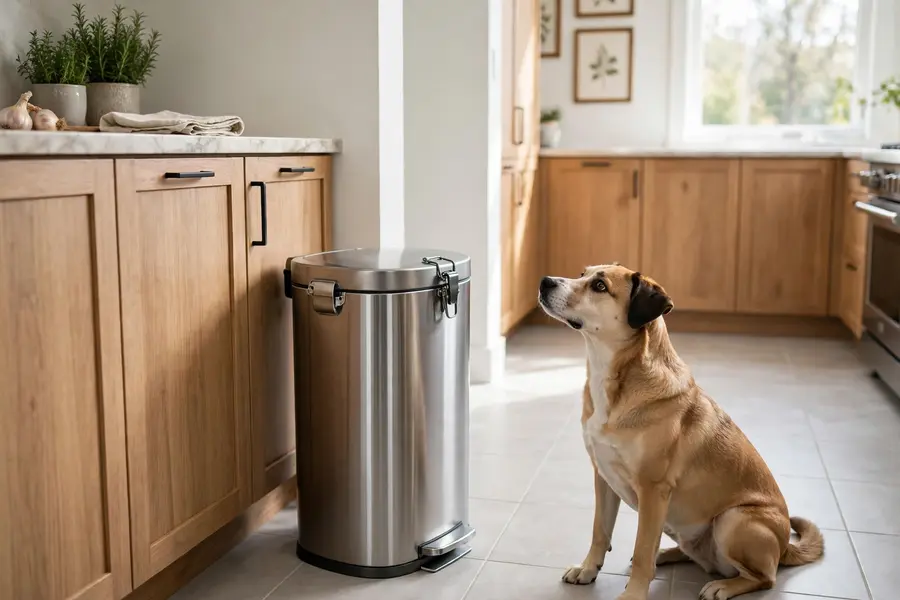
A locking lid is the strongest defense against a dog, since a lid that latches shut stays shut when a dog noses or paws at it. A heavy base helps, and a can stored inside a latched cabinet beats any freestanding can for a determined dog, since the cabinet door adds a second barrier. A step-on lid alone does not stop a dog that learns to press the pedal, and a sensor lid alone does not stop a dog that triggers the sensor with its head, so neither lid type should be trusted as proofing on its own.
For small children, a locking lid or a latched cabinet keeps hands out of waste and keeps the can from tipping onto a child who pulls at it. Keep the can away from a chair or step stool a child can climb, and keep cleaning supplies and spare batteries out of reach.
For mice, a sealed lid with no gaps, a clean rim with no food residue, and a can that sits flush on the floor leave little to attract or enter. Store pet food in a sealed container away from the trash can, sweep up crumbs near the can each night, and take the trash out before bags sit overnight with food waste inside. Fruit flies and maggots breed in exposed food waste, so tie bags shut, rinse containers, keep the lid closed, wipe spills at the rim, and empty the can often in warm weather.
How do you stop a trash can from sliding?
A can slides when the pedal is pressed hard, the floor is smooth, or the base is too light for the can height. A non-slip base or rubber pads under the base grip a hard floor, and a rubber mat cut to the base footprint grips better still. A can fitted snugly into a gap between cabinets cannot slide far, and a pull-out bin inside a cabinet cannot slide at all, since the rails hold it.
Check the feet or pads each time the can is washed, since pads wear flat and peel off, and a can with one missing pad rocks and slides. Keep the back of the can a short distance from the wall so the lid swings without scraping, and press the pedal with the ball of the foot, not a kick. For a can on wheels, set the wheel locks whenever the can is in use, and release them only to move the can for emptying.
Start with the spot, then the size
Measure the spot, pick the kitchen trash can that fits it, and let the size, the lid, and the place follow that order. A 13 gallon tall can suits most kitchens, a slim can or a pull-out bin suits a tight kitchen, and a dual can suits a kitchen that sorts recycling at the counter. The next step is a tape measure and the inside of the cabinet or the gap you plan to use, checked against the specification page for the exact can before any order is placed. The Kitchen chapter gathers the other guides for the room.
Quick answers to common questions
What size trash can is best for a family of four? A 13 to 16 gallon can suits most families of four who cook most days, with the larger end for daily cooking and once-a-week pickup. A family that eats out often or has twice-a-week pickup can use 10 to 13 gallons without overflow.
How tall is a standard 13 gallon kitchen can? About 23 to 26 inches high with the lid closed, and about 32 to 35 inches with the lid open, across common rectangular shapes in manufacturer specification pages read October 27, 2026. Check the exact can, since round and oval shapes of the same volume measure differently.
Can a trash can go inside a kitchen cabinet? Yes, as a pull-out bin on rails, in a 15 inch cabinet for one bin or an 18 inch cabinet for two 35 quart bins. Measure the inside width, depth, and height, and use a full-height door cabinet for a single 50 quart bin.
How do you keep a trash can from smelling? Tie bags shut, rinse containers, empty food waste promptly, and wash the can with cleaner and baking soda when odor lingers after emptying. Wipe the rim on every bag change and let the can dry fully before a new liner goes in.
What keeps dogs out of the trash? A latching lid, a heavy base, or storage inside a latched cabinet, since step-on and sensor lids alone do not stop a dog that learns the opening motion. The latched cabinet is the strongest option for a determined dog.