Here is how to remove vinyl flooring. First, find out what you have: click-lock planks lift out by releasing the joints, while glued sheets and tiles are cut into strips and scraped up. If the floor is old, or the glue underneath is dark, have a sample tested for asbestos before you start. Remove the trim, lift the vinyl, clear the leftover adhesive with warm soapy water, and patch the subfloor. A small room takes a day.
Removal at a glance
| Question | Short answer |
|---|---|
| What tools? | Utility knife, flat floor scraper, pry bar, heat gun on low, bucket and gloves |
| How long for a 150 sq ft room? | About 3 to 6 hours for glued vinyl, less for click-lock |
| Hardest part | Scraping up leftover glue |
| Biggest risk | Asbestos in old floors and dark adhesive |
| Do you need a pro? | If the test is positive, or the subfloor is damaged |
| Cost if you hire it out | About $1.50 to $3 per square foot, plus adhesive work |
What type of vinyl flooring do you have?
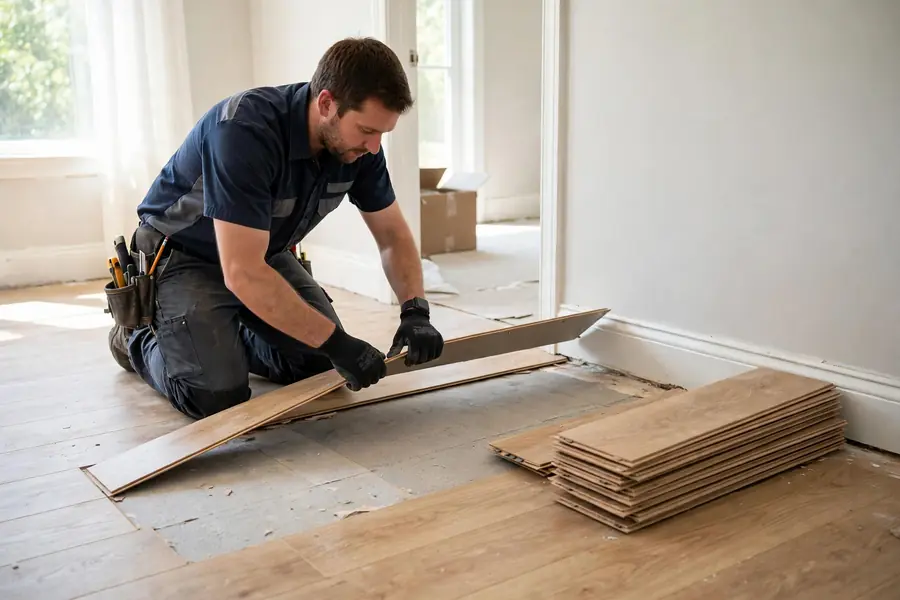
The type decides the method. Click-lock planks float and lift out. Peel-and-stick tiles pry up with a little warmth. Glued sheet vinyl and glued tiles are the hard jobs, because the adhesive grips the subfloor. If the floor is old, the first step is a test.
Does old vinyl flooring contain asbestos?
It can. Asbestos was used in some vinyl flooring products and in older black adhesive, called mastic, until about the mid-1980s. Color alone does not settle it, but dark glue on an older floor is a warning sign. Do not sand, dry-scrape or break up an old floor until you know. Cut a small piece out while keeping it wet, bag it, and send it to a certified lab. If it tests positive, hire a licensed abatement professional.
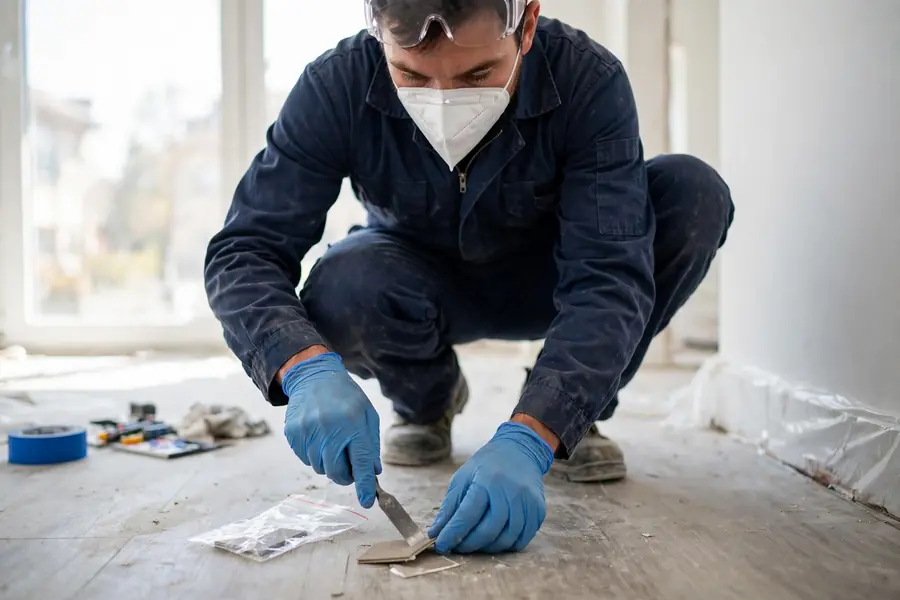
Newer vinyl floors do not carry this risk, but a sample test is cheap insurance if you do not know the age of the house.
What tools and materials do you need?
| Tool | What it does |
|---|---|
| Utility knife with spare blades | Cuts sheet vinyl into strips |
| Long-handled floor scraper | Lifts glued vinyl and scrapes adhesive |
| Pry bar and putty knife | Lifts edges and trim |
| Heat gun or hair dryer | Softens adhesive in small areas. Keep it moving |
| Bucket and warm soapy water | Softens leftover adhesive |
| Mask, gloves, safety glasses, knee pads | Protects you from dust, edges and sharp blades |
| Heavy bags | Carry debris out |
Use heat carefully. Too much concentrated heat melts vinyl and can release fumes.
How do you remove vinyl flooring, step by step?
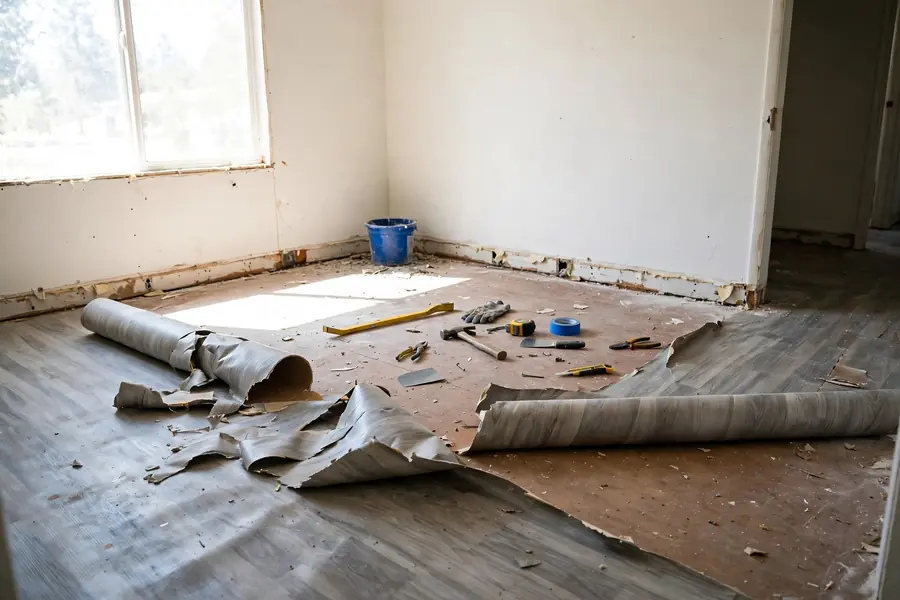
Step 1: Check the floor and prepare the room
Empty the room, turn off power to any floor outlets that need work, and remove baseboards and trim with a pry bar. Cover doorways to contain dust. Put on your mask, gloves and glasses.
Step 2: Lift the flooring
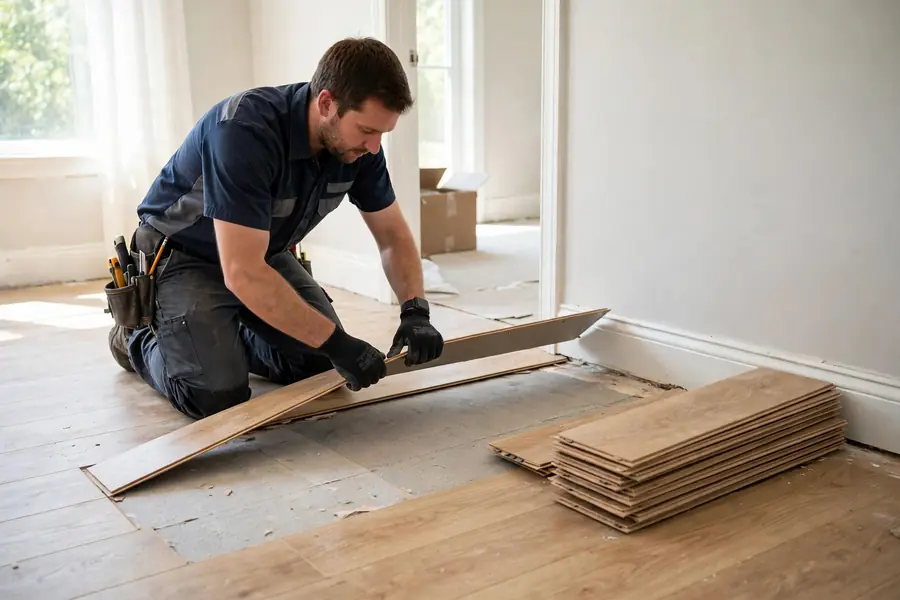
For click-lock planks, start at the last row you installed, lift the plank at a slight angle to release the joint. Work back across the room. For peel-and-stick tiles, warm a corner and pry up gently. For glued vinyl, see the next section.
Step 3: Clear the adhesive
Soak leftover glue with warm soapy water, let it sit, then scrape with a flat scraper. A gentler first approach works better than a harsh solvent, which can affect the subfloor and give off strong fumes. Never dry-grind or sand old adhesive.
Step 4: Patch and prep the subfloor
Fill gouges and low spots, sand down raised ridges, and vacuum. The subfloor must be flat, clean and dry for the next floor.
How do you remove glued-down vinyl flooring?
Cut the vinyl into strips, then peel and scrape them up. Score sheet vinyl across the floor about a foot apart, and lift each strip with a flat scraper while you pull. If it fights back, warm the spot with a heat gun on low. A long-handled scraper saves your back, and keeping the blade low and flat reduces gouges in the subfloor.
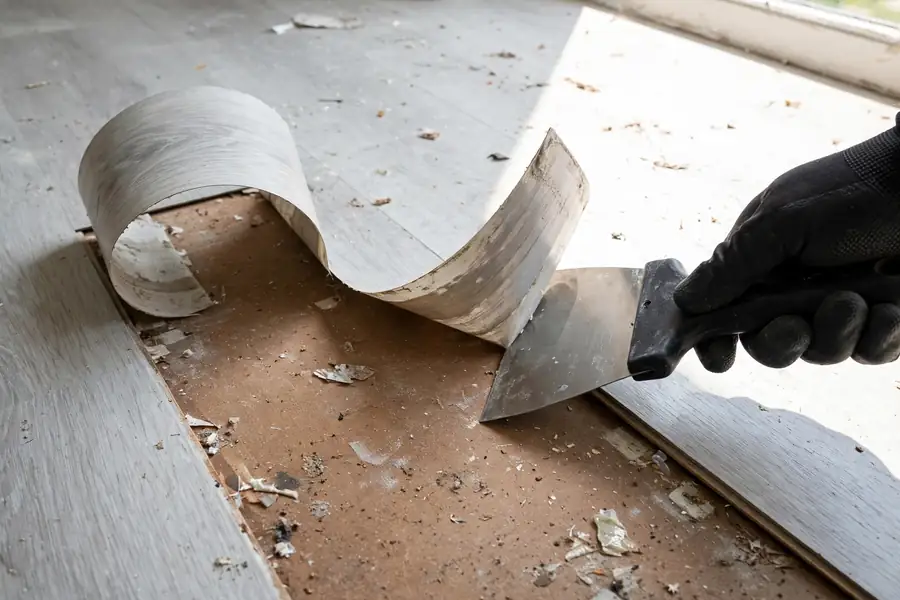
Glue-down tiles come up one at a time. Pry under a corner, warm the tile if needed, and pull it up while scraping the glue as you go.
How do you get rid of vinyl flooring adhesive?
Soften it with warm soapy water and scrape it off with a flat scraper. Keep the adhesive wet while you work, especially on an old floor. For stubborn glue, try a manufacturer-approved adhesive remover, and ventilate well. Test any chemical on a small patch, because some removers can harm a concrete bond or the next floor's adhesive.
What does it cost to remove vinyl flooring?
If you hire a pro, removal runs about $1.50 to $3 per square foot, and adhesive removal can add roughly $0.50 to $3 per square foot. Disposal is often about $50 to $200 depending on your area. Subfloor repair is extra. These are rough estimates from consumer guides, so ask for local quotes.
| Item | Estimate (2026) | For a 150 sq ft room |
|---|---|---|
| Removal labor | $1.50 to $3 per sq ft | $225 to $450 |
| Adhesive removal | $0.50 to $3 per sq ft | $75 to $450 |
| Disposal | $50 to $200 | $50 to $200 |
What mistakes should you avoid?
| Mistake | Why it matters | Fix |
|---|---|---|
| Skipping the age check | Old floors and black glue may contain asbestos | Test before you scrape |
| Too much heat | Melts vinyl and gives off fumes | Low heat, keep it moving |
| Digging the scraper in | Gouges the subfloor | Keep it low and flat |
| Dry scraping dust | Raises dust you should not breathe | Keep adhesive damp |
| Harsh solvents | Fumes, and they can harm the subfloor | Try warm soapy water first |
| Skipping subfloor prep | Bumps show through the new floor | Patch and sand |
Quick answers to common questions
How do you remove glued-down vinyl flooring?
Cut it into strips about a foot wide, peel each strip up with a flat scraper, and scrape off the adhesive.
Can you remove vinyl flooring without damaging the subfloor?
Mostly. Keep the scraper low and flat, use gentle heat, and expect to patch small gouges before the next floor.
How do you remove vinyl flooring adhesive?
Soak it with warm soapy water and scrape it up. Use an approved remover for stubborn spots, and ventilate.
Does old vinyl flooring contain asbestos?
It can, in floors and black adhesive from before the mid-1980s. Test a sample before you remove it.
How much does it cost to remove vinyl flooring?
About $1.50 to $3 per square foot for labor, plus adhesive and disposal costs, by consumer-guide estimates.
Keep reading: how to install vinyl plank flooring, typical flooring installation fees and vinyl flooring.
Is removing vinyl flooring a DIY job?
Removing vinyl flooring is a good DIY job when the floor is newer and the adhesive is light. Test an older floor first, and hire a professional if the test is positive or the subfloor is damaged. How to remove vinyl flooring well comes down to the type, the right tools, patience with the glue and a clean, flat subfloor for what comes next.