Vinyl flooring is a manufactured floor made mostly of PVC plastic, with a printed pattern under a clear protective layer. It comes as sheets, tiles or planks, and it copies wood, stone and tile. Vinyl resists water, feels softer underfoot than tile, and costs less than most other floors. It is a type of resilient flooring, which means it gives slightly when you walk on it.
Vinyl flooring at a glance
| Feature | What to know |
|---|---|
| Material | PVC (polyvinyl chloride) with a printed layer and a clear wear layer |
| Forms | Sheet, tile and plank |
| Look | Wood, stone, ceramic, concrete |
| Water | Resists water. Seams and the subfloor are the weak points |
| Cost | About $1 to $7 per square foot for the material in 2026 estimates |
| Lifespan | About 10 to 20 years, and often 15 to 25 for luxury vinyl |
| Refinishing | Not possible |
What are the types of vinyl flooring?
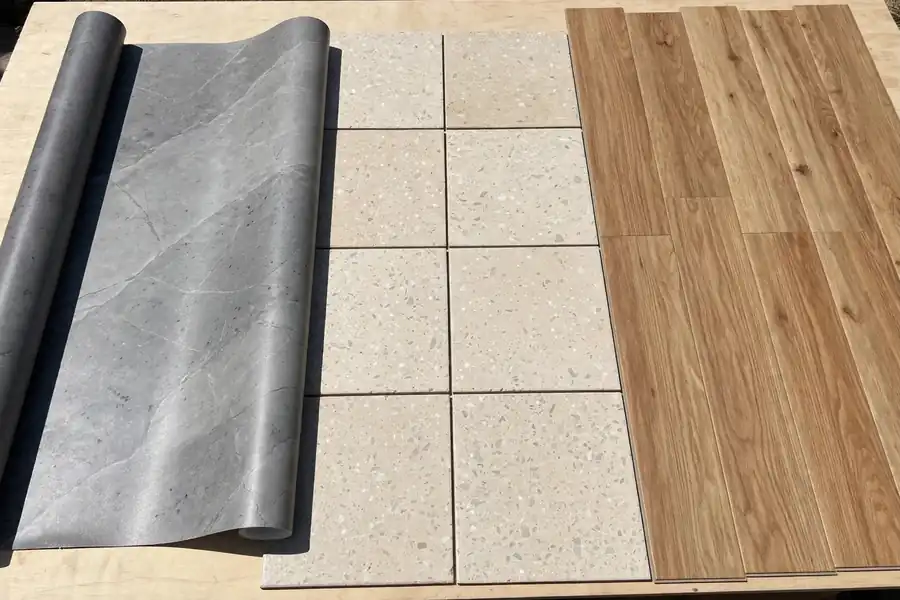
There are four main types of vinyl flooring: sheet vinyl, VCT, vinyl plank and luxury vinyl. They share the same base material, but they differ in thickness, look and use. Sheet vinyl is the thinnest and cheapest, and luxury vinyl is the thickest and most realistic.
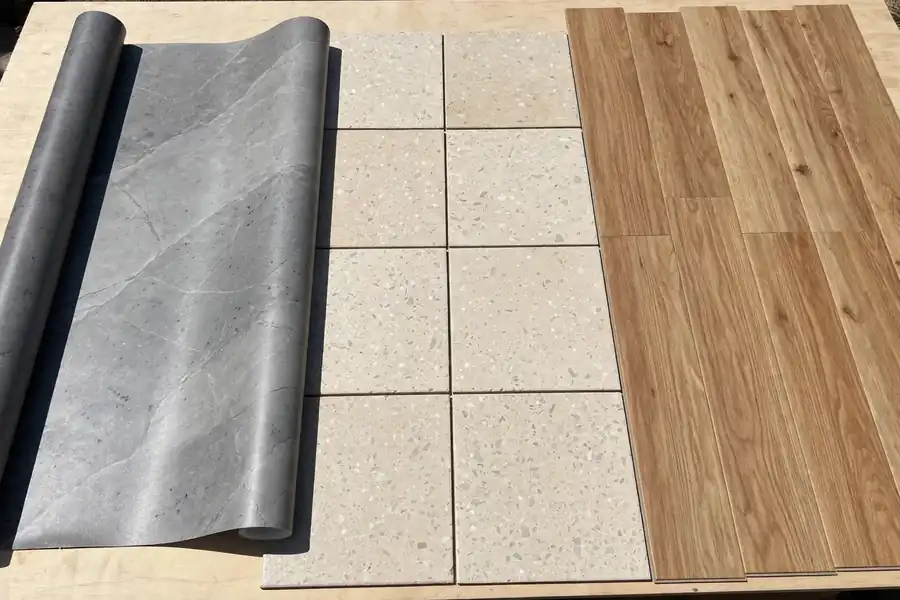
| Type | What it is | Best for |
|---|---|---|
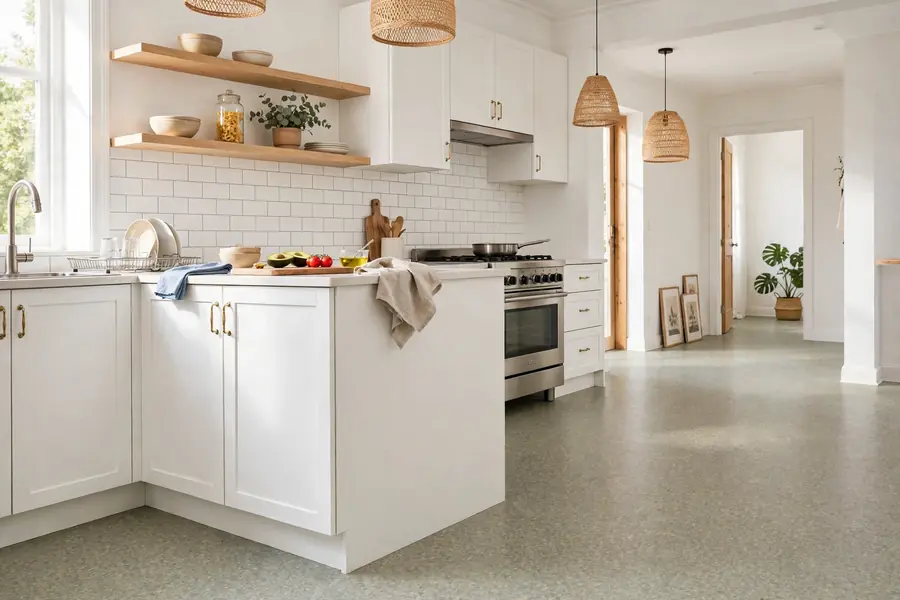
| Sheet vinyl | A thin, continuous roll, often glued down | Small baths, laundry rooms, rentals on a tight budget |
| VCT (vinyl composition tile) | A hard, thin tile that is often waxed and buffed | Shops, schools and other commercial spaces |
| Vinyl plank | Long boards that copy hardwood | Living areas, bedrooms, kitchens |
| Luxury vinyl (LVP and LVT) | A thicker, layered floor with a realistic print | Kitchens, baths, family rooms |
What is vinyl plank flooring?
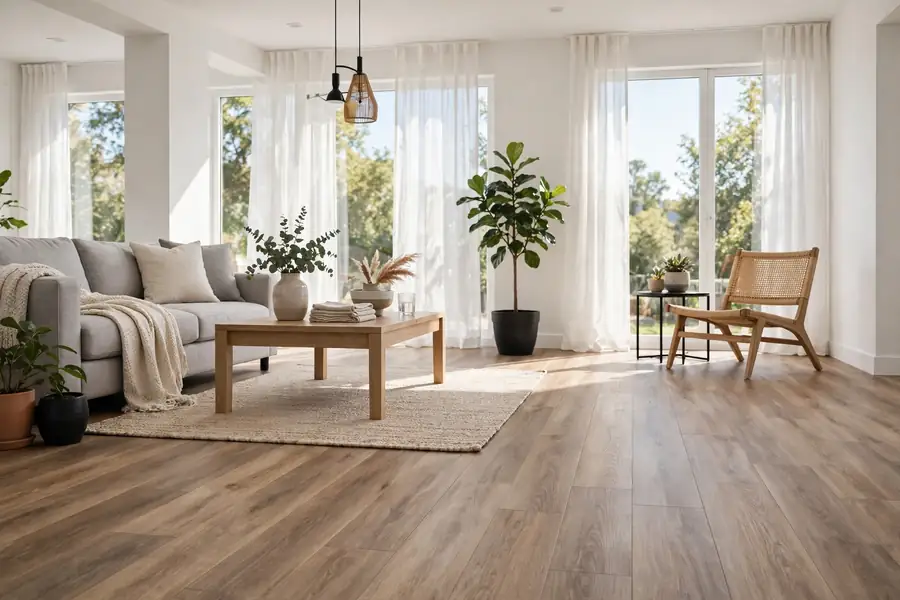
Vinyl plank flooring is vinyl cut into long boards that copy the look of hardwood. Most modern vinyl plank is luxury vinyl plank, called LVP, which is thicker and more realistic than basic vinyl. Many planks click together without glue and float over the floor, which makes them a popular DIY choice.
What is vinyl flooring made of?
Vinyl flooring is made of layers bonded together. A clear wear layer sits on top, a printed decorative layer gives the look, and a core or backing sits below. The main ingredient is PVC, a plastic that is mixed with plasticizers to make it flexible, plus stabilizers and fillers. Rigid-core products swap the flexible core for a stiff stone or wood composite.
The wear layer does the hard work. Its thickness is measured in mils, where one mil is one thousandth of an inch. A thicker layer lasts longer against scuffs and scratches.
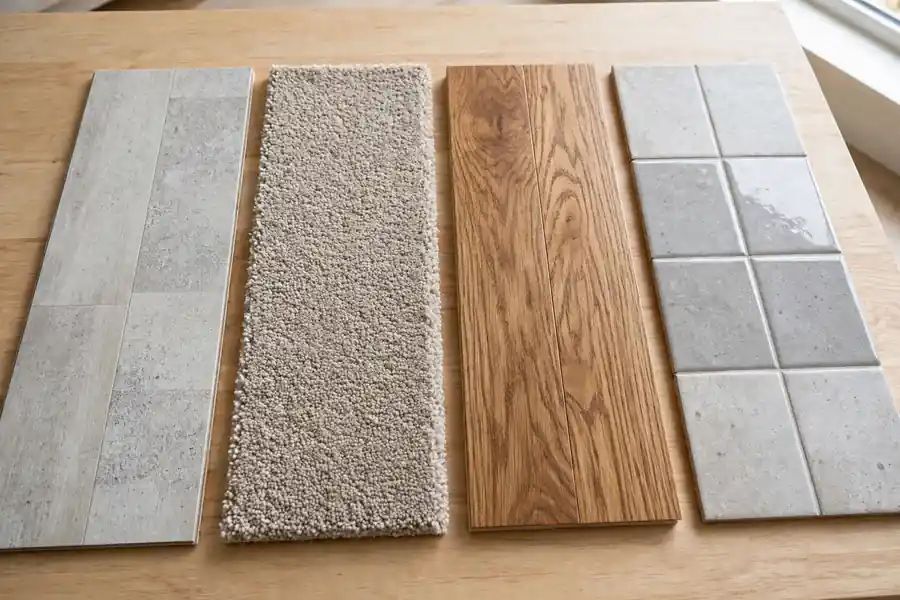
How does vinyl compare with carpet, wood and tile?
Vinyl wins on price, water resistance and easy cleaning. Wood and tile win on lifespan and resale appeal. Carpet is the softest, but it is the hardest to keep clean in wet or messy rooms.
What are the pros and cons of vinyl flooring?
| Pros | Cons |
|---|---|
| Resists water, spills and stains | Cannot be refinished |
| Easy to clean | Can dent or tear under heavy loads or sharp objects |
| Lower cost than wood or tile | Lower resale appeal than wood or tile |
| Soft and quiet underfoot | Thin sheet vinyl can feel cold and hard over concrete |
| Many wood and stone looks | Seams and subfloor can still let water through |
| Click-lock options suit DIY | Quality varies a lot between brands |
Is vinyl flooring waterproof?
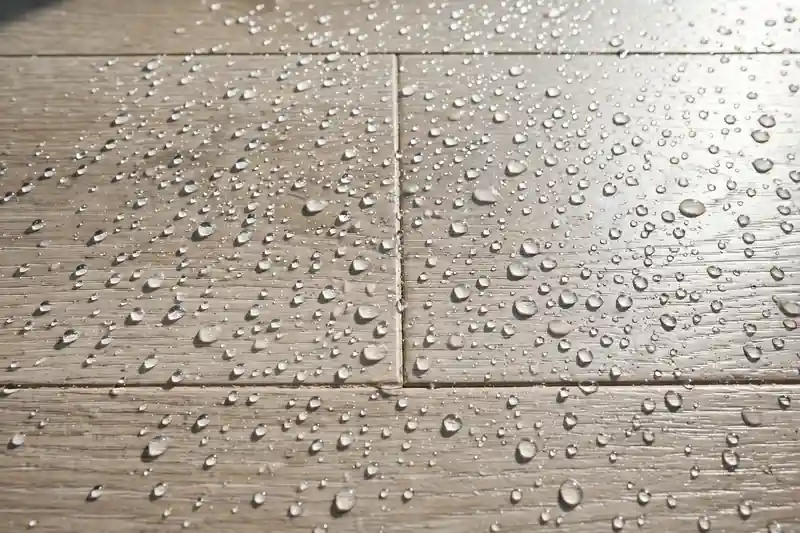
The vinyl itself resists water, and most vinyl will not swell or rot when wet. That is not the same as a waterproof floor. Water can seep through seams and sit on the subfloor, and the vinyl then holds it there. Wipe up spills, and have the subfloor dried after a leak. Treat "100% waterproof" as marketing language about the vinyl, not a promise about your home.
How much does vinyl flooring cost?
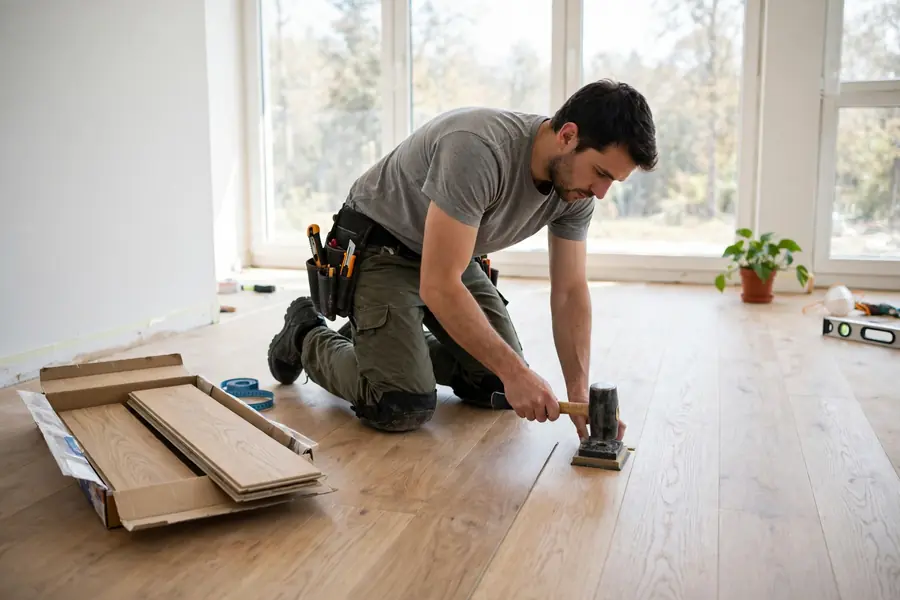
Sheet vinyl is the cheapest at about $1 to $4 per square foot for the material, and vinyl plank and tile run about $2 to $7 in 2026 estimates. Installed prices run about $3 to $9 per square foot, depending on the type, your area and the work needed on the subfloor.
| Item | Estimate (2026) | For a 100 sq ft bathroom |
|---|---|---|
| Material, sheet vinyl | $1 to $4 per sq ft | $100 to $400 |
| Material, plank or tile | $2 to $7 per sq ft | $200 to $700 |
| Installed, typical | $3 to $9 per sq ft | $300 to $900 |
These are estimates, not quotes, and sources vary. For sheet vinyl, plan for extra material, because cutting from wide rolls can waste a lot. Ask local installers for written prices.
How long does vinyl flooring last?
Basic vinyl often lasts about 10 to 20 years, and luxury vinyl is commonly said to last 15 to 25 years in a home. These are seller estimates, not lab results. A thicker wear layer, a flat dry subfloor and careful cleaning matter most.
Is vinyl flooring safe for your home?
Look for a low-emission certification such as FloorScore on the box or spec sheet, and let a new floor air out. Certification is voluntary, so check the label before you buy. Cheap products without any certification may release more chemicals than certified ones.
How do you choose the right vinyl floor?
Choose by room, look and budget. Sheet vinyl gives the lowest price and the fewest seams in a small bath. Luxury vinyl plank suits a wood look, and luxury vinyl tile suits a stone look. VCT and thick wear layers suit busy commercial spaces.
How is vinyl flooring installed?
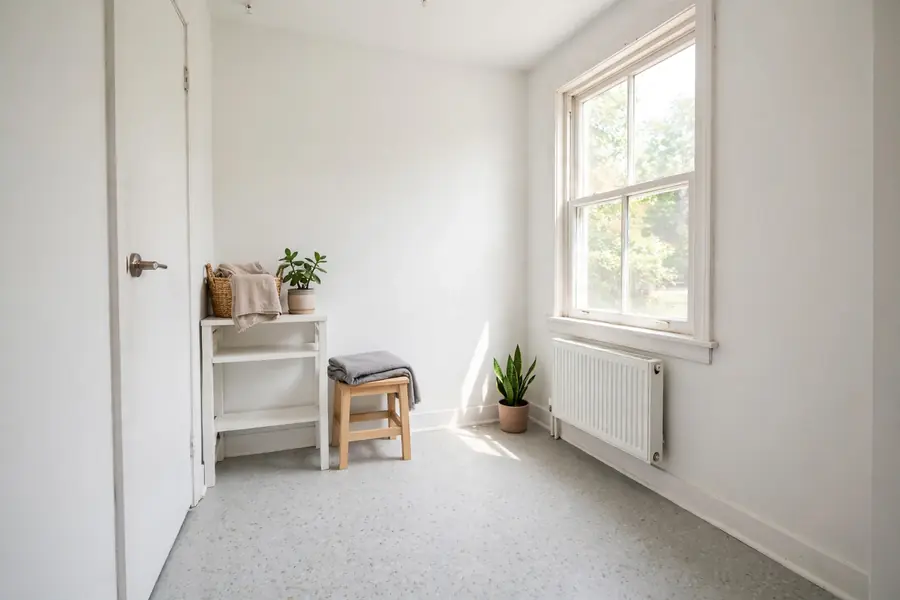
Vinyl goes down in three ways. Click-lock planks float over a flat floor. Glue-down sheets and tiles are bonded with adhesive. Peel-and-stick tiles have a self-adhesive back. Whichever you choose, the subfloor needs to be flat, clean and dry. Follow your product's instructions.
Quick answers to common questions
Is vinyl flooring waterproof?
The material resists water, but the floor is only as waterproof as its seams and subfloor. Wipe up spills and dry the subfloor after a leak.
Is vinyl flooring cheap?
It costs less than wood or tile, and sheet vinyl is the cheapest type. Luxury vinyl costs more, but it is still usually below hardwood.
How long does vinyl flooring last?
About 10 to 20 years for basic vinyl and often 15 to 25 for luxury vinyl, by seller estimates.
Is vinyl flooring safe to live with?
Look for a low-emission label such as FloorScore, and let the new floor air out. Check the spec sheet before you buy.
Can you install vinyl flooring over existing flooring?
Often, if the old floor is sound, flat and clean. Thin vinyl can show bumps through it, so fill deep grout lines first. Check the maker's rules.
Keep reading: what LVP flooring is, the pros and cons of vinyl flooring and resilient flooring.
Is vinyl flooring worth buying?
Vinyl flooring is worth buying for kitchens, bathrooms, laundry rooms, basements and busy family rooms where you want a durable floor at a modest price. It is less suited to homes where resale value or a refinishable surface comes first. Pick the type that fits the room, test the subfloor, and order a sample before you buy.