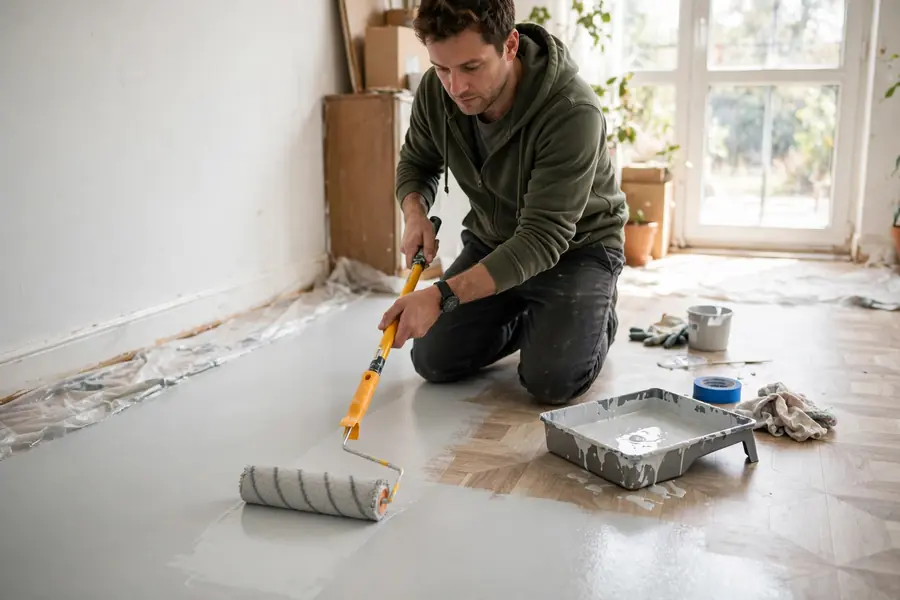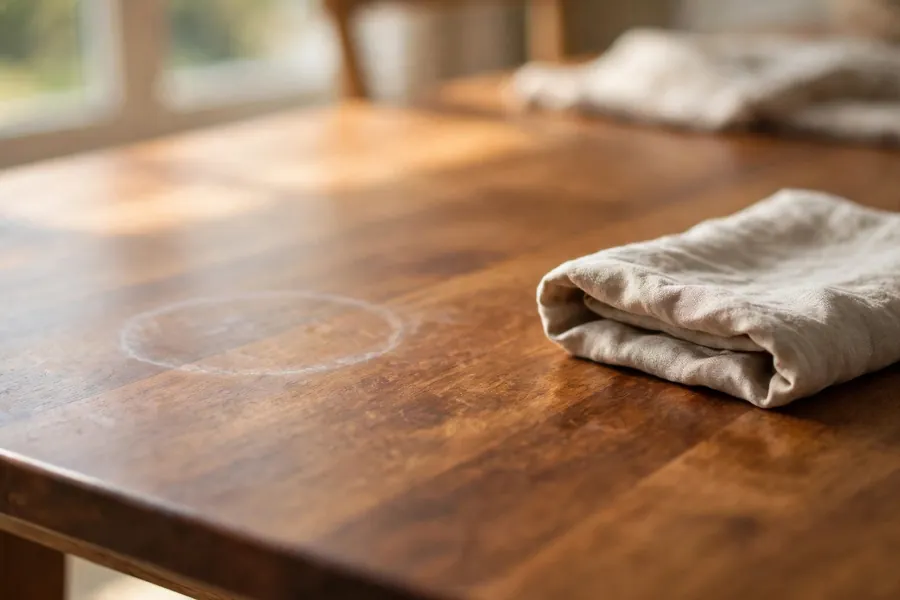
A white ring on a table or a dark stain on a floor looks like one problem, but it is two different problems, and the fix that works on one ruins the other. The method for how to remove water stains from wood depends on one question first: is the water trapped in the finish, or has it reached the wood itself? White marks sit in the finish and often lift with gentle heat or a light buff. Dark marks sit in the wood and need the finish removed, then a wood bleach or sanding. Start with the lightest fix that fits the stain, test it where it will not show, and stop the moment the surface tells you the stain is deeper than the finish.
Water stains at a glance
| Stain | Where the water sits | First fix to try | Stop and change course when |
|---|---|---|---|
| White ring or cloud | Trapped in the finish layer | Gentle heat, then oil and fine steel wool | The mark stays white after two heat passes, or the finish feels soft |
| Dark or black mark | In the wood, past the finish | Strip the finish, then oxalic acid or sanding | The stain covers a large area, or the piece is veneer |
| Ring on a floor | Finish or wood, by floor type | Dry 24 hours, then the fix for that floor finish | A lacquered floor still shows the stain after drying |
| Mark on veneer | In a thin wood layer over a core | Gentle heat only, no sanding | Any method needs abrasion, or the veneer edge lifts |
| Mark on laminate | On the printed surface or at a seam | Damp cloth, dry at once | The edge swells, or the print layer is scratched |
What does the color of a water stain tell you?
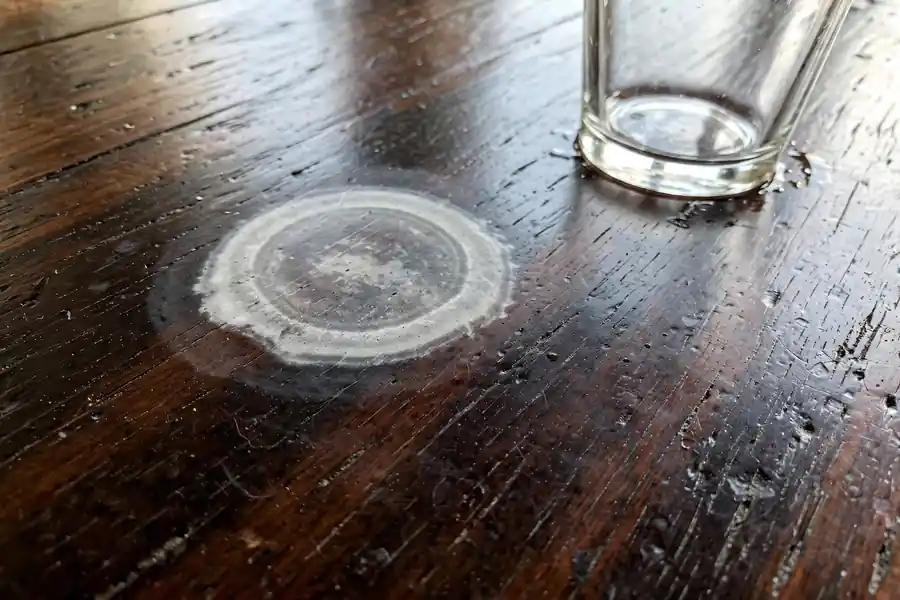
Color is the diagnosis. A white ring or a cloudy patch means moisture is trapped in the finish, not in the wood. Bruce Johnson, a wood finishing expert and Minwax spokesman, describes white marks as moisture held in a finish that is wearing out and no longer keeps water out, in guidance published by Minwax and read October 27, 2026. The finish has gone cloudy because water sits inside it. The wood below is usually sound, which is why gentle heat or a light buff with oil can clear it.
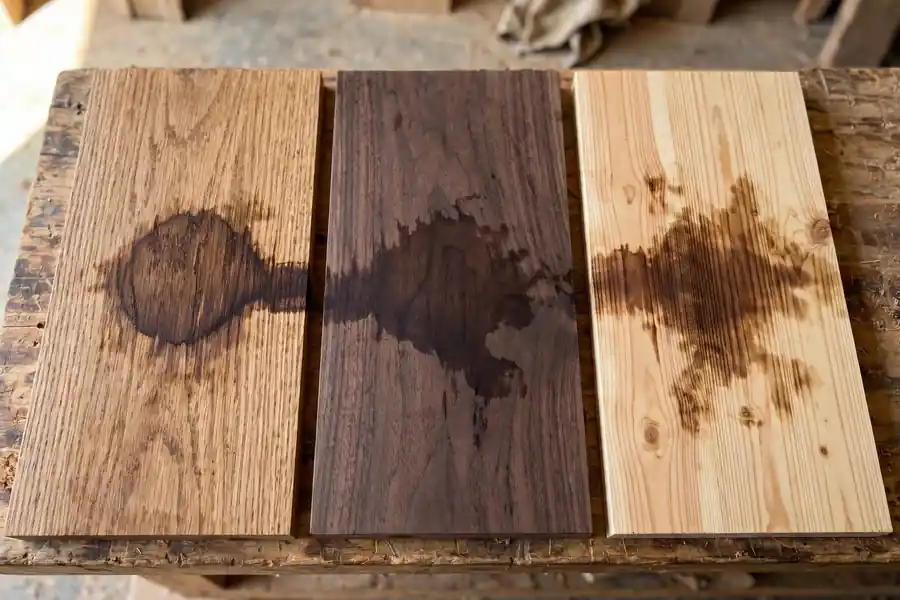
A dark, gray, or black mark means water got past the finish and into the wood fibers. On tannin-rich woods such as oak, water that carries iron from a nail, a screw, a metal plant stand, or a wet can reacts with the tannin and turns black. That reaction is chemical, not dirt, so no surface cleaner lifts it. Dark stains need the finish taken off the spot so a treatment can reach the wood, and the spot needs refinishing after. A stain that is dark and soft, or wood that feels spongy, warped, or swollen, is water damage past staining, and drying and repair come before any cosmetic fix.
What should you do before you try any fix?
Dry the piece first. Move the glass, plant pot, or wet object off the surface, wipe up standing liquid, and let the surface reach normal room dryness with air moving around it. Bona, the floor care maker, tells floor owners to wipe up liquid, let the floor dry, and keep the room well ventilated for 24 hours before judging a stain, in guidance opened in full and read October 27, 2026. The same wait applies to furniture. A fresh mark can fade as it dries, and working on a wet surface traps more moisture under whatever you apply next. Do not seal a damp mark with furniture polish or wax. Johnson warns that polish poured over a white mark seals the moisture in and stops it from escaping on its own.
Clean the surface next, gently. Dust with a soft dry cloth, then wipe with a barely damp cloth and dry at once, using only a cleaner the finish maker allows. Soil, polish film, and plant saucer residue can disguise the true edge of a stain, and a fix applied over grime leaves a ring of its own. Keep water off joints, open seams, and unsealed edges, and keep liquid away from outlets and built-in fittings.
Test every method where it will not show. Pick a hidden spot with the same finish, run the full method there, including drying and buffing, and judge the result in the same light. A test spot protects the whole top from a method that dulls the sheen, softens the finish, or lightens the color. Work in small sections, keep products off metal inlays and damaged coating, and stop after the stated attempt if the result is uneven.
How do you remove white water stains from wood with heat?
Heat works on fresh white marks because it drives trapped moisture out of the finish. Use a hair dryer on warm or low, held moving back and forth over the mark, never held still in one place. Johnson recommends a hair dryer on warm or low for recent marks, in the Minwax guidance read October 27, 2026. Most fresh rings fade as the moisture evaporates. Buff the spot with a soft cloth after, since heat can soften a wax finish slightly and the buff restores the sheen.
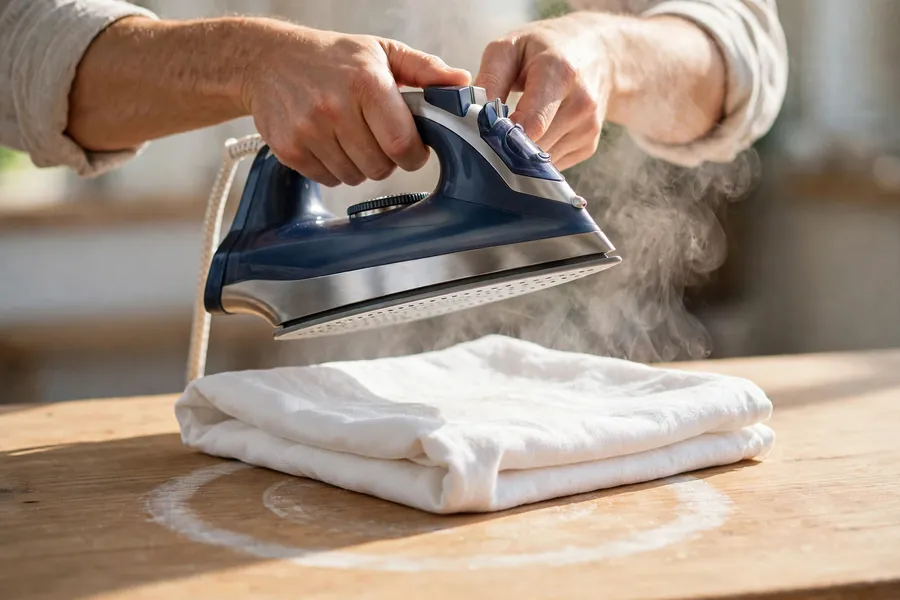
The iron method is the stronger version of the same idea. Lay a clean, dry cotton cloth over the mark, set the iron to low heat with the steam off, and press for a few seconds at a time, lifting to check often. Keep the iron moving and stop as soon as the cloudiness fades. Heat softens shellac and lacquer and can blister any finish if it runs hot or sits still, so treat the iron as a last resort for heat, not the first tool. Never use an iron or steam on veneer, where heat softens the glue that holds the thin wood layer down. Never use heat on a finish that already feels soft, tacky, or blistered.
Does mayonnaise remove water stains from wood?
Mayonnaise sometimes fades a fresh white ring, and nothing more. The oil in it displaces some of the moisture trapped in the finish, which is why a thin layer left for a few hours and wiped clean can lighten a light, recent mark. It does not repair a finish, it does not reach the wood, and it does nothing for a dark stain. Treat it as a low-risk experiment on a fresh white ring, not as a reliable fix. Wipe it fully clean after, since leftover oil collects dust and dulls the surface. If the ring is still there after one attempt, move on to heat or the steel wool method instead of repeating the mayonnaise.
Does vinegar remove water stains from wood?
Vinegar mixed with oil is a polish-style rub, not a stain remover. The usual mix is equal parts white vinegar and olive oil, rubbed lightly with the grain and buffed dry. The oil adds shine and can make a white mark less visible, while the vinegar can dissolve mineral deposits left by hard water. It does not pull moisture out of a finish, and vinegar is an acid that can dull or etch some finishes, so it needs a test spot first and must never be left sitting on the surface. Skip vinegar on floors, where a maker such as Bona directs owners to its own cleaners, and skip it on any finish you cannot identify. If the mark is a mineral deposit on top of the finish, a damp cloth with a small amount of vinegar, wiped off at once and dried, is the honest use of it. If the mark is moisture inside the finish, vinegar will not fix it.
Does baking soda paste remove water stains from wood?
Baking soda paste is a mild abrasive, and abrasion is both its effect and its risk. Mixed thick with a few drops of water and rubbed very gently with the grain, it can scuff the cloudy top layer of a finish enough to lighten a white mark. The same scuffing dulls gloss finishes, leaves a hazy patch on dark stain colors, and wears through thin finishes if rubbed hard or long. Use it only on a white mark, only with light pressure, only with the grain, and only after a test spot shows no dulling. Wipe all residue off and dry the surface, since paste left in grain lines dries white and looks like a new stain. It has no effect on dark stains in the wood, and rubbing harder will not change that.
Does toothpaste remove water stains from wood?
Plain white non-gel toothpaste works the same way baking soda paste does, by mild abrasion. Dabbed on a soft cloth and rubbed very gently with the grain, it can lighten a recent white mark. Whitening formulas are more abrasive and should not be used, gel pastes do nothing, and any toothpaste dulls high-gloss and delicate finishes if the test spot shows dulling. It is a weaker, messier version of the steel wool and oil method, with the same ceiling: white marks only, never dark stains. If the test spot dulls, skip it.
How do you use steel wool and oil on a white ring?
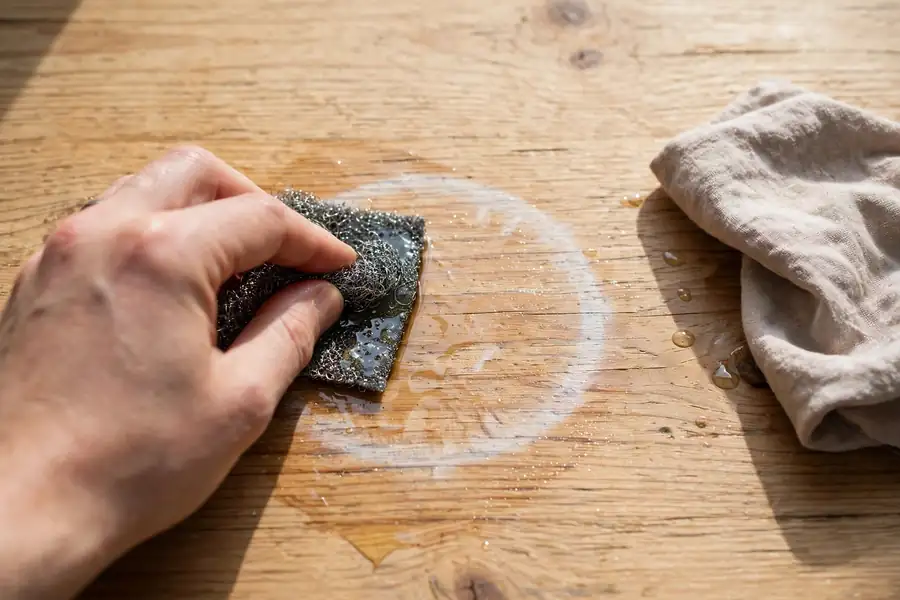
When heat has not cleared a white ring, fine steel wool with oil is the finisher's next step, and it is the method Minwax publishes. Put a small amount of tung oil finish or wipe-on polyurethane on a pad of very fine 4/0 steel wool, and buff the ring very gently with the grain, in guidance from Minwax read October 27, 2026. The oil releases the trapped moisture as the pad lightly abrades the cloudy finish. Wipe the surface clean, then wipe the whole top with the same finishing product and buff it, so the treated spot does not sit shinier or duller than the rest.
Use only 4/0 steel wool, the finest grade, and only with the grain. Coarser wool scratches, and rubbing across the grain leaves visible marks. Keep the pad barely wet with oil, not dripping, and stop the moment the ring fades. This method suits solid wood with an oil or polyurethane finish. Skip it on veneer, on high-gloss lacquer you cannot test, and on any surface where the finish is already peeling, since abrasion lifts loose finish. After the ring is gone, the surface needs its normal protection back, a coat of paste wax or the finish the maker specifies, because the buffed spot is now the thinnest part of the top.
Which folk method should you try first?
| Method | What it can do | Damage risk | Verdict |
|---|---|---|---|
| Hair dryer, warm | Drives moisture out of a fresh white mark | Low, if kept moving | Try first on fresh white rings |
| Iron and cloth, low, no steam | Same as a dryer, stronger | Softens shellac and lacquer, blisters finish, never on veneer | Second, with frequent checks |
| Mayonnaise | Oil displaces some trapped moisture on a fresh white ring | Leftover oil dulls and collects dust | One low-risk try, then move on |
| Vinegar and oil | Polishes, dissolves mineral deposits on the surface | Acid dulls some finishes | Only for surface deposits, test first |
| Baking soda paste | Mild abrasion lightens a white mark | Dulls gloss, hazes dark stain colors | Only on white marks, light pressure, test first |
| Toothpaste, plain white | Same abrasion as baking soda, weaker | Whitening formulas are too abrasive | Skip if the test spot dulls |
| Steel wool 4/0 with oil | Buffs the cloudy finish and releases moisture | Scratches if coarser wool or cross-grain rubbing | The finisher's fix when heat fails |
| Household chlorine bleach | None on wood stains | Lightens wood unevenly, damages fibers | Never use on wood |
How do you remove dark water stains from wood with oxalic acid?
Oxalic acid is the wood bleach for dark water stains, and it is a different chemical from household chlorine bleach. Household bleach lightens wood unevenly, weakens fibers, and does not remove the iron and tannin reaction that makes a stain black. Oxalic acid targets iron-based stains and tannin discoloration while leaving the natural wood color largely alone, according to wood bleach product guidance read October 27, 2026. It only works on bare wood, so the finish over the stain has to come off first, by stripping or by sanding the spot down to bare wood with the grain.
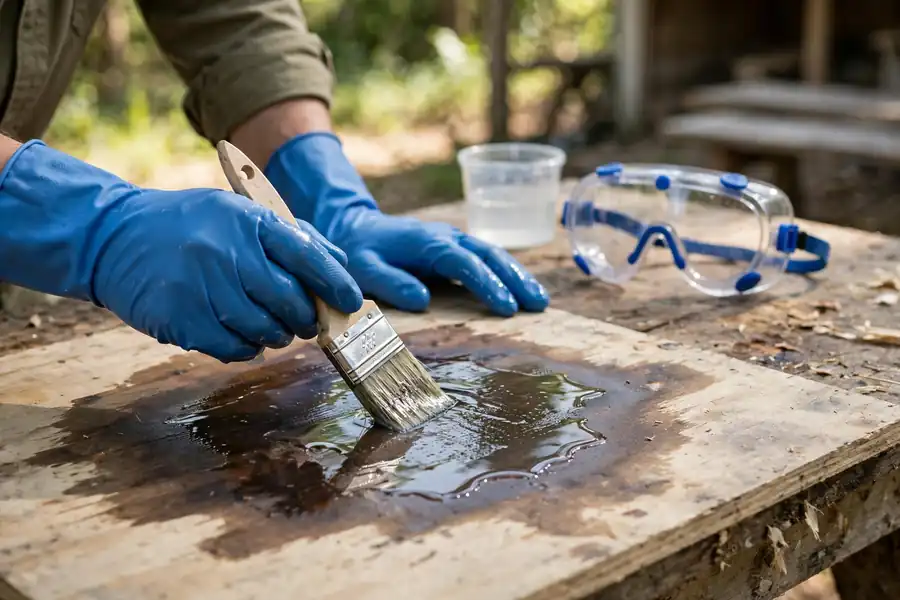
Work with the product label in front of you, and follow it over any general advice. Common label strength is about 1 ounce of crystals per quart of warm water, with one product label directing a full 12 ounce package dissolved in 1 gallon of hot water, in guidance read October 27, 2026. Labels differ, so mix to your label, in a glass or plastic container, never metal. Wear chemical-resistant gloves and goggles, and a respirator rated for dust when handling the dry crystals. Work with fresh air moving, keep children and pets away, and keep the solution off skin, clothing, and metal hardware.
Brush the warm solution onto the bare stained wood, keep the area evenly wet, and let it dry fully, which takes hours. Treat the whole board or the whole surface section where you can, since a spot treatment can dry lighter than the wood around it. If the stain is only partly lighter after drying, a second application after full drying works better than leaving the first one on longer, according to wood bleach guidance read October 27, 2026. Rinse the residue away with clean water, never brush dry crystals off the surface, since the dust is toxic to breathe. Neutralize with a mild baking soda and water solution, rinse again with clean water, and let the wood dry fully before sanding. Finish with fine sandpaper, 180 to 220 grit, sanding with the grain, then stain and refinish the spot to match. The treated area often dries lighter than the surrounding wood, and a toner or gel stain hides that better than a second bleach pass.
Never mix oxalic acid with other chemicals, and never use it on a finished surface expecting it to work through the coating. It does not remove paint, finish, or dye stains. Store crystals in their labeled container, out of reach of children.
When does sanding and refinishing beat bleaching a dark stain?
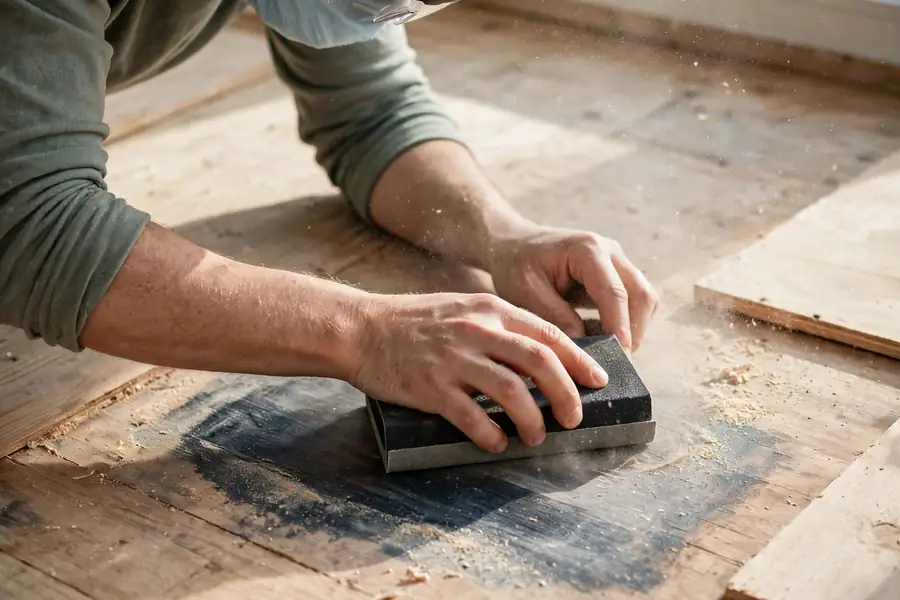
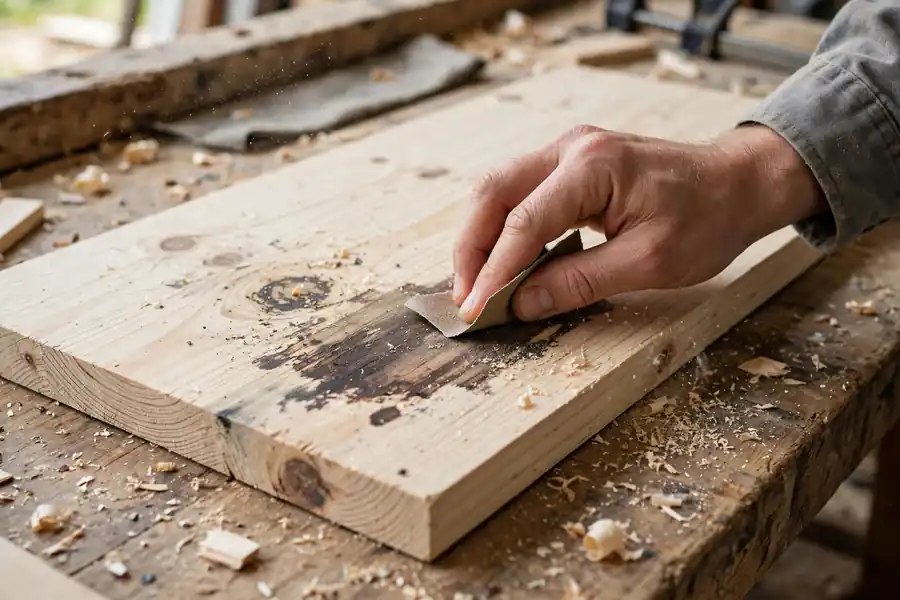
Sanding wins when the stain is shallow, when the finish is already failing across the surface, or when bleaching leaves a light patch that will not blend. Sand the spot or the whole surface with the grain, working through the grits from coarse enough to cut the finish to fine enough to finish, and stop at 180 to 220 grit for the final pass before refinishing. Sanding across the grain leaves scratches that show through stain and finish. A spot sand that stops at the edge of a stain leaves a dull patch with a visible border, so feather the sanded area outward and refinish the full board or the full top where the eye will catch a patch.
Sanding loses when the stain runs deep. Black stains that reach deep into the wood, boards that are cupped, soft, or warped, and floors sanded thin by past refinishings do not sand out. A floor with exposed nail heads or thin edges at vents has little wood left above the tongue, and another full sanding risks cutting through. In those cases, replacing the affected boards and weaving in matching boards before finishing is the honest repair, and a floor professional should judge it. If the stain covers a large area, refinishing the whole surface gives a more even result than chasing one spot, and the cost of a full refinish is the right comparison, not the cost of one more home remedy.
How to remove water stains from wood floors?
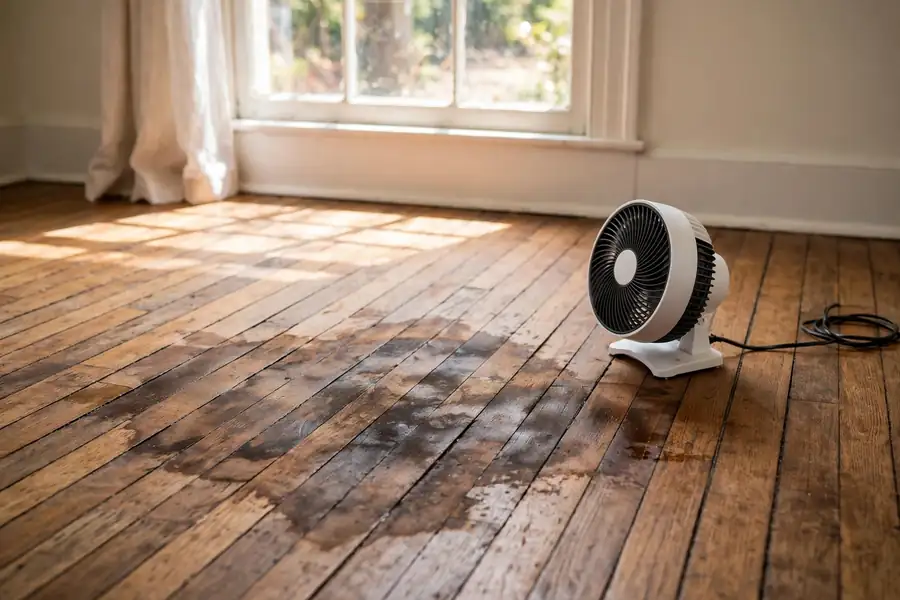
Floors follow the same white versus dark rule, with one extra limit: the finish decides the fix, and the floor type decides how far you can go. Start as Bona directs, in guidance opened in full and read October 27, 2026. Move the plant pot or wet object, wipe up the liquid, let the floor dry, and keep the room well ventilated for 24 hours. Judge the stain only after the floor is fully dry, since a damp board looks worse than it is.
| Floor finish | White or surface mark | Dark mark in the wood |
|---|---|---|
| Lacquered or polyurethane | Dry 24 hours, then a floor cleaner made for that finish, damp mop only | The fluid has soaked into the wood, so call a floor professional |
| Oiled | Dry 24 hours, clean with the oiled-floor cleaner, dry fully | Sand the spot with very fine sandpaper, then re-oil with the same oil used before |
| Waxed | Dry, buff with a soft cloth, re-wax the spot | Strip the wax from the spot, treat the wood, re-wax the full board |
| Engineered, wear layer 2 mm or less | Gentlest surface methods only, damp mop, dry at once | A compatible screen and recoat only, after a pro measures the remaining wear layer. The NWFA refinishable minimum is 2.5 mm for smooth factory-finished flooring. |
| Engineered, thin veneer | Gentlest surface methods only | No full sanding, board replacement or a pro repair |
| Laminate or luxury vinyl | Damp cloth, dry at once, keep water out of seams | No sanding, the print layer is not wood, replace the plank if swollen |
Never soak a wood floor, never leave a damp mop sitting on it, and never use vinegar, steam mops, or abrasive pads on a finish you cannot identify. The Flooring chapter covers floor care more broadly, and the engineered hardwood guide explains wear layers in detail. Water at seams and edges swells cores and lifts edges, and that damage does not reverse. On oiled floors, re-oiling with a different oil than the one already on the floor can leave a patch that never matches, so use the same oil or ask the installer. On lacquered floors, a stain that survives drying has soaked past the coating, and Bona directs owners to a certified craftsman at that point rather than to a home remedy.
How do you remove water stains from wood furniture and tables?
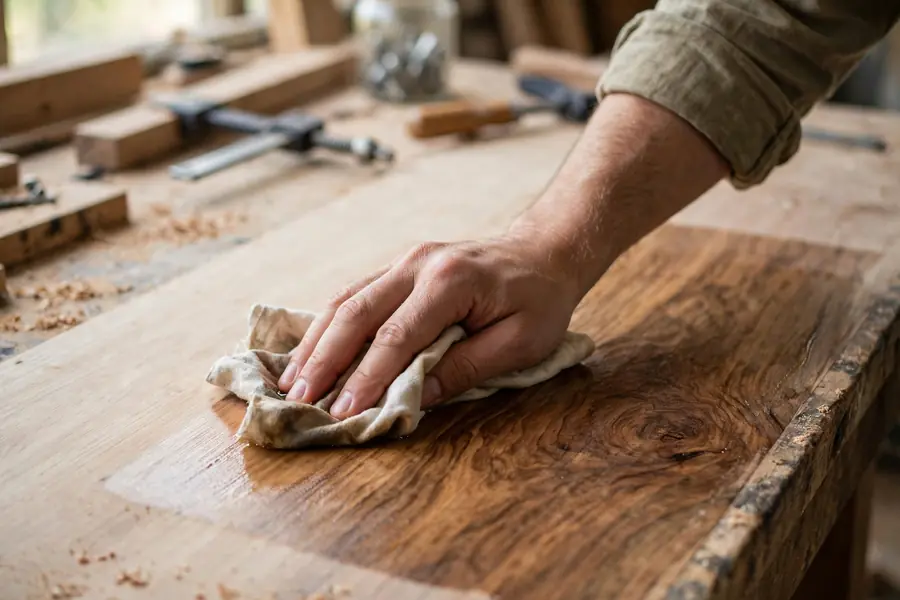
Tables take the same diagnosis as floors, with more room to work, since a tabletop can be spot-treated, stripped, and refinished without shutting down a room. A white ring on a dining table usually answers to heat first, then the steel wool and oil buff. A dark ring needs the finish stripped from the spot, oxalic acid or sanding on bare wood, and a refinish that blends across the full top. Refinish the whole top when the stain is large or the finish is thin across the surface, since a spot refinish shows its border in raking light.
Cabinets, window sills, paneling, beams, and trim each add one constraint. Cabinet doors come off their hinges for flat, even work, and the finish inside the frame must match the door. Window sills sit in sun and weather, so check for soft or rotted wood under the stain before refinishing, and fix the leak or the condensation source first. Paneling and beams are often thin or rough-sawn, so sanding is light and with the grain, and a stain that will not lift is better toned and sealed than sanded thin. Trim is usually painted or clear-coated in place, so mask the wall and floor, work in short sections, and keep oxalic acid and strippers off paint and plaster. On any piece you care about, test on the underside first.
How do you remove water stains from veneer without sanding through it?
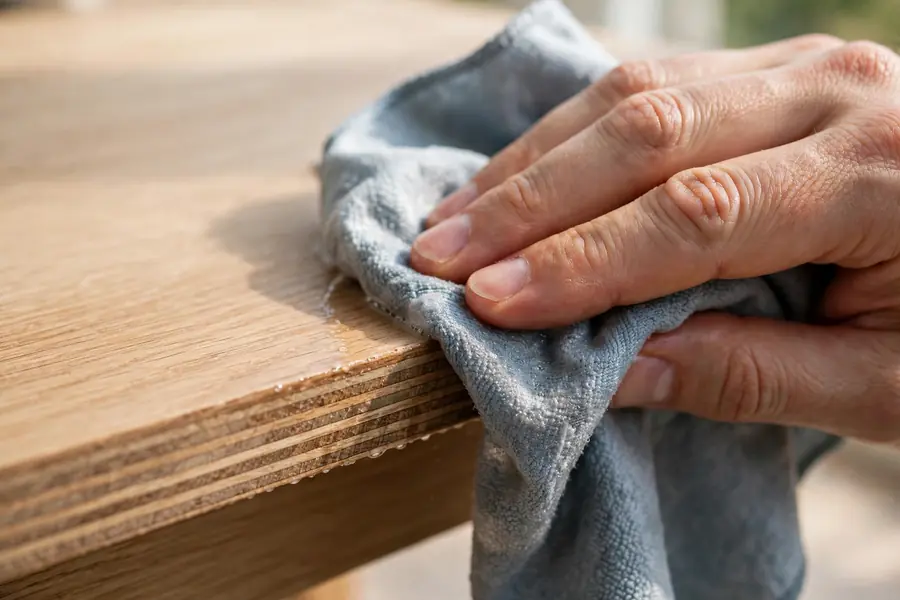
Veneer is a thin layer of real wood glued to a core, and the limit is absolute: no sanding through it, and no method that needs abrasion. Gentle heat on a fresh white mark is the only home method with a safe margin, and even heat needs care, since it softens the glue. Keep the dryer on warm, keep it moving, and stop at once if an edge lifts or the surface bubbles. Skip the iron, skip steel wool, skip baking soda and toothpaste, and skip oxalic acid unless a restorer has stripped the finish and judged the veneer thick enough, which most veneer is not.
If the veneer is lifting, bubbling, or cracked, stop. Regluing veneer is a restorer's job, and sanding a lifted edge tears it. If you suspect a piece is veneered and you are not sure, check an edge or the underside for a thin layer line, and treat it as veneer until proven otherwise. Dark stains on veneer usually mean a professional repair or living with the mark, since the wood layer is too thin to bleach and sand safely.
How do you remove water stains from laminate and fake wood?
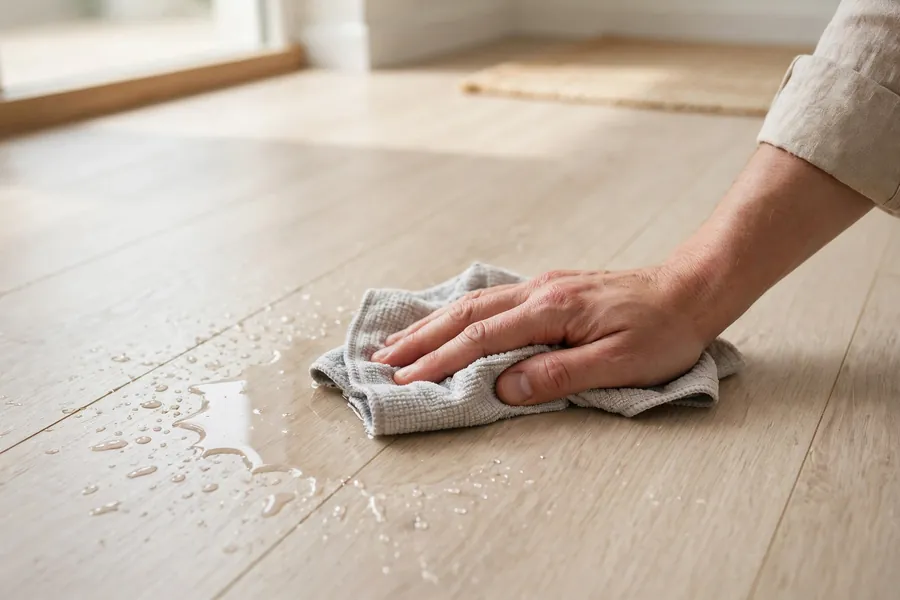
Laminate and fake wood have no wood at the surface to bleach or sand. The top is a printed layer under a wear coating, and sanding through it exposes the core and ruins the plank. Clean the mark with a damp cloth and a cleaner made for that floor or surface, wipe dry at once, and keep water out of seams and edges, where it swells the core. A white ring on laminate is usually a film on the coating, and a gentle cleaner plus a dry buff is the full fix. Dark marks, swollen edges, and peeling print mean the plank or panel is damaged, and replacement is the repair. Do not use the iron, steel wool, baking soda, oxalic acid, or any abrasive on laminate. The same limit applies to vinyl plank and luxury vinyl tile, which are not wood at all.
How do you remove water stains from unfinished wood?
Unfinished wood has no finish to trap moisture, so every stain is in the wood itself. White marks are uncommon on raw wood, and a pale mark is usually a surface deposit or a light scuff, which a light sand with the grain removes. Dark stains need oxalic acid on the bare wood, mixed and applied as described above, or sanding with the grain until the stain is gone, finishing at 180 to 220 grit. Raw wood drinks liquid fast, so apply treatments evenly across the full board to avoid a clean patch ringed by stain. Let the wood dry fully, sand lightly, and finish it at once with the stain and topcoat the piece needs, since unfinished wood stains again at the next spill. Pine and other softwoods sand fast and take stain unevenly, so keep pressure light and even, and expect blotching if the stain is applied without a conditioner the maker recommends.
How do water stains differ by wood species?
Species changes the stain because tannin content and oil content differ. Oak is tannin-rich, so water plus iron turns black fast, and oak is the classic case for oxalic acid. Walnut is dark already, so light marks show more than dark ones, and a dark stain often blends with a toner rather than needing a bleach. Cedar and redwood carry tannins that gray and streak with water, and their stains answer to oxalic acid on bare wood. Teak is oily, so oil-based finishes and oil contamination behave differently, and a test spot matters more than the method name. Pine is soft and absorbent, so stains go deep fast, sanding cuts fast, and the surface needs an even hand.
| Species | Stain tendency | Method note |
|---|---|---|
| Oak | Tannin plus iron turns black | Oxalic acid on bare wood is the standard fix |
| Walnut | Light marks show, dark marks blend | Tone and refinish more often than bleach |
| Cedar, redwood | Tannin streaks and graying | Oxalic acid on bare wood, even application |
| Teak | Oily wood, finishes vary | Test spot first, match the existing oil or finish |
| Pine, fir | Soft, stains go deep, sands fast | Light pressure, even sanding, expect uneven stain uptake |
| Maple, birch | Light wood, stains show clearly | Gentle methods first, sanding shows scratches fast |
How do you remove hard water stains from wood?
Hard water stains are mineral deposits, not moisture trapped in the finish, so they sit on top of the surface and feel slightly rough or chalky. A damp cloth with a small amount of white vinegar, wiped off at once and dried, can dissolve the deposit, and that is the one honest job for vinegar on wood. Test first, since vinegar can dull some finishes, and never leave it sitting. On floors, use the floor maker's cleaner instead. If the deposit has etched the finish or the wood below is dark, the problem is no longer mineral, and the dark-stain methods apply. Wipe up hard water at once in the future, and dry the surface, since deposits build with every evaporation.
What keeps water stains from coming back?
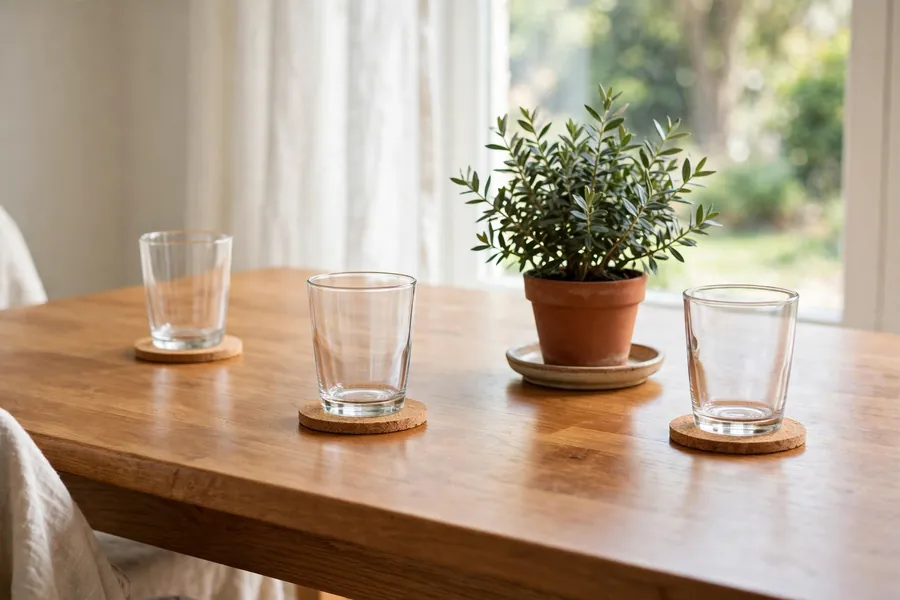
Prevention is finish care, not a product. Use coasters under cold glasses and trivets under hot dishes, since heat and cold both drive moisture into finishes. Wipe spills at once instead of leaving a glass to sit, and keep plant pots on saucers with felt pads, moving the pots now and then so sunlight does not leave a pale outline. Keep the finish sound: a coat of paste wax once or twice a year on waxed furniture, and a fresh topcoat when water stops beading and starts soaking in, are the two maintenance acts that prevent rings. Wipe with a barely damp cloth and dry at once, and skip silicone sprays and heavy polish build-up, which trap moisture and dull the surface over time. Fix the source of floor stains, a leaking pot, a pet bowl, a window drip, before refinishing, or the new finish stains the same way.
When should you call a professional?
Call a floor professional or a furniture restorer when the stain is dark and covers a large area, when the piece is veneer or a valuable antique, when the floor is engineered with a thin wear layer, or when sanding would cut through the wood that is left. Call one when the wood is soft, warped, or swollen, when boards need replacing and weaving in, or when a full refinish is the honest fix and the room cannot be closed off for sanding and coating. Call one before using oxalic acid if you are not comfortable with the safety gear, the ventilation, and the neutralization steps, or if the stain sits near metal inlays, mixed materials, or a finish you cannot identify. A restorer can also judge whether a stain is mold, which needs the moisture source fixed and the affected material handled as a health matter, not a cosmetic one. If the stain came from a leak, a roof drip, or plumbing, fix the water source first and let the wood dry fully before any finish work.
Start with the lightest fix that fits the stain
The order that avoids damage is simple: dry the surface, clean it, test a hidden spot, and work from the gentlest method up. The guide for how to remove water stains from wood comes down to that order plus one judgment call, white or dark, made before any product touches the surface. White marks answer to heat and a light buff. Dark marks need bare wood and either oxalic acid or sanding, then a refinish. Veneer, laminate, and thin engineered floors set hard limits that no method overrides. Keep the finish sound after the fix, and the next glass leaves no mark to chase.
Quick answers to common questions
Can mayonnaise remove a dark water stain from wood?
No. Mayonnaise only displaces a little moisture in a finish, so it can fade a fresh white ring and nothing else. A dark stain sits in the wood past the finish, and no surface rub reaches it. Strip the finish from the spot and use oxalic acid or sanding on the bare wood instead.
Will an iron damage a wood finish?
It can. Heat softens shellac and lacquer and can blister any finish if the iron runs hot or sits still. Use low heat with the steam off, a dry cotton cloth between iron and wood, a few seconds at a time, and lift to check often. Never use an iron or steam on veneer, and never use heat on a finish that already feels soft or blistered.
Is oxalic acid safe to use indoors?
It is safe when the label directions are followed, and it is not a casual cleaner. Wear chemical-resistant gloves and goggles, and a respirator for dust when mixing crystals. Work with fresh air moving, keep children and pets away, mix in glass or plastic, never metal, and rinse and neutralize with a baking soda solution before refinishing. Never mix it with other chemicals, and never use household chlorine bleach on wood in its place.
Can you sand water stains out of engineered wood floors?
Only when the wear layer is thick enough, generally 2.5 mm or more under the NWFA refinishable program, and only with a careful light sanding judged by a floor professional. At 2 mm or less, skip sanding and use a compatible screen and recoat after a pro evaluates it. Thin-veneer engineered floors cannot take a full sanding, and sanding through the wear layer ruins the plank. Check the wear layer at a vent or transition first, and replace boards that are too thin or too deeply stained.
How do you stop water rings from coming back?
Use coasters and trivets, wipe spills at once, and keep plant pots on saucers with felt pads. Keep the finish sound with paste wax on waxed furniture and a fresh topcoat when water stops beading. Fix the water source behind any floor stain before refinishing, or the new finish stains the same way.