Here is how to clean cork flooring safely. Sweep or vacuum first, then damp mop with a well-wrung mop and a pH-neutral cleaner, and wipe the floor dry so water does not sit. Skip steam mops, soaking mops, solvents, and oil soaps or waxes not made for cork. Blot spills right away, use felt pads and mats, and check your maker's care guide, because the finish decides what is safe.
The routine at a glance
- Sweep or vacuum. Use a soft broom or a vacuum on the bare-floor setting, with no beater bar.
- Damp mop. Use a pH-neutral cleaner and a mop wrung until it is damp, not wet.
- Dry the floor. Wipe it with a clean cloth so water does not leave spots.
- Blot spills. Do it right away, before cork absorbs them.
- Protect the floor. Use felt pads, mats and window coverings.
How often should you clean cork flooring?
Sweep every few days, damp mop every week or two, and wipe spills immediately. Check the finish every few years. Cork is a natural material that reacts to water and sunlight, so a regular light routine beats an occasional heavy one.
| Task | How often |
|---|---|
| Sweep or vacuum | Every few days |
| Damp mop | Every week or two |
| Blot spills | Right away |
| Move furniture and clean underneath | Once or twice a year |
| Check the finish and recoat if worn | Every 3 to 5 years, by common advice |
Recoat timing varies by product and traffic. Some guides say 3 to 7 years, so follow your maker's advice.
What should you use to clean cork floors?
Use a pH-neutral cleaner, or the cleaner your maker recommends. One supplier gives a range of pH 7 to 9, and says to avoid acidic or alkaline products. Do not assume a cleaner is neutral. The label should say so. Test any new cleaner on a hidden spot or a spare piece of cork first.
| Cleaner | Verdict | Why |
|---|---|---|
| pH-neutral floor cleaner | Best choice | Gentle on the finish |
| Plain water, barely damp | Good for light cleaning | Leaves no residue |
| Maker-approved cleaner | Use it if the warranty asks | Keeps coverage |
| Vinegar | Sources disagree. Avoid unless your maker allows it | An acid can dull the finish |
| Oil soap, wax not made for cork | Avoid | Can leave a greasy film or discolor |
| Solvents such as mineral spirits or turpentine | Avoid | Can damage the finish |
How do you clean cork flooring step by step?
Step 1: Remove the dry dirt
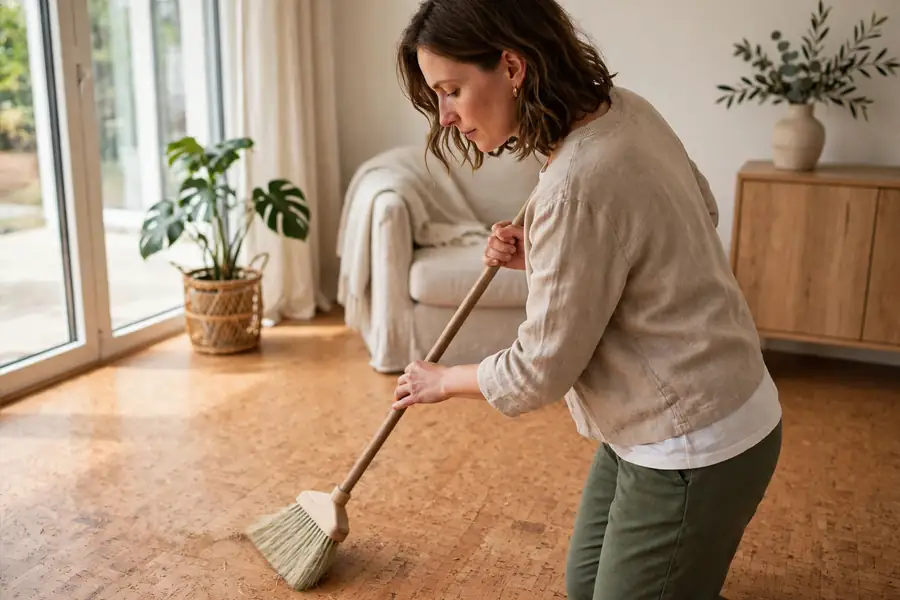
Sweep with a soft broom or use a vacuum on the bare-floor setting. Turn off the beater bar, because it can scratch the finish. Grit under shoes acts like sandpaper, so this step prevents more scratches than any cleaner does.
Step 2: Mop damp, not wet
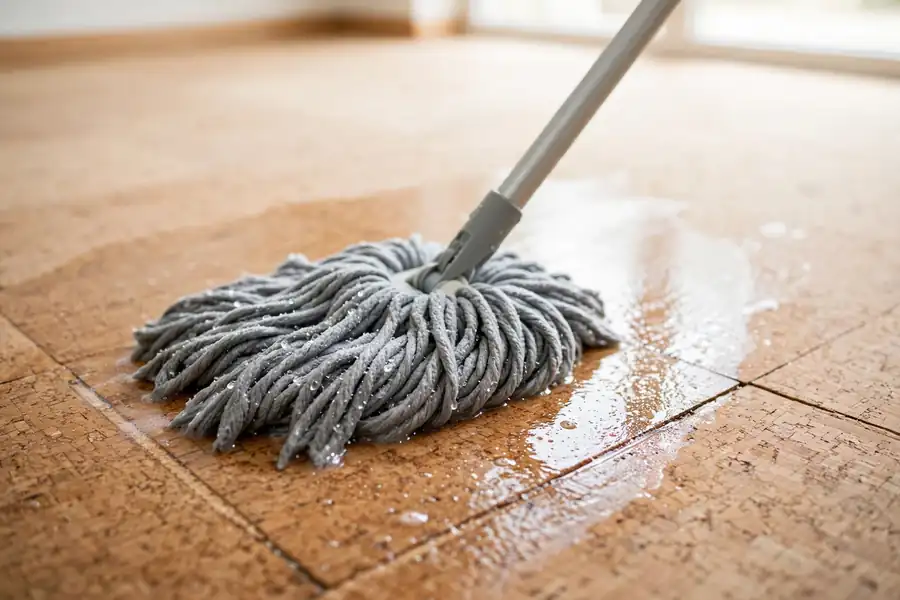
Mix the cleaner as the label says, dip a microfiber mop, and wring it until it is only damp. Mop in the direction of the planks, and keep the mop moving so water does not sit. Standing water can soak into seams and cause swelling or warping.
Step 3: Dry the floor
Wipe the floor with a clean, dry cloth or let it dry with good airflow. This prevents water spots and stains. A hazy film means the cleaner was too strong, so go over the floor once with a cloth dampened in plain water.
What should you never use on cork flooring?
Never use steam, soaking water, solvents, or oily soaps and waxes that are not made for cork. Heat and moisture damage the finish, and oily products leave a film.
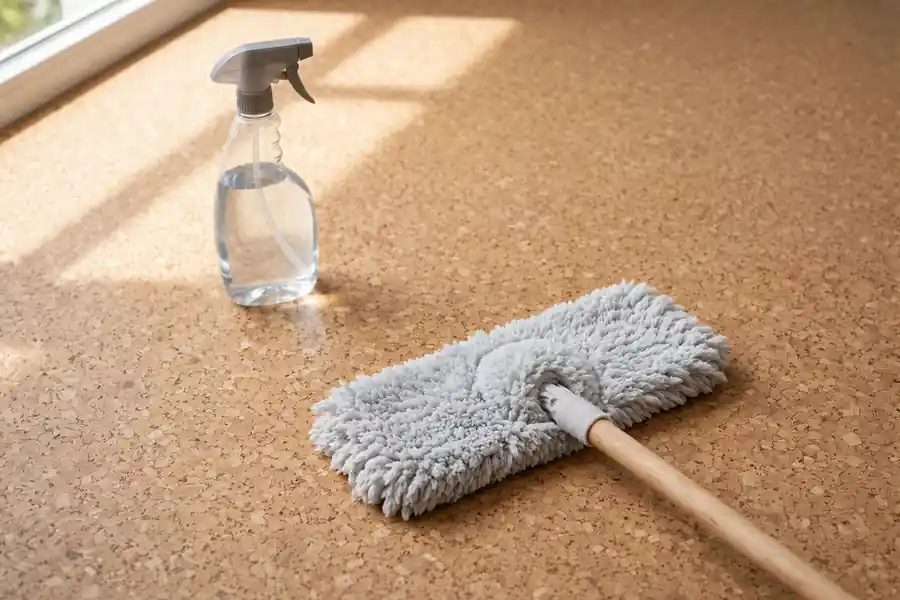
Also avoid abrasive pads, scouring powder and ammonia or bleach, which can dull the surface. When in doubt, use less water and less product.
How do you remove stains and scuffs from cork flooring?
Blot first, never scrub. Start with the gentlest remedy, and test on a hidden spot. Sealed cork resists most spills when they are wiped up quickly, but unsealed cork absorbs them.
| Problem | What to try | Notes |
|---|---|---|
| Fresh spills | Blot with a clean cloth, then wipe with a damp cloth | Dry the spot afterward |
| Dried food | A damp cloth and your pH-neutral cleaner | Let the cleaner sit for a minute |
| Sticky residue | A damp cloth, then a plastic scraper if needed | Never use metal scrapers |
| Water spots | Buff with a dry cloth, or re-wipe with a damp cloth | Dry fully |
| Scuffs | A soft cloth, rubbed lightly | Check your maker's advice |
| Deep gouges or worn finish | Ask your maker or a flooring pro | May need recoating |
Avoid solvents on cork unless your maker approves them.
How do you protect cork flooring from damage?
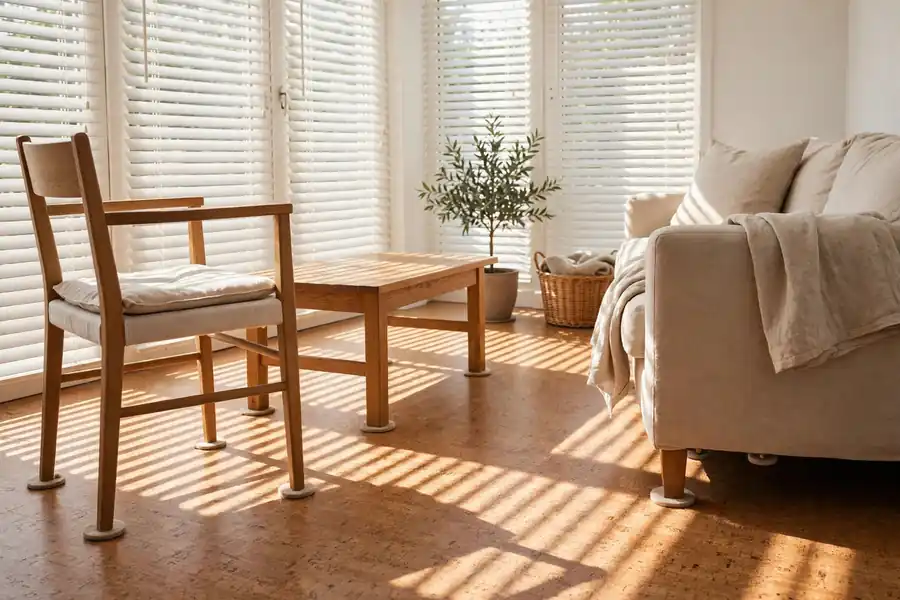
Control sunlight, furniture and humidity. Cork contains organic pigments and fades in strong sun. It dents under pinpoint loads, though shallow dents can recover. It expands and contracts with humidity, so a steady room is kinder to it.
Do you need to reseal cork flooring?
Often, after a few years. Most cork floors have a factory finish, such as polyurethane, that wears down over time. Common advice is to reseal every 3 to 5 years, depending on traffic. To recoat, lightly abrade the old finish with fine sandpaper and apply a compatible water-based topcoat, but never sand through to bare cork. Follow your maker's instructions, because the right product depends on the finish.
Quick answers to common questions
Can you mop cork flooring?
Yes, with a damp mop, not a wet one. Wring it well and dry the floor afterward.
Can you use vinegar on cork floors?
Sources disagree. Some makers allow a weak dilution, and others forbid it. Follow your maker's care guide, or use a pH-neutral cleaner instead.
How often should you reseal cork flooring?
Often every 3 to 5 years, by common advice. Check the finish for dull or worn spots.
How do you remove stains from cork flooring?
Blot spills quickly, then clean with a damp cloth and a pH-neutral cleaner. Avoid solvents and scrubbing.
Can cork flooring get wet?
Sealed cork resists a quick spill, but standing water can swell the seams. Wipe spills right away.
Keep reading: the benefits of cork flooring, eco-friendly flooring options and how to clean vinyl flooring.
Is cork flooring easy to look after?
Cork flooring is easy to look after when you keep water, grit and sun under control. Sweep often, damp mop gently, wipe up spills at once, and recoat the finish when it wears thin. That is how to clean cork flooring so it lasts, and it takes only a few minutes each week.