Here is how to clean vinyl flooring safely. Sweep or vacuum first, with the beater bar turned off. Then damp mop with a well-wrung microfiber mop and a pH-neutral vinyl floor cleaner, and wipe up spills as soon as they happen. Skip steam mops, wax, bleach and abrasive pads. The same routine works for luxury vinyl plank (LVP), vinyl tile and sheet vinyl. Check your maker's care guide first, because some warranties require specific cleaners.
The routine at a glance
- Sweep or vacuum. Use a soft broom or a vacuum on the bare-floor setting.
- Mix a gentle cleaner. Use a pH-neutral vinyl floor cleaner, or plain warm water for light cleaning.
- Damp mop. Wring the mop until it is damp, not wet.
- Treat stains. Use the safe remedy for the stain, not a harsh product.
- Protect the floor. Use mats, felt pads and window coverings.
How often should vinyl floors be cleaned?
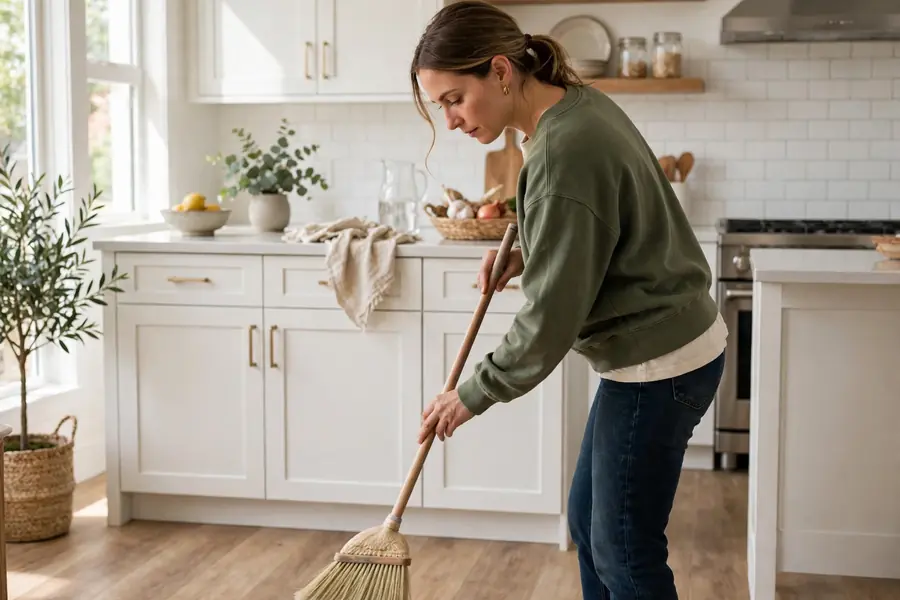
Sweep every day or two, mop once a week, and deep clean once a month. Mop more often with pets or kids, and less often in a bedroom that sees little traffic.
| Task | How often |
|---|---|
| Sweep or vacuum | Daily in busy areas, every two to three days elsewhere |
| Damp mop | Weekly. Every few days with pets or kids |
| Wipe up spills | Right away |
| Deep clean | Monthly, or every one to two months |
| Shake out entry mats | Weekly |
| Check felt pads and mats | Every six months |
| Move furniture and clean underneath | Once a year |
What should you use to clean vinyl floors?
Use a pH-neutral cleaner made for vinyl, or the cleaner your maker recommends. A pH-neutral cleaner is neither acidic nor alkaline, so it lifts dirt without wearing down the protective wear layer. Some makers require their own cleaner to keep the warranty, so read the care sheet before you buy one.
| Cleaner | Verdict | Why |
|---|---|---|
| pH-neutral vinyl cleaner | Best choice | Gentle, and made for the wear layer |
| Plain warm water | Good for light cleaning | Leaves no residue |
| Maker-approved cleaner | Use it if the warranty asks | Keeps your coverage |
| Mild dish soap | Use sparingly, if at all | Can leave a film or streaks. Some makers ban detergents |
| White vinegar | Only if your maker allows it | See the next section |
| Bleach, ammonia, oil soap, wax | Avoid | They dull, strip or coat the finish |
Is vinegar safe on vinyl floors?
Not always, and the people who make your floor usually say no. Vinegar is a mild acid. Some retail guides call a half cup per gallon of water safe, but at least two flooring makers tell owners to avoid it because acid can slowly dull the finish. When a maker and a blog disagree, follow the maker, because the maker decides your warranty.
If your care sheet does not mention vinegar, a pH-neutral cleaner is the safer default for regular use. If your maker does allow it, keep it diluted and use it only occasionally.
How do you clean vinyl flooring, step by step?
Step 1: Remove the dry dirt
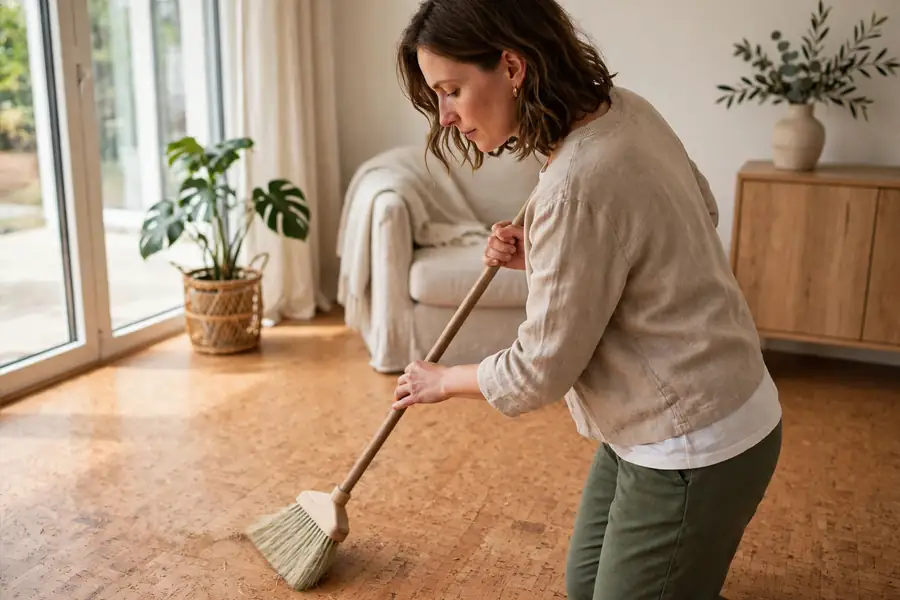
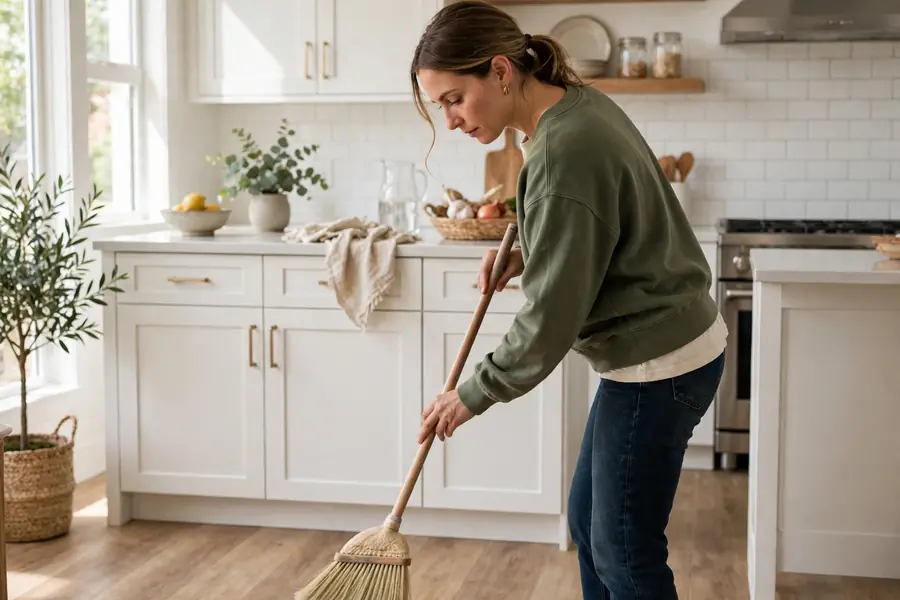
Sweep with a soft-bristle broom or use a vacuum set to the bare-floor mode. Turn off the beater bar or rotating brush, because it can scratch the surface. Grit left on the floor acts like sandpaper under your shoes, so this step prevents more scratches than any cleaner does.
Step 2: Mix and apply the cleaner
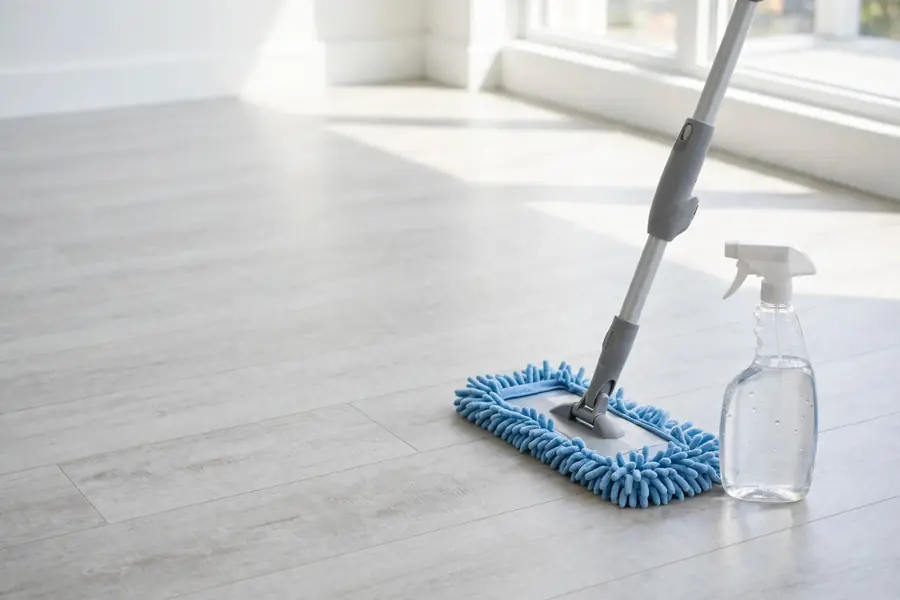
Follow the dilution on the cleaner's label, and use warm, not hot, water. Use a microfiber mop with a wringer bucket, because it gives you control over how much water goes on the floor. A string mop applies too much.
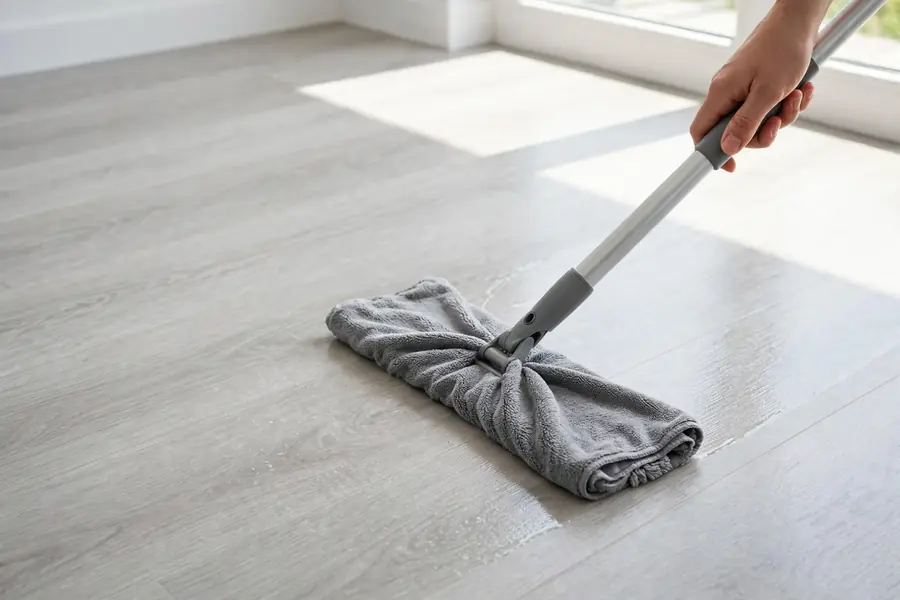
Step 3: Mop damp, not wet
Wring the mop until it is only damp. Water that sits on the floor can run into the seams and under the planks, where it can damage the subfloor and lift edges. Work from the farthest corner toward the exit, and overlap each pass by about half so the floor is covered twice.
Step 4: Dry and finish
Wipe the floor with a clean microfiber cloth or let it air dry with a window open. If you see a hazy film, go over it once with a cloth dampened in plain warm water. Most pH-neutral cleaners do not need rinsing when they are mixed to the label, but a film means the mix was too strong.
How do you remove stains and scuffs from vinyl flooring?
Blot first, never scrub. Start with the gentlest remedy in this table, and test any product on a hidden spot before you use it on the floor.
| Stain | What to use | Notes |
|---|---|---|
| Fresh spills | A white cloth or paper towel | Blot, then clean with a damp cloth |
| Dried food | A damp cloth and your pH-neutral cleaner | Let the cleaner sit about a minute |
| Juice, wine, ketchup | A paste of baking soda and water | Leave it a few minutes, then clean as usual |
| Grease and oil | Your pH-neutral cleaner, or a baking soda paste | Rinse with a damp cloth |
| Ink, marker, crayon, lipstick | 70% rubbing alcohol on a soft cloth | Dab, do not scrub, then rinse |
| Paint | Wipe wet paint right away. Soften dried latex paint with warm water | Never scrape with metal |
| Gum or sticky residue | Harden it with ice, then lift it with a plastic scraper | Use an adhesive remover your maker approves |
| Pet accidents | Blot, then use an enzyme cleaner | Rinse with a damp cloth |
| Scuffs | A pencil eraser or a tennis ball, rubbed lightly | A melamine sponge can work with very light pressure, but it is mildly abrasive, so test first |
Avoid acetone and nail polish remover. Strong solvents can soften or cloud the surface.
What should you never use on vinyl flooring?
| Avoid | What can go wrong |
|---|---|
| Steam mops | Heat and moisture get into seams and can lift edges. Many makers void the warranty for steam |
| Wax, polish and "mop and shine" products | Leave a dull, sticky film that traps dirt |
| Bleach, ammonia and harsh solvents | Strip or discolor the wear layer |
| Steel wool and scouring pads | Scratch the surface |
| Vacuums with a beater bar | Scratch and dent the floor |
| Rubber or latex-backed mats | Cause permanent yellow stains |
| String mops and soaking | Push water into seams |
| Oil soaps and strong detergents | Leave a residue |
How do you protect vinyl flooring from damage?
Prevention takes less time than cleaning, and it keeps the wear layer intact.
Use the right mats
Put a walk-off mat at every outside door, and set small rugs in front of the sink and stove. Pick mats without rubber or latex backing. Rubber can react with the plasticizers in vinyl and leave a yellow stain that does not come out, and that damage is generally not covered by warranties. Unbacked mats, or ones labeled non-staining, are the safer choice.
Protect it from furniture
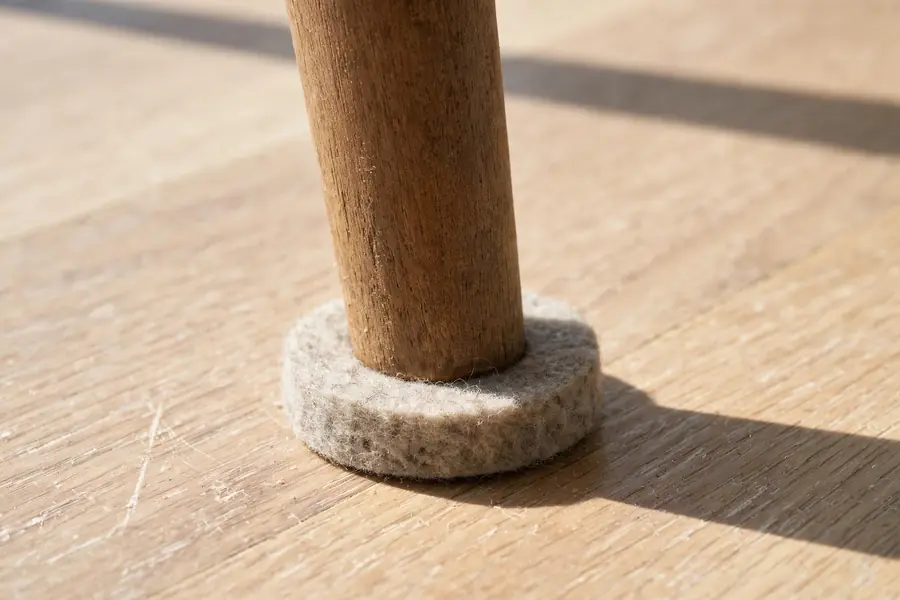
- Felt pads. Put them on every leg, and lift furniture instead of dragging it. Check the pads every six months.
- Casters. Use soft, non-staining wheels at least 2 inches wide.
- Heavy loads. Slide a rigid runway, at least 1/8 inch thick, under a dolly. Appliances need glides or a sheet of 1/8 inch hardboard under them, shiny side down.
- Leg ends. Replace small or metal tips with protectors at least 1 inch wide.
Keep sun and heat in check
Strong direct sunlight can fade vinyl over time. Use curtains or blinds on sunny windows, and keep space heaters and other heat sources away from the floor. A room between about 60 and 80°F is easiest on the floor.
Think about pets
Keep pet nails trimmed and put a mat under food and water bowls. Clean up accidents quickly.
How do you deep clean vinyl floors?
Once a month, do a slower version of the usual mop. Sweep first, then use your pH-neutral cleaner at the strength on the label. Work in small sections and change the water when it turns gray. Use a soft-bristle brush on stuck-on spots or in the textured grooves, then follow with a clean damp mop. Never use a hard brush or steel wool.
What if the floor is already scratched or dented?
Cleaning cannot fix damage to the wear layer, but you can hide or repair small problems. Fix them early, before dirt settles into the scratch.
| Problem | What you can do |
|---|---|
| Light surface scratches | Clean the area, then use a vinyl floor repair marker or a scratch-filling kit in a matching color |
| Deep scratches and gouges | Fill small ones with a repair compound. For click-lock planks, replacing the damaged plank is the cleanest fix |
| Dents | Dents in planks with a soft WPC core are usually permanent. Protect the spot and replace the plank if it bothers you |
| Lifting edges or seams | Stop mopping the area, let it dry, and check for water under the floor. A glue-down floor may need re-gluing |
Keep a few spare planks or tiles from your original order. Color and pattern change between batches, so a spare from the same lot matches best.
Does cleaning differ for LVP, vinyl tile and sheet vinyl?
The routine is the same, but the amount of water matters most for floors with seams.
| Type | What to watch |
|---|---|
| LVP (luxury vinyl plank) | Click-lock planks have seams, so keep the mop damp and wipe spills fast |
| Vinyl tile | Seams between tiles collect dirt, so use a soft brush there |
| Sheet vinyl | Fewer seams, but cuts and tears let water under the sheet, so watch the edges and seams |
| Textured or embossed vinyl | Dirt hides in the grooves, so use a soft brush during deep cleans |
Quick answers to common questions
Can you use a Swiffer or robot mop on vinyl floors?
Often yes, if the pad is only lightly damp and your maker allows it. Dry sweeping pads are fine. For wet pads and robot mops, keep the water low, wipe away standing water, and check your care sheet. Robot vacuums are fine if the brush bar is turned off or set for hard floors.
How do you make dull vinyl floors shiny again?
Dullness is usually residue, not wear. Mop once with plain warm water and a clean microfiber cloth to lift the film, then switch to a pH-neutral cleaner mixed to the label. Do not use wax or polish. If the shine is worn off, the wear layer is thin in that spot, and cleaning will not bring it back.
Can you use dish soap on vinyl floors?
A few drops in a bucket of warm water is a common home remedy for light cleaning, but it can leave a film. Some makers ban detergents outright. A pH-neutral vinyl cleaner is safer, so check your warranty before you use soap.
How do you clean textured vinyl?
Use the normal routine, then work over the grooves with a soft-bristle brush while the floor is damp. Avoid stiff brushes, which can scratch the pattern. Dry the floor with a microfiber cloth.
Do vinyl floors need to be rinsed?
Not when you mix a pH-neutral cleaner to the label. If you see streaks or a film, the mix was probably too strong. Go over the floor once with a cloth dampened in plain warm water.
Keep reading: vinyl flooring, whether vinyl flooring is waterproof and what LVP flooring is.
What is the best way to keep vinyl floors looking new?
The best way to clean vinyl flooring is to do less to it, more often. Sweep regularly, mop damp, use a pH-neutral cleaner, and stop grit and rubber at the door with the right mats. Treat spills fast, and keep steam, wax and harsh chemicals away from the floor.
Before you try any new cleaner, read your maker's care sheet. It tells you what keeps the warranty valid, and it beats any general advice, including this guide.