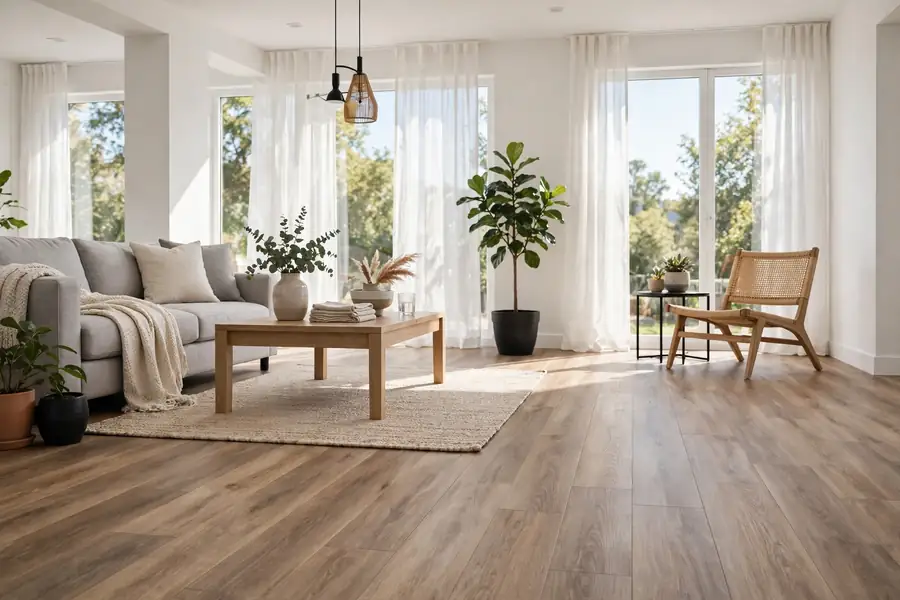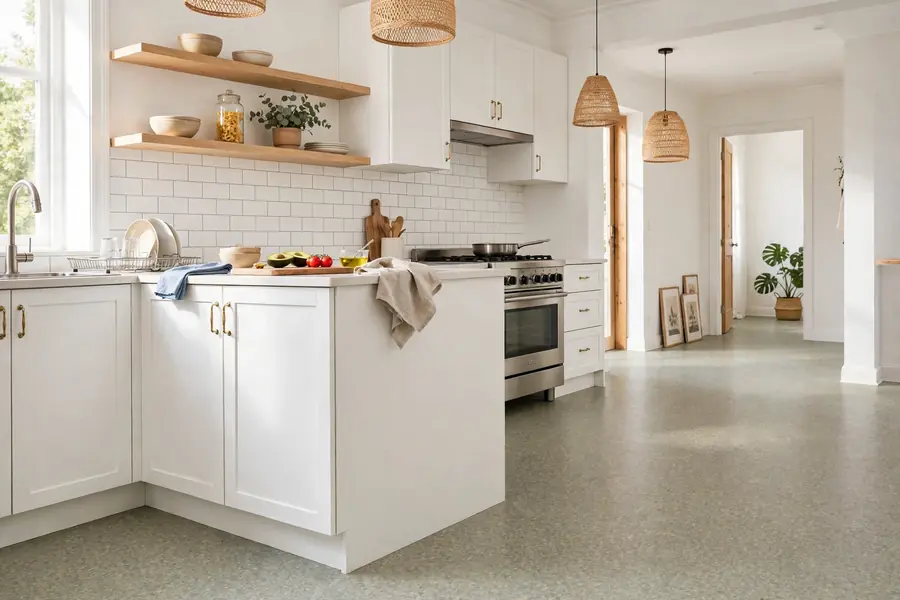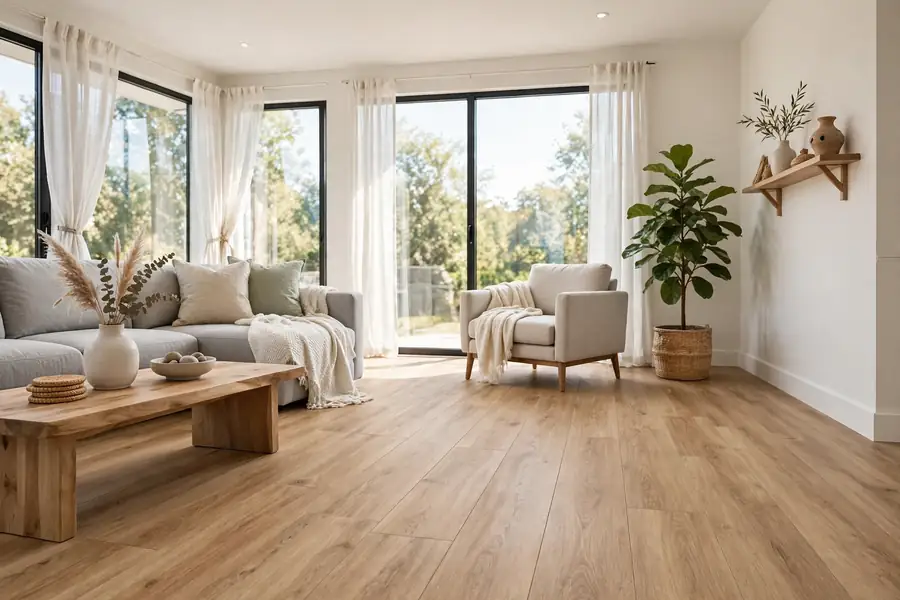
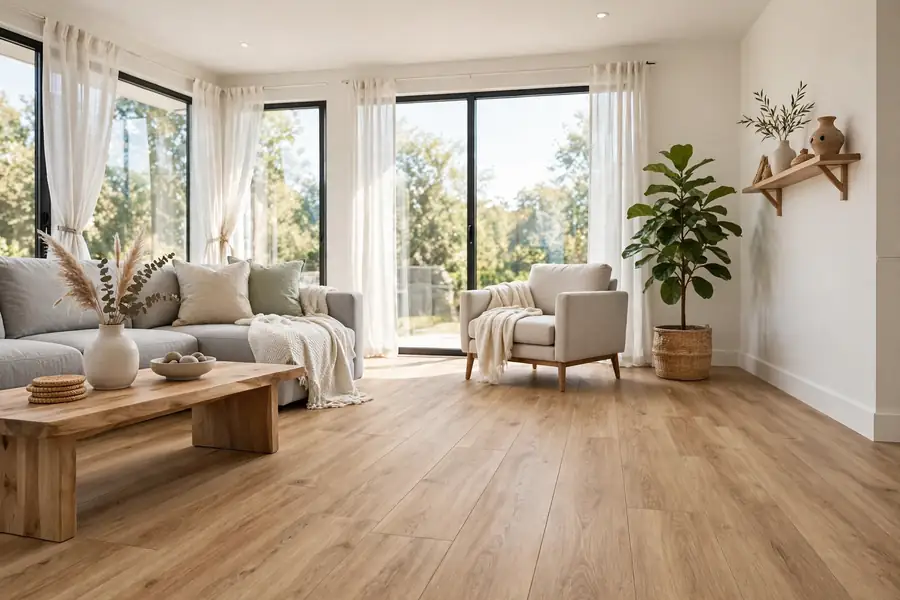
Luxury vinyl flooring is a layered plastic floor with a printed photo of wood or stone under a clear protective coating. It comes as planks, called LVP, or as tiles, called LVT, and it is thicker and more realistic than old sheet vinyl. It handles spills and humidity far better than wood or laminate, feels softer underfoot than tile, and usually costs less than all three.
Luxury vinyl at a glance
| Feature | What to know |
|---|---|
| Also called | LVF, LVP (plank), LVT (tile), rigid core vinyl |
| Material | Layered PVC with a printed top and a clear wear layer |
| Total thickness | About 2 to 8 mm, depending on the core |
| Wear layer | 6 to 28 mil, and 12 to 20 mil suits most homes |
| Installation | Click-lock, glue-down, or peel and stick |
| Water | The material resists water. Seams and the subfloor are the weak points |
| Cost | About $2 to $8 per square foot for the material in 2026 estimates |
| Lifespan | Sellers commonly say 15 to 25 years |
What is luxury vinyl flooring, and what is it not?
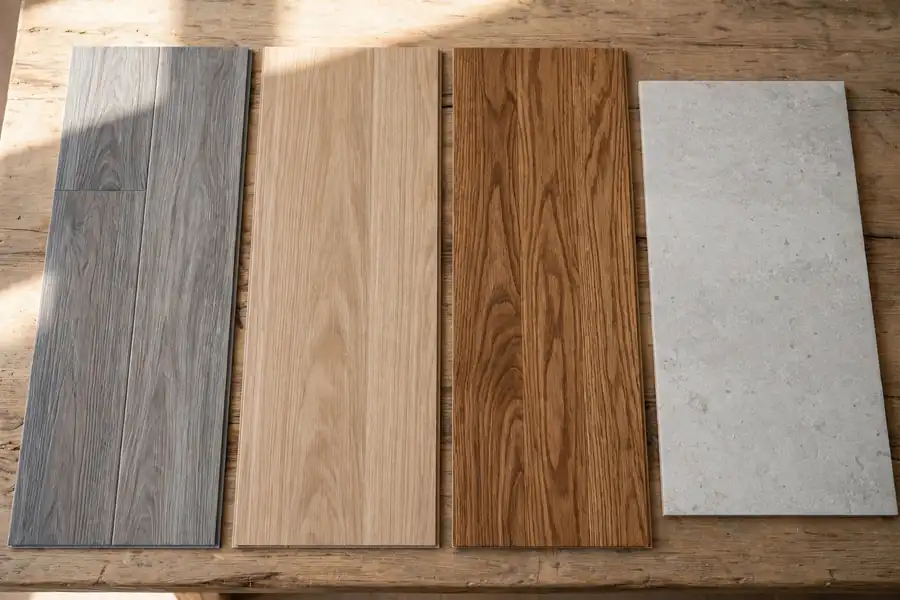
Luxury vinyl flooring is a family of vinyl floors that copy the look of wood, stone or concrete. "Luxury" is a sales word for the upgraded build: a thicker body, a realistic print and a stronger wear layer. It is not a standard or a grade, so two products sold as luxury can differ a lot.
It is also not the same as older kinds of vinyl. Sheet vinyl comes in thin rolls and is common in budget kitchens and baths. VCT, or vinyl composition tile, is a hard commercial tile that is usually waxed and buffed. Luxury vinyl is thicker than both and looks far more like real wood or stone.
What are the types of luxury vinyl?
Luxury vinyl comes in a few formats, and the names overlap in stores. Read the product description, not just the label.
| Format | Shape and look | Core | Usual install |
|---|---|---|---|
| LVP (plank) | Long boards that copy hardwood | Flexible, or rigid in newer lines | Click-lock or glue-down |
| LVT (tile) | Squares or rectangles that copy stone or ceramic | Usually flexible | Often glued down |
| Rigid core (SPC or WPC) | Planks or tiles on a stiff core | Stone-plastic or wood-plastic composite | Click-lock |
Some sellers call every luxury vinyl floor LVT. The difference is mostly the shape, and the construction is often similar.
What is luxury vinyl flooring made of?
Most luxury vinyl has four layers: a clear wear layer on top, a printed decorative layer, a core, and a backing. The wear layer takes the daily scuffs, and its thickness is measured in mils, where one mil is one thousandth of an inch. The core is flexible PVC in thin products and a stiff stone-plastic or wood-plastic composite in rigid products.
For most homes, a 12 mil wear layer is a practical minimum, and 20 mil is a better choice with pets, kids or heavy traffic.
How does luxury vinyl compare with laminate, hardwood and tile?
Luxury vinyl wins on water resistance, comfort and price. Tile and hardwood win on lifespan and resale appeal. Laminate is the closest rival on cost and looks, but its fiberboard core swells in water.
| Luxury vinyl | Laminate | Hardwood | Tile | |
|---|---|---|---|---|
| Can be refinished | No | No | Yes | Not needed |
| Typical lifespan | 15 to 25 years | 15 to 25 years | 30 years or more | 30 years or more |
| Feels | Soft | Hard | Warm, firm | Hard and cold |
| Best in | Kitchens, baths, family rooms | Dry rooms | Living areas | Wet rooms |
What are the pros and cons of luxury vinyl?
| Pros | Cons |
|---|---|
| Resists spills, humidity and stains | Cannot be refinished |
| Soft and quiet underfoot | Can dent under heavy furniture |
| Many realistic wood and stone looks | Lower resale appeal than hardwood or tile |
| Click-lock suits many DIYers | Seams and subfloor can still let water through |
| Costs less than hardwood or tile | Quality varies a lot between brands |
| Easy to clean | Limited recycling options |
Is luxury vinyl flooring waterproof?
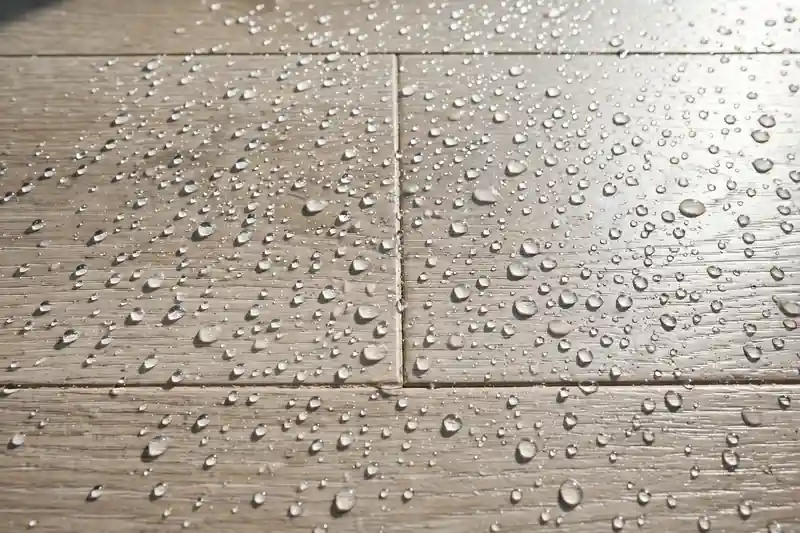
The planks and tiles resist water, and most will not swell or rot when wet. That is not the same as a waterproof floor. Water can run through the seams and sit on the subfloor, and the vinyl then holds it there. Wipe up spills, and have the subfloor dried if a leak gets under the floor. Treat "100% waterproof" as marketing language about the plank, not a promise about your home.
How is luxury vinyl installed?
There are three common methods. Click-lock planks float over a flat floor and are the usual choice for DIY. Glue-down tiles are bonded to the floor with adhesive, which is common for tile formats and busy spaces. Peel-and-stick pieces have a sticky back and suit thin, budget products.
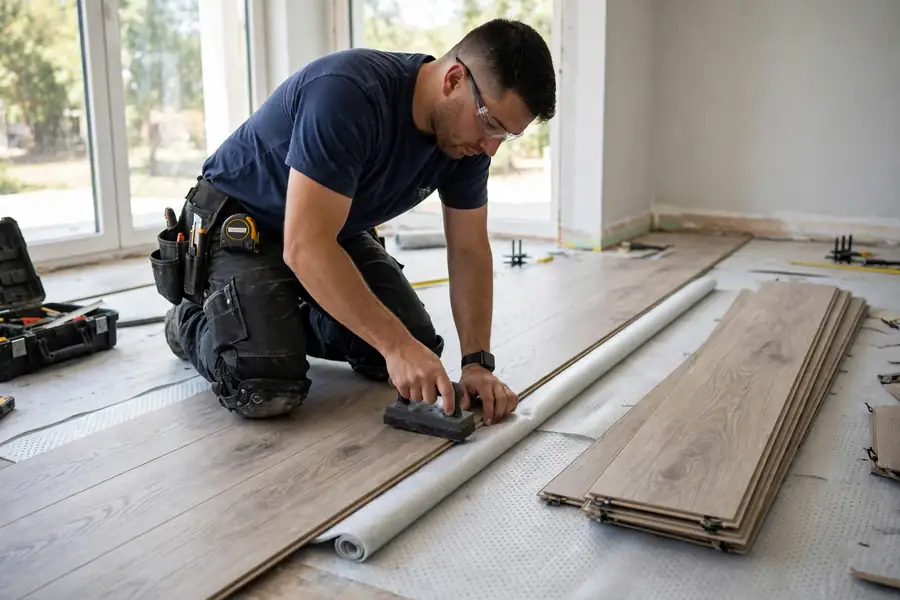
Whichever you choose, the subfloor needs to be flat, clean and dry. Follow your product's instructions, because the rules differ by brand.
How much does luxury vinyl cost?
Quality luxury vinyl usually costs about $2 to $5 per square foot for the material, and premium lines run $5 to $8 in 2026 estimates. Installed prices run about $3 to $9 per square foot, depending on your area, the subfloor and the old floor you remove.
| Item | Estimate (2026) | For a 300 sq ft room |
|---|---|---|
| Material, quality | $2 to $5 per sq ft | $600 to $1,500 |
| Material, premium | $5 to $8 per sq ft | $1,500 to $2,400 |
| Installed, typical | $3 to $9 per sq ft | $900 to $2,700 |
These are estimates, not quotes. Ask two or three local installers for written prices before you decide.
How long does luxury vinyl last?
Sellers commonly say 15 to 25 years in a home. These are seller estimates, not lab results. A thicker wear layer, a flat dry subfloor and a properly spaced wall gap matter most. Because the surface cannot be sanded, a badly worn area means replacing planks.
Where does luxury vinyl work best?
| Space | Fit |
|---|---|
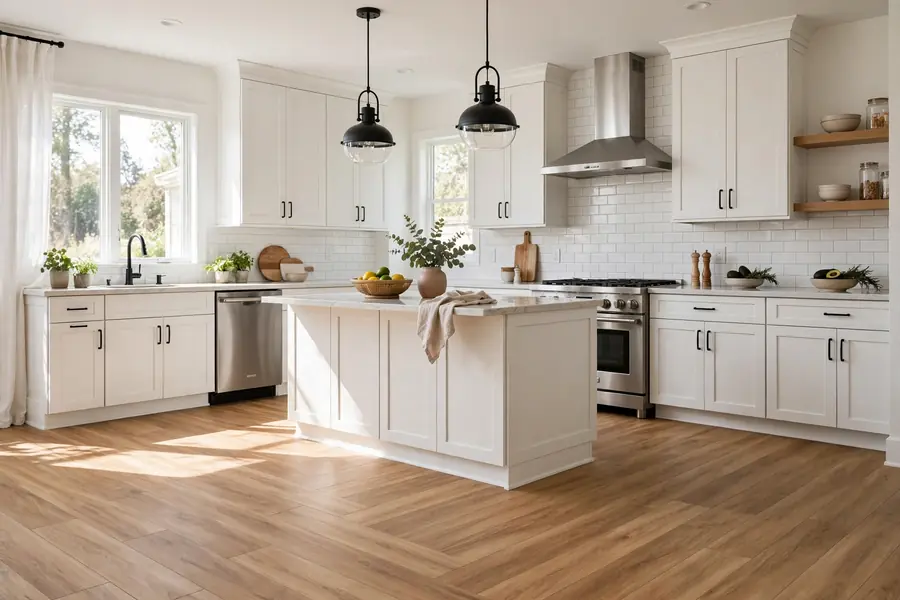
| Kitchen and laundry | Very good, with a dry subfloor |
| Bathroom | Good, with sealed edges and no standing water |
| Basement | Good after a moisture test on the slab |
| Living areas and bedrooms | Very good |
| Over radiant heat | Often fine within the maker's temperature limit |
Quick answers to common questions
Is luxury vinyl flooring waterproof?
The material resists water, but the floor is only as waterproof as its seams and subfloor. Wipe up spills, and dry the subfloor after a leak.
Is luxury vinyl flooring the same as LVP?
Almost. LVP is the plank version of luxury vinyl, and LVT is the tile version. Luxury vinyl flooring is the umbrella term for both.
Is luxury vinyl flooring better than laminate?
In kitchens, bathrooms and basements, yes, because laminate's core swells in water. In a dry room, laminate can be good value, so compare samples and prices.
Is luxury vinyl flooring safe for indoor air?
Look for a low-emission certification such as FloorScore on the box or spec sheet, and let a new floor air out. Certification is voluntary, so check the label.
Can you put luxury vinyl flooring over old flooring?
Often, if the old floor is sound, flat and clean. Thin vinyl can show bumps and grout lines through it, so fill deep grout lines first. Check your maker's rules.
Keep reading: what LVP flooring is, LVT flooring and SPC flooring.
Is luxury vinyl flooring worth buying?
Luxury vinyl flooring is worth buying for kitchens, baths, basements and busy family rooms where you want a wood or stone look, a soft feel and a price below hardwood or tile. It is less suited to homes where resale value or a refinishable surface comes first.
Pick a wear layer that fits your traffic, test the subfloor, and order a sample before you buy.