The most eco-friendly flooring options are cork, natural linoleum, FSC-certified or reclaimed wood, and carefully sourced bamboo. They come from renewable or salvaged materials, last a long time and can be installed with low-emission adhesives. No floor is perfect, so look at where it comes from, what it releases indoors, how long it lasts and what happens to it at the end of its life.
Eco-friendly flooring at a glance
| Option | Why it is greener | Watch out for | Common lifespan estimate |
|---|---|---|---|
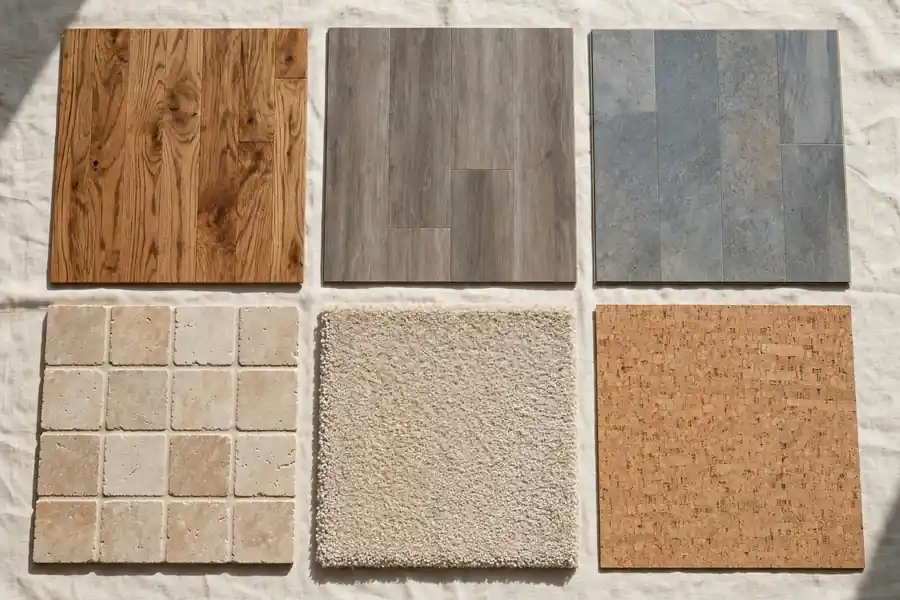
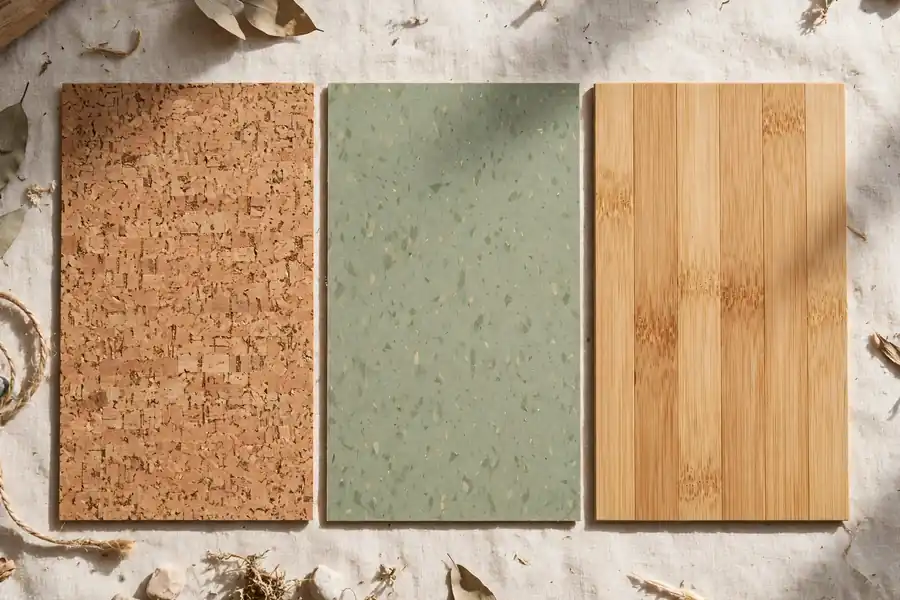
| Cork | Bark is harvested without felling the tree, and it is renewable and recyclable | Shipping distance, adhesive choice | 10 to 30 years |
| Natural linoleum | Made from linseed oil, wood flour and cork dust, and biodegradable | Needs sealing and good care | 20 to 40 years and more |
| FSC-certified wood | Responsibly managed forests | Finish and adhesive emissions | Decades |
| Reclaimed wood | Salvaged material, no new harvest | Check origin and finish | Decades |
| Strand-woven bamboo | Fast regrowth, hard and dense | Source, shipping and resins | 20 to 50 years |
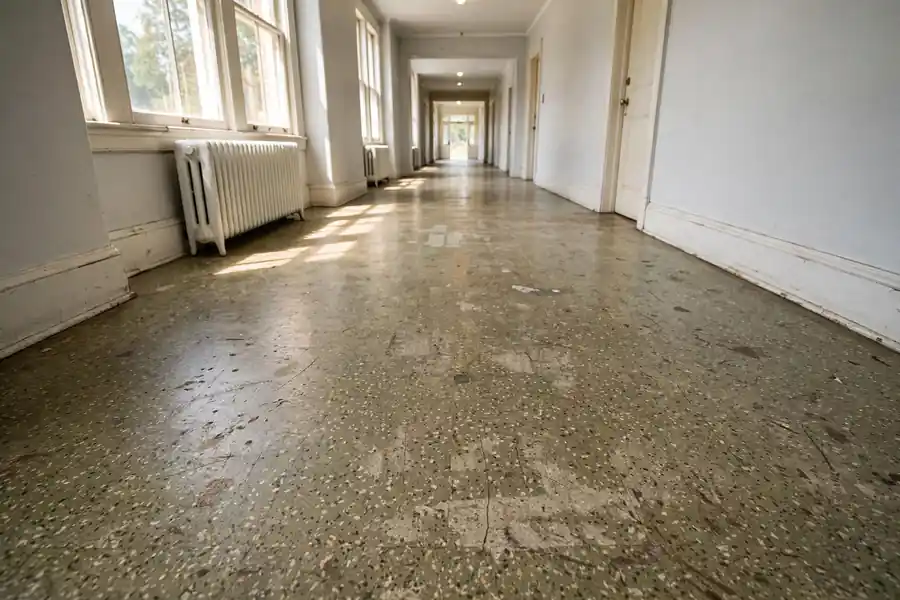
| Recycled terrazzo | Salvaged stone and glass chips | High cost, specialist install | Decades |
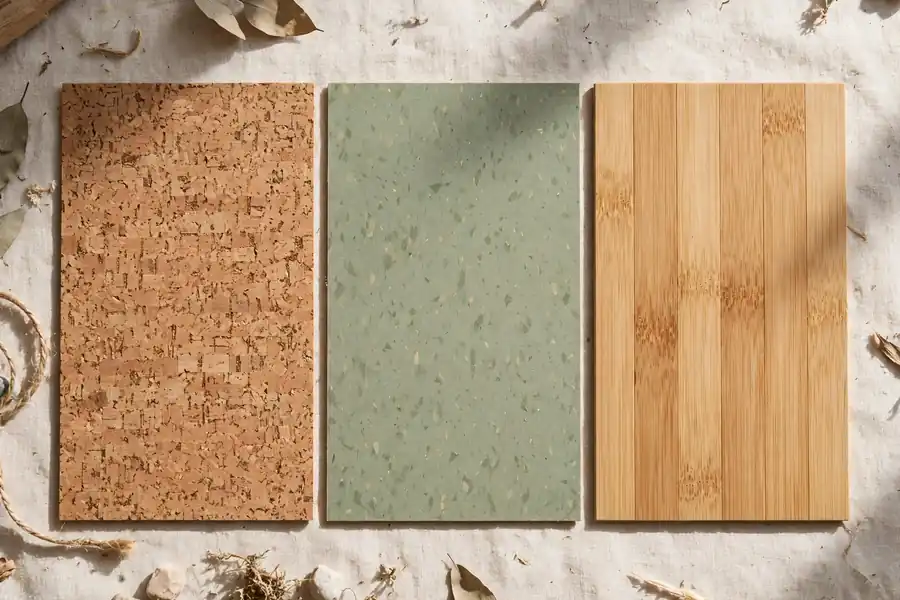
What makes a floor eco-friendly?
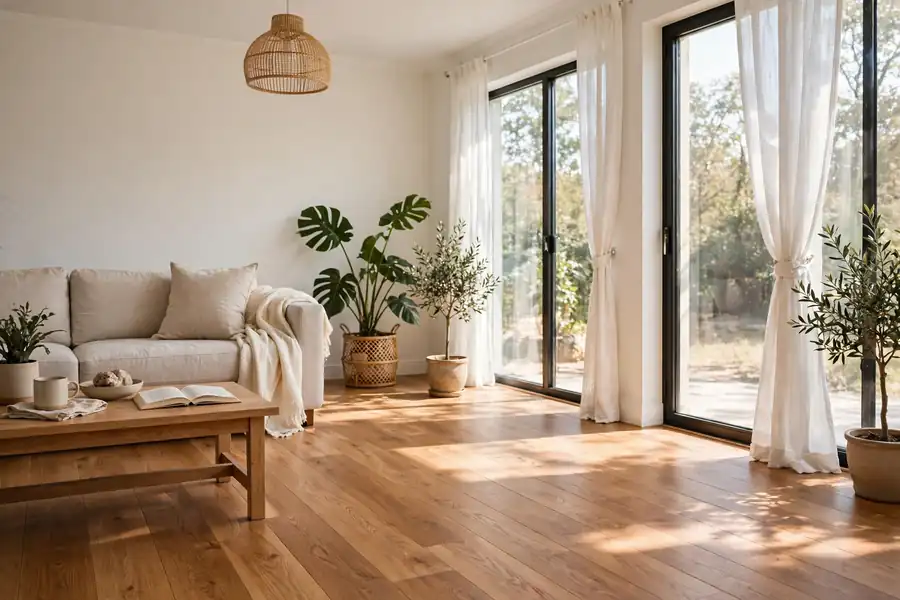
An eco-friendly floor scores well on five things: its raw material, how it is made and shipped, the emissions it gives off at home, how long it lasts, and what happens when you remove it. A floor that lasts 40 years usually beats a cheap one that you replace every 10, even if the cheap one sounds greener on paper.
| Question | What to look for |
|---|---|
| Where does it come from? | Renewable, certified or salvaged material |
| How is it made and shipped? | Natural ingredients, shorter shipping |
| What does it release indoors? | Low-emission label, low-VOC adhesive and finish |
| How long does it last? | A dense, durable material you can renew |
| What happens at the end? | Recyclable or biodegradable |
Is cork flooring eco-friendly?
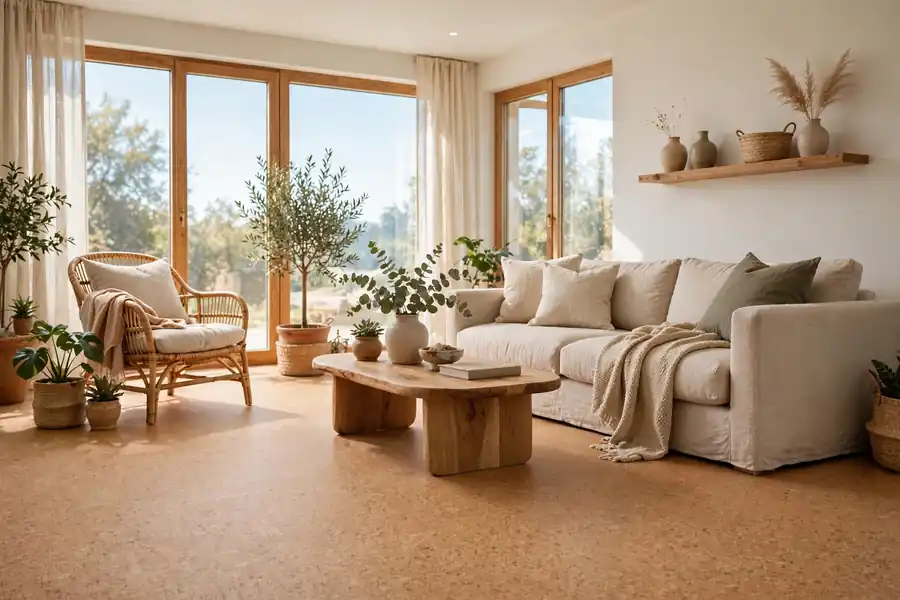
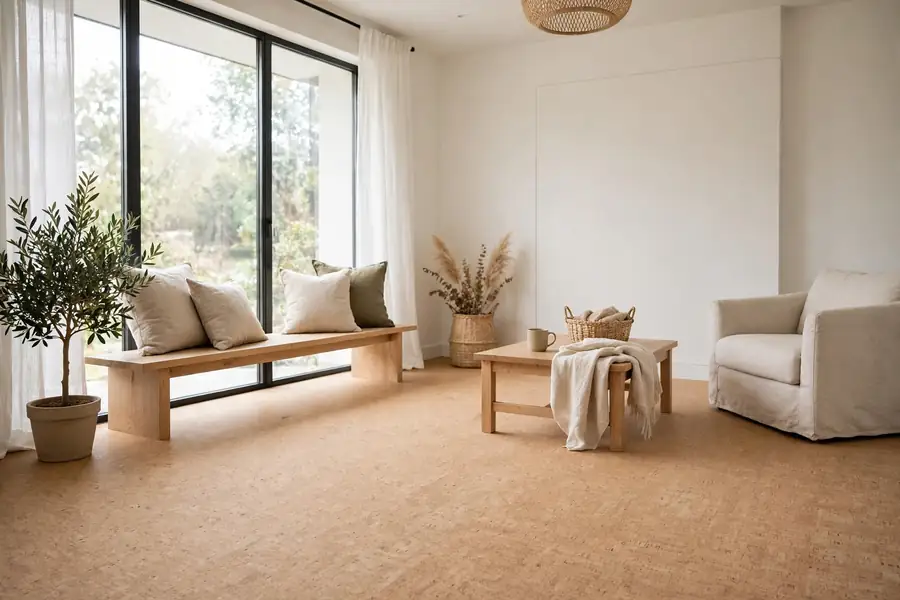
Yes, cork is one of the greenest choices. The bark is peeled from the cork oak without cutting the tree down, and the tree grows a new layer. Cork is renewable, recyclable and biodegradable, and it is warm, soft and quiet underfoot. The drawbacks are shipping from the Mediterranean and the adhesive, so choose a low-VOC adhesive for glue-down cork, and seal the surface.
Is linoleum eco-friendly?
True linoleum is. Despite the name, it is not vinyl. It is made of oxidized linseed oil from flax, pine rosin, wood flour, ground cork, limestone and natural pigments, pressed onto a jute backing. It has a long life, often 20 to 40 years or more with care, and it can return to the earth at the end of its life, unlike petroleum-based floors. Check that you are buying real linoleum, not vinyl sold under the same word.
Is FSC-certified or reclaimed wood eco-friendly?
Yes, when the wood is certified or salvaged. FSC certification shows that the wood comes from responsibly managed forests. Reclaimed wood avoids new harvesting and gives character. Hardwood lasts for decades and can be sanded and refinished many times, which makes it a long-lived floor. The finish and adhesive still matter, so pick a low-VOC finish.
Is bamboo flooring eco-friendly?
It can be, but check the details. Bamboo regrows quickly, and strand-woven bamboo is dense and long-lasting. The concerns are the source, the maturity of the stalks and the resins used. Some cheap bamboo is harvested very young, which makes it soft and dents easily, and some products use resins that can release formaldehyde. Look for FSC certification and a low-emission label, and note that most bamboo is shipped from overseas.
Is vinyl flooring eco-friendly?
Not really. Vinyl is a petroleum-based plastic, mostly PVC, and recycling options are limited. Some vinyl releases volatile organic compounds when new. If you choose it for its water tolerance, look for a low-emission certification such as FloorScore, and pick a durable product that lasts, instead of a thin one you replace.
Which labels should you look for?
Four labels cover most of what matters. FSC covers responsible forestry for wood and bamboo. FloorScore and GREENGUARD cover low chemical emissions indoors. Cradle to Cradle looks at material health and reuse.
| Label | What it tells you |
|---|---|
| FSC | Wood from responsibly managed forests |
| FloorScore | Low emissions from hard flooring |
| GREENGUARD | Low chemical emissions |
| Cradle to Cradle | Material health and circularity |
Certification is voluntary, so a floor without a label is not necessarily bad. It just means you need to ask more questions.
What does low-VOC mean for flooring?
VOCs are volatile organic compounds, gases that some flooring, adhesives and finishes release into indoor air after installation. A low-VOC floor, adhesive and finish release less. Choose low-emission products, ventilate the room during and after installation, and let new flooring air out before you move in if you can.
Do eco-friendly floors last?
Many do, and lasting is part of being green. A floor that you keep for decades uses fewer resources than several short-lived ones.
How do you shop for a greener floor?
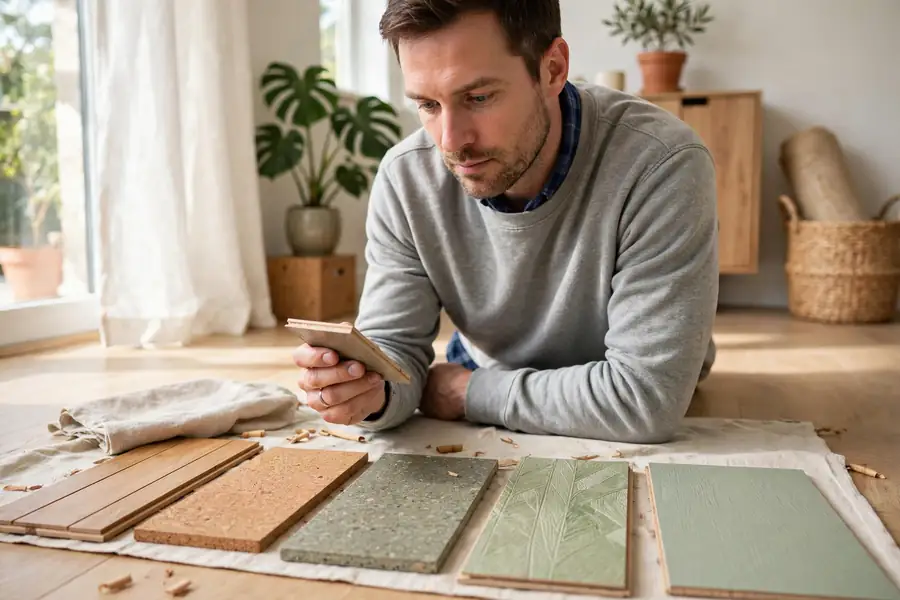
Use a short checklist: a certified or salvaged source, low emissions, a low-VOC adhesive and finish, a long life, natural ingredients, short shipping and a good end of life. No product ticks every box, so choose the ones that matter most to you.
Which eco-friendly floor suits which room?
Choose by the feel and look you want. Cork suits bedrooms and playrooms, linoleum suits busy kitchens and halls, certified or reclaimed wood suits living areas, and strand-woven bamboo suits a modern look.
What are the cost trade-offs?
Eco-friendly floors range from budget to premium. Cork and linoleum are mid-priced, reclaimed wood and terrazzo cost more, and bamboo varies with quality. A long-lasting floor can be cheaper per year than a cheap one, so compare cost over the life of the floor, not just the price tag.
Quick answers to common questions
What is the most eco-friendly flooring?
Cork, natural linoleum and FSC-certified or reclaimed wood are usually the strongest choices, with low-VOC adhesives and finishes.
Is bamboo flooring really eco-friendly?
It can be, if it is FSC-certified, mature strand-woven bamboo with low-emission resins. Cheap, young bamboo is a weaker choice.
Is vinyl flooring eco-friendly?
Not really. It is petroleum-based and hard to recycle, though some products carry low-emission labels.
Is cork flooring sustainable?
Yes. The bark grows back, and cork is recyclable and biodegradable. Choose low-VOC adhesive.
What does low-VOC flooring mean?
It means the floor, adhesive and finish release fewer volatile organic compounds into indoor air.
Keep reading: the benefits of cork flooring, linoleum flooring and how to clean cork flooring.
Which eco-friendly flooring should you choose?
Choose the eco-friendly floor that fits your room and lasts the longest. Cork and linoleum are the easiest greener picks, certified or reclaimed wood is the best for a classic look, and bamboo is a good choice only when the source and resins check out. Look for FSC, FloorScore or GREENGUARD labels, choose low-VOC adhesives, and order samples before you buy.