The main benefits of cork flooring are that it is soft and comfortable underfoot, warmer and quieter than most hard floors, renewable, and able to spring back from light dents. Cork comes from the bark of the cork oak, which grows back after harvest. Its downsides are that it is not waterproof, it can fade in strong sun, and heavy point loads can leave marks. It suits bedrooms, playrooms and offices best.
The benefits of cork flooring at a glance
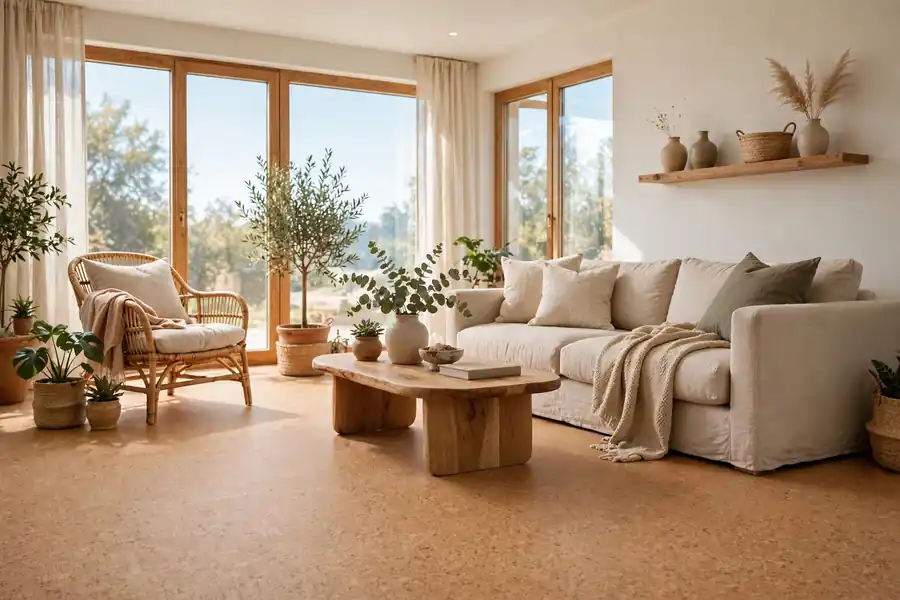
| Benefit | What it means | Caveat |
|---|---|---|
| Soft underfoot | Cushions joints during long periods of standing | Heavy point loads can still dent it |
| Quiet | Absorbs footsteps and room noise | Claims vary by product |
| Warmer | Feels less cold than tile or wood | Not a heater |
| Renewable | Bark is harvested and grows back | Shipping from the Mediterranean |
| Dent recovery | Springs back from light pressure | Not from sharp or very heavy loads |
| Natural look | Warm, earthy tones | Mostly beige and brown |
Why is cork flooring soft and comfortable?
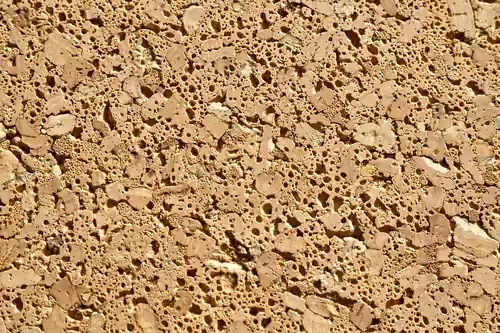
Cork is made of millions of tiny air-filled cells with springy walls. The cells compress slightly when you step, which cushions your feet and joints, and then expand again. That is why cork feels softer than hardwood, tile or laminate, and why many people choose it for kitchens where they stand for long periods, as well as bedrooms and playrooms.
Is cork flooring warm?
Yes, it feels warmer than tile, stone and many wood floors. The trapped air in the cells slows the movement of heat, so the surface does not pull heat from your feet as fast as a hard, dense floor. One industry source puts the insulating value of 10 to 12 mm cork at roughly R-1.1 to 1.5, compared with about 0.7 for hardwood and 0.25 for ceramic tile. These are vendor figures, so treat them as a guide.
Is cork flooring quiet?
Yes. The cell walls absorb impact and sound, so cork cuts footstep noise and muffles the room. Makers report large reductions compared with hard floors, and a thin layer of cork is often used as an underlayment for that reason. The exact numbers depend on the product and the floor beneath, so compare ratings on the same setup.
Is cork flooring renewable and eco-friendly?
Yes, it is one of the greener choices. Cork is peeled by hand from the bark of the cork oak without felling the tree, and the bark grows back, so the same tree can be harvested again. Cork is also recyclable and biodegradable. The main drawbacks are shipping distance and the adhesive, so choose low-VOC adhesives and a low-emission product. See eco-friendly flooring options.

Does cork flooring recover from dents?
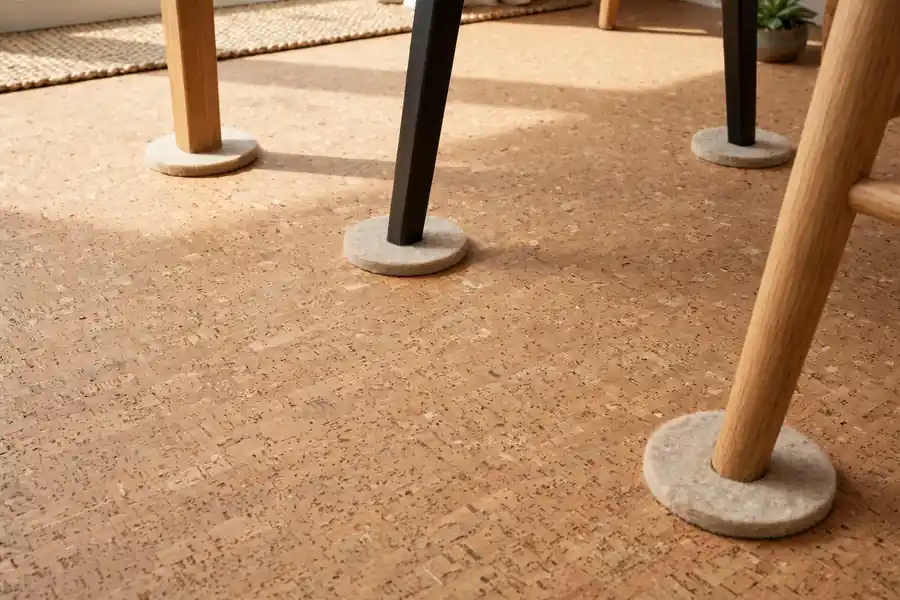
Often, yes, for light loads. Cork compresses under pressure and returns toward its original shape, so furniture marks from everyday use can fade. It does not recover from sharp, very heavy or concentrated loads, such as stiletto heels or an unprotected furniture leg, which can leave permanent dents. Use felt pads and lift furniture instead of dragging it.
What are the other benefits of cork?
Cork is a natural material with a stable, warm look, and some makers say it has useful fire and air-quality properties. Some cork products are treated or sealed with a factory finish, so wear and stain resistance depend on the finish. Choose floors that meet low-emission standards, and ask for the certification.
What are the downsides of cork flooring?
Cork is not waterproof, it can fade in strong sun, and it can dent under heavy or sharp loads. It also has limited color choices, because natural cork is mostly beige and brown, and the factory seal wears down and needs renewing.
| Downside | Why it happens | What to do |
|---|---|---|
| Water damage | Cork resists moisture but does not block it | Wipe spills, keep it sealed |
| Seam and edge risk | Edges and seams let water in | Seal tiles at once, leave and cover wall gaps |
| Fading | Strong sun fades the color | Blinds or UV film |
| Dents | A soft material | Felt pads, avoid heels |
| Resealing | The finish wears down | Recoat every few years |
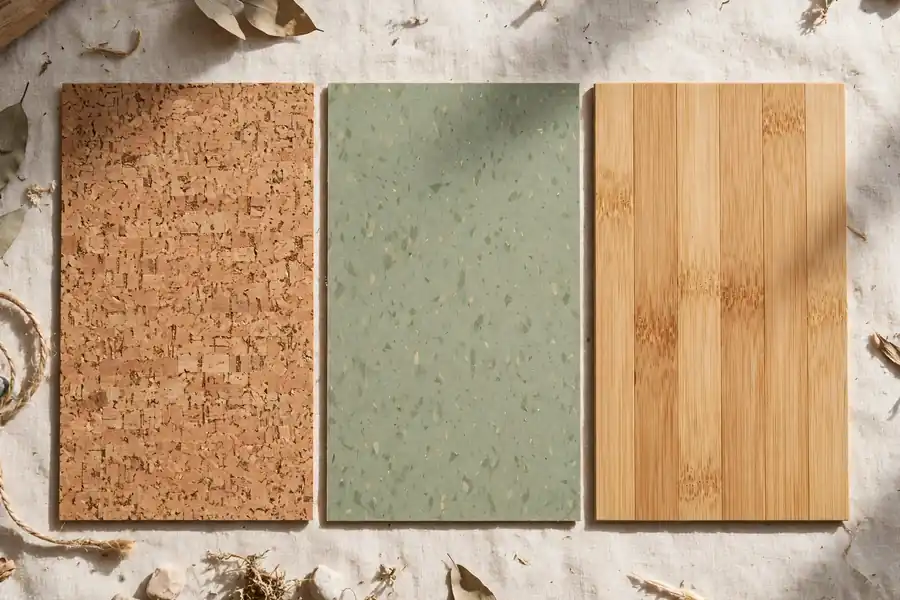
| Few colors | Natural cork is earthy | Choose stained or printed planks |
Is cork flooring waterproof?
No. Sealed cork resists spills, but standing water can seep through seams and edges. Glue-down tiles must be sealed right away, and floating click planks have weak points at the wall edges. Some cork planks have a fiberboard core that swells when wet. Cork is not the first choice for bathrooms or wet basements. For care, see how to clean cork flooring.
Where does cork flooring work best?
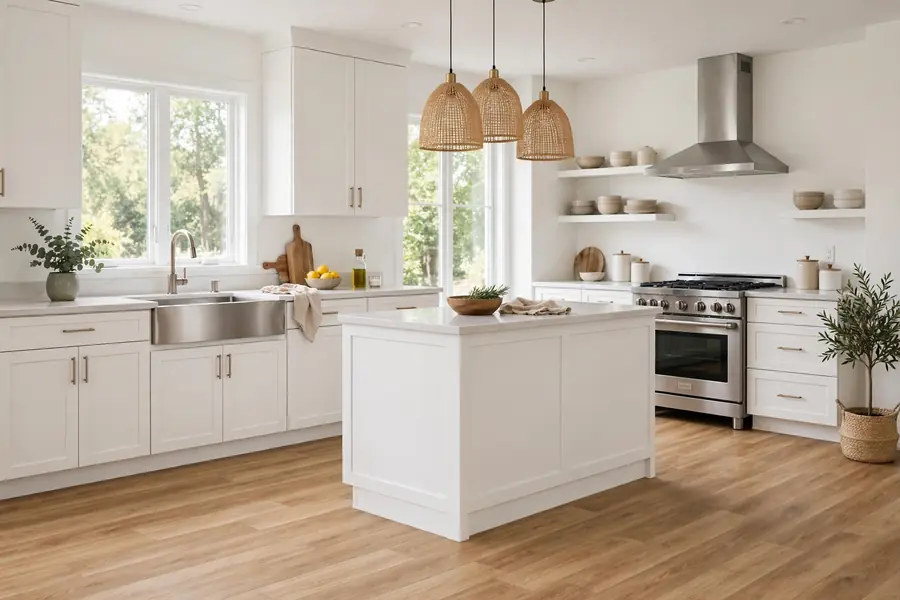
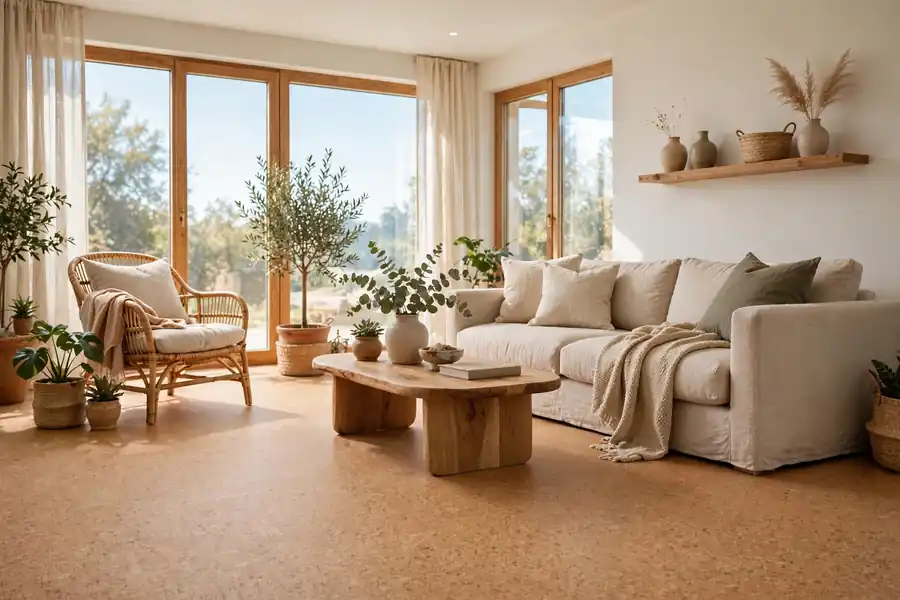
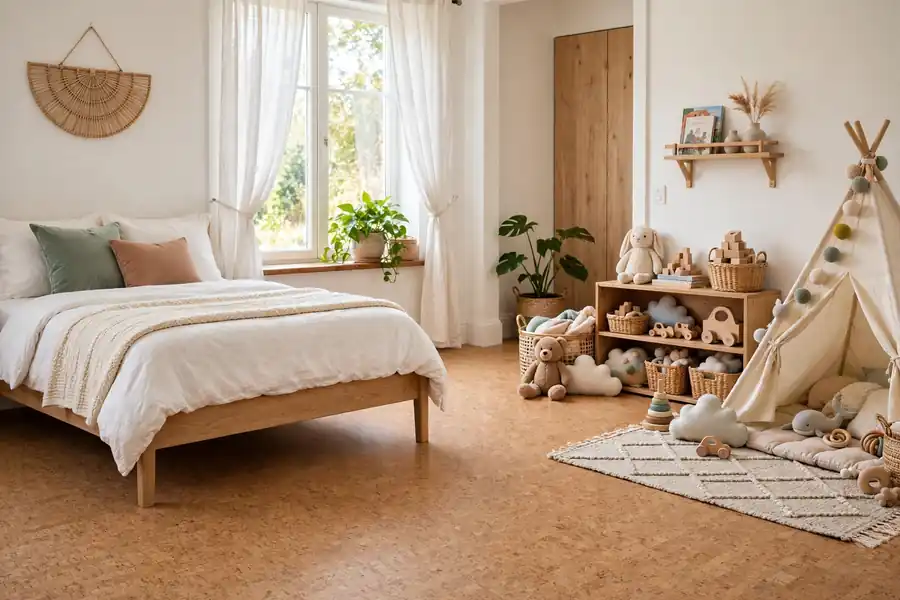
Cork works best in bedrooms, playrooms, home offices and living areas where comfort and quiet matter. It is a weaker choice in sunny rooms, wet basements and bathrooms. Kitchens split opinion: cork is comfortable for standing, but spills and leaks must be handled quickly.
How long does cork flooring last?
Common estimates run from about 10 to 30 years, and 20 to 30 years with good care and resealing. A thicker wear layer, regular sealing and protection from sun and water matter most. These are seller estimates, not lab results.
How does cork compare with other floors?
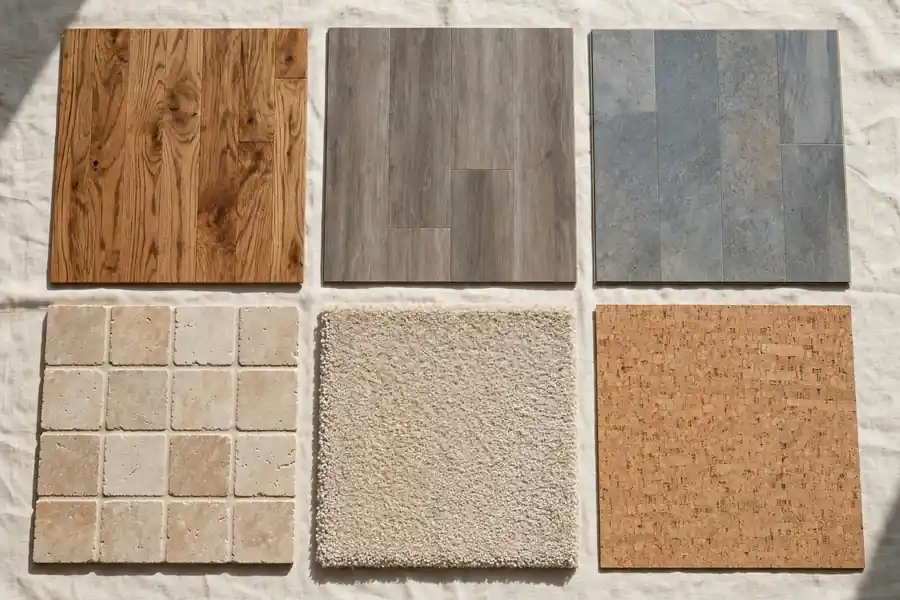
Cork is softer and warmer than most floors and quieter than hard floors, but less water-tolerant than vinyl or tile. Compared with vinyl, it is more natural and comfortable, but less water-resistant. Compared with laminate, it is softer and warmer, though both dislike water.
| Cork | Vinyl | Laminate | Hardwood | |
|---|---|---|---|---|
| Comfort underfoot | Very soft | Soft | Hard | Firm |
| Quiet | Very good | Good | Fair | Fair |
| Water | Fair, sealed | Very good | Poor | Poor |
| Natural material | Yes | No | Partly | Yes |
| Typical lifespan | 10 to 30 years | 15 to 25 years | 15 to 25 years | Decades |
Quick answers to common questions
Is cork flooring good for a home?
Yes, for bedrooms, playrooms, offices and living areas, where its softness and quiet are the biggest benefits.
Is cork flooring warm?
Yes. The air in its cells slows heat loss, so it feels warmer than tile or wood.
Is cork flooring waterproof?
No. Sealed cork resists spills, but standing water can get into seams and edges.
Does cork flooring scratch or dent easily?
Light loads recover, but heavy or sharp loads can dent it. Use felt pads and avoid heels.
How long does cork flooring last?
About 10 to 30 years, with resealing and care.
Are the benefits of cork flooring worth it?
The benefits of cork flooring are worth it when you want a soft, warm, quiet and renewable floor in a dry room. It is less suited to wet rooms and sun-drenched spaces. Choose a sealed, low-emission product, use felt pads and window coverings, and plan to reseal the finish every few years.