Epoxy flooring is a hard, joint-free coating made by mixing epoxy resin with a hardener and spreading it over a concrete floor. The two parts react and cure into a tough plastic surface that resists wear, stains and many chemicals. It is common in garages, workshops and warehouses, and it also comes in decorative flake and metallic looks for homes and shops.
Epoxy flooring at a glance
| Feature | What to know |
|---|---|
| What it is | A resin and hardener coating cured on concrete |
| Surface | One piece with no joints, glossy or satin |
| Typical use | Garages, workshops, warehouses, shops, some basements |
| Thickness | From thin coatings of about 11 mil up to thick systems of about 375 mil |
| Looks | Solid color, flake, metallic, self-leveling |
| Lifespan | Anywhere from about 7 to 30 years, depending on use and prep |
| Installation | Demanding. Prep is the biggest job |
| Weak points | Hard and cold underfoot, and plain epoxy can yellow in strong sun |
What is epoxy flooring made of?
Epoxy flooring is made of a two-part resin system, applied in layers. The base is a concrete slab. A primer helps the coating grip, a colored epoxy coat gives the look, and a clear topcoat seals it. When the resin and hardener are mixed, they start a chemical reaction that cures into a hard shell.
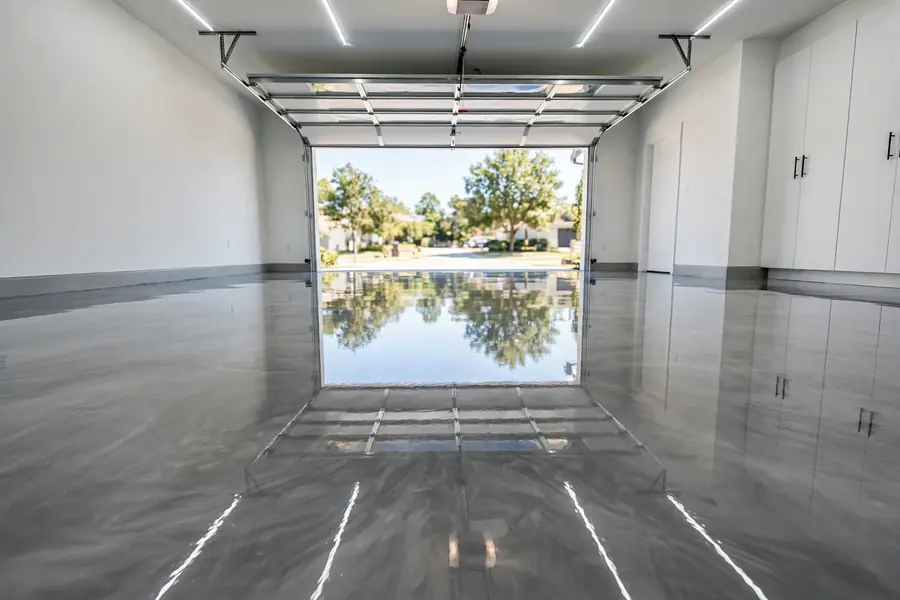
| Layer | What it does |
|---|---|
| Clear topcoat | Seals the surface and adds wear and UV protection |
| Epoxy coat | Gives color, thickness and the finished look |
| Primer | Helps the coating bond to the concrete |
| Concrete slab | The base, which must be clean, sound and dry |
What are the types of epoxy flooring?
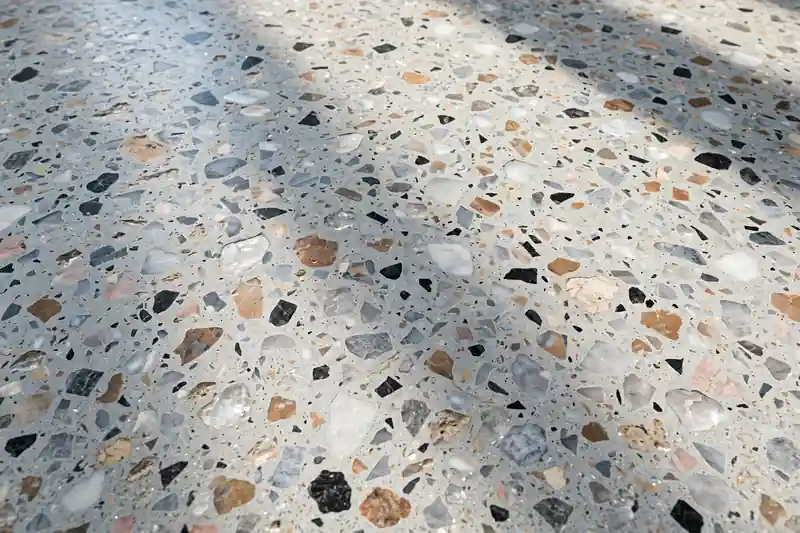
The main types are solid color, flake, metallic and self-leveling. They use the same resin chemistry, but they differ in look and thickness. Sources also list mortar and terrazzo-style systems, which are thicker and used in industrial spaces.
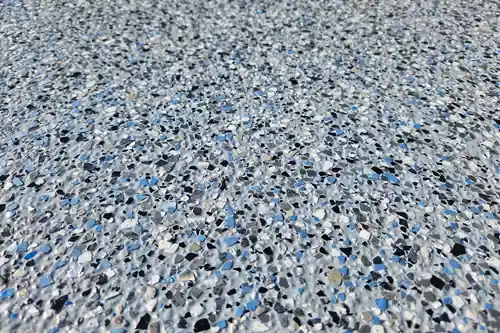
| Type | Look | Best for |
|---|---|---|
| Solid color | Plain, glossy | Simple garages and workshops |
| Flake | Colored chips that add grip and hide dirt | Garages and utility spaces |
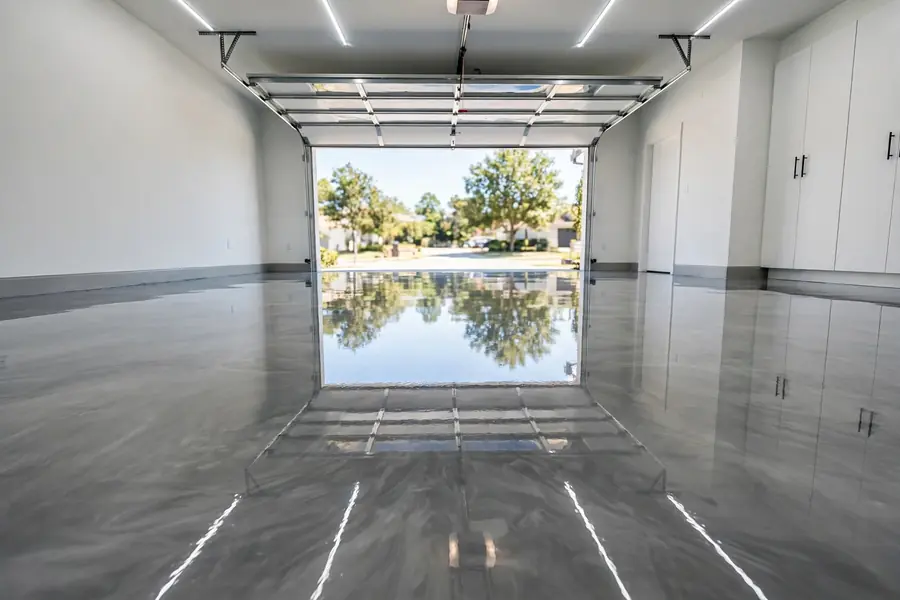
| Metallic | Swirled, reflective pigments | Showrooms, shops, feature floors |
| Self-leveling | Thick, smooth, with no seams | Warehouses, labs, uneven slabs |
How is epoxy flooring installed?
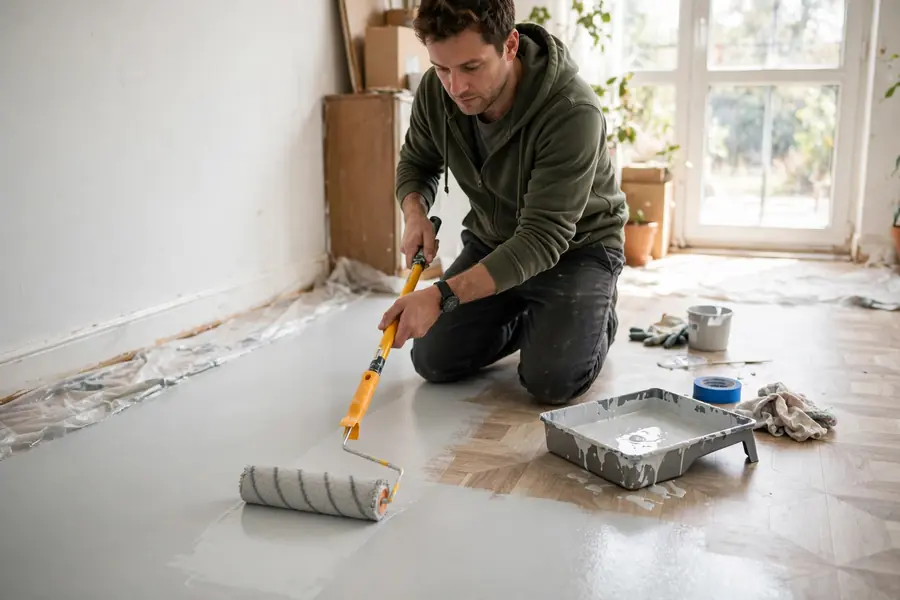
Installation is mostly preparation. The slab is tested for moisture, ground and cleaned, repaired, primed, coated and sealed, then left to cure. The coat is worked within a limited pot life, so it needs the right mix and speed. Most sources describe it as a specialized job that is best left to professionals, although DIY kits exist for basic floors.
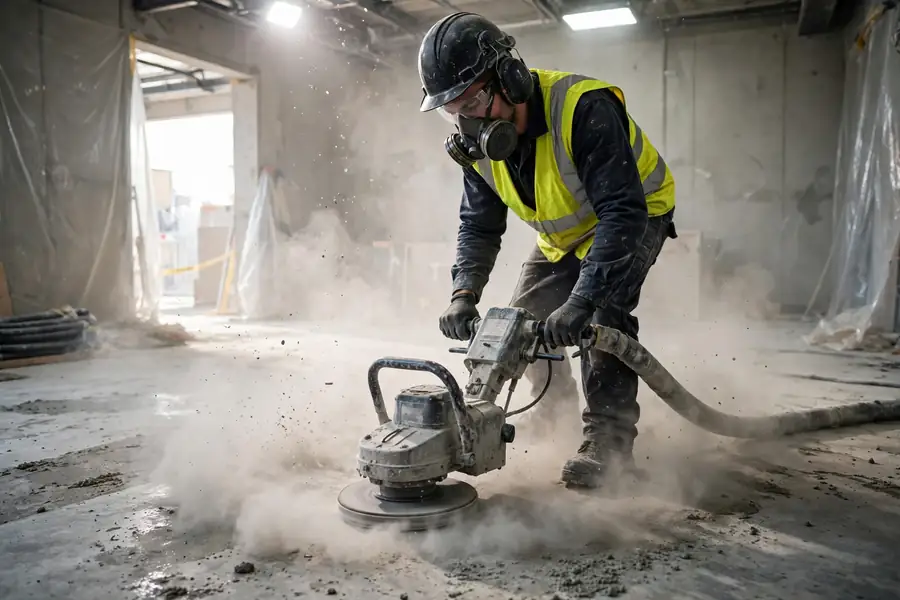
Curing takes time, and the floor is off limits while it cures. Follow your product's instructions for walking, parking and full cure.
What are the pros and cons of epoxy flooring?
| Pros | Cons |
|---|---|
| Tough and wear-resistant | Hard and cold underfoot |
| No seams, easy to clean | Prep is demanding, and poor prep causes peeling |
| Resists many chemicals and stains | Automotive fluids should be wiped up quickly |
| Many colors, flakes and metallic looks | Plain epoxy can yellow in strong sunlight |
| Slip-resistance can be added with grit | Curing takes time |
| Lower cost than many other floors | Hard to remove later |
Is epoxy flooring slippery?
It can be, especially when wet and glossy. A smooth, glossy epoxy coat gets slick with water or oil. Ask the installer to add slip-resistant grit or use a flake system, which adds texture and grip, especially in garages and entries.
How long does epoxy flooring last?
Epoxy floors can last about 7 to 30 years, depending on where they are, how much traffic they get and how well they were prepared. Thicker systems and good surface prep last longer. Heavy-traffic commercial floors may need recoating more often, while a lightly used home garage can last far longer. These are contractor and seller estimates.
How much does epoxy flooring cost?
Epoxy flooring costs about $1 to $3 per square foot for a basic DIY kit and about $5 to $15 per square foot for professional installation, with decorative flake and metallic systems around $7 to $12. These are 2026 estimates, and prep work can add a lot. Get two or three written quotes that name the system and the prep.
Where does epoxy flooring work best?
Epoxy works best in garages, workshops, warehouses and other spaces where you need a tough, easy-to-clean floor. In a basement, test the slab for moisture first. Outdoors or in sunny spaces, ask for a UV-stable topcoat, because plain epoxy can yellow. In living areas, other floors are warmer and softer.
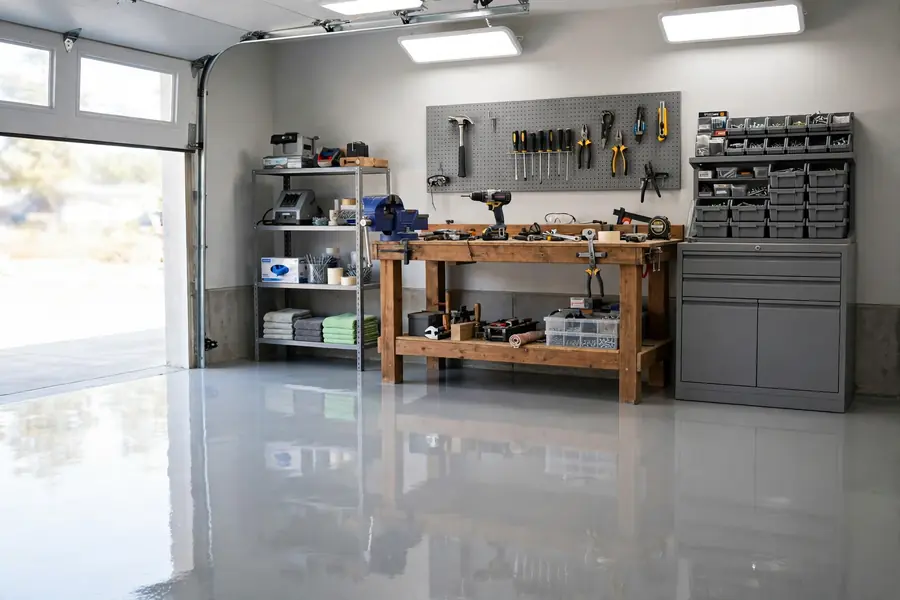
How do you clean epoxy flooring?
Sweep or dust-mop, then damp mop with a mild, pH-neutral cleaner. Wipe up automotive fluids, oil and chemical spills quickly, because they can stain even a tough coating over time. Avoid harsh solvents and abrasive pads that dull the gloss, and follow your installer's care instructions. A recoat refreshes a worn topcoat.
Quick answers to common questions
Is epoxy flooring durable?
Yes. A well-prepared epoxy floor is hard-wearing and resists many chemicals and stains. Poor prep is the usual cause of failure.
How long does epoxy flooring last?
About 7 to 30 years, depending on use, thickness and prep.
Can you put epoxy flooring over existing concrete?
Yes, if the slab is sound, clean and dry. It must be ground and cleaned, and cracks must be repaired first.
Is epoxy flooring slippery?
It can be when wet. Add slip-resistant grit or choose a flake system for better grip.
Can you install epoxy flooring yourself?
Basic kits are made for DIY, but prep is demanding. Decorative and thick systems are usually best left to professionals.
Keep reading: what epoxy flooring costs, terrazzo flooring and the best types of flooring for homes.
Is epoxy flooring worth it?
Epoxy flooring is worth it for garages, workshops and utility spaces where you want a tough, joint-free floor that is easy to clean. Do the prep properly, test the slab for moisture, and choose a UV-stable topcoat if the space sees sun. For warm, soft living areas, a different floor is a better fit.