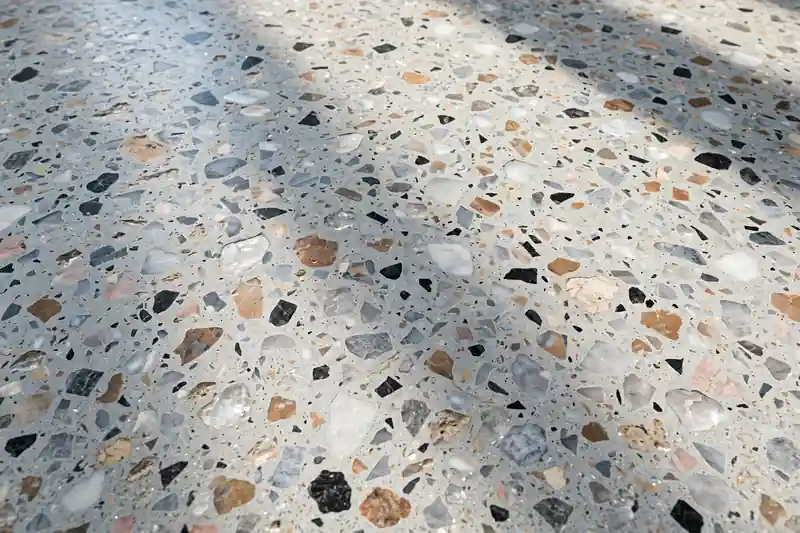
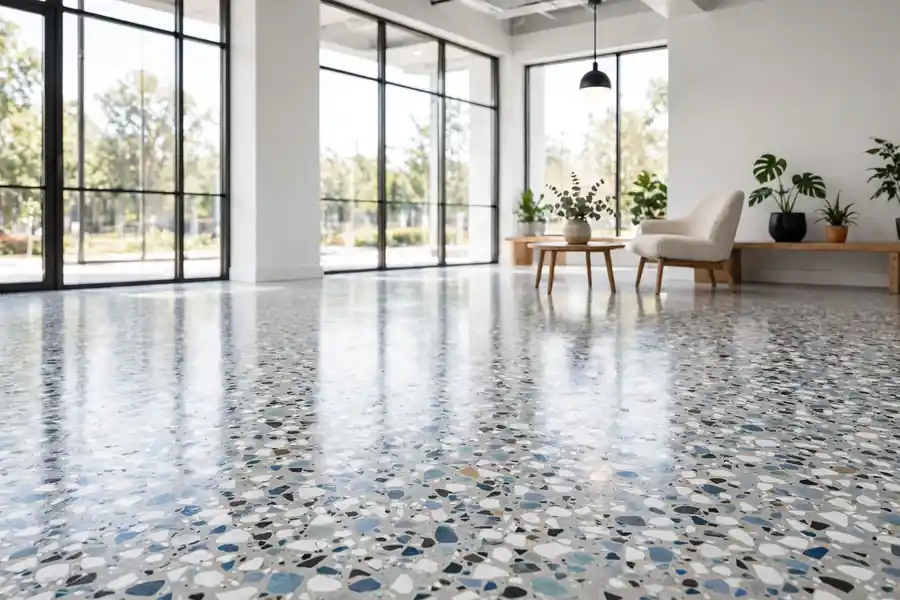
Terrazzo flooring is a poured and polished floor made of small chips of marble, granite, glass or shell set in cement or epoxy resin. After it cures, the surface is ground flat with diamond abrasives and sealed, which leaves a smooth, speckled floor with no grout lines. It is very durable, easy to keep clean and costs far more to install than most floors, so it is common in lobbies, schools and airports and increasingly in stylish homes.
Terrazzo flooring at a glance
| Feature | What to know |
|---|---|
| What it is | Stone, glass or shell chips set in cement or epoxy, then ground and sealed |
| Look | Speckled, with a smooth, polished surface and no grout joints |
| Types | Cement terrazzo, epoxy terrazzo, and precast tiles |
| Thickness | About 1/4 to 1/2 inch for epoxy, 3/4 to 1 inch for cement |
| Cost | Roughly $15 to $70 per square foot installed, and sources vary a lot |
| Lifespan | Decades with care |
| Care | Damp mop, and reseal and polish over the years |
| Weak points | Cost, hard and cold underfoot, and slippery when wet and glossy |
What is terrazzo flooring made of?
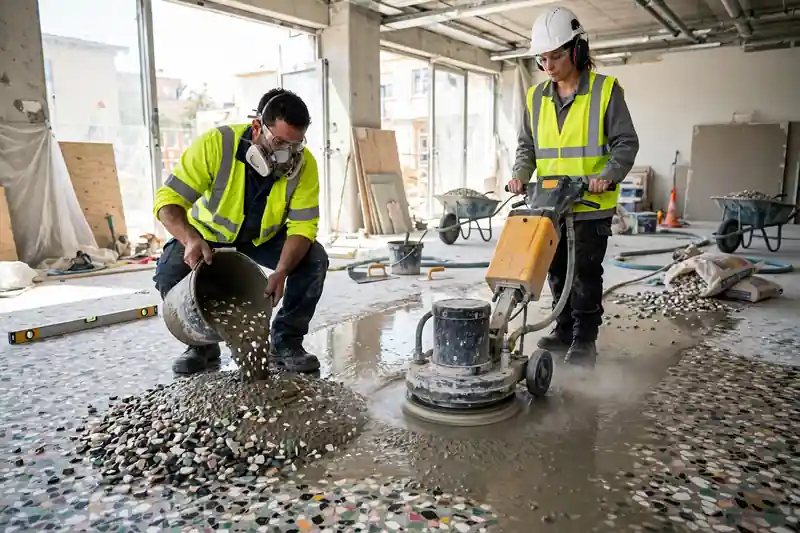
Terrazzo is made of two parts: chips and a binder. The chips, called aggregate, can be marble, granite, quartz, glass or shell. The binder is either portland cement or epoxy resin. The mix is poured, left to cure, ground flat and then sealed.
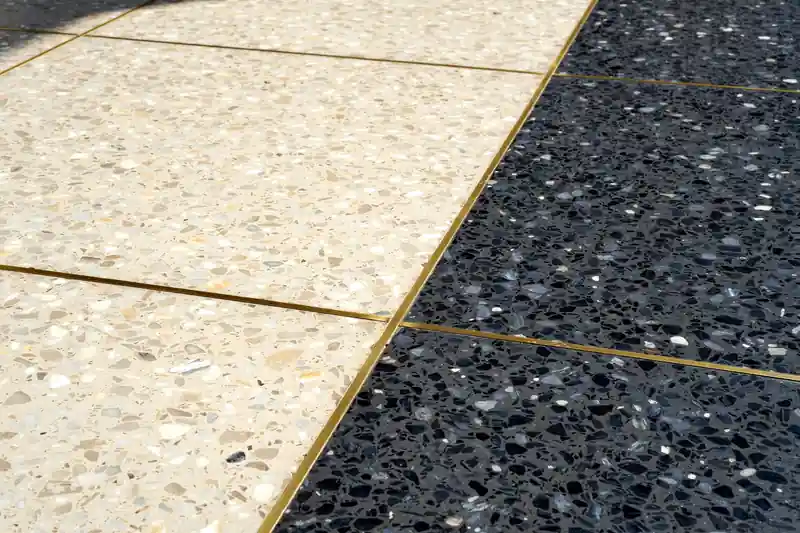
Metal divider strips, often brass or zinc, are set into the floor before it is poured. They separate colors, form patterns and divide the floor into sections, which helps the floor handle movement.
What are the types of terrazzo?
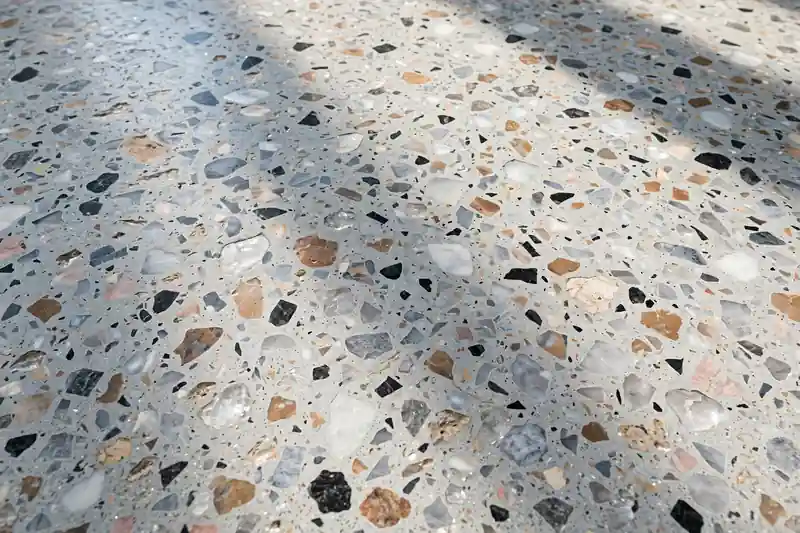
The main types are cement terrazzo, epoxy terrazzo and precast terrazzo tiles. Cement terrazzo is the traditional version and is poured thick. Epoxy terrazzo is thinner and comes in more colors, and is often used in homes and shops. Precast tiles are made in a factory and laid like other tiles.
| Type | Binder | Thickness | Best for |
|---|---|---|---|
| Cement terrazzo | Portland cement | About 3/4 to 1 inch | Lobbies, public buildings, long-lasting floors |
| Epoxy terrazzo | Epoxy resin | About 1/4 to 1/2 inch | Homes, shops, bright colors and patterns |
| Precast tiles | Cement or resin | Factory made | Smaller jobs and easier installs |
Cement terrazzo is rated as moderately durable with medium upkeep in some guides, while epoxy is rated as highly durable with low upkeep. Treat these as general trends and ask installers what they use.
Where does terrazzo come from?
Terrazzo began in Venice, where workers reused leftover marble chips from grand buildings by setting them in clay to surface their own patios and floors. The method grew into the Venetian pavement and a cheaper version called seminato, and modern cement terrazzo descends from them. Epoxy terrazzo came later, and today designers use it for colorful, modern floors.
How long does terrazzo flooring last?
A well-made terrazzo floor can last for decades, and some very old floors have been restored and used again. Its life depends on the binder, the thickness, the quality of the work and how well it is looked after. There is no firm figure, and any specific number you see is an estimate. Terrazzo is often described as outlasting most alternatives, which can offset its high cost over time.
How do you care for terrazzo flooring?
Sweep or dust-mop, damp mop with a neutral cleaner, and reseal when the finish wears. Use a sealer made for terrazzo, because the wrong product can damage it. Avoid acids such as vinegar and harsh cleaners, which can etch marble chips. Over the years, the floor can be re-ground and polished, which restores it and costs far less than replacement.
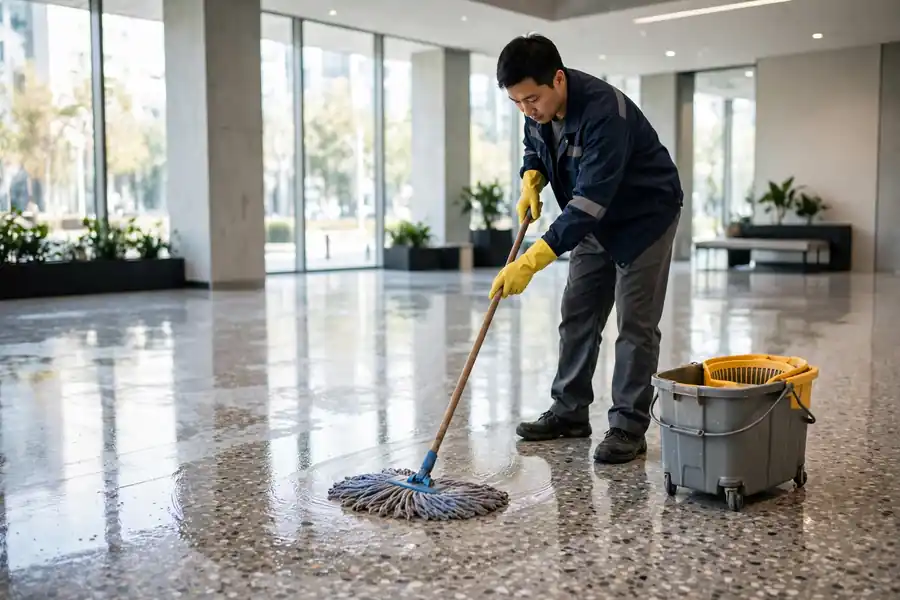
Restoration commonly costs about $6 to $18 per square foot, depending on how deep the grinding goes and how much patching is needed.
How much does terrazzo flooring cost?
Terrazzo flooring typically costs about $15 to $70 per square foot installed in 2026 estimates, and the sources disagree on whether cement or epoxy costs more. Price rises with thickness, the number of colors and the complexity of the pattern. One guide breaks it down by thickness, which is a useful way to compare quotes.
| Item | Estimate (2026) | For a 200 sq ft room |
|---|---|---|
| 1/4 inch epoxy | $12 to $18 per sq ft | $2,400 to $3,600 |
| 1/2 inch epoxy | $19 to $28 per sq ft | $3,800 to $5,600 |
| 3/4 inch cement | $20 to $30 per sq ft | $4,000 to $6,000 |
| 1 inch cement | $31 to $40 or more per sq ft | $6,200 to $8,000 or more |
| Restoration later | $6 to $18 per sq ft | $1,200 to $3,600 |
These are estimates from consumer guides and they vary by region, chip choice and pattern. Get several written quotes that name the binder, the thickness and the finish.
What are the pros and cons of terrazzo flooring?
| Pros | Cons |
|---|---|
| Very durable, lasts for decades | High installed cost |
| Smooth, with no grout lines to clean | Hard and cold underfoot |
| Wide choice of colors and chips | Can be slippery when wet and glossy |
| Can be restored by re-grinding | Installation is a specialist job |
| Works with radiant heat in many cases | Can crack if the slab moves |
| Adds a high-end look | Hard to repair invisibly |
Is terrazzo flooring slippery?
It can be. A glossy, polished surface is slick when wet. Ask for a honed or textured finish with slip-resistant additives in wet areas such as entries, bathrooms and kitchens. A rug or mat helps in homes.
Can terrazzo flooring crack?
Yes, like any slab-based floor. Cracks usually follow movement in the concrete slab underneath. Divider strips and control joints are placed to guide movement, and a good installer plans them. A cracked terrazzo floor can often be patched and re-ground.
How does terrazzo compare with concrete, tile and vinyl?
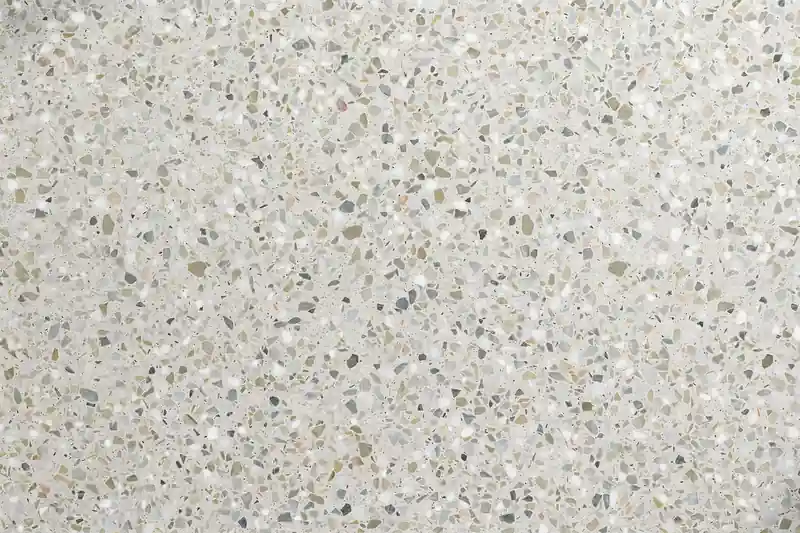
Terrazzo looks like a speckled mosaic, but it is built differently from other floors. Polished concrete is a ground slab with a plain finish, while terrazzo adds chips and color. Tile has grout lines, and vinyl is a printed layer. Terrazzo-look porcelain tile and vinyl are common and cost much less, but they are not the same floor.
| Terrazzo | Polished concrete | Porcelain tile | |
|---|---|---|---|
| Look | Speckled, colorful | Plain, with some aggregate showing | Printed or solid, with grout lines |
| Joints | Few, with strips | Saw-cut joints | Many grout lines |
| Cost | High | Moderate | Low to high |
| Lifespan | Decades | Decades | Decades |
Where is terrazzo flooring used?
Terrazzo is used in lobbies, schools, hospitals, airports and shops, and increasingly in kitchens, entries and living areas at home. It suits spaces that see heavy foot traffic and need a floor that is easy to clean. For bedrooms and cozy rooms, many homeowners prefer a warmer floor.
Quick answers to common questions
Is terrazzo flooring expensive?
Yes. It usually costs more to install than tile, vinyl or hardwood, but it can last for decades.
Is terrazzo the same as concrete?
No. Terrazzo has stone, glass or shell chips set in cement or epoxy, then ground and sealed. Polished concrete is the slab itself, with no added chips.
How long does terrazzo flooring last?
For decades, with sealing and care. Exact figures vary.
Is terrazzo flooring slippery?
It can be when wet and glossy. Ask for a slip-resistant finish.
Can terrazzo flooring crack?
Yes, if the slab moves. Divider strips guide movement, and cracks can usually be patched.
Keep reading: epoxy flooring, popular flooring trends and the most durable flooring.
Is terrazzo flooring worth it?
Terrazzo flooring is worth it when you want a one-of-a-kind floor that can last for decades and be restored rather than replaced. It is a premium choice with a premium price, and it is hard and cold underfoot. If you want the look on a budget, consider terrazzo-look tile or vinyl, and if you want the real thing, hire an experienced installer and ask to see past work.