Porcelain tile is the most durable flooring for everyday wear, because it is dense, scratch-resistant and unaffected by water. Rigid-core luxury vinyl comes next, then laminate, then hardwood, which is tough in the long run because it can be refinished but is easy to dent and scratch. The best choice depends on what hurts your floor most: water, scratches, dents or heavy traffic.
The most durable floors at a glance
| Floor | Strongest at | Weakest at | Common lifespan estimate |
|---|---|---|---|
| Porcelain tile | Scratches, water, traffic | Cracks if something heavy drops | 20 to 50 years or more |
| Luxury vinyl (rigid core) | Water, daily wear | Dents, sun, long-term resale | 15 to 25 years |
| Laminate | Scratches, fading | Water | 15 to 25 years |
| Solid hardwood | Lasting for decades | Dents, scratches, moisture | 30 to 100 years with refinishing |
| Engineered hardwood | Stability in humidity | Thin veneers cannot be refinished | 20 to 30 years or more |
| Carpet | Comfort | Stains and wear | About 5 to 10 years |
Lifespan figures are common estimates, not guarantees, and use and care change them a lot.
What does durable mean for a floor?
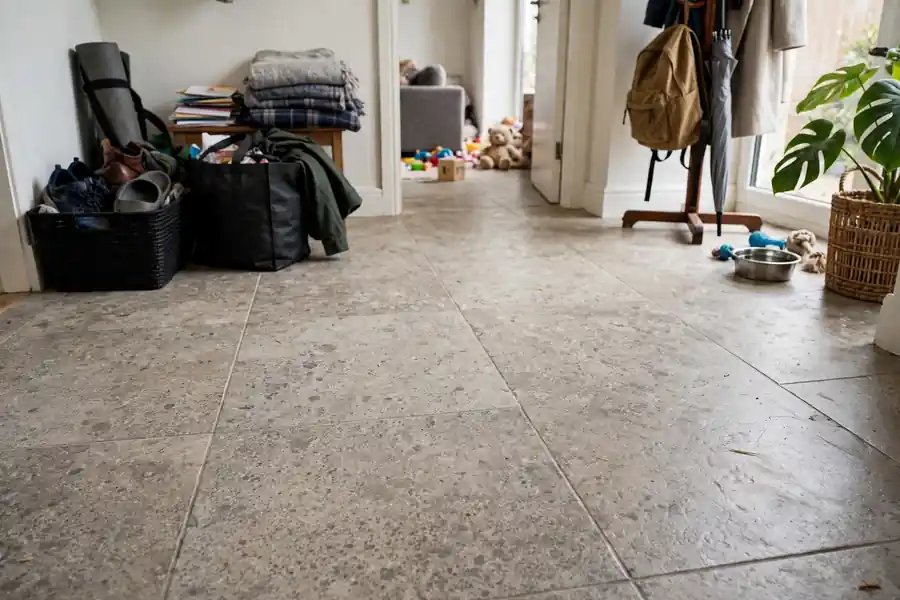
A durable floor resists the things your home throws at it. That means scratches from pets and furniture, dents from heavy loads, water from spills and leaks, wear from foot traffic, and impact from dropped objects. No floor wins every category, so the most durable floor for you is the one that handles your biggest threat.
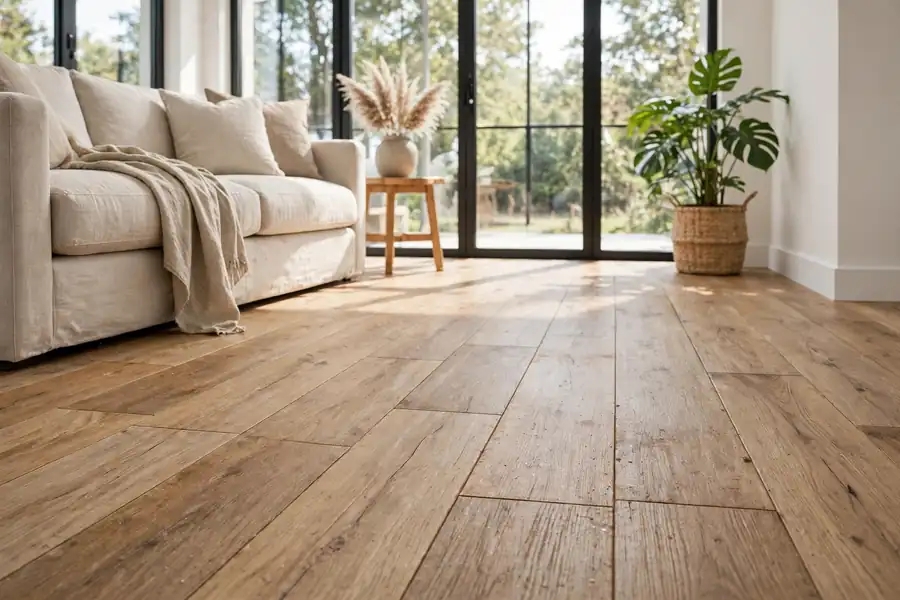
Durability also has a time dimension. Some floors age gracefully and can be renewed. Hardwood can be sanded and refinished many times, while vinyl and laminate wear out once the top layer is gone.
Which flooring is the most durable overall?
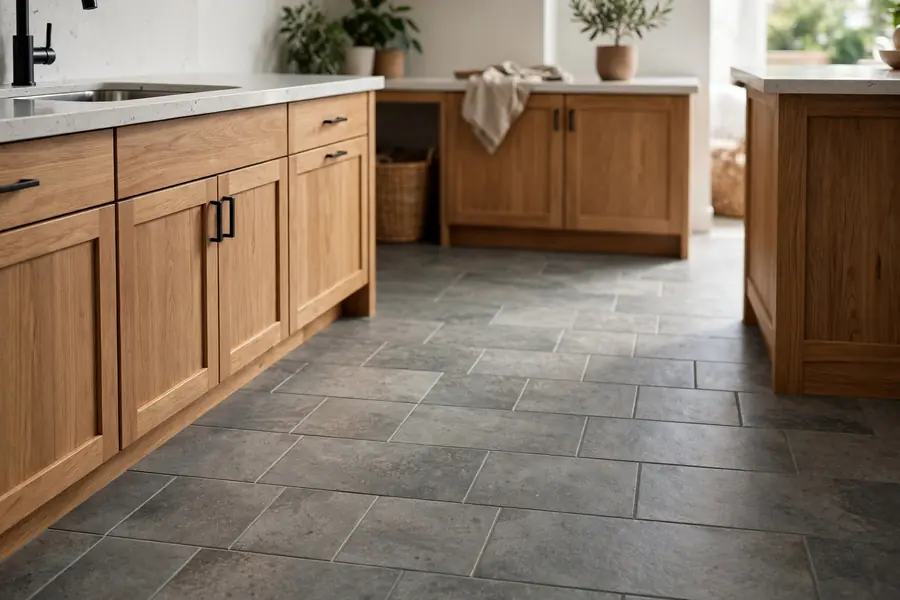
Porcelain tile is usually the toughest overall. Its dense, fired body resists scratches, moisture and fading, and in consumer testing, tile has ranked at the top, with wood-look porcelain a standout for high-traffic rooms. Its weak points are the grout, a cold hard feel and the risk of cracking if something heavy drops on it.
Luxury vinyl and laminate often outperform hardwood in scratch and wear tests, while hardwood's advantage is that it can be repaired and refinished.
How do the floors compare for each kind of damage?
Tile and vinyl handle water best, laminate and tile resist scratches best, and every floor has a weak point.
| Threat | Best choices | Weakest |
|---|---|---|
| Scratches | Porcelain tile, laminate | Hardwood, soft vinyl |
| Dents | Tile, thick-wear vinyl | Softer woods |
| Water | Tile, rigid-core vinyl | Laminate, hardwood |
| Heavy traffic | Tile, 20 mil vinyl | Carpet, thin vinyl |
| Dropped weight | Vinyl, laminate, wood | Tile, which can crack |
How long does each type of flooring last?
Tile and hardwood last longest, and vinyl and laminate last about 15 to 25 years. Hardwood is the long-run champion because it can be refinished, and many hardwood floors last well beyond a century with care. Tile can last for decades if it is installed on a stable base.
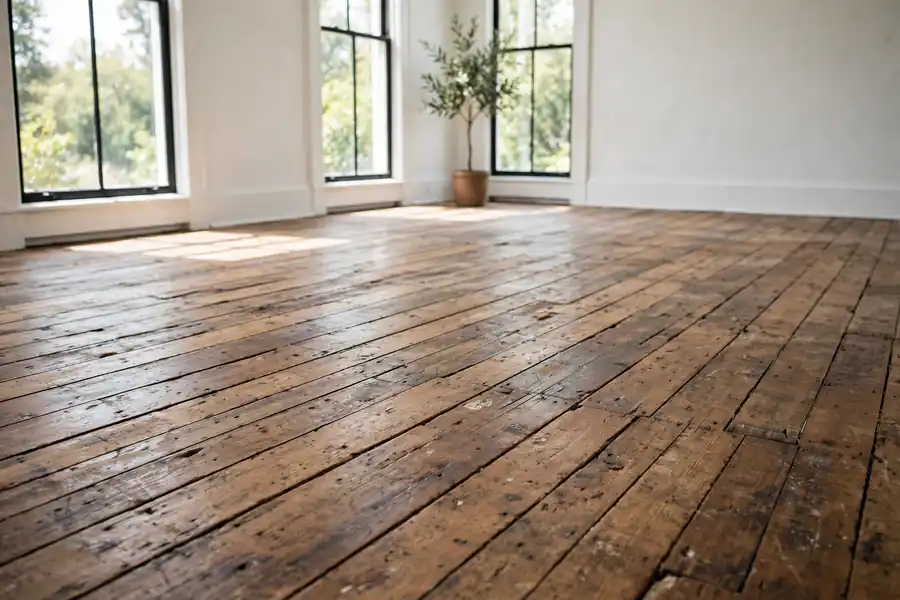
These ranges vary by source, and some put tile closer to 75 years or more. A floor that is installed well, kept dry and cleaned correctly lasts longer than one that is not.
What should you look for on the spec sheet?
Each floor has its own durability rating. For vinyl, check the wear layer in mils. For laminate, check the AC rating. For tile, check the PEI rating. For hardwood, look at the Janka hardness of the species.
| Floor | Rating | What to pick |
|---|---|---|
| Vinyl | Wear layer, in mils | 12 mil for most homes, 20 mil for busy ones |
| Laminate | AC rating, 1 to 5 | AC3 or higher |
| Tile | PEI rating, 0 to 5 | 3 or 4 for residential floors |
| Hardwood | Janka hardness | Higher numbers resist dents better |
Janka numbers are commonly listed values, and they differ slightly between charts.
What is the most durable flooring for pets and kids?
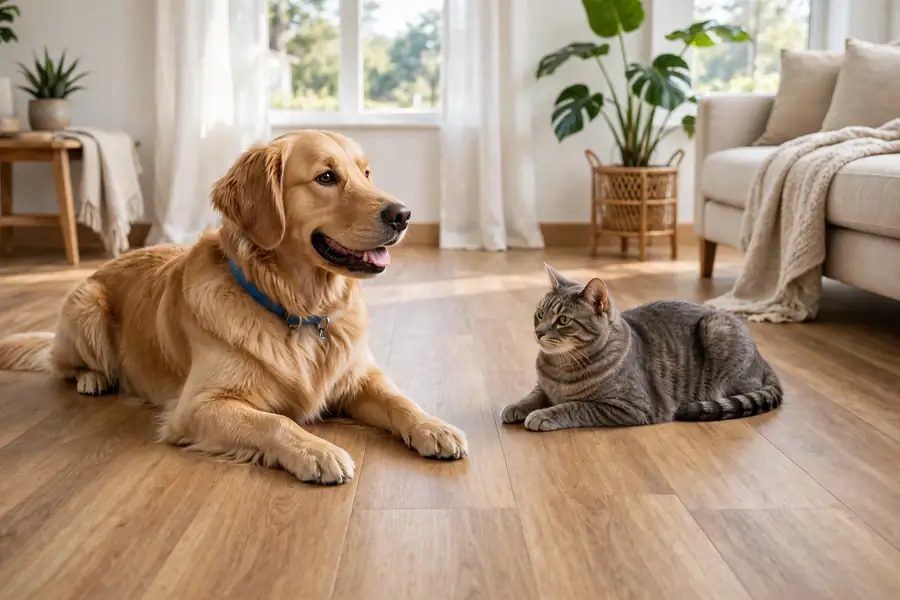
Rigid-core luxury vinyl with a 20 mil wear layer and porcelain tile are the best picks. They resist scratches from claws and toys, handle accidents and clean up easily. Laminate with a high AC rating also stands up well in dry rooms. Hardwood scratches more easily, though it can be refinished.
What is the most durable flooring for a kitchen or bathroom?
Porcelain tile and rigid-core vinyl are the best picks for wet rooms. Tile ignores water, and vinyl resists it, though both need sealed edges and a dry subfloor. Laminate and hardwood are weaker choices where water is common.
What is the most durable flooring for high traffic?
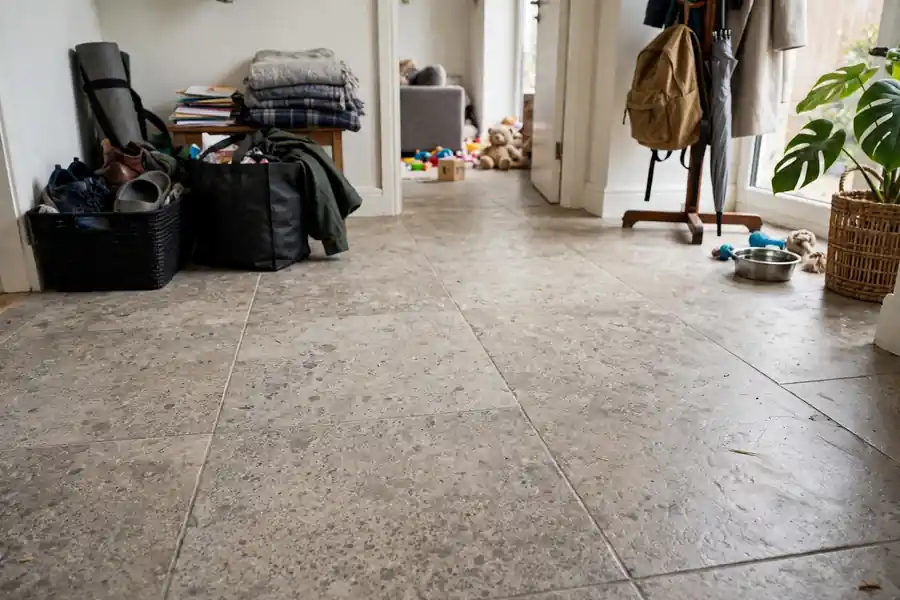
Porcelain tile and thick-wear vinyl handle the most traffic, with tile the top pick for hallways and entries. Choose a PEI 3 or 4 tile or a 20 mil vinyl, and use mats to catch grit, because grit does most of the damage.
How can you make any floor last longer?
Keep grit off it, use felt pads, wipe up spills, keep humidity steady and protect it from direct sun. A good installation matters as much as the floor. Poor prep is a leading cause of early failure for every type, including tile, vinyl and laminate.
| Habit | Why it helps |
|---|---|
| Walk-off mats at doors | Grit scratches like sandpaper |
| Felt pads under furniture | Prevent dents and scratches |
| Prompt spill cleanup | Keeps water out of seams |
| Steady humidity | Reduces movement in wood and laminate |
| Window coverings | Slow fading |
| Good subfloor prep | Prevents joint and grout failure |
Quick answers to common questions
What is the most durable flooring for a house with pets?
Rigid-core luxury vinyl with a 20 mil wear layer or porcelain tile. Both resist scratches and accidents.
What is the most durable flooring for a kitchen?
Porcelain tile or rigid-core vinyl, because both handle water and daily wear well.
Is luxury vinyl more durable than laminate?
In wet areas, yes. Laminate resists scratches well, but its core swells when it gets wet.
Which lasts longer, hardwood or tile?
Both can last for decades. Hardwood can be refinished many times, while tile lasts with little upkeep if the base is stable.
What is the most durable flooring for high traffic?
Porcelain tile, or vinyl with a 20 mil wear layer, plus mats at the entrances.
Keep reading: the best types of flooring for homes, the pros and cons of vinyl flooring and SPC flooring.
So, what is the most durable flooring for your home?
For most homes, porcelain tile is the toughest floor and rigid-core luxury vinyl is the best all-round value. Choose hardwood if you want a floor that can be renewed for decades, and laminate if the room stays dry. Check the rating for your floor type, prepare the subfloor well and protect the surface from grit.