A spider plant is an easy, forgiving houseplant with long, arching green and white leaves that grows best in bright indirect light, needs water only when the top inch of soil is dry and sends out small baby plants on long stems that you can root for free. Its scientific name is Chlorophytum comosum. It grows well in a pot or hanging basket, tolerates some neglect and is listed as non-toxic to cats and dogs by the ASPCA. The most common problem is brown leaf tips, which usually come from tap water minerals, dry soil or too much fertilizer.
Spider plants are popular for good reason. They survive in ordinary homes, they grow fast once they are settled and they pay you back with dozens of "spiderettes" you can give away. This guide covers everything people ask about them: what they are, which type to buy, how to water, light and feed them, how to propagate the babies, how to fix brown tips and yellow leaves, whether they are safe for pets and whether they can live outside.
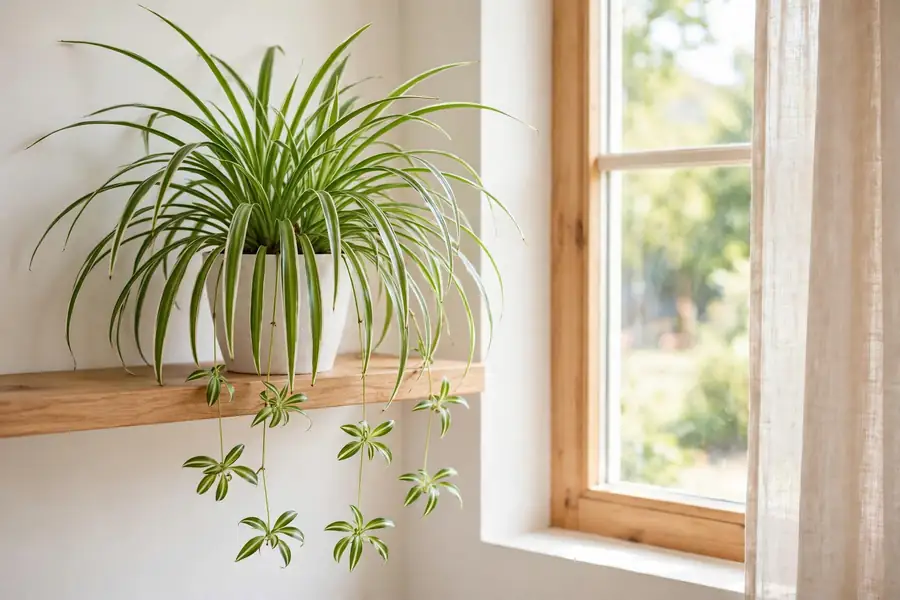
Spider plant at a glance
| Question | Short answer |
|---|---|
| Scientific name | Chlorophytum comosum |
| Other names | Airplane plant, spider ivy, ribbon plant, spider grass |
| Light | Bright indirect light. Tolerates medium light, burns in hot direct sun |
| Water | When the top inch of soil is dry, about once a week in summer, less in winter |
| Soil | Loose, well-draining potting mix |
| Temperature | About 60 to 80°F. Keep it above 50°F |
| Humidity | Average household humidity is fine |
| Feeding | A weak liquid fertilizer every few weeks in spring and summer |
| Size | Leaves 12 to 24 inches long, plant 1 to 2 feet wide, longer in hanging baskets |
| Babies | Appear on long stems on mature plants, usually from spring to fall |
| Pet safety | Listed as non-toxic to cats and dogs by the ASPCA |
| Biggest problem | Brown leaf tips from water minerals, dry soil or too much fertilizer |
| Difficulty | Easy, a good first houseplant |
What is a spider plant?
A spider plant is an evergreen perennial from the lily family that is native to southern and tropical Africa and is grown around the world as a houseplant. Its scientific name is Chlorophytum comosum. The "spiders" are the baby plants that dangle from the mother plant on long, arching stems, like spiders hanging from a thread.
- Other names: airplane plant, spider ivy, ribbon plant and spider grass. They all mean the same plant.
- Roots: it has thick, fleshy, tuber-like roots that store water. That is why it survives missed waterings. It is not a succulent, though, and it still wants regular water and a well-draining pot.
- Lifespan: with decent care, a spider plant lives for many years. The mother plant often looks best for the first few years, so many gardeners keep younger babies growing as replacements.
- Not to be confused with: spiderwort (Tradescantia), spider lily, spider flower (Cleome), the "spider web" Fatsia and spider mites. These are different plants or pests with similar names.
What does a spider plant look like, and how big does it get?
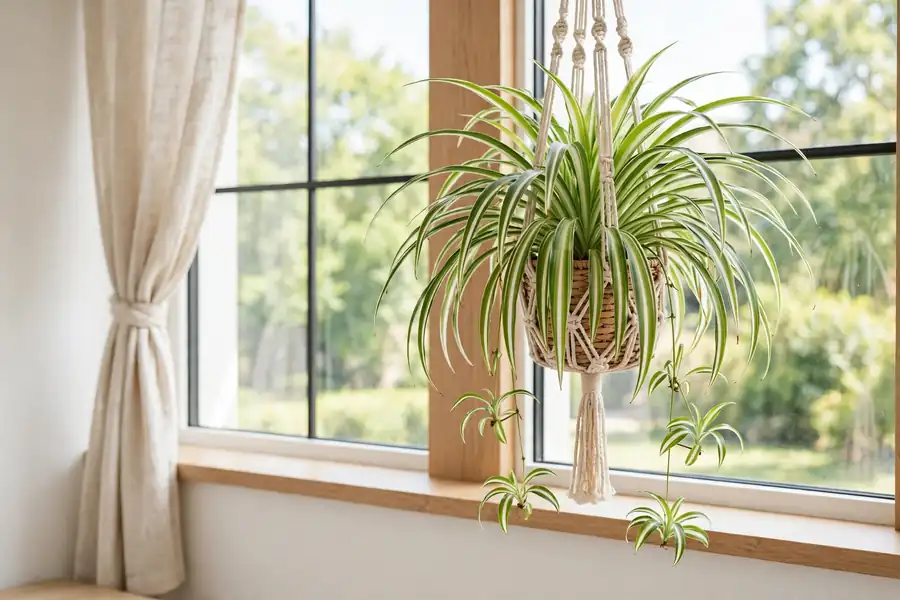
A spider plant forms a fountain of narrow, grass-like leaves that arch outward from a central crown. Leaves are usually 12 to 24 inches long and about half an inch wide, either solid green or striped with white or cream. A mature plant is usually 1 to 2 feet tall and wide, and the long stems can trail 2 feet or more in a hanging basket.
- Small spider plant: young plants and babies are just a few inches across. They fill out in a year or two.
- Big or large spider plant: a mature plant in a large pot can reach about 2 feet across. Hanging plants with many babies look even larger, since the runners trail below the pot.
- Curly types stay more compact.
- Growth rate: spider plants grow quickly in spring and summer and slow down in winter.
What are the benefits of a spider plant?
The real benefits are practical: it is easy to grow, it is safe around pets, it fills a hanging basket quickly and it gives you free plants. Spider plants also add a soft, green look to bathrooms, kitchens and shelves.
You will often read that spider plants clean the air. That idea comes from a 1980s NASA study done in small sealed chambers. Later reviews found that typical houseplants have little measurable effect on the air in a real home, where air changes constantly. Enjoy the plant for what it is, and ventilate your home for air quality.
Which spider plant variety should you pick?
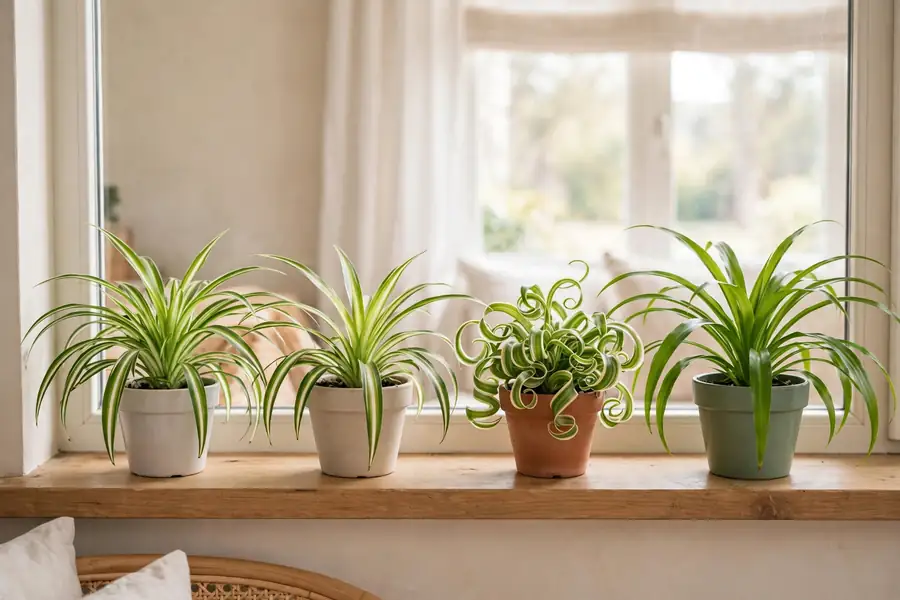
Pick by leaf pattern and size. Most spider plants sold are the classic striped type, but several varieties are widely available. Names vary between sellers, so use the description, not just the label.
| Variety or type | What it looks like | Good for |
|---|---|---|
| Variegated (often sold as Variegatum) | Green leaves with white or cream edges, or the reverse | The classic look, easiest to find |
| Reverse variegated (Vittatum) | White or cream center stripe with green edges | A brighter, lighter look |
| Curly spider plant (Bonnie) | Curled, twisting leaves, more compact | Shelves, small spaces, hanging pots |
| Hawaiian spider plant | Dark green leaves, sometimes with golden or cream tones | Fuller plants, easy care |
| Solid or all green | Plain green leaves, with no white | The hardiest, and the least prone to leaf scorch |
| Zebra and similar | Slightly yellow-green leaves with thin cream edges | Variety on a windowsill |
| Mandarin, Orange or Fire Flash | Green leaves with bright orange stems | A rare, related plant that likes warmth and humidity |
- Pink, purple or red spider plants: natural spider plants are green, white and cream. A truly pink, purple or red plant is usually dyed, or a different plant. The color fades as new leaves grow.
- Non-variegated types: solid green spider plants are sturdier in low light because the leaves have more chlorophyll.
- Which is best? For a first plant, choose a green and white variegated type or a solid green one.
How much light does a spider plant need?
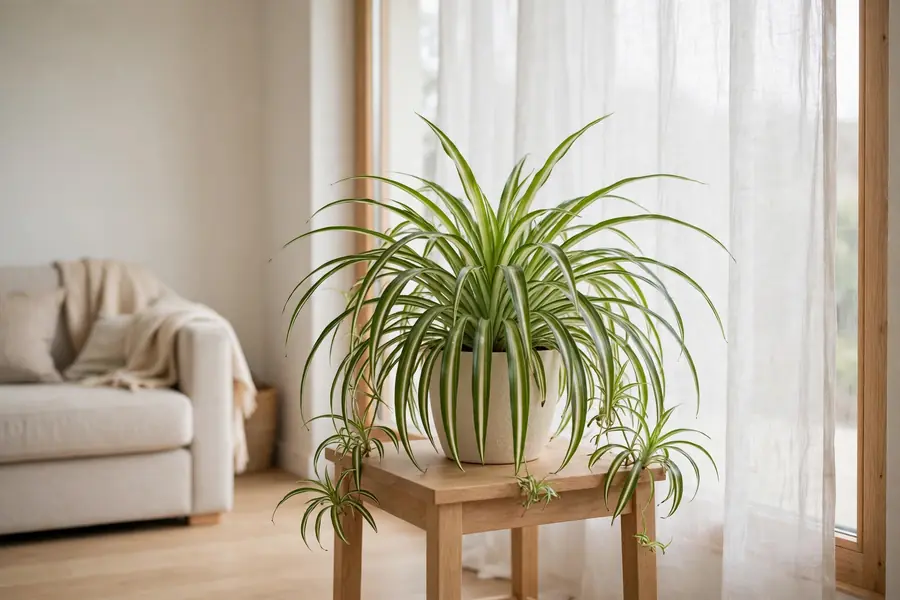
Bright, indirect light is best. A spot near an east or north window, or a few feet back from a south or west window, works well. Spider plants tolerate medium and low light, but they grow slower, lose their variegation and make fewer babies.
- Direct sun: a few hours of gentle morning sun is fine. Hot afternoon sun scorches leaves and leaves brown, crispy patches.
- Low light: the plant survives, but the leaves get dull and floppy, and the white stripes fade.
- Too little light signs: pale or plain green leaves, slow growth, no babies and leaning toward the window.
- Grow lights: an LED grow light for 10 to 12 hours a day keeps a spider plant healthy in a dark room.
- Sun versus shade outdoors: outdoors, a spider plant wants shade or filtered sun, not full sun.
How often should you water a spider plant?
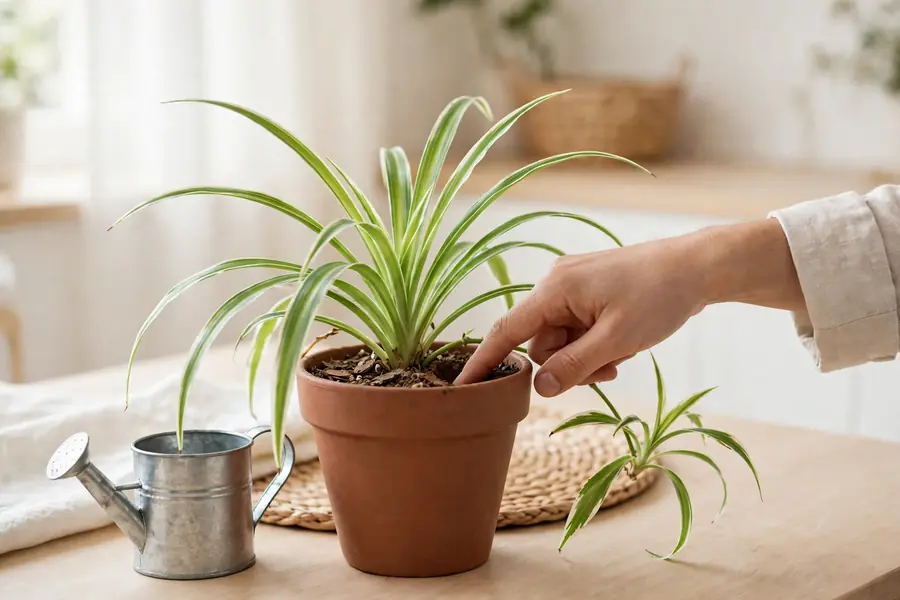
Water when the top inch of soil feels dry, which is usually about once a week in spring and summer and every two to three weeks in winter. Check with your finger first, since pot size, light, temperature and soil change how fast it dries. Water until it drains from the bottom, then empty the saucer.
- Overwatering causes root rot, yellow leaves and a soft, brown crown.
- Underwatering causes dry brown tips, curling, drooping and shriveled, thin roots.
- Water quality: spider plants are sensitive to fluoride and salts in tap water, which cause brown tips. If tips keep browning, use rainwater, distilled water or water that has stood overnight. Standing water removes chlorine but not fluoride.
- Soil dries slowly in winter, so water less.
- In a hanging basket, the pot dries faster, so check more often.
| Sign | Overwatered | Underwatered |
|---|---|---|
| Leaf color | Yellow, limp | Pale, dry, brown tips |
| Soil | Wet, smells sour | Dry, pulls from the pot edge |
| Roots | Mushy, brown, smelly | Dry and shriveled |
| Fix | Let it dry, repot if rotting | Soak thoroughly, then water on schedule |
What is the best soil, pot and fertilizer for a spider plant?
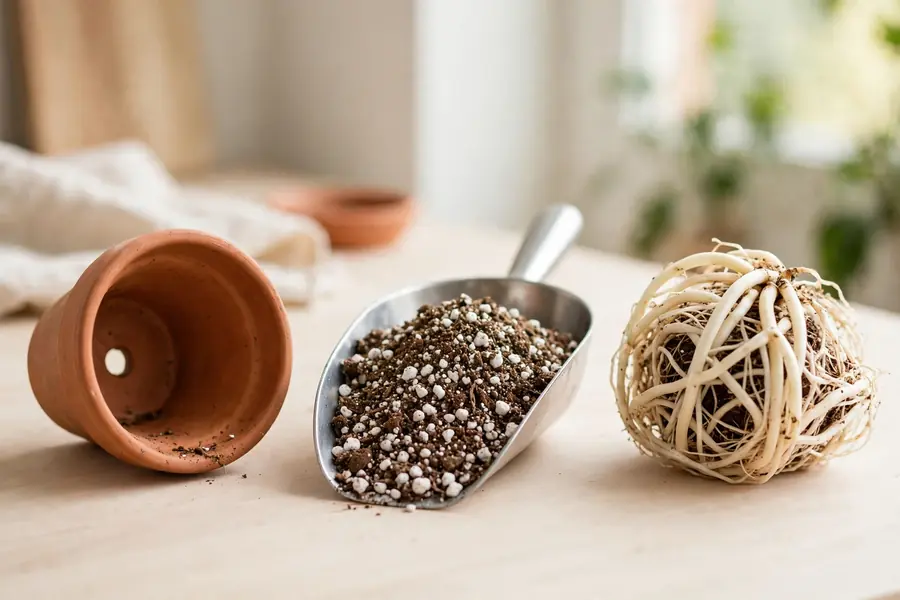
Use a loose, well-draining potting mix, a pot with drainage holes and a light feeding in the growing season. A standard houseplant mix with a handful of perlite works well. Spider plants do not need a rich, heavy soil.
- Soil: potting mix with perlite or coarse sand for drainage. Avoid heavy garden soil. A mildly acidic to neutral pH suits it.
- Pot size: choose a pot only 1 to 2 inches wider than the root ball. The thick roots fill a pot quickly, and a pot that is too big stays wet.
- Best pot: one with drainage holes. Plastic holds water longer, and terracotta dries faster. Thick roots can crack thin plastic pots.
- Hanging basket: lines with moss or coco liners dry fast, so check often.
- Fertilizer: feed with a balanced liquid houseplant fertilizer at half strength every 2 to 4 weeks in spring and summer. Skip it in fall and winter. Too much fertilizer causes brown tips.
- Humidity: average home humidity is fine. Dry air can brown the tips. Grouping plants or using a pebble tray can help a little.
- Temperature: about 60 to 80°F. Spider plants tolerate brief dips but are hurt by frost, so keep them above about 50°F and away from cold drafts and heating vents.
Why are the tips of my spider plant turning brown?
Brown tips are the most common spider plant problem, and the usual causes are tap water minerals, uneven watering, dry air or too much fertilizer. The plant is not dying. The tips simply dry out when something stresses the leaf edge.
| Cause | Clue | Fix |
|---|---|---|
| Fluoride, chlorine or salts in water | Brown or tan tips, even with good watering | Use rainwater, distilled water or water left out overnight |
| Fertilizer buildup | White crust on soil, brown tips | Flush the soil with plain water, feed less |
| Underwatering | Dry soil, crispy tips | Water deeply, then keep it more regular |
| Dry air | Tips brown near heaters, dry rooms | Move away from vents, group plants |
| Too much sun | Brown patches, bleached leaves | Move to bright indirect light |
| Root bound | Roots fill the pot, fast drying | Repot into a slightly larger pot |
| Cold drafts | Brown streaks after a chill | Move away from windows and doors |
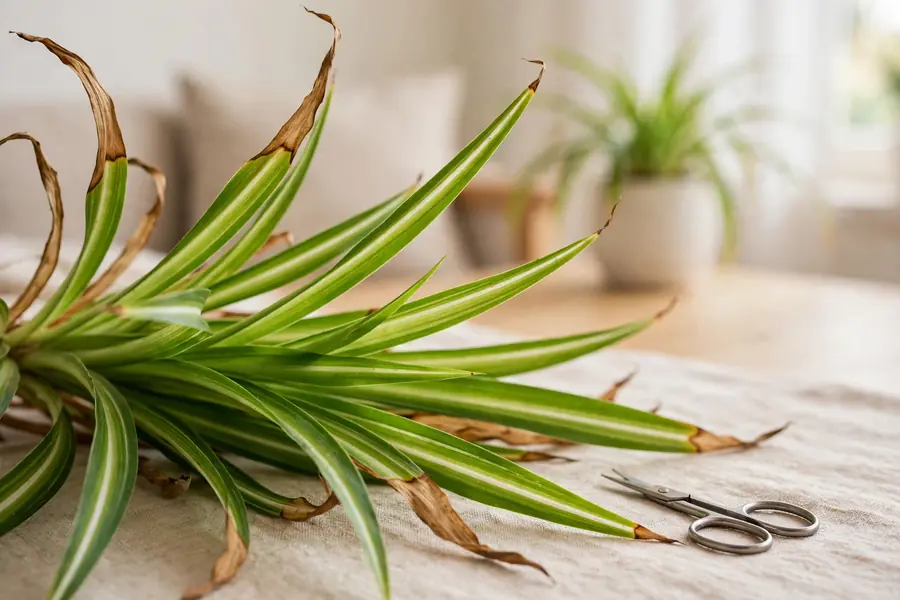
To tidy the plant, trim the brown tips with clean scissors, following the natural shape of the leaf and leaving a thin edge of brown so you do not cut into healthy tissue. Trimming does not harm the plant.
Why is my spider plant turning yellow, pale, drooping or dying?
Check the roots and the soil first. Overwatering, root rot, root crowding, low light and old age cause most yellow, pale and drooping leaves.
- Yellow leaves: most often overwatering. Check if the soil is soggy. Older outer leaves yellow naturally and can be pulled off.
- Pale or washed-out leaves: too much sun, too little light or nutrient lack. Adjust the light and feed lightly.
- Drooping or bending leaves: thirst, root rot, or a plant that has outgrown its pot. Check the soil and roots.
- Curling leaves: dry soil, low humidity or cold. Water well and move it away from drafts.
- Not growing: low light, a winter rest, a pot that is too small or no feeding.
- Sick or dying plant: look for mushy, brown roots with a sour smell. That is root rot.
How do you revive a dying spider plant?
- Take the plant out of the pot and shake off the soil.
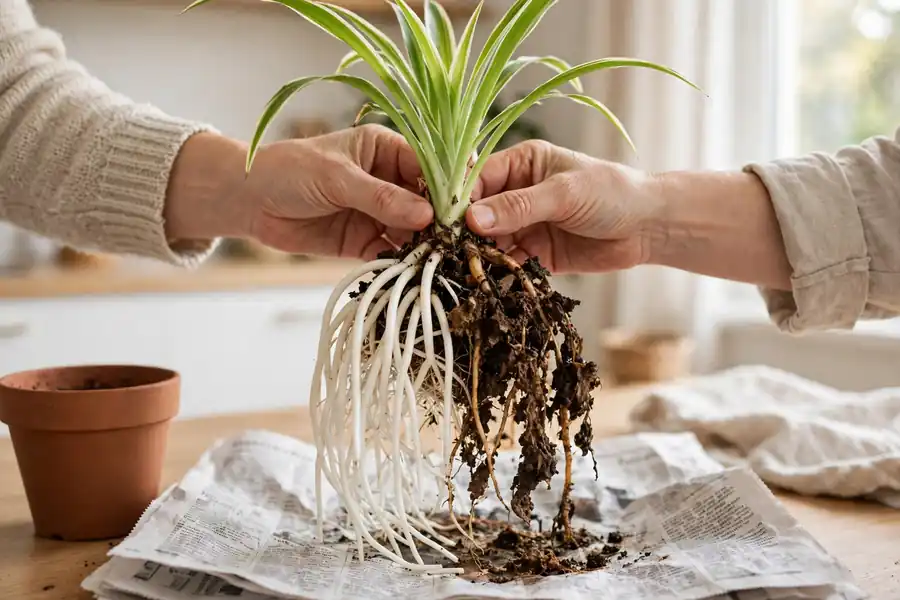
- Inspect the roots. Healthy roots are firm and cream to white. Rotted roots are brown, soft and smelly.
- Cut off all rotten roots and dead or yellow leaves with clean scissors.
- Repot in fresh, drier mix in a clean pot with drainage holes.
- Water lightly, then wait until the top inch is dry.
- Give it bright indirect light and skip fertilizer for a month.
- Take babies as a backup. If the mother is badly rotted, root the plantlets to start over.
How do you propagate a spider plant?
The easiest way is to root the baby plants, called plantlets, spiderettes, pups or offshoots, that grow at the ends of long stems. You can root a baby in water or soil, or leave it attached to the mother until it grows roots. You can also divide a large plant when you repot it.
What are spider plant babies?
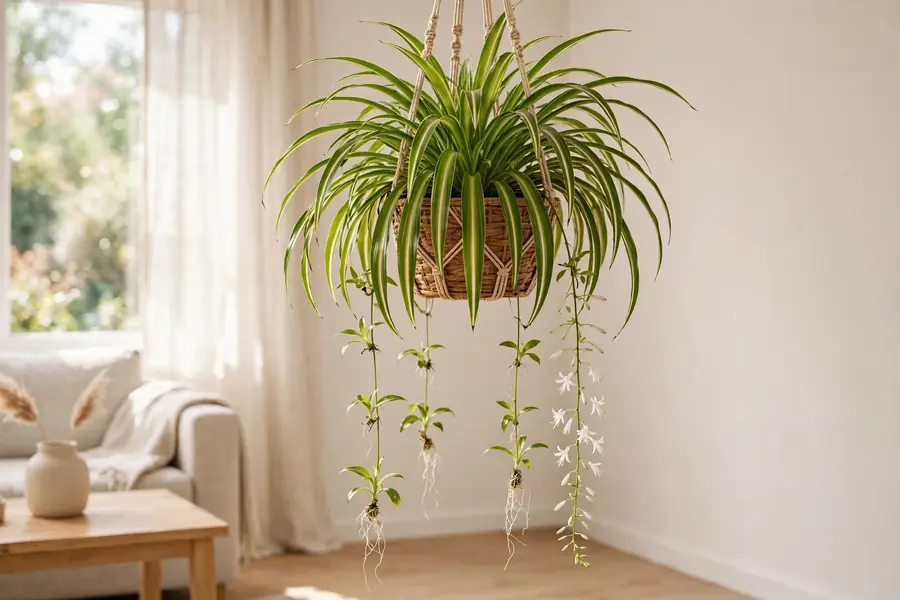
Spider plant babies are miniature plants that form on long, arching stems called runners or stolons. Mature, healthy plants produce them, often after the plant has become a little root bound and has enough light. A flower often appears first, and the baby grows where the flower was. They are copies of the mother plant.
Where do you cut spider plant babies?
Cut the stem about one inch above the baby, or at the base of the baby where it joins the runner, using clean scissors. You can also trim the stem back to the mother plant once the baby is rooted. Waiting until the baby has small root nubs, or is at least 2 to 3 inches tall, gives better results, but babies without roots can root too.
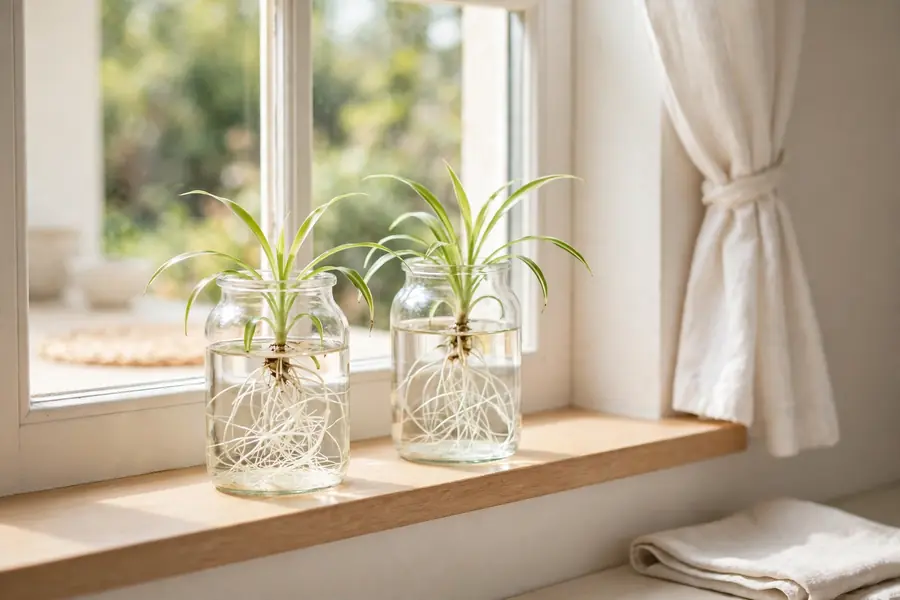
How do you propagate spider plant babies in water?
- Cut a baby with a short piece of stem.
- Set the base in a small jar of water, so the leaves stay dry. Rainwater or distilled water is best.
- Put it in bright indirect light.
- Change the water every few days.
- Wait for roots, usually 1 to 3 weeks.
- Pot it up when roots are about 1 to 2 inches long, in loose potting mix.
Water-rooted plants can stay in water for a long time if you change the water and add a drop of liquid fertilizer, but they usually do better in soil.
How do you propagate spider plant babies in soil?
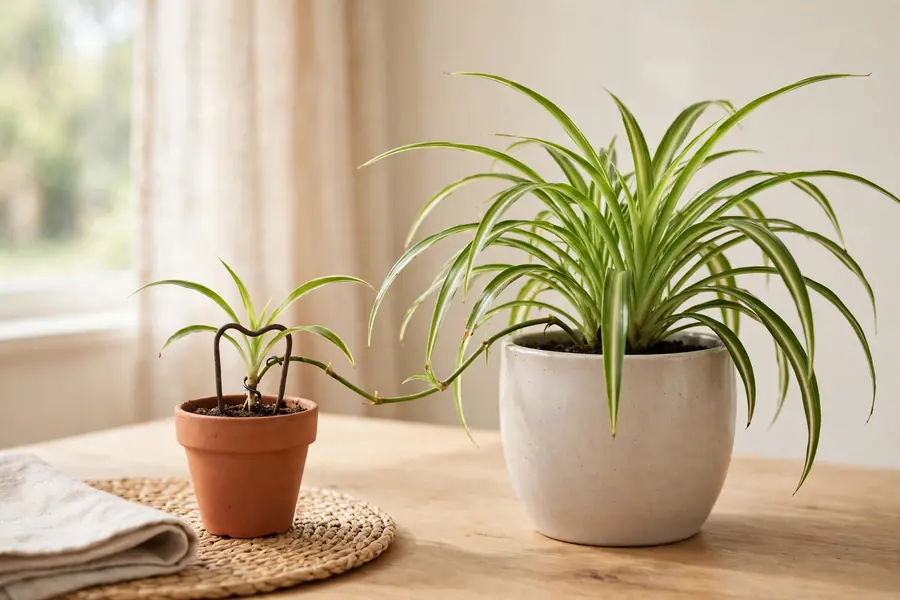
- Fill a small pot (3 to 4 inches) with damp, loose potting mix.
- Place the baby on the soil while it is still attached to the mother, and pin it down with a bent wire or a paperclip so the base touches the soil.
- Keep the soil lightly damp.
- Wait 2 to 4 weeks for roots. Tug gently. If it resists, it has rooted.
- Cut the runner and move the new plant to a bright spot.
- Or cut the baby first and plant it right away, with the base just covered. Keep it damp and covered in a clear bag for a week or two if the air is dry.
Can you propagate a spider plant without babies?
Yes. Divide the plant when you repot it, since each section with leaves and roots becomes a new plant. You can also grow a spider plant from seed, but seeds are rare indoors, slow and do not always match the parent. Cuttings of leaves do not root.
Why is my spider plant not producing babies?
Common reasons are plants that are too young, too little light, a large pot, too little or too much fertilizer, or a plant that is not root bound enough. Give it bright light, feed lightly in spring and summer and let the roots fill the pot. Some varieties make few babies.
How do you care for spider plant babies?
Keep baby plants in bright indirect light, in small pots, with soil that stays slightly damp. Do not overfeed them. Repot into a larger pot after a few months once the roots fill the pot.
How do you repot a spider plant?
The best time to plant or repot a spider plant is spring, when growth is picking up, though you can pot up a plant or a baby at any time of year if it needs it. Repot every 1 to 2 years, when roots circle the pot or push out of the drainage holes. Spider plants grow fast and have thick roots, so they get root bound quickly.
- Water the plant a day before so the roots slip out.
- Choose a pot 1 to 2 inches wider, with drainage.
- Slide the plant out. Loosen the roots gently.
- Divide it if you want a second plant. Cut or tease the clump apart.
- Set it at the same depth in fresh potting mix.
- Water lightly and keep it out of hot sun for a week.
- Skip fertilizer for a month.
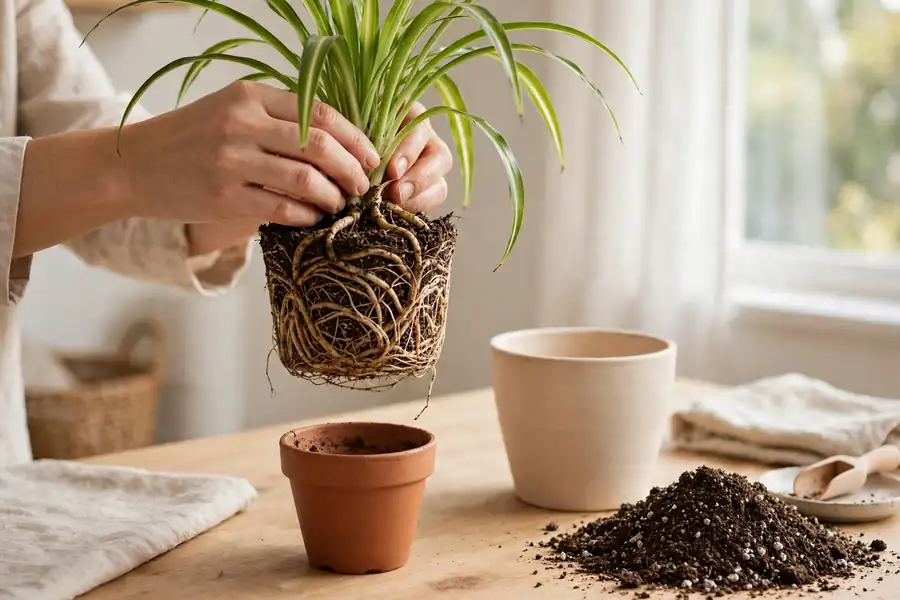
Is a root bound spider plant bad? A little crowding is fine and even helps it make babies. Too much crowding slows growth, dries the soil fast and browns the tips.
How do you prune or trim a spider plant?
Trim brown tips, yellow leaves and spent flower stems with clean scissors. Cut off dead leaves at the base. You can remove baby plants to keep the plant tidy or to root them. Pruning does not harm a spider plant. Avoid cutting more than a third of the plant at one time.
Why does a spider plant flower, and what are the seed pods?
Mature spider plants produce small white flowers on the same long stems that later carry babies. Flowers are a sign of a happy, mature plant, and they often appear when the plant is slightly root bound. After flowering, tiny green seed pods can form, although indoor plants rarely make viable seed. Babies can form where flowers were. Cut off a flower stem after it fades if you want a tidier plant.
Can a spider plant live outside, in water or in a bathroom?
Yes to all three, with conditions.
- Outdoors: spider plants are tender perennials that live outside year round only in warm, frost-free climates, roughly USDA zones 9 to 11. Elsewhere, put the pot outside in shade in summer and bring it in before nights fall below about 50°F. Keep it out of direct sun.
- In water: a spider plant can live in water permanently if you use clean water, change it often and give it a little fertilizer. It grows slower than in soil.
- Hydroponic: it grows well in a water-based nutrient system.
- In a bathroom: a bright bathroom works well, since spider plants like a little humidity. Dark bathrooms are too dim.
- In a terrarium: not ideal. A closed terrarium stays too wet and cramped.
- In an aquarium: not an aquatic plant. It can sit above water with roots dipping in, but a fully submerged plant will rot.
- As a hanging plant: a hanging basket is the classic way to show it off, since the babies can dangle.
- Kokedama and bonsai styles: possible, but the plant outgrows a small form quickly.
How do you care for a spider plant in winter?
Water less, feed not at all and keep it warm and bright. Growth slows in winter. Water when the top inch is dry, which may be every two to three weeks. Keep the plant away from cold windows and heaters, and give it as much light as you can.
Is a spider plant toxic to cats and dogs?
No. The ASPCA lists the spider plant as non-toxic to cats and dogs. Even so, eating a lot of any plant can upset a pet's stomach and cause vomiting or diarrhea. Cats often love to chew the long, dangling leaves, which can damage the plant and may make them sick. Long leaves can also be a choking hazard for small dogs.
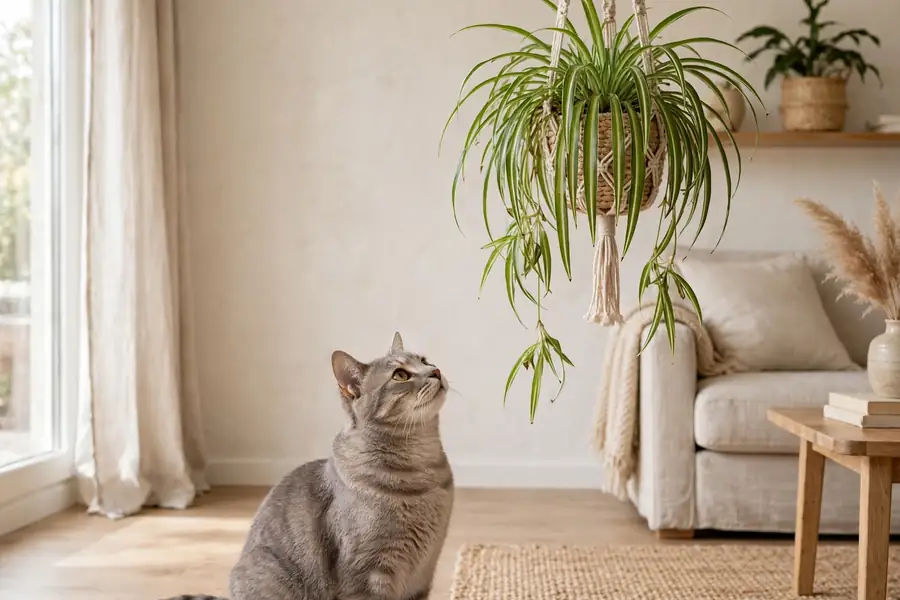
- Cats and spider plants: many cats are drawn to the leaves and babies. Hang the plant out of reach or give the cat a pot of cat grass instead.
- Dogs: safe in small amounts. Keep puppies from chewing.
- If a pet is sick: call your vet if your cat or dog vomits repeatedly or seems unwell after chewing a plant.
- A claim you may see: some pages say spider plants cause a "high" in cats. This is not confirmed, so treat it as unverified.
If you want other pet-safe or pet-risky plants, check the ASPCA list. The snake plant guide covers a popular plant that is toxic to pets.
How do you get rid of spider mites, fungus gnats and other bugs on a spider plant?
Check the underside of leaves and the soil. Spider plants can get spider mites, mealybugs, scale and aphids, and the soil can host fungus gnats if it stays wet.
- Spider mites: tiny pests that cause fine white or yellow specks and thin webbing. Rinse the leaves, wipe them and treat with insecticidal soap, repeating weekly.
- Mealybugs and scale: cottony or hard brown bumps. Dab with rubbing alcohol on a cotton swab, then spray with soap.
- Aphids: small green or black bugs on new growth. Rinse them off.
- "Spider eggs" in the soil: tiny white dots or webs in the soil are usually fungus gnat larvae, springtails or mold, not spider eggs. Let the soil dry out and see the gnat guide.
- Prevention: do not overwater, quarantine new plants and keep leaves clean.
What are the downsides of a spider plant?
Spider plants are easy, but they have a few drawbacks. Brown tips are common and can look untidy. The plant is sensitive to fluoride and salts in water. Cats love to chew the leaves. The roots are thick and crowd a pot fast, so it needs repotting every year or two. The long runners and babies can look messy if you do not trim them, and dim rooms make the leaves dull and floppy.
What plants look like a spider plant?
Several plants have similar long, arching, grassy leaves: ponytail palm, lilyturf, dwarf mondo grass, ribbon grass and some dracaena types. Their care differs, and some are not safe for pets, so check each plant before you buy. A solid green spider plant, a curly spider plant and a variegated one can also look quite different from one another, though they are the same species.
How does a spider plant compare with a snake plant?
Both are easy, but they differ in light, water and pet safety.
| Feature | Spider plant | Snake plant |
|---|---|---|
| Look | Arching, grassy leaves | Stiff, upright leaves |
| Light | Bright indirect, tolerates medium | Tolerates low to bright |
| Water | When the top inch is dry | Every 2 to 4 weeks, when fully dry |
| Pet safety | Non-toxic per ASPCA | Toxic to cats and dogs |
| Babies | Many, easy to root | Slow, by division or leaf cuttings |
| Brown tips | Common | Rare |
| Best for | Hanging baskets, pet homes | Dim rooms, forgetful waterers |
The airplane plant is the same plant as the spider plant.
Where can you buy a spider plant, and how much does it cost?
You can buy spider plants at garden centers, nurseries, big-box home stores, grocery stores with plant sections and online plant shops. A small plant in a 4-inch pot often costs about $5 to $15, a large or hanging plant about $15 to $40, and rare types such as the Mandarin or Fire Flash cost more. These are rough 2026 estimates that vary by region and seller.
- What to look for: green, firm leaves, a full crown and no brown, mushy roots. Check the soil for insects.
- Cheapest option: ask a friend. Spider plants make so many babies that most owners give them away.
- Pots and stands: choose a pot with drainage and a hook, stand or shelf where the babies can hang.
- Artificial spider plants: fake spider plants are sold for decor, but they need no care and give no benefits.
- Display ideas: a hanging basket by a bright window, a shelf, a plant stand, a bathroom ledge or macrame holder, where the babies can trail.
Quick answers to common questions
How often should you water a spider plant?
When the top inch of soil is dry, usually about once a week in spring and summer and every two to three weeks in winter. Check with your finger first.
Is a spider plant toxic to cats and dogs?
No. The ASPCA lists it as non-toxic to both. Eating a lot can still cause mild stomach upset, so keep pets from chewing it heavily.
How do you propagate spider plant babies?
Cut a baby from its stem, root it in water for 1 to 3 weeks or pin it into damp soil for 2 to 4 weeks, then pot it up. You can also divide a large plant when repotting.
Why are the tips of my spider plant turning brown?
Usually minerals such as fluoride in tap water, uneven watering, dry air or too much fertilizer. Use rainwater or distilled water, water evenly, feed lightly and trim the tips.
How much light does a spider plant need?
Bright indirect light. It tolerates medium light but grows slower, and hot direct sun burns the leaves.
Keep reading: snake plant care, how to get rid of gnats and more houseplant guides.
Is a spider plant worth growing?
Yes. A spider plant is one of the easiest houseplants to grow, it is safe around pets and it gives you new plants for free. Give it bright indirect light, water when the top inch is dry, use water without much fluoride and repot every year or two. Do that and your spider plant will keep producing babies for years.