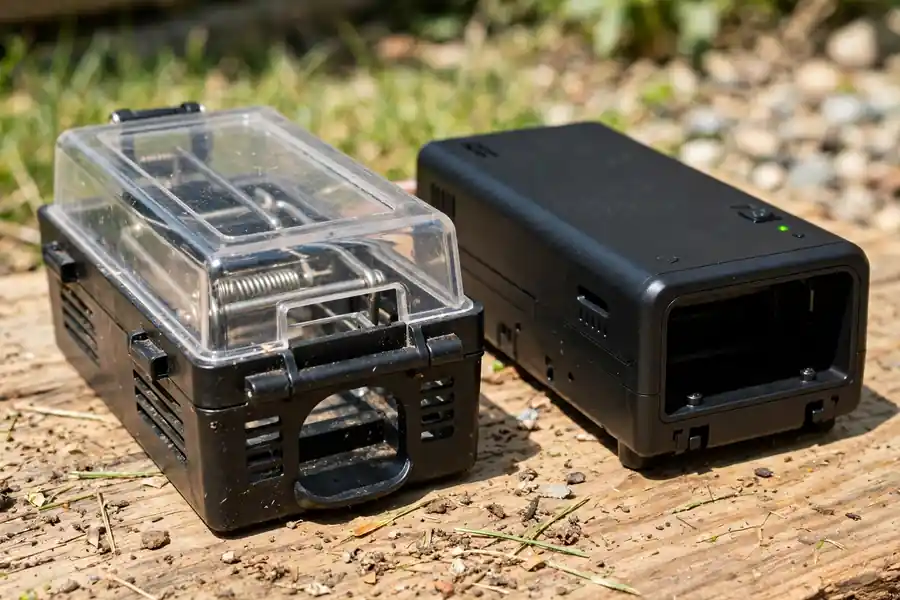
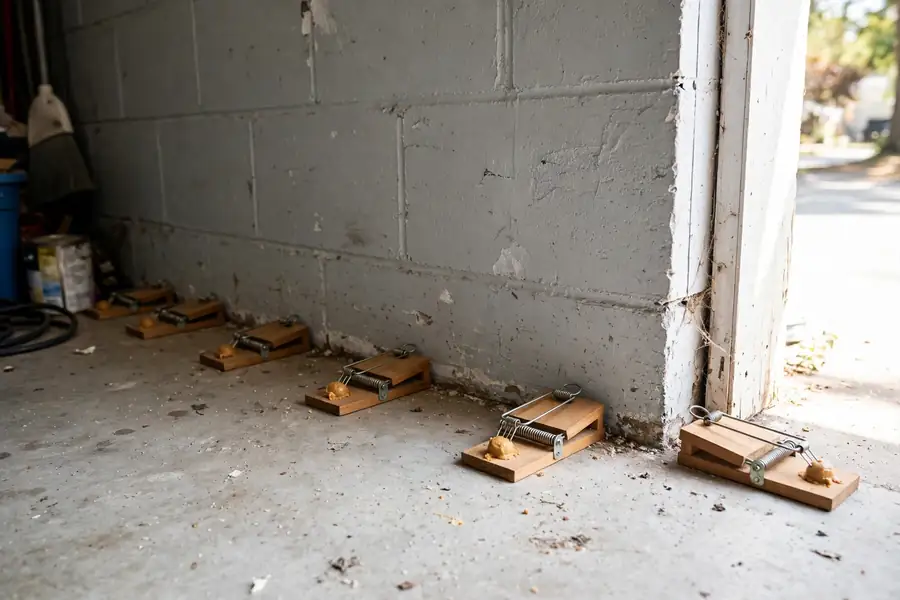
For most homes, the best mouse trap is an enclosed snap trap, set in pairs along walls with a dab of peanut butter. It is cheap, fast and reliable, and you can buy enough of them to cover every runway. Electronic traps are a cleaner but costlier alternative, and glue boards are the weakest and most cruel option. Where you put the traps and how many you use matter more than the brand.
Best mouse trap at a glance
| Question | Short answer |
|---|---|
| Best overall trap | Enclosed snap trap |
| Best no-touch, reusable option | Electronic trap |
| Best humane option | Live trap, checked twice a day, or a good exclusion job |
| Worst option | Glue board |
| Best bait | A pea-sized dab of peanut butter |
| Best placement | Along walls, across the runway, in pairs |
| How many traps | More than you think. Several for an active area, more if it is heavy |
| When to stop | About a week after the last catch and no fresh signs |
What is the best type of mouse trap?
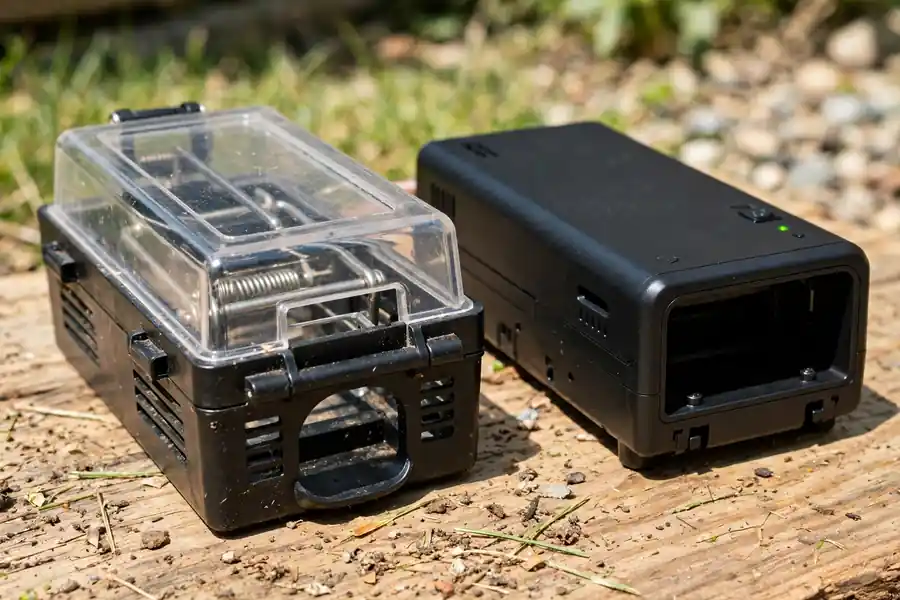
Snap traps are the best all-round choice, and electronic traps are the best upgrade. Snap traps kill quickly, cost little and are easy to place in bulk. Electronic traps are clean and reusable, but cost more and depend on batteries. Live traps are humane but need frequent checks, and glue boards underperform and cause suffering.
| Trap type | Pros | Cons |
|---|---|---|
| Enclosed snap trap | Cheap, quick kill, easy to buy in bulk, safer around pets and children | Needs gloves for disposal, and cheap models can fail on small or wary mice |
| Classic open snap trap | The lowest price, widely available | Open spring can hurt fingers, pets and kids |
| Electronic trap | Clean, no-touch disposal, reusable | Higher price, needs batteries that must stay strong |
| Live or multi-catch trap | No kill, can hold more than one mouse | Needs checks at least twice a day, and released mice often do not survive |
| Bucket trap | Cheap to build | Unreliable, and drowning is a welfare concern |
| Glue board | Easy to set | Catches fewer mice, causes long suffering and can trap pets |
An independent field study on wild house mice found glue traps caught far fewer mice than non-glue traps, because many mice avoid or neutralize the glue.
Which mouse trap is best for each spot?
Pick by location, pets and the size of the problem. The same trap does not suit every room.
- Best mouse trap for the kitchen or indoors: an enclosed snap trap or an electronic trap, placed behind appliances and along baseboards.
- Best mouse trap for the garage or basement: many snap traps along walls and near stored boxes, since these spaces see heavy activity.
- Best mouse trap for the attic: snap traps near droppings, along beams and next to boxes. For safety, follow attic rules in the rat guide.
- Best outdoor mouse trap: a trap in a covered box or station, so rain, birds and pets cannot reach it.
- Best mouse trap with pets or kids: an enclosed design set where pets cannot reach, such as behind appliances or inside cabinets. Treat any "pet-safe" label as a sales claim and still keep traps out of reach.
- Best for small mice: a sensitive, well-made snap trap sized for mice, not rats. Cheap traps can miss small mice.
- Best for multiple mice or a large infestation: many snap traps in pairs, or a multi-catch trap, along with sealing the entry points.
How do you choose a good mouse trap?
Look for a sensitive trigger, a strong spring, a durable build and an easy set. Brand matters less than design and how many you place. Check these before you buy:
- Mouse-sized, not rat-sized, so a light mouse triggers it.
- Sensitive, stable trigger that does not snap when you set it.
- Enclosed or covered if kids or pets are around.
- Easy, one-handed set, so you set traps safely.
- Easy, no-touch release, so you can dispose of a catch without handling it.
- Reusable and washable, for a lower cost per use.
- Enough in a pack to cover your runways.
What is the best bait for a mouse trap?
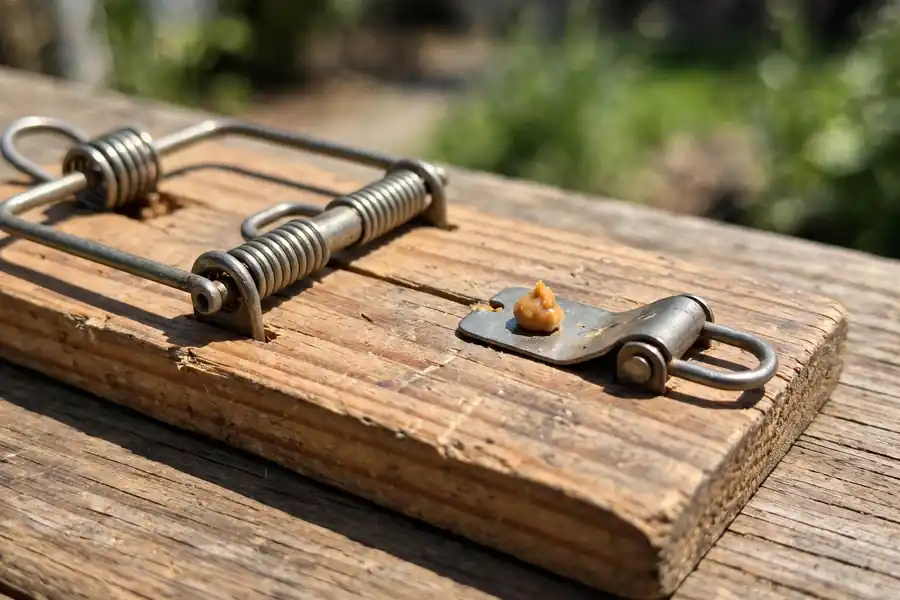
Peanut butter is the most recommended bait. It is sticky, strong-smelling and high in fat, so a mouse has to stay and work at it instead of grabbing it and leaving. No controlled study compares all baits, so treat rankings as practical guidance, and use a tiny dab.
| Bait | Why it works |
|---|---|
| Peanut butter | Strong smell, sticky, hard to steal in one grab |
| Hazelnut spread or chocolate | Sweet, sticky and smelly |
| Bacon or ham | Strong savory aroma, use tiny bits |
| Cotton, dental floss, shredded paper | Mice use it for nests, so it can attract them in cold weather |
| Raisins, dried fruit, sunflower seeds | Food mice eat, but less sticky |
| Soft cheese | Often used, but sources say it is not the best choice |
What is the best bait for each kind of trap?
The same food works across types, but placement of the bait changes.
- Snap trap: press a pea-sized dab into the bait cup so the mouse has to work at it.
- Electronic trap: place a small amount of peanut butter on the plate or in the chamber, as the maker directs.
- Live or humane trap: use sticky, strong baits such as peanut butter, plus a bit of dry food or nesting material, so the mouse stays calm.
- Bucket trap: a smear of peanut butter on the far end of the plank or roller.
- Glue board: not recommended. A glue board does not work well, and baiting it only attracts more risk for pets.
Homemade mouse trap bait
Use food you already have. Peanut butter, a dab of chocolate-hazelnut spread, a tiny bit of cooked bacon, a raisin pressed into peanut butter, or a wisp of cotton all work. Keep it small, because a large lump lets the mouse eat without triggering the trap.
How do you set a mouse trap?
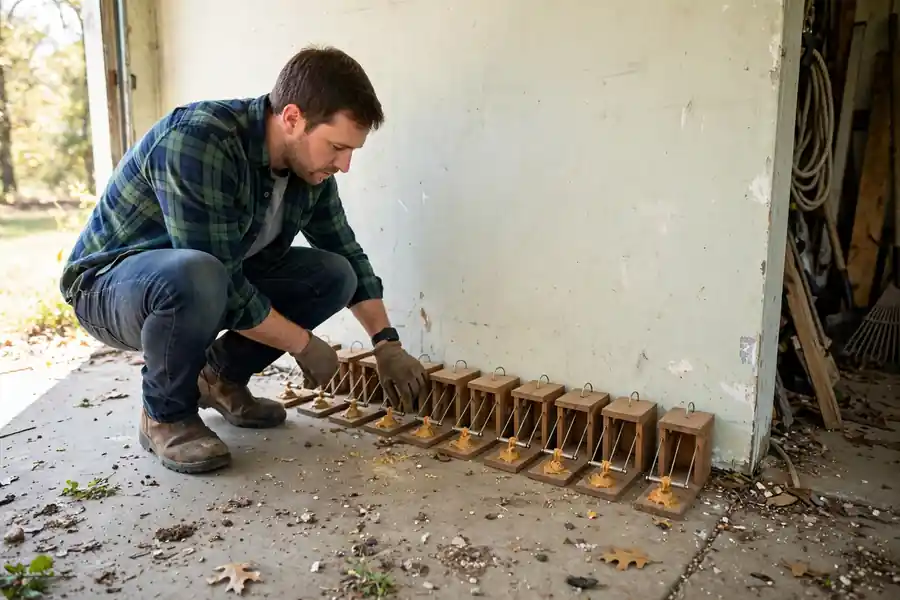
Set it along a wall, bait it lightly and place it where droppings or gnaw marks appear. Mice run along edges, so a trap across their path gets triggered. Wear gloves, and keep the trap away from children and pets.
- Find droppings, gnaw marks and runways, usually along walls, behind appliances and in corners.
- Press a pea-sized dab of bait into the trap.
- Set the trap with care, holding it away from your fingers.
- Place it across the runway, with the trigger end against the wall.
- Put a second trap right beside the first, since mice that avoid one may hit the other.
- Check daily, and reset or replace as needed.
Some pest professionals bait traps and leave them unset for a few days so mice get used to them. Others say a well-placed trap works without baiting. If mice keep avoiding your traps, pre-baiting is worth trying.
Where is the best place to put a mouse trap?
Along walls, across the runway, with the trigger toward the wall, and in pairs. Open floor catches little, because mice avoid exposed space.
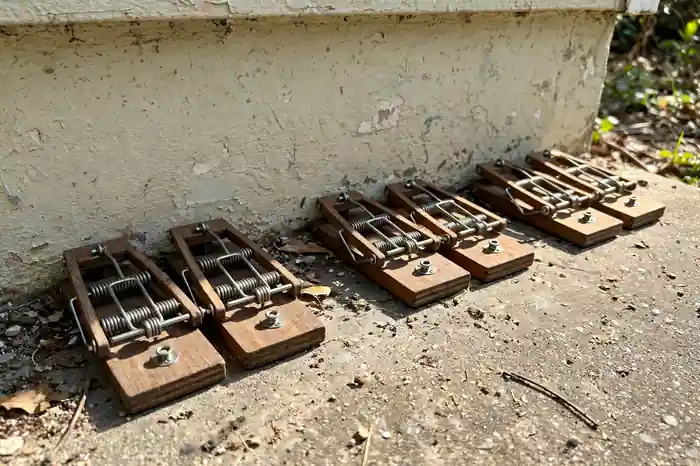
- Check behind the fridge, stove and dishwasher, under sinks and inside cabinets.
- Look in garages, basements, attics and along stored boxes.
- Place traps within a few feet of fresh droppings.
- Guidance on spacing varies, but many sources say no more than about 10 feet apart along active walls.
- A heavy or older infestation can need many traps.
How many mouse traps do you need?
More than you think. A single trap rarely solves it, because mice travel along several routes and learn to avoid one trap. Start with several across an active area, and add more where you keep finding droppings. One park-service guide suggests as many as ten in a small room for older or heavier infestations. Check them all every day.
How long should you keep trapping mice?
Until nothing is caught and you see no fresh signs for about a week. People talk about a "five day rule", which is an informal guide, not an official standard. Most advice is to continue for roughly five to seven days with no catches and no new droppings, urine or gnawing, and to keep a few traps out a bit longer for shy or young mice. Check traps at least every 24 hours.
Trapping alone does not stop new mice from coming in. Seal gaps larger than about 1/4 inch, store food in hard containers and fix leaks. For sealing materials and rat-sized holes, see the rat guide.
Are live, humane and bucket traps worth it?
They can be, but they take more work. A live trap holds the mouse unharmed, so you must check it often. Some sellers advise checking at least twice a day. Public health guidance leans against live traps because frightened mice can urinate and spread germs.
- Release is a problem. Advice on release distance varies, with some suggesting about two miles from home. Many mice released far from their home territory do not survive, and releasing animals may be regulated where you live.
- Bucket traps are hit or miss. Wary mice often avoid them, the parts can jam, and a water-filled bucket drowns the mouse, which is a welfare concern.
- The most humane approach is prevention. Seal entry points, store food and clean up crumbs, so fewer mice get in.
- If you want a quick kill, a well-made snap or electronic trap is faster than glue, drowning or exposure.
Why are glue traps the worst choice?
They catch fewer mice and cause suffering. Mice that touch the glue can struggle for hours or days, and many mice learn to avoid or tear through the board. Glue boards also trap pets, birds and other animals that wander onto them. Some places restrict or ban them.
If you find a mouse stuck on a glue board, do not leave it. Call a vet, a wildlife rehabilitator or local animal control for guidance on the quickest, least painful option. Switch to snap or electronic traps afterward.
How do you stay safe handling traps and dead mice?
Use gloves, and treat droppings and carcasses as a germ risk. Mice can carry hantavirus and other germs.
- Wear gloves, and wash your hands afterward.
- Do not sweep or vacuum dry droppings. Wet them with a disinfectant, wait a few minutes and wipe them up.
- Bag the mouse and the paper towels, and put them in the trash.
- Keep traps away from children and pets, and store unused traps out of reach.
The rat guide has step-by-step cleanup instructions.
When should you call a pro?
Call if you see mice in several rooms, hear them in the walls, or keep catching them after two weeks. A pro can find the entry points and set traps where you cannot reach, and can tell whether you have mice, rats or both.
Quick answers to common questions
What is the best mouse trap?
An enclosed snap trap is the best all-round choice. Electronic traps are the best reusable option, and glue boards are the worst.
What is the best bait for a mouse trap?
A pea-sized dab of peanut butter. Hazelnut spread, bacon bits and nesting material also work.
Where is the best place to put a mouse trap?
Along walls, across the runway, in pairs, with the trigger toward the wall.
Are glue traps a good idea?
No. They catch fewer mice, cause long suffering and can trap pets.
How long should you keep trapping mice?
Until you have gone about a week with no catches and no fresh signs, and then seal the gaps they used.
Keep reading: how to get rid of rats, how to get rid of ants and more pest control guides.
So, what is the best mouse trap for your home?
The best mouse trap is the one you can set safely, place along walls and use in numbers. For most homes, that means enclosed snap traps baited with peanut butter, or electronic traps if you want a cleaner option. Keep trapping until the signs stop, and seal the gaps so the best mouse trap does not have to work again.