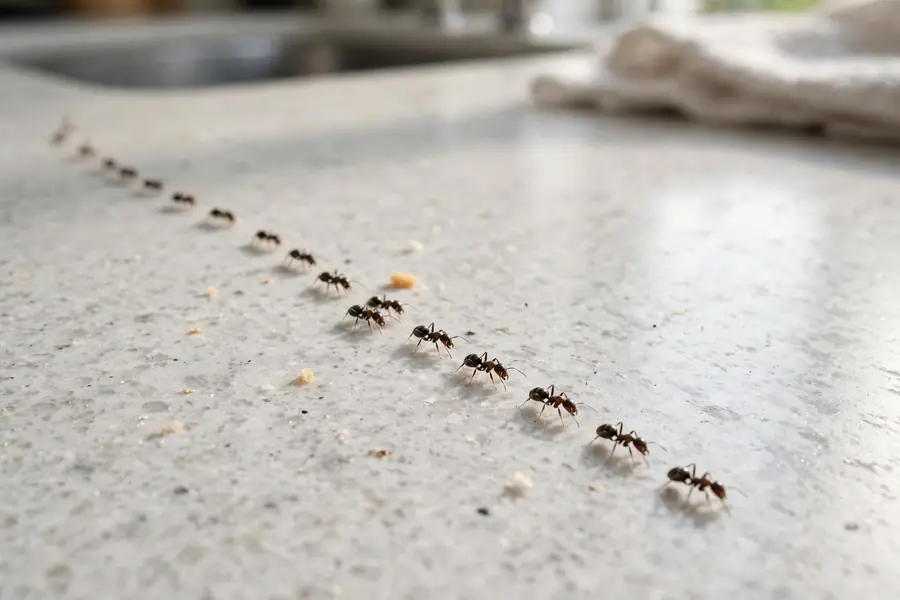
Use bait, not spray. Ants you see are a small part of the colony, and the queen and the young stay in the nest. Bait works because workers carry the slow poison home and feed it to everyone there. Set bait next to the trail, leave the extra ants alone for several days, wipe away what draws them, and seal the cracks they came through.
Ant control at a glance
| Question | Short answer |
|---|---|
| Best method indoors | Bait stations or gel bait beside the trail |
| Should you spray the ants you see? | No. It leaves the nest alive and can split some colonies |
| How long does bait take? | Several days to a week to see a drop, sometimes weeks |
| Is a surge of ants after baiting bad? | No. It usually means the bait is working |
| Fastest safe cleanup | Wipe trails with soapy water, then bait |
| Can you get rid of them overnight? | You can start tonight. Finishing takes days or weeks |
| Which ants need a pro? | Carpenter ants, and any ants inside walls or outlets |
| Typical pro visit | About $150 to $300, more for carpenter ants |
How to get rid of ants in the house, step by step
Find the trail, bait it, clean around it, and then close the entry points. This order matters. Kill the nest first, and the cracks and crumbs stop mattering. Seal and clean first, and the ants that are already inside keep foraging anyway.
- Watch the trail. Follow the line of ants to see where they enter and where they feed. Do not spray them.
- Remove other food. Put sugar, pet food, fruit and crumbs away. Ants take the easiest food, so leave the bait as the best option.
- Set bait beside the trail. Put it in the path or within a few inches, not on top of the line. Use a sweet bait first, and try a grease or protein bait if they ignore it.
- Leave the ants alone. Do not step on them or wipe them while they feed.
- Wipe the rest of the trail. Clean the areas away from the bait with soapy water or a vinegar and water mix. This removes the scent path that guides new ants.
- Refill the bait. Check it every day for the first week and keep it stocked.
- Seal the gaps. Once ant activity drops, caulk the cracks you found and fix any leaks.
What kind of ants do you have?
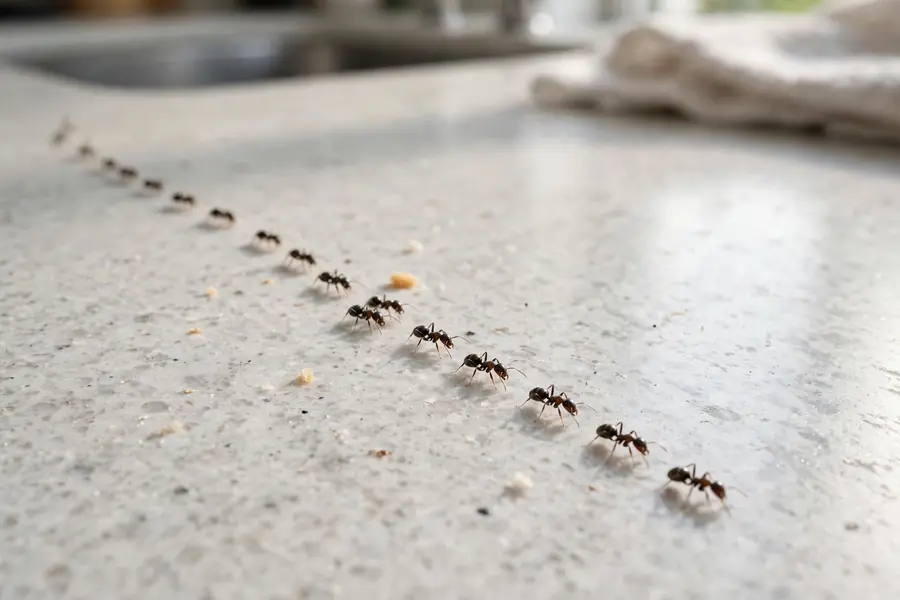
Check the size, color and nest site before you choose a product, because the best bait depends on the species. Most house-invading ants in the US fall into a few groups. If you cannot tell, trap one on a piece of tape and compare it with a photo from your county extension office or a pest company.
| Ant | Looks like | Where you see it | What works |
|---|---|---|---|
| Odorous house ant | Tiny, dark brown, smells like rotten coconut when crushed | Trails to sweets in kitchens | Sweet bait, never spray |
| Pavement ant | Small, brown to black | Near cracks in concrete, patios, slabs | Sweet or grease bait |
| Carpenter ant | Large, black or reddish | Near damp wood, with fine sawdust piles | Find the nest, call a pro |
| Tiny grease ants | Very small, yellowish to brown | Kitchens with greasy residue | Grease bait, not sweet |
| Fire ants | Reddish brown, painful sting | Outdoor mounds | Bait the mound, then drench |
A crushed odorous house ant smells a bit like rotten coconut, which is a handy test. Because the best product changes by species, a quick ID saves weeks.
How does ant bait work?
Bait mixes a food ants like with a slow-acting poison. Foraging workers eat it, carry it back in their bodies, and share it with the nest through feeding. The poison has to act slowly, or the workers die at the bait and the colony never gets a dose. That is why you want ants to feed freely, and why a quick-kill spray beats the purpose.
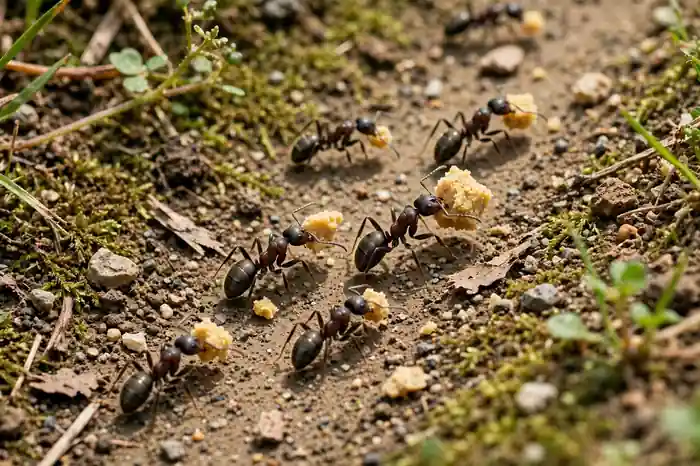
Spraying has two problems. It kills only the ants it touches, so the nest keeps producing more. With some species, such as odorous house ants, sprays can also stress the colony until it splits into several smaller colonies, which makes the problem larger.
Which ant bait should you use, sweet or grease?
Test which food the ants want, then match the bait. Many ant colonies shift between sweet food and protein or fat during the year, depending on whether they are raising young. A bait they ignore is not a dud. It may just be the wrong food right now.
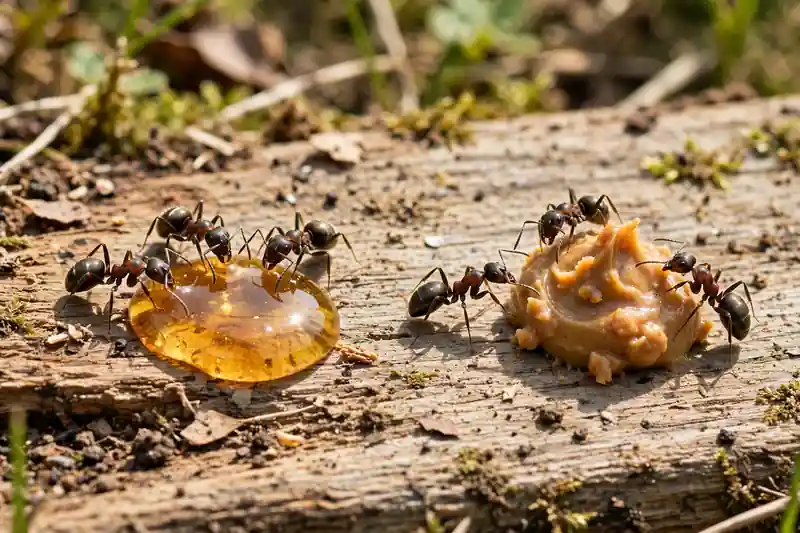
Sweet baits suit the most common house ants, including odorous house ants and pavement ants. They are often not attractive to carpenter ants or tiny grease ants, which need a different approach.
Is a homemade borax or boric acid bait worth making?
It can work, but strength is where homemade baits fail. A bait that is too strong kills ants at the dish before they can carry it home. University pest guidance for homemade boric acid bait is roughly 0.5 to 1 percent boric acid mixed into a sugar solution of about 10 to 25 percent sugar, and mixes above 1 percent can repel ants. Borax and boric acid are different chemicals, and many recipes online run far stronger than that.
If you make your own, a rough kitchen mix is 1 teaspoon of boric acid and 3 tablespoons of sugar, topped up with warm water to about 1¾ cups. That is close to 1 percent, but kitchen measuring is not exact. Put a small amount on a bottle cap or cardboard, away from children and pets. If you are unsure, a store-bought enclosed bait station is the safer choice, because the dose is tested and the poison stays in the station.
How long does it take to get rid of ants?
Expect a drop in ants after several days to about a week, and a nearly clear house in a few weeks. Big or hidden colonies take longer, and heavy infestations can take much more time. The first few days often look worse, not better.
Why are there more ants after I put out bait?
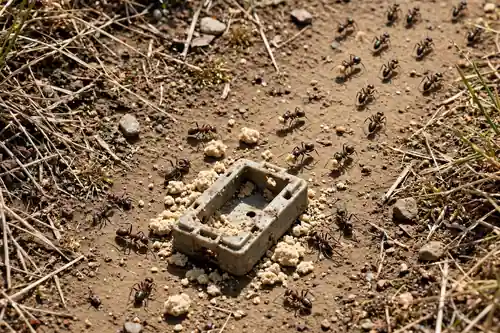
Because more foragers are finding the food. A line of ants at the bait means they are feeding and carrying the poison home. Keep the bait stocked, do not wipe up the ants, and give it time. If the numbers are still climbing after about a week and a half, change the bait type.
How do you get rid of ants overnight?
You cannot finish the job in one night, but you can set it up tonight and see the first signs by morning. A flashlight check after dark is the quickest way to find the trail. Ants are active at night, and walking into the kitchen with a light shows the exact path from the crack to the food.
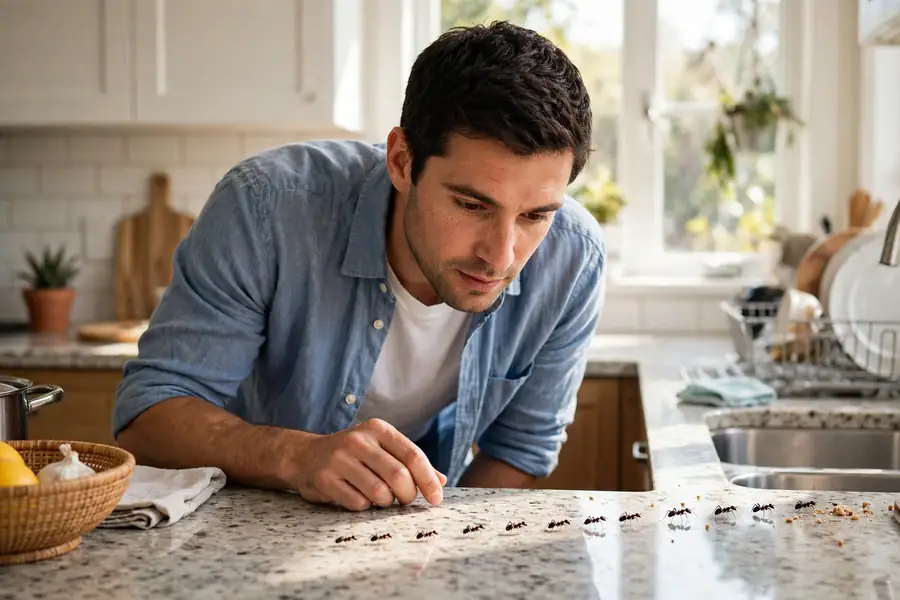
What you can do tonight:
- Find the trail with a flashlight and note where it enters.
- Put food away and wipe counters away from the trail.
- Set bait beside the trail, where ants already walk.
- Fix a dripping tap or wet sponge that gives ants water.
For a quick visual cleanup, wipe visible ants with a damp cloth and soapy water. Do this only on ants away from the bait, so the foragers can keep carrying poison home.
How do you get rid of ants in the kitchen?
Remove the food and water they want, then bait the trail. Kitchens give ants sugar, grease and moisture in one room. The fix is a tight routine more than a product.
- Store sugar, honey, cereal and pet food in sealed hard containers. Ants can chew through bags and thin cardboard.
- Wipe spills, crumbs and sticky jar rims the same day.
- Rinse recycling and take out the trash before it overflows.
- Fix leaks and dry the sink area. Ants need water too.
- Put the bait where the trail crosses the counter or floor, away from food prep surfaces.
- Do not spray repellent or use strong cleaner right next to the bait. It can push ants away from the dose.
If the trail runs behind the cabinets or into the wall, the nest may be inside. That is a job for a pro.
Does ant spray work?
Not for ending an infestation. A grocery-store spray kills the ants it touches and leaves the nest. A residual spray can also stop foraging ants from reaching your bait, or kill them before they carry it home. Some species, such as odorous house ants, may split into more colonies after repeated spraying.
Spray has a place when used the right way:
- Outdoors around the foundation. A non-repellent liquid is a barrier that ants cross without noticing. They track it back to the nest. These products work slowly and are often professional-grade.
- For a single wandering ant. A quick squirt of soapy water is fine.
- As a backup, not the main plan. Use it only after baits have failed.
Always follow the label, and keep sprays off food surfaces and away from pets and children.
What is the best ant killer?
The best ant killer is a bait that suits the ant, placed in the right spot. Products come in a few forms, and the right one depends on where the ants are and what they eat.
| Situation | Best choice | Notes |
|---|---|---|
| Sweet-loving ants in the kitchen | Liquid bait station with borax or a similar slow poison | Most common choice for odorous house and pavement ants |
| Ants ignore sweet bait | Grease or protein gel bait, or a different active ingredient | Test with honey and peanut butter first |
| Ants coming in from outside | Granular bait around the foundation, plus bait stations | Place near trails and nests, out of rain |
| Fire ant mound | Bait first, then a drench if the mound persists 7 to 10 days later | Water the drench in as the label says |
| Large black carpenter ants | Professional treatment | Sweet baits often do not attract them |
| Tiny grease ants | Grease bait or a pro | Sugary baits are rarely effective |
Many ready-made baits use borax at about 5 percent, or very small amounts of fast-breaking active ingredients such as indoxacarb, thiamethoxam or fipronil. These levels are set to be slow enough for ants to carry home. Do not boost the strength with extra poison.
How do you get rid of ants without chemicals?
You can use traps and barriers, but know what each one does. Most non-chemical tricks remove trails or block a path. Few of them kill a colony. If the nest is inside or nearby, they only buy time.
| Remedy | What it does | Honest verdict |
|---|---|---|
| Soap and water | Kills ants it touches, wipes the scent trail | Useful cleanup, not a cure |
| White vinegar and water | Erases scent trails for a day or two | Short-term |
| Food-grade diatomaceous earth | Dries out ants that cross it, only when dry | Slow, messy, keep the dust out of lungs and eyes |
| Cinnamon or peppermint oil | May deter ants from a spot | Temporary at best. Peppermint oil can harm pets, especially cats |
| Petroleum jelly ring | Blocks ants from climbing a bowl or bin | Works as a barrier |
| Boiling water on an outdoor mound | Kills ants it reaches | May miss the queen deeper down and can kill plants |
| Club soda down a nest | No reliable evidence | Skip it |
For pet bowls, set the bowl in a shallow dish of soapy water, or use a ring of petroleum jelly under the rim. That keeps ants off the food without poison.
Are ant baits safe around pets and kids?
Enclosed bait stations are the safer choice, and open bait should stay out of reach. Borates have low toxicity at the levels in commercial baits, but a small pet or toddler can still get sick from a large amount. Signs of borate poisoning in pets include drooling, vomiting, loss of appetite, diarrhea, lethargy and tremors in serious cases.
- Use enclosed stations, and place them behind appliances or under furniture where pets cannot reach.
- Keep homemade bait in a station or a taped cardboard box with small holes.
- Do not leave open bait on a floor with a dog, cat or crawling baby.
- Store the product in its original container and follow the label.
- If a pet eats bait, call your vet or a poison hotline right away.
How do you get rid of ants outside?
Treat the nest or the paths with bait outdoors, and add a barrier at the foundation if ants keep coming. Many house ants nest in soil, under patios and in mulch, and then run trails up the wall. Baits placed beside outdoor trails and near the foundation reach the colony without bringing more ants inside.
- Find the mounds and trails. Look along the foundation, patio edges, sidewalk cracks and under pots.
- Bait near the trail. Use outdoor bait stations or a granular bait, shaded from sun and rain.
- Treat fire ant mounds in two steps. Bait the mound, then drench persistent mounds about 7 to 10 days later, watering the product in as the label says.
- Add a perimeter barrier if needed. A non-repellent liquid or granule around the base of the house can stop ants that keep returning. Follow the label.
- Cut the bridges. Trim branches that touch the roof, pull mulch back from the foundation, and move firewood off the wall.
Boiling water poured on a mound kills the ants it touches. It can miss a deep nest, and it kills grass and plants nearby, so treat it as a one-off for a patch of pavement, not a colony cure.
How do you stop ants from coming back inside?
Cut off food, water and entry points. Once the colony is gone, new scouts can still find your house, so a tight home keeps them from settling in. Walk the outside and inside with a flashlight and look for small gaps.
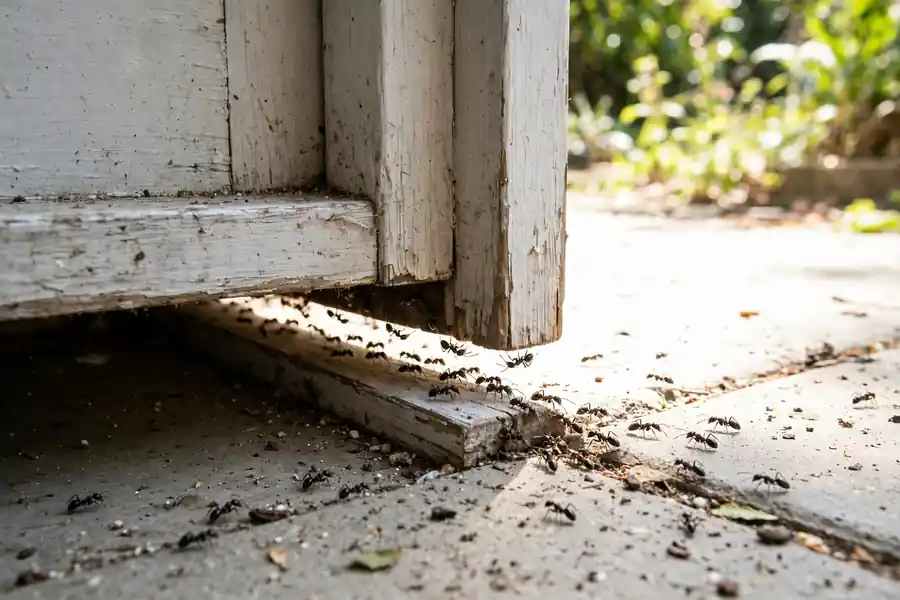
- Caulk cracks around windows, doors and where pipes enter the wall.
- Add a door sweep, and replace worn weather stripping.
- Repair torn screens and fill foundation cracks.
- Keep mulch a few inches below siding.
- Fix leaks and keep sinks dry.
- Keep food in sealed containers, and wash pet bowls daily.
Why are ants ignoring my bait, or coming back?
Ants ignore bait when it is the wrong food, in the wrong place, or competing with easier food. They also skip it when something repels them. Check these, in order:
- Wrong food. Switch from sweet to grease or protein, or the other way round.
- Competing food. Crumbs, pet food and spills beat your bait every time.
- Repellent residue. Spray, bleach or strong cleaner near the bait can keep ants away.
- Bad placement. Move the bait next to the trail and near water.
- Bait is stale or gone. Liquid bait dries out, so refill it.
- Strong homemade mix. Too much poison kills ants before they carry it home.
If the same spot fills with ants every year, there is usually a nest near that crack, or a seasonal food source. Bait early in the season and seal that entry.
How do you know the colony is gone?
You see no new trails for a couple of weeks, and ants stop taking the bait. There is no sure test. Keep a bait out for another week or two, then check again. If ants return in the same place, the colony is not finished.
What about ants in the bathroom, walls, outlets or plants?
Where the ants are tells you what they want. Bathrooms give them water, walls give them warmth and hidden nests, and plants give them sweet honeydew.
- Bathroom with no food. Look for leaks, damp wood or a wet floor. Ants come for water. A plumber may need to fix a hidden leak.
- Ants coming out of walls or outlets. The nest is likely inside the wall. Do not spray liquid into an outlet. Call a pest pro, or an electrician if the ants are in the wiring.
- Apartments and high-rises. Ants travel along pipes, wiring and shared walls. Tell the landlord, because a treatment that stays in your unit may not reach the nest.
- Dishwasher and washing machine. Moisture draws them. Check the hoses, the base seals and the drain for leaks, and run a hot wash.
- Potted plants. Ants often tend aphids for honeydew. Treat the aphids, and place bait near the pot, not in the soil.
Are they flying ants or termites?
Check the waist, the antennae and the wings. A flying ant has a pinched waist, elbowed antennae and front wings longer than the back pair. A termite has a straight, thick body, straight beaded antennae and wings of equal length. Termites damage the structure, so if you are unsure, catch one and have it identified. If it is a termite, see the termite treatment guide.
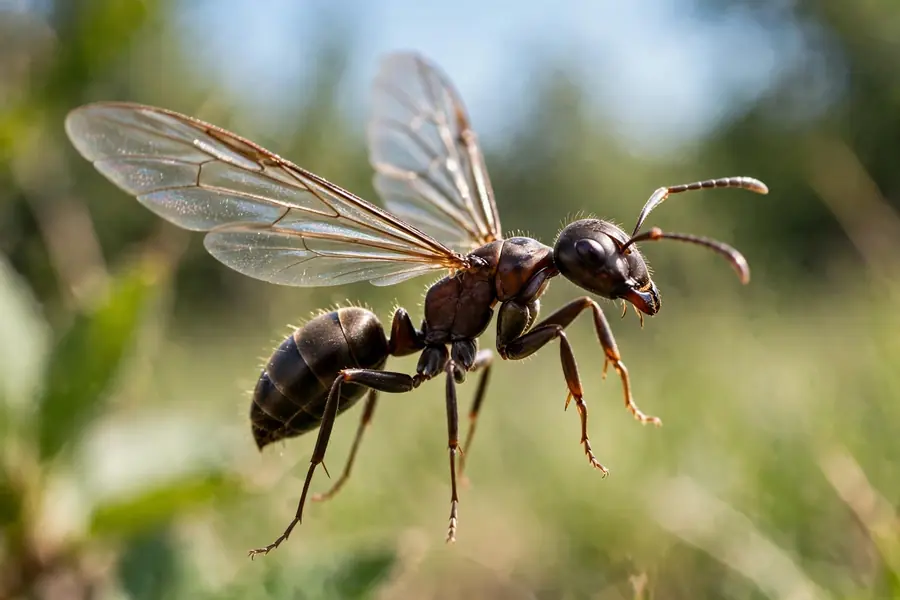
A swarm of winged insects indoors, or a pile of discarded wings by a window, is a reason to call a pest company soon. Carpenter ants leave smooth tunnels and small piles of sawdust-like debris. Termites leave mud and soil in their tunnels.
What does Reddit recommend for getting rid of ants?
Most threads agree on the same core plan: bait, patience, clean-up and sealing. That matches university pest advice. The advice drifts when people share one-off remedies or strong homemade mixes.
What forum advice gets right:
- Do not spray. Use bait and let the ants carry it home.
- Do not kill the ants at the bait.
- Wipe scent trails with soap or vinegar and keep food sealed.
- Caulk cracks and fix leaks.
Where to be careful:
- Recipes with a heavy dose of borax or boric acid. Too strong can kill ants at the dish.
- Cinnamon, peppermint and club soda as a cure. They may deter ants for a while, but they do not end a colony.
- Quick claims that the queen is dead. Watch the trails for a couple of weeks.
When should you call a pro, and what does it cost?
Call a pro for carpenter ants, ants in walls, or an infestation that survives two to three weeks of good baiting. A professional can find the nest, use baits and barriers not sold in stores, and check for moisture or wood damage. Prices vary by region and species, so treat the numbers below as rough 2026 estimates.
| Service | Rough cost | Notes |
|---|---|---|
| One-time visit for common house ants | About $150 to $300 | Some quotes start near $80 |
| Follow-up visit | About $40 to $70 | If the first treatment does not finish it |
| Carpenter ant treatment | About $250 to $1,000 or more | Wood repair is extra |
| Quarterly plan | About $500 to $1,200 a year | Covers other pests too |
Ask what product they will use, whether the treatment includes the exterior, and whether a follow-up visit is covered.
Quick answers to common questions
How do you get rid of ants permanently?
Kill the colony with bait, remove the food and water that drew them, and seal the entry points. No treatment is permanent on its own, so keep the house clean and sealed.
Can you get rid of ants overnight?
You can find the trail and set bait tonight, but ending a colony takes days to weeks. More ants at first is a good sign.
What is the best ant killer?
A slow-acting bait that matches the ant's food, placed next to the trail. Use sweet bait first, and switch to grease or protein if they ignore it.
Why are there more ants after I put out bait?
More foragers have found the food and are carrying it home. Do not wipe them away, and keep the bait stocked.
Do home remedies like vinegar and cinnamon work?
They erase trails or deter ants for a short time, but they rarely kill the nest. Use them as cleanup next to a bait, not as the cure.
Keep reading: how to get rid of fruit flies, how to get rid of gnats and more pest control guides.
Can you get rid of ants permanently?
Yes, for the colony you have now, and the way to keep them gone is a sealed, clean home. To get rid of ants permanently, bait the trail, give it a few weeks, then caulk the entry points and fix the moisture. If new ants show up in the same place, repeat the bait and check outside for a nearby nest. When you find ants in walls or sawdust piles, call a pro before the damage spreads.