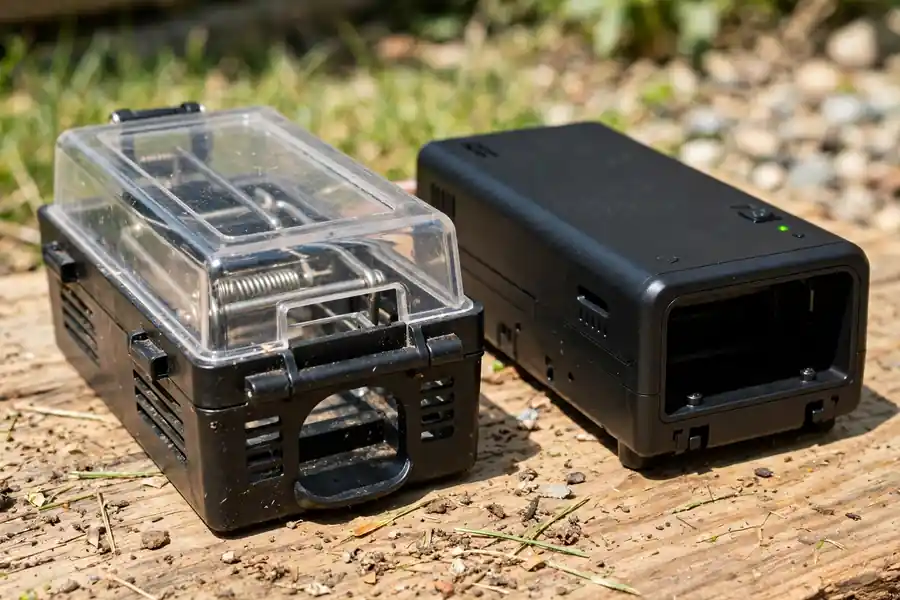
Seal the entry holes, set plenty of snap traps along their runways, and remove the food that drew them. Rats come back unless every gap is closed, and one trapped rat is rarely the only one. Traps handle the rats you have now, sealing keeps new ones out, and clean food storage removes the reason to come. Expect a few weeks, not one night.
Rat control at a glance
| Question | Short answer |
|---|---|
| Best long-term fix | Seal every gap, about 1/2 inch or larger |
| Best way to kill them | Snap traps, set along walls where droppings are |
| How many traps? | About three times what you think you need |
| Does poison work? | It can, but it risks pets and wildlife, and rats die in walls |
| Do repellents work? | Peppermint oil, mothballs and ultrasonic devices are unproven |
| How long does it take? | Several weeks, often with a few follow-up visits |
| When to seal holes | After you confirm nothing is still using them |
| When to call a pro | Rats in walls or attics, roof rats, or a repeat problem |
What kind of rat do you have?
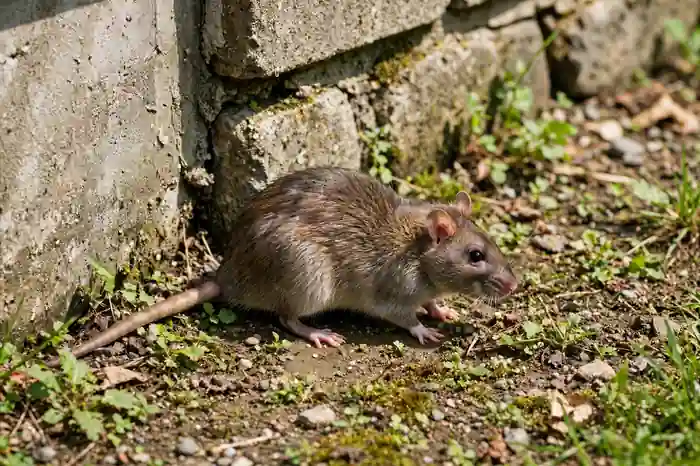
Check the nose, the tail and where the signs are. Norway rats are stocky with blunt noses and tails shorter than their bodies, and they burrow in the ground. Roof rats are slim with pointed noses and tails longer than their bodies, and they live up high, in attics and trees. Woodrats, also called pack rats, build stick nests and chew wiring. The species changes where you look first.
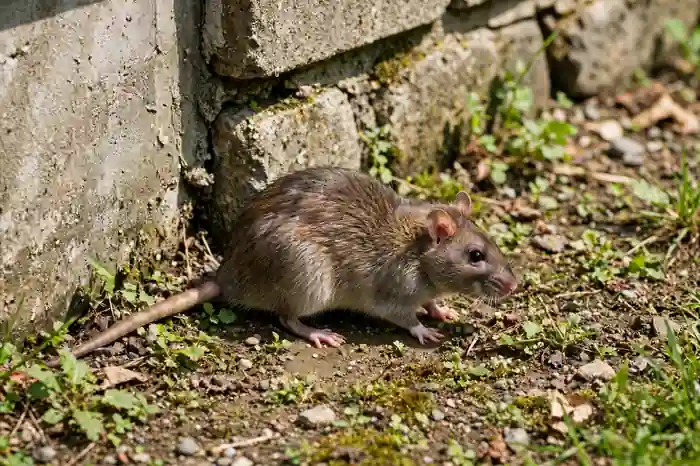
| Rat | Looks like | Droppings | Look first |
|---|---|---|---|
| Norway rat | Stocky, blunt nose, short tail | About 3/4 inch, blunt ends | Foundation, crawl space, basement, burrows |
| Roof rat | Slim, pointed nose, long tail | About 1/2 inch, pointed ends | Attic, rafters, rooflines, trees touching the house |
| Woodrat or pack rat | Large ears, furry tail | Smaller, scattered near nests | Sheds, garages, engine bays, outbuildings |
Are they rats or mice?
Size is the quick test. Rats are much larger, with thick bodies, and their droppings are bigger. A mouse can squeeze through a gap about 1/4 inch wide, while a rat needs about 1/2 inch, roughly the size of a quarter. If you have small droppings, tiny gnaw marks and small gaps, you may have mice, and the same sealing and trapping approach works with smaller traps and tighter mesh. If you have both, treat for the larger one and use mouse-sized traps too.
How do you know you have rats?
Look for droppings, gnaw marks, greasy smears and noise at night. Rats move along the same paths every night, so the signs line up along walls and edges. Because they stay hidden by day, you often find the signs before you see the animal.
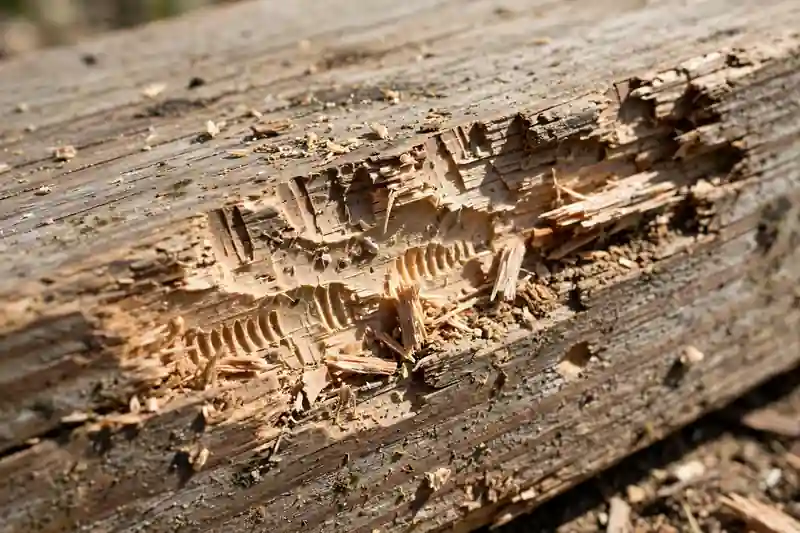
- Greasy rub marks appear low on walls along travel routes, often one to three inches above the floor for Norway rats.
- Fresh gnaw marks are rough and pale. Older ones are smooth and dark.
- Burrows show fresh, fan-shaped dirt at the entrance.
- Noises are loudest at night, in the attic, ceilings and walls.
Which rat control methods work?
Exclusion and snap traps do the work. Seal the holes so no new rats arrive, and trap the ones inside. The rest are backups or unreliable.
How to get rid of rats in the house, step by step
Find the entry points, trap first, seal second. Doing it in this order matters. If you seal every hole first, rats already inside can be trapped in the walls or pushed into another part of the house.
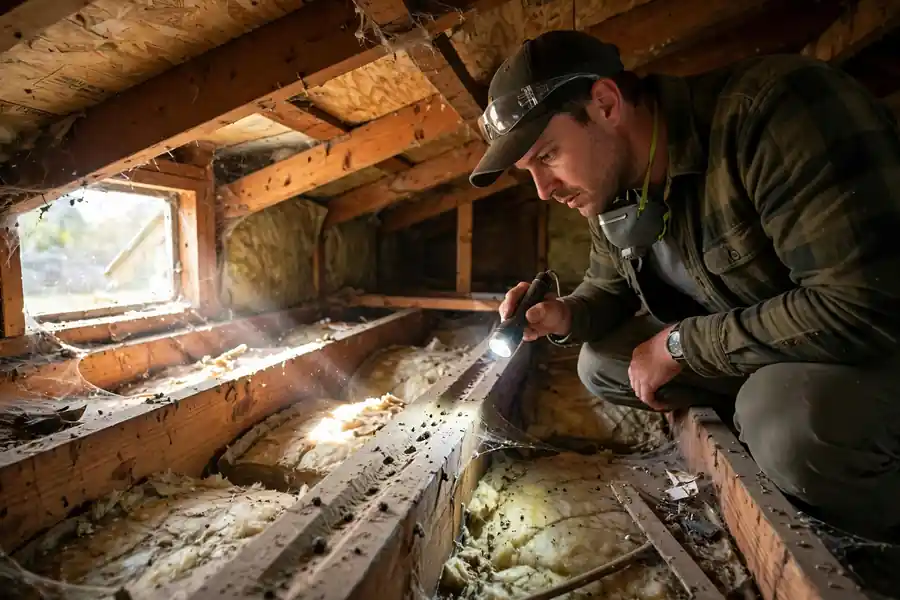
- Inspect. Use a flashlight in the attic, basement, crawl space and garage. Note droppings, grease marks and holes.
- Remove food. Store pet food, grain, birdseed and pantry items in metal or hard plastic containers.
- Bait and place traps. Put them along walls where droppings are, across the runway.
- Check daily. Reset traps and remove catches with gloves.
- Seal the entry points once catches stop and the holes are no longer in use.
- Clean and disinfect the areas where droppings or nests were.
- Keep monitoring for a month or more.
How do you set snap traps for rats?
Pre-bait, place them against the wall, use more than you think you need and check them every day. Rats are cautious around new objects, so a trap that suddenly appears often gets ignored.
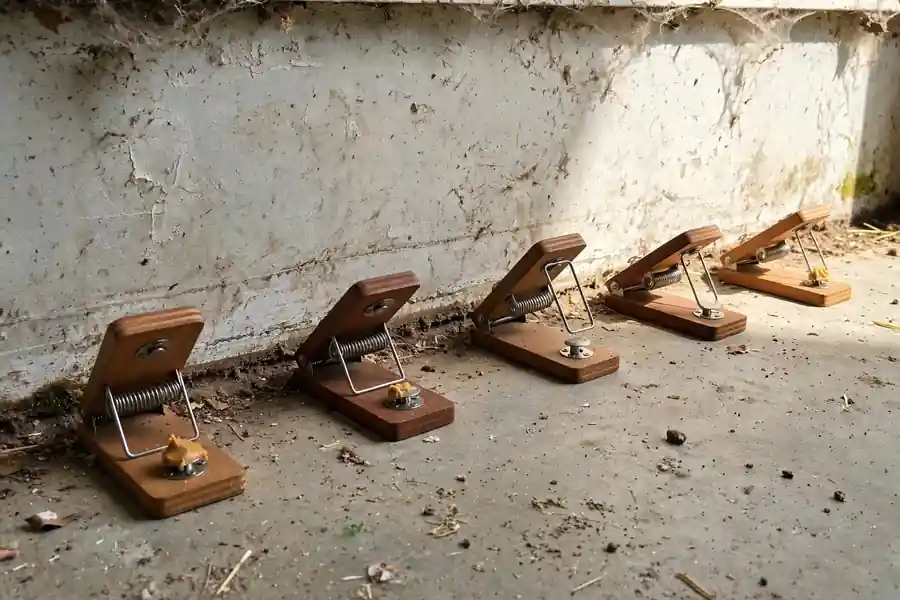
- Pre-bait first. Bait the traps but leave them unset for two to seven days, so the rats get used to them and take the bait.
- Use good bait. Chunky peanut butter works well. Nuts, dried fruit and dried meat are other options, and rotating lures helps.
- Place them right. Put traps against walls, across the runway, with the bait end toward the wall. Open floors catch little.
- Use many traps. The most common mistake is setting too few. If you think you have one rat, you may have several.
- Check daily. Dispose of catches with gloves, wash your hands, and re-bait.
How do you seal rat entry points?
Close every gap about 1/2 inch or larger with chew-proof material. Rats can enter through a hole the size of a quarter, so check the roofline, vents, utility lines, doors and foundation. A roof rat can come in through a gap under a door about 1/2 inch high.
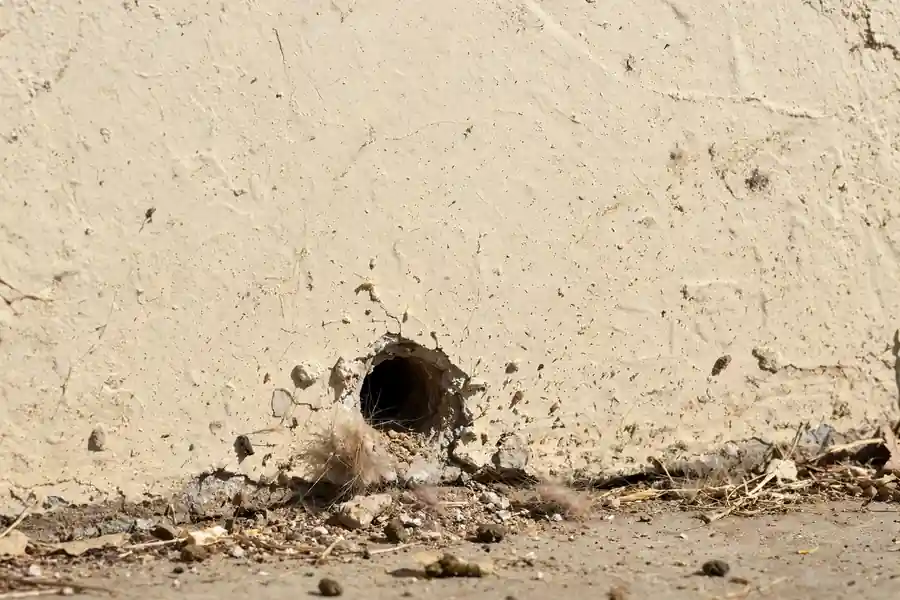
| Gap | Seal with |
|---|---|
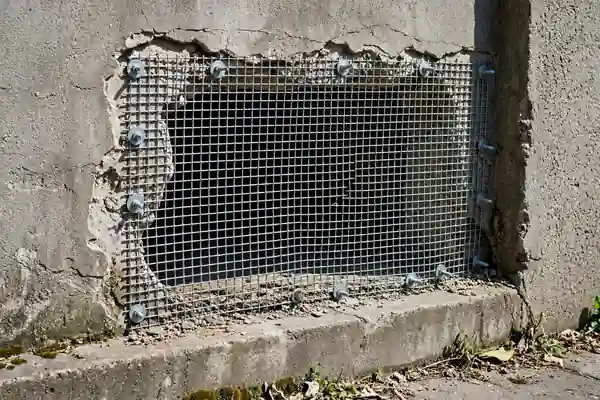
| Vents and large openings | Hardware cloth, 1/2 inch mesh, 19 gauge, screwed down. Finer mesh cuts airflow |
| Small holes around pipes and wires | Copper or stainless steel wool wedged in, plus caulk |
| Foundation cracks | Cement or patching compound |
| Under doors and garage doors | Door sweeps and metal flashing |
| Roofline, soffits and eaves | Metal flashing or mesh, fixed firmly |
Plain steel wool can rust and get chewed, so treat it as a temporary stopgap. Seal from the ground up, and before closing a hole, check that it is no longer in use so you do not trap rats inside.
How do you get rid of rats fast, or overnight?
You cannot clear them overnight, but you can start the right steps tonight. Set baited traps in the likely runways, put away all food, and find the entry holes. A fast first catch is possible, but one catch does not mean the problem is over. Plan for weeks of trapping and a proper seal.
- Put away pet food, bird seed and open snacks.
- Bait traps and place them along walls. Set them after pre-baiting if you can wait a couple of days.
- Listen at night to find where the noise is.
- Check the traps first thing in the morning.
Should you use rat poison?
Poison is a last resort. It risks pets, children and wildlife, and rats can die in the walls and cause a long-lasting smell. Poisoned rats can also be eaten by other animals, which spreads the poison up the food chain. In the US, consumer rodent baits have to be sold in tamper-resistant stations, and some of the most dangerous anticoagulants were removed from the consumer market. Rules and labels change, so check the current label and your state's rules.
- Use only enclosed bait stations, never loose bait.
- Keep stations where pets and children cannot reach them.
- Expect rats to die hidden, sometimes in walls.
- For any large infestation, a licensed professional is the safer route.
How do you get rid of rats in the attic?
Look for roof rats and seal the roofline. Roof rats climb, so they enter through gaps along the roof, soffits, vents and where tree branches touch the house. A single hole the size of a quarter is enough.
- Inspect the attic with a flashlight for droppings, gnaw marks and nests.
- Check the roofline, vents, chimney gaps and attic access from outside.
- Trim branches back from the roof, and cut wires and cables that make a bridge.
- Place snap traps near droppings, along rafters and beside stored boxes.
- Check traps daily, and set more than you think you need.
- Seal the entry points once catches stop.
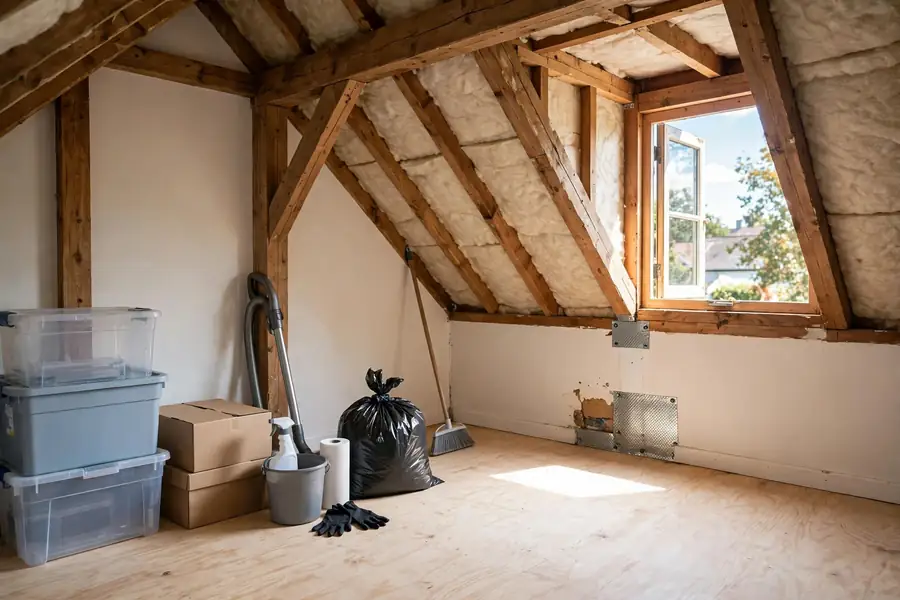
- Clean up droppings and replace soiled insulation if needed.
Attic jobs are the most expensive part of rat work, mainly because of clean-up and insulation. If you cannot reach the area safely, call a professional.
How do you get rid of rats in walls?
Trap at the access points and find where they enter. Rats in walls usually travel between the attic, the basement and the crawl space. Listen to learn the route, and place traps where they enter and leave the wall, such as the attic, a basement corner or behind an access panel.
If you hear rats in a ceiling and have no access, work from the places you can reach. Check the attic above, the room edges and the exterior, and call a pro if you cannot get to the space. Do not cut into walls on a guess.
What if a rat dies in the wall?
You will smell it, and the smell can last about one to three weeks. The only real fix is to find and remove the carcass. Check accessible spots first, such as the attic, crawl space, cabinets and around vents, and avoid opening walls based only on smell. Ventilate the area meanwhile. Once it is out, clean and disinfect the spot.
How do you get rid of rats in the basement, crawl space, garage or under the house?
These are the favorite areas for Norway rats. They burrow in soil next to foundations and use gaps at pipes, slabs and doors. The steps are the same as for the house, with a focus on the ground level.
| Place | What to check | What to do |
|---|---|---|
| Basement | Pipe entries, sill plates, floor drains | Seal gaps, store boxes off the floor |
| Crawl space | Vents, torn vapor barrier, burrows | Cover vents with 1/2 inch mesh, repair access doors |
| Garage | Door gaps, stored food, pet food, bird seed | Fit a door sweep, use sealed bins |
| Under the house | Burrows along the foundation | Fill and seal, then trap and remove cover |
How do you get rid of rats outside or in the yard?
Remove their food and shelter, then trap. Outdoor rats are drawn to anything edible and any place to hide. Without food, they leave or breed less.
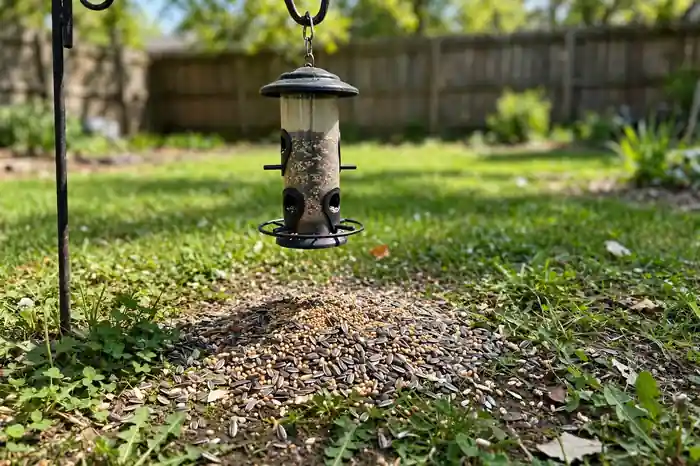
- Bring pet food in at night, and clean up spilled bird seed weekly. Keep seed in metal containers.
- Use closed trash cans and enclosed compost bins, and keep meat and large amounts of kitchen scraps out of compost.
- Pick up fallen fruit and harvest produce promptly.
- Stack firewood off the ground and away from the house.
- Trim shrubs, ivy and low branches, and clear clutter.
- Fix leaks and remove standing water.
- Fill burrows after they are clear, and trap with covered snap traps along fences and walls.
A neighbor's yard can feed rats too, so talk to neighbors if the problem keeps coming back.
How do you get rid of rats in a chicken coop?
Make the coop rat-proof, secure the feed and trap. Chicken keepers report that rats come for feed and eggs, and that they will chew wood and thin wire to get in.
- Use hardware cloth with small mesh, not chicken wire, and screw it down firmly. Some keepers report rats chewing thin 1/4 inch mesh and wooden wall sections, so protect the weak points too.
- Bury a wire apron about 12 to 18 inches wide around the base, or lay hardware cloth under the coop, so rats cannot tunnel in.
- Store feed in galvanized metal cans with tight lids.
- Take feeders in at night. Some keepers found that auto-closing feeders taught rats to feed earlier at dusk.
- Collect eggs daily, and clean up spilled feed.
- Set snap traps in covered boxes or tunnels where chickens cannot reach.
- Consider a concrete floor or footing if rats keep digging.
How do you get rid of pack rats or wood rats?
Exclude them, and check the rules before you trap. Woodrats, or pack rats, build large stick nests in sheds, attics and engine bays, and they chew wiring. Wildlife and extension sources agree that sealing them out is the most effective method.
- Seal gaps larger than 1/2 inch, and make sure the animal is not trapped inside.
- Wear gloves and a mask and wet down nests with disinfectant before you disturb them, because nests can carry hantavirus.
- Do not release live-trapped animals elsewhere. They often die, and relocating may be illegal.
- Some woodrat species are protected, so check with your state wildlife agency before trapping or removing a nest.
- Check parked vehicles and equipment for chewed wires.
How do you get rid of rats naturally?
Sanitation, sealing and traps are the natural methods that work. Home remedies mostly do not. Peppermint oil, vinegar, mothballs and ultrasonic devices are often suggested, but there is no solid evidence that any of them gets rid of rats.
| Remedy | Verdict |
|---|---|
| Sealing holes, removing food | Works. The base of all control |
| Snap traps | Works when set correctly |
| Peppermint oil | Unproven. May deter briefly, if at all |
| Vinegar | Unproven. Cleans surfaces, does not clear rats |
| Mothballs | Not effective for rats, and toxic to people and pets |
| Ultrasonic repellers | Unproven. Rats tend to get used to them |
| Cats and dogs | Not a reliable fix |
How do you get rid of rats without poison, or without killing them?
Seal the home, and use snap traps or live traps. Sealing is the most humane method, because it stops rats from entering without harming them. Live traps are a humane option, but they need checking at least twice a day, and relocating rats can be illegal and often leads to their death. Glue boards are cruel and banned or restricted in some places.
- Seal entry points first, once the holes are clear.
- Use snap traps for a quick kill, if you accept lethal control.
- Use live traps only if you can check them often, and know your local rules.
- Avoid glue boards entirely.
- If you want a non-lethal outcome, a wildlife control professional can help.
How do you get rid of rats permanently?
Keep every entry sealed, keep food locked up and keep checking. No treatment makes rats impossible to return. The permanent part is a home that offers no entry, no food and no shelter, so new rats move on.
- Re-inspect the roofline, vents and foundation every few months.
- Keep a few snap traps in the attic or garage as an early warning.
- Keep pet food, grain, bird seed and trash sealed.
- Trim branches and keep plants away from walls.
- Fix new cracks as soon as you see them.
How long does it take to get rid of rats?
Plan on several weeks. A small problem may clear in two to three weeks, while a larger or hidden one often needs two to four follow-up checks. Rats learn to avoid traps, so progress can stall until you change the bait, the placement or the number of traps. Keep trapping until nothing is caught for several days, and then seal.
Are rats dangerous, and how do you clean up droppings?
Rats can carry diseases, so clean up carefully. Hantavirus is rare, but people can breathe in dust from dried droppings or urine. Other illnesses such as leptospirosis and salmonella are linked to rodent waste.
- Air out the area and wear rubber gloves and a mask.
- Spray droppings and urine with a disinfectant or a bleach and water mix until they are wet.
- Let it soak for about five minutes.
- Wipe up with paper towels and put them in a sealed bag.
- Do not sweep or vacuum dry droppings, because that raises dust.
- Wash your hands well afterward.
See a doctor if you get a fever, aches or breathing problems in the weeks after exposure.
What does rat removal cost?
A professional rat job often costs several hundred to a few thousand dollars, and attic clean-up and insulation can add a lot. Cost guides vary widely, so treat these as rough ranges and get itemized quotes.
| Item | Rough cost |
|---|---|
| Inspection | About $80 to $300 |
| Trapping, removal and sealing | About $250 to $2,000 |
| Droppings and odor clean-up | About $150 to $1,000 |
| Insulation replacement | About $400 to $5,000 |
| Roof rat exclusion (whole house) | Often around $2,500, with a wide range |
Ask whether sealing, clean-up and follow-up visits are included in the quote.
When should you call a pro?
Call a pro if rats are in the walls or attic, if you have roof rats, or if traps do not work after a few weeks. A professional can find hidden entry points, handle high roof work and deal with clean-up. Ask for an inspection report, a written exclusion plan and what the warranty covers.
Quick answers to common questions
How do you get rid of rats permanently?
Seal every gap about 1/2 inch or larger, remove food and shelter, and keep monitoring with traps. Trapping alone does not stop new rats arriving.
How do you get rid of rats fast?
Put away food, set baited snap traps along their runways and find the entry holes. Expect weeks, not a night.
Does rat poison work?
It can kill rats, but it risks pets and wildlife and often leaves dead rats in walls. Use traps and sealing first.
Do peppermint oil and ultrasonic devices repel rats?
There is no solid evidence that they do. Sealing and trapping work better.
How long does it take to get rid of rats?
Often two to four weeks or more. Large or hidden infestations take longer.
Keep reading: the best mouse trap, how to get rid of ants, termite treatment and more pest control guides.
Is it hard to get rid of rats for good?
It takes patience, but it is possible. To get rid of rats for good, seal every gap, trap with plenty of well-placed snap traps, lock up food and clean the yard. If rats keep returning, look for a gap you missed or a neighbor's food source, and bring in a professional.