To get rid of chipmunks, take away what draws them, trap the ones already there, and then block the holes and gaps they use. Live traps baited with peanut butter or sunflower seeds work fast. Sealing with 1/4-inch hardware cloth is what keeps them from coming back. Scent sprays, mothballs and ammonia rarely do much, and poison is not a safe or approved choice.
Chipmunks are small and cute, which is why many people put off acting. The trouble starts when one digs under a porch step, eats a row of tulip bulbs or empties a bird feeder daily. This guide covers the yard, the garden, the foundation and the inside of the house.
How to get rid of chipmunks at a glance
| Problem | Best first move |
|---|---|
| Holes and digging in the yard | Cut food and cover, then trap and fill the holes |
| Bulbs and tomatoes eaten | Cover beds with 1/4-inch hardware cloth |
| Bird feeder raided | Switch feeders and clean up spilled seed |
| Burrow under a porch, deck or patio | Trap first, then screen the base with mesh |
| Chipmunk in the house or garage | Open an exit, trap if needed, then seal the entry |
| Noises in the walls or attic | Check for mice, squirrels or rats before you trap |
| Home remedies | Treat as a short delay at best |
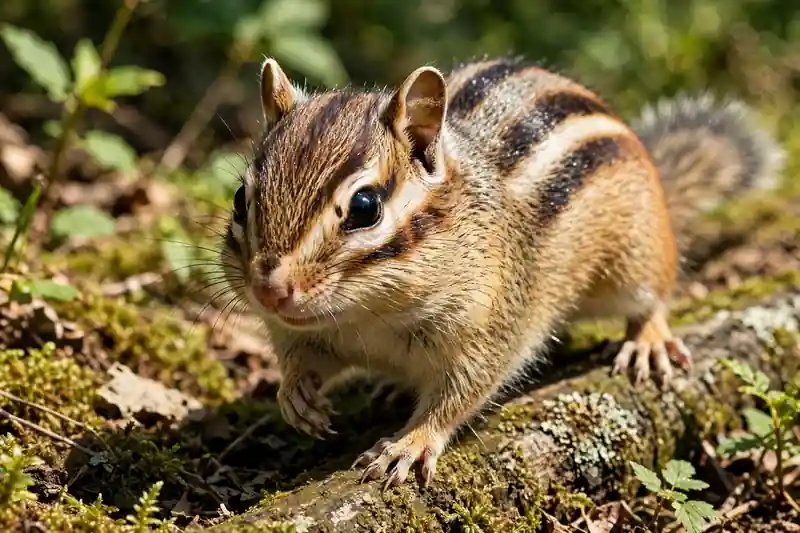
How do you know it is a chipmunk?
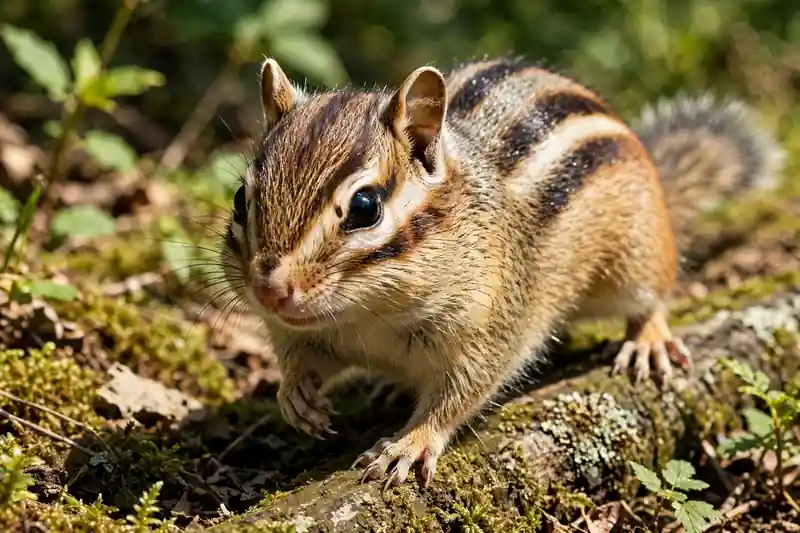
Look for a small striped animal with stripes that run onto its face, and a neat hole about 2 inches wide with little or no loose dirt around it. Chipmunks carry soil away in their cheeks, so the entrance often looks too clean for the size of the burrow. You often see them in the daytime, stuffing their cheeks with seed.
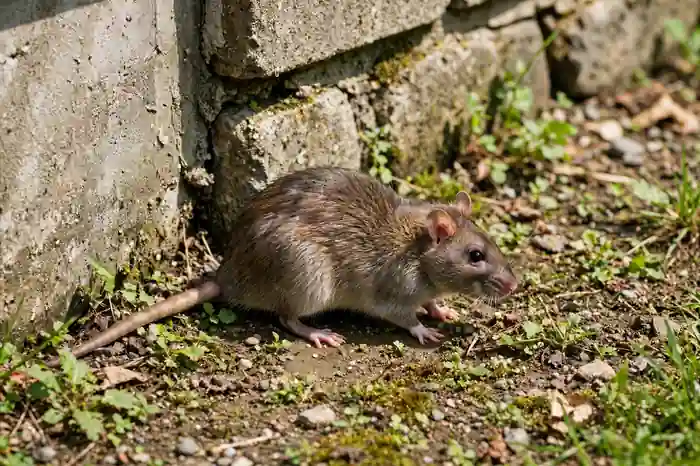
Other animals cause similar damage, and the fix differs. Ground squirrels are larger and leave a mound of dirt. Moles push up ridges and cones and eat grubs, not plants. Voles make runways in the grass. If you are not sure, watch the hole for a day or two, or read the rat guide and the mouse trap guide for signs of the night-time rodents.
Why are chipmunks in your yard?
Food and cover bring them in. Seed, nuts, fallen fruit, pet food and bird feeders are the main draws. Woodpiles, rock walls, brush, dense shrubs and the cracks around steps give them places to hide and dig.
Most damage is a nuisance, not a danger. They dig up bulbs and seedlings, nibble ripe tomatoes and strawberries, and can undermine a patio, a walkway or a foundation if a burrow runs long. Reports suggest tunnels of 10 to 30 feet, though that varies. They are not a large disease threat, but you should still not handle them bare-handed.
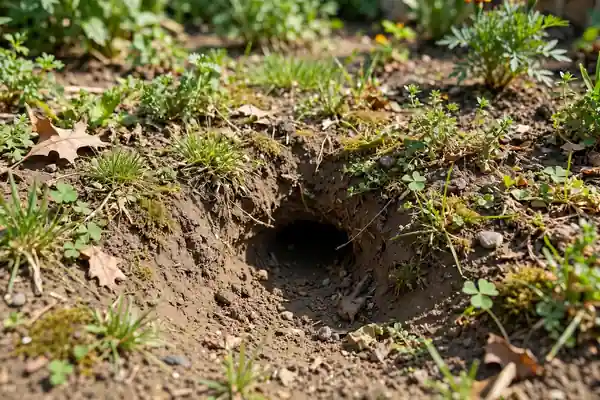
What is the fastest way to get rid of chipmunks?
Trap them in a live trap, then seal the openings. Place a small cage trap on the runway near the burrow, bait it with peanut butter or sunflower seeds, and check it daily. Once the traps stop catching, block the burrow and any gaps. Without sealing, new chipmunks move into the empty burrow.
Do it in this order:
- Remove food: store seed in metal bins, sweep up spilled seed, and bring pet food in at night.
- Clear cover: move woodpiles and brush away from the house, and trim shrubs near the foundation.
- Trap the chipmunks that are already there.
- Fill the holes and screen the vulnerable spots with 1/4-inch hardware cloth.
- Watch for fresh digging for a few weeks.
How do you get rid of chipmunks in your yard?
Make the yard less useful to them. Chipmunks stay where food and shelter are close together, so removing both does more than any spray.
- Bird feeders: fallen seed is the biggest draw. Use a tray or seed catcher, and sweep the ground often. A feeder pole with a baffle helps against squirrels, though chipmunks climb well, so cleanup matters most.
- Pet food and trash: feed pets inside or pick up the bowls, and keep lids tight.
- Cover: keep firewood off the ground and away from the house, and cut back brush and ground-level shrubs.
- Fallen fruit and nuts: pick them up promptly.
- Holes: once a burrow is empty, fill it with soil and tamp it down. Re-seed bare patches using the steps in the lawn reseeding guide.
If the yard has squirrels, ground squirrels or moles too, the same food and cover steps help, but their traps and burrows differ. Treat each animal on its own terms.
How do you keep chipmunks out of the garden?
Cover the things they eat. Chipmunks dig up bulbs, pull seedlings and bite into tomatoes, strawberries and melons. Fencing does little because they climb and squeeze through, so the best protection is mesh.
- Bulbs: plant them in a cage or lay 1/4-inch hardware cloth over the bed, then cover it with soil or mulch. Extension guidance says to run the cloth past the edge of the planting by about a foot.
- Seedlings and vegetables: use cloches, row covers or wire cages until the plants are established.
- Tomatoes and berries: pick fruit as soon as it is ripe, and do not leave fallen fruit.
- Containers and flower pots: put a ring of mesh on the soil surface, or move pots away from walls.
- Mulch: keep it thin near the house, since thick mulch makes a roof for burrows.
Some gardeners plant daffodils, alliums or other bulbs that squirrels and chipmunks tend to skip. That can help, but it is a tendency, not a guarantee.
Do home remedies get rid of chipmunks?
Mostly not. Extension sources are skeptical of scent repellents, and say they rarely give a long-term answer. A repellent may nudge a chipmunk to dig elsewhere for a few days, especially in a garden, but rain washes it off.
| Remedy | Verdict |
|---|---|
| Cayenne pepper or hot pepper spray | No strong proof. It can irritate eyes and skin, and washes away in rain |
| Peppermint oil and other plant oils | Weak, short-lived. Strong smell may bother pets |
| Vinegar, garlic | Little evidence. Fades quickly |
| Predator urine or commercial repellents | Mixed results. Needs reapplying after rain |
| Ammonia | Weak evidence. Harsh on plants and soil, and a hazard in closed spaces |
| Mothballs | Skip. Using them outdoors this way goes against the label, and they are toxic to pets and children |
| Ultrasonic devices | Inconsistent results. Not a reliable answer |
What smell drives chipmunks away? Strong scents such as hot pepper, peppermint and predator urine are the usual picks, but none holds up well. If you try one, treat it as a trial, rotate it, and put your real effort into trapping and sealing.
Is poison a good way to get rid of chipmunks?
No. Extension guidance says no toxic baits are registered for chipmunks, and poison puts pets, children, birds and other wildlife at risk. A poisoned chipmunk can also die in a wall or burrow, where the smell is hard to deal with.
You may see lists of foods that are toxic to chipmunks. Skip them. Feeding a wild animal something harmful is cruel, uncertain, and may break local law. Use traps and exclusion instead.
Does the bucket method for chipmunks work?
Sometimes, but it is not a good choice. A bucket trap uses a bucket with a ramp or a rolling bar, bait on top, and the chipmunk falls in. Advice on water depth varies from a few inches to much more, and a water-filled bucket drowns the animal, which is a welfare concern. Rules on killing wildlife vary by state.
A dry bucket can hold a chipmunk, but they climb and jump, and a smooth deep bucket is needed to keep one in. Most people do better with a small live cage trap, which holds the animal unharmed and costs little.
How do you trap a chipmunk?
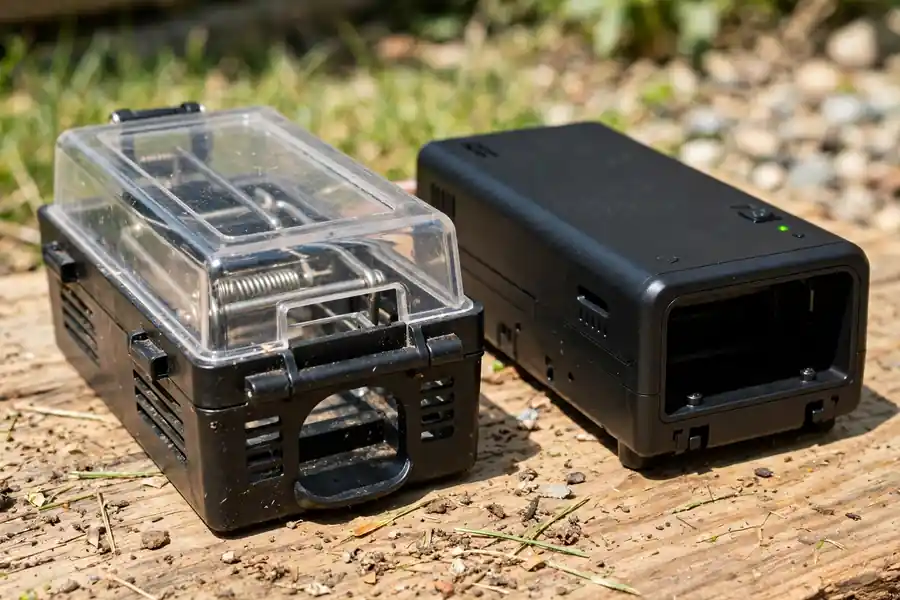
Use a small live cage trap sized for chipmunks, bait it with peanut butter, sunflower seeds or nutmeats, and set it on the runway near the burrow. Check the label for the trap size, since a rat trap can miss a chipmunk.
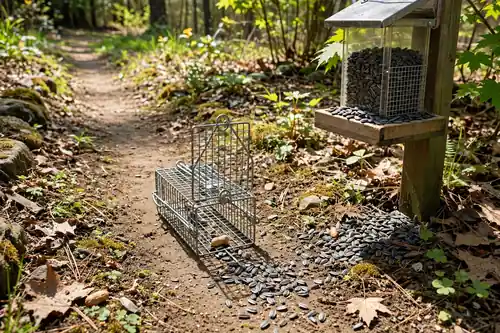
- Prebait. Wire the door open and put bait inside for two to three days, so the chipmunk gets used to it.
- Place it. Put the trap along the path to the burrow, or near the entrance, on level ground and out of direct sun.
- Set and cover. Set the trap and lay a cloth over it, which calms the animal and keeps off rain and sun.
- Check it daily. Do it at least once a day, and more in hot or cold weather. A trapped animal can suffer quickly.
- Handle with care. Wear thick gloves and keep your hands clear. Chipmunks bite.
Mothers with young may be in the burrow in spring and summer, since chipmunks often raise two litters a year. If you trap a nursing mother, her young may be left behind. Late summer through fall is a better time to trap if you can wait.
Can you get rid of chipmunks without killing them?
Yes. Use live traps and exclusion, and avoid snap traps, bucket traps with water, glue and poison. A cage trap caught and released properly, or better, exclusion that makes the animal leave on its own, are the humane routes.
To encourage a chipmunk to leave, remove its food, block the burrow after it has left, and screen the area. Before blocking, make sure it is not inside, and never seal a hole during spring and summer when young may be in the nest.
Where do you release a trapped chipmunk?
Advice varies, so check your state wildlife agency first. In many places it is illegal to move wildlife, or to release it on land that is not yours. Some extension sources suggest at least a mile away, while others suggest several miles, since chipmunks have a strong homing instinct. A released animal also often struggles to find food and shelter in an unfamiliar spot, and the area may already hold chipmunks.
Because of this, many wildlife professionals prefer to remove food, trap, and then seal the property so a replacement does not move in. If you cannot release legally, call a wildlife control company.
Are snap traps allowed?
Sometimes. Rules differ by state. Some places let a landowner take chipmunks that are damaging property, and others protect them or limit methods. A snap trap kills quickly when it works, but misfires can injure. Look up your state rules before using one.
How do you get rid of chipmunks under a porch, deck, patio or foundation?
Confirm that the burrow is active, trap the chipmunk, and then screen the base with hardware cloth. Chipmunks dig under steps, slabs and walkways because the soil is dry and the cover is good. A long burrow under a structure can loosen the soil that holds it up.
- Check if it is active. Loosely stuff a wad of paper or a little soil in the hole. If it is pushed out in a day or two, it is in use.
- Trap. Set a live trap at the entrance, using the steps above.
- Fill after the animal is gone. Fill the burrow only when you are sure it is empty. A trapped animal or a nest of young will die, and the smell can be strong.
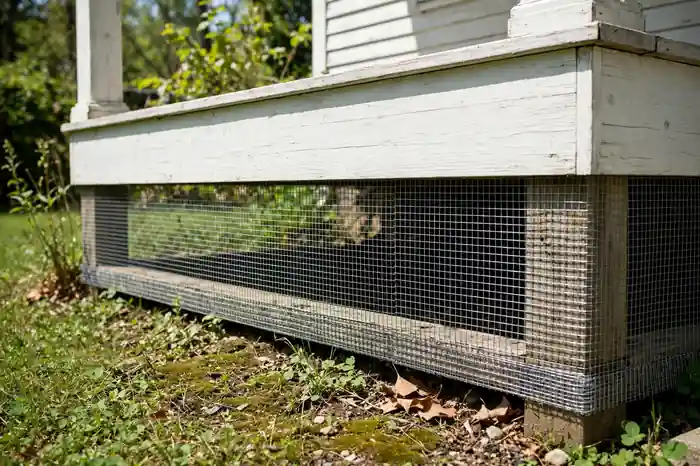
- Screen the base. Run 1/4-inch hardware cloth along the porch, deck or slab edge, bury it 6 to 12 inches, and bend the bottom a foot outward so a digger cannot go around.
- Seal edges. Fasten it tight to the structure, or set it into concrete. A small gap is an open door.
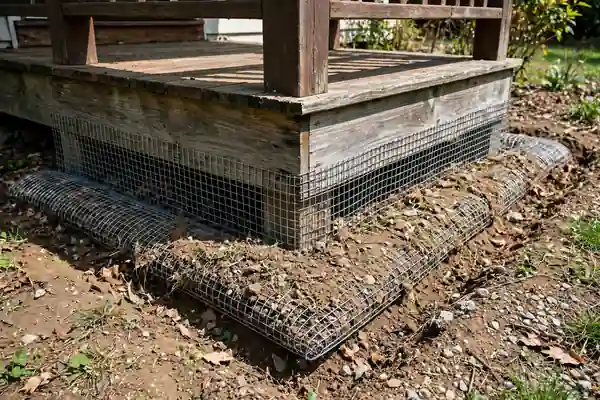
The same steps apply under a deck, a shed, a sidewalk, a patio, or along a foundation. If you see cracks in a slab, a settling step or a leaning wall, have a contractor or a structural pro check it. A chipmunk may be the cause or just a symptom.
How do you get rid of chipmunks in the house, garage, attic or walls?
Chipmunks rarely nest indoors, so first check what is making the noise. They are active by day, while mice, rats and flying squirrels are mostly active at night. A chipmunk that wandered into a garage or house is usually looking for food or a way out.
- A chipmunk loose in a room: open an outside door, close the doors to the rest of the house, and let it leave. If it will not, use a live trap baited with peanut butter near a wall.
- In the garage or basement: store seed, pet food and bird food in sealed metal or plastic bins, and move boxes off the floor.
- In walls or the attic: listen for daytime scratching, then look for the entrance. Trap or set a one-way door at the entry, and seal it after the animal is out. If noises are mostly at night, treat it as mice or rats.
- In a camper, shed or car: check the engine bay, wiring and air filter, and shake out any stored cushions. Rodents can chew wires, so inspect before you drive.
- In the crawl space: inspect with a flashlight, seal vents with 1/4-inch hardware cloth, and trap if signs of activity continue.
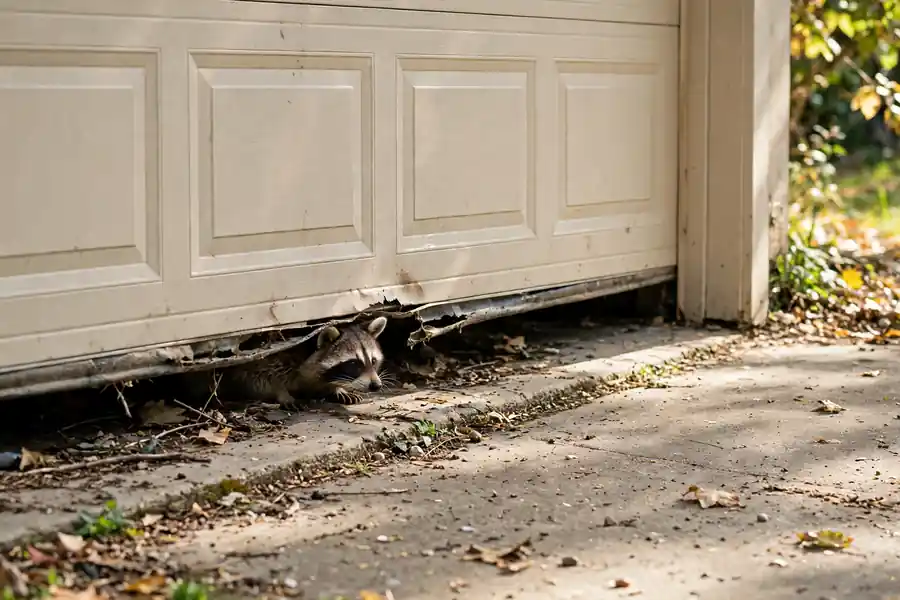
Seal gaps with 1/4-inch hardware cloth, steel wool backed by caulk, or metal flashing. Replace worn door sweeps and fix loose vent screens. Never block a hole while an animal could still be inside, and never seal one with a nest of young.
Can you get rid of chipmunks permanently?
Not forever, but you can make the problem rare. Chipmunks come back if food and cover remain, and neighbors' yards may hold more of them. The long-term fix is to keep food stored, cover cut back and the key spots screened.
Plan for a few weeks of watching. If new holes appear, trap again and find what is drawing them in. Fall is a good time to check and seal the house before they look for winter stores, since chipmunks sleep through much of winter and wake to eat what they have stashed.
What about chipmunks and squirrels, moles or voles together?
Treat the food and cover first, since that helps with all of them, then use the right trap for each.
| Animal | What to do |
|---|---|
| Chipmunks | Live trap, screen holes with mesh |
| Ground squirrels | Similar to chipmunks, but larger traps and more mesh depth. Check local rules |
| Tree squirrels | Seal attic and roof entries. Use feeder baffles |
| Moles | Control grubs and use trapping designed for tunnels |
| Voles | Cut grass short, clear mulch from stems, and use mesh guards on young trees |
| Rats and mice | Snap traps and sealing. See the rat guide |
How much does it cost to get rid of chipmunks?
DIY costs little: a small live trap, bait and a roll of 1/4-inch hardware cloth, often under $100 in total in 2026. Professional wildlife control can run from a couple of hundred dollars to several hundred, depending on how many visits and how much sealing is needed. Prices vary by region and the company, so treat these as rough estimates and ask for a written quote.
When should you call a pro?
Call if the burrow is under a foundation or slab, if you see cracks or settling, if chipmunks are in the walls or attic, or if you cannot legally trap or release them. A wildlife control company can inspect, trap within local rules and seal the entry points, and a structural pro can tell you if the ground has shifted.
Quick answers to common questions
What is the fastest way to get rid of chipmunks?
Set a baited live trap on the runway near the burrow, check it daily, then fill the hole and screen the area with 1/4-inch hardware cloth.
What smell do chipmunks hate most?
Hot pepper, peppermint and predator urine are the usual picks, but results are weak and wear off in rain. Trapping and sealing work better.
Does the bucket method work for chipmunks?
It can catch one, but a water bucket drowns the animal, and rules vary. A small live cage trap is a more reliable and humane choice.
How do you get rid of chipmunks without killing them?
Remove food and cover, use a live trap checked daily, and seal burrows and gaps once the animal is gone. Check local rules before releasing it.
How do you get rid of chipmunks under a porch or in the walls?
Trap first, then seal. Screen the porch base with buried hardware cloth, and for walls, trap or use a one-way door at the entry and close the gap after.
Keep reading: how to get rid of rats, the best mouse trap, how to reseed a lawn and more pest control guides.
Is getting rid of chipmunks worth the effort?
Usually yes if they are digging under a structure, raiding the garden or getting indoors. One or two chipmunks in a quiet corner may not be worth it. If you do decide to act, the best way to get rid of chipmunks is simple: cut off the food, trap what is there, and seal the spots they use so the problem does not return.