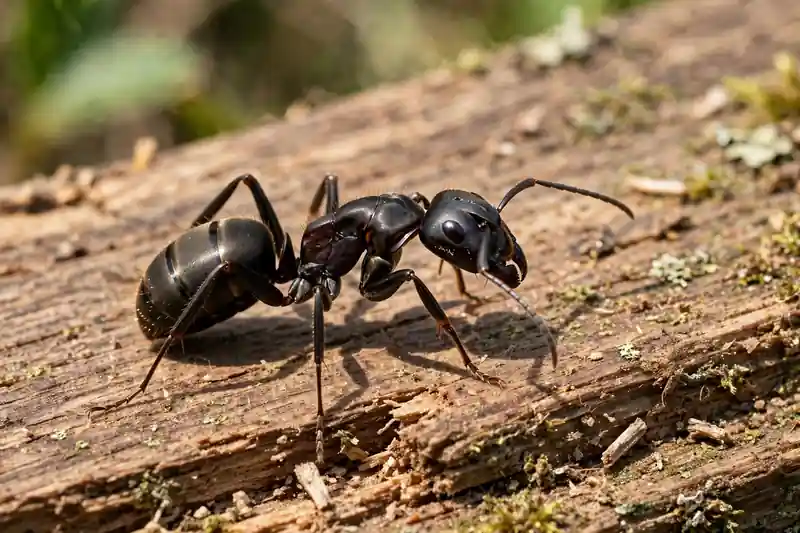
The right termite treatment depends on the termite. Subterranean termites live in the soil and are treated with a liquid barrier or bait stations. Drywood termites live inside the wood and are treated with tent fumigation or a spot treatment. A professional job usually costs about $1,200 to $4,000, and a whole-house tent can run higher. Identify the termite first, because the wrong treatment wastes money and leaves the colony alive.
Termite treatment at a glance
| Question | Short answer |
|---|---|
| Most common treatment | Liquid soil barrier or bait stations for subterranean termites |
| Whole-house drywood treatment | Tent fumigation |
| Tentless options | Spot treatment, foam, injection, heat, borate |
| Typical professional cost | About $1,200 to $4,000, up to $8,000 or more for large tenting jobs |
| How long a liquid barrier lasts | About 5 to 10 years, depending on the product and soil |
| Can you do it yourself? | Partly. Bait stations and borate on exposed wood, yes. A full soil barrier, rarely |
| Does orange oil work? | On small, shallow drywood patches only |
| Does home insurance pay for it? | Usually no. Termite damage is commonly excluded |
What are the main types of termite treatment?
There are eight common treatments, and each one fits a different situation. Soil barriers and bait stations handle termites that live in the ground. Fumigation, heat, foam and spot treatments handle termites that live in the wood. Borate and pre-construction treatments mostly prevent problems.
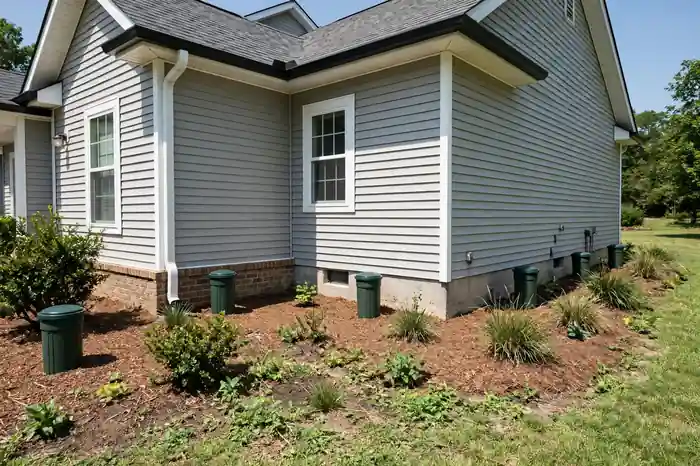
| Treatment | How it works | Best for |
|---|---|---|
| Liquid soil barrier | A termiticide is placed in the soil around and under the foundation | Subterranean termites, active or preventive |
| Bait stations | Stations in the soil hold slow poison that termites carry back to the colony | Subterranean termites, as a main or backup method |
| Wood borate | A borate product is sprayed or brushed on bare wood and soaks in | Preventing attacks on exposed framing |
| Spot, foam, injection | Product is delivered into the galleries or wall voids | Small, found drywood infestations |
| Tent fumigation | The home is tented and filled with gas | Widespread drywood termites |
| Heat | Hot air raises wood temperature high enough to kill | Drywood termites when you want no gas |
| Orange oil | An oil from orange peels is injected into galleries | Small, shallow drywood patches |
| Pre-construction | Soil or wood is treated while the home is built | New homes |
Which termite do you have?
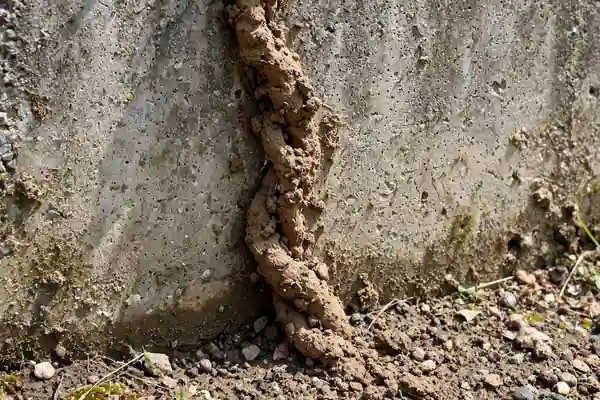
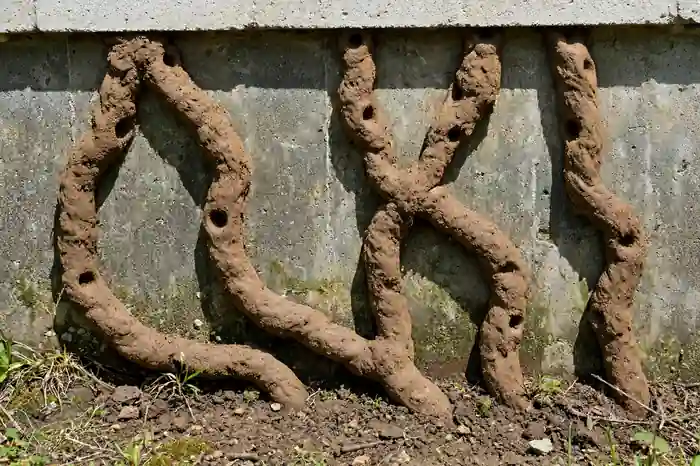
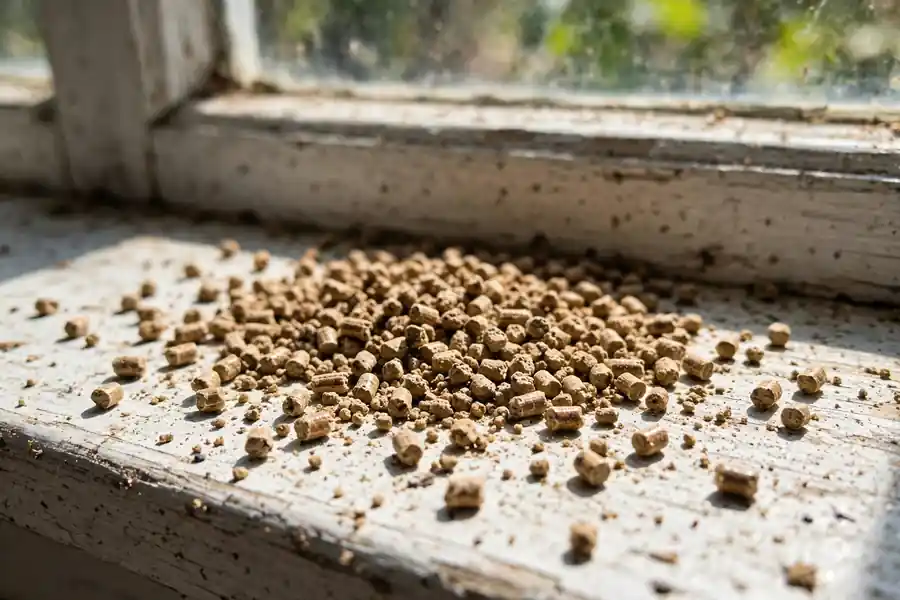
Look for mud tubes, pellets or swarms. Subterranean termites build mud tubes on the foundation. Drywood termites leave small, hard pellets, called frass, outside the wood. Formosan termites are an aggressive subterranean species found along the Gulf Coast and in Hawaii. They build mud "swarm castles" and swarm at night in late spring.
| Termite | Telltale signs | Where it lives | Usual treatment |
|---|---|---|---|
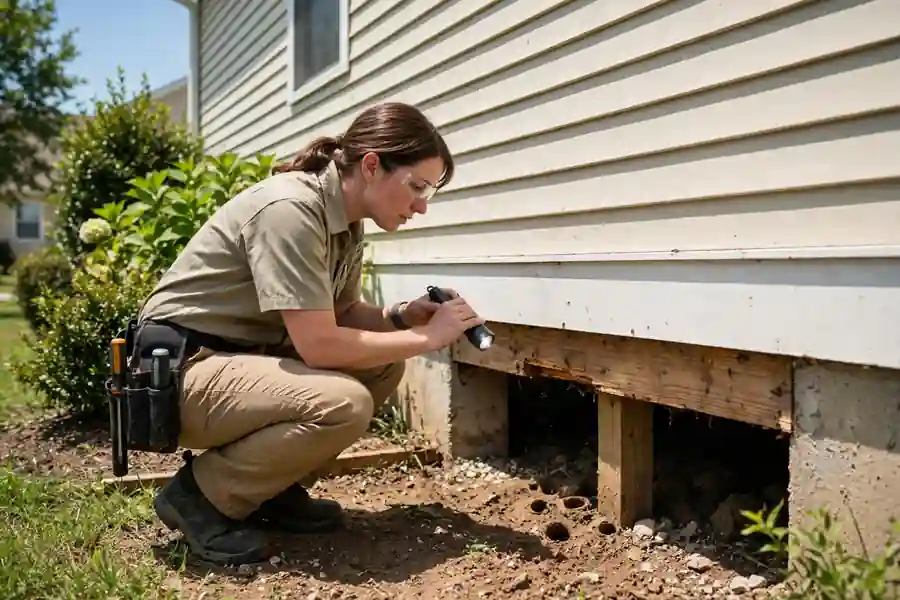
| Subterranean | Mud tubes, hollow-sounding wood, shed wings near windows | In the soil, entering through cracks and contact points | Liquid barrier, bait, or both |
| Drywood | Small hard pellets with six concave sides, tiny kick-out holes | Inside dry wood, including furniture | Tent fumigation, spot treatment, heat |
| Formosan | Mud swarm castles, night swarms near lights, fast damage | Large soil colonies, sometimes inside wall voids | Soil treatment plus bait, with a professional |
If you cannot tell, ask a licensed inspector or send a specimen to your county extension office. Most inspections are inexpensive, and some companies include them with a quote.
What should you do if you see termite swarmers?
Call a pest professional and do not spray. Swarmers are the winged adults that leave a mature colony, and seeing them indoors usually means a colony is close. Vacuum them up, save a few for identification and book an inspection. The how to get rid of termites guide has the full swarmer checklist and how to tell them from flying ants.
How does subterranean termite treatment work?
A liquid termiticide goes into the soil around the foundation to form a barrier, and bait stations go in the ground to take out the colony. This is called soil treatment, ground treatment, yard treatment or perimeter treatment. A pro digs a trench along the foundation, pours in the product, and drills holes through slabs or patios to reach soil beneath.
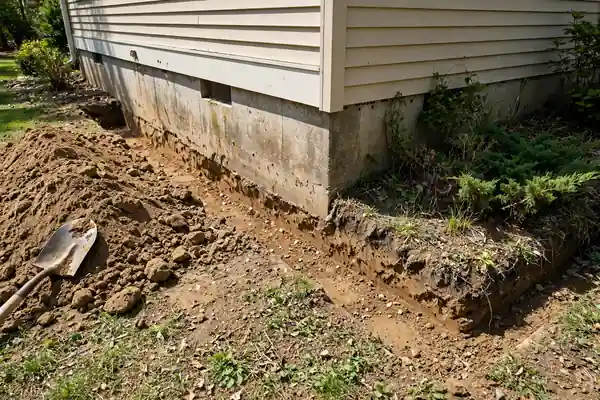
Two kinds of liquid are used:
- Non-repellent products. Termites cannot detect them, so they walk through the treated soil. Active ingredients include fipronil, imidacloprid and chlorantraniliprole. These are generally preferred.
- Repellent products. Pyrethroids such as bifenthrin or permethrin form a barrier termites avoid. They keep termites out of the treated zone, but they do less to reach the colony.
Protection depends on an unbroken barrier, which is why gaps, poor mixing or too little product shorten results. Termites can also find gaps. One 2024 study found that dead termites near treated soil can make the rest of the colony avoid the area, so soil treatments protect the building well but may not wipe out a colony by themselves. That is the reason many companies pair a barrier with bait.
Termite bait stations vs liquid treatment
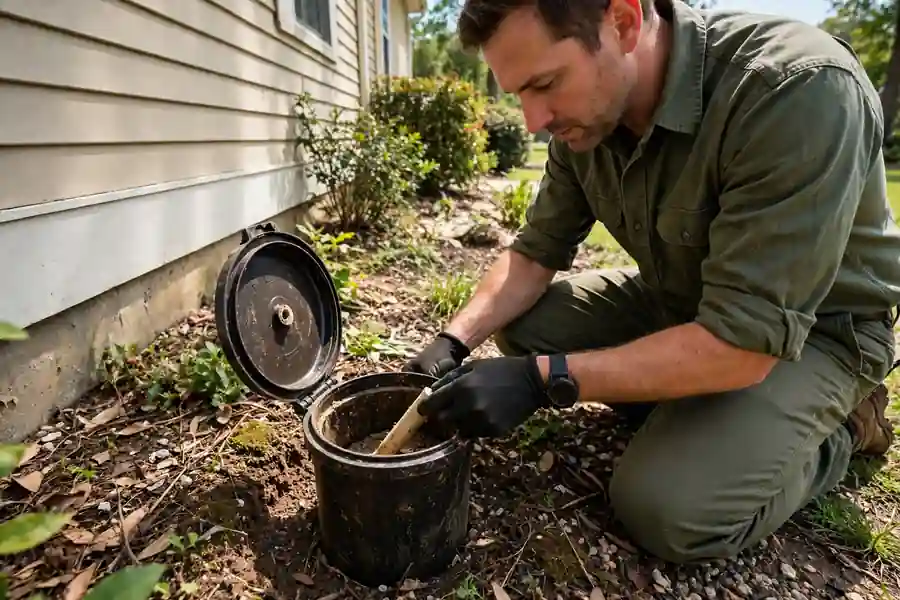
Liquid works faster and protects a building right away. Bait works slowly but targets the colony itself. A liquid barrier only kills termites that cross it. Bait stations contain a slow-acting poison, often an ingredient that stops termites from molting. Workers carry it back to the nest, and the colony declines over time.
| Liquid soil barrier | Bait stations | |
|---|---|---|
| Speed | Immediate protection | Slow, usually months |
| Goal | Block entry and protect the structure | Reduce or eliminate the colony |
| Upkeep | Warranty, periodic inspections | Regular checks and re-baiting |
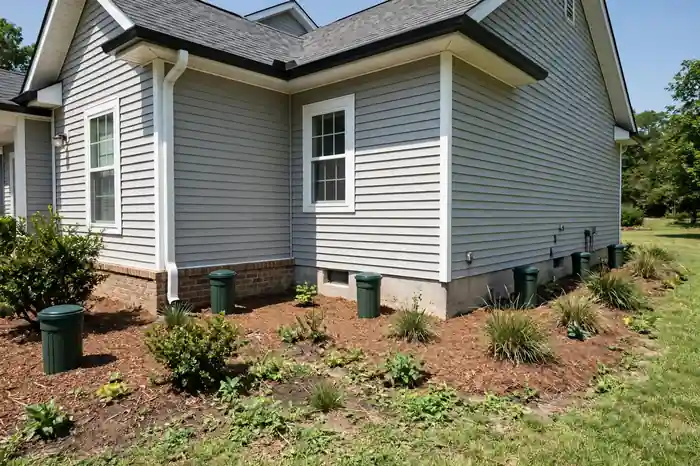
| Disruption | Trenching, drilling slabs | Small stations in the yard |
| Best for | Active infestation in the house | Homes where drilling is hard, or as a backup |
| Main risk | Gaps in the barrier | Lapsed monitoring, so termites bypass the stations |
Station checks may be monthly, quarterly, twice a year or yearly, depending on the product and the company. If checks lapse, foraging termites can pass the stations without ever eating the bait. Many homeowners get the best protection by using both methods.
How is drywood termite treatment done?
Drywood termites live entirely inside wood, so treatment goes into the wood, not the soil. A professional picks the method by how far the infestation spreads. Tent fumigation reaches the whole structure. Spot, foam, heat and borate methods are options for limited infestations.
How does tent fumigation work?
The home is sealed under a tent and filled with a gas that penetrates all the wood. It is the most thorough option for widespread drywood termites, because the gas reaches hidden galleries. The gas is typically held for about 16 to 30 hours. After that, the structure is ventilated for at least 12 hours. Only the licensed operator can clear the home for re-entry.
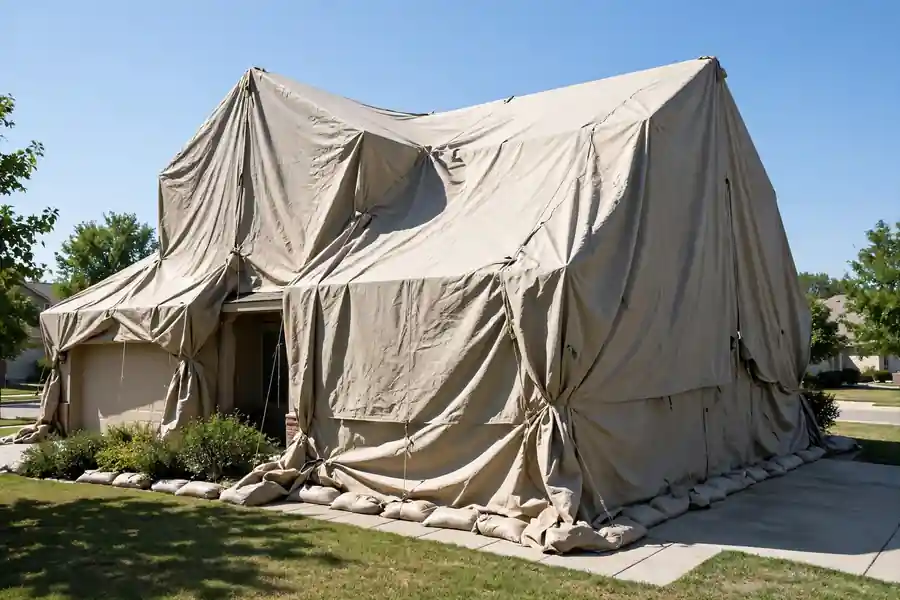
Your fumigator will give written instructions, and those come first. Common steps:
- Everyone leaves, including pets, fish and plants.
- Food, medicine and baby items go out or into special sealed bags.
- Mattresses and some furniture may need to be bagged or covered.
- Shrubs near the house are trimmed back so the tent can seal.
- Nobody enters the tent or the home until it is cleared, and never during the treatment.
The gas can linger in enclosed spaces, so ask the fumigator which hidden areas, such as cabinets or crawl spaces, should be aired out before you move back in. Fumigation kills what is inside, but it does not leave lasting protection, so termites can return later.
Is there a termite treatment without tenting?
Yes, for limited infestations. Tentless termite treatment includes spot treatment, foam and injection, heat, borate and orange oil. These are usually cheaper and less disruptive, but they only work where the product or heat reaches the termites.
- Spot treatment, foam and injection. A technician drills small holes into mapped galleries and injects liquid, dust or foam. Foam expands to coat voids and galleries more fully than a straight liquid.
- Heat. Hot air raises the temperature inside the wood to a level that kills termites, commonly about 120°F or more at the slowest-heating spot. Hold times vary with wood thickness, and thick beams heat slowly, so a probe check matters. Heat leaves no residual protection.
- Borate. Applied to bare wood, borate soaks in and protects it against later attacks. It is mostly preventive.
- Orange oil. See the next section.
Tentless methods often cannot guarantee that every colony is reached. Ask the company exactly which areas are covered and what the warranty includes.
Does orange oil kill termites?
Orange oil kills drywood termites it touches, but it has limits. It is a contact treatment with a short lasting effect, and it does not travel far through dense wood. That makes it a fit for small, shallow, found infestations, and a poor fit for widespread ones.
- It does not protect wood from future termites.
- It is not a soil treatment, so it does not work on subterranean termites.
- It only works where the oil reaches the galleries, which can be hard to map.
- Sources disagree on how well it works, so ask for the warranty terms before you pay for it.
What is the best termite treatment?
The best treatment is the one that matches the termite and the building. For subterranean termites, a non-repellent soil barrier, bait stations or both are the standard answer. For drywood termites, tent fumigation is the most thorough, and spot treatment suits small patches.
| Situation | Best treatment |
|---|---|
| Subterranean termites in or near the house | Liquid barrier, bait stations, or both |
| Hard to drill, concrete everywhere | Bait stations |
| Widespread drywood termites | Tent fumigation |
| One small drywood patch | Spot treatment or foam |
| You want no gas | Heat, or localized treatment |
| Exposed wood in a crawl space or attic | Borate, as prevention |
| New home | Pre-construction soil or wood treatment |
| Not sure what it is | An inspection before any treatment |
How much does termite treatment cost?
Most professional termite treatment costs about $1,200 to $4,000, with big tenting jobs reaching $8,000 or more. Prices vary by method, home size and region, and sources disagree widely. Treat these ranges as a starting point, and get local written quotes.
| Treatment | Typical cost | How it is priced |
|---|---|---|
| Spot treatment | About $250 to $1,500 | By area and number of spots |
| Orange oil | About $500 to $1,500 | By area treated |
| Liquid soil barrier | About $1,200 to $4,000, or $3 to $16 per linear foot | By foundation perimeter |
| Bait stations | About $1,200 to $3,800, or $8 to $12 per linear foot, plus $280 to $500 a year to monitor | By perimeter, plus a monitoring plan |
| Heat | About $1,200 to $4,000 | By floor area |
| Tent fumigation | About $1,200 to $8,000, often $1 to $4 per square foot | By floor area |
| Annual inspection or bond | About $150 to $350 a year | Flat renewal fee |
| Plan that covers damage repairs | About $700 to $1,500 or more a year | Varies by contract |
How do you estimate termite treatment cost?
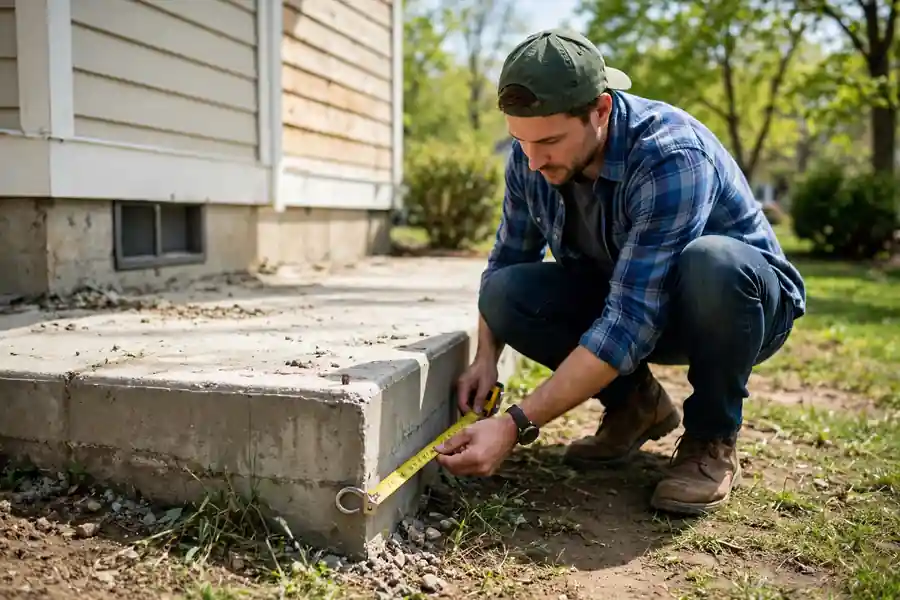
Measure your foundation perimeter and multiply it by the per-foot rate. That is the quick way to estimate a liquid or bait job. A single-story home of about 2,000 square feet has a perimeter of about 180 feet, so $3 to $16 per foot works out to roughly $540 to $2,880 before extras. Fumigation and heat are priced by floor area, not perimeter.
Things that raise the price:
- A large or complex foundation, with porches, additions and crawl spaces
- Concrete that must be drilled
- Hard or rocky soil
- A heavy infestation, or Formosan termites
- A minimum service fee on small jobs
- A warranty that includes damage repair
What is the cheapest termite treatment?
Spot treatment and DIY borate are the cheapest, but they only fit small, found problems. Choosing the cheapest option for the wrong job costs more later. A $400 spot treatment does nothing for a subterranean colony under the slab. Compare the cost per year of protection, not only the quote.
What does an annual termite treatment cost?
Most homeowners pay about $150 to $350 a year for an inspection or bond. A termite bond is a contract where a company inspects the home each year and promises to retreat if termites return. Plans that also pay for damage repairs run higher, around $700 to $1,500 or more a year. Read what the contract covers, because a retreat-only plan does not pay for repairs.
How long does termite treatment last?
A liquid soil barrier lasts about 5 to 10 years, and bait stations last as long as they are monitored. Manufacturers often warrant liquid products for about five years, though many last longer. Fumigation and heat kill what is present but give no lasting protection.
What shortens a liquid barrier:
- Gaps from poor application or too little product
- Soil disturbed by digging, landscaping or heavy rain
- High termite pressure in your area
- Cracks or new additions that break the treated zone
Plan on a yearly inspection even with a warranty. A termite bond also keeps the warranty alive.
Can you do termite treatment yourself?
You can do parts of it, but a full soil barrier is hard to do right. Many termiticide labels call for about 4 gallons of diluted product for every 10 linear feet of trench, for each foot of depth. For a 180-foot perimeter treated 1 foot deep, that is about 72 gallons, and deeper footings mean more. Trenches usually need to be at least 6 inches deep, and rod holes about 12 inches apart or less. Labels differ by product and state, and some termiticides are limited to licensed applicators, so read the label first.
DIY works best for prevention, such as borate on bare, exposed wood, and for small outdoor wood like fence posts. For a colony in the soil or in the house, hire a licensed pro. The how to get rid of termites guide covers what you can safely do yourself, what home remedies do and do not accomplish, and how to handle termites in walls, furniture and the yard.
Does natural termite treatment work?
Home remedies such as vinegar, salt and plant oils are not proven against a structural infestation. The natural options with real backing are borate on wood, heat, and sometimes orange oil for small drywood patches. The how to get rid of termites guide has a full remedy-by-remedy verdict.
What about termite treatment for new construction?
Treat the soil or the wood while the house is being built, and keep the records. Pre-construction treatment is applied after the forms, rebar and plumbing are in place, and just before concrete is poured and before the vapor barrier goes down. Workers then need to avoid disturbing the treated soil.
| Option | What it is |
|---|---|
| Soil treatment | A termiticide sprayed on the soil before the slab, then a perimeter treatment after |
| Borate-treated lumber | Wood treated against termites before it is installed |
| Physical barriers | Approved metal or plastic shields and collars at foundations and pipes |
| Bait stations | Placed around the finished house |
Building codes allow chemical treatment, physical barriers, wood treatment or a mix, and some local codes add baiting. The rules differ by region and by code edition, so ask your builder or building department what applies. Ask for the product label and a warranty in writing, and schedule yearly inspections to keep the warranty valid.
Is termite treatment worth it?
For most homeowners in termite regions, yes. Termite damage is expensive and usually not covered by home insurance. Industry estimates put the average repair around $3,000, and the damage can run far higher. Termites can also eat structural wood for a long time before any sign shows.
The national cost figures often quoted, such as $5 billion a year, are loose estimates, but the risk to a single home is real. Questions to weigh:
- Do you live in a high-termite area such as the Southeast, Gulf Coast or Southwest?
- Is the home wood-framed, with wood near soil?
- Have neighbors had termites?
- Does a lender or builder require an inspection or warranty?
An annual inspection is usually the best value. Whether to buy a full bond depends on what it covers, so compare a retreat-only plan against one that pays for repairs.
How do you choose a termite company?
Get two or three written quotes for the same method, and compare what they include. The cheapest quote is not always the best. A good company inspects the whole home, identifies the termite, and puts the plan and warranty in writing.
Ask each company:
- Is the company and the technician licensed in your state?
- Which termite is it, and how did you confirm it?
- Which product and method will you use, and why?
- How much product will go into the soil, and where?
- What does the warranty cover, for how long, and does it include damage repair?
- What are the yearly renewal and inspection costs?
- What do I need to do before and after treatment?
Be wary of anyone who pushes a same-day signing, refuses to name the product, or recommends treatment without finding signs.
What happens during and after treatment?
A pro inspects, identifies the termite, treats and then follows up. Timing depends on the method.
| Method | Time on site | After |
|---|---|---|
| Liquid barrier | About a day for most homes | Inspection renewals, retreat if termites return |
| Bait stations | A few hours to install | Regular checks for months |
| Tent fumigation | About 2 to 3 days away from home | Ventilation, clearance, then move back |
| Spot treatment | A few hours | Re-inspection, often within weeks |
| Heat | About a day | Probe checks and a follow-up |
Termites do not die the moment you apply a treatment. You may still see swarmers or termite activity for a while, and bait takes months. Call the company if you see new activity, rather than trying another product on top.
Is termite treatment safe for pets and kids?
Licensed treatments are used around families, but follow the instructions. Liquid termiticides go in the soil and are meant to stay there. Fumigation needs everyone, including pets and plants, out of the house until it is cleared. Never enter a tented home, and ask about airing out cabinets and closed spaces afterward.
- Keep children and pets away from treated soil until it dries or settles, as the label says.
- Store bait products out of reach.
- Do not apply a liquid near wells, ponds or drains.
- If anyone feels unwell after treatment, call poison control or a doctor.
Quick answers to common questions
How much does termite treatment cost?
Most professional termite treatment costs about $1,200 to $4,000. Spot treatment is cheaper, and tent fumigation for a large home can reach $8,000 or more.
How long does termite treatment last?
A liquid soil barrier lasts about 5 to 10 years, and bait stations last as long as they are monitored. Fumigation and heat give no lasting protection.
Can you do termite treatment yourself?
You can treat exposed wood with borate, set bait stations and treat small outdoor items. A full soil barrier and fumigation are best left to a licensed pro.
What is the best termite treatment?
For subterranean termites, a non-repellent soil barrier, bait stations, or both. For drywood termites, tent fumigation for widespread cases and spot treatment for small ones.
Does orange oil kill termites?
It kills drywood termites it touches, but it only works on small, shallow patches, and it does not protect against new ones.
Keep reading: how to get rid of termites, how to get rid of ants and more pest control guides.
So, which termite treatment is right for your home?
The right termite treatment starts with identifying the termite, then choosing a method that reaches where it lives. Use a soil barrier or bait for termites in the ground, fumigation or spot treatment for termites in the wood, and borate to protect exposed framing. Get an inspection, compare written quotes and ask exactly what the warranty covers before you sign.