To get rid of house centipedes, dry out the damp spots they live in, seal cracks, cut down the insects they hunt, and use sticky traps and dry dust where you see them. You can remove a single one with a cup or a vacuum. A steady stream of them means you have a moisture problem and a hidden bug population, and those are what you need to fix.
House centipedes look alarming, with long banded legs and a fast, jerky run. They also eat cockroaches, spiders, silverfish and other pests, so a few in a basement can be tolerated. If you cannot stand them, this guide covers the bathroom, basement, bedroom, drains and plants, and explains what works and what does not.
How to get rid of house centipedes at a glance
| Question | Short answer |
|---|---|
| What works best? | Dry the space, seal gaps, cut their prey and trap |
| Fastest way to remove one | Vacuum it, or scoop it with a cup and card and release it outside |
| What kills them instantly? | A direct hit with a labeled contact spray, but it does not fix the cause |
| Why are they in the house? | Damp air plus insects to eat plus cracks to enter |
| Are they dangerous? | Low risk. They can bite if handled, and the bite is usually mild |
| Do natural remedies work? | A dehumidifier, traps and vacuuming do. Oil sprays have little proof |
| Do you need a pro? | Only for heavy numbers or a big bug problem |
How do you know it is a house centipede?
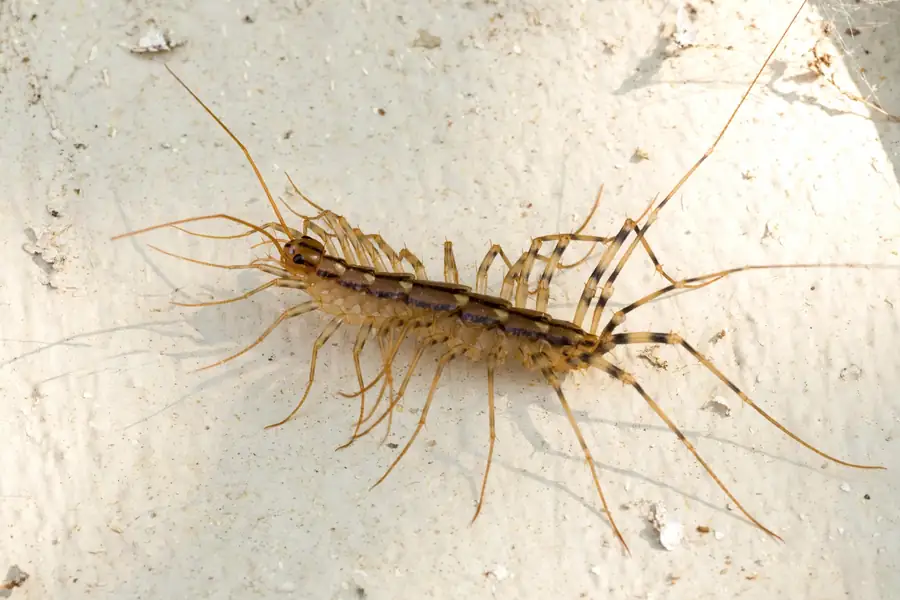
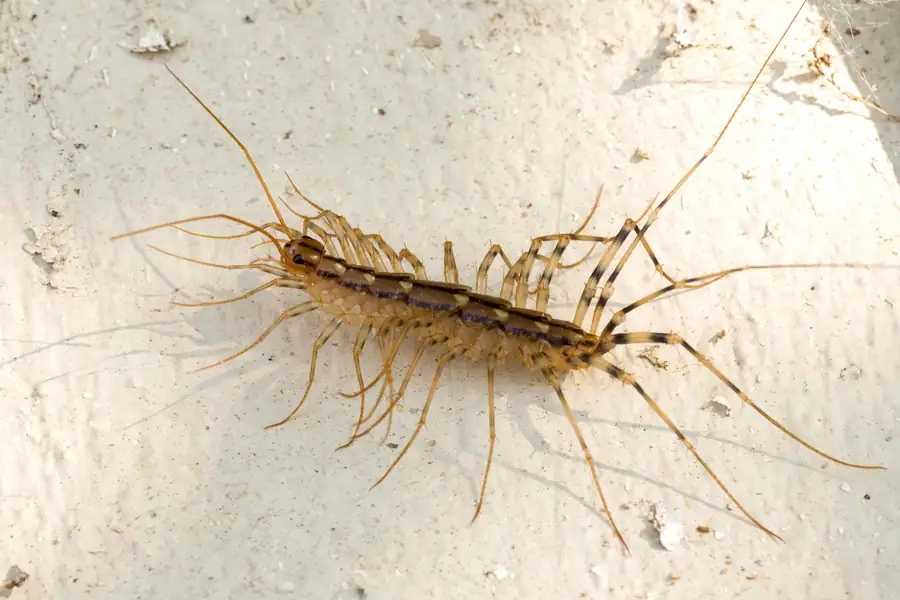
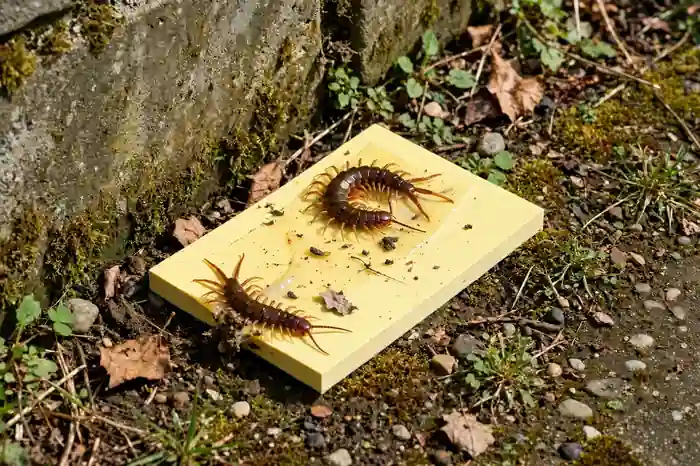
A house centipede is a yellow-gray, body-banded arthropod about 1 to 1.5 inches long, with 15 pairs of very long legs and long feelers. It runs fast, often along walls and floors, and it hunts at night. Millipedes are rounder, slower and curl into a coil. Babies look like small, pale versions of adults with fewer legs, and they add leg pairs as they grow.
Spiders have eight legs, and silverfish are silver and carrot-shaped, so they look different up close.
A much larger or darker centipede, often found outdoors under logs and stones, is usually a different species. It hunts the same way and is handled the same way, so seal the gaps it used and keep leaf litter and wood piles away from the foundation. Outside, centipedes are harmless garden predators, so leave them there.
Are house centipedes dangerous?
Not much. They can bite if you handle or press on one, and the bite can be sharp and painful for a short time. Medical risk is low for most people. They do not attack on their own, they do not spread disease and they do not damage wood, wiring or food. Wash a bite and treat it like a bee sting, and see a doctor if you have a strong reaction.
Are house centipedes beneficial?
In a way, yes. They are predators that eat insects and spiders, including some you do not want, such as roaches and silverfish. Extension sources note they can help control indoor pests, though most people find them unpleasant. A basement or crawl space with a few of them may just have a few pests for them to eat.
Why do you suddenly have centipedes in your house?
Because the house offers damp air, insects to eat and a way in. House centipedes need moisture to live, so most that wander indoors die within days if the air is dry. Seeing more of them often means a leak, a wet basement or a bathroom that stays humid, along with a population of other bugs.
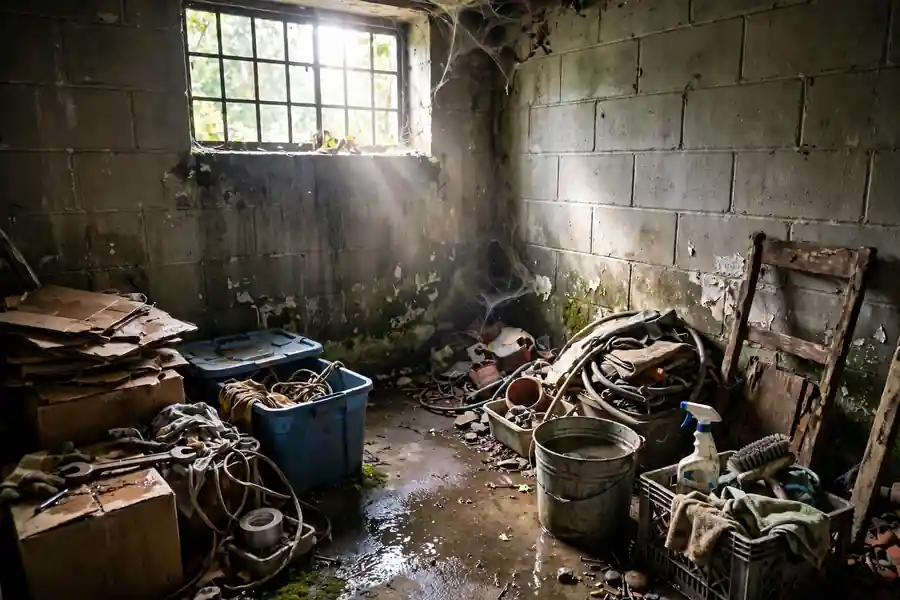
- A sudden rise in late summer or fall often follows wet weather or a leak, or comes when cooler nights push them indoors.
- Many in one room points to a nearby leak, a damp wall or a bug-filled corner.
- Seeing them in several rooms can mean a larger insect problem, so check for roaches, silverfish and spiders as well.
What are the signs of a house centipede infestation?
One or two now and then is normal. Signs of a real problem are several centipedes a week, young ones as well as adults, and plenty of other insects in the same spots. House centipedes can live and reproduce indoors, so they can settle in a damp basement or crawl space. A sticky trap along the wall will show where they travel.
Where do house centipedes hide?
In dark, damp, undisturbed places near their prey: basements, crawl spaces, bathrooms, closets, laundry rooms, garages and under potted plants. A bedroom or living room is usually a spot they wander through, not a nest.
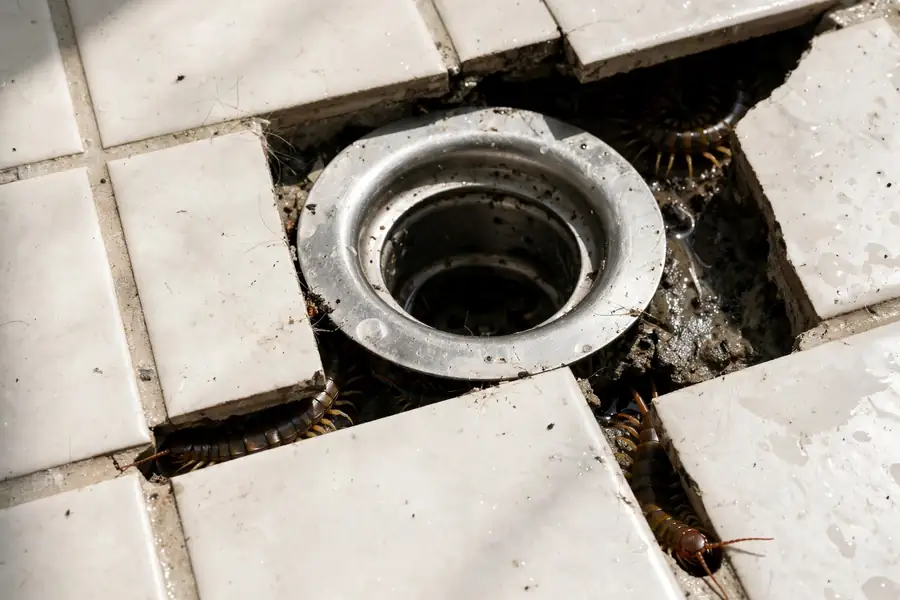
- Bathroom and drains: centipedes get into tubs and sinks and cannot climb out of smooth tubs. They may come through gaps around pipes or from damp drains. Use drain stoppers or strainers, fix slow drains, seal pipe gaps and keep the room dry.
- Basement and crawl space: the most common home. Dehumidify and vent.
- Closets and laundry: moisture and clutter. Clear boxes off the floor.
- Houseplants: they may hide in damp soil. They do not harm the plant, but overwatering draws them. Let the soil dry between waterings.
- Apartments: a neighbor's damp unit or a shared pipe chase can be the source. Tell your landlord about leaks, and ask about pest service.
- Bedroom: a centipede on the floor is usually passing through. Seal gaps under doors and around vents, and vacuum.
How do you get rid of house centipedes?
Start with moisture, and work in order. Killing the centipedes you see helps for a day, but the cause brings more.
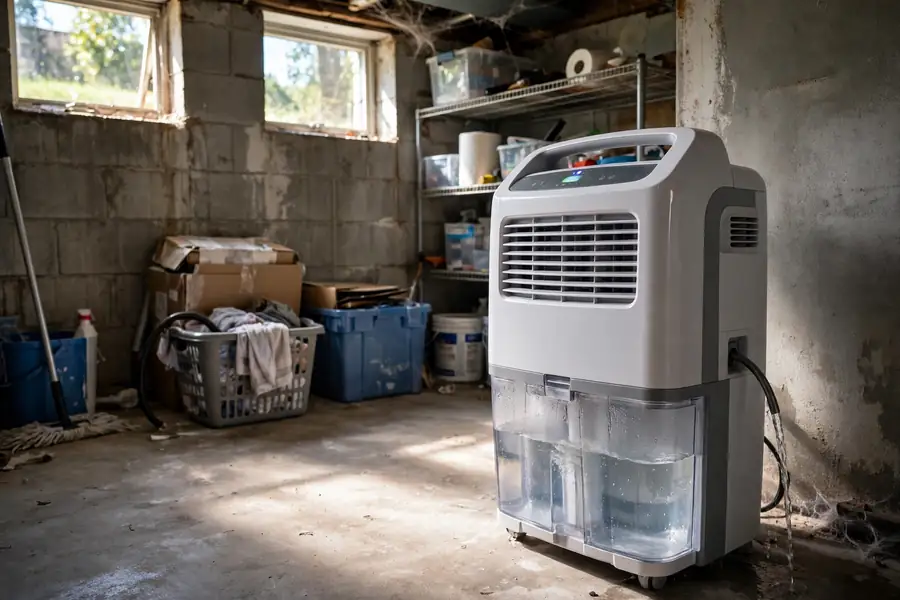
- Dry it out. Fix leaks and run a dehumidifier in the basement and crawl space. Many pros suggest keeping indoor humidity below about 50 percent. Use fans and vents in bathrooms.
- Seal and clear. Caulk cracks in the foundation and around pipes, windows and doors. Add door sweeps. Remove cardboard, leaf litter, wood piles and clutter that give them cover.
- Cut the prey. Treat the roaches, silverfish, spiders and other insects that draw them. Without food, centipedes leave or die.
- Trap and dust. Put sticky traps along baseboards, in corners and where you see them. Apply a dry dust labeled for crawling insects, such as borate or silica, in voids, crawl spaces and behind appliances. Dust works only while it stays dry, and it should be kept away from pets and children.
- Treat outside if needed. Pull mulch and leaf litter back from the foundation, and trim plants that touch the house. If you are still seeing many, a perimeter treatment around the foundation may help.
For individual centipedes, vacuum them or trap one under a cup and slide a card beneath it to release it outside. Wear gloves if you handle one.
Do home remedies get rid of house centipedes?
Some steps help and some do not. Anything that dries the space or removes bugs works. Scents and sprays have little proof.
| Remedy | Verdict |
|---|---|
| Dehumidifier and fixing leaks | The most reliable natural step. It removes what they need |
| Sticky traps | Catch centipedes and show where they travel. Keep them where pets cannot reach |
| Vacuuming | Quick and effective for the ones you see |
| Diatomaceous earth or boric acid | Work only when dry and in contact. Keep from pets, children and breathing |
| Peppermint, cedar or other plant oils | Little proof. Some oils harm cats and dogs |
| Vinegar or soapy water | Kills one on contact. Does not fix the cause |
| Mothballs | Skip. Toxic and not meant for this use |
| Foggers or bug bombs | Skip. They miss hiding places and carry fire and health risks |
What kills house centipedes instantly?
A direct hit with a contact insecticide labeled for indoor crawling insects kills one quickly, and so does a firm swat with a shoe or tissue. That does nothing about the next one. If you want to stop them, fix the damp air and the other bugs.
How do you get rid of house centipedes naturally?
Dry the space, seal the gaps, clear clutter, set sticky traps and vacuum. These are the natural steps with real evidence behind them. Skip the oil sprays and powders you do not need, and keep dry dusts away from pets.
Can you get rid of house centipedes forever?
You can make your home a poor place for them, but a stray one may still wander in. Keep the basement and bathrooms dry, caulk cracks, keep bug numbers low and keep mulch and leaf litter off the foundation. Check traps every month or two. If the traps stay empty, the fix is working.
How do you handle house centipedes and millipedes, spiders or silverfish together?
The same steps help all of them, because all four like damp spaces. Millipedes mostly wander in from outside in damp weather and do not breed indoors. Spiders and silverfish are food for centipedes, so cutting them also cuts the centipedes. For silverfish, see the silverfish guide, and for crawling insects in general, see the ant guide.
How much does it cost to get rid of house centipedes?
DIY is cheap: sticky traps, caulk, a dehumidifier and a dust, often $20 to $75 for supplies, plus the cost of any moisture fix. A pest professional often charges roughly $100 to $300 for a visit, sometimes as part of a regular service plan. These are rough 2026 estimates, so ask for a written quote.
When should you call a pro?
Call if you see many centipedes after a month of drying and sealing, if you also have roaches or other pests, or if the damp air comes from a leak you cannot find. A pro can treat the crawl space and the foundation, and a plumber or contractor can fix the moisture.
Quick answers to common questions
What kills house centipedes instantly?
A direct hit with a labeled contact spray, or a swat. It does not solve the cause, so dry the space and cut the bugs they eat.
Why do I suddenly have centipedes in my house?
Damp air, insects to eat and cracks to enter. A leak, wet weather or a humid bathroom is often the trigger.
How do you get rid of house centipedes naturally?
Run a dehumidifier, fix leaks, seal cracks, remove clutter, set sticky traps and vacuum the ones you see.
Are house centipedes dangerous?
Not very. They can bite if handled, and the bite is usually mild. They do not damage the home and they eat other pests.
How do you get rid of house centipedes forever?
Keep the house dry, seal gaps, keep other bugs low and keep mulch and leaf litter off the foundation.
Keep reading: how to get rid of silverfish, how to get rid of ants and more pest control guides.
Is it worth getting rid of house centipedes?
If you see one now and then, you can leave it. If you see many, treat it as a sign of damp air and bugs, and fix both. The best way to get rid of house centipedes is to make the house dry and bare of prey, so they have no reason to stay.