To get rid of leaf cutter ants, find every mound, treat the whole colony with a bait labeled for leaf cutting ants, and protect valuable plants while it works. These ants strip leaves from shrubs and gardens overnight, and their nests are deep and wide, so sprays and home remedies rarely reach them. Expect weeks to see results, and plan on checking for a return.
Leaf cutter ants do not eat the leaves they carry. They feed them to a fungus that grows in the nest, and the fungus feeds the colony. That is why a plant can look bare in a night and why poison has to be carried back to be effective.
How to get rid of leaf cutter ants at a glance
| Question | Short answer |
|---|---|
| Best method | A bait made for leaf cutting ants, placed around every mound |
| Do sprays and drenches work? | Rarely. The nest is too deep and large |
| How long does it take? | Often 4 to 6 weeks for activity to fall |
| Can they come back? | Yes. Extension guidance says about half the time, within months |
| Do home remedies work? | No proven recipe. At best they delay a few feeding trips |
| How do you protect plants? | Sticky bands on trunks, covers, and repeat checks |
| When to call a pro | A large colony, many mounds, or valuable trees |
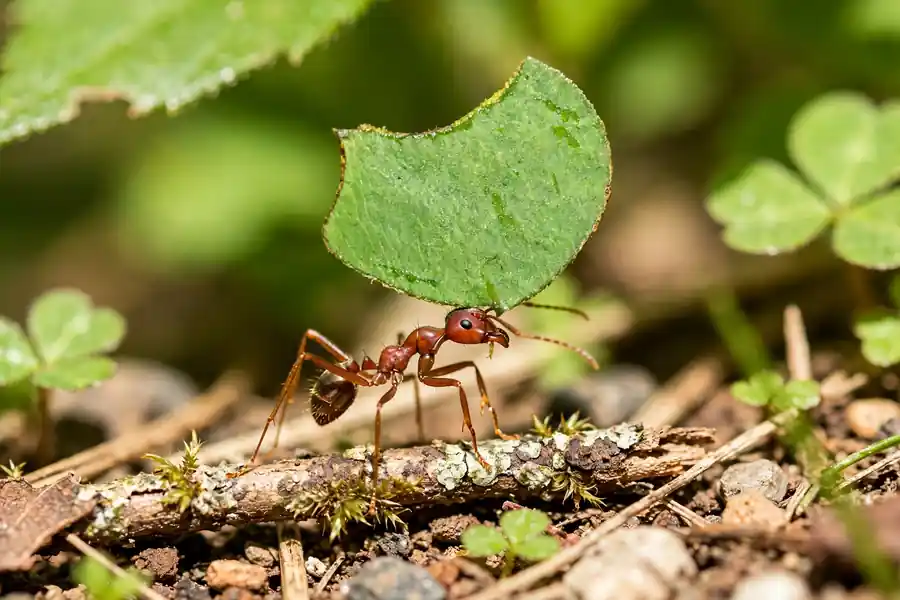
How do you know it is a leaf cutter ant?
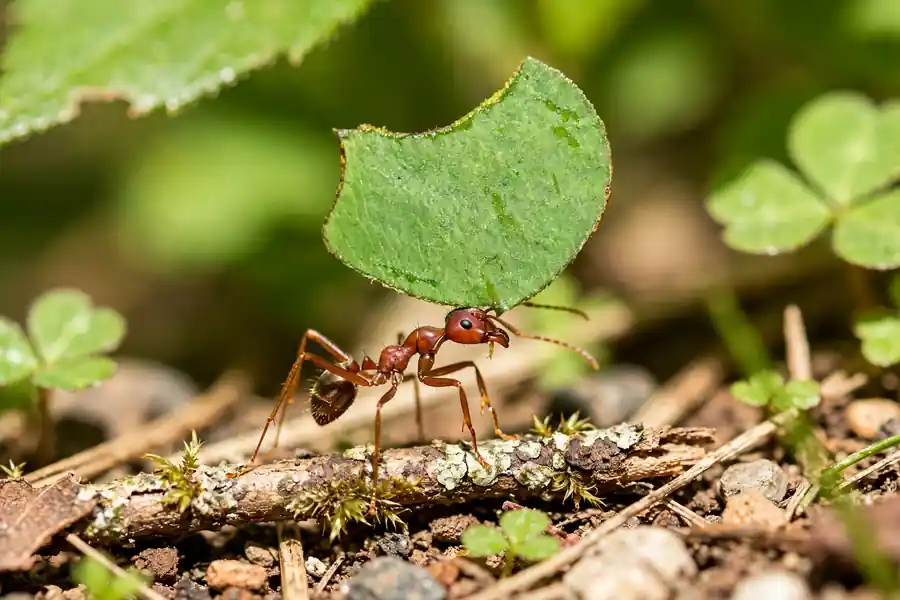
Look for large reddish-brown ants, up to about half an inch long, carrying green pieces of leaf in a line. They have two bumps at the waist and spines on the back of the thorax. The trail is often a worn path, with bits of leaf scattered along it.
Do not confuse them with leaf cutter bees. Those bees cut neat circles from the edges of leaves, usually from roses and similar plants, and they do not form trails. Leaf cutter bees are harmless to the plant and are good pollinators, so leave them alone.
Where do leaf cutter ants live?
They live in the ground, in large nests with many chambers, in warm regions. In the United States the leaf cutting ants most people meet, often called Texas leafcutter ants, are found mainly in parts of Texas and Louisiana, usually in sandy or loamy soil. Related species live in the desert Southwest. Most other leaf cutters live in Central and South America. Ranges shift, so check with your local extension office if you are unsure.
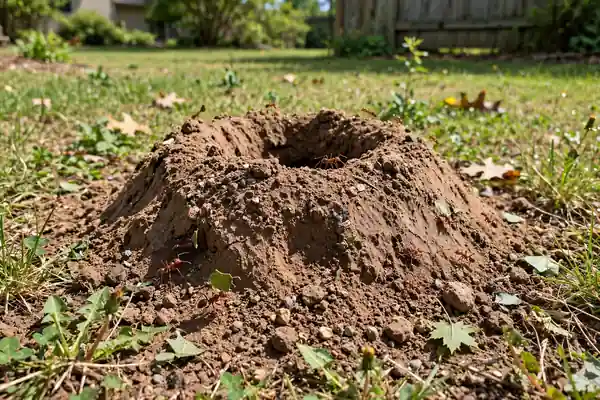
Leaf cutters do not live inside houses. They nest in soil and forage on plants, mainly at night in warm weather. An ant in the kitchen is nearly always a different species, so see the ant guide for indoor ants.
What do leaf cutter ants eat, and what damage do they do?
They cut leaves, flowers and tender shoots to feed their fungus. A foraging line can defoliate a shrub in a night or two. Favorites often include roses, azaleas, fruit trees, vegetables and young ornamentals, though they take many plants. The plant usually recovers if it is stripped once, but repeated attacks weaken or kill it.
How do you find a leaf cutter ant nest?
Follow the trail. Go out after dark with a flashlight, find the stripped plant, and trace the line of ants back to the ground. The mound is a crater-shaped pile of soil, often with several openings, and the colony may have more than one.
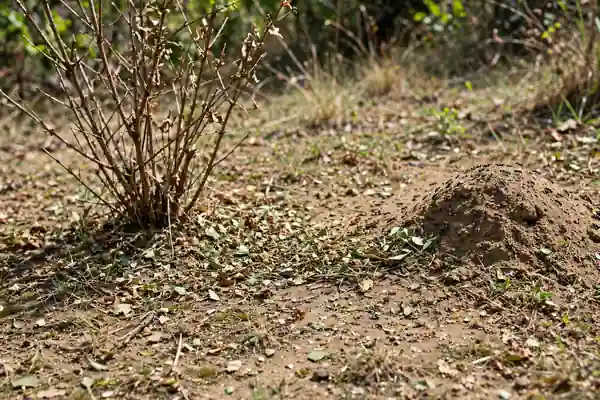
This step matters because bait only works if it reaches the whole colony. Extension guidance says to treat around all mounds, not just the one nearest the damage.
What is the best way to get rid of leaf cutter ants?
Use a bait labeled for leaf cutting ants, and apply it around every mound and trail entrance. Workers carry the bait into the nest and feed it to the fungus and the colony. Nest-wide control is hard, so treat this as a slow process, not a one-day fix.
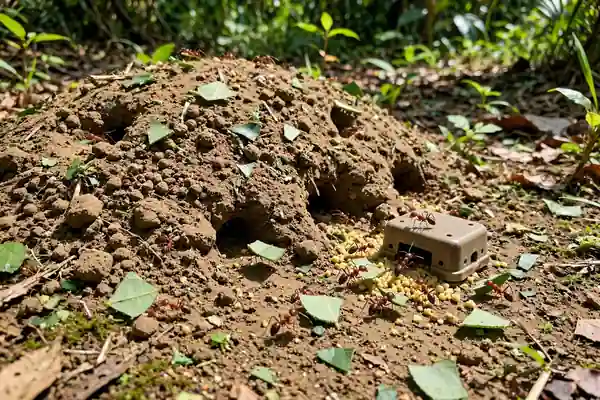
- Check the label. Choose a bait made for leaf cutting ants, and confirm it is allowed where you live and on your site. Availability changes, so check current labels. Many baits are not for gardens or food crops.
- Apply at dusk or when ants are active. Place bait on the trails and around every mound and opening, in dry weather, as directed.
- Keep the bait dry. Rain and watering ruin it. Reapply after heavy rain.
- Do not disturb the trail. Let workers carry it home.
- Wait. Activity often falls over 4 to 6 weeks, as extension guidance describes, and can return within several months.
- Re-check and treat again if new trails show up.
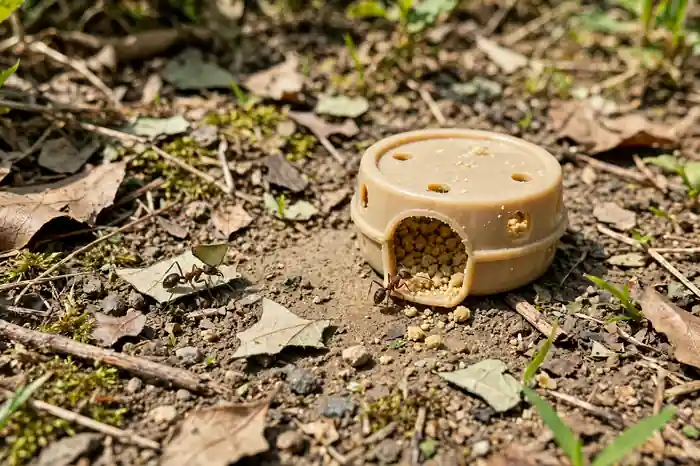
Keep bait away from pets and children, and follow the label exactly. Do not use a bait on edible plants or sites the label does not allow.
How do you protect plants while the bait works?
Block the climb and shield the plants. Protection is temporary, so treat it as a bridge until the colony is gone.
- Sticky trunk bands: wrap a band around the trunk and coat it with a sticky barrier, so ants cannot climb. Reapply as it dries or gets covered with debris.
- Covers: drape fine mesh or fabric over small shrubs and vegetables at night.
- Prune bridges: cut branches that touch the ground, fences or other plants, since ants use them as ramps.
- Dust at the hole: a small amount of a labeled dust at the entrance can calm activity for a few days, but it does not end the colony.
- Replant carefully: after the colony is dead, give new plants a few weeks before putting anything tender in the same area.
Do home remedies get rid of leaf cutter ants?
No proven home remedy ends a colony. The nest is deep and the fungus garden is protected, so anything you pour or sprinkle on top rarely reaches it. Some remedies may turn the trail aside for a night.
| Remedy | Verdict |
|---|---|
| Vinegar, dish soap or citrus sprays | Kill a few ants on contact. Do not reach the nest |
| Boiling water | Does not reach the chambers. Can harm roots |
| Cinnamon, pepper or powders | Little proof. Washes away |
| Diatomaceous earth | Works only when dry and in contact. Not nest-wide |
| Nasturtium or plant extracts | Lab studies only. Not a proven garden method |
| Gasoline, flooding, fire | Never. Dangerous and ineffective |
If you want a natural or organic path, the honest answer is to protect the plants with barriers and covers, and to hire a pro if the colony keeps growing. Pouring harsh liquids into the soil harms plants and the ground around them.
Can you get rid of leaf cutter ants permanently?
Not always. Large colonies are hard to eliminate, and extension specialists generally say you may only get them under control. Treat all mounds, check monthly for new trails, and bait again if they return. A neighbor's colony can also send foragers into your yard.
How much does it cost to get rid of leaf cutter ants?
DIY bait is the cheapest option, often a few dozen dollars per application, with several treatments over a season. A professional treatment can cost from a couple of hundred dollars to much more, depending on how many mounds there are and how large the property is. These are rough 2026 estimates, and prices vary by region, so ask for a written quote.
When should you call a pro?
Call if you find many mounds, if the colony covers a large area, or if valuable trees and shrubs are being stripped. A licensed pest control operator can use products and methods that are not sold to homeowners and can monitor the colony after treatment.
Quick answers to common questions
What is the best way to get rid of leaf cutter ants?
Find every mound, then apply a bait labeled for leaf cutting ants around all of them. Protect valuable plants with sticky trunk bands or covers while it works.
Do home remedies get rid of leaf cutter ants?
No proven recipe does. Sprays and powders miss the deep nest, so use them only as a short delay.
Where do leaf cutter ants live?
In the soil, in large nests, mostly in warm regions. In the United States, the best-known species lives in parts of Texas and Louisiana.
How do you find a leaf cutter ant nest?
Follow the trail of leaf pieces back from a stripped plant at night with a flashlight, and mark every mound.
How do you protect plants from leaf cutter ants?
Wrap sticky bands around trunks, cover small plants at night, and prune branches that touch the ground.
Keep reading: how to get rid of ants, how to get rid of termites and more pest control guides.
Is it worth getting rid of leaf cutter ants yourself?
Yes for a small colony, and no for a large one near valuable trees. The way to get rid of leaf cutter ants is to treat the whole colony, not the ants on the plant, and to guard your plants until the bait has had weeks to work. If it keeps coming back, a pro is a better investment.