To get rid of carpenter ants, find the nest and treat it, because the ants you see are only a small part of the colony. Slow-acting bait set beside their trail is the best DIY step. Dust in wall voids, nests inside structural wood and large colonies are jobs for a pro. Then fix the damp wood that let them in. Spraying the ants you see does not end the problem.
Carpenter ants are large black or reddish ants that dig tunnels in wood to nest. Unlike termites, they do not eat the wood, but a mature colony can weaken beams, sills and window frames over several years. This guide covers ants in the house, walls, kitchen, bathroom, attic, trees, stumps and yard, and tells you when to stop and call for help.
How to get rid of carpenter ants at a glance
| Question | Short answer |
|---|---|
| Fastest real fix | Find the nest and treat it directly or with bait and dust |
| Best DIY step | Slow-acting bait placed beside the foraging trail |
| How long does bait take? | Often several weeks, sometimes about two to three months |
| Should you spray the ants you see? | No. It kills foragers, not the nest |
| Do home remedies work? | Not reliably. Borax and boric acid work only as slow bait |
| Why are they inside? | Damp wood, a nest nearby, or a trail from a tree, stump or woodpile |
| Winged ants indoors | A sign of an established colony, often in spring |
| Who should treat walls and structural wood? | A pest professional |
| Typical pro visit | Often $150 to $500, with a follow-up |
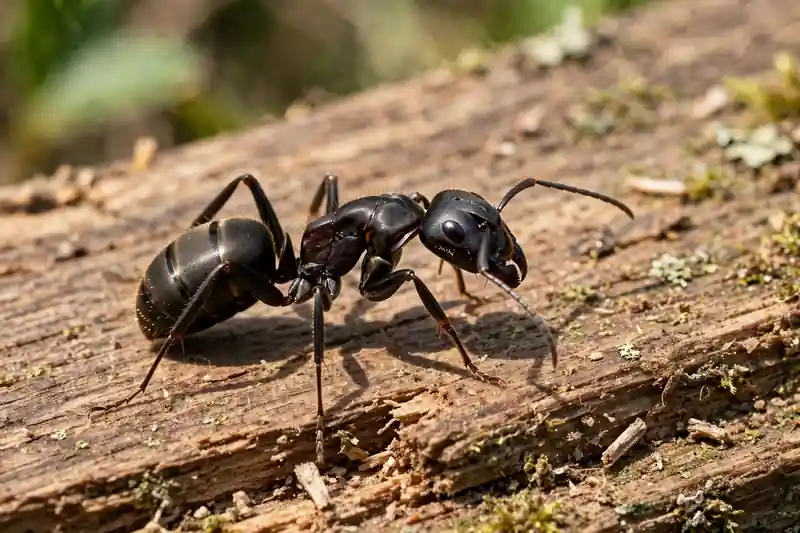
How do you know it is a carpenter ant?
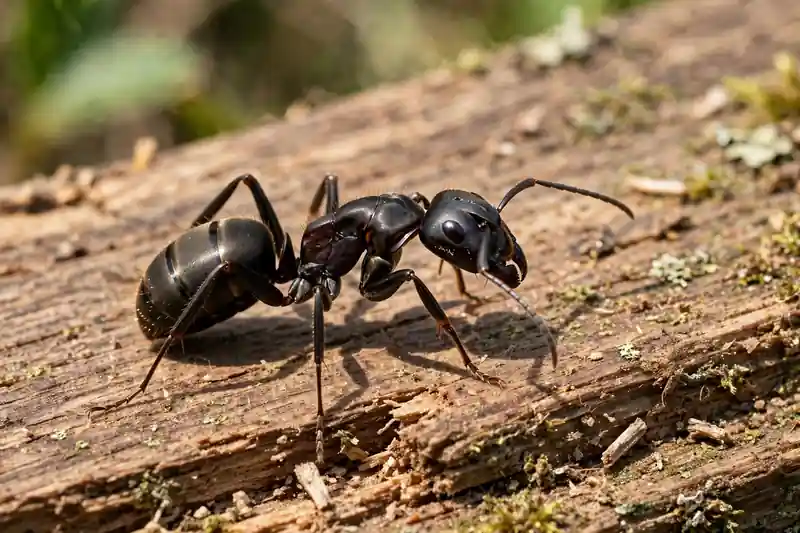
Look at the waist, the antennae and the wings. A carpenter ant has a pinched waist and elbowed antennae. A termite has a thick, straight waist and straight, beaded antennae. Winged carpenter ants have longer front wings than back wings, while winged termites have four equal wings. Carpenter ants are also large, often a quarter to a half inch long, and black, red or a mix of both.
This matters because the two need different treatment. Termites eat wood and call for a specific plan, which you can read in the termite treatment guide and the guide on how to get rid of termites. Carpenter ants are treated as ants with a hidden nest. Black, red, big and small carpenter ants are all treated the same way, since size varies with the worker's role.
What are the signs of carpenter ants?
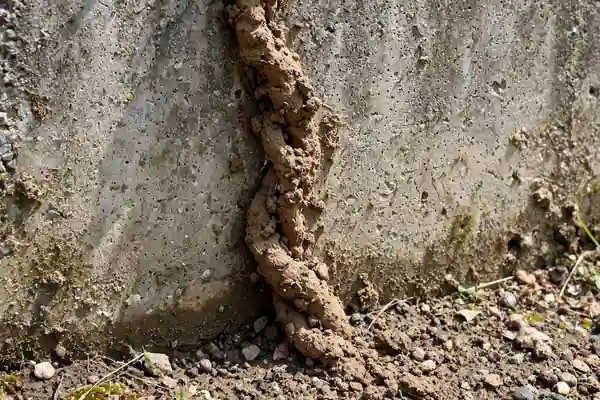
The clearest signs are frass, slit-like holes and big ants walking at night. Frass is a sawdust-like pile of wood shavings, insect parts and debris that workers push out of small holes in the wood, and it collects below the hole. Their tunnels are smooth and clean inside, unlike termite tunnels, which are rough and carry mud.
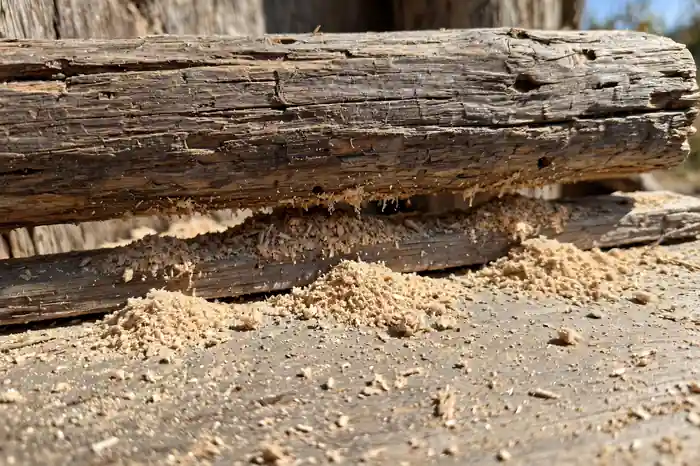
- Large ants indoors, especially in the evening and at night, in kitchens, bathrooms and near windows.
- Frass under baseboards, window sills, door frames or wood trim.
- Rustling or faint crackling in a wall, sometimes heard at night. Termites can make similar noise, so sound alone does not identify the pest.
- Winged ants indoors, often in spring, which suggests a colony in or near the building.
- Hollow-sounding wood when you tap a damaged board.
Why do you suddenly have carpenter ants in your house?
Usually because damp wood gave them a place to nest. Carpenter ants favor wet or rotting wood from a roof leak, a leaking pipe, bad drainage or a clogged gutter. They also come inside from a nest in a nearby stump, tree, woodpile or fence, or follow a branch that touches the roof. Seeing them in winter often points to a nest inside the structure, where it stays warm.
Carpenter ants do not create moisture, but they use it. That is why fixing leaks matters as much as killing the ants.
How do you find a carpenter ant nest?
Follow the workers, and look for frass. Foraging is strongest from sunset to around midnight, so watch where ants go with a flashlight and note the direction they leave and return. A trail may run along a pipe, wire, fence or branch, and ants can travel long distances, so the trail may not lead straight to the nest.
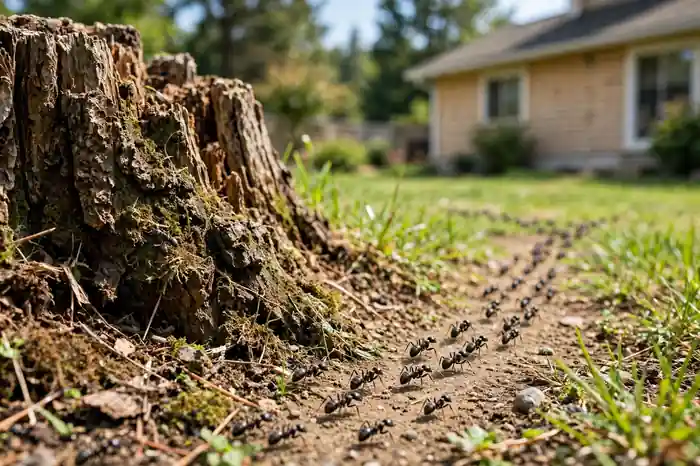
A colony often has a parent nest, usually outdoors in a stump, log or tree, and one or more satellite nests in drier spots inside the house. Treating a satellite nest alone leaves the parent colony free to send more ants. Look in:
- Walls and the voids behind kitchens and bathrooms.
- Attics, soffits and roof edges.
- Window sills, door frames and porch posts.
- Decks, siding and foam insulation, where ants may tunnel in the soft material.
- Basements and crawl spaces near wet wood.
- Log homes, cabins, sheds, RVs, campers and boats, where damp wood or wet carpet gives a nest site.
- Apartments and rentals: a nest in a shared wall can come from a neighbor, so tell your landlord or building manager instead of treating it alone.
What is the fastest way to get rid of carpenter ants?
Treat the nest directly. There is no instant fix for a hidden colony, but you can start the same day. Use bait beside the trail, dust in the wall void if you can reach it safely, fix the moisture source and keep other food away. If the nest is in structural wood or a wall, bring in a professional.
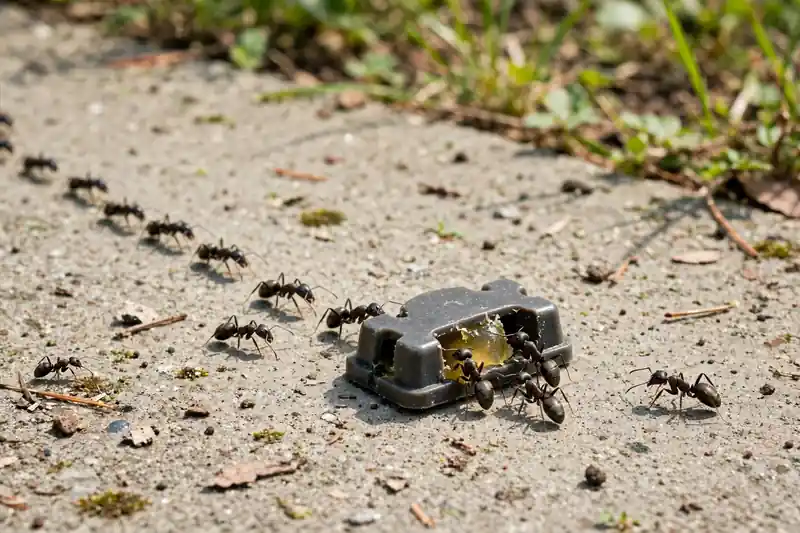
How do you use bait for carpenter ants?
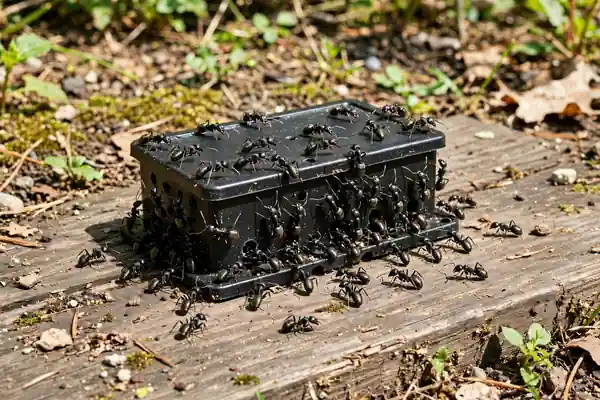
Set bait stations or gel bait next to the trail, and leave it alone. The poison has to be slow enough for workers to carry it back and feed it to the queen and the young. A field study of boric acid baits found control took a few weeks to a few months and results varied by site, so patience is part of the method.
- Find the trail and put the bait right beside it, not on top.
- Match the bait to the ant. Carpenter ants want sweets at some times and protein at others. If they ignore one, try the other.
- Do not spray or wipe the ants feeding at the bait.
- Keep other food away. Put sugar, pet food and crumbs in sealed containers.
- Keep bait out of reach of children and pets, since boric acid is a poison if swallowed.
- Refill and wait. Expect weeks, and sometimes two to three months.
Should you use dust or spray?
Dust works in wall voids, but a pro should do it. A fine dust, applied through small holes into the cavity, reaches the nest and covers the tunnels. Strong dusts and sprays can be hazardous in walls, near wiring and around pets, and the stronger products are sold only to licensed applicators. A spray on foragers kills what it touches, may repel the rest, and can make bait less effective, so use it only if a pro advises.
Do home remedies get rid of carpenter ants?
Not reliably. Home mixes can kill a few ants on contact or serve as slow bait, but none is proven to end a colony.
| Remedy | Verdict |
|---|---|
| Borax or boric acid in sweet bait | Can work as slow bait, but results are slow and variable. Poison if swallowed, so keep away from pets and children |
| Vinegar or soapy water | Kills a few ants on contact and wipes trails. Does not reach the nest |
| Diatomaceous earth | Works only when dry and in contact. Not proven against a colony |
| Cinnamon, pepper or peppermint | Little proof. Wears off fast |
| Boiling water | Only for an outdoor nest in soil, and it can harm plants |
| Gasoline or fire | Never. Dangerous and does not work |
If you want a natural route, keep it to what works: fix moisture, remove bridges, store food and use bait. Safe-for-pets claims are not guaranteed, so read the label and keep any bait where pets cannot reach it.
How do you get rid of carpenter ants outside, in trees and in the yard?
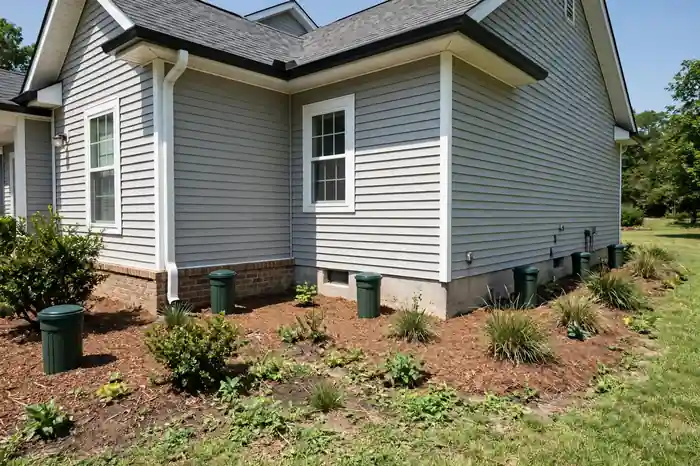
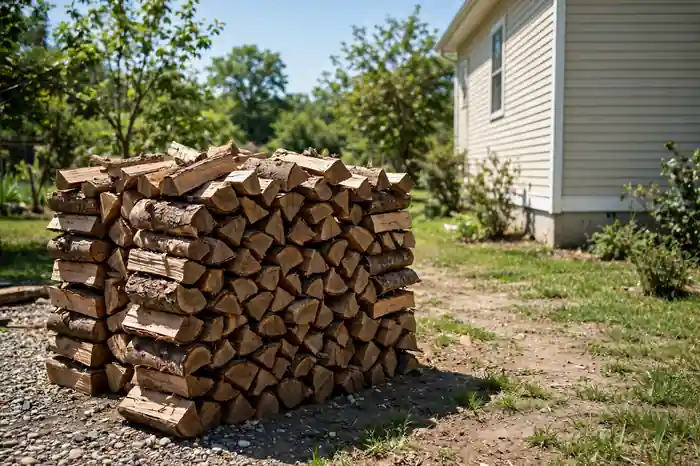
Remove the wood they nest in. A parent nest is often in a stump, log, woodpile, fence post or a damp part of a tree. Take out old stumps and rotting logs, store firewood off the ground and away from the house, and cut back limbs that touch the roof or walls.
- Stumps and logs: remove them, or treat the stump with a product labeled for ant nests.
- Live trees: carpenter ants usually move into a hollow or decaying section. A tree with a nest may have rot, so have an arborist check the tree, especially a large one near the house.
- Mulch and woodpiles: keep mulch a few inches below the siding, and move wood away from the foundation.
- Decks and porches: seal gaps, fix leaks and replace rotted boards.
- Trails: bait where the ants cross from the yard to the house.
What invites carpenter ants?
Moisture, wood-to-ground contact and bridges. If you fix the cause, the next colony has fewer places to start.
How do you get rid of winged carpenter ants?
Winged ants are the reproductive ants that leave to start new colonies, so finding them inside is a sign that a colony is nearby or in the house. Vacuum them, and do not stop there. A single winged ant that sheds its wings may be a queen starting a new colony, so kill it, but killing swarmers does not end an existing colony. Look for the nest. If they come from a wall, call a pro.
Do carpenter ants bite?
They can. They have strong jaws, and some can spray formic acid when threatened, but they rarely attack people. A bite may sting a little. Wash it, and see a doctor if you have a strong reaction.
Can you get rid of carpenter ants permanently?
You can end a colony, but new ones can come back if the conditions remain. Fix leaks, dry out damp wood, replace rotted boards, trim limbs, move firewood and seal gaps in siding and around pipes. Check every few weeks in spring and summer, and watch for frass and big ants at night.
How many treatments does it take?
For DIY bait, you refill it continuously until activity stops, often several weeks. A professional typically treats once, checks the result and follows up one or more times if ants persist. Expect the problem to be gone in a few weeks to a few months, depending on how large and hidden the colony is.
How much does it cost to get rid of carpenter ants?
DIY bait is the cheapest route, often $20 to $60 for bait and dust, plus the cost of repairing the moisture source. A professional treatment often runs about $150 to $500, and more for a large nest, repeat visits or wall access. If wood is already damaged, repairs are extra. These are rough 2026 estimates that vary by region and company, so ask for a written quote.
When should you call a pro?
Call if you find frass or damaged wood, if ants are coming from inside a wall, if you see swarmers indoors or if bait has not worked after a couple of months. A professional can find the nest, treat a wall void safely and check the structure. They can also look for termites, since the two pests are often confused. For general house ants, see the ant guide.
Quick answers to common questions
What is the fastest way to get rid of carpenter ants?
Find and treat the nest. Set bait beside the trail, dust the void if a pro does it and fix the moisture. Spraying foragers does not end the problem.
Why do I suddenly have carpenter ants in my house?
Damp or rotting wood, a nest nearby in a stump or tree or a branch touching the roof. Winged ants indoors suggest an established colony.
How do you find a carpenter ant nest?
Watch the ants from sunset to midnight and follow their trail. Look for frass, slit holes and hollow-sounding wood.
Do home remedies like borax, boric acid and vinegar get rid of carpenter ants?
Borax and boric acid can work as slow bait but results vary. Vinegar kills a few ants and does not reach the nest.
How do you get rid of carpenter ants permanently?
Destroy the nest, then fix leaks, replace rotted wood, trim limbs, move firewood and seal gaps so another colony does not settle.
Keep reading: how to get rid of ants, how to get rid of termites, termite treatment and more pest control guides.
Is it worth getting rid of carpenter ants right away?
Yes. A small colony is easier to stop, and wet wood gets worse every month. To get rid of carpenter ants for good, treat the nest, fix the moisture and call a pro if the ants are in a wall or in structural wood. Waiting costs more than acting.