Resilient flooring is a manufactured floor covering with a firm, non-textile surface that gives slightly underfoot, made as sheets, tiles or planks. The main types are vinyl, linoleum, cork, rubber and vinyl composition tile. Vinyl dominates, with about 94% of resilient flooring sold being vinyl-type products. Resilient floors are softer and warmer than tile or stone, usually cost less, and suit kitchens, baths, basements and busy spaces.
Resilient flooring at a glance
| Type | Made of | Best for | Installed cost per sq ft (2026) |
|---|---|---|---|
| Sheet vinyl | PVC in rolls | Small baths, laundry rooms | About $1.50 to $4 |
| Luxury vinyl | Layered PVC planks and tiles | Kitchens, living areas | About $3 to $9 |
| VCT | Limestone and vinyl binder | Shops, schools | Varies, often lower |
| Linoleum | Linseed oil, wood flour, cork dust | Kitchens, halls | About $4 to $8 |
| Cork | Oak bark | Bedrooms, offices | Mid-range |
| Rubber | Natural or synthetic rubber | Gyms, garages, utility rooms | About $4 to $12 |
Costs are rough 2026 estimates from consumer guides and vary by region and product.
What does resilient mean in flooring?
In flooring, resilient means a manufactured, non-textile floor covering that is made in sheets or tiles, or poured in place. The word does not describe an exact softness, and it is a category, not a measured property. Resilient floors are firmer than carpet, but they flex slightly and absorb some impact, unlike rigid tile, stone or hardwood.
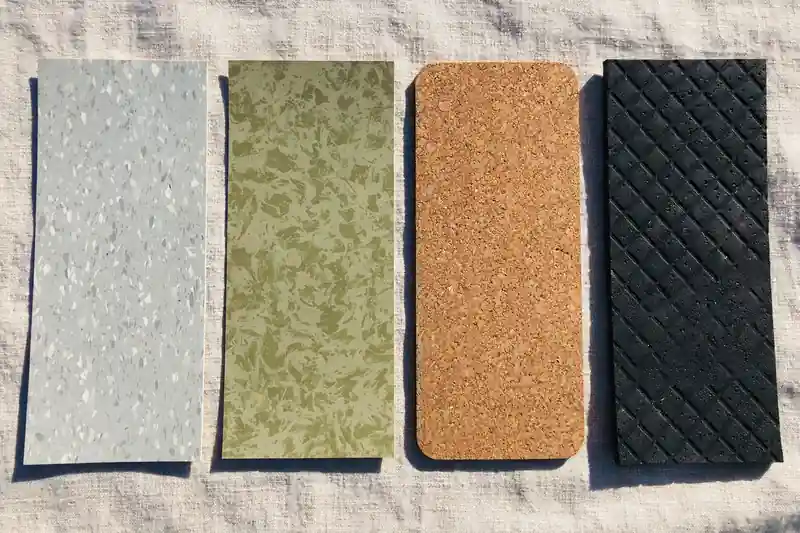
The industry uses standards to define each product. For example, VCT, sheet vinyl, rubber tile, linoleum and cork each have their own product standards.
Where does resilient flooring sit between hard and soft floors?
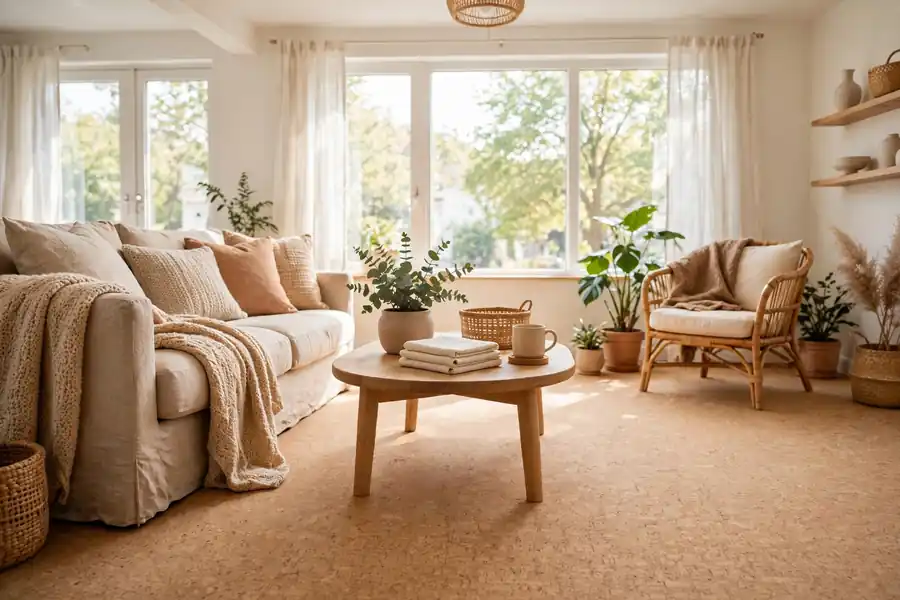
Resilient floors sit in the middle. Stone, tile and hardwood are hard, carpet is soft, and vinyl, linoleum, cork and rubber fall between them. That middle position is why they feel warmer and quieter than hard floors, but firmer and easier to clean than carpet.
What are the types of resilient flooring?
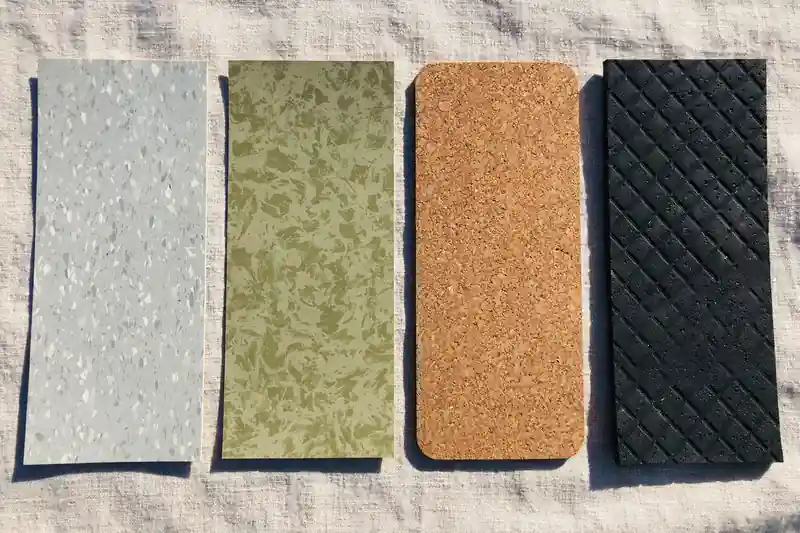
The main types are vinyl, linoleum, cork, rubber and vinyl composition tile. Vinyl comes in sheets, tiles and planks, including luxury vinyl and rigid-core products. The industry term for rigid-core planks is hybrid resilient flooring. Older asphalt tile belongs to the family, but it is rarely sold now.
Vinyl
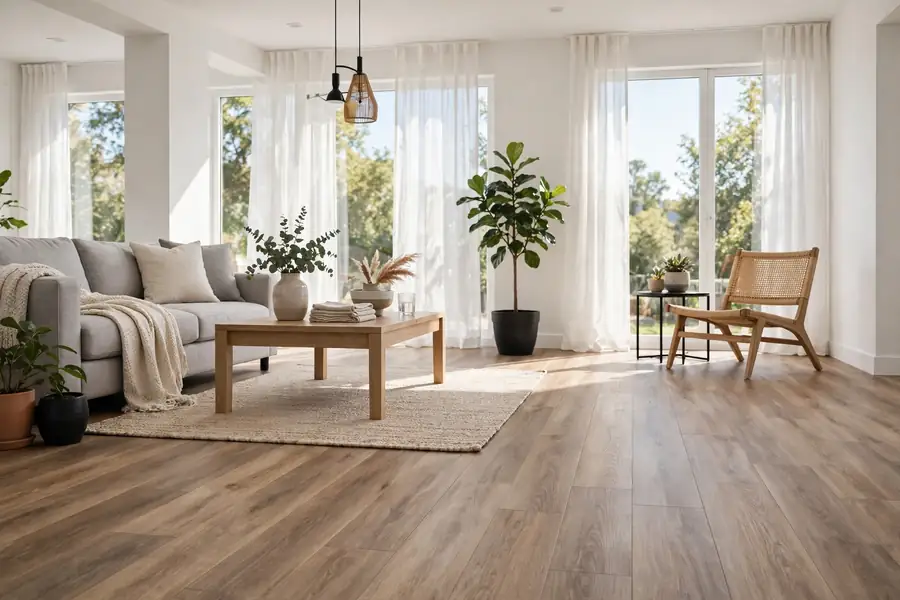
Vinyl is the dominant resilient floor. Its clear wear layer is durable, stain-resistant and easy to clean, and it comes in many looks. See what is LVP flooring and what is LVT flooring.
Linoleum
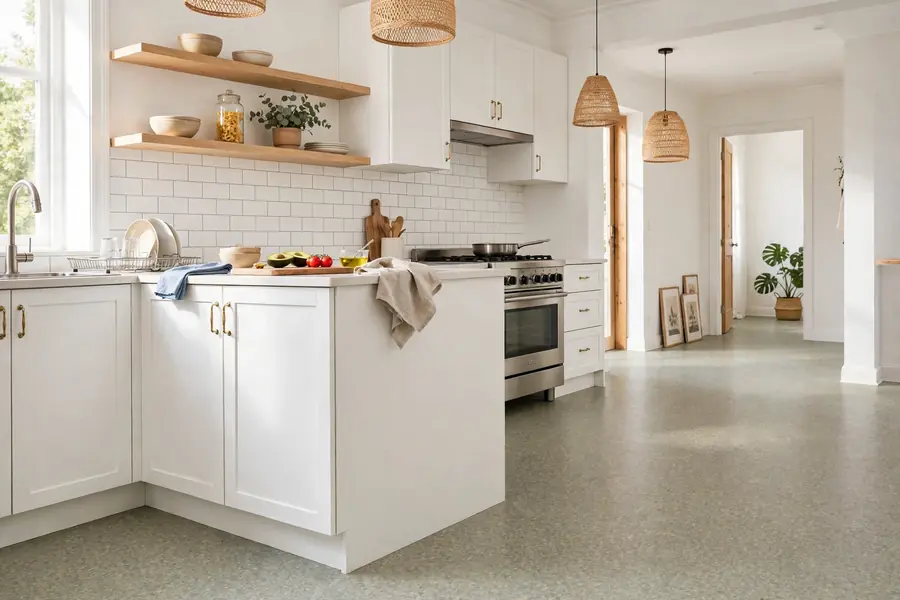
Linoleum is made from linseed oil from flax, pine rosin, wood flour, ground cork and limestone, pressed onto a jute backing. It is natural, soft underfoot and long-lived, and it is not vinyl, despite the common mix-up.
Cork
Cork is sensitive to moisture and abrasion, so it needs sealing and gentle care. It is soft, warm and quiet. See how to clean cork flooring.
Rubber
Rubber is suited to high-impact spaces such as gyms and garages. It is shock-absorbing and slip-resistant, and it is not sensitive to water, though it can be affected by abrasion and some chemicals. Some rubber floors have a strong smell at first, so ventilate the room for a few days after installation.
VCT
VCT is a hard, thin commercial tile made of limestone and a vinyl binder, usually finished with polish.
How much does resilient flooring cost?
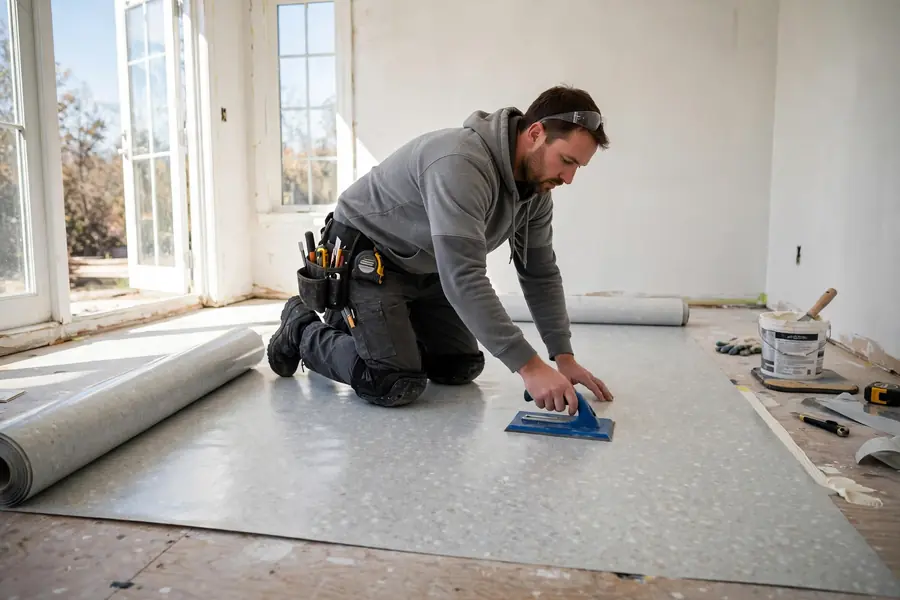
Resilient flooring is generally lower in cost than tile, stone and hardwood, and rubber and linoleum cost more than vinyl. One guide puts installed sheet vinyl at about $1.50 to $4 per square foot, luxury vinyl at about $3 to $9, linoleum at about $4 to $8 and rubber at about $4 to $12, depending on grade.
What are the pros and cons of resilient flooring?
| Pros | Cons |
|---|---|
| Softer and warmer than tile or stone | Can dent or tear |
| Many types are water-tolerant | Not all are waterproof, and seams matter |
| Easy to clean | Usually cannot be refinished |
| Lower cost than hardwood or tile | Less resale appeal than real wood |
| Quieter underfoot | Some types need sealing or special care |
| Many looks and formats | Some are hard to recycle |
Is resilient flooring waterproof?
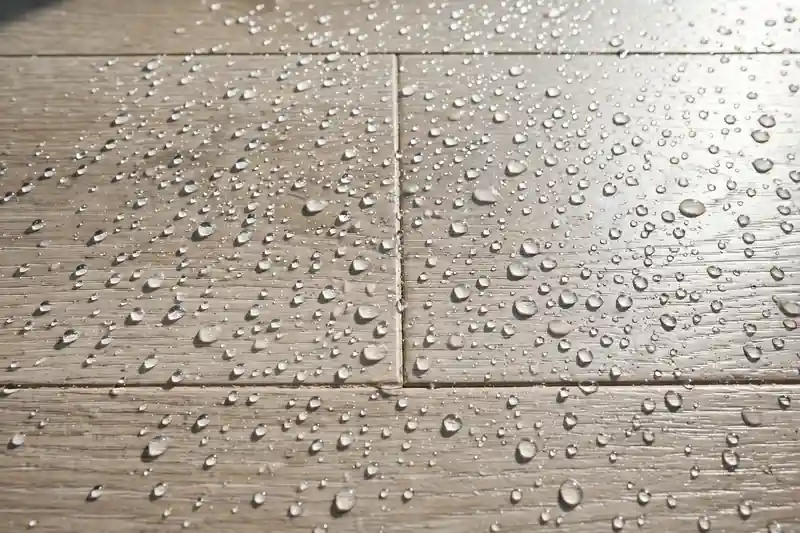
Some types are water-tolerant, and none is a guarantee. Vinyl and rubber resist water, linoleum and cork need sealing, and water can still enter through seams and sit on the subfloor. Read is vinyl flooring waterproof for how to protect the whole floor.
Where should you use resilient flooring?
Use it in kitchens, bathrooms, laundry rooms, basements, offices, gyms and busy family rooms. Choose by room: vinyl for wet areas, linoleum for natural kitchens and halls, cork for soft, quiet bedrooms and offices, and rubber for gyms and garages.
Quick answers to common questions
Is resilient flooring the same as vinyl?
Not exactly. Vinyl is the biggest type of resilient flooring, but linoleum, cork, rubber and VCT are resilient too.
Is resilient flooring waterproof?
Some types resist water, but none protects the subfloor on its own. Seams and edges are the weak points.
Is resilient flooring good for kitchens?
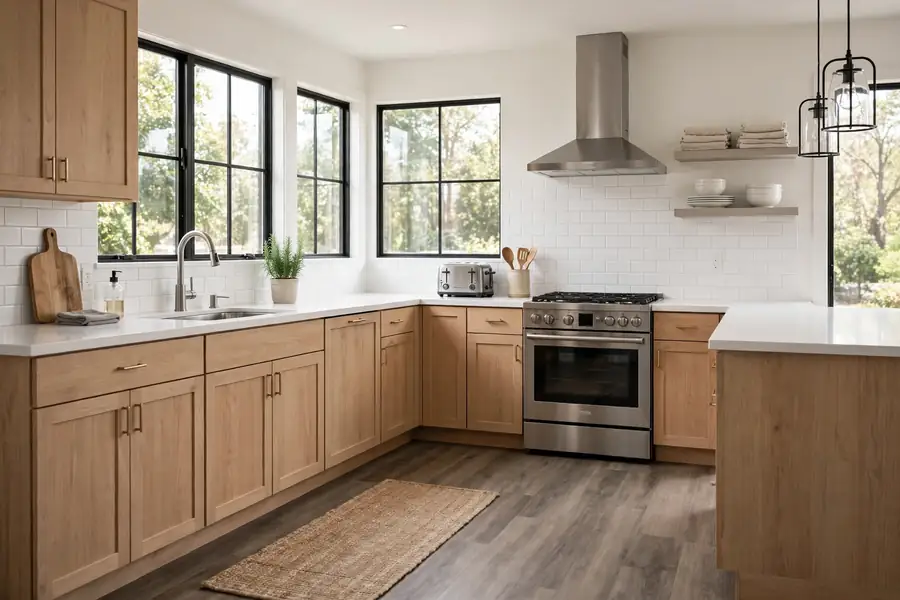
Yes. Vinyl and linoleum are popular kitchen floors because they are comfortable and easy to clean.
Is resilient flooring durable?
Many types are, especially vinyl with a thick wear layer. They wear out sooner than tile or hardwood, but they cost less.
How is resilient flooring different from hardwood?
It is manufactured, softer underfoot, usually water-tolerant and cheaper, but it cannot be refinished like hardwood.
Is resilient flooring right for your home?
Resilient flooring is right for most homes because it is comfortable, practical and affordable across a wide range of rooms. Choose the type by the room, check the wear rating and prepare the subfloor well. For a first look at the whole field, see the best types of flooring for homes.