Find the source, vacuum it out, wash or freeze what you cannot clean, and treat only the cracks where larvae hide. The beetles you see flying are not the problem. The larvae chew wool, fur, feathers and lint, and they hide in dark spots for months. Sanitation does most of the work, and a labeled spray in cracks is a backup. Expect weeks to months, not days.
Carpet beetle control at a glance
| Question | Short answer |
|---|---|
| What causes the damage? | The larvae, not the adults |
| First step | Find where they feed and hide: dark, undisturbed spots |
| Main fix | Vacuum, hot wash or dry clean, freeze what cannot be washed |
| Do sprays work? | As a backup in cracks, after vacuuming. Foggers do not |
| Do they bite? | No. Larval hairs can cause an itchy rash |
| How long does it take? | Several weeks to months, since larvae develop slowly |
| What kills them instantly? | Nothing reaches the hidden larvae instantly |
| When to call a pro | Attic nests, repeat infestations, or damage you cannot trace |
What do carpet beetles look like?
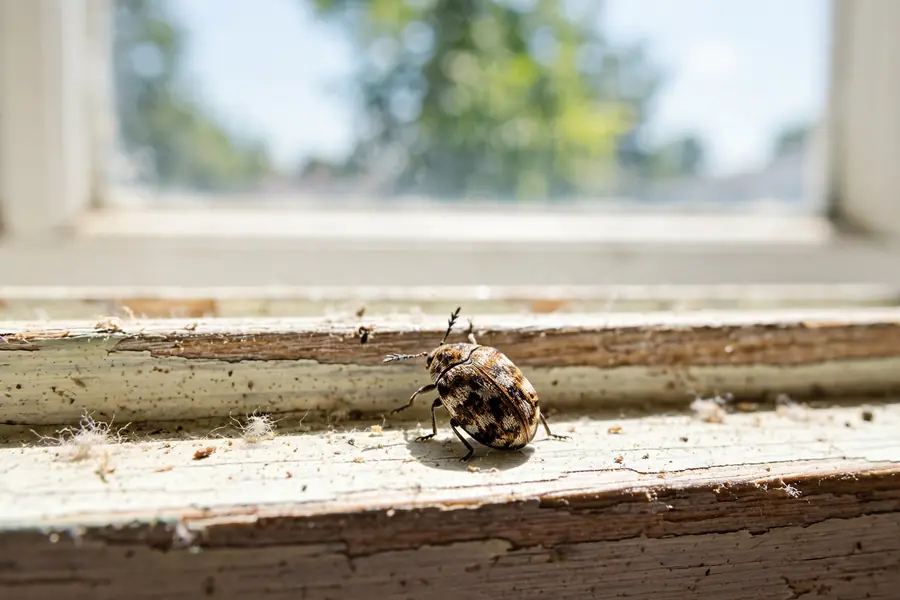
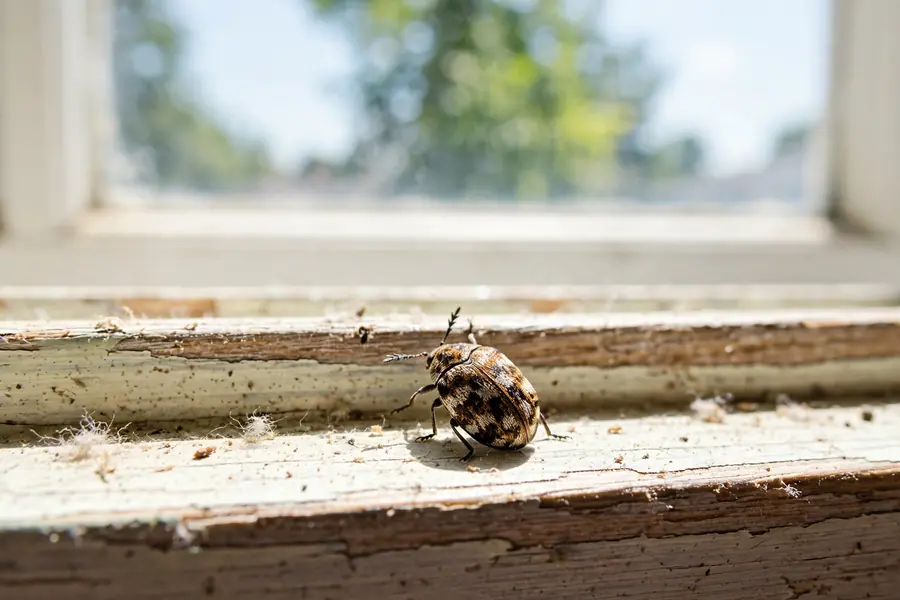
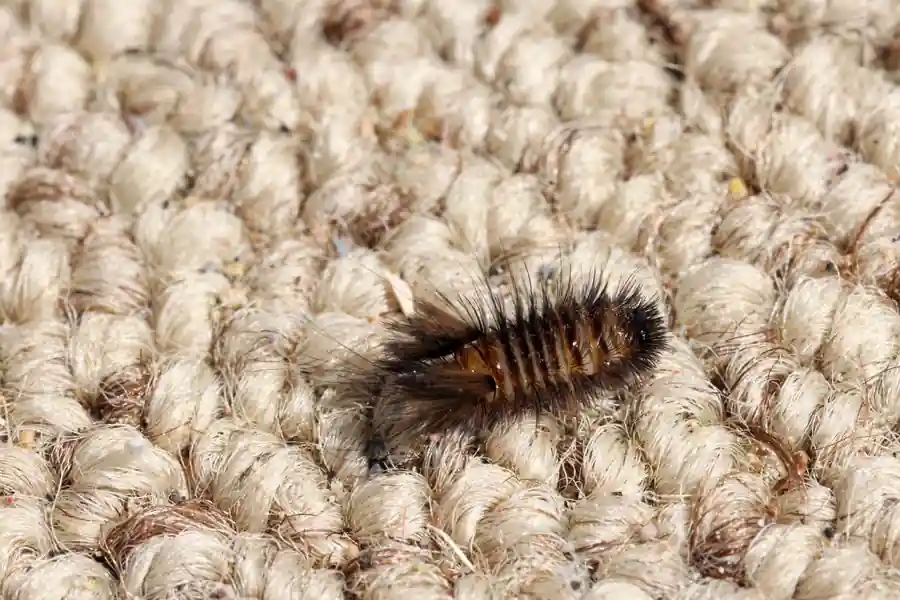
Adults are tiny, round beetles about 1/8 inch long. Varied, furniture and common carpet beetles look alike, with mottled white, tan, yellow, brown and black scales. The black carpet beetle is the most common species, and it is small, shiny and oval. The larvae are the part that matters. They are hairy and carrot-shaped, up to about 1/2 inch long, and they look like tiny fuzzy worms.
| Stage | What to look for | What it does |
|---|---|---|
| Adult | Round or oval, 1/8 to 3/16 inch, mottled or black | Flies in, feeds on pollen outdoors, lays eggs indoors |
| Larva | Hairy, carrot-shaped, tan to dark brown | Chews wool, fur, feathers, silk and lint |
| Shed skin | Empty, bristly husks | A sign that larvae have been feeding nearby |
| Droppings | Tiny pellets, about the size of a grain of salt | Shows where they feed |
What causes carpet beetles?
Carpet beetles come in from outdoors, on used items, or from a hidden food source inside. They are not a sign of a dirty home. Adults feed on pollen, so they fly in through open windows and doors in spring and early fall, and they are drawn to light. They also ride in on cut flowers, secondhand rugs and vintage clothes.

Where do carpet beetles come from?
Often from a nest or a pile of animal material you cannot see. In the wild, females lay eggs in bird nests, wasp nests and spider webs, which hold feathers and dead insects. A nest or a dead animal in an attic or a wall void can feed a population that spreads into the living space. Indoors, they feed on pet hair, lint, wool, silk and dried pet food.
Do 90% of homes have carpet beetles?
No reliable source backs that number, but carpet beetles are very common. One small university survey found larvae in every home it checked, and another extension source says most homes older than about two years probably have some. Having a few in a home does not mean you have an infestation. The problem starts when larvae find a good food source and breed.
How do you know you have carpet beetles?
Look for damage, shed skins and larvae in dark spots. Larvae avoid light and feed in closets, drawers, folds of upholstery and along baseboards. Shed skins and the salt-size droppings are often easier to find than the larvae, and they show where the feeding is happening.
- Irregular holes in wool, silk, fur or feathers, with thin or shredded edges
- Bristly shed skins under furniture, in closets or along carpet edges
- Tiny pellets in drawers, boxes or at the base of a rug
- Adults on window sills, especially in spring
- Damage on stored items you have not touched in months
How to get rid of carpet beetles in the house, step by step
Find the source, vacuum, wash or freeze, then treat cracks only if needed. This works because it removes the larvae's food and hiding spots while killing the stages you find.
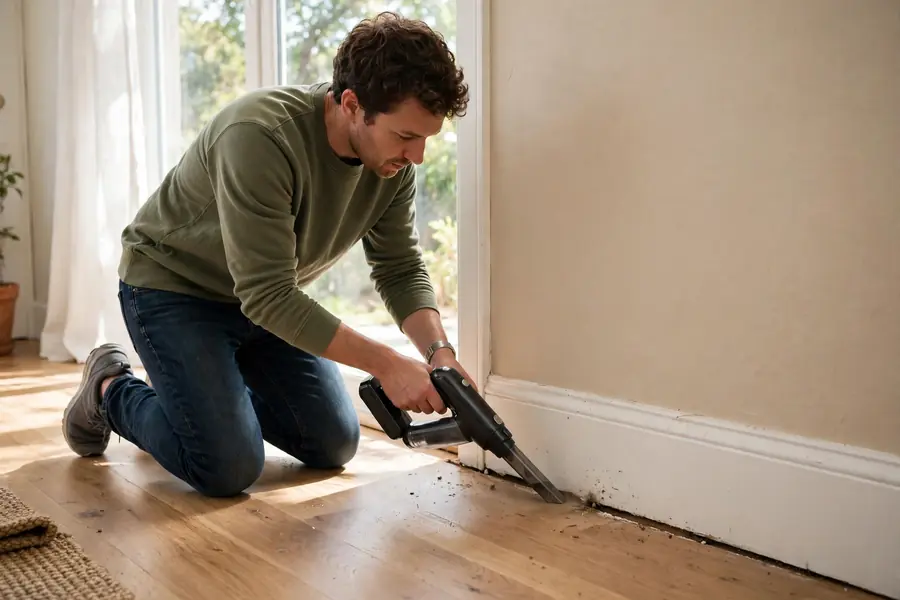
- Find the source. Check closets, drawers, under furniture, along baseboards, inside upholstery, and attics. Look for shed skins and damaged fibers.
- Vacuum thoroughly. Focus on cracks, corners, baseboards and the edges and undersides of rugs. Vacuuming the middle of a rug does little, because larvae stay at the edges and underneath. Empty the vacuum outside.
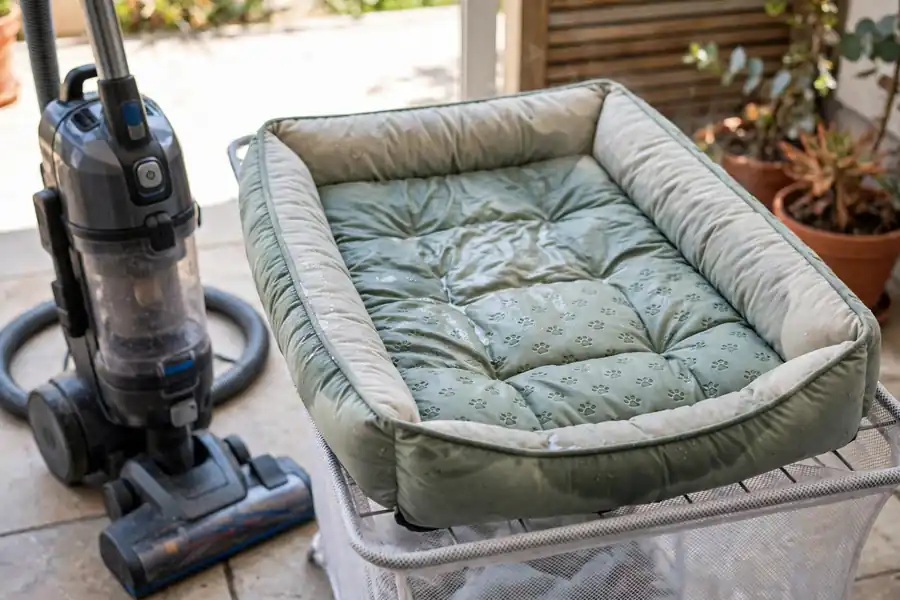
- Clean or treat fabrics. Wash what you can in hot water, or dry clean. Freeze or heat what you cannot wash.
- Remove or replace infested items. Throw out badly damaged things you do not need, in a sealed bag.
- Treat cracks if needed. After vacuuming, apply a labeled crack-and-crevice product along baseboards and in hidden gaps.
- Seal and store. Close gaps, and keep wool and silk in airtight containers.
- Keep monitoring. Vacuum weekly for a month or more, and check for new shed skins.
How do you get rid of carpet beetle larvae?
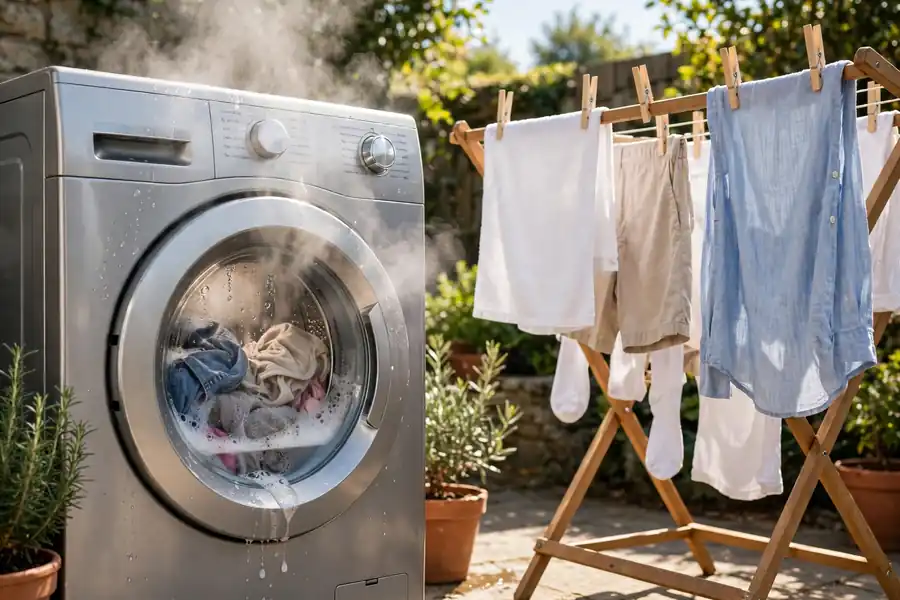
Heat, freezing, hot washing, dry cleaning and thorough vacuuming kill larvae. Use the one that suits the item. Larvae hide in fibers and dark folds, so the method has to reach them.
| Method | What it kills | Notes |
|---|---|---|
| Hot wash | All stages in washable items | Follow the care label, since heat shrinks wool |
| Dry cleaning | All stages | A good choice for wool, silk and fur |
| Freezing | All stages, if cold enough for long enough | Bag the item first. Museum guidance uses about 0°F (-18°C) for two weeks, and dense items need extra time to freeze through. Some extension sheets give much shorter times |
| Heat | Larvae and eggs | One extension source lists above 105°F for four hours. Do not use dryer heat on wool |
| Vacuuming | Larvae and eggs it picks up | Repeat weekly, then empty the bag outside |
| Crack treatment | Larvae in hiding spots | Backup only, after cleaning |
Do not clean an item before freezing it. Bag it first, freeze, then clean it afterward, so the larvae do not scatter.
What kills carpet beetles instantly?
Nothing kills them all instantly, because most are hidden as larvae. A contact spray or a soapy-water spray will kill the adults and larvae it touches. A vacuum picks up what it reaches. But eggs and larvae in fibers, cracks and dark spots survive, so the problem returns if you stop there.
- For a beetle on a window sill, vacuum it or wipe it with a soapy cloth.
- For larvae in a rug, vacuum the edges and treat the cause. Do not spray the whole rug.
- Skip bug bombs and foggers. Extension specialists call them ineffective for carpet beetles because the mist does not reach the hiding places.
Does carpet beetle spray work?
A labeled spray helps in cracks, but it does not replace cleaning. Sanitation removes the food, and it may be enough without any insecticide. If you use one, apply it after vacuuming and only where the label allows.
- Use a product labeled for carpet beetles, and follow the label exactly.
- Target cracks, baseboards, closet edges and the undersides of furniture.
- Do not spray clothing or bedding directly. Treat what cannot be washed by spot-treating it as the label allows.
- Keep children and pets out of the area until it dries.
- For attics and wall voids, a professional may use an insecticidal dust with precautions against breathing it.
How do you get rid of carpet beetles naturally?
Cleaning, washing, freezing and heat are the natural methods that work. They remove or kill the larvae without chemicals. Sprays of plant oils and powders such as diatomaceous earth or boric acid are common suggestions, but extension sources do not back them with solid evidence.
| Natural method | Does it work? |
|---|---|
| Vacuuming cracks and edges | Yes, the core of control |
| Hot wash or dry clean | Yes, kills all stages |
| Freezing in a bag | Yes, with enough time and cold |
| Sunlight and airing out | Helps check and shake out items, but it does not clear hidden larvae |
| Vinegar spray | Cleans surfaces, but no evidence it kills larvae |
| Diatomaceous earth, boric acid | Sometimes used in cracks, but there is no reliable evidence for carpet beetles |
| Cedar, lavender, mothballs | No dependable proof, and mothballs are toxic |
Does baking soda kill carpet beetles?
No reliable evidence says it does. Baking soda is not an insecticide. Sprinkling it on a carpet and vacuuming can pick up lint and debris, and it may freshen the rug, but the larvae in the backing and edges are not likely to be affected. Vacuum thoroughly, with or without it.
How do you get rid of black carpet beetles?
Use the same steps, and check the pantry and pet food too. The black carpet beetle is the most common species and the larvae eat wool, fur, feathers, lint and some stored or soiled materials. They are carrot-shaped, and many have a tail of long hairs. They also feed on dried pet food, so seal kibble in a hard container.
- Vacuum along baseboards and under furniture.
- Wash or dry clean wool and stained fabrics, and freeze what cannot be washed.
- Check the pantry and pet food area for spilled kibble.
- Clean light fixtures, window sills and vents where dead insects collect.
How do you get rid of carpet beetles in bed?
Hot wash the bedding, vacuum the mattress and bed frame, and look at the whole room. Carpet beetles usually are not living in the mattress for food. Larvae feed on animal fibers, so check wool blankets, feather pillows, stored clothes, and the carpet or rugs near the bed.
- Strip the bed and wash the sheets, blankets and pillowcases hot, as the care labels allow.
- Vacuum the mattress seams, the bed frame, the headboard and the floor beneath it.
- Check wool blankets, feather pillows and stored bedding for damage.
- Vacuum the carpet and baseboards in the room, and empty the vacuum outside.
- Wash or dry clean anything stored under the bed.
If you wake with bites in lines or clusters, or find blood spots on sheets, have a professional check for bed bugs. The two pests are often confused, and the wrong treatment wastes money.
Are carpet beetles harmful?
They damage fabric, but they do not bite. The larvae have barbed hairs that can cause an itchy, blotchy rash and sometimes eye or breathing irritation in people who are sensitive. This is called carpet beetle dermatitis, and it is often mistaken for bed bug or flea bites. A medical case series noted that this mix-up leads to needless, toxic insecticide use.
- Wash clothing and bedding that touched your skin, and store clean items in airtight bags.
- See a doctor if a rash is severe or does not clear. Antihistamines and a topical steroid are the usual treatments.
- Do not spray your skin or bedding with pesticide.
How do you get rid of carpet beetles permanently?
You remove the source, clean until the larvae are gone, and keep the home sealed and tidy. No one treatment guarantees they never return, because adults can fly in from outside. The goal is to make your home a poor place for larvae.
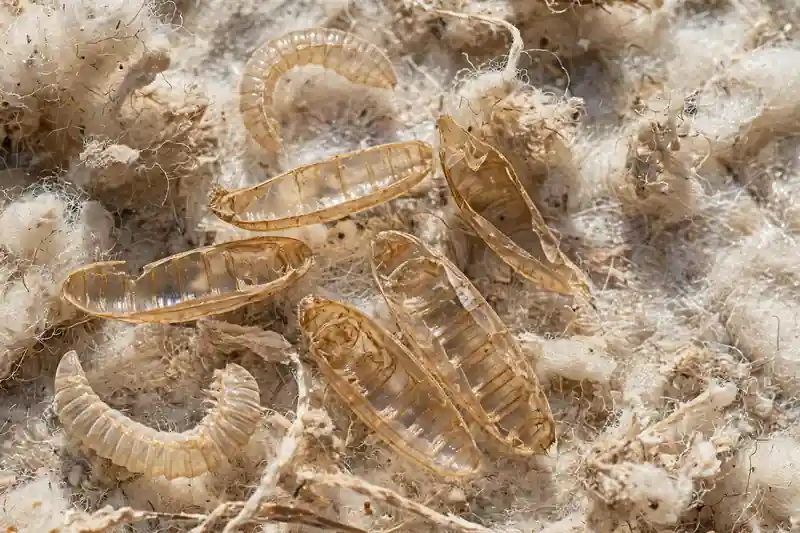
Because the larval stage can last from a few months to a few years, expect several weeks of cleaning and checks. Vacuum weekly for at least a month, then monthly. If new shed skins or damage keep appearing, there is a food source you have not found, often in an attic, wall void or a forgotten box.
How do you stop carpet beetles from coming back?
Keep fibers clean, stored items sealed and entry points closed. Carpet beetles need food, and your goal is to take it away.
- Vacuum regularly, especially along baseboards, under furniture, in closets and around pet beds.
- Wash or dry clean wool, silk and fur before storing, and keep them in airtight bins.
- Store dried pet food in hard containers and sweep up spills.
- Repair torn window and door screens, and seal gaps around frames.
- Check cut flowers for beetles before bringing them in.
- Inspect used rugs, furs and vintage clothes before they go in your home.
- Clear dead insects from window sills, vents and light fixtures.
- Remove bird or wasp nests near the house when it is safe, and check attics.
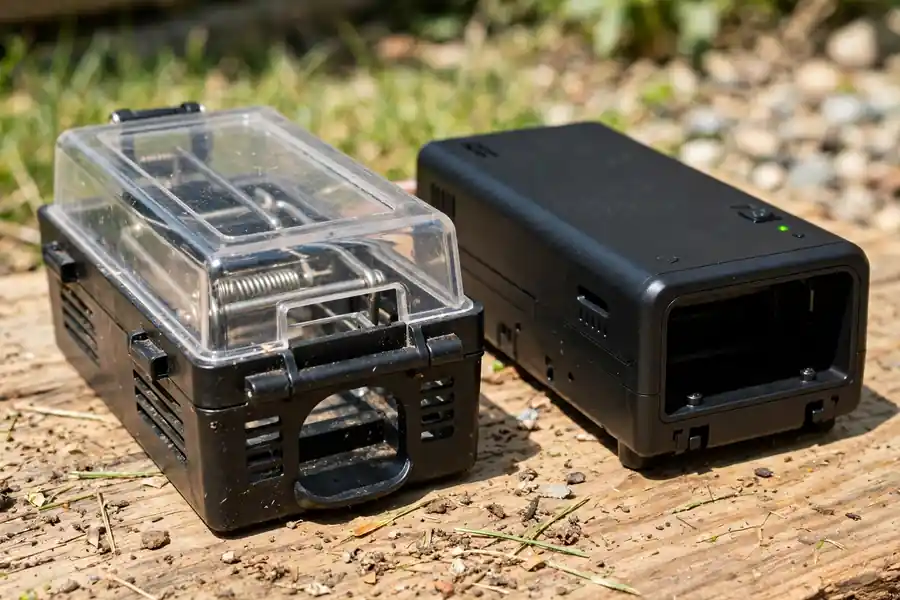
- Use a pheromone or sticky trap to monitor. Traps help you see whether beetles are present, but they do not clear an infestation.
When should you call a pro, and what does it cost?
Call a pest professional for attic or wall infestations, repeat problems, or damage you cannot trace. A pro can find hidden nests, treat cracks and voids, and tell carpet beetles apart from other pests. Prices vary, and these are rough estimates from cost guides.
| Service | Rough cost |
|---|---|
| One-time insecticide visit for carpet beetles | About $150 to $250 |
| Typical per-visit range | About $200 to $400 |
| Whole-home heat treatment | About $1,500 to $4,000 |
Ask what the technician will treat, what you should wash or discard first, and whether a follow-up visit is included.
Quick answers to common questions
How do you get rid of carpet beetles permanently?
Find and remove the food source, vacuum and wash everything, then seal gaps and store fabrics airtight. Keep checking for several weeks, since larvae develop slowly.
What kills carpet beetles instantly?
Nothing kills the hidden larvae instantly. A vacuum or contact spray handles what you can reach, and cleaning handles the rest.
What causes carpet beetles?
Adults fly in for pollen, or arrive on flowers and used items, then lay eggs near wool, pet hair, lint or stored fabrics. Nests in attics can also feed them.
Do carpet beetles bite?
No. Larval hairs can cause an itchy rash that looks like a bite.
Does baking soda kill carpet beetles?
There is no reliable evidence that it does. Vacuuming, washing and freezing work better.
Keep reading: how to get rid of silverfish, how to get rid of ants, termite treatment and more pest control guides.
Is it hard to get rid of carpet beetles for good?
It takes patience, but it is manageable. To get rid of carpet beetles for good, find the source, clean and treat fabrics, vacuum the hiding spots for weeks, and close the gaps that let them in. If damage keeps showing up, look for a hidden nest in the attic or a wall before you buy another spray.