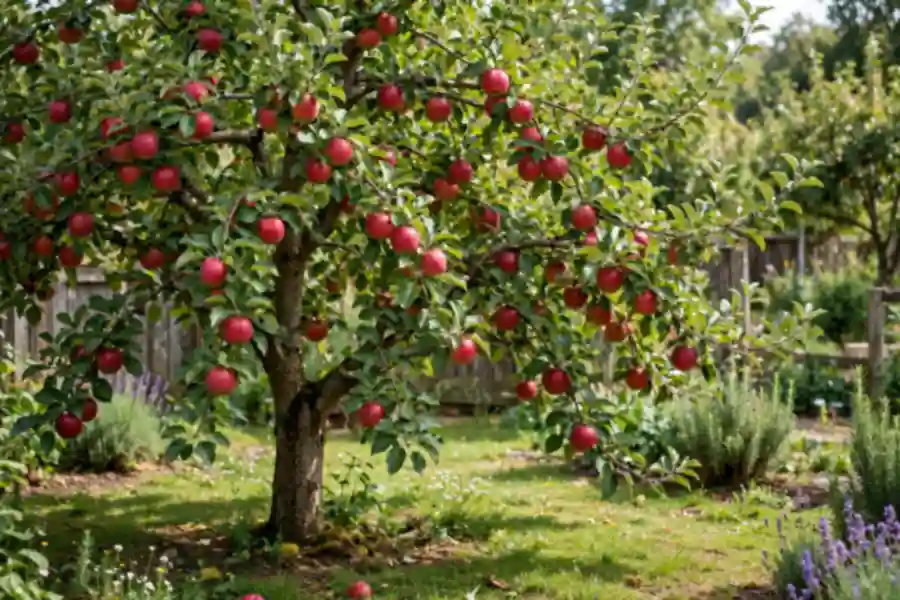
An apple tree (Malus domestica) is a deciduous fruit tree that needs full sun, well-drained soil and, for most varieties, a second variety nearby for pollination. A grafted tree bears fruit in about 2 to 5 years if it is a dwarf or semi-dwarf and 6 to 10 years if it is a full-size tree. Plant bare-root trees in early spring, prune in late winter while the tree is dormant, and choose a variety suited to your winter cold and disease pressure.
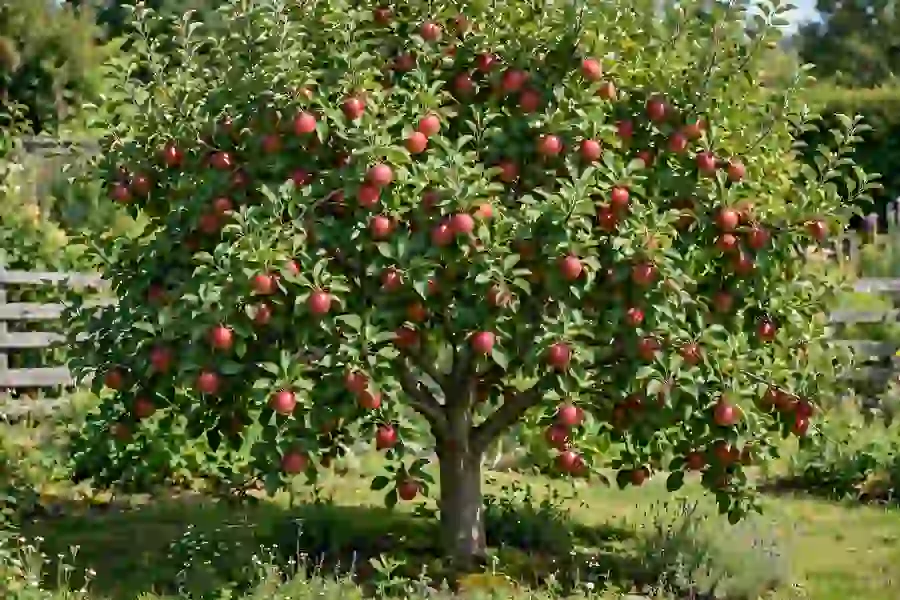
Apple tree at a glance
| Question | Answer |
|---|---|
| Scientific name | Malus domestica (the crabapples are other Malus species) |
| Sun | Full sun, 6 to 8 hours or more |
| Soil | Well-drained loam, pH about 6.0 to 7.0 |
| Hardiness | Roughly zones 3 to 9, depending on variety |
| Size | Dwarf 8 to 10 ft, semi-dwarf 12 to 18 ft, standard 20 to 30 ft |
| First fruit | Dwarf 2 to 3 years, semi-dwarf 4 to 5, standard 6 to 10 |
| Pollination | Most need a different variety blooming at the same time |
| Water | About 1 inch a week, more in the first two years |
| Prune | Late winter, before buds swell |
| Lifespan | About 30 to 45 years for grafted trees. Old standards can live longer |
What does an apple tree look like?
| Part | What to look for |
|---|---|
| Leaves | Alternate, oval, with a pointed tip and finely toothed edges, dull green above and paler and slightly downy underneath |
| Blossoms | Five petals, white to pink, in clusters of 5 or so, open in mid-spring |
| Bark | Gray-brown, smooth on young trees, scaly and flaky on old ones |
| Twigs and buds | Fruit grows on short, stubby side twigs called spurs, easy to spot in winter |
| Fruit | 2 to 4 inches wide, ripens late summer to late fall |
| Roots | Mostly shallow and wide, spreading to about the width of the branches, with a few deeper roots |
| Shape | Rounded, spreading crown. Columnar types are narrow |
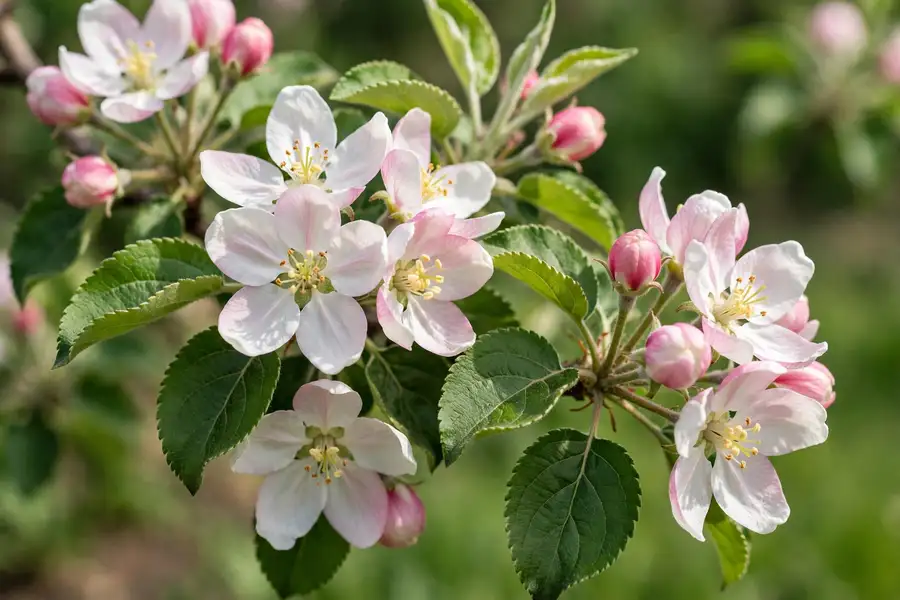
Wild apple trees grow from discarded cores and seeds. They are often thorny, with small, sour fruit that is fine for cider or wildlife. Crabapples have fruit under about 2 inches wide.
What size are apple trees, and how fast do they grow?
The rootstock the variety is grafted onto sets the size. The variety sets the fruit.
| Type | Height | Spacing | First fruit | Typical lifespan |
|---|---|---|---|---|
| Standard | 20 to 30 ft | 25 to 30 ft | 6 to 10 years | 35 to 45 years or more |
| Semi-dwarf | 12 to 18 ft | 12 to 18 ft | 4 to 5 years | 30 to 35 years |
| Dwarf | 8 to 10 ft | 6 to 10 ft | 2 to 3 years | 30 to 35 years |
| Columnar | 8 to 10 ft tall, 2 ft wide | 2 to 3 ft | 1 to 3 years | About 15 to 20 years |
Sources vary a little on these numbers, so treat them as ranges. Young trees grow roughly 1 to 2 feet a year, faster with water and sun.
Growth stages: a grafted tree goes from dormant sapling to first blossoms in 2 to 8 years, then to a full crop a few years later. Dwarfs fill out fastest, standards slowest.
Full-grown size also depends on pruning. You can keep a semi-dwarf at 8 to 10 feet with yearly cuts.
Dwarf rootstocks need support. A common dwarfing rootstock called M.9 has weak roots and needs a stake for the life of the tree.
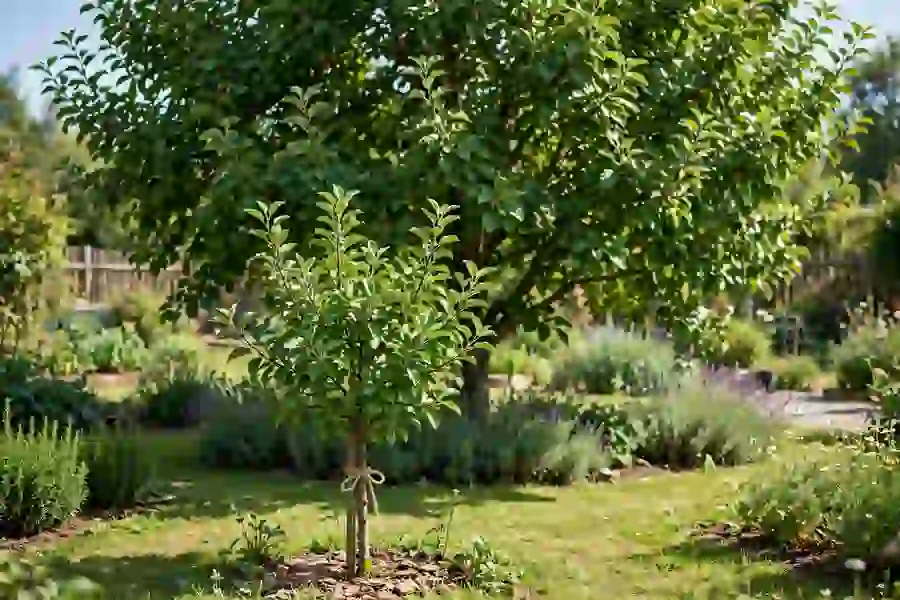
Dwarf, columnar, espalier, bonsai and multi-grafted trees
- Dwarf and mini apple trees suit small yards and big pots. Use a container at least 20 inches wide (about 15 to 20 gallons) with drainage.
- Columnar apple trees (such as Scarlet Sentinel and North Pole) grow upright with short fruiting spurs along one stem. They fit patios and narrow beds.
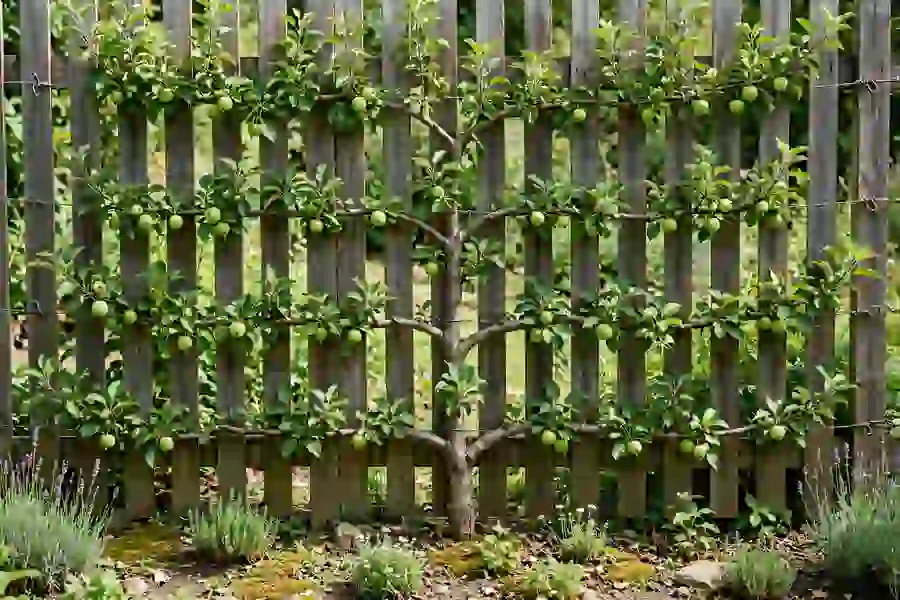
- Espalier apple trees are trained flat against a wall, fence or wire in tiers. Use dwarf or semi-dwarf trees, tie branches to the wires and prune twice a year, in winter and summer.
- Bonsai apple trees are possible but need patience. Crabapples and dwarf varieties work best. They need outdoor winters, because the tree must go dormant.
- Multi-grafted apple trees (3-in-1, 4-in-1 and 5-in-1) carry several varieties on one trunk, so one tree can pollinate itself. Watch for the strongest variety taking over, and prune it harder.
Which apple tree varieties are best?
Climate decides first. Cold winters suit Honeycrisp and McIntosh. Long hot seasons suit Fuji, Granny Smith and Pink Lady. Mild winters need low-chill varieties. Zones below are typical nursery ranges and vary by source, so check the tag.
| Variety | Fruit | Notes |
|---|---|---|
| Honeycrisp | Red-yellow, crisp, sweet-tart | Very cold hardy (zones 3 to 8). Needs a pollinator. Can be fussy |
| Gala | Red-gold, mild and sweet | Reliable and widely adapted. Often about zones 5 to 8 |
| Fuji | Red-pink, very sweet, stores well | Wants a long, warm season. Often about zones 6 to 9 |
| Granny Smith | Green, tart | Late blooming and ripening, long season. The classic baking apple. Often about zones 6 to 9 |
| Pink Lady | Pink-red, tart-sweet | Needs a long, warm season to ripen |
| Golden Delicious | Yellow, sweet | Widely grown. Often used as a pollinator for other apples |
| Red Delicious | Deep red, mild | Old standard. Fruit quality varies by climate |
| McIntosh and Cortland | Red-green, tart, soft | Cold hardy (about zones 4 to 7). Cortland browns slowly when cut |
| Liberty | Red, tart-sweet | Good scab resistance. About zones 4 to 8 |
| Braeburn and Empire | Red, crisp | Braeburn likes warmer summers. Empire is cold hardy |
| Cosmic Crisp | Red, very crisp, stores long | Newer. Needs a pollinator |
| Northern Spy, Jonathan, Wolf River | Tart | Baking and cooking apples. Wolf River fruit is huge |
| Arkansas Black | Nearly black-red, hard | Late, keeps for months |
| Zestar and Haralson | Red, tart | Very cold hardy (about zones 3 to 4). Zestar ripens early |
| Jonagold, Mutsu, Winesap, Gravenstein | Mixed | Triploids. They cannot pollinate other apples |
| Anna and Dorsett Golden | Sweet, red-blushed and yellow | Low-chill types for mild winters. They bloom together and pollinate each other |
| Ein Shemer | Yellow | Another low-chill type |
| Hidden Rose, Pink Pearl, Lucy Glo | Pink or red flesh | Novelty apples |
| Rockit | Tiny snack apple | Grown for size, not baking |
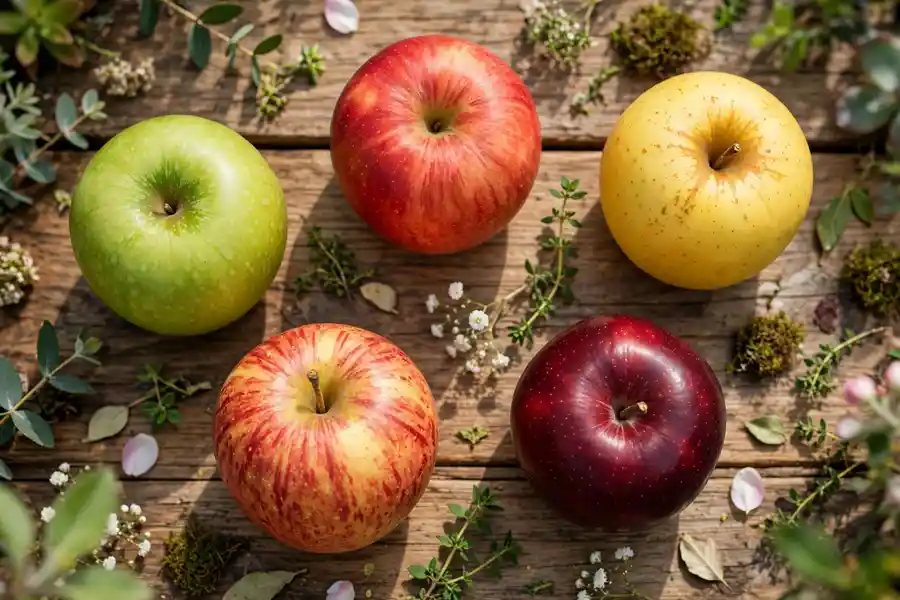
By trait: the picks below come from breeder and nursery descriptions.
| Need | Choose |
|---|---|
| Disease resistant | Liberty, Freedom, Enterprise, Pixie Crunch, Gold Rush |
| Coldest winters | Honeycrisp, Haralson, Zestar, Wolf River |
| Warm winters (low chill) | Anna, Dorsett Golden, Ein Shemer |
| Early apples | Zestar, Lodi, Gravenstein |
| Late, long-keeping apples | Arkansas Black, Cosmic Crisp, Gold Rush, Winesap |
| Baking | Granny Smith, Northern Spy, Wolf River, Jonathan |
| Cider | Winesap, Northern Spy, wild and crabapples |
Green, red, yellow and black apple trees: Granny Smith is the green one, Golden Delicious and Opal are yellow, Red Delicious and Fuji are red, and Arkansas Black is the darkest.
Chill hours: most apple varieties need about 500 to 1,000 hours between 32 and 45°F in winter to bloom well. Honeycrisp is reported at 800 to 1,000. Anna is reported at about 200 to 300. In zone 9, pick low-chill varieties. Your local extension office can give your chill hours.
What is a crabapple tree?
A crabapple is an ornamental Malus tree with small fruit under about 2 inches wide. It is grown mainly for spring blossoms in white, pink or red, and for its fall fruit that feeds birds.
| Question | Answer |
|---|---|
| Size | 8 to 25 feet depending on variety. Weeping, dwarf and upright forms exist |
| Blossoms | White, pink and red. Some are fragrant |
| Fruit | Small, tart and edible, usually used for jelly. Some varieties drop little fruit |
| Pollinator | A good one for apple trees, since it blooms for a long time |
| Problems | Same as apples: scab, fire blight, rust. Choose disease-resistant varieties |
| Common types | Flowering, weeping, Siberian, Japanese, white, red, pink and snow (Spring Snow is a nearly fruitless type) |
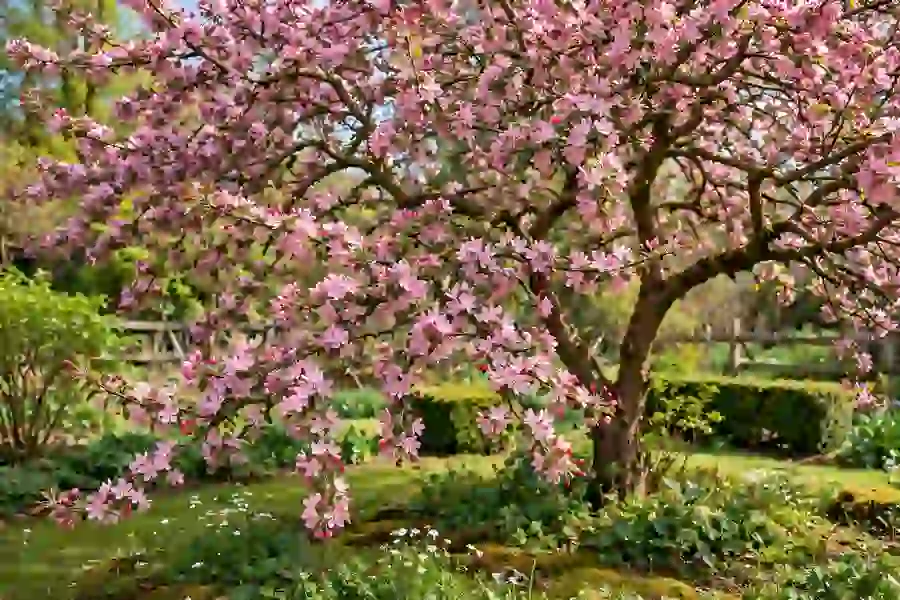
Treat a crabapple like an apple for planting and pruning.
Where and when do you plant an apple tree?
When: plant bare-root trees in early spring while dormant, as soon as the soil can be worked. In mild climates, fall planting works. Container trees can go in any time the ground is not frozen or baking.
Where: full sun, good air flow, well-drained soil and no low frost pockets. Avoid planting beneath black walnut, which can stunt apples.
How:
- Soak bare roots in water for a few hours before planting.
- Dig a hole as deep as the roots and 2 times wider.
- Spread the roots and set the tree so the graft union (the bump on the trunk) stays 2 to 3 inches above the soil. If it is buried, the top can root and the tree will grow to full size.
- Backfill with the same soil. Skip heavy amendments in the planting hole, which can trap water.
- Water well and mulch 3 to 4 inches deep, keeping mulch off the trunk.
- Stake dwarf trees. Add a trunk guard against voles and rabbits.
- Prune a bare-root whip lightly at planting to start the shape.
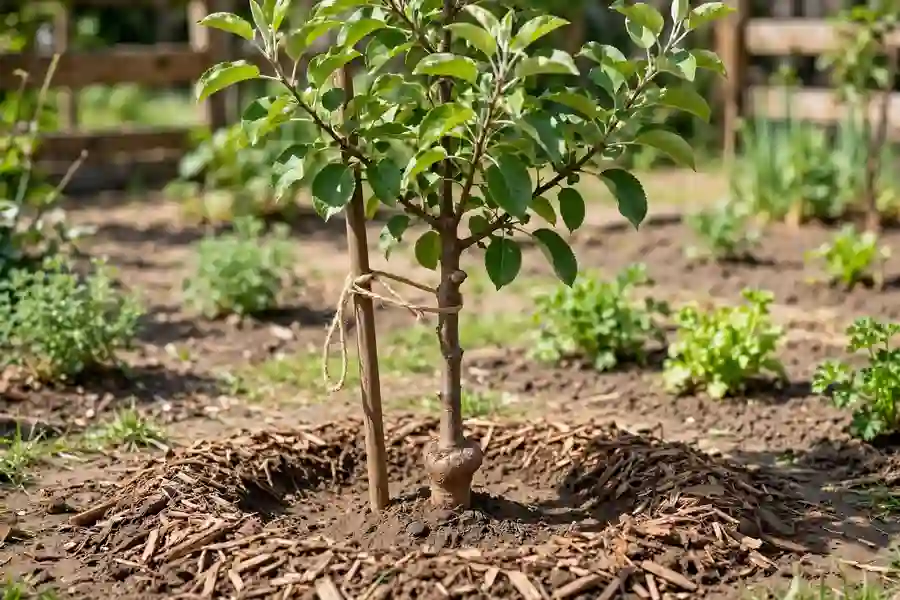
Spacing: see the size table. Allow about 6 to 10 feet for dwarfs, 12 to 18 for semi-dwarfs and 25 to 30 for standards.
Soil: apples like loam that drains well. Test the soil first. Add compost to heavy or sandy soil. Our how to compost guide covers making your own. For other trees that grow quickly, see fast growing trees.
Do you need two apple trees to get fruit?
Usually, yes. Most apples need pollen from a different variety that blooms at the same time. Bees carry it between flowers.
- Plant the second tree within about 50 feet. Closer is better.
- A crabapple blooming nearby also pollinates apples.
- Triploids (Jonagold, Mutsu, Winesap, Gravenstein) make sterile pollen, so they need pollinators, and they cannot pollinate others. Sources disagree whether one or two partners are needed, so plant two other varieties to be safe.
- "Self-fertile" apples still crop better with a partner.
- A multi-grafted tree carries a partner on the same trunk.
- Honeybees and mason bees do the work. Avoid spraying while trees are in bloom.
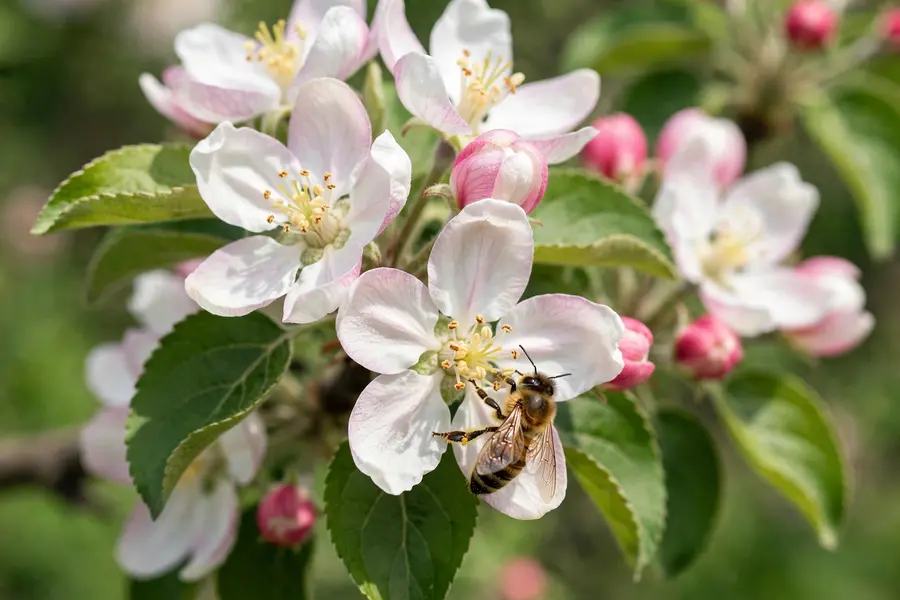
Pollination chart basics: nurseries sort apples into early, mid and late bloom groups. Match your tree with one in its own group or the next one over. The overlap in bloom matters more than the label. Mid-season bloomers commonly include Gala, Honeycrisp, Golden Delicious, McIntosh and Liberty. Bloom dates shift by region, so check the chart your nursery gives you.
How do you care for an apple tree?
| Task | What to do |
|---|---|
| Water | About 1 inch a week, deep and slow. Water young trees every week or two in dry spells for the first two years |
| Mulch | 3 to 4 inches, out to the drip line, away from the trunk |
| Fertilizer | Apply in early spring, based on a soil test. A balanced fertilizer or compost works |
| Weeds and grass | Keep a 3-foot circle clear around the trunk |
| Fruit thinning | Thin to one apple per cluster about 4 to 6 inches apart, after fruit set |
| Protection | Trunk guards for voles and rabbits, fencing against deer |
Best fertilizer for apple trees: a balanced fertilizer or compost, applied in early spring. Too much nitrogen gives soft, leafy growth and invites fire blight, so skip heavy feeding. Check growth: bearing trees often make 8 to 12 inches of new growth a year, and young trees more. If growth is strong, skip fertilizer. Fertilizer spikes are easy to use but feed unevenly, so a measured spring application is better. If leaves turn pale in spring, test the soil before adding more.
Fruit drop: a "June drop" of small fruit is natural thinning.
Biennial bearing: some varieties crop heavily one year and lightly the next. Thin fruit in heavy years to even it out.
Harvest: apples are ripe when they twist off easily, the seeds are brown and the color is full for the variety. Store them cool.
When and how do you prune an apple tree?
When: late winter or early spring, while the tree is dormant, before buds swell. Do light summer pruning, in July or August, to remove water sprouts and thin dense growth. Do not prune in fall, when the tree is going dormant.
How:
- Remove the three Ds: dead, diseased and damaged wood.
- Cut crossing and rubbing branches.
- Remove water sprouts (straight shoots from branches) and suckers (shoots from the base or roots).
- Thin crowded branches so sun reaches the center.
- Shorten leaders a little to keep the tree at a reachable height.
- Cut just outside the branch collar, not flush with the trunk.
- Clean tools with rubbing alcohol or a bleach solution between trees, especially if fire blight is nearby.
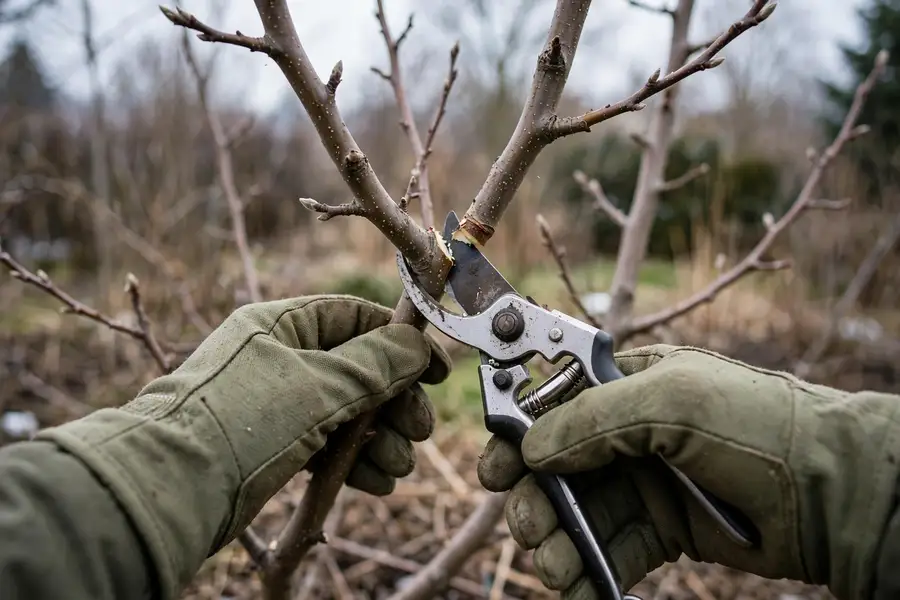
Two training styles: a central leader has one main trunk with tiers of branches (common for apples). An open center has 3 to 4 main limbs and a low, vase shape.
Pruning a young apple tree: at planting, cut a bare whip back to about 30 to 36 inches. In the first few years, pick the best 3 to 4 side branches, wide-angled, and remove the rest.
Over-pruned or badly pruned tree: removing too much at once triggers a burst of water sprouts. Spread corrective cuts over 2 to 3 years, taking no more than about a quarter to a third of the canopy a year. Keep your pruning tools sharp. See how to prune roses for the same cut technique on a smaller plant.
Before and after: a well-pruned tree has an open center, no crossing branches and light reaching the middle. An unpruned one is a dense thicket with small, shaded fruit.
Can you grow an apple tree from a seed?
Yes, but you will not get the same apple. Apple seeds do not grow true to the parent, so the fruit may be small, sour or poor. A seedling can take 6 to 10 years or more to fruit. It is a fun project, not a way to get reliable apples.
How to start apple seeds:
- Take seeds from a ripe apple and rinse them.
- Chill the seeds in damp paper towel in a bag in the fridge, about 35 to 40°F, for 6 to 8 weeks (cold stratification).
- Plant them about half an inch deep in a pot of potting mix.
- Keep the soil moist and put the pot in bright light. Sprouts appear in a few weeks.
- Move to a bigger pot and later to the ground.
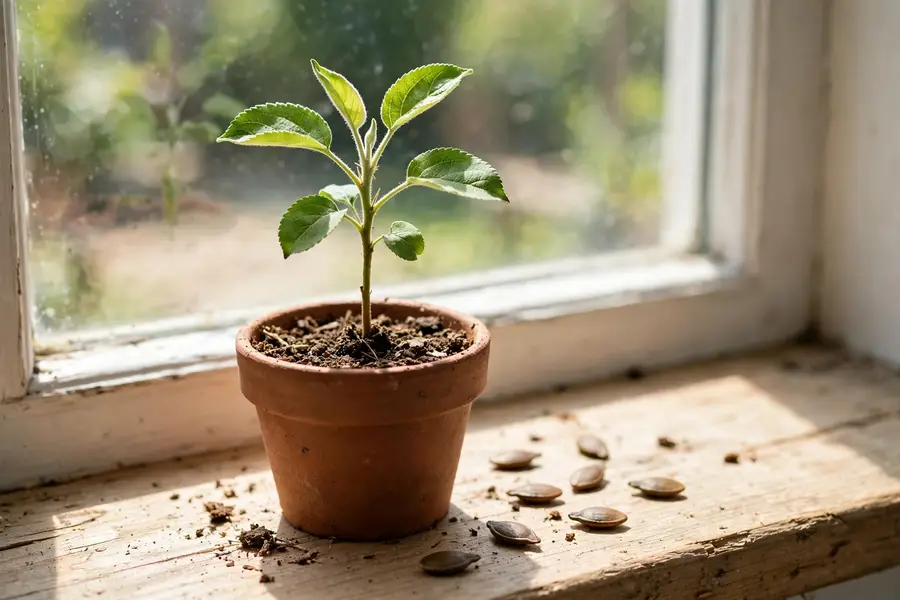
A sprout is a seedling. If you want a specific variety, use grafting.
Grafting an apple tree: to copy a variety, join a cut piece of that tree (the scion) onto a rootstock. Collect dormant scion wood in winter, store it cool and graft in early spring (a whip-and-tongue graft is the usual one for beginners). Budding in late summer is another method. A grafted tree bears much sooner than a seedling.
Cuttings from apple trees rarely root, which is why grafting is used.
Rootstock: the Malling (M) series sets size, such as M.9 (dwarf) and M.26. Geneva (G) series rootstocks are bred for disease resistance. Pick a rootstock for your size needs and soil.
What diseases and pests affect apple trees?
| Problem | Signs | What to do |
|---|---|---|
| Apple scab | Olive-green to brown spots on leaves and fruit, early leaf drop | Rake leaves, prune for air flow, grow resistant varieties, spray fungicide if needed |
| Cedar apple rust | Yellow-orange spots on leaves in spring | Needs a nearby juniper or red cedar. Plant resistant varieties and remove junipers if you can |
| Fire blight | Blossoms and shoots turn black and bent like a shepherd's crook | Prune out infected wood well below the damage in dry weather, disinfect tools |
| Powdery mildew | White fuzz on leaves and shoots, curled leaves | Prune for air flow, resistant varieties, fungicide |
| Cankers and bark fungus | Sunken, cracked or oozing bark | Cut out dead wood, avoid wounds, keep the tree healthy |
| Sooty blotch and flyspeck | Smudges and dots on fruit skin | Cosmetic. Prune for air flow |
| Leaf curl and leaves curling | Curled, distorted leaves | Aphids are the usual cause. Spray with water or insecticidal soap |
| Codling moth and apple maggot | Worm holes in fruit | Traps, bagging fruit, sanitation, timed sprays |
| Borers and scale | Sawdust at the base, crusty bumps on bark | Protect trunks, dormant oil for scale |
| Voles, rabbits, deer | Gnawed bark, browsed shoots | Trunk guards, fencing |
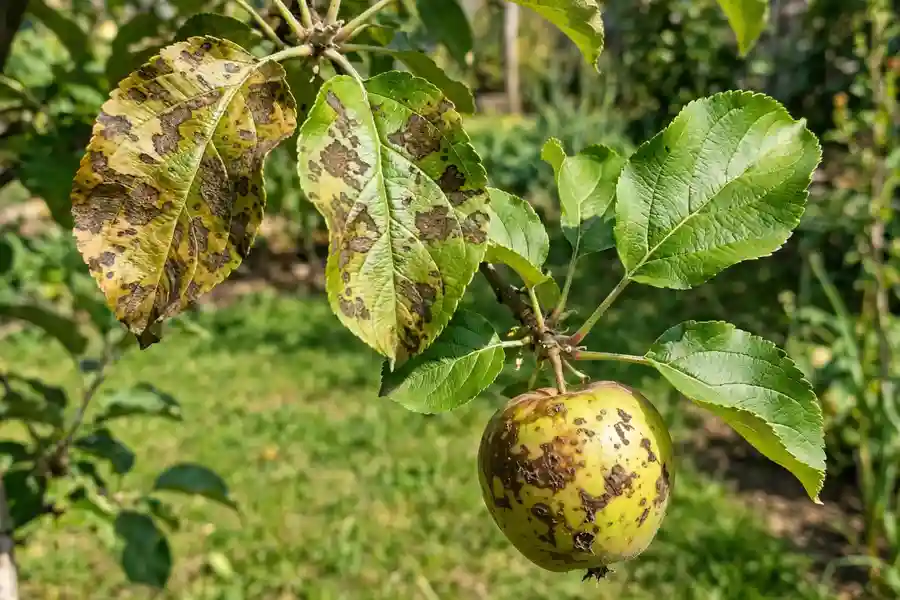
Why are the leaves yellow, brown or spotted?
| Symptom | Likely cause |
|---|---|
| Yellow leaves | Overwatering, poor drainage, nutrient shortage or natural fall color |
| Brown leaves or brown spots | Scab, fire blight, drought, leaf scorch or herbicide drift |
| Yellow spots | Cedar apple rust |
| Leaves turning brown in summer | Drought stress or fire blight |
| Curling leaves | Aphids or powdery mildew |
| White fuzz | Powdery mildew or woolly apple aphid |
Look at where the symptom starts, and photograph it for your local extension office if unsure.
Apple tree spray schedule: home orchard sprays depend on your climate and on which problems your trees get, so follow the label and your local extension guide.
| Stage | Typical step |
|---|---|
| Dormant (late winter) | Dormant oil for scale and mites, or copper for fire blight, if needed |
| Green tip to pink bud | Fungicide for scab and rust, starting at green tip and repeating every 7 to 10 days in wet weather |
| Bloom | Do not spray. Protect bees |
| Petal fall | Insecticide against codling moth if needed |
| Summer | Sprays at 10 to 14 day intervals if needed, following the label |
| After harvest | Rake and destroy leaves |
Resistant varieties and good sanitation cut spraying a lot.
What plants grow well with apple trees?
An apple tree guild puts helpful plants in the circle under the tree: chives or garlic (they may deter pests), nasturtium, comfrey and clover (for soil), and yarrow, borage and dill for pollinators. Daffodils around the trunk help keep grass back. Keep grass and weeds off the trunk itself.
Is an apple tree toxic?
Apple seeds, leaves and stems contain compounds that can release cyanide. A few swallowed seeds are not a concern for people, but horses, dogs and cats should not eat fallen leaves, twigs or large amounts of seeds. Ripe flesh is safe.
What is apple tree wood used for?
Apple wood is dense and burns slowly. It is a popular firewood and smoking wood, with a mild, fruity smoke, and it is used for carving and small woodwork.
What does an apple tree do each season?
| Season | What the tree does | What to do |
|---|---|---|
| Winter | Dormant. Spurs and buds are visible | Prune, graft, apply dormant sprays |
| Spring | Buds break, blossoms open in clusters, bees pollinate | Plant, fertilize, protect blooms from frost |
| Summer | Fruit sets, June drop, fruit swells | Thin fruit, water, control pests |
| Fall | Fruit ripens, leaves turn yellow and drop | Harvest, rake leaves, mulch, trunk guards |
Life cycle: seed, seedling, juvenile tree (no flowers), flowering tree, then a mature fruiting tree for decades.
What else is called an "apple tree"?
Many trees have "apple" in the name but are not Malus.
| Name | What it is |
|---|---|
| Crabapple | A true Malus. Small ornamental fruit |
| Hedge apple or horse apple | Osage orange (Maclura pomifera). Bumpy green fruit, not edible. A thorny hedge tree |
| Sugar apple and custard apple | Tropical Annona trees with sweet, creamy fruit |
| Rose apple, wax apple and Malay apple | Tropical Syzygium trees with fruit eaten fresh |
| Star apple | A tropical tree with a purple or green fruit that has a star-shaped core |
| Pond apple | A swamp tree in the Annona family from Florida and the Caribbean |
| Wood apple | A tropical tree with a hard-shelled fruit |
| Cashew apple | The swollen stalk of the cashew nut |
| Thorn apple | Names vary: it can mean a hawthorn tree or the toxic jimsonweed plant |
| Pine apple | Pineapple, a ground-growing plant, not a tree |
| Death apple, poison apple tree, manchineel | Hippomane mancinella, a coastal tree in Florida and the Caribbean. Every part is highly poisonous. The sap blisters skin, and standing under it in rain can burn. Never touch, eat or burn it |
Is the Isaac Newton apple tree story true?
Partly. Newton said he was inspired to think about gravity by watching an apple fall at his family home, Woolsthorpe Manor in Lincolnshire, England, around 1666. The popular picture of an apple hitting him on the head is probably an embellishment. A tree at Woolsthorpe, said to be the one, is a Flower of Kent cooking apple. It blew over in a storm long ago and regrew from its roots, and grafted copies grow in gardens around the world.
What does "the apple doesn't fall far from the tree" mean?
It means children tend to resemble their parents, usually in character or habits. The saying is old, comes from the idea that a ripe apple drops close to the trunk, and is not about apple growing.
What do Adam and Eve and The Wizard of Oz have to do with apple trees?
The Bible calls the forbidden fruit just "fruit" and never names an apple, so the apple tree is a later tradition in art. In the 1939 film The Wizard of Oz, a grove of apple trees throws apples at Dorothy and her friends.
Quick answers to common questions
How long does it take for an apple tree to bear fruit?
Dwarf trees bear in 2 to 3 years, semi-dwarfs in 4 to 5 and standards in 6 to 10. A tree grown from seed can take 6 to 10 years or more.
When is the best time to prune an apple tree?
Late winter or early spring, while the tree is dormant. Add light summer pruning for water sprouts.
Do you need two apple trees to get fruit?
Usually. Plant a different variety that blooms at the same time within about 50 feet. A crabapple or a multi-grafted tree also works.
Can you grow an apple tree from a seed?
Yes, after 6 to 8 weeks in the fridge. The fruit will differ from the parent apple, and it takes years.
How tall does an apple tree get?
Dwarfs reach 8 to 10 feet, semi-dwarfs 12 to 18 and standards 20 to 30. Pruning can hold them smaller.
Keep reading: fast growing trees, dogwood tree, how to grow strawberries, how to compost and more lawn and garden guides.
Should you grow an apple tree?
Yes, if you have a sunny spot and some patience. An apple tree gives blossoms in spring and fruit for decades. Pick a disease-resistant variety, plant a pollinator, and prune each winter.