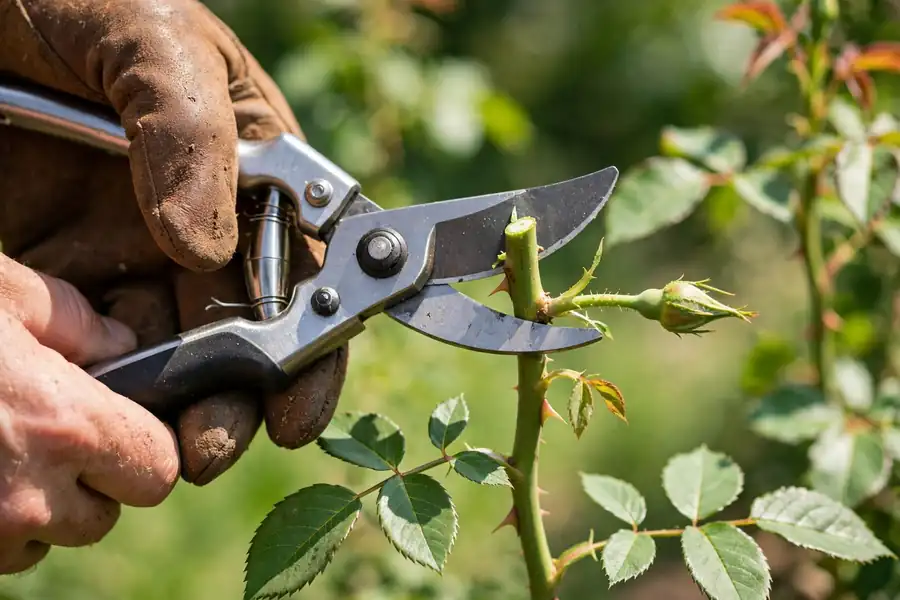
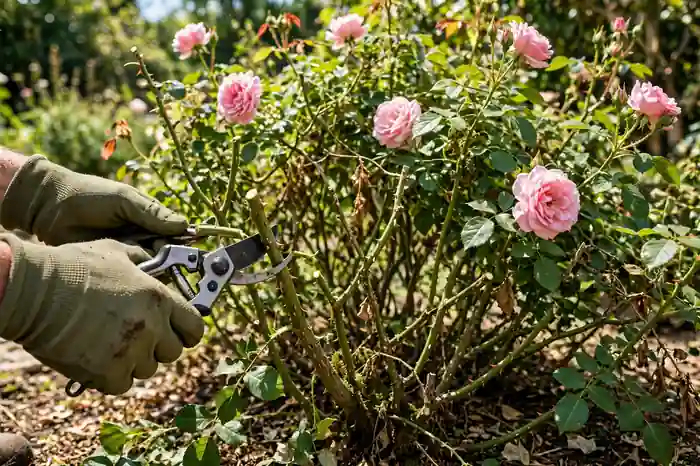
To prune roses, wait until late winter or early spring when the buds start to swell, then use clean, sharp pruners to cut out dead, damaged and diseased canes, remove crossing and weak growth, and cut the remaining canes back by about a third to a half. Make each cut about a quarter inch above an outward-facing bud, slanted away from it. Prune climbers right after they bloom.
Pruning keeps roses healthy, shapely and full of flowers. It opens up the plant to light and air, removes disease and tells the rose where to put new growth. The right timing and a few simple cuts matter more than exact measurements. This guide covers every common situation, from a first spring prune to a summer deadhead, climbing roses, shrub roses, overgrown plants and winter care.
How to prune roses at a glance
| Question | Short answer |
|---|---|
| Best time | Late winter to early spring, as buds swell |
| Climbers and once-bloomers | Right after they flower |
| Tools | Sharp bypass pruners, loppers, gloves |
| Where to cut | 1/4 inch above an outward-facing bud, slanted away |
| First cuts | Dead, damaged, diseased and crossing canes |
| How far | Cut back by about a third to a half, more for hybrid teas |
| Deadheading | Cut spent flowers back to the first 5-leaflet leaf |
| Fall | Light tidy only. Save hard pruning for spring |
| Overgrown roses | Thin the oldest canes and cut back over 2 to 3 years |
| If you never prune | Plants get dense, leggy and prone to disease |
When is the best time to prune roses?
Late winter to early spring, just as the buds start to swell and before leaves open. In many areas that is when forsythia shrubs are blooming. If you prune too early, a late freeze can kill new growth. If you prune too late, you cut off new shoots.
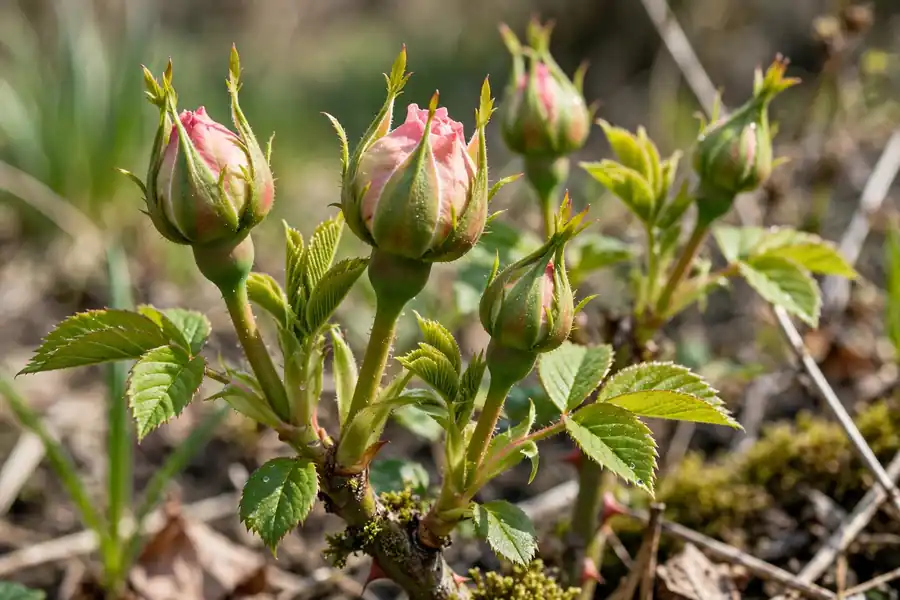
- Cold climates: wait until the worst frost has passed and buds are swelling, often March or April.
- Mild climates: roses may keep growing in winter, so prune in January or February, a few weeks before the last frost.
- Climbers, ramblers and once-blooming roses: these flower on old wood, so prune right after their bloom in early summer. Pruning them in spring cuts off the flowers.
- Reblooming shrub roses: prune in early spring, and trim lightly after the first flush.
- A rule of thumb: if the soil is above about 55°F, you are usually safe to prune.
What tools do you need to prune roses?
Sharp bypass pruners, a pair of loppers for thicker canes, a small saw for old wood and thick gloves. Bypass pruners slice like scissors and make clean cuts. Anvil pruners crush stems, so avoid them for roses.
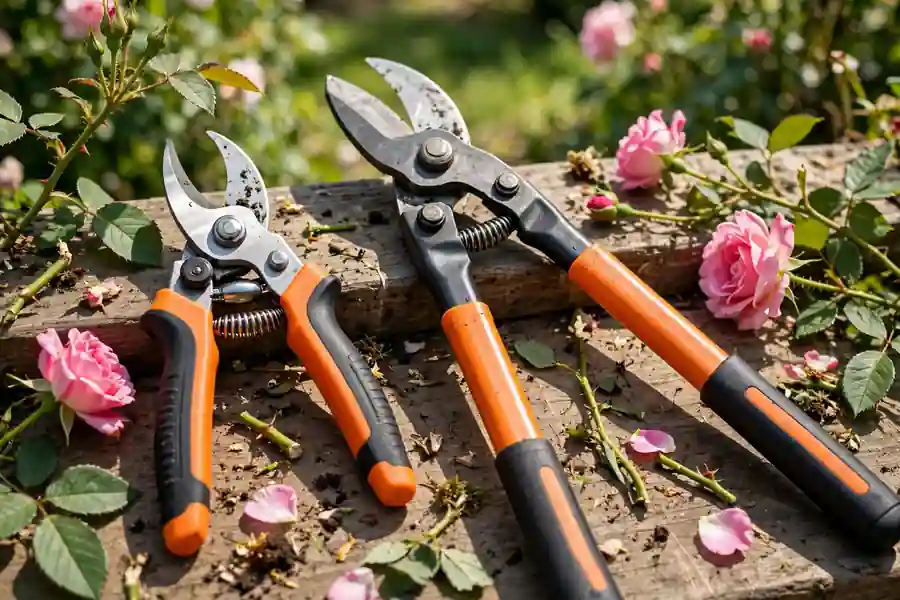
Wipe the blades with rubbing alcohol between plants and after cutting diseased canes, so you do not spread problems. Sharp blades make cleaner cuts that heal faster.
How do you make a proper rose cut?
Cut about a quarter inch above an outward-facing bud, at a 45 degree angle that slopes away from the bud. The bud is a small bump where a leaf joined the cane. The cane grows out from that bud, so choosing one that points away from the center of the bush opens up the plant.
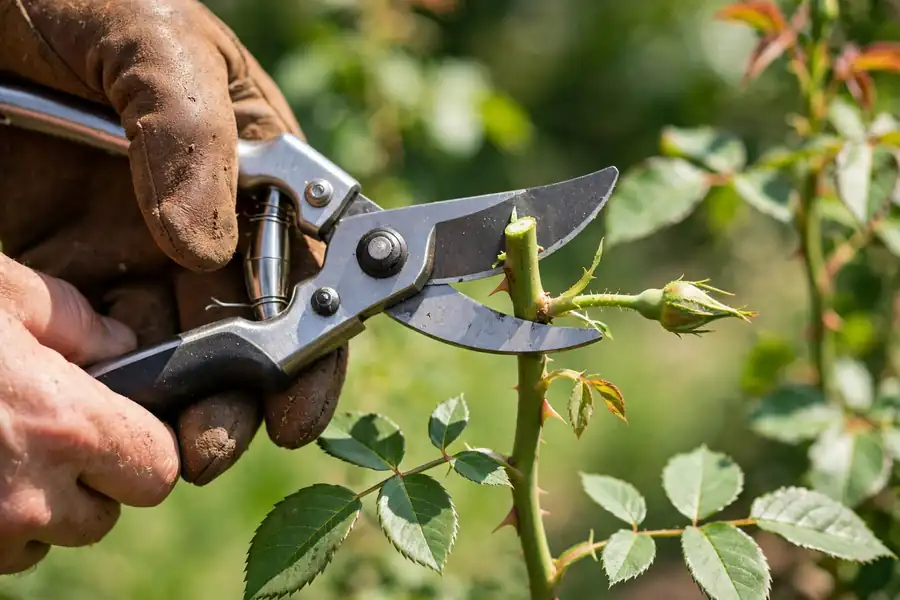
- Angle: slant the cut so water runs off the bud.
- Distance: too close harms the bud, and too far leaves a stub that dies back.
- Clean cut: one clean snip, not a chewed stem.
- Thick canes: if a cut surface is larger than a pencil, some gardeners seal it with a dab of glue or wound paint to keep out cane borers. Many experts say sealing is not needed, so it is optional.
- Inside the plant: keep the center open, like a vase, so air moves through.
What should you cut out first?
Remove anything dead, damaged or diseased first, then crossing, weak and sucker growth. This is often called the three Ds, with a few extras. Do this on every rose before you decide how far to cut the rest.
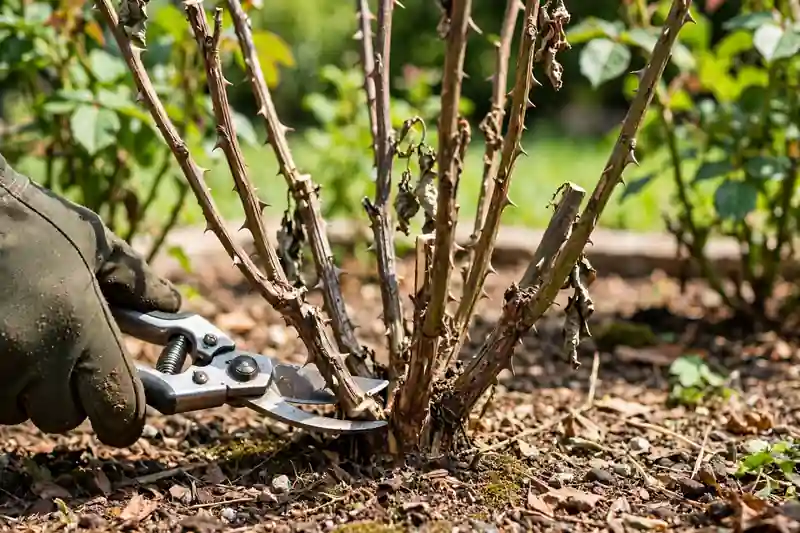
- Dead wood: cut back to healthy wood. A healthy cane has white or light green pith in the center. Cut until the center is clean and white.
- Crossing canes: they rub and make wounds that let disease in. Remove the weaker one.
- Weak growth: thin, spindly shoots do not produce good flowers.
- Suckers: shoots from below the graft union, with different leaves, come from the rootstock. Pull or cut them off at the base.
- Diseased canes: throw them away, not in the compost pile.
How far back should you prune roses?
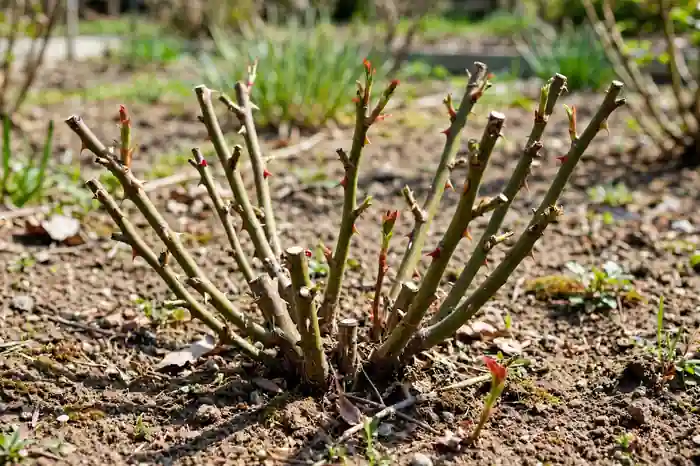
It depends on the type. As a general rule, cut the remaining healthy canes back by about a third to a half, and cut hybrid teas shorter. Gardeners differ here. Some cut hybrid teas to about 12 to 24 inches for long stems, and others prune lightly to knee height. Both work.
| Rose type | How to prune |
|---|---|
| Hybrid tea | Remove dead and weak canes, keep 3 to 5 strong ones and cut to about 12 to 24 inches |
| Floribunda and grandiflora | Cut by a third to a half, keeping a fuller shape |
| Shrub roses, including Knock Out, Drift and carpet roses | Trim by about a third, and shape to a rounded mound. Extension sources say hardy shrub roses need little else |
| Miniature roses | Trim about a third, and remove dead twigs. The same rules, only smaller |
| Standard (tree) roses | Prune the round head to a balanced shape, cut canes to an outward bud and remove suckers from the trunk |
| Old garden, wild, rugosa and beach roses | Mostly bloom once. Thin old canes and shape right after they flower |
| Groundcover roses | Trim to keep them in bounds, and cut out dead wood |
If you are not sure what type you have, follow the care tag or ask a nursery, since some roses bloom on old wood.
How do you prune climbing roses?
Prune climbers after they flower, train long canes sideways and cut side shoots back to two or three buds. Climbers bloom on side shoots from last year's wood, so heavy spring pruning removes flowers. Keep the main framework of long canes, remove dead and weak wood and tie in new canes.
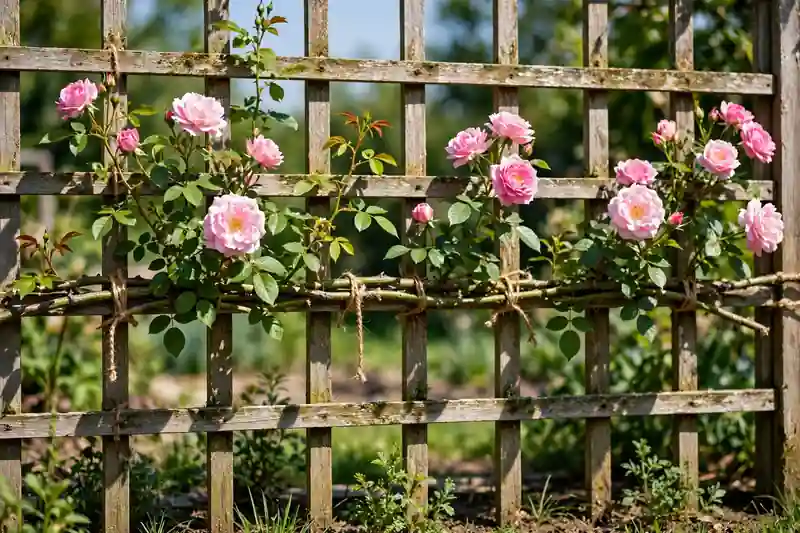
- Young climbers: do not prune for the first two years except for dead wood. Train canes sideways.
- Established climbers: after bloom, shorten side shoots to two or three buds and cut out one or two of the oldest canes at the base.
- Ramblers: these bloom once on last year's canes. Prune right after flowering and remove some of the oldest canes.
- Repeat bloomers: prune lightly in late winter to remove dead wood, and deadhead through summer.
- In fall or winter: you can tidy and tie in canes, but avoid cutting them back hard.
Should you deadhead roses or prune them?
Both, but they are different jobs. Deadheading removes spent flowers during the growing season to encourage new blooms. Pruning shapes and renews the plant once a year. Deadhead by cutting the flower stem back to the first leaf with five leaflets, just above an outward-facing bud.
- Summer: deadhead reblooming roses all season. Many shrub roses such as Knock Outs also bloom without it.
- Once-blooming roses: deadheading is optional. Leaving the hips gives fall color and bird food.
- Late fall: stop deadheading so plants can slow down for winter.
How do you prune roses in summer, and for more flowers?
In summer, deadhead, remove dead twigs and trim lightly after each flush. Do not prune hard in summer, since it stresses the plant. To encourage more flowers, prune in early spring, feed after pruning, water deeply and keep the plant in full sun. Pruning opens the center and stimulates new, flowering shoots.
Can you prune roses in fall?
Only lightly. Hard pruning in fall can trigger new growth that winter kills, and in cold climates it can harm the whole plant. A light tidy is fine: cut off dead flowers and any dead or diseased wood, and shorten very tall canes that the wind could whip. Save the main prune for spring.
How do you prepare roses for winter?
Stop deadheading, trim only tall canes and protect the base in cold climates. Roses in zones 6 and colder benefit from extra protection. In mild climates, little is needed.
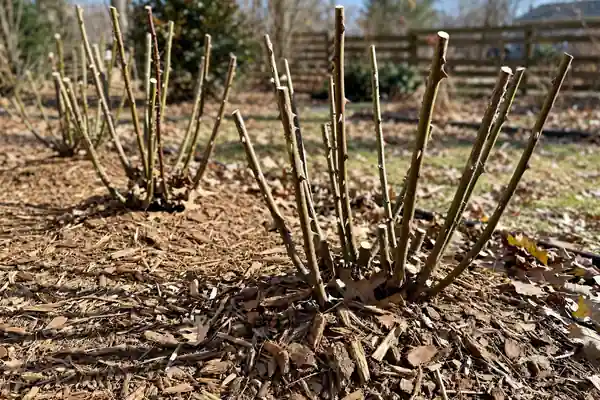
- Mounding: after a hard frost, pile soil or mulch 6 to 8 inches deep around the base. Extension guidance suggests leaving about 18 to 24 inches of healthy cane under the mulch for spring regrowth.
- Climbers: tie canes together and wrap or cover them in very cold regions.
- Potted roses: move pots to a sheltered spot, or sink them in the ground, and keep them from freezing solid.
- Hardy shrub roses: many, including Knock Out types, need no extra winter pruning or protection. Check your variety.
- Spring: remove covers and mounds when buds swell, then do the main prune.
How do you prune an overgrown rose?
Prune it in stages: clear dead wood, thin the oldest canes and cut the rest back. A neglected rose can be renewed with a hard prune in late winter. For very old or overgrown plants, spread the work over two or three years so the plant is not stressed.
- Leggy roses: bare stems at the base and flowers only at the top mean old canes need renewing. Cut out the oldest ones and shorten the rest.
- Wild or reverted roses: if suckers have taken over, cut them off below ground at the base.
- After pruning: water, feed and mulch, and expect new growth in a few weeks.
How do you prune bare-root and newly planted roses?
Remove broken or damaged canes and trim the roots slightly, then cut the canes to about 6 to 12 inches at planting, depending on the type. This helps the plant put its energy into roots. After that, wait for the first spring and prune as usual.
What happens if you do not prune roses?
Not pruning will not kill a rose, but plants become tangled, leggy and less floriferous over the years. Dense growth traps moisture and increases black spot and mildew. Old canes produce fewer flowers, and the plant puts out weak, crowded shoots. Some hardy shrub roses do well with very little pruning, so treat them as low-maintenance.
How much does rose pruning cost?
DIY costs a good pair of bypass pruners, often $20 to $50, plus gloves. A professional garden service may charge $50 to $150 or more per visit, or per rose, depending on how many plants you have. These are rough 2026 estimates that vary by region.
Quick answers to common questions
When is the best time to prune roses?
Late winter to early spring as buds swell. Prune climbers and once-bloomers right after they flower.
How far back should you prune roses?
Cut the remaining canes back by about a third to a half. Hybrid teas can go shorter, to about 12 to 24 inches.
Should you deadhead roses or prune them?
Both. Deadhead spent flowers through the season, and prune once a year to renew the plant.
How do you prune climbing roses?
After they bloom, shorten side shoots to two or three buds, tie long canes sideways and cut out dead wood and an old cane.
What happens if you do not prune roses?
They become dense, leggy and more prone to disease, with fewer flowers. They will still live.
Keep reading: how to plant tulip bulbs, how to plant lavender, how to compost and more lawn and garden guides.
Is it worth learning how to prune roses?
Yes. A little yearly pruning keeps roses healthy and full of flowers. The key to how to prune roses is simple: prune at the right time, cut out the dead, damaged and diseased wood first, make clean cuts above outward buds and do not overdo it.