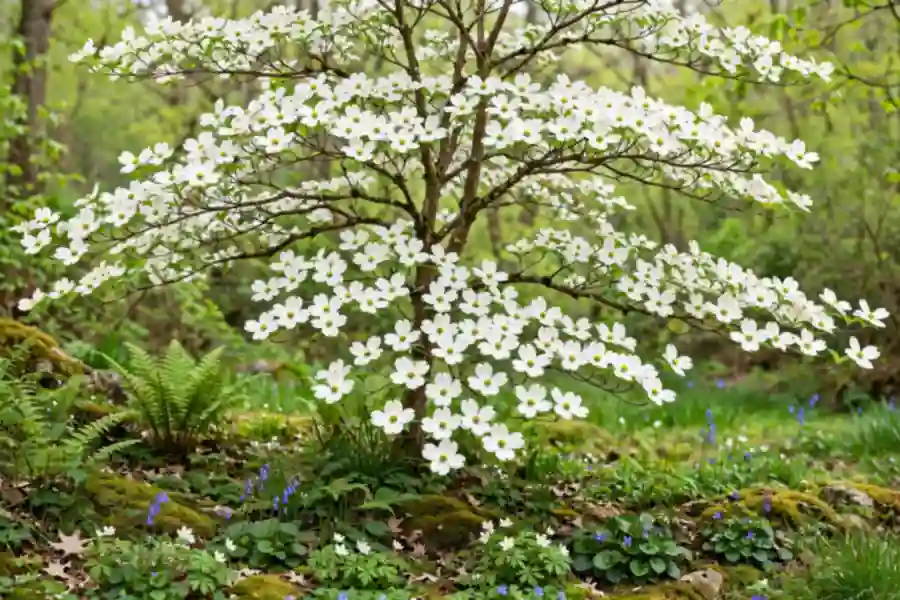
A dogwood tree is a small flowering tree in the genus Cornus, best known for its spring display of white, pink or red "flowers." The showy parts are actually four bracts around a tiny cluster of true flowers. The two main garden types are flowering dogwood (Cornus florida), native to the eastern US, and kousa dogwood (Cornus kousa) from Asia. Most dogwoods grow 15 to 30 feet tall, prefer part shade, moist acidic soil and a layer of mulch, and need little pruning. Kousa is the more disease-resistant choice.
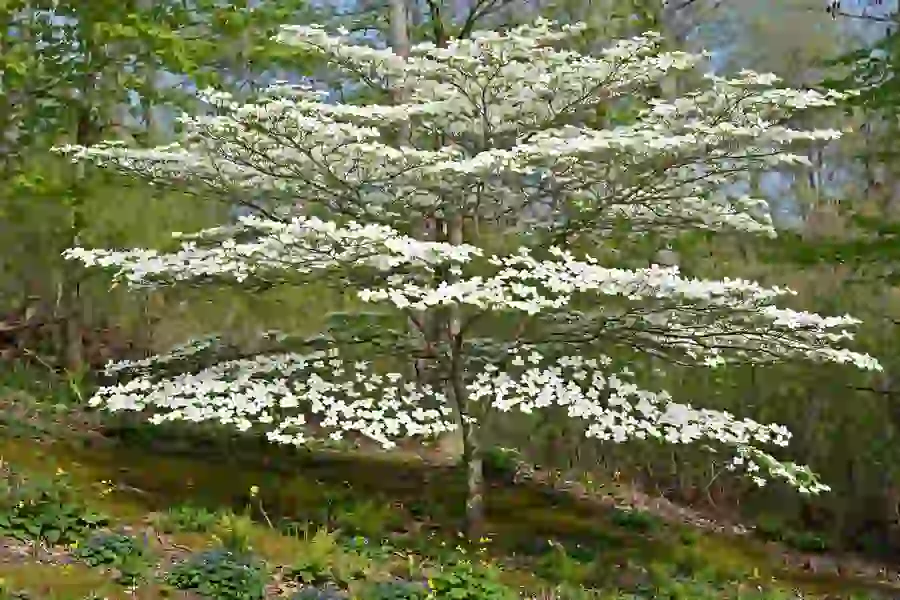
Dogwood tree at a glance
| Question | Answer |
|---|---|
| Scientific name | Cornus |
| Main garden types | Flowering dogwood, kousa dogwood, pagoda dogwood, Pacific dogwood, Cornelian cherry |
| Height and spread | 15 to 30 ft, about as wide |
| Growth rate | Slow to moderate, about 1 ft a year |
| Bloom | Flowering: April to May. Kousa: late May to June, after leaves |
| Colors | White, pink, red-pink. Yellow (Cornelian cherry) |
| Light | Part shade for flowering dogwood. Kousa tolerates full sun |
| Soil | Moist, rich, well-drained, slightly acidic |
| Zones | Flowering 5 to 9. Kousa 5 to 8. Check the tag |
| Fruit | Red berries in fall. Kousa fruit is edible |
| Biggest problems | Anthracnose, borers, drought stress |
| Roots | Shallow and fibrous |
What are the main types of dogwood?
| Type | Latin name | Size | Notes |
|---|---|---|---|
| Flowering dogwood (white flowering, American, eastern, southern, Florida, Virginia) | Cornus florida | 15 to 30 ft | Native to eastern North America. Notched bracts, blooms before or with leaves. Prone to anthracnose |
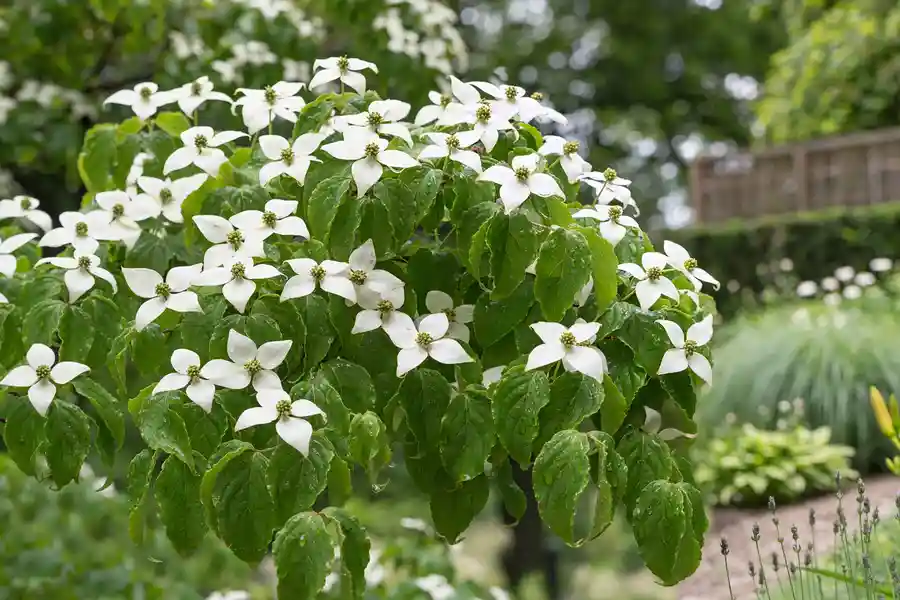
| Kousa dogwood (Chinese, Korean, Japanese) | Cornus kousa | 15 to 30 ft | Pointed bracts, blooms later. Peeling mottled bark. More disease-resistant. Edible fruit |
| Pagoda dogwood | Cornus alternifolia | 15 to 25 ft | Native. Layered horizontal branches. Clusters of small white flowers. Zones 3 to 7. Likes shade |
| Pacific dogwood | Cornus nuttallii | 20 to 50 ft | West Coast native. Large white bracts. Dislikes heat and humidity |
| Cornelian cherry | Cornus mas | 15 to 25 ft | Yellow flowers in late winter. Edible red fruit. Hardy to about zone 4 |
| Roughleaf dogwood | Cornus drummondii | 10 to 15 ft | Native shrub or small tree in Texas and the Midwest. Creamy flower clusters, white berries |
| Gray (grey) dogwood | Cornus racemosa | 6 to 15 ft | Native thicket shrub. White berries on red stalks. Spreads by suckers |
| Silky dogwood | Cornus amomum | 6 to 10 ft | Native shrub for moist ground. Blue fruit |
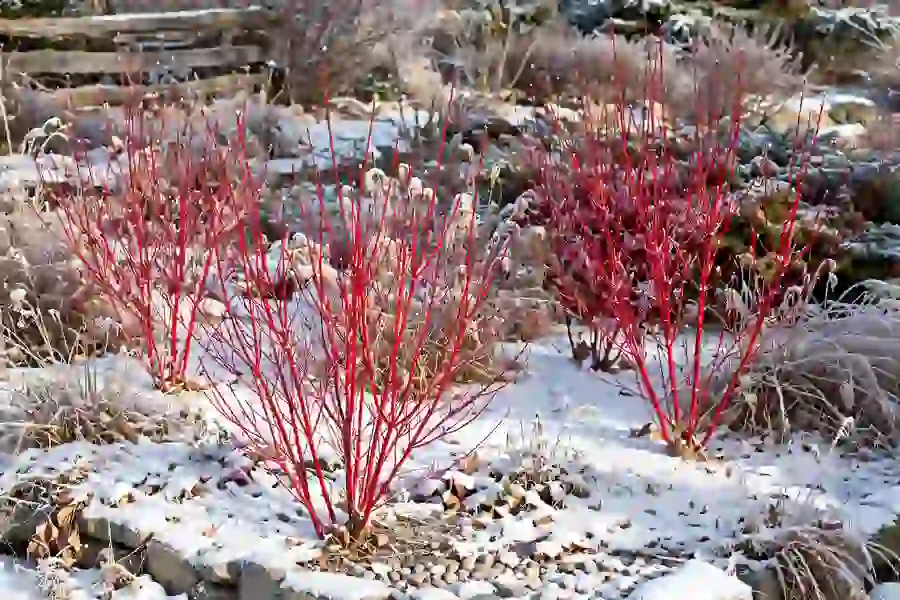
| Red twig (red osier) dogwood | Cornus sericea | 6 to 9 ft | Bright red winter stems. Zones 2 to 7 |
| Swamp dogwood | Cornus foemina | 8 to 15 ft | Southeastern shrub for wet soil |
| Giant (wedding cake) dogwood | Cornus controversa | 20 to 40 ft | Tiered branches, white flat flower clusters |
| Evergreen dogwood | Cornus capitata | 20 to 40 ft | Himalayan. Mild climates only, about zones 8 to 9 |
Jamaican dogwood (Piscidia) is a tropical tree and not a true dogwood. Is dogwood a tree? Both. The showy types are small trees, and several are shrubs.
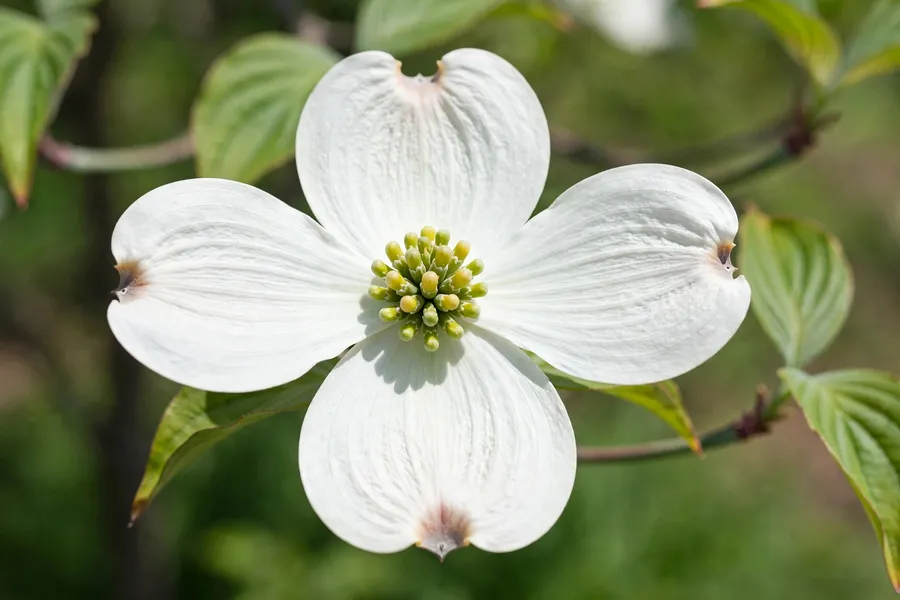
Flowering dogwood vs kousa dogwood
| Feature | Flowering dogwood | Kousa dogwood |
|---|---|---|
| Native to | Eastern North America | Korea, Japan, China |
| Bloom | April to May | Late May to June |
| Bracts | Rounded with a notch | Pointed |
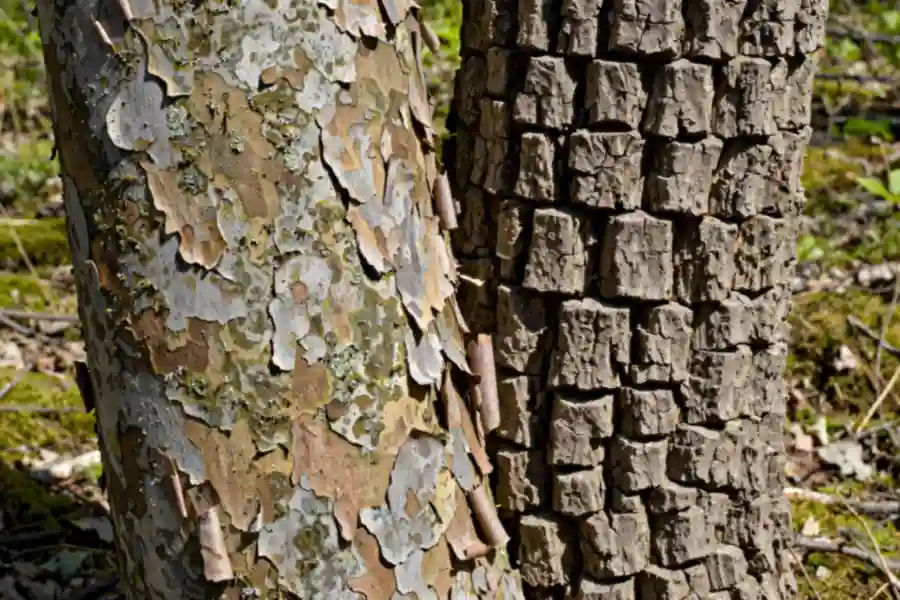
| Bark | Blocky, like alligator skin | Peels and mottles with age |
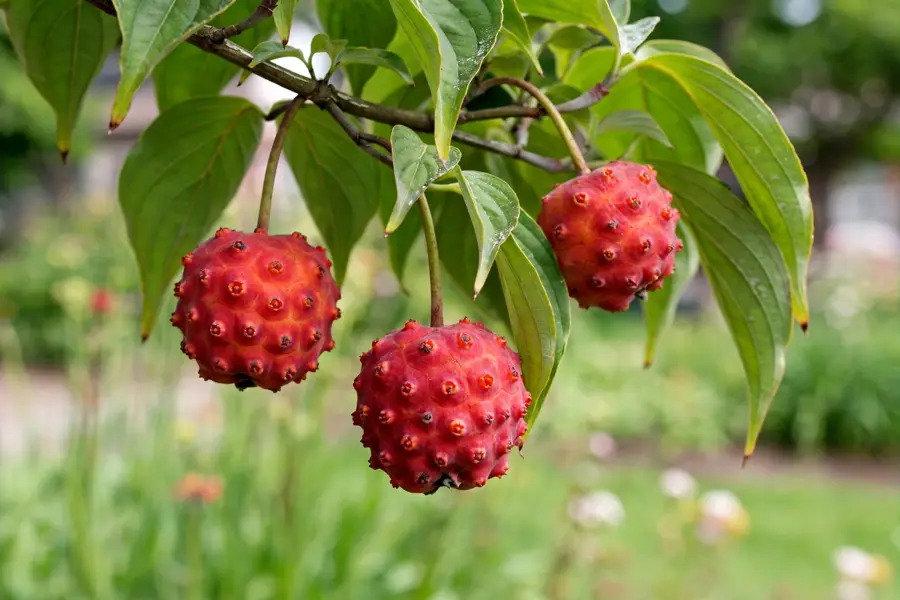
| Fruit | Red, bitter, for birds | Red, raspberry-like, edible |
| Disease | Susceptible to anthracnose | More resistant |
| Sun | Part shade | More sun tolerant |
| Zones | 5 to 9 | 5 to 8 |
What are the best dogwood varieties?
| Variety | Type | Look |
|---|---|---|
| Cherokee Princess | Flowering | Large white bracts, reliable |
| Cherokee Chief, Cherokee Brave | Flowering | Pink-red to red bracts |
| Rubra (pink dogwood) | Flowering | Pink bracts |
| Appalachian Spring | Flowering | White, highly anthracnose-resistant |
| Cloud Nine | Flowering | White, blooms young |
| Satomi, Rosy Teacups | Kousa | Pink bracts |
| Milky Way | Kousa | Heavy white bloom |
| Wolf Eyes, Samaritan, Summer Fun | Kousa | Variegated (white-edged) leaves |
| Little Poncho, other dwarf kousa | Kousa | Compact, about 8 to 12 ft |
| Snow Tower | Kousa | Narrow, upright |
| Venus, Stellar series (Stellar Pink, Aurora, Celestial, Constellation) | Hybrids (flowering x kousa) | Large bracts, bred for disease resistance. Zones 5 to 9 |
Sizes and traits vary by source and site. Check the plant tag.
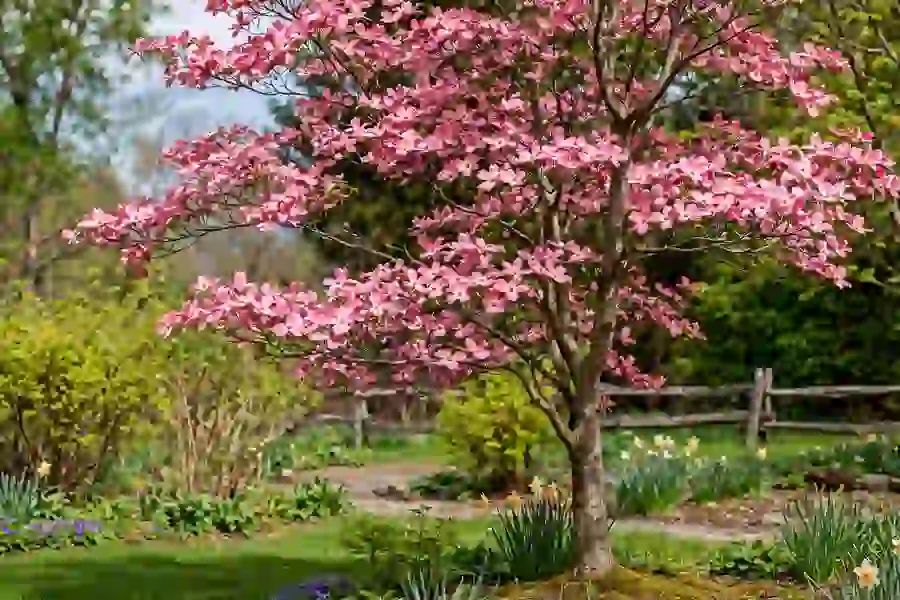
By color:
| Color | Choices |
|---|---|
| White | Cherokee Princess, Appalachian Spring, Milky Way, Venus |
| Pink | Rubra, Satomi, Stellar Pink, Rosy Teacups |
| Red | Cherokee Chief, Cherokee Brave |
| Yellow | Cornelian cherry (Cornus mas), a different species with yellow flowers |
| Purple | "Purple dogwood" usually means purple-red fall leaves or a deep red-pink bract. No true purple |
| Variegated | Wolf Eyes, Samaritan, Summer Fun |
| Green | Green is the leaf color. "Green dogwood" is not a flower color |
Which dogwoods are small or dwarf?
- Small trees (under 20 ft): dwarf kousa types such as Little Poncho, pagoda dogwood and Cornelian cherry.
- Shrub dogwoods: gray, silky, red twig and roughleaf are 6 to 15 ft.
- Mini dogwood: a few compact cultivars stay near 8 to 12 ft. True dwarf dogwoods are rare, so check the mature height before buying.
- Bonsai: kousa dogwood bonsai is possible with patient pruning.
- Potted dogwood: a dwarf kousa grows in a large container for some years. Protect roots in winter.
How big does a dogwood tree get and how fast?
- Height and width: 15 to 30 ft tall and about as wide. A white dogwood commonly reaches 20 ft. A pink dogwood is similar.
- Growth rate: about 1 ft a year. No dogwood tree is truly fast growing. Shrub dogwoods (red twig, gray) can add 1 to 2 ft a year.
- Time to bloom: a nursery tree usually blooms within 3 to 6 years. A seedling can take longer.
- Lifespan: typically a few decades in gardens. Disease, drought and borers shorten it, and a healthy tree in a good site lasts longer. Kousa often outlives flowering dogwood.
When do dogwood trees bloom?
| Type | Bloom time |
|---|---|
| Cornelian cherry | Late winter to early spring |
| Flowering dogwood | April to May, about 2 to 3 weeks |
| Pacific dogwood | April to May |
| Kousa dogwood | Late May to June, about 4 weeks |
| Pagoda and red twig | May to June |
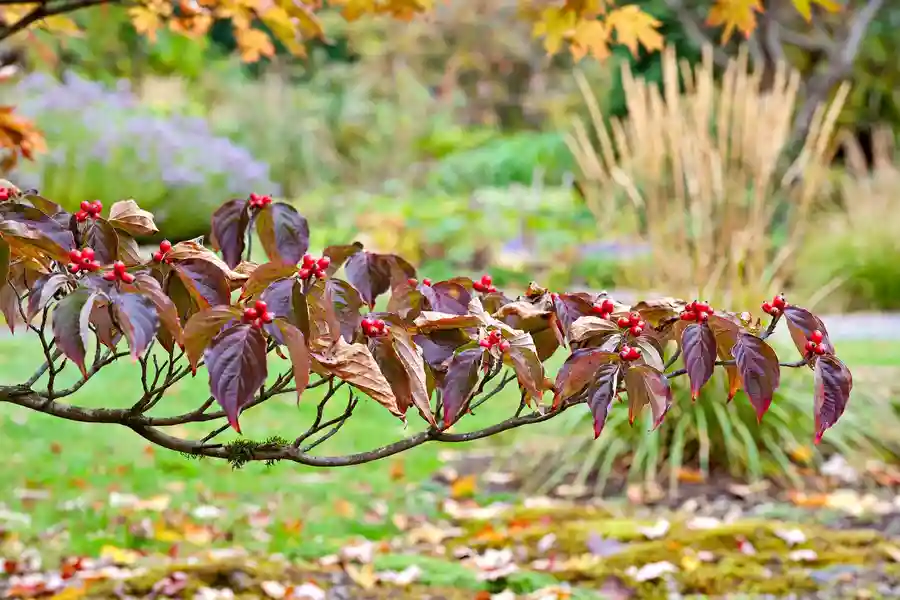
Flowering dogwood blooms about a month before kousa. After bloom come green summer foliage, red berries and red-purple fall color (flowering dogwood) or red-orange fall color (kousa).
Why is my dogwood tree not blooming?
| Cause | Fix |
|---|---|
| Too young | Wait. Trees may take 3 to 6 years |
| Pruned at the wrong time | Buds form on old wood in the summer before. Prune right after bloom, not later |
| Frozen flower buds | A hard winter or late frost kills buds. Choose a hardy variety |
| Too much shade | Move or thin nearby trees. Kousa needs more light |
| Too much nitrogen | Stop high-nitrogen lawn fertilizer near the tree |
| Drought stress | Water deeply in dry summers |
| Disease | Check for anthracnose, borers and canker |
A dogwood with no flowers may simply be flowering after leaf-out. That is normal for kousa.
How and where do you plant a dogwood tree?
When: fall or early spring.
Where: flowering dogwood does best with morning sun and afternoon shade, in moist, rich, well-drained, slightly acidic soil. Kousa and hybrids handle full sun if watered. Plant 15 to 20 ft from buildings and 15 to 25 ft from other trees.
How:
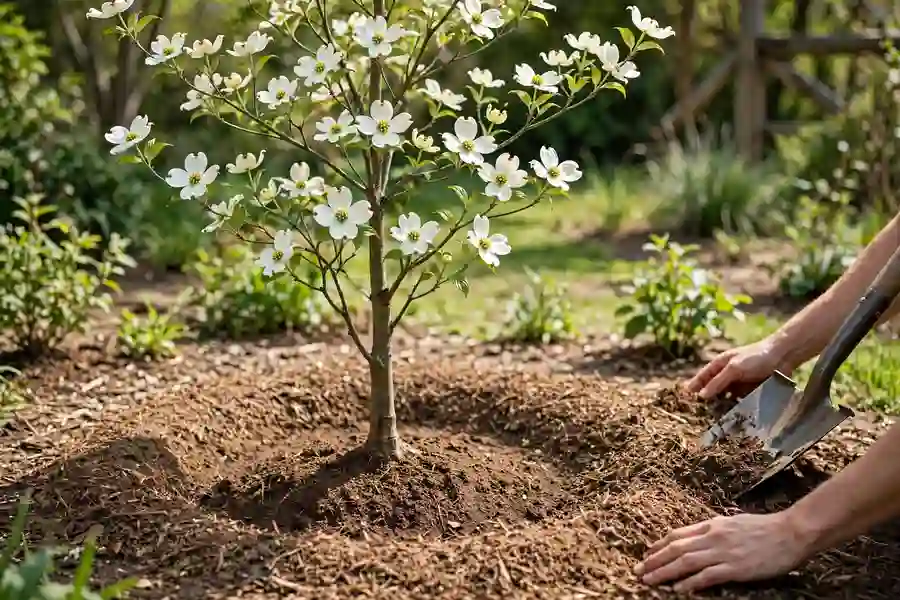
- Dig a hole 2 to 3 times as wide as the root ball and the same depth. Never plant too deep.
- Set the root flare level with the soil.
- Backfill with native soil and water deeply.
- Mulch 2 to 3 inches, kept off the trunk.
- Water weekly in dry weather for the first two years.
Companion plants: azalea, rhododendron, hosta, ferns, hellebore, coral bells and spring bulbs. In landscaping, dogwoods suit front-yard specimens, woodland edges and driveway lines.
How do you care for a dogwood tree?
- Water: deeply during dry spells. The roots are shallow and dry out fast.
- Mulch: 2 to 3 inches every year keeps roots cool and moist. Overwatering can cause root rot.
- Fertilizer: little. Use compost or a slow-release acid fertilizer in spring. Avoid heavy nitrogen. The compost guide explains how to make your own.
- Protect the trunk: mower and trimmer wounds invite borers.
- Roots: they are shallow and spread widely but not aggressively. Avoid digging or compacting under the canopy.
When and how do you prune a dogwood tree?
Dogwoods need little pruning. Prune right after flowering, because the next year's flower buds form on old wood. Remove dead, damaged and crossing branches. Remove suckers. Use clean tools and avoid heavy cuts, which let borers in.
- Overgrown dogwood: thin gradually over two or three years.
- Red twig dogwood: cut a third of the oldest stems to the ground in late winter or early spring so new, brightly colored stems grow.
How do you propagate a dogwood tree?
- Cuttings: take 4 to 6 inch softwood cuttings in early summer, dip in rooting hormone and keep humid. Success varies.
- Seed: collect fall fruit, clean the seed and give it 90 to 120 days of cold, moist storage. Seedlings are slow and vary from the parent.
- Layering and division work for shrub dogwoods.
- Named varieties are usually grafted or budded.
What are the common dogwood tree diseases and pests?
| Problem | Signs | What to do |
|---|---|---|
| Dogwood anthracnose | Tan blotches with purple edges, twig and branch dieback, cankers | Plant resistant types such as kousa, Appalachian Spring and hybrids. Water at the base, rake leaves, prune dead wood |
| Spot anthracnose | Small spots on leaves and bracts | Mostly cosmetic |
| Powdery mildew | White coating on leaves in late summer | Improve airflow, choose resistant types |
| Dogwood borer | Holes and sawdust at the trunk or wounds | Protect the bark and keep the tree healthy |
| Leaf scorch | Brown leaf edges in summer | Water deeply, mulch, shelter from wind |
| Canker, root rot | Sunken bark, wilting, poor drainage | Fix drainage, remove dead wood |
| Leaf curl | Curling from drought, aphids or heat | Check for pests, water |
| Fungus on bark | Shelf mushrooms or cankers | A sign of decay. Call an arborist |
| Scale and aphids | Sticky leaves, small bumps | Horticultural oil or soap |
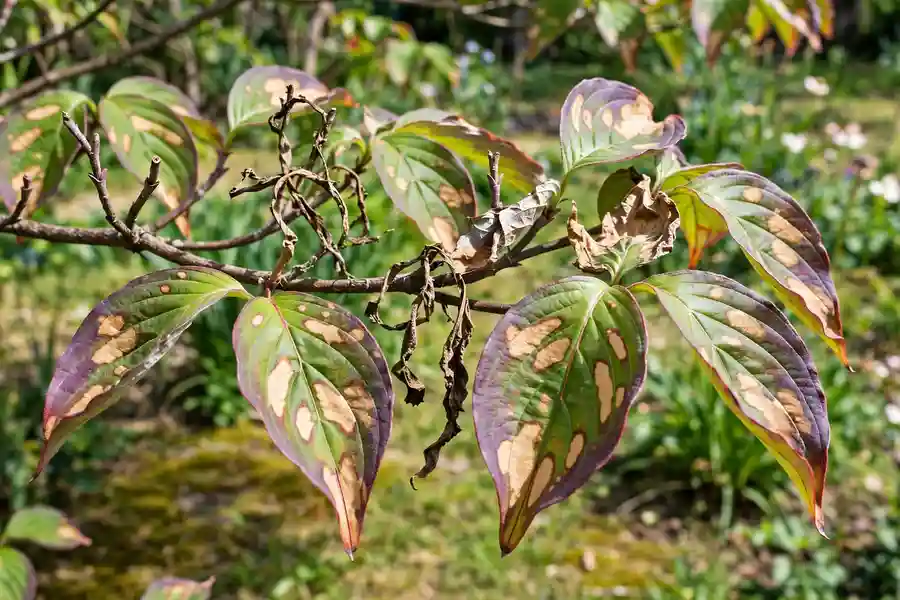
Why are the leaves turning brown or red in summer? Usually drought, heat or scorch. Does my dogwood look sick? Check for dead twigs, leaf spots, bark damage and soil moisture. Disease-resistant does not mean immune, and good care matters.
Are dogwood berries edible or poisonous?
- Kousa fruit: edible when ripe and soft. It tastes sweet, like a mix of pawpaw and persimmon, with a gritty skin and seeds. Used in jams.
- Cornelian cherry: edible, tart, used in preserves.
- Flowering dogwood berries: bitter and not meant for eating. They feed birds.
- Red twig, silky, gray and roughleaf berries: wildlife food, not for people.
- Dogs: dogwoods are not considered highly toxic, but eating a lot of fruit can cause stomach upset. Call your vet if a pet eats a lot.
- Allergies: dogwood is insect-pollinated and rarely causes hay fever.
How do you tell a dogwood tree by leaves, bark and shape?
- Leaves: oval, pointed, with curved veins that follow the leaf edge. Leaves grow opposite each other on the twig.
- Bark: flowering dogwood has blocky, square-ish plates. Kousa peels in patches. Red twig has red stems.
- Buds: flowering dogwood has round, button-like flower buds in winter.
- Shape: layered, horizontal branches.
- Fall: red to purple in flowering dogwood, red-orange in kousa.
Dogwood vs similar trees
| Compare | Difference |
|---|---|
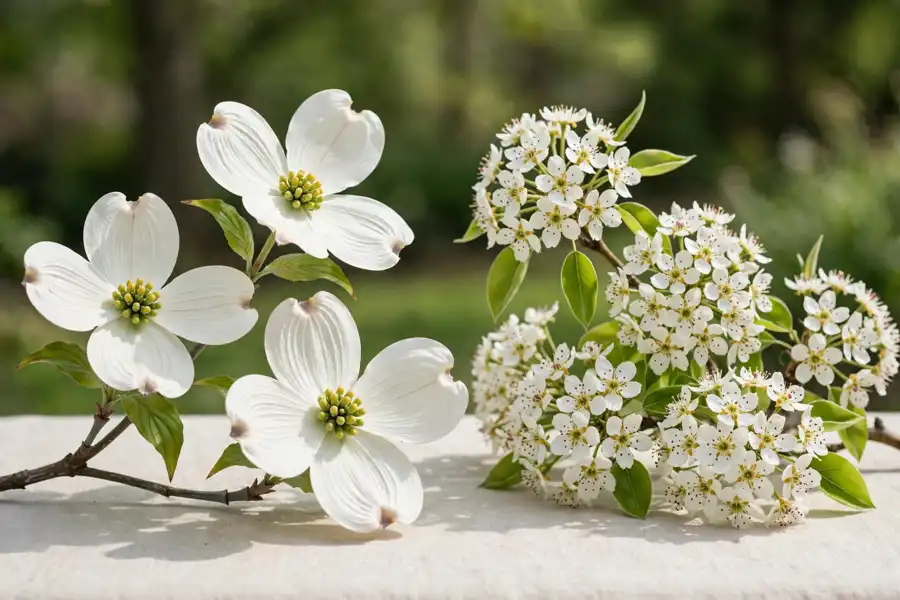
| Dogwood vs Bradford pear | Both bloom white in spring. Bradford pear flowers smell unpleasant, grows fast, splits in storms and is invasive. Dogwood has little scent and is smaller |
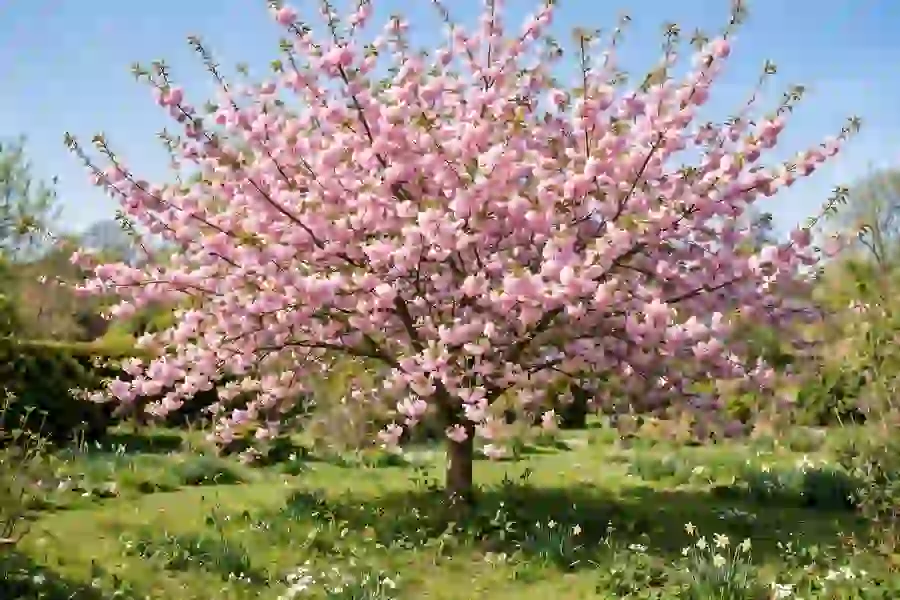
| Dogwood vs cherry blossom | Cherry blooms earlier with five-petal flowers. Dogwood has four bracts |
| Dogwood vs magnolia | Magnolia has large cup-shaped flowers and bigger trees. See our magnolia tree guide |
| Dogwood vs redbud | Redbud has magenta pea-like flowers and heart-shaped leaves |
What does the dogwood tree mean?
The dogwood stands for rebirth, durability and purity, and it is tied to spring and Easter. It is the state tree of Missouri, the state tree and flower of Virginia, and the state flower of North Carolina.
Legend of the dogwood tree: a folk story says the dogwood was once a tall tree used for the cross of Jesus, and was cursed to stay small and twisted. The cross-shaped bracts with notched tips and rusty stains are said to recall the crucifixion, and the red berries the blood. It is a legend, not a historical or Biblical account, and there is no Bible verse about it.
Why is it called a dogwood? The origin is uncertain. One idea links it to "dagwood" (dagger wood), because the hard wood made skewers.
Dogwood wood: very hard and dense. It was used for weaving shuttles, tool handles and golf club heads.
Mistletoe rarely grows on dogwood because it favors other hosts, such as oaks, maples and apple trees.
Pros and cons of a dogwood tree
| Pros | Cons |
|---|---|
| Spring flowers, fall color, winter shape | Susceptible to anthracnose and borers (flowering dogwood) |
| Small size, fits most yards | Needs moisture and mulch |
| Feeds birds | Shallow roots |
| Kousa is hardy and resistant | Lifespan of a few decades |
Quick answers to common questions
What are the main types of dogwood tree?
Flowering dogwood, kousa dogwood, pagoda dogwood, Pacific dogwood, Cornelian cherry and shrubs such as red twig and gray dogwood.
How big does a dogwood tree get?
15 to 30 feet tall and about as wide, growing about a foot a year.
When do dogwood trees bloom?
April to May for flowering dogwood and late May to June for kousa.
Why is my dogwood tree not blooming?
Usually age, wrong-time pruning, frozen buds, too much shade or too much nitrogen.
When should you prune a dogwood tree?
Right after it flowers, with light cuts only.
Keep reading: magnolia tree, oak tree, pink flowers, how to compost and more lawn and garden guides.
Is a dogwood tree worth planting?
Yes, if you have a spot with part shade and moist soil. A dogwood tree gives spring bloom, fall color and wildlife food in a small package. Choose a disease-resistant kousa or hybrid, mulch it, water it in dry weather and prune lightly after flowering.