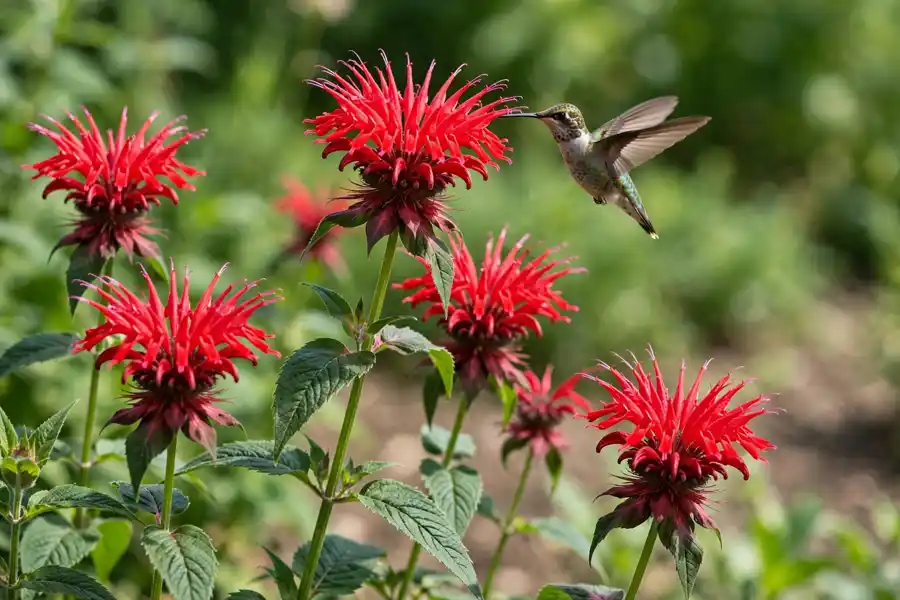
Bee balm (Monarda) is a North American native perennial with shaggy, pom-pom flowers in red, pink, purple or lavender that bloom in mid to late summer and attract bees, butterflies and hummingbirds. It grows 2 to 4 feet tall, likes full sun and moist, rich soil, spreads by rhizomes and is hardy in about zones 3 to 9. It is a member of the mint family. Its main problem is powdery mildew, so choose resistant varieties and give plants airflow.
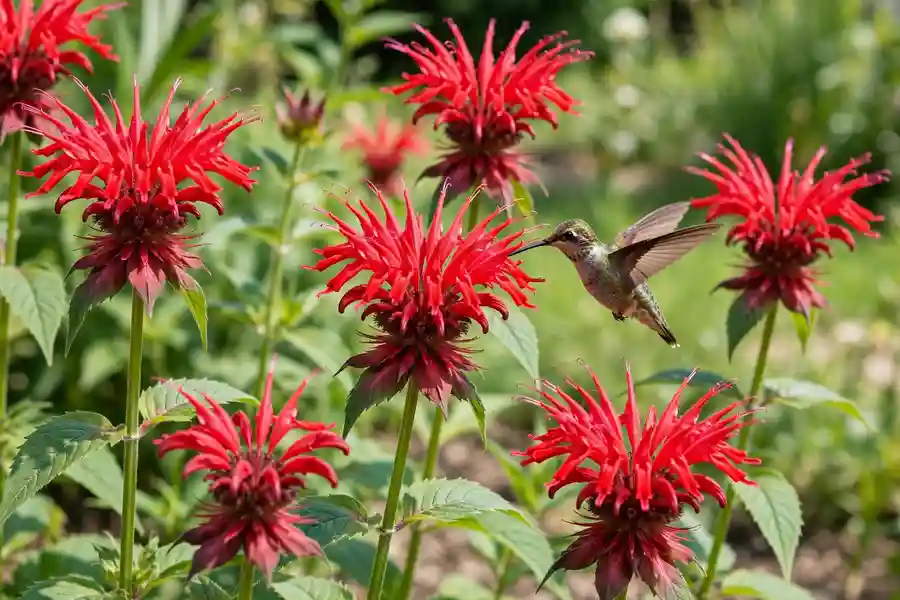
Bee balm at a glance
| Question | Answer |
|---|---|
| Scientific name | Monarda (mint family, Lamiaceae) |
| Other names | Wild bergamot, Oswego tea, horsemint, monarda |
| Type | Perennial. Lemon bee balm is an annual or short-lived |
| Height and spread | Usually 2 to 4 ft tall, 2 to 3 ft wide. Dwarf types 10 to 18 in |
| Bloom | Mid to late summer, about 4 to 8 weeks |
| Colors | Red, pink, purple, lavender, white. Yellow (spotted bee balm) |
| Light | Full sun, at least 6 hours. Tolerates part shade |
| Soil | Moist, rich, well-drained |
| Zones | About 3 or 4 to 9 |
| Spreads | By underground runners. Divide every 2 to 3 years |
| Deer | Mostly resistant |
| Main problem | Powdery mildew |
What are the types of bee balm?
| Type | Latin name | Look |
|---|---|---|
| Scarlet bee balm (red, crimson, Oswego tea) | Monarda didyma | Bright red flowers, 2 to 4 ft. Likes moisture. Mildew-prone |
| Wild bergamot (native, lavender bee balm) | Monarda fistulosa | Lavender-pink flowers, 2 to 4 ft. Tolerates dry soil, less mildew |
| Spotted bee balm (horsemint) | Monarda punctata | Yellow flowers spotted purple with pink bracts, 1 to 3 ft. Sandy soil, short-lived |
| Lemon bee balm (lemon mint) | Monarda citriodora | Lemon-scented, lavender-pink tiers, 1 to 3 ft. Annual that reseeds |
| Bradbury's bee balm | Monarda bradburiana | Pale pink, 1 to 2 ft. Tolerates shade |
| Purple bee balm | Monarda media | Dark purple flowers, 3 to 4 ft |
| Hybrids | Monarda x | Many colors, often mildew-resistant, bred from M. didyma and M. fistulosa |
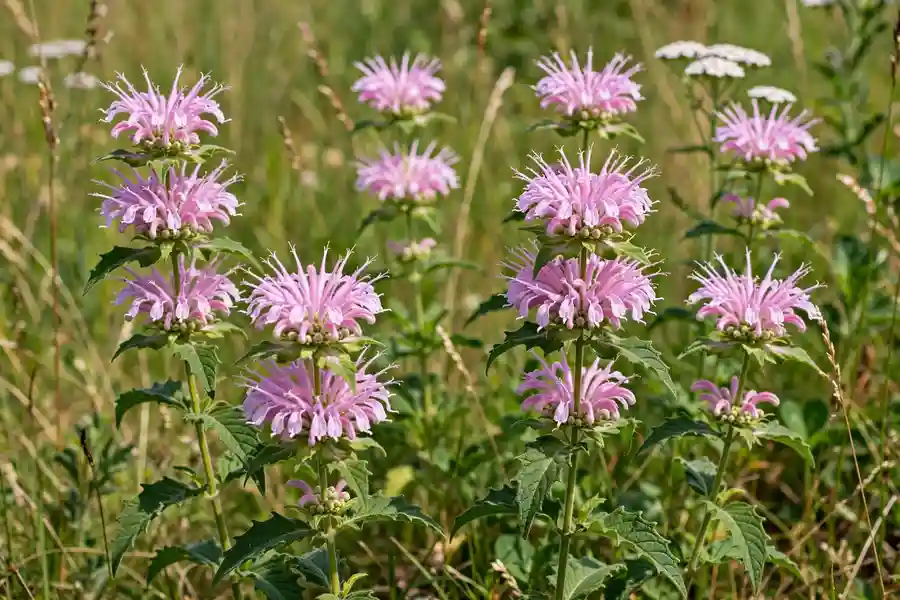
Wild bergamot vs bee balm: wild bergamot is one kind of bee balm (Monarda fistulosa), and "bee balm" is the whole group. Bee balm vs bergamot orange: the citrus used in Earl Grey tea is a different plant. Bee balm vs lemon balm: lemon balm (Melissa officinalis) has small, plain white flowers and is grown for its leaves. Bee balm is taller and showier.
What are the best bee balm varieties and colors?
| Variety | Color | Size | Notes |
|---|---|---|---|
| Jacob Cline | Bright red | 3 to 4 ft | Large flowers, mildew-resistant, hummingbird favorite |
| Gardenview Scarlet | Scarlet | 3 to 4 ft | Mildew-resistant red |
| Raspberry Wine | Wine-red | 3 to 4 ft | Rich color |
| Marshall's Delight | Pink | 3 ft | Mildew-resistant |
| Leading Lady (Razzberry, Plum) | Raspberry, plum | 2 to 3 ft | Mildew-resistant series |
| Fireball | Red | 1 to 2 ft | Compact |
| Petite Delight | Pink | 1 to 1.5 ft | Dwarf |
| Balmy series (Purple, Pink, Lilac, Rose) | Various | 10 to 12 in | Dwarf, good for pots |
| Pardon My series (Cerise, Purple, Lavender) | Various | About 1 to 1.5 ft | Compact |
| Sugar Buzz series (Grape Gumball, Bubblegum Blast, Cherry Pops, Rockin' Raspberry) | Various | About 1 to 1.5 ft | Compact |
| Blue Stocking, Blue Moon | Violet | 3 to 4 ft | Not true blue |
| Panorama mix (seed) | Mixed | About 3 ft | Seed-grown mix |
| Snow White | White | 3 to 4 ft | White-flowered |
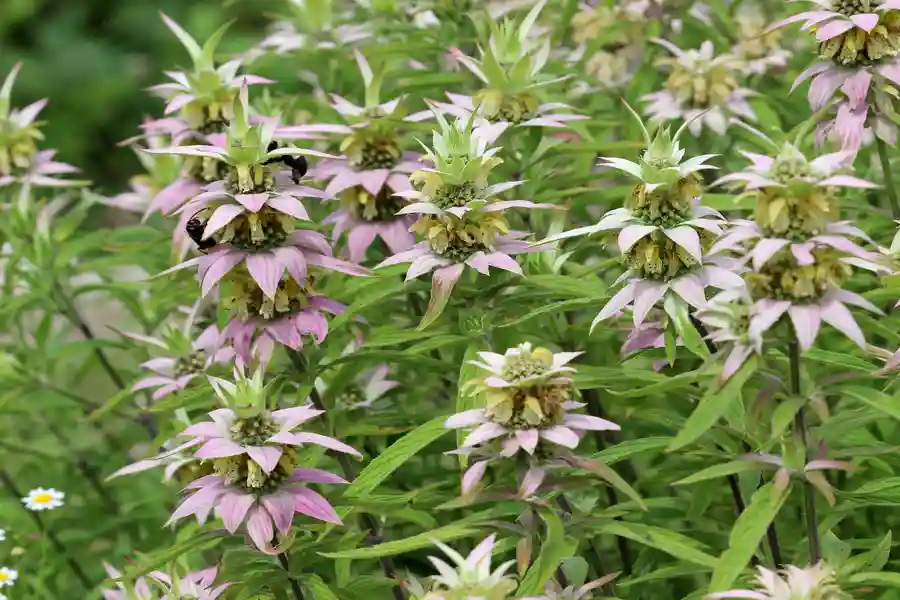
Sizes vary by source, so check the tag. There is no true blue bee balm, and the "blue" ones are violet. Dwarf bee balm (Balmy, Petite Delight, Pardon My and Sugar Buzz types) suits pots and small beds.
How tall and wide does bee balm get?
Standard types reach 2 to 4 feet tall and 2 to 3 feet wide. Wild bergamot and scarlet bee balm are tallest, spotted and Bradbury's bee balm are shorter, and dwarf cultivars stay under 18 inches. Space plants 18 to 24 inches apart.
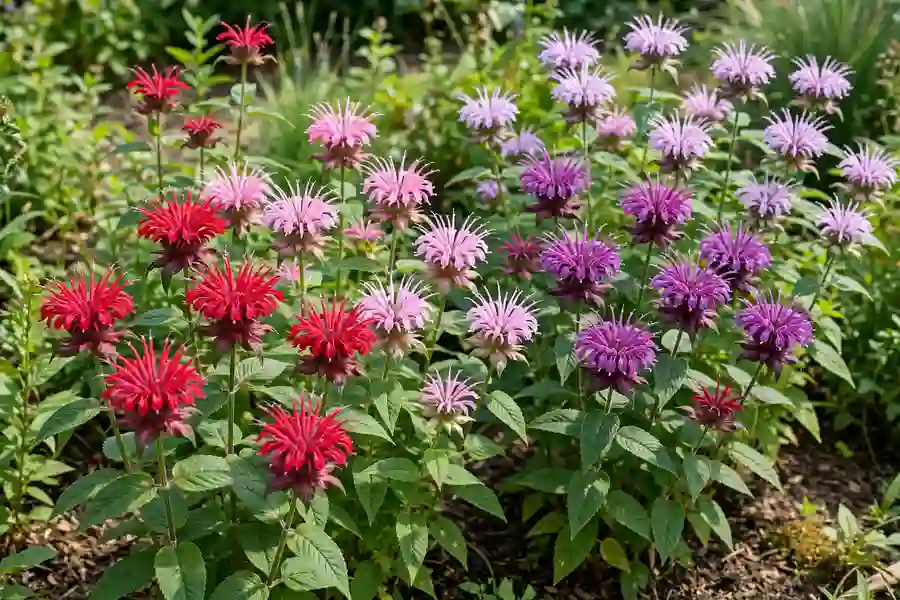
When does bee balm bloom?
Mid to late summer, usually July to September, for about 4 to 8 weeks, with deadheading extending it. Bee balm often does not bloom its first year from seed. A potted plant from a nursery usually blooms the first summer. Bee balm not flowering: too much shade, too much nitrogen fertilizer, dry stress, crowded clumps, or a young plant.
How do you plant bee balm?
When: spring or early fall. Where: full sun (6 or more hours) for the most flowers. Part shade works, with fewer flowers and more mildew risk. Pick a spot with good airflow.
How:
- Loosen the soil and mix in compost. The compost guide explains how to make your own.
- Plant at the same depth as the pot, 18 to 24 inches apart.
- Water well and mulch 2 inches.
- Water 1 inch a week in the first year and during dry spells.
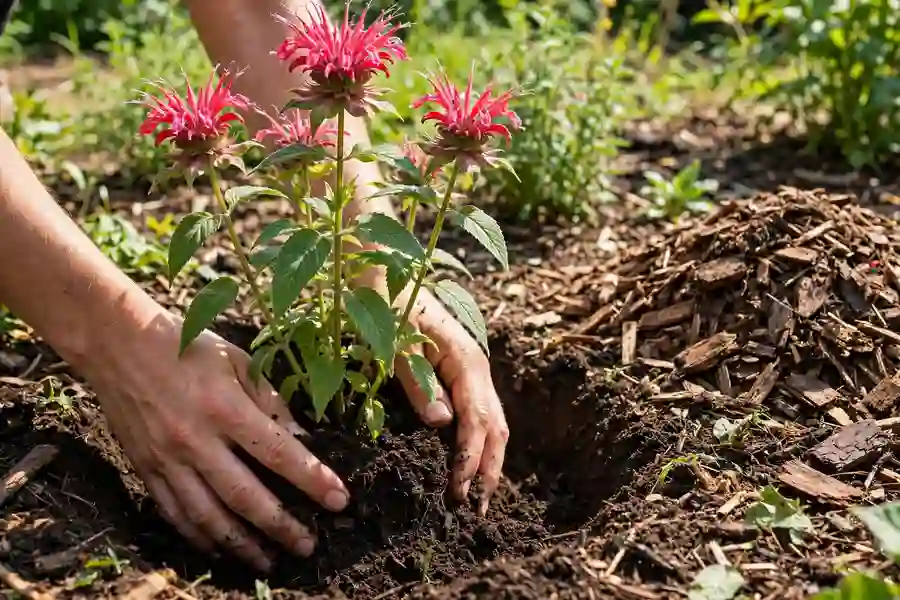
Bee balm in pots: use a large pot at least 12 to 16 inches wide, with drainage, and choose a dwarf variety. Water often. Soil needs: moist, fertile, well-drained. Wild bergamot and spotted bee balm tolerate drier, poorer soil.
What should you plant with bee balm?
| Good partners | Why |
|---|---|
| Coneflower, black-eyed Susan | Same sun and soil, long bloom |
| Phlox, liatris, Joe-Pye weed | Summer color for pollinators |
| Daylily, yarrow, catmint | Easy and tough |
| Ornamental grasses | Support floppy stems |
| Milkweed | Monarch host plant |
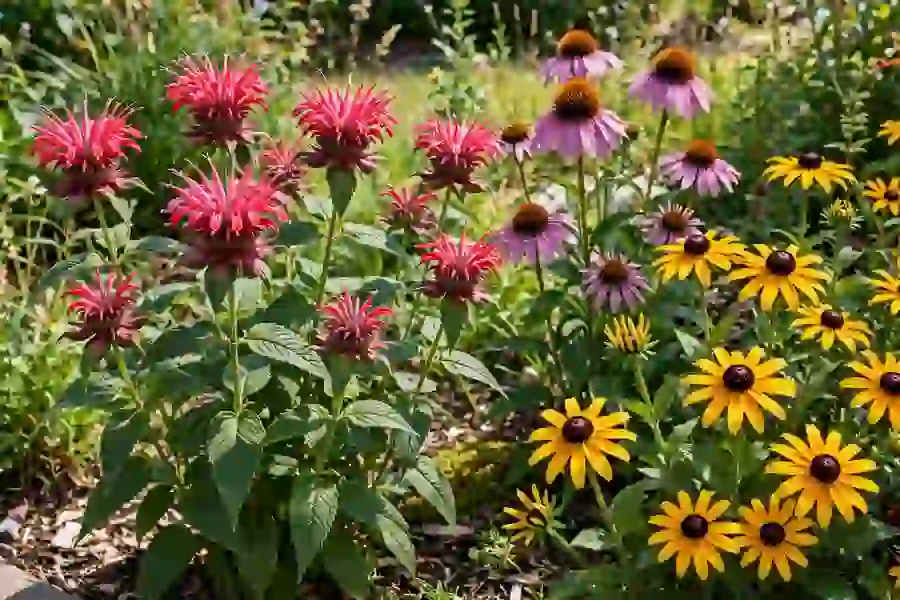
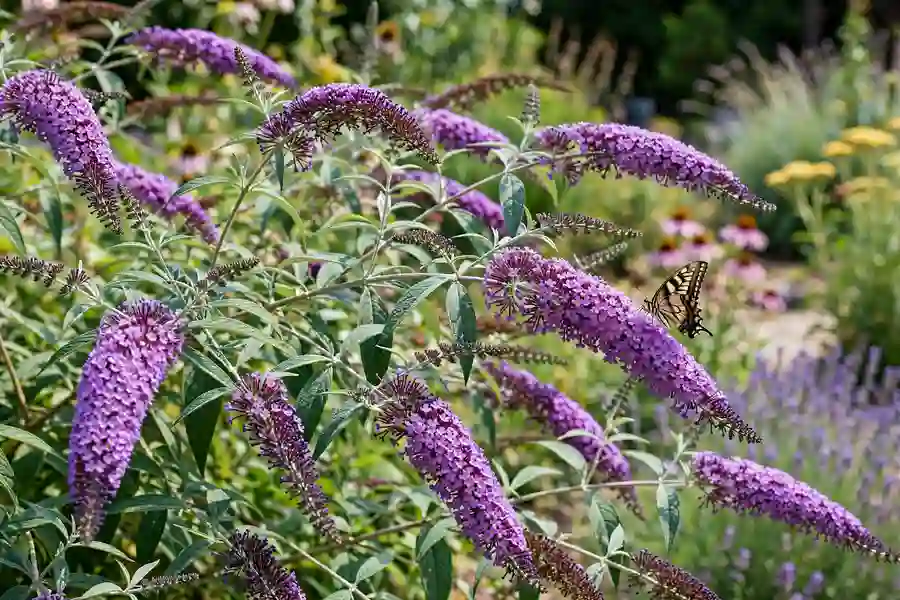
What not to plant with bee balm: plants that need dry soil (lavender, sedum), small delicate plants it can crowd out, and other mildew-prone plants packed close together. Use bee balm in cottage gardens, pollinator and hummingbird gardens, borders and the edges of rain gardens. See our pink flowers guide and butterfly bush guide for more pollinator plants.
Should you deadhead and cut back bee balm?
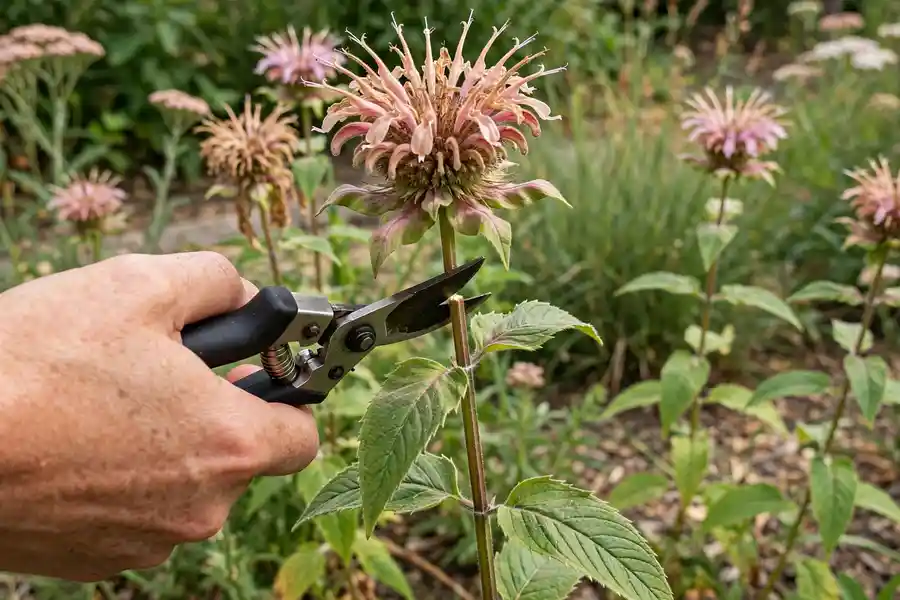
Yes, deadhead. Pinch or cut off faded flower heads to prolong blooming and prevent heavy self-seeding. Stop in late summer if you want seeds for birds.
- Chelsea chop: in late spring or early summer, cut stems back by about a third. Plants get bushier and shorter, and bloom 1 to 2 weeks later.
- After bloom: cut stems back if they look ragged or have mildew.
- End of season: cut stems to the ground in late fall, or leave them over winter for wildlife and cut in early spring.
- Mildew control: thin crowded stems in spring.
How do you divide and transplant bee balm?
Divide every 2 to 3 years in early spring or fall, because the center dies out and the clump spreads.
- Dig up the clump.
- Discard the woody center.
- Replant healthy outer pieces, 18 to 24 inches apart, at the same depth.
- Water well.
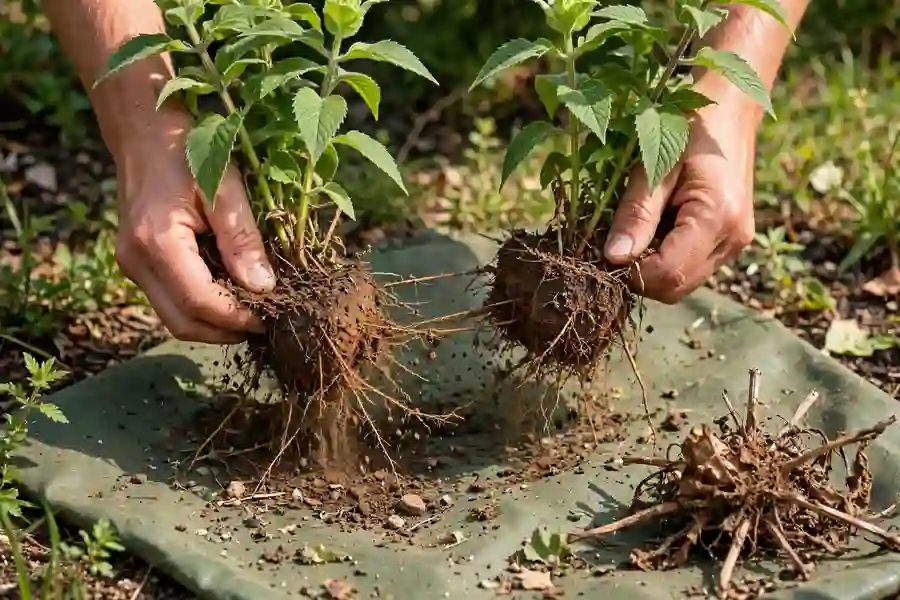
Transplanting in spring or fall works the same way. Water until it settles.
Does bee balm spread, and is it invasive?
It spreads by underground runners and seeds, like other mints, and forms a thick clump. It is native and not classed as invasive, but it can overrun neighbors. Divide it, pull runners and give it space. Is bee balm annual or perennial? Perennial, coming back every year, though spotted and lemon bee balm are short-lived.
How do you grow bee balm from seed?
- Sow indoors 6 to 8 weeks before the last frost, or outdoors in fall or early spring.
- Seeds are tiny and need light: press them onto the surface, do not cover.
- Keep moist at about 70°F. Seeds sprout in 2 to 3 weeks. Wild bergamot germinates better after about 30 days of cold, moist storage.
- Thin seedlings to 18 to 24 inches.
- Plants bloom in the second year, sometimes the first.
Collecting seeds: let flower heads dry brown in fall, then crush them and collect the tiny dark seeds. Cuttings: take 4 to 6 inch stem cuttings in early summer and root in moist mix. Division is easiest. Named varieties do not come true from seed.
What are bee balm's problems, and is it deer resistant?
| Problem | Signs | Fix |
|---|---|---|
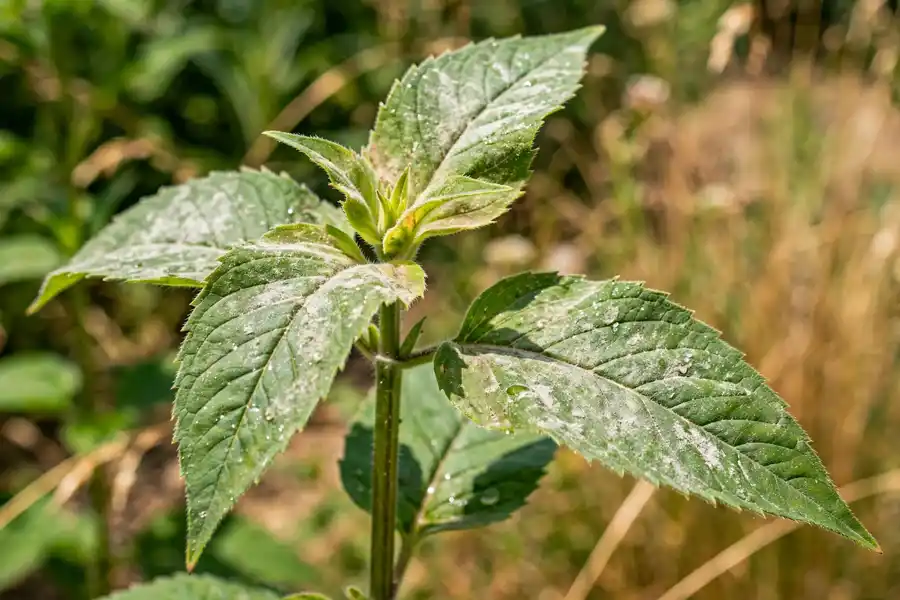
| Powdery mildew | White powder on leaves in late summer | Choose resistant varieties, thin stems, space plants, water at the base in the morning, cut back affected stems |
| Rust, leaf spot | Orange or brown spots | Remove leaves, improve airflow |
| Wilting | Dry soil | Water deeply and mulch |
| Floppy stems | Too much shade or nitrogen | More sun, Chelsea chop |
Deer and rabbits: bee balm is mostly deer resistant because of its strong scent. Rabbits rarely eat it. Hummingbirds, bees and butterflies love it, especially red and tubular types. Pets: bee balm is not considered toxic to dogs or cats.
Is bee balm edible, and what is it used for?
Yes. The leaves and flowers are edible, with a minty, oregano-like or citrus flavor. People use them in tea (sometimes called Oswego tea), salads, as a garnish and in herbal preparations. Native peoples used wild bergamot as a traditional remedy, and it was also used for bee stings. Health claims are not well proven, so check with a doctor if you take medicines or are pregnant.
Bee balm tea: steep a few fresh leaves or flowers in hot water for 5 to 10 minutes. Use plants you grew and did not spray.
Quick answers to common questions
How tall does bee balm get?
2 to 4 feet, with dwarf types at 10 to 18 inches.
When does bee balm bloom?
Mid to late summer, for 4 to 8 weeks.
Should you deadhead bee balm?
Yes, to prolong bloom. Cut back in late fall or early spring.
Is bee balm invasive or deer resistant?
It spreads aggressively but is native, and it is mostly deer resistant.
Is bee balm edible?
Yes, the leaves and flowers, in tea and salads.
Keep reading: butterfly bush, pink flowers, hibiscus flower, how to compost and more lawn and garden guides.
Should you grow bee balm?
Yes. Bee balm is a tough native that feeds pollinators and hummingbirds and returns every year. Choose a mildew-resistant variety, give it sun and moisture, and divide it every few years.