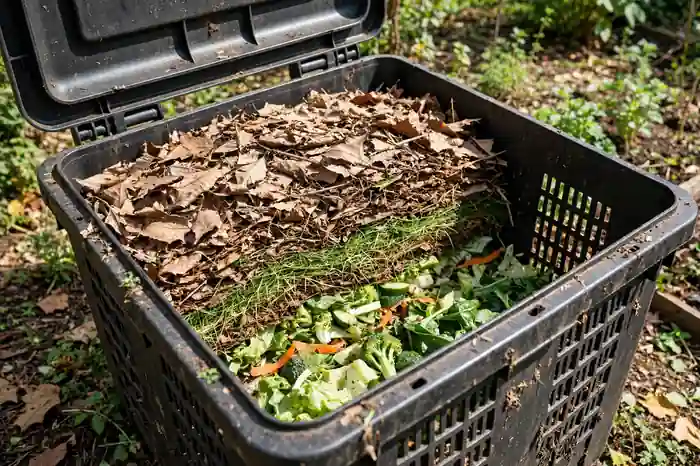
To compost, pile up two to three parts dry "browns" like leaves and cardboard for each part of wet "greens" like food scraps and grass, keep it as damp as a wrung-out sponge, and turn it now and then. Microbes break it down into dark, crumbly compost in about two months to two years, depending on how much you tend it. You can do it in a pile, a bin, a tumbler, a worm bin or a countertop bucket.
Compost is food scraps and yard waste that have rotted into a rich soil booster. It cuts the trash you throw out, feeds plants and improves soil that is sandy, heavy or tired. This guide covers how to start, what to add, how to speed it up, how to fix problems and how to use the result, with a short section for every common situation.
How to compost at a glance
| Question | Short answer |
|---|---|
| What do you need? | A spot, a bin or pile, browns, greens and water |
| Best mix | About 2 to 3 parts browns to 1 part greens, by volume |
| How damp? | Like a wrung-out sponge |
| How often to turn? | Every week or two for faster compost. Less often is fine, but slower |
| How long does it take? | Roughly 2 to 3 months if hot and turned, 6 months to 2 years if left alone |
| When is it ready? | Dark, crumbly, earthy smelling, and no scraps you can still recognize |
| What to skip | Meat, bones, dairy, oils, pet waste, diseased plants |
| Easiest start | A 3 ft pile or bin in a corner of the yard |
| Apartment option | A worm bin, a countertop bucket or a drop-off program |
What do you need to start composting?
You need a spot, a container or a pile, a mix of browns and greens, and water. You do not need special products. A flat, well-drained patch of ground with partial shade works best, close enough to the kitchen that you will actually use it. A garden fork or shovel helps for turning.
- Space: a pile or bin about 3 feet wide, long and tall holds heat well. Smaller works, but cools faster.
- A bin (optional): it keeps the pile tidy and holds in moisture. A pile on the ground works too.
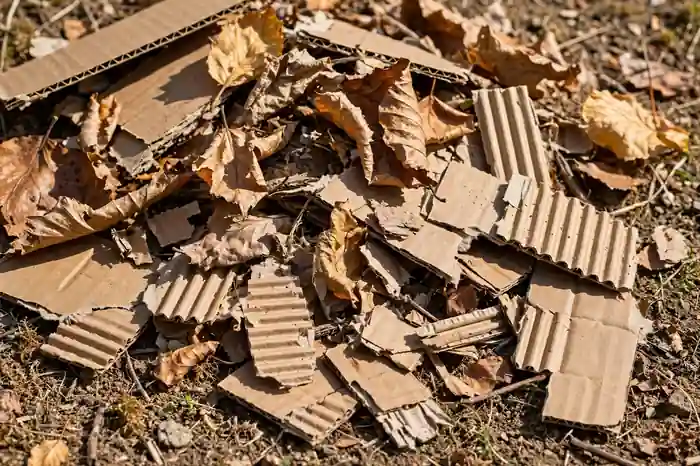
- Browns: dry leaves, shredded cardboard and paper, straw, sawdust.
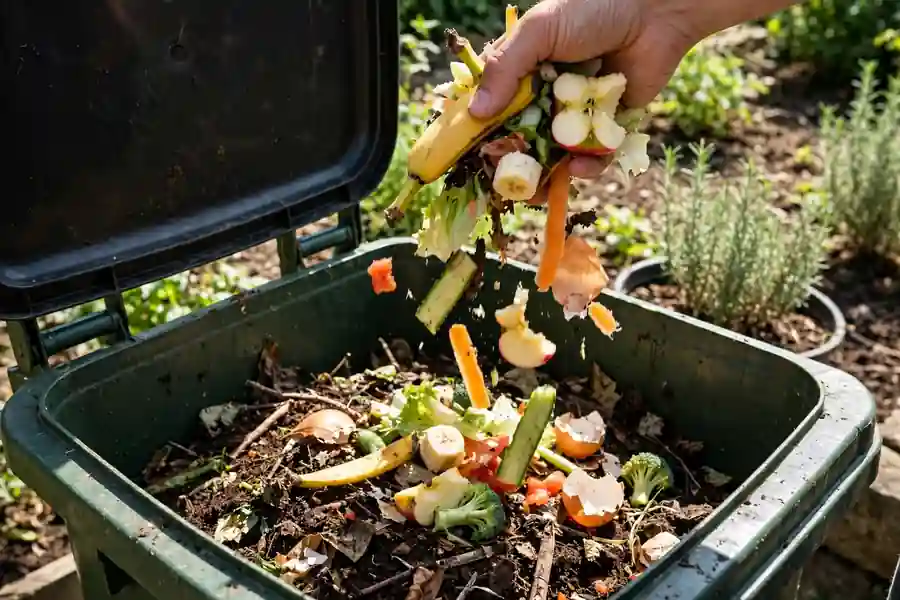
- Greens: kitchen scraps, coffee grounds, grass clippings, fresh plant trimmings.
- Water: from a hose or watering can.
- A thermometer (optional): a long compost thermometer shows whether the pile is hot.
How do you compost at home, step by step?
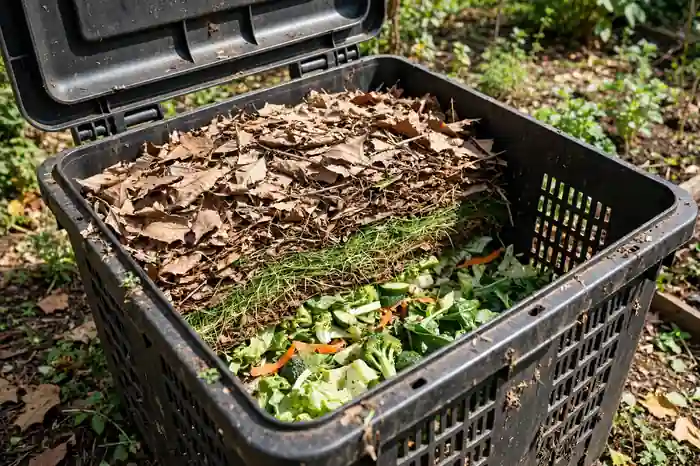
Start with a base of coarse twigs, add browns and greens in layers or mix them, water as you go and cover the pile. Bury fresh food scraps in the middle so pests do not find them. Then turn the pile when you can.
- Pick a spot on bare soil, so worms and microbes can move in. Choose level ground with partial shade.
- Lay a base of 4 to 6 inches of twigs or straw. It lets air in from below.
- Add browns and greens. Alternate layers or mix them as you add scraps.
- Chop or shred big pieces. Small pieces break down faster.
- Water it until it feels like a wrung-out sponge. If you squeeze a handful, a drop or two of water should come out.
- Bury kitchen scraps in the center and cover them with browns.
- Cover the pile with a lid or tarp so rain does not soak it.
- Turn it every week or two, or whenever you can, to bring in air.
How much brown and green do you need?
About 2 to 3 parts brown to 1 part green by volume. University guides give slightly different numbers, from 2 to 1 to 4 to 1, and they all say precision does not matter. Use your nose and eyes: a wet, smelly pile needs more browns, and a dry, slow pile needs more greens and water.
What can you compost?
Most plant-based kitchen scraps and yard waste can go in. Greens are wet and rich in nitrogen. Browns are dry and rich in carbon. Both are needed.
| Material | Can you compost it? | How |
|---|---|---|
| Fruit and vegetable scraps | Yes, a green | Chop small and bury in the pile |
| Coffee grounds and paper filters | Yes, a green | Mix with browns |
| Tea bags | Yes | Remove plastic or staple parts, since some bags contain plastic |
| Eggshells | Yes, in small amounts | Crush them. Whole shells last a long time |
| Grass clippings | Yes, a green | Mix with browns. Thick wet layers get slimy and smelly |
| Fall leaves | Yes, a brown | Shred with a mower to speed them up |
| Cardboard and paper | Yes, a brown | Tear or shred. Remove tape and glossy coatings |
| Wood chips and sawdust | Yes, a brown | Slow. Use small amounts of fine sawdust |
| Pine needles | Yes, in moderation | Slow to break down. Mix with other materials |
| Weeds | Yes if not gone to seed | Hot piles kill many seeds. Cold piles may not |
| Banana peels, watermelon rinds, pumpkins | Yes | Chop big pieces. Remove pumpkin seeds if you do not want volunteers |
| Bread, pasta, rice | Small amounts | They can attract pests. Bury them |
| Citrus peels, onions | Small amounts | Fine in moderation. Worm bins prefer little |
| Ashes from untreated wood | Small amounts | Sprinkle thinly. They are alkaline |
| Diseased or pest-infested plants | No | They may spread problems |
| Pesticide-treated clippings | No | Residues can harm plants and worms |
Can you compost meat, dairy, bones and eggs?
Not in most home piles. Meat, bones, dairy, fats and oils break down slowly, smell and attract rats, flies and raccoons. Cooked eggs and egg dishes fall in the same group. Extension guidance generally excludes them. A sealed hot system or a municipal program can handle them, but a basic backyard bin is not set up for it.
Can you compost manure, chicken poop and dog waste?
Plant-eating animal manure can be composted, and pet waste should be kept out of food gardens.
- Horse, cow, chicken and rabbit manure: these are rich greens. Mix them with plenty of browns, such as bedding, straw or leaves, and let the pile heat up. Chicken manure is the strongest and needs the most browns and time. Some quick hot methods promise finished compost in a few weeks with frequent turning, but plan on a few months to be safe.
- Safety: raw manure can carry germs. Composting at about 131°F or higher helps kill many of them, and extension guidance also says to apply raw manure at least 90 to 120 days before harvesting food crops. Wash hands after handling.
- Dog and cat waste: do not add it to a compost pile used for vegetables. It can carry parasites and germs. Use a separate pet-waste system for ornamental areas only, or put it in the trash.
- Human waste: this is a separate topic with special rules and is not covered here.
Which composting method is right for you?
Choose by space and by how much effort you want to give. A bin is the best all-round choice for a yard. A worm bin or countertop bucket suits an apartment.
How do you make a compost bin?
The simplest bin is a ring of wire fencing, three wooden pallets wired into a box, or a plastic trash can with holes drilled in it. The goal is air, drainage, a lid and room to turn.
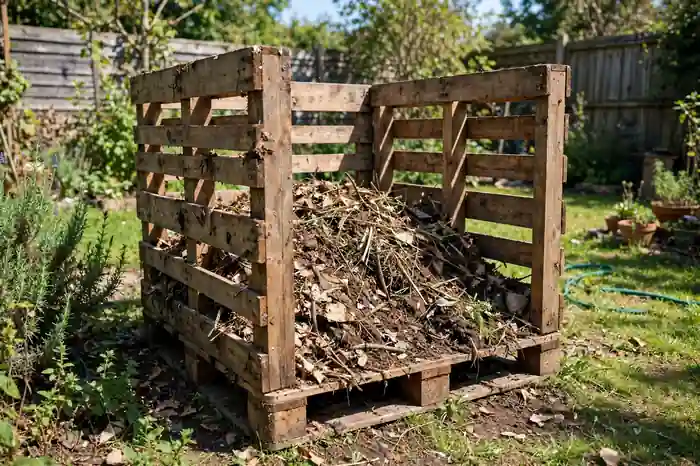
- Pallet bin: wire three pallets into a U shape about 3 feet square and use a fourth as a lift-out front. Check the stamp on each pallet. HT means heat-treated and is safer. Avoid MB, which means methyl bromide.
- Wire cylinder: roll a piece of 3 to 4 foot tall wire fencing into a ring and fasten it. Cheap, easy to lift off to turn the pile.
- Wood or box bin: build a simple box from untreated lumber with gaps between boards for air.
- Trash can or bucket bin: drill air holes around the sides and bottom, and use a lid. Good for small amounts, but it stays wet, so add plenty of browns.
- Three-bin system: one bin for new material, one for turning and one for finishing.
- Store-bought bins: from about $50 for a basic plastic bin to a few hundred dollars for a large or tumbling model. Look for good airflow, a lid and an easy way to get the compost out.
How do you use a compost tumbler?
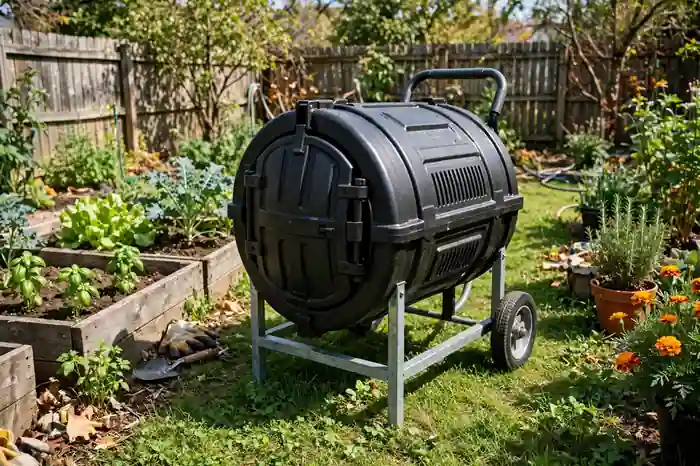
Fill it about two thirds full with a mix of browns and greens, close it and spin it every few days. A tumbler is sealed, so it keeps pests out and is easy to turn, but it holds small batches and can get wet and clumpy. Add browns if it smells, add water if it is dry, and stop adding new scraps when you want a batch to finish. Dual-chamber tumblers let one side cook while you fill the other. To empty it, open the door and shovel out the finished compost.
How do you compost with worms?
Red worms in a ventilated bin eat kitchen scraps and make rich castings, called worm compost. A starter bin can use about a pound of worms (several hundred to a thousand) and bedding of shredded newspaper or cardboard kept as damp as a wrung-out sponge. Feed a few times a week by burying scraps, and keep the bin between about 55°F and 77°F. A worm bin works indoors all year, so it suits apartments. Avoid meat, dairy, oily food and too much citrus.
How do you compost in an apartment or indoors?
Use a worm bin, a countertop bin or a drop-off service. A countertop fermenting bucket, often called bokashi, uses a special bran to pickle scraps, then you bury the result in soil or finish it elsewhere. It does not make finished compost by itself. Many cities and community gardens also take food scraps, so check local drop-off programs. Keep a lidded container in the freezer for scraps until the day you drop them off.
Can you compost without a bin?
Yes. Use an open pile, or dig a trench or pit in a garden bed, bury scraps 8 to 12 inches deep, and cover with soil. Plant there later. A 5 gallon bucket with holes works for tiny amounts.
How do you make compost faster?
Shred the material, keep the pile at least 3 feet wide, keep it damp and turn it often. A hot, well-fed pile can finish in a couple of months. A pile left alone takes much longer.
- Shred or chop leaves, cardboard and scraps into small pieces.
- Add nitrogen if the pile is slow: more greens, a layer of grass clippings, coffee grounds or a little manure. A sprinkle of finished compost or garden soil adds microbes, and you do not need a store-bought starter.
- Keep it damp but not soggy.
- Build it big enough to heat up, about 3 by 3 by 3 feet.
- Turn it every few days to a week for hot compost.
- Use a thermometer. A hot pile reaches about 130°F to 160°F. Extension guidance suggests at least 131°F, and turning when the temperature drops.
A hot pile smells earthy, not rotten, and steams on a cool day.
How often should you turn and water compost?
Turn it about once a week for fast compost, and every few weeks for slower compost. Turning adds air, which the microbes need. Move the outside material to the middle, and break up clumps. A pile you never turn still breaks down, but much more slowly.
Water when the pile feels dry, and skip it when the pile feels soggy. In a hot, dry spell, you may water weekly. In winter or rainy weather, you may not need to water at all. A tumbler may need a turn every couple of days when you want it quick, and a pile or bin every week or two.
How long does compost take?
Anywhere from about a month to two years. It depends on the method, the size, the mix and the weather.
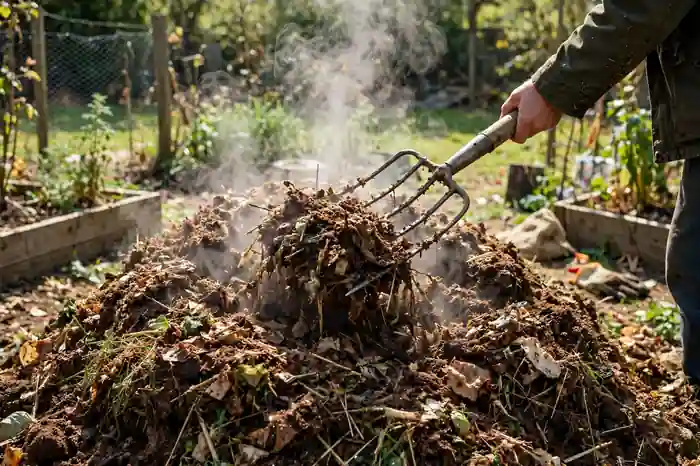
- Leaves: shredded leaves in a pile make leaf mold in about 6 to 12 months, and mixed into a hot pile they finish faster.
- Grass clippings: break down in weeks when mixed with browns, and turn slimy if piled thick.
- Food scraps: a few weeks to a few months in a working pile. A banana peel is gone in weeks, while eggshells, avocado pits and woody scraps take longer.
- Manure: a few months in a hot pile, longer in a cold one.
- Wood chips: many months, sometimes more than a year.
- Cold weather slows everything, and the pile goes dormant in winter.
How do you know when compost is ready?
It is dark brown or black, crumbly like soil, smells earthy, is cool, and you can no longer recognize what went in. A few twigs or shells may remain. Sift them out and toss them back into the pile.
A simple test: put a handful in a sealed bag for a day. If it still smells sour or ammonia-like, it needs more time. You can also sow a few radish or bean seeds in a pot of it. Healthy sprouts mean it is ready.
How do you use finished compost?
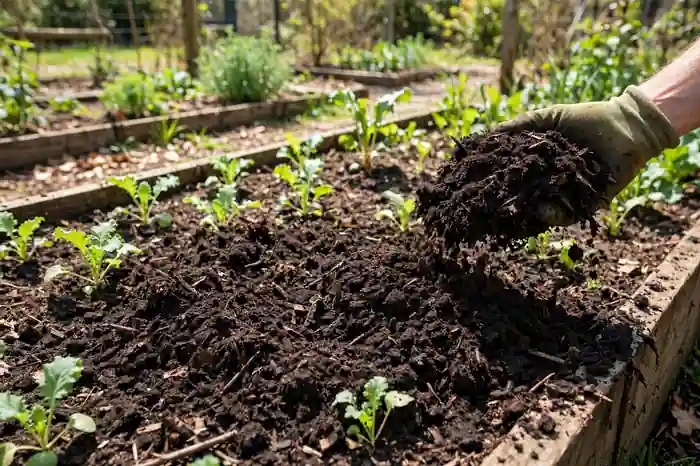
Spread it on soil, mix it into beds or add it to potting mix. It improves soil structure, holds water and feeds plants slowly. It is not a complete fertilizer, so treat it as a soil conditioner.
- Lawn: spread a thin layer of 1/4 to 1/2 inch over the grass, rake it in so the blades show, and water. Do it in spring or fall, and combine it with overseeding. See how to reseed a lawn.
- Garden and vegetable beds: spread 1 to 3 inches and mix it into the top 6 inches. You can also put it on top of the soil and let rain and worms work it in.
- Around plants: a 1 to 2 inch layer works like mulch. Keep it off stems and trunks.
- Containers and potting mix: mix about one part compost to three parts potting soil. Too much compost can hold too much water.
- Storing: keep finished compost covered, so rain does not wash out nutrients. A closed bin or bag in the shade works for months.
Compost does not need sterilizing for garden beds. For seed starting, most gardeners use a purchased seed mix.
What is mushroom compost?
Mushroom compost is the leftover growing medium from mushroom farms, usually made from straw, manure and other materials. You can buy it by the bag or truckload. It is useful as a soil amendment, but it can be salty, so use it sparingly, avoid it around seedlings and salt-sensitive plants, and test or mix it into the soil. Making it at home is not practical, since it is a farm by-product.
What is compost tea, and does it work?
Compost tea is compost steeped in water and sprayed or poured on plants. University sources are cautious. Several say there is little controlled evidence for most of the claims, and some warn about germs growing in home brews. The best support is for reducing some leaf diseases, though not enough to rely on it alone.
If you try it, use fully finished compost, fresh water and a short steep. A common home recipe is about a shovelful of compost in 5 gallons of water for a day or two, then diluting it to look like weak tea. Use it soon, and do not apply it to leafy vegetables close to harvest. Washing your hands afterward is wise. Adding compost to the soil does the same job with less risk.
Why does your compost bin smell or not work?
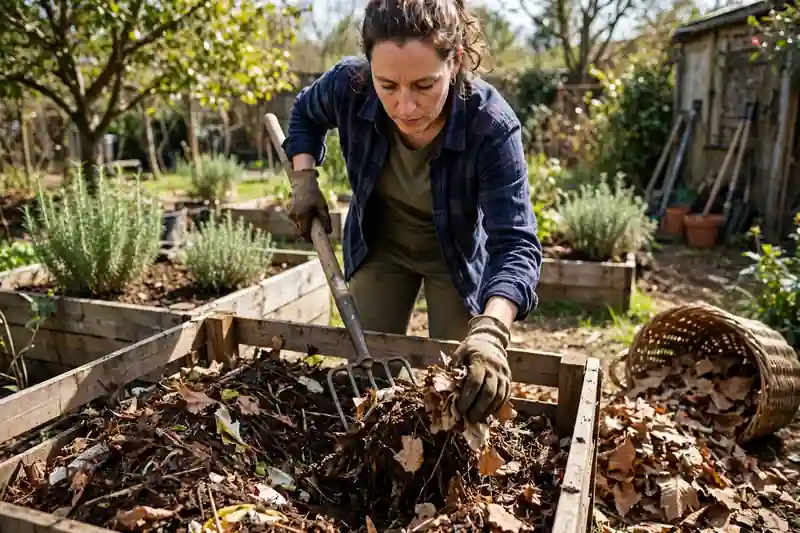
Almost every compost problem comes from too much water, too many greens, too little air or too dry a pile. Check the smell and the feel, then adjust.
| Problem | Likely cause | Fix |
|---|---|---|
| Rotten-egg or sour smell | Too wet, too compact, not enough air | Turn it, add dry browns, spread out soggy material |
| Ammonia smell | Too many greens | Add browns such as leaves or cardboard, and mix |
| Pile is cold and slow | Too dry, too few greens, too small | Add water and greens, turn it, make it bigger |
| Pile is soggy | Too much water or wet greens | Add dry browns, cover it, drain it |
| Pile is dry | Not enough water | Water as you turn it |
| Bin not working at all | Poor mix, no air, too small | Dump, remix with browns and greens and restart |
| Compost smells like manure | Too many greens, wet | Add browns and turn |
To clean a smelly bin, empty it, scrub with water and a little vinegar, rinse and let it air dry, then restart with more browns. To dry out a wet pile, spread it on a tarp in the sun and turn it. To move or remove a bin, finish the batch first or spread the compost in beds.
How do you keep flies, maggots, ants and rats out of compost?
Bury scraps, cover them with browns and keep meat and dairy out. Pests come for food they can reach, so a covered pile with no meat, bones or cooked food is rarely a problem.
- Fruit flies: dig a hole in the center, bury scraps and cover with browns. For an active infestation, add dry browns and stop adding fruit and vegetable scraps for a few weeks. See the fruit fly guide.
- Maggots: these are fly larvae, and they show up when scraps are left exposed. Bury food, add browns and keep the lid on. Learn where maggots come from.
- Ants: they usually mean the pile is too dry. Moisten it and turn it. Ants do not harm the compost.
- Rats and animals: skip meat, dairy and oils, use a bin with a solid base or mesh floor, and add a tight lid. For rat control, see the rat guide.
- Worms: earthworms and other decomposers are a good sign. You do not need to buy or attract them.
Can you compost in winter?
Yes, but it slows or stops in cold weather. Keep adding scraps, bury them in the center and add extra browns. A bigger pile holds heat better, and a cover of straw or leaves insulates it. Turn less often. In freezing weather, keep a lidded bucket of scraps indoors or in the freezer and add them in a batch. In spring, the pile wakes up. Worm bins stay indoors all winter.
How much does composting cost?
You can start for almost nothing with a pile, a wire ring or a trash can bin. A store-bought bin often runs from about $50 to a few hundred dollars, and a tumbler or electric countertop unit costs more. These are rough 2026 estimates and vary by brand and size. Most of the cost is the bin. The compost is free.
Quick answers to common questions
How do you start composting at home?
Choose a flat, shaded spot, set up a bin or 3 foot pile, add 2 to 3 parts browns to 1 part greens, keep it damp and turn it every week or two.
How long does it take to make compost?
About 2 to 3 months if the pile is hot and turned, and 6 months to 2 years if you leave it alone.
What should you not put in compost?
Meat, bones, dairy, oils, pet waste, diseased plants, weeds with seeds in cold piles and anything treated with pesticides.
How often should you turn compost?
Every week or two for faster results. Every few days for hot composting, and less in winter.
How do you know when compost is ready?
It is dark, crumbly, earthy smelling and cool, and you cannot see recognizable scraps.
Keep reading: how to reseed a lawn, natural weed killer, how to get rid of fruit flies and more lawn and garden guides.
Is learning how to compost worth it?
Yes. If you have a yard, even a simple pile saves kitchen and yard waste and gives you free soil food. If you live in an apartment, a worm bin or a drop-off program works too. The key to how to compost well is simple: balance browns and greens, keep it damp, give it air and be patient.