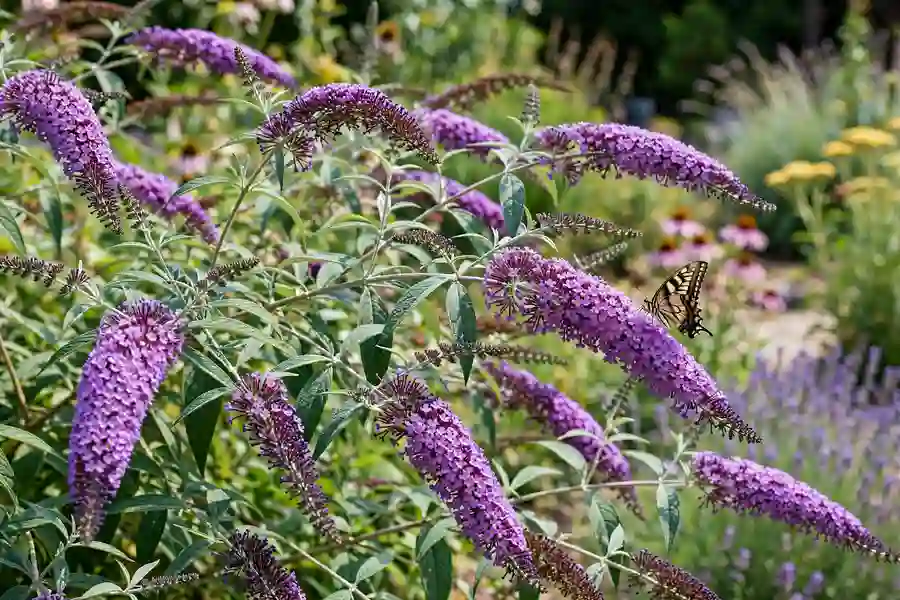
Butterfly bush (Buddleja davidii, also spelled Buddleia) is a fast-growing deciduous shrub with long, honey-scented flower spikes from early summer to frost that attract butterflies, bees and hummingbirds. It needs full sun and well-drained soil, grows 3 to 10 feet depending on the variety, blooms on new wood and is cut back hard in late winter or early spring. It is hardy in about zones 5 to 9. It self-seeds heavily and is invasive in parts of the US, so choose a sterile or low-seed variety.
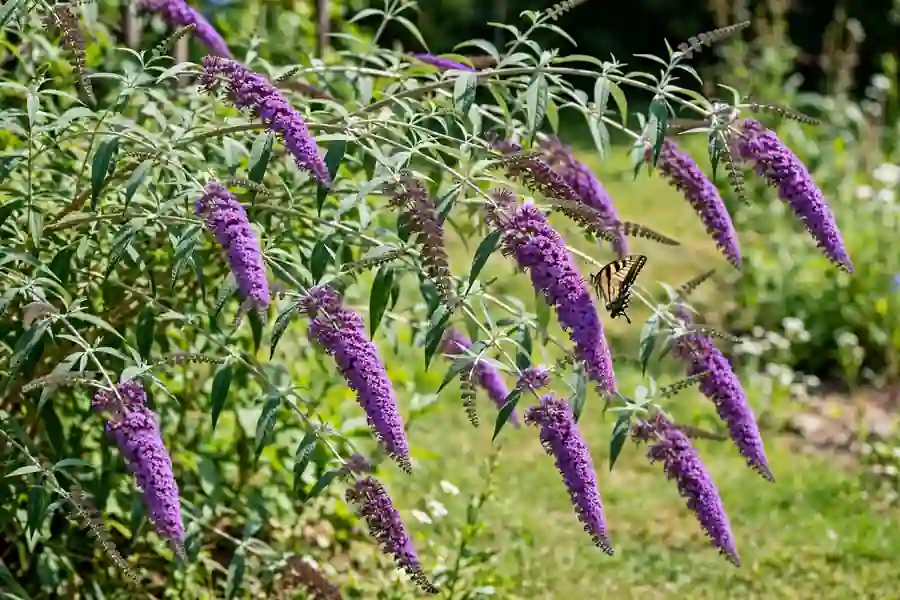
Butterfly bush at a glance
| Question | Answer |
|---|---|
| Plant type | Deciduous to semi-evergreen shrub. Perennial in the ground |
| Also called | Summer lilac, buddleia, butterfly tree (standard form) |
| Hardiness | About zones 5 to 9. Dies to the ground in cold winters and regrows from the roots |
| Size | Dwarf 2 to 4 ft. Standard 6 to 10 ft or more, about as wide |
| Growth rate | Fast. Several feet in one season |
| Light | Full sun, 6 or more hours |
| Soil | Well-drained. Tolerates poor soil and drought once established |
| Bloom | Early summer to first frost, on new growth |
| Prune | Late winter to early spring, to 6 to 12 inches. Deadhead through summer |
| Problem | Self-seeds and is invasive in some states |
What is a butterfly bush?
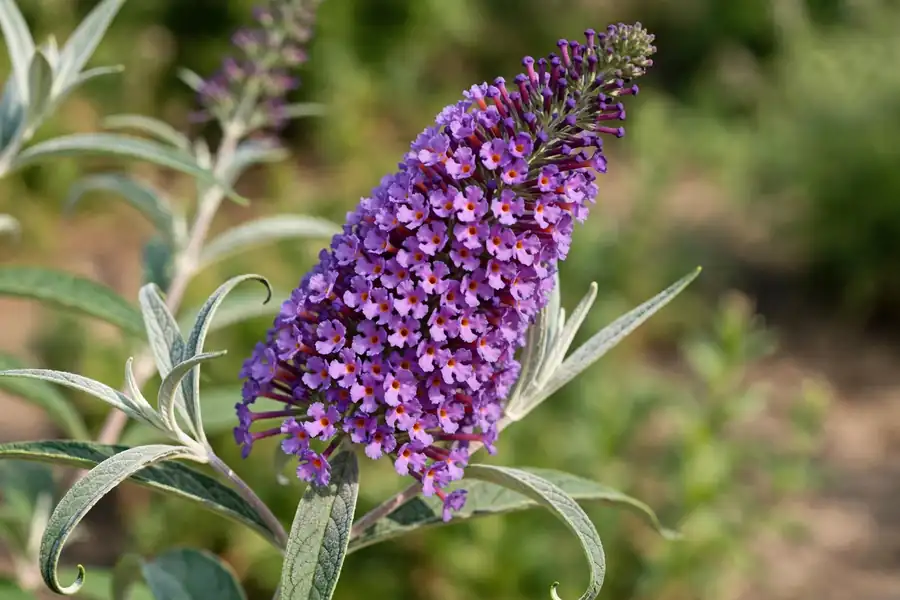
A shrub native to China, grown for 4 to 10 inch flower spikes made of tiny tubular flowers with an orange eye. The leaves are narrow, gray-green and silvery underneath, and the branches arch. It feeds adult butterflies, bees and hummingbirds with nectar. It does not feed butterfly caterpillars, which need host plants such as milkweed.
It is not a tree, but trained single-stem forms are sold as "butterfly bush tree" or standards. A butterfly bush is a woody shrub, not an annual.
What are the best butterfly bush varieties?
Pick by size first. Sizes are approximate, so check the tag.
| Group | Examples | Height | Notes |
|---|---|---|---|
| Dwarf (compact, mini, miniature, small) | Pugster (Blue, Amethyst, Pinker, White, Periwinkle), Lo & Behold (Blue Chip, Blue Chip Jr., Ruby Chip, Purple Haze, Pink Micro Chip), Buzz (Midnight, Magenta, Ivory, Velvet, Lavender, Hot Raspberry), Flutterby Petite (Tutti Frutti, Snow White), Chrysalis (Blue, Cranberry, Pink) | 1.5 to 4 ft | Fits pots, borders and small yards. Many are low-seed or sterile |
| Mid-size | Miss Molly (hot pink), Miss Ruby (magenta-red), Miss Violet (violet), Nanho Blue and Nanho Purple | 4 to 6 ft | Compact for a full-size butterfly bush |
| Full-size | Black Knight (deep purple), Royal Red, White Profusion, Pink Delight, Honeycomb (yellow), Orange Sceptre | 6 to 10 ft | Best at the back of a border or as a loose hedge |
| Arching | Grand Cascade | 4 to 6 ft | Cascading, mounding habit |
| Other species | Woolly butterfly bush (B. marrubiifolia), orange ball butterfly bush (B. globosa) | Varies | Different species. Mostly for warmer climates |
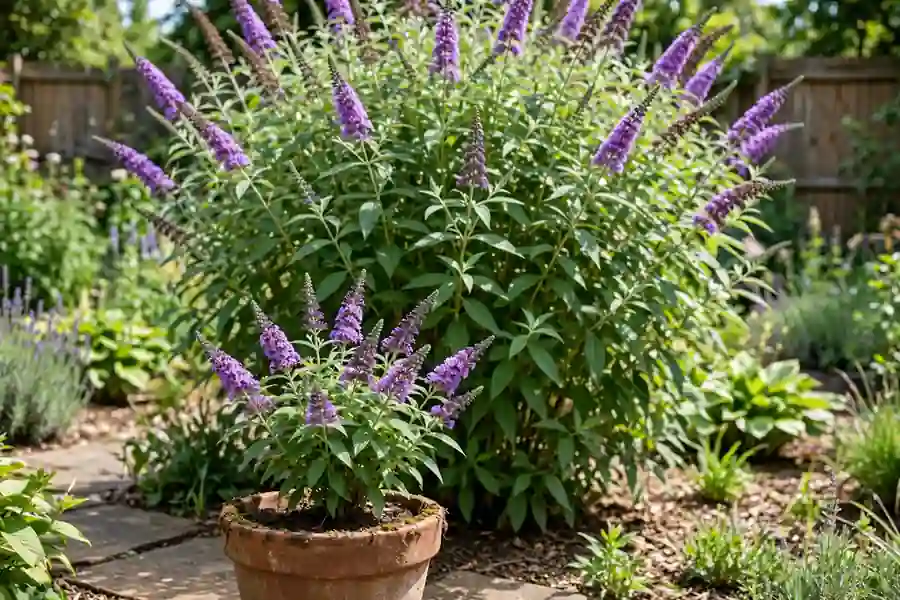
Blue butterfly bush: Pugster Blue, Lo & Behold Blue Chip and Nanho Blue are the true Buddleja blues, which look violet-blue. A plant sold as "blue butterfly bush" can also be Clerodendrum ugandense, an unrelated tender shrub.
What colors do butterfly bushes come in?
| Color | Examples |
|---|---|
| Purple, dark purple | Black Knight, Dark Knight, Dark Dynasty, Purple Haze, Buzz Midnight |
| Blue, violet-blue | Pugster Blue, Nanho Blue, Lo & Behold Blue Chip, Chrysalis Blue |
| Lavender | Dapper Lavender, Buzz Lavender, Lil' Lavender |
| Pink | Pugster Pinker, Pink Delight, Chrysalis Pink |
| Magenta, raspberry, red | Miss Molly, Miss Ruby, Royal Red, Buzz Hot Raspberry, Cranrazz |
| White | White Profusion, Snow White, Pugster White, Buzz Ivory |
| Yellow, orange | Honeycomb, Orange Sceptre, Sungold |
| Bicolor, multicolor | Kaleidoscope, Tricolor, Perfecta Trifecta |
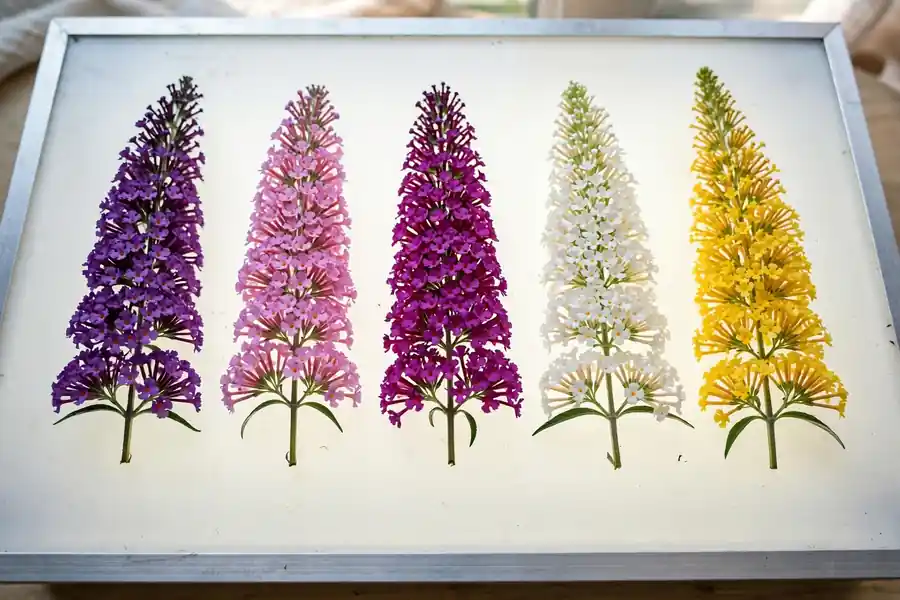
There is no true red or true black. Dark purple looks black in low light.
Where and when do you plant butterfly bush?
- When: spring after frost, or early fall at least 6 weeks before hard frost.
- Sun: full sun, 6 or more hours. In shade it grows leggy with few flowers.
- Soil: any well-drained soil. Wet soil rots the roots. It is drought tolerant once established.
- Spacing: dwarfs 2 to 3 ft apart, mid-size 4 ft, full-size 5 to 6 ft. For a hedge, space at about the mature width.
- Where: back of a border, along a fence, in a pollinator bed or in a large pot. Keep it away from natural areas, because the seeds spread.
How to plant:
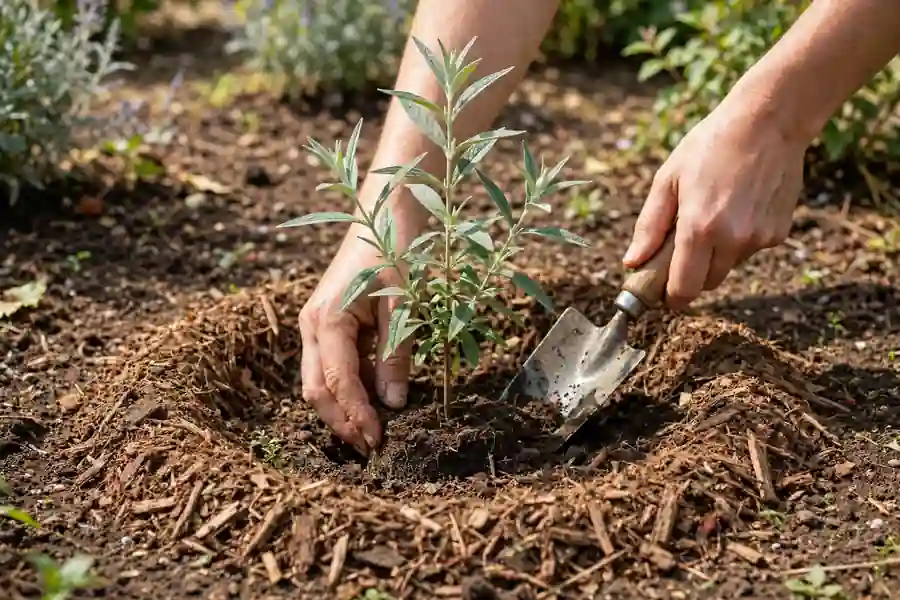
- Dig a hole twice as wide as the root ball and the same depth.
- Set the plant level with the soil, backfill and water well.
- Mulch 2 to 3 inches, keeping it off the stems.
- Water weekly for the first season.
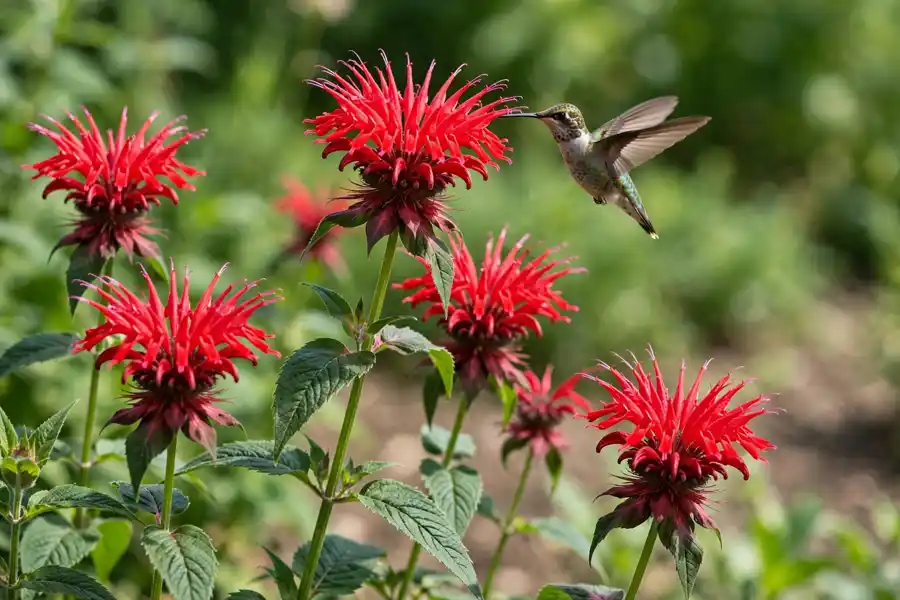
Companion plants: coneflower, black-eyed Susan, salvia, yarrow, sedum, bee balm, lavender, zinnia and ornamental grasses. They share sun and drainage needs and bloom with it.
How do you care for butterfly bush?
- Water: about 1 inch a week the first season. Established plants need a deep soak only in long dry spells. Potted plants dry fast and need watering more often.
- Fertilizer: little. Compost or a light balanced feeding in spring is enough. Too much nitrogen gives leaves, not flowers. The compost guide explains how to make your own.
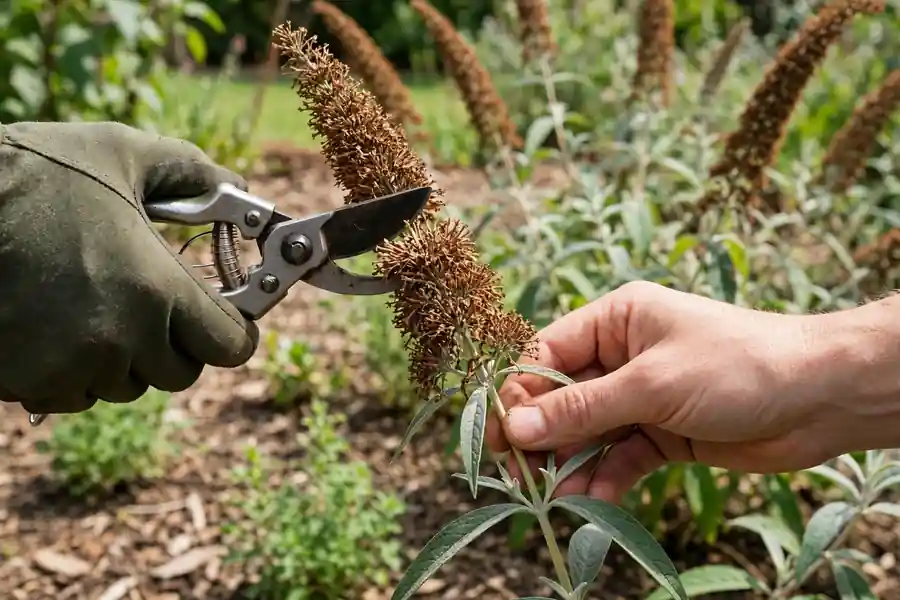
- Deadheading: cut spent flower spikes back to a pair of leaves to trigger new blooms. Do it through summer, and stop when frost nears. It also stops seed formation.
- Pots: use a large container with drainage and potting mix. Dwarf types suit pots best.
- Bloom time: early summer to frost. A hard spring cut delays the first flush a few weeks.
When and how do you prune butterfly bush?
When: late winter to early spring, once buds swell and new growth shows at the base. In cold zones, wait until the shrub leafs out so you can see dead wood. Don't prune hard in fall, because it invites winter damage. Do light shaping and deadheading in summer.
How:
- Cut all stems to 6 to 12 inches above the ground for standard types. Cut dwarfs to 6 to 8 inches.
- In mild zones (8 to 9), cut by one-third to one-half instead, or to about 12 to 18 inches.
- Cut just above a pair of healthy buds or new shoots.
- Remove dead, weak and crossing stems at the base.
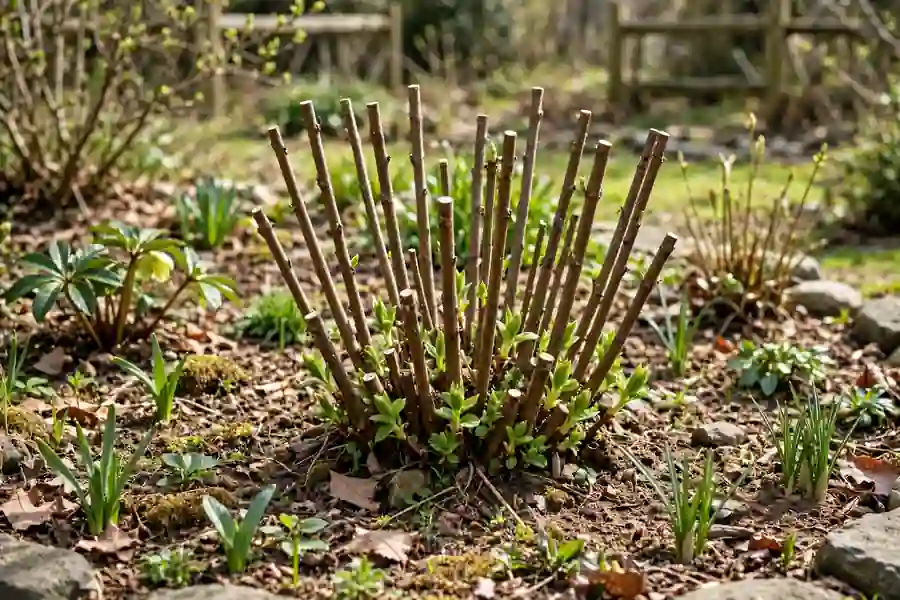
It blooms on new wood, so hard pruning improves flowering. A pruned plant regrows 4 to 8 feet in one season.
Overgrown butterfly bush: cut it back to 12 inches in spring. It regrows from the base.
Does it look dead? Late leaf-out is normal. Scratch a stem. Green underneath means alive. Wait until late spring before giving up.
How do you winter butterfly bush?
- In the ground: after the soil freezes, mulch the base 3 to 4 inches. Leave the old stems until spring. Dieback is normal in zone 5.
- In pots: roots freeze harder in pots. Move the pot to an unheated garage or sheltered spot at 40 to 50°F, water sparingly and bring it out in spring. You can also sink the pot into the ground.
- Do not fertilize after midsummer.
How do you propagate butterfly bush?
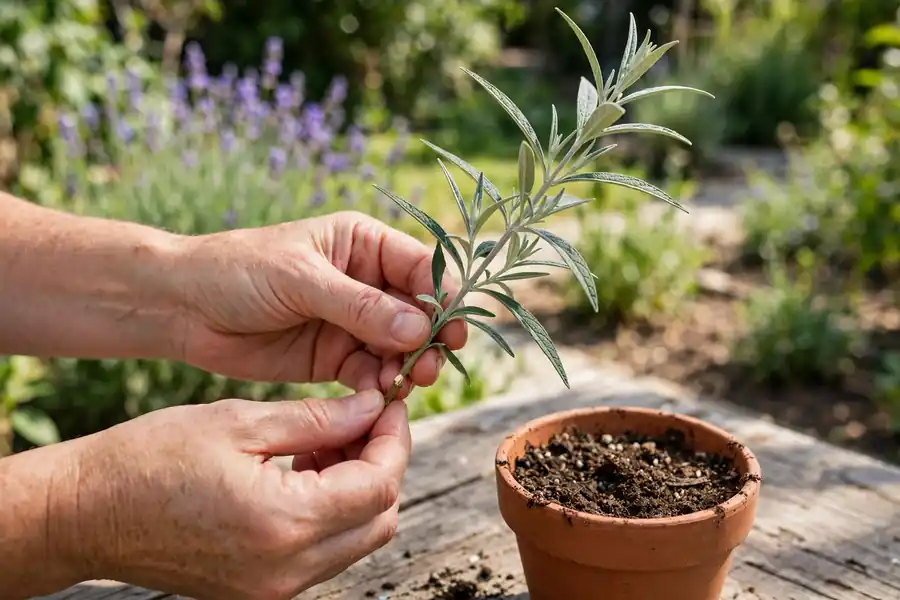
- Cuttings (best): in summer, take 4 to 6 inch non-flowering tips, strip the lower leaves, dip in rooting hormone and plant in moist potting mix. Roots form in 2 to 4 weeks. Winter hardwood cuttings also work. Water rooting works but soil is more reliable.
- Seed: seeds are tiny and need light. Surface-sow indoors in late winter or outdoors after frost, and keep moist. Seedlings flower the first year. Named varieties don't come true from seed.
- Division and transplanting: move or divide in early spring while dormant.
Is butterfly bush invasive?
In many places, yes. One plant makes thousands of seeds that spread on wind and along roads and streams, and seedlings crowd out native plants. Oregon and Washington list it as a noxious weed, and several eastern states, including Pennsylvania, Maryland, Virginia, New Jersey and North Carolina, flag it as invasive. Rules vary by state, so check with your state agriculture department or extension office.
What to do:
- Deadhead before seeds form.
- Choose low-seed or sterile varieties. Lo & Behold, Flutterby Petite and some Miss types are sold as sterile or low-seed. Oregon allows sales of cultivars producing 2 percent or less viable seed, labeled "summer lilac" or "seedless butterfly bush." Sterility can vary, so keep deadheading.
- Never plant it near woods, streams or natural areas.
Native alternatives for butterflies: milkweed (host plant for monarchs), buttonbush, summersweet, New Jersey tea, spicebush, coneflower, Joe-Pye weed, bee balm and anise hyssop.
Do deer eat butterfly bush? Is it toxic?
- Deer: it is considered deer resistant because of its scent and texture, but hungry deer may browse it. Young plants are most at risk.
- Pets: it is not known as a serious toxin to dogs or cats, though reliable data is thin and eating plants can upset a stomach. Keep pets from chewing it and call your vet if one does.
Why is my butterfly bush not blooming, yellowing or damaged?
| Problem | Cause | Fix |
|---|---|---|
| Few or no flowers | Too much shade, too much nitrogen, young plant, late hard prune | Move to full sun, stop feeding, wait a season |
| Yellow leaves | Wet soil, poor drainage, overwatering | Improve drainage, water less |
| Leggy, floppy stems | Shade or no pruning | Prune hard in spring, give more sun |
| Holes in leaves | Japanese beetles, caterpillars | Hand-pick, or use insecticidal soap |
| Speckled leaves, webbing | Spider mites in hot, dry weather | Spray with water, use insecticidal soap |
| White powder on leaves | Mildew in humid, crowded plants | Space plants, avoid wet leaves |
| Dead stems in spring | Winter dieback | Cut to live wood. Regrowth comes from the base |
Quick answers to common questions
When should you prune a butterfly bush?
Late winter to early spring when new growth appears, cutting to 6 to 12 inches. Deadhead spent flowers through summer.
How big does a butterfly bush get?
Dwarf types 2 to 4 feet, mid-size 4 to 6 feet, full-size 6 to 10 feet or more, and about as wide as tall.
Is butterfly bush invasive?
In many areas, yes. It spreads by seed. Plant sterile or low-seed varieties, deadhead and keep it out of natural areas.
How much sun does a butterfly bush need?
Full sun, at least 6 hours a day.
Do deer eat butterfly bush?
It is deer resistant but not deer-proof.
Keep reading: lily flower, hibiscus flower, how to prune roses, how to compost and more lawn and garden guides.
Should you plant a butterfly bush?
Yes, if you choose a sterile or low-seed variety, deadhead it and keep it away from natural areas. It gives fast, long-lasting color and nectar for little work. If you want to support caterpillars as well, pair it with milkweed.