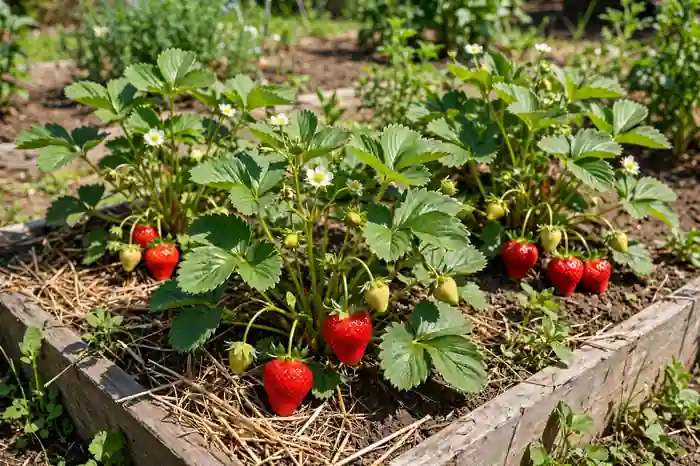
To grow strawberries, plant young plants in early spring in a sunny, well-drained spot, set the crown right at the soil line, water steadily and mulch with straw. Everbearing plants can give a few berries the first summer, and June-bearing plants give their main crop the second year. Strawberries also grow well in pots, hanging baskets and raised beds, so you do not need a big yard.
Strawberries are one of the easiest fruits to grow at home. They stay small, they come back for several years and each plant sends out runners that make new plants. The few things that matter are sun, drainage, planting depth and watering. This guide covers every common setup, from ground beds to a balcony pot, and how to get bigger, sweeter fruit.
How to grow strawberries at a glance
| Question | Short answer |
|---|---|
| Easiest way to start | Buy bare-root or potted plants in early spring |
| Sun | At least 6 to 8 hours of direct sun a day |
| Soil | Loose, fertile, well drained, slightly acidic |
| Planting depth | Crown level with the soil, roots covered, crown not buried |
| Spacing | About 12 to 24 inches in beds, closer for everbearing types |
| Water | About 1 to 1.5 inches a week, more in pots in hot weather |
| Time to fruit | Some berries the first summer for everbearing, next June for June-bearing |
| Pot size | 10 to 12 inches wide holds 2 to 3 plants |
| Best for pots | Everbearing and day-neutral types |
| How long a bed lasts | Roughly 3 to 4 years before plants tire |
Which type of strawberry should you grow?
Choose by when you want fruit. June-bearing plants give one large crop over about three weeks, which suits jam and freezing. Everbearing plants give two or three smaller crops. Day-neutral plants flower and fruit through the season as long as it is not too hot. Alpine and wild strawberries give tiny, very sweet berries, tolerate some shade and grow easily from seed.
White strawberries, sometimes sold as pineberries, are small and pale with red seeds. They grow like regular strawberries, but the fruit is a novelty with a different flavor. For named varieties, ask your local garden center or extension office, since some do much better in certain climates than others.
How hard is it to grow strawberries?
Not hard. Strawberries forgive many mistakes. The common problems are too little sun, soggy soil, burying the crown, letting them dry out and birds or slugs eating the fruit. If you get those right, even a beginner can pick berries in the first season.
When should you plant strawberries?
Plant in early spring, as soon as the soil can be worked, in most climates with cold winters. Planting after early summer is not recommended, since plants have too little time to root. In mild climates with hot summers, many gardeners plant in fall and grow strawberries through the cool months, treating them as a winter and spring crop. In very hot climates, a shaded spot and heavy mulch help, and day-neutral types often struggle in peak heat.
Use your climate, not a state name, as a guide. If the ground freezes in winter, plant in spring. If summers are very hot and winters are mild, plant in fall. Check your local extension office for exact dates.
Where is the best place to plant strawberries?
A sunny, level spot with loose, well-drained soil. Strawberries need at least 6 to 8 hours of direct sun, and more gives sweeter fruit. Avoid low spots where frost collects, because blossoms can freeze. Raised beds and mounded rows drain well and warm up earlier in spring.
- Soil: loose, rich in organic matter and slightly acidic. Mix in several inches of compost before planting. See how to compost.
- Drainage: soggy soil rots roots. In heavy clay, build a raised bed.
- Avoid: spots where tomatoes, peppers, potatoes or eggplants grew recently, since they can leave behind soil diseases that harm strawberries.
How do you plant strawberries?
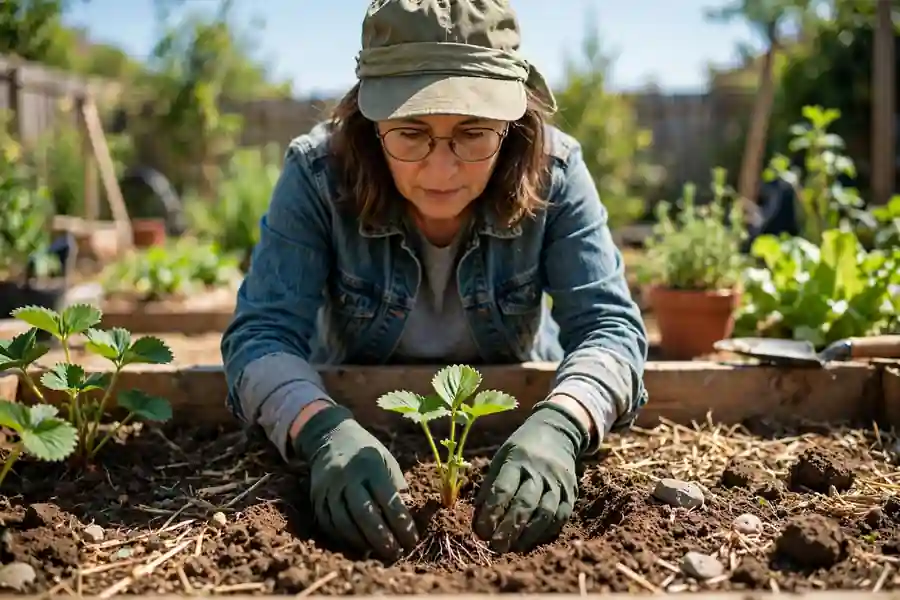
Soak bare roots for about half an hour, dig a hole wide enough to spread them, set the plant so the crown sits level with the soil and firm the soil around it. The crown is the thick part where the leaves meet the roots. Roots go under the soil, and the crown must stay above it.
- Prepare the bed. Remove weeds and mix in compost.
- Soak the roots of bare-root plants in water for about 30 minutes. Trim very long roots.
- Dig a hole deep enough for the roots to hang straight down, not curled up.
- Set the crown at soil level. Cover the roots, but not the center of the crown.
- Space the plants. In matted rows, leave about 18 to 24 inches between plants and 3 to 4 feet between rows. In the hill system, used for everbearing and day-neutral types, set plants about a foot apart. Compact pot and bed plantings can be closer.
- Water well and keep the soil damp while roots establish.
- Mulch with about 2 to 4 inches of clean straw or pine needles to keep fruit clean and the soil cool.
How do you grow strawberries from bare-root plants?
Plant them as soon as you get them, in early spring. Bare-root plants arrive dormant, with roots and no leaves. After planting, they break dormancy and send out leaves in a week or two. Do not let the roots dry out before planting, and do not bury the crown.
How long do strawberries take to grow?
It depends on the type and how you start. From a bare-root or potted plant, everbearing and day-neutral types can fruit by early summer of the first year, while June-bearing types give their first real crop the next year. From seed, expect about a year or more. Once a plant flowers, fruit ripens in about four weeks.
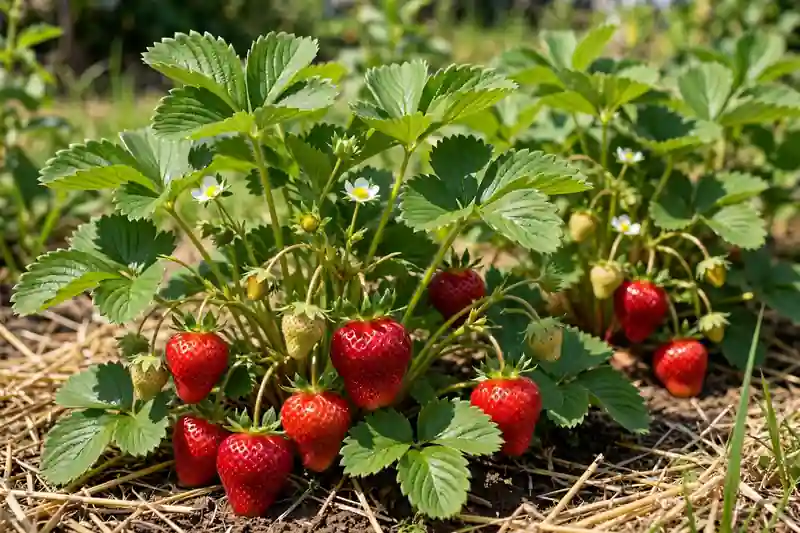
- First-year blossoms: pinch the flowers off June-bearing plants in their first year. This lets the plant put its energy into roots and runners, and gives a bigger crop later. For everbearing types, pinch early flowers and allow later ones, depending on the variety.
- From runners: a rooted runner planted by early fall usually fruits the next season.
- Indoors or hydroponic: with strong light and warmth, plants can flower in a couple of months, but the first harvest still takes a few months from planting.
- Bare-root and potted plants are the quickest, and seeds are the slowest.
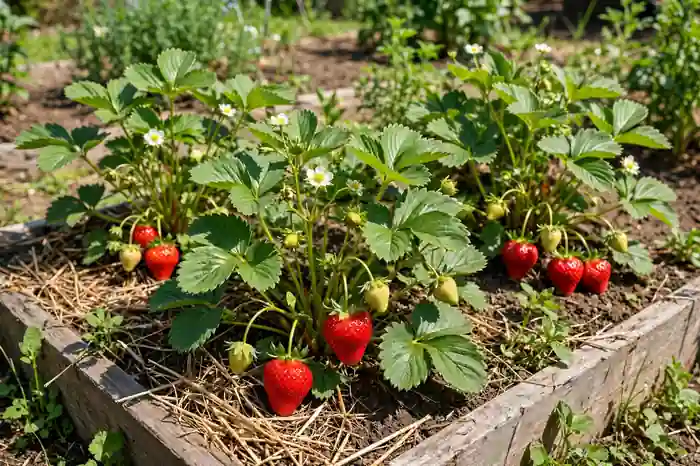
- What to expect: a young plant starts as a small cluster of three-part leaves. Strawberries flower in spring, a few weeks after growth starts, and the white blossoms are followed by tiny green berries that swell and turn red.
How do you grow strawberries in pots and containers?
Use a pot at least 10 to 12 inches wide and about 8 inches deep for 2 to 3 plants, fill it with quality potting mix, plant the crown at the surface and water when the top inch of soil is dry. Strawberry roots are shallow, so width matters more than depth. Pots with drainage holes are a must.
- Soil: potting mix, not garden soil. Garden soil compacts and drains slowly in a pot.
- Sun: 6 to 8 hours. Turn the pot every week so all sides get light.
- Water: check daily in summer. Water until it runs out of the bottom. Terracotta and fabric pots dry faster than plastic.
- Feed: use a balanced fertilizer made for fruit or vegetables, at half strength, every few weeks while fruiting.
- Winter: in cold regions, move pots to a sheltered spot or insulate them, since roots in pots freeze more easily than roots in the ground.
Hanging baskets, towers, gutters and other small-space setups
Anything with drainage and enough soil can hold strawberries.
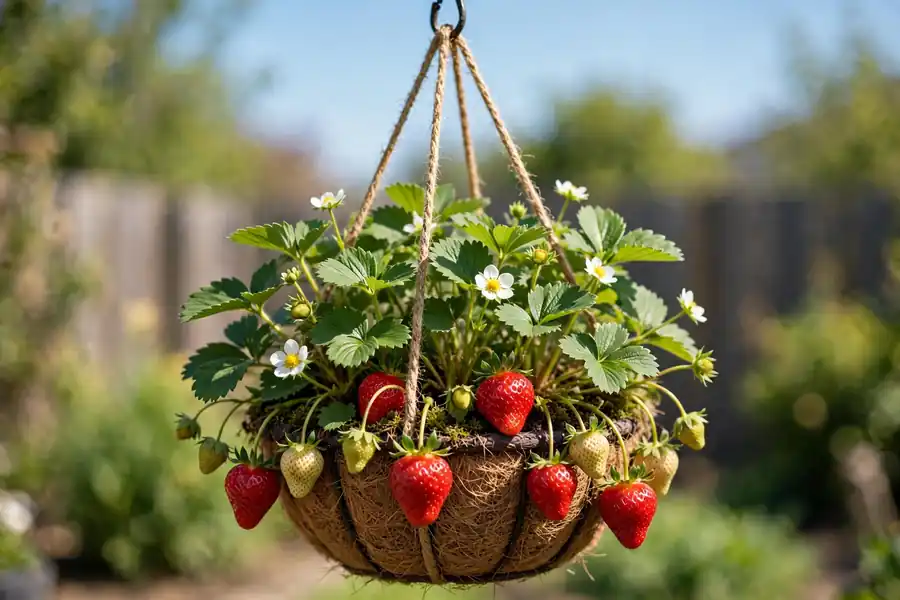
- Hanging baskets: a 12 to 14 inch basket holds 2 to 3 plants. Everbearing and day-neutral types look good and keep fruit off the ground. Water often, since baskets dry fast.
- Strawberry jars and tower planters: plant each pocket as you fill the soil. Use a perforated pipe or drip line down the center for even watering.
- Gutters, pipes and pallets: a gutter or a pallet with a liner works if it has drainage and about 6 inches of mix. Plants dry out fast, so water often.
- Grow bags, buckets and planters: a 5 gallon bucket with holes in the bottom works for 3 to 4 plants.
- Balconies: choose day-neutral or everbearing types, protect from wind and set pots in the sunniest spot.
- Egg cartons: fine for starting seeds, but not for growing plants to fruit.
Can you grow strawberries in raised beds or in the ground?
Yes. Raised beds warm earlier, drain well and are easier to weed and cover. In the ground, use rows or mounds. In either, give each plant room, mulch with straw and keep paths clear. Raised beds suit everbearing and day-neutral types, set about a foot apart.
How do you grow strawberries from seed?
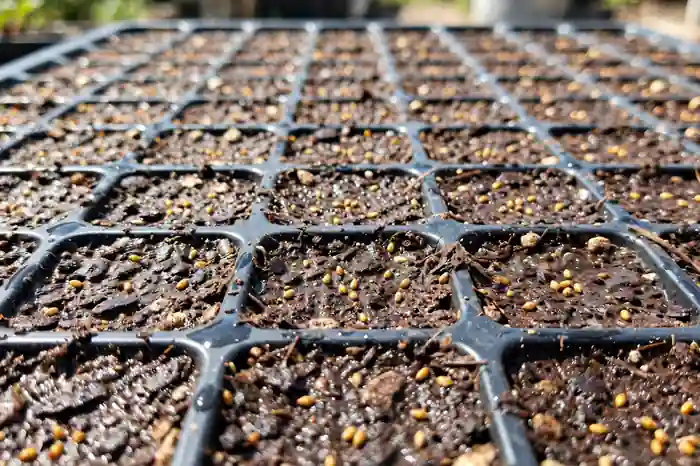
Chill the seeds, sow them on top of damp mix, keep them warm and bright and wait. Strawberry seeds are slow, and the plants take a year or more to fruit, so seed is best for alpine and wild types, or for a project, not for a quick crop.
- Chill (stratify): sealed seeds in the fridge or freezer for 3 to 6 weeks. Sources vary on exact time.
- Sow: press the seeds onto damp mix, uncovered, since they need light.
- Keep them warm and bright: about 70°F, under a grow light or in a bright window, and damp.
- Wait: sprouts take 1 to 6 weeks.
- Thin and grow on, then move outdoors after frost, when plants have 3 to 4 true leaves.
Can you grow strawberries from a strawberry?
Sometimes, but not reliably. The tiny seeds on the outside of a grocery store strawberry may sprout, but plants from hybrid fruit often do not match the parent and may produce poor fruit. Store-bought berries may also carry diseases. For a good crop, start with plants or seed sold for gardens. If you want to try it for fun, scrape off seeds with a bit of fruit flesh, dry them, chill them and sow as above. Strawberry tops, leaves and cuttings do not reliably make new plants.
How do you grow strawberries from runners?
Runners are the long stems a mother plant sends out, with a baby plant at the end. Set a small pot of damp mix next to the plant, pin the baby onto the soil with a U-shaped wire and cut the runner when it has rooted, usually after a few weeks. Plant it out by early fall. This is the cheapest way to get new plants, and it works best from healthy, young, disease-free parents.
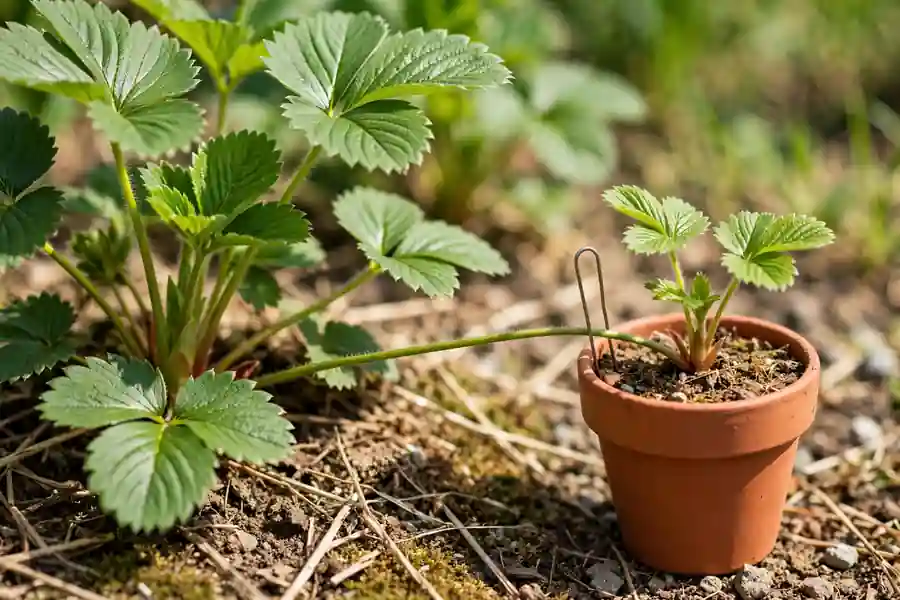
For a bigger harvest from June-bearing plants, let runners fill in a row. For everbearing and day-neutral plants, trim most runners so energy goes into fruit.
Can you grow strawberries indoors, in winter or year round?
Yes, with strong light and warm temperatures. A sunny south window is rarely enough. A grow light for about 10 to 14 hours a day helps. Choose everbearing, day-neutral or alpine types, use a pot with drainage and shake or brush the flowers by hand to pollinate them, since there are no bees indoors. Plants also like a cool rest in winter, so many gardeners rotate pots in and out.
- Greenhouse: a greenhouse extends the season, but needs ventilation, because heat and humidity bring mold. Hand pollinate if bees cannot get in.
- Hydroponic: strawberries grow well in water-based systems with a nutrient mix and good light. They can fruit within a few months of planting, and the setup costs more than soil.
- Outdoors in winter: in cold climates, mulch with straw after the ground freezes to protect the crowns, then pull it back in spring.
How much water and sun do strawberries need?
About 1 to 1.5 inches of water a week, and 6 to 8 hours of direct sun. Water at the base, not the leaves, using a drip line or a soaker hose, since wet leaves lead to mold. Keep the soil evenly damp from bloom through harvest. Pots need more frequent checks.
How do you care for strawberries through the year?
- Spring: remove winter mulch, clear dead leaves, feed lightly and watch for frost. Cover plants if a late frost is forecast.
- Summer: water, mulch, pick ripe fruit and remove runners you do not want.
- After harvest (June-bearing): mow or trim leaves to about an inch above the crowns, thin the rows, remove weeds, feed and water so plants make new growth for next year.
- Fall: clean up debris and renew mulch.
- Winter: in cold climates, cover with 3 to 4 inches of straw after the ground freezes.
- Replacing: most beds decline after about 3 to 4 years. Start a new bed from runners every few years, in a different spot.
How do you grow bigger and sweeter strawberries?
More sun, steady water and a good variety do the most. Berries swell with consistent moisture, and they get sweet by ripening fully on the plant in strong sun.
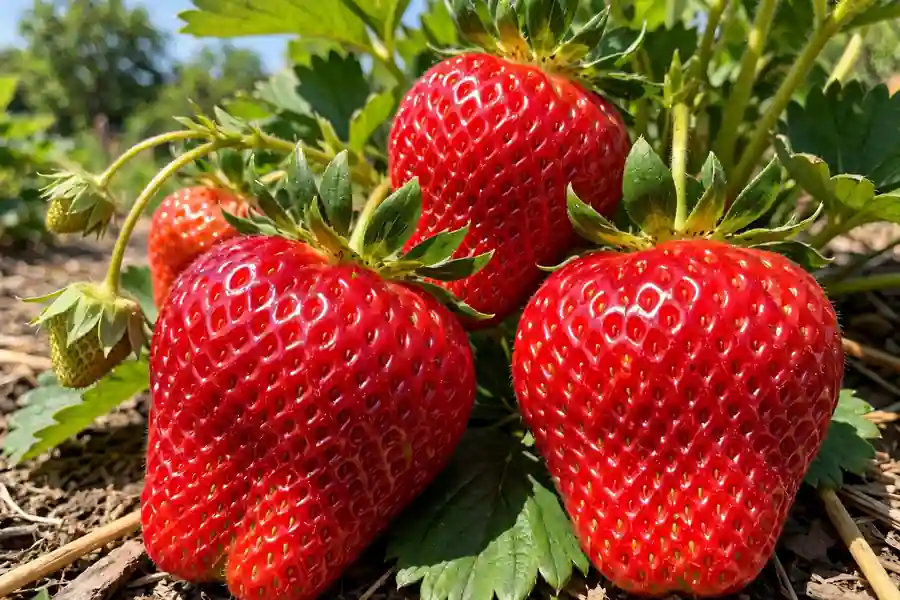
- Thin the plants: crowded plants make small fruit. Trim extra runners and keep spacing.
- Do not overfeed: a lot of nitrogen gives leaves, not berries. Compost plus a light fruit fertilizer is enough.
- Pick off first-year blossoms on June-bearers.
- Keep fruit clean and dry with straw mulch.
- Choose a bigger variety if size matters to you.
- Wait until fully red. Strawberries do not get sweeter after picking.
How do you pick strawberries so they keep growing?
Pick when fully red, with the green cap attached, and pinch the stem above the berry, not the fruit. Pick every day or two in peak season, early in the morning when the fruit is cool. Removing ripe fruit tells the plant to keep flowering, which matters most for everbearing and day-neutral types. Remove soft or moldy berries so rot does not spread.
What problems do strawberries have?
Slugs, birds, gray mold and leaf spots are the usual ones.
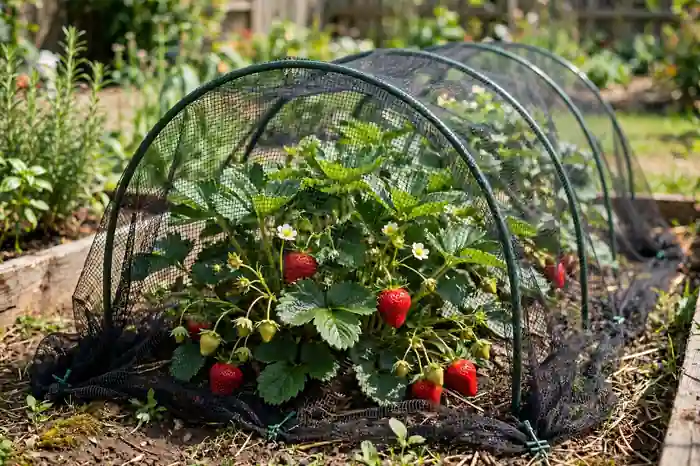
- Birds and animals: cover plants with netting before the fruit turns red.
- Slugs and snails: keep mulch tidy, set traps and raise fruit off the soil in pots or baskets.
- Gray mold: it grows on damp fruit. Mulch, space plants, water at the base and remove rotting berries at once.
- Leaf spot and mildew: clear old leaves after harvest and choose resistant varieties.
- Few or small berries: too little sun, uneven watering, crowding or old plants.
- Not flowering: the plant is too young, too shaded or the blossoms were hit by frost.
Can you grow strawberries organically?
Yes. Use compost, straw mulch, netting and good spacing, and pick off diseased fruit. Start with certified disease-free plants, rotate beds and avoid wet foliage. Most strawberry problems are about growing conditions, so prevention does most of the work.
How much does it cost to grow strawberries?
A pack of bare-root plants often costs about $10 to $25, a few potted plants cost more and a pot or raised bed adds to it. Compost, mulch and netting are small extras. Expect to spend roughly $30 to $100 to start a small patch, which pays back with a few pounds of fruit. These are rough 2026 estimates that vary by region and supplier.
Quick answers to common questions
How long do strawberries take to grow?
Everbearing plants can fruit the first summer, June-bearing plants fruit the next year, and plants from seed take a year or more. Fruit ripens about 4 weeks after flowering.
Can you grow strawberries from a strawberry?
Sometimes, from the seeds on the fruit, but plants from store-bought fruit often do not match the parent. Plants, seeds and runners work better.
How much sun do strawberries need?
At least 6 to 8 hours of direct sun a day. More sun gives sweeter fruit.
How do you grow strawberries in pots?
Use a pot 10 to 12 inches wide with drainage holes, fill it with potting mix, plant the crown at the surface, keep it in full sun and water when the top inch is dry.
How do you get bigger strawberries?
Give full sun and steady water, thin crowded plants and runners, avoid too much nitrogen, pick first-year blossoms off June-bearers and choose a larger variety.
Keep reading: how to compost, how to reseed a lawn, natural weed killer and more lawn and garden guides.
Is it worth learning how to grow strawberries?
Yes. A small patch or a few pots can give you fresh berries for years, and homegrown fruit tastes better than store-bought. The key to how to grow strawberries is simple: full sun, loose well-drained soil, the crown at the soil line, steady water and a good mulch. Start with a few plants and add more from runners.