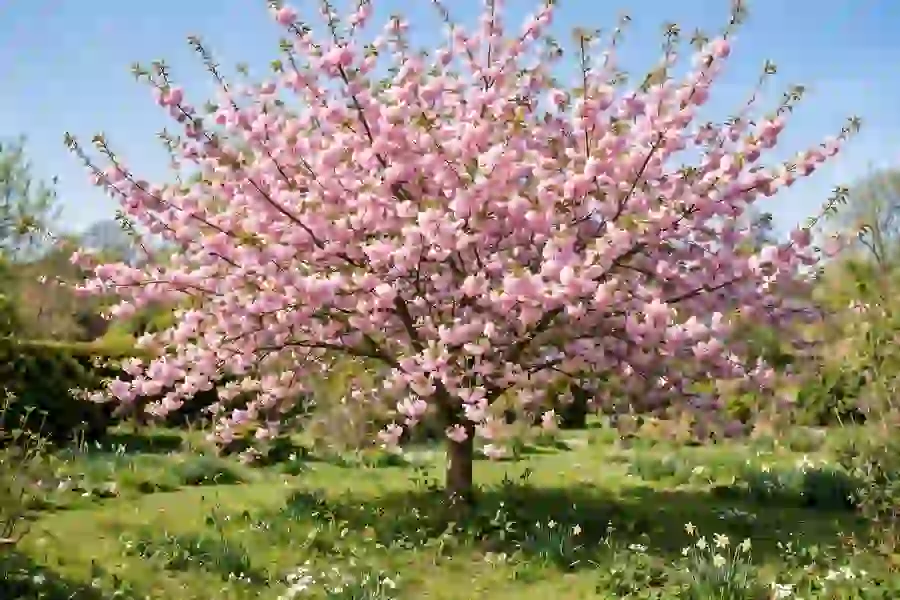
A cherry blossom tree is an ornamental cherry (Prunus, called sakura in Japan) grown for its spring flowers rather than its fruit. It blooms for 1 to 2 weeks in early to mid spring before the leaves open, grows 15 to 40 feet tall depending on the type, and needs full sun and well-drained soil. Plant in early spring or fall, prune right after bloom, and expect 15 to 40 years of life. In Japan the blossom stands for the fleeting beauty of life.
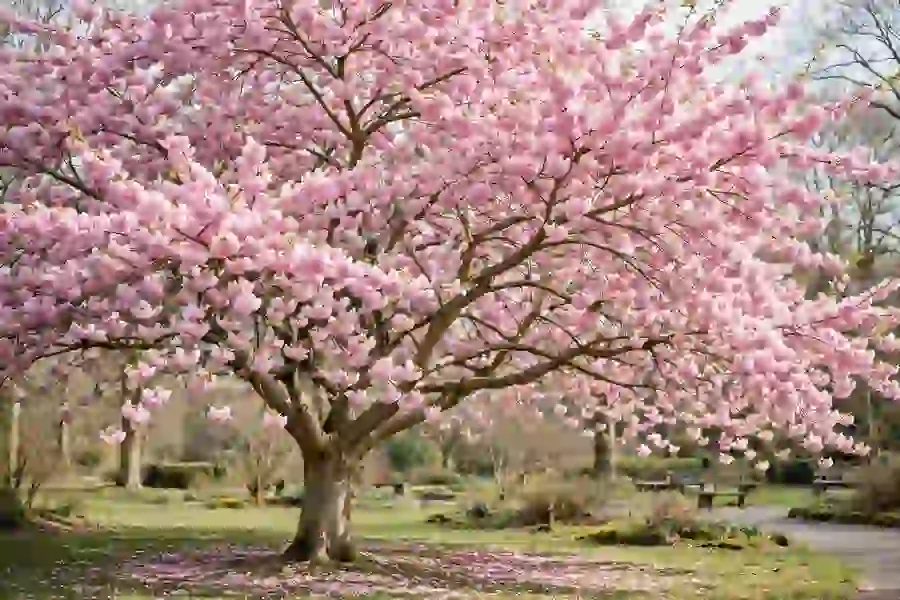
Cherry blossom tree at a glance
| Question | Answer |
|---|---|
| What it is | Ornamental flowering cherry trees in the genus Prunus |
| Other names | Sakura, flowering cherry, Japanese cherry, cerezo en flor (Spanish) |
| Bloom | Early to mid spring, usually late March to April, for 1 to 2 weeks |
| Colors | Pink and white. Rarely pale green, yellow or deep magenta. No true blue |
| Size | 6 ft (dwarf) to 40 ft |
| Hardiness | Mostly zones 5 to 8, some 4 to 9. Check each variety |
| Sun | Full sun, 6 hours or more |
| Soil | Well-drained, slightly acidic to neutral (pH 6 to 7) |
| Growth rate | Medium to fast, about 1 to 2 ft a year when young |
| Lifespan | About 15 to 40 years for most garden types |
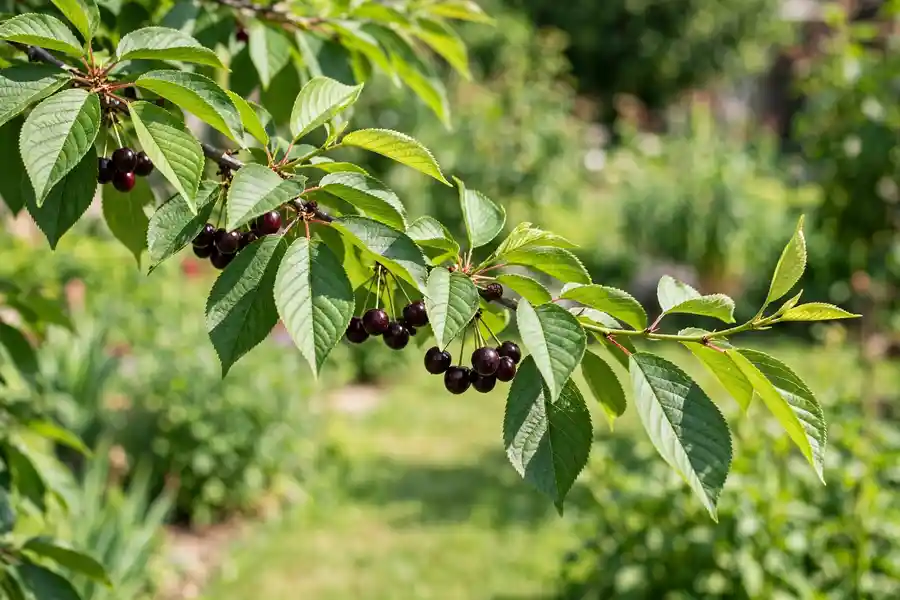
| Fruit | Small, sour and not worth eating |
| Prune | Right after flowering, in dry weather |
Is a cherry blossom tree a cherry tree?
Yes, it is a cherry, but a different kind. Ornamental cherries are bred for flowers, and fruit cherries (sweet and sour) are bred for fruit.
| Cherry blossom tree | Fruit cherry tree | |
|---|---|---|
| Grown for | Flowers | Fruit |
| Fruit | Small, pea-sized, bitter or sour. Many double-flowered types make little or none | Large, sweet or tart cherries |
| Flowers | Often double and showy | Single white, smaller |
| Examples | Yoshino, Kwanzan, weeping cherry | Bing, Montmorency |
Do cherry blossom trees produce cherries? Some do, in early summer. The fruit is small and sour, birds eat it, and it is edible but not tasty. Heavily double-flowered types like Kwanzan make little fruit. A cherry blossom tree will not give you eating cherries.
Sakura vs cherry blossom: same thing. Sakura is the Japanese word.
What are the types of cherry blossom trees?
| Type | Look and size | Notes |
|---|---|---|
| Yoshino (Prunus × yedoensis) | White to pale pink single flowers. 30 to 40 ft, wide and rounded | The classic Japan and Washington DC tree. About zones 5 to 8 |
| Akebono | Pale pink Yoshino type, 25 to 30 ft | Blooms a little earlier |
| Kwanzan (also spelled Kanzan) | Deep pink double flowers, 25 to 30 ft, vase shape | Very showy. Blooms later. Bronze new leaves, orange fall color |
| Shirofugen | White buds opening pink, double, 20 to 25 ft | Late bloomer |
| Shogetsu | Large white double flowers, 15 to 25 ft | Late bloomer |
| Okame | Bright pink single flowers, 20 to 25 ft | Blooms very early. Suits warmer zones (about 6 to 9) |
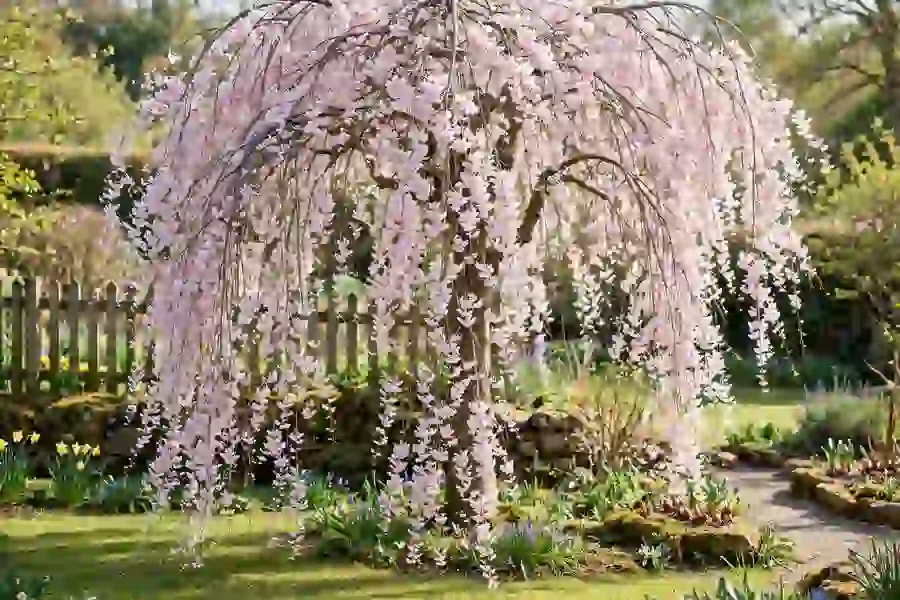
| Weeping cherry (Prunus subhirtella 'Pendula') | Drooping branches with pink or white blooms, 15 to 25 ft | Not a willow. Dwarf forms stay 8 to 15 ft |
| Autumnalis | Blooms in fall and again in spring | Smaller, 20 to 25 ft |
| Kojo-no-mai | Dwarf, zigzag branches, white-pink flowers, 6 to 8 ft | Good for pots and small yards, and for bonsai |
| Accolade | Semi-double pink flowers, 20 to 25 ft | Tough and upright |
| Taiwan cherry | Deep pink-red flowers | For warm climates |
| Ukon and Gyoiko | Pale yellow-green flowers | Rare, unusual color |
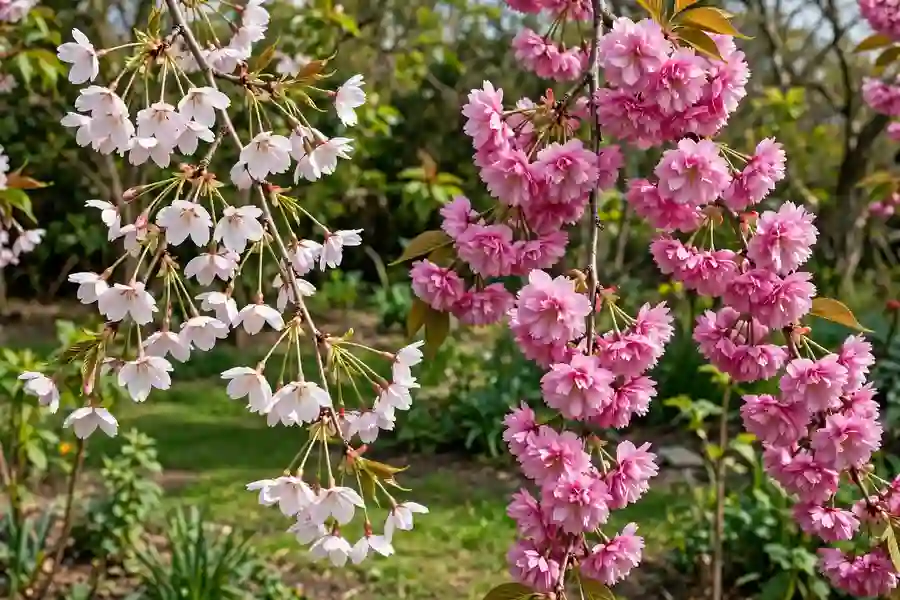
Sizes vary by source, so check the tag. Names such as "Japanese cherry blossom tree," "Chinese," "Korean" and "American cherry blossom tree" are mostly marketing or origin labels. There is no single American species. Wild native cherries, such as black cherry and chokecherry, have white flowers in spring.
Colors: pink, white, deep pink or magenta, and rare pale green or yellow. There is no real blue or purple cherry blossom tree. Photos showing one are edited.
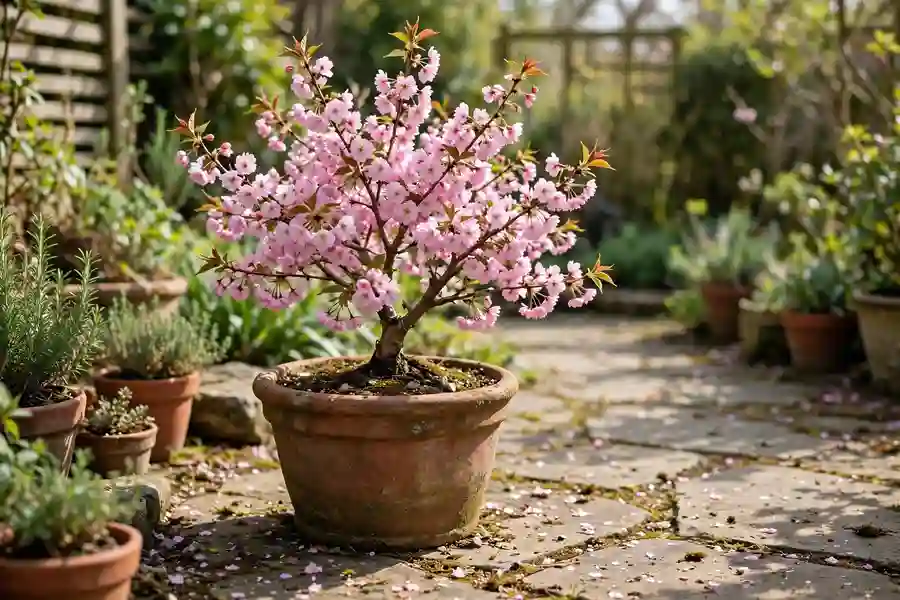
Dwarf, small and mini trees: Kojo-no-mai, dwarf weeping cherries and Okame stay small. A true "mini" cherry blossom tree is a bonsai or a young nursery plant.
How do cherry blossoms compare with similar flowering trees?
| Tree | How to tell it apart |
|---|---|
| Cherry blossom | Clusters of flowers on long stalks. Petals are notched at the tip. Bark has horizontal stripes. Blooms before the leaves |
| Plum blossom | Rounder petals on short stalks, stronger fragrance, blooms earlier |
| Peach blossom | Pink flowers sit tight on the twig. Narrow leaves follow |
| Almond | Similar to peach, blooms very early |
| Apple blossom | White with pink, blooms with the leaves. See our apple tree guide |
| Crabapple | Smaller flowers and fruit that stay on the tree |
| Magnolia | Large cup-shaped flowers. Not a cherry. See magnolia tree |
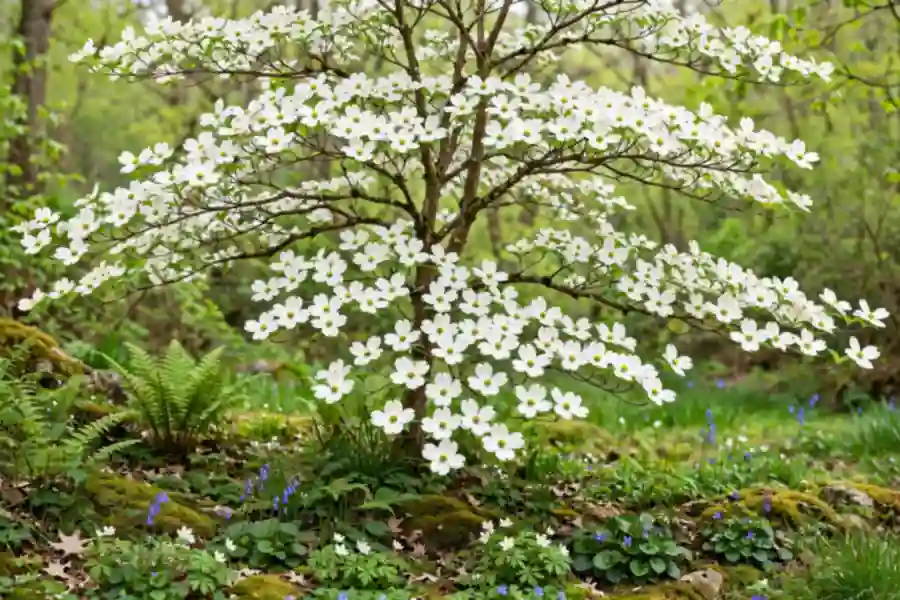
| Dogwood | Four-bract flowers. See dogwood tree |
| Bradford pear | White, with a bad smell, and invasive in many places |
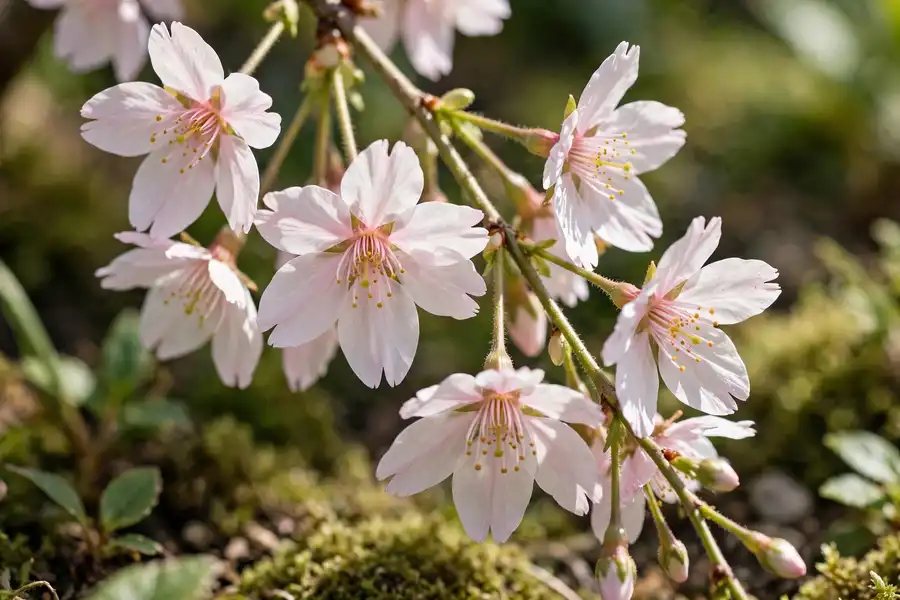
When do cherry blossom trees bloom?
Usually late March to April in zones 5 to 7. Each bloom lasts about 1 to 2 weeks, and peak bloom may be only 5 to 10 days. Wind, rain or a hard freeze can shorten it. Cold springs delay bloom, warm ones bring it earlier.
| Place | Typical timing |
|---|---|
| Japan (cherry blossom season) | Late March to early April in Tokyo and Kyoto. The bloom moves north and reaches Hokkaido in late April to May |
| Washington DC | Early April, usually near peak around the first week |
| Korea and Taiwan | Late March (Korea) and earlier in Taiwan, in winter to early spring |
| Fall-flowering types | Some bloom in fall and again in spring |
Seasons of a cherry blossom tree:
| Season | What it does |
|---|---|
| Winter | Bare branches with swelling buds |
| Spring | Blossoms, then petals fall and green leaves open |
| Summer | Full green canopy, small fruit |
| Fall | Orange, red or yellow leaves |
Growth stages and life cycle: seed, seedling, young tree (3 to 5 years before first real bloom), flowering tree, then a decline in later years.
What does a cherry blossom tree look like?
| Part | Details |
|---|---|
| Flowers | Five petals (or many in double types) in clusters, with a faint, light scent |
| Leaves | Oval, pointed, with fine teeth. New leaves can be bronze. They turn orange or red in fall |
| Bark | Shiny reddish-brown with horizontal stripes (lenticels) |
| Shape | Rounded, vase-shaped, upright or weeping |
| Roots | Shallow and spreading |
| Wood | Dense and reddish-brown. Ornamental cherries are rarely cut for lumber. Black cherry is the furniture wood |
How big does a cherry blossom tree get, and how fast?
Heights run from 6 feet (Kojo-no-mai) to 40 feet (Yoshino). Most garden types reach 20 to 30 feet, with a similar spread. They grow about 1 to 2 feet a year when young. A tree from a nursery can bloom within 1 to 3 years, but a tree from seed takes 5 years or more. Plan for its mature width before choosing a spot.
Lifespan: most garden cherry blossom trees live about 15 to 40 years. They are short-lived compared to oaks. Some old trees in Japan are far older. The Jindai Zakura in Yamanashi is often said to be about 2,000 years old, though that age is a claim.
Where and when do you plant a cherry blossom tree?
When: early spring or fall. Fall is good in zones 6 and warmer, and early spring in colder areas.
Where: full sun, good drainage and shelter from cold wind and frost pockets. Keep 15 to 20 feet from the house, pipes and pavement, since roots spread near the surface.
How:
- Dig a hole 2 to 3 times as wide as the root ball and no deeper.
- Set the tree so the root flare (where the trunk widens) sits at ground level.
- Backfill with the native soil and water well.
- Mulch 2 to 3 inches deep, a few inches off the trunk.
- Stake only if the tree is loose in wind. Remove the stake after a year.
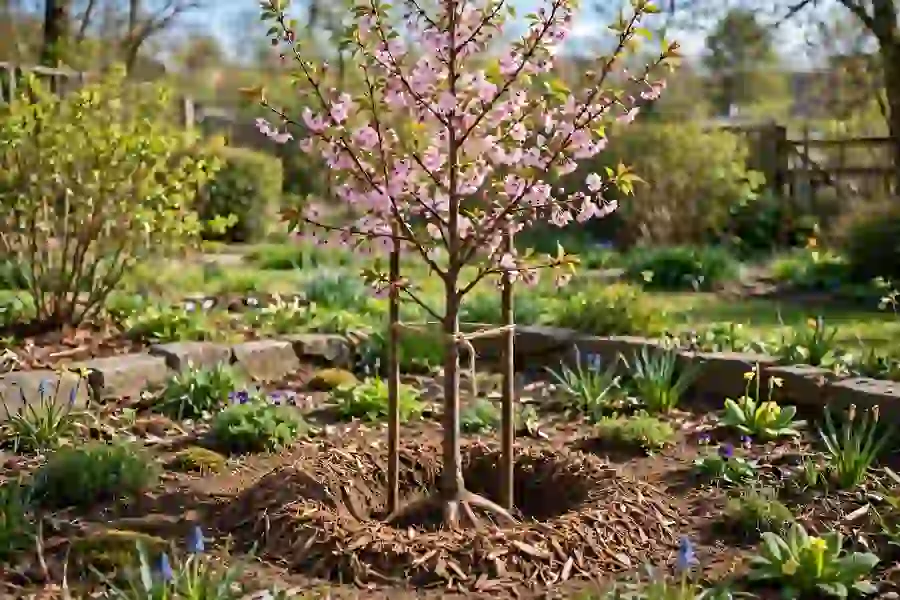
Can you plant one in your yard? Yes, in zones 5 to 8 for most, as long as it has sun and drainage.
How do you care for a cherry blossom tree?
| Task | What to do |
|---|---|
| Water | Deep soak weekly for the first 2 years, then in dry spells. Avoid soggy soil |
| Fertilizer | Not needed in good soil. Use a slow-release balanced feed in early spring, after a soil test. Too much nitrogen gives leaves, not flowers |
| Mulch | Refresh each spring, away from the trunk |
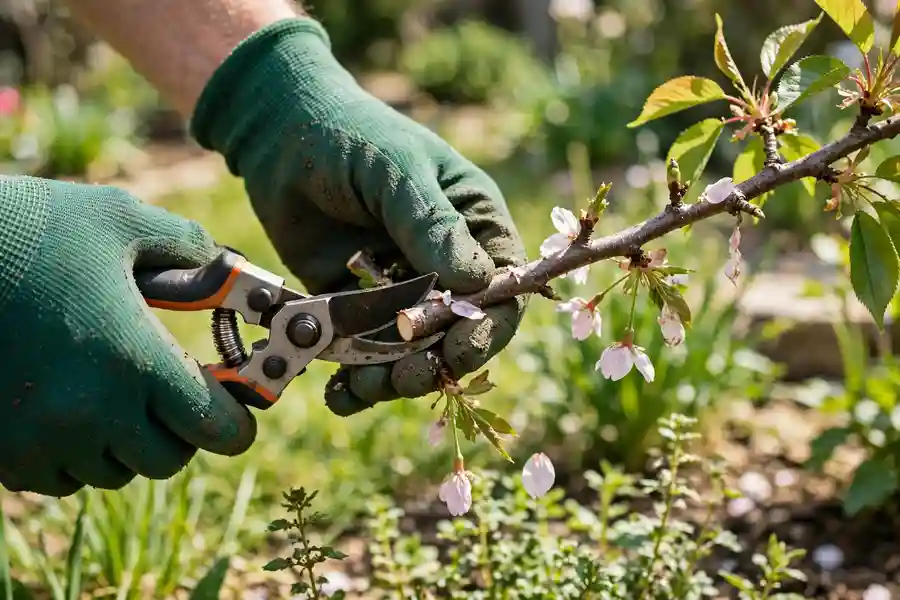
| Pruning | Right after flowering, in dry weather. Remove dead, crossing and damaged branches only. Prune lightly |
| Winter | Hardy. Wrap young trunks against sunscald and rabbits |
| Roots | Do not dig close to the trunk |
Pruning cherry blossom trees: avoid wet weather and heavy cuts, which let in disease. Remove no more than about a quarter at a time.
Can you grow a cherry blossom tree from seed or propagate it?
Yes, but named types such as Kwanzan and Yoshino do not come true from seed.
- Collect seed from fruit in summer and clean it.
- Chill the seed in damp sand or paper towel at about 34 to 41°F for roughly 3 months.
- Sow in spring or in a pot outdoors, and keep it moist.
Nurseries propagate named types by grafting or budding onto a rootstock, which is the reliable method. Cuttings are hard. A seedling may flower after 5 or more years and look different from the parent.
Why is my cherry blossom tree not blooming?
| Cause | Fix |
|---|---|
| Too young | Wait. Trees may take 2 to 5 years |
| Too much shade | Move or prune surrounding trees. It needs 6+ hours of sun |
| Late frost killed the buds | Nothing to fix. It may bloom next year |
| Too much nitrogen | Stop fertilizing, especially lawn feed nearby |
| Pruned at the wrong time | Prune only right after bloom |
| Drought or root damage | Water deeply, protect roots |
| Wrong zone or too little winter chill | Choose a variety suited to your climate |
| Disease or dead branches | See below |
What problems affect cherry blossom trees?
| Problem | Signs | What to do |
|---|---|---|
| Brown rot (blossom blight) | Blossoms turn brown and stick on | Remove infected blossoms and twigs |
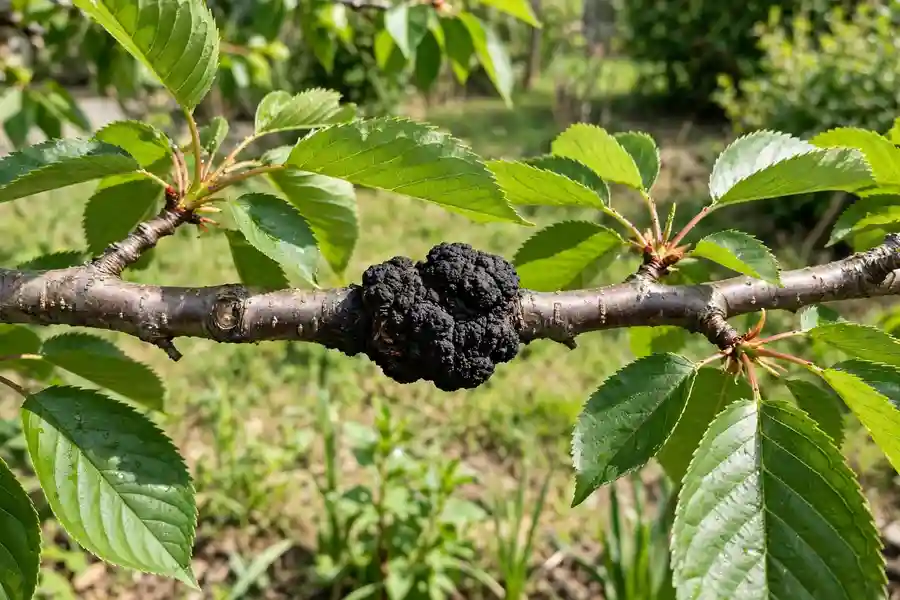
| Black knot | Black, rough swellings on branches | Prune 4 inches below the knot in winter, and burn or bag the cuttings |
| Bacterial canker and gummosis | Gum oozing from bark, dieback | Prune in dry weather, avoid wounds |
| Leaf spot and shot hole | Tiny holes, brown spots on leaves | Rake leaves, improve air flow |
| Powdery mildew | White coating on leaves | Prune for air flow |
| Borers | Gum and sawdust at the base | Keep the tree healthy, call an arborist |
| Aphids, mites, scale | Curled or sticky leaves | Spray with water or insecticidal soap |
| Japanese beetles, tent caterpillars | Eaten leaves, silk tents | Hand-pick, remove tents |
| Yellow leaves | Overwatering, poor drainage or nutrient shortage | Check drainage |
Is my tree dead? Scratch a twig. Green under the bark means alive. A tree with no buds in spring, brittle twigs and peeling bark is dead. An arborist can confirm, and should remove a dead tree near a house.
Can you grow a cherry blossom tree in a pot, indoors or as a bonsai?
- In a pot: dwarf types like Kojo-no-mai and dwarf weeping cherry work in a container at least 20 gallons. Water often, and protect the roots in winter.
- Indoors: the tree needs full sun and a cold winter rest, so it does not live well indoors. Indoor cherry blossom trees for sale are usually artificial.
- Bonsai: possible with Kojo-no-mai or Fuji cherry. Keep it outdoors year-round in full sun, and wire and prune after flowering. It needs winter cold.
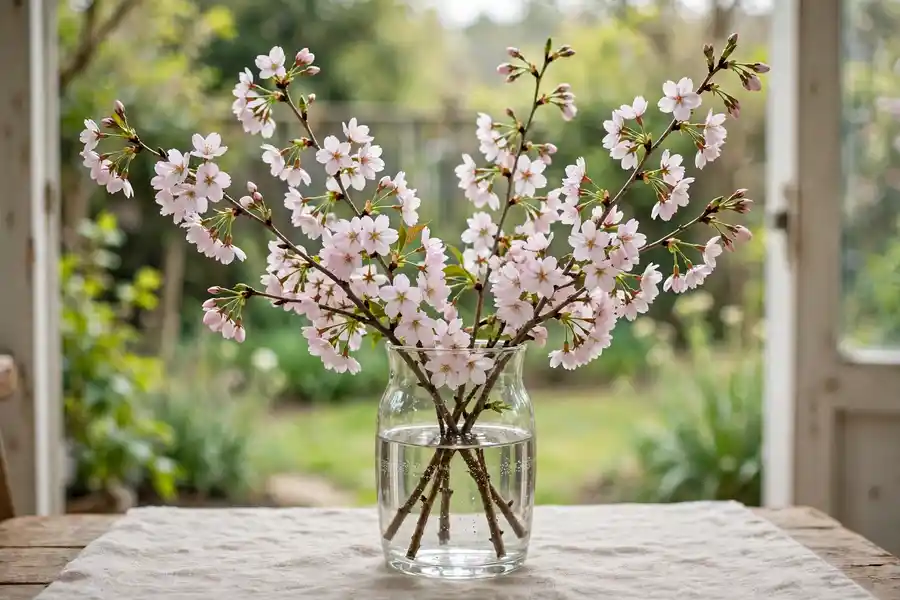
- Forced branches: cut a few branches with swelling buds in late winter, put them in water in a cool room, and they bloom in 1 to 3 weeks.
What does the cherry blossom tree symbolize?
| Meaning | Where |
|---|---|
| Transience of life and beauty | Japan, where the short bloom reminds people that life is brief |
| Renewal and spring | Worldwide |
| Love and feminine beauty | China |
| Hospitality and friendship | The gift of Japanese trees to Washington DC in 1912 |
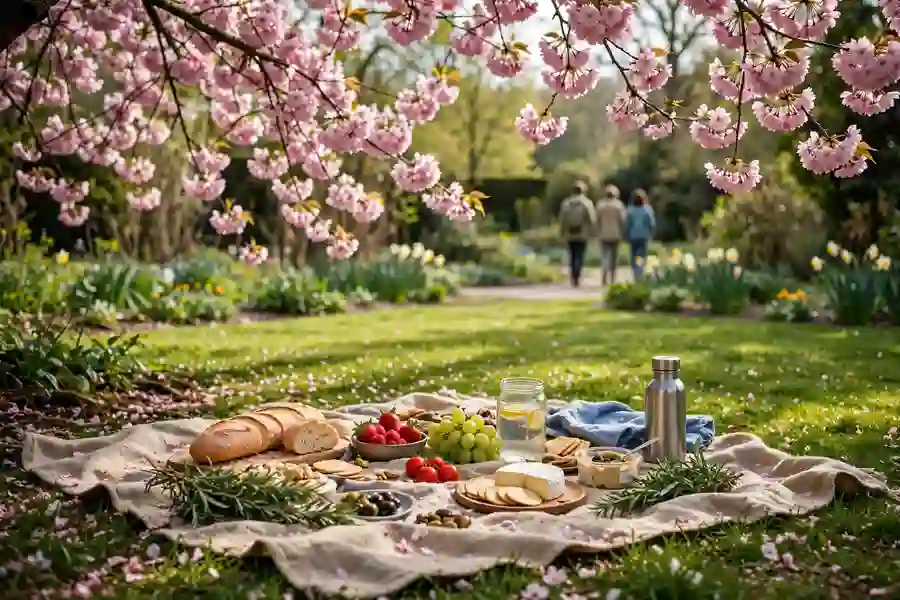
Japanese people hold hanami, picnics under the blossoms, every spring. The same meanings are behind cherry blossom tattoos. Spiritual readings link it to impermanence and rebirth.
What are the weeping cherry and "cherry blossom willow" trees?
A weeping cherry (Prunus subhirtella 'Pendula' and others) has long drooping branches, so people call it a "cherry blossom willow tree." It is not a willow. It grows 15 to 25 feet, and dwarf types 8 to 15 feet, and it needs the same care. Other trees are called cherry blossom but are different plants, such as the serissa bonsai.
Quick answers to common questions
What is the difference between a cherry blossom tree and a cherry tree?
A cherry blossom tree is bred for flowers and makes small, sour fruit. A cherry tree is bred for eating cherries.
When do cherry blossom trees bloom?
Late March to April in most places, for 1 to 2 weeks, before the leaves open.
How big does a cherry blossom tree get?
Most reach 20 to 30 feet. Dwarf types stay 6 to 15 feet, and Yoshino can reach 40 feet.
Why is my cherry blossom tree not blooming?
Usually too young, too shaded, hit by frost, over-fertilized or pruned at the wrong time.
What does the cherry blossom tree symbolize?
The fleeting beauty of life, renewal and love.
Keep reading: apple tree, magnolia tree, dogwood tree, pink flowers and more lawn and garden guides.
Should you plant a cherry blossom tree?
Yes, if you have a sunny spot and space. A cherry blossom tree gives a short but spectacular spring display and good fall color. Pick a type that fits your zone and mature size, and prune only after bloom.