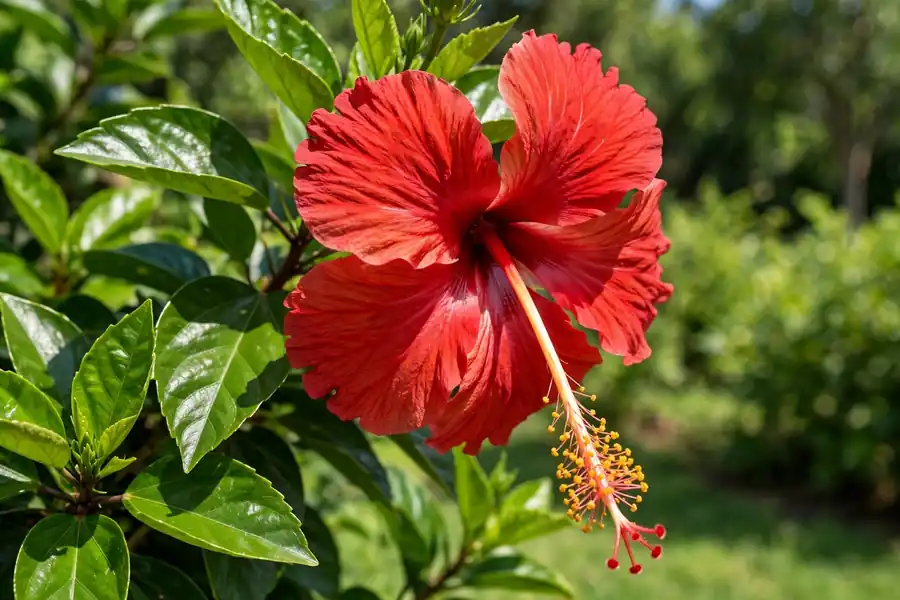
The hibiscus flower is a large, trumpet-shaped bloom with five broad petals and a long central column that carries the pollen and the stigma. It belongs to the mallow family (Malvaceae), comes in red, pink, white, yellow, orange, peach and purple, and grows on shrubs and perennials from tropical islands to cold-winter gardens. Each bloom is short-lived, often lasting only a day or two, but a healthy plant keeps opening new ones for weeks or months. The flower stands for delicate beauty, hospitality and, in several countries, national pride.
People search for hibiscus for very different reasons: to identify one, to grow one, to understand what it means, or to make tea. This guide covers all of that: what a hibiscus flower is, its colors and types, how it is built, what it symbolizes, whether it is edible, what the tea can and cannot do, how to care for it and how to fix a plant that refuses to bloom.
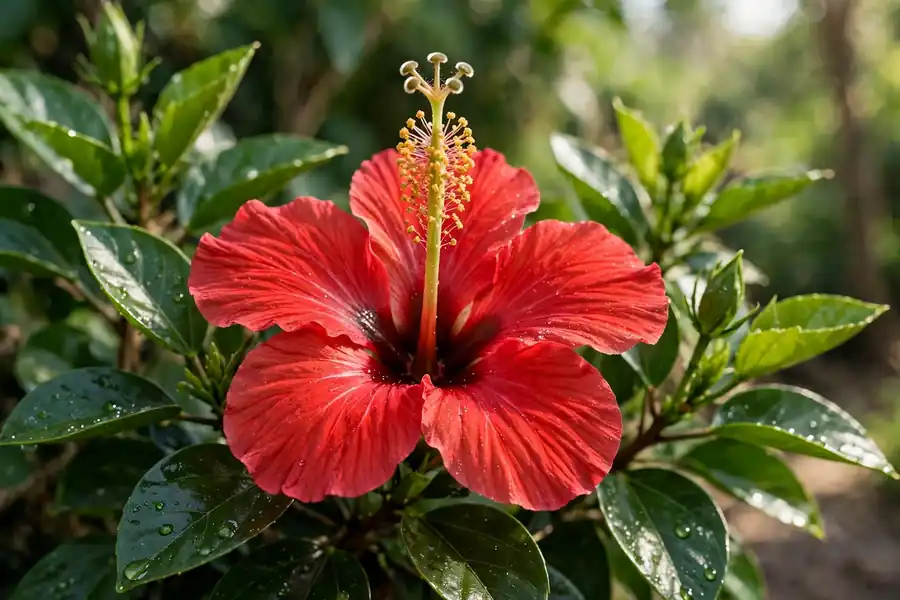
Hibiscus flower at a glance
| Question | Short answer |
|---|---|
| What is it? | A flowering plant genus (Hibiscus) in the mallow family, with hundreds of species |
| Flower shape | Trumpet or funnel, five petals, a long central column, often 3 to 10 inches across |
| Common colors | Red, pink, white, yellow, orange, peach, lavender and purple, plus multicolor |
| How long a bloom lasts | Usually one to two days per flower, with new buds opening all season |
| Main garden types | Tropical (Chinese) hibiscus, hardy hibiscus, rose of Sharon |
| Edible? | Some are. The tea flower is roselle (Hibiscus sabdariffa), and petals of tropical hibiscus are eaten in some cuisines |
| Best light | Full sun, at least six hours a day |
| Frost hardiness | Tropical types are frost tender. Hardy types survive roughly zones 4 to 9 |
| Common problem | Buds dropping or no blooms from stress, pests or too much nitrogen |
What is a hibiscus flower?
A hibiscus flower is the bloom of a plant in the genus Hibiscus. The genus includes several hundred species of shrubs, small trees and perennials, most of them native to warm temperate and tropical regions. "Hibiscus" is also the common name of the whole plant, so people use "hibiscus flower," "hibiscus plant" and "hibiscus bush" interchangeably. Yes, it is a flower, and a well-known one.
Hibiscus is closely related to okra, cotton, hollyhock and mallow. If you have seen an okra blossom, you have already seen a small, pale hibiscus relative.
The plant most people picture is the tropical or Chinese hibiscus (Hibiscus rosa-sinensis), with glossy dark leaves and big, bright flowers. Exactly where it first came from is uncertain, because it has been grown and moved around by people for a very long time, but it is generally linked to tropical Asia. It is now planted in warm regions around the world, including Hawaii, Florida and the Caribbean.
What does a hibiscus flower look like?
A typical hibiscus bloom has these parts:
- Five petals that overlap into a wide trumpet. Double forms have extra rows of petals and look more like a small rose.
- A central column (the staminal column) that sticks out of the throat of the flower. The pollen-bearing anthers cover the column, and the sticky, five-lobed stigma sits at its tip.
- A dark center (the "eye") in many varieties, often red or maroon against a lighter petal.
- Five sepals and a ring of narrow bracts at the base of the flower, which hold the bud before it opens.
- Leaves that are simple, oval to heart-shaped and toothed or lobed. Tropical hibiscus leaves are glossy. Hardy hibiscus leaves are larger and matte, and often lobed.
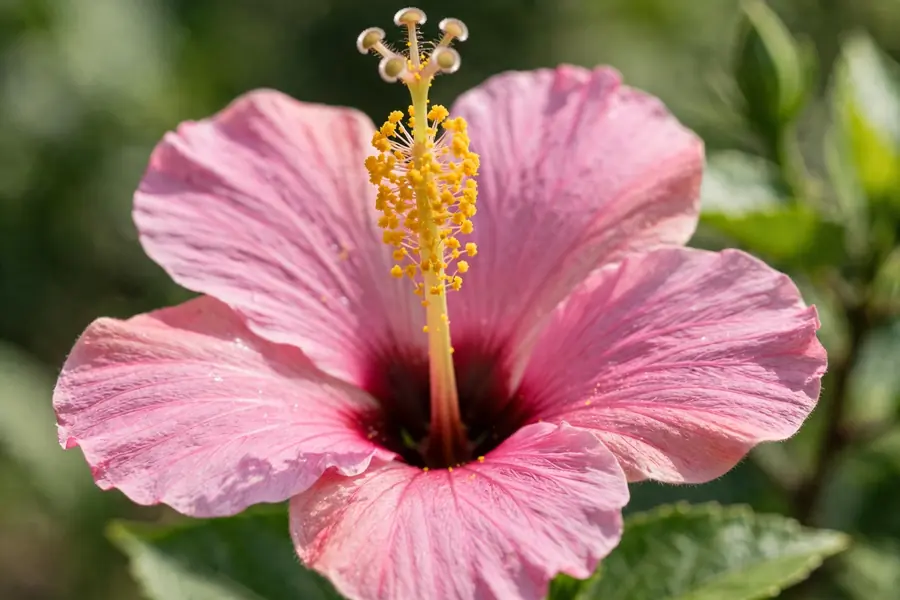
The flower is a perfect flower, meaning it has both male and female parts. Bees, butterflies and hummingbirds visit hibiscus for nectar, and they pollinate it as they feed. If you want to cross two plants by hand, you can dab pollen from one flower onto the stigma of another with a small brush.
The bloom size varies a lot. Tropical hibiscus flowers are usually about 4 to 7 inches across. Some hardy hibiscus cultivars, often called "dinner plate" types, can reach 8 to 10 inches or more. At the other end, a few species and small cultivars have flowers only an inch or two wide.
What colors do hibiscus flowers come in?
Hibiscus flowers come in almost every warm color. Red, pink and white are the classics, and breeders have added yellow, orange, apricot, peach, lavender and deep purple. Many flowers are two-toned or have a darker eye.
| Color | Where you will see it | Notes |
|---|---|---|
| Red | Tropical hibiscus, hardy hibiscus, Malaysia's national flower | The most recognized hibiscus color |
| Pink | All major types, including rose of Sharon | Ranges from pale blush to hot pink |
| White | Hardy hibiscus, rose of Sharon, tropical types | Often has a red or maroon eye |
| Yellow | Tropical hibiscus, Hawaii's state flower | A native Hawaiian yellow species is the state flower |
| Orange and peach | Tropical hibiscus | Popular in container plants and hybrids |
| Purple and lavender | Rose of Sharon, some hardy and tropical hybrids | Often sold as "purple" or "blue" hibiscus |
| Near black | "Black Dragon" and other dark reds | Deep burgundy that looks black in low light |
| Multicolor | Tropical hybrids | Petals blend red, orange, yellow or pink |
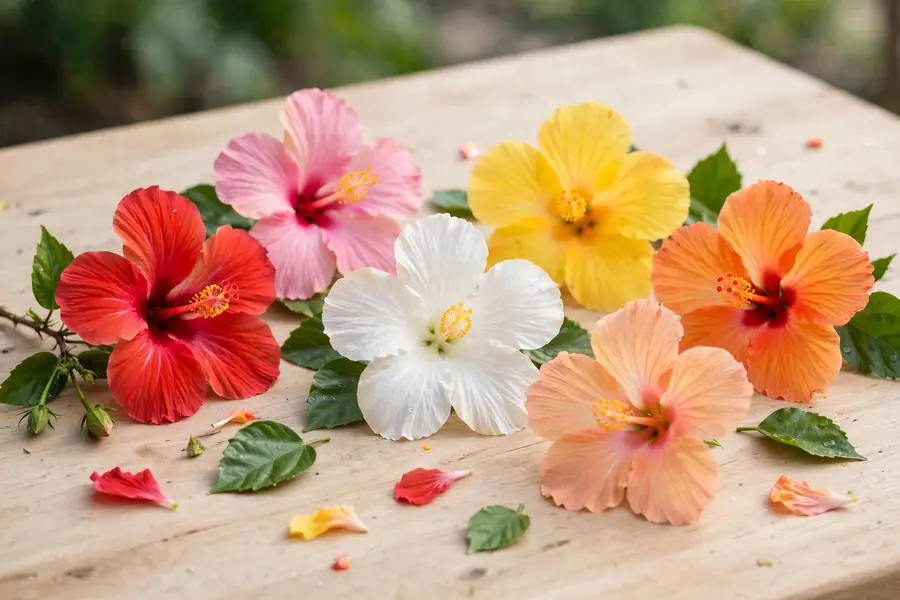
Is there a true blue hibiscus? Not really. Plants sold as blue hibiscus are usually lavender-blue or violet. The best known are certain rose of Sharon cultivars, and a separate Australian shrub (Alyogyne huegelii) that is commonly called blue hibiscus although it is not in the Hibiscus genus. Photos online are often edited to look bluer than the real flower. If you want the closest color, look for a lavender-blue rose of Sharon cultivar and read the plant tag carefully.
Color can shift a little with light, temperature and soil. Hot weather often fades pale colors, and cool nights can deepen them.
What are the main types of hibiscus?
Three groups cover almost every hibiscus sold to home gardeners, plus one important edible species.
| Type | Scientific name | Hardiness | Form | Bloom time |
|---|---|---|---|---|
| Tropical (Chinese) hibiscus | Hibiscus rosa-sinensis | Frost tender, grown outdoors year-round only in warm climates | Evergreen shrub or small tree, glossy leaves | Nearly year-round in warm zones, summer in containers |
| Hardy hibiscus (rose mallow) | Hibiscus moscheutos and hybrids | About zones 4 to 9 | Perennial that dies back to the ground each winter | Mid to late summer into fall |
| Rose of Sharon (shrub althea) | Hibiscus syriacus | About zones 5 to 8 or 9 | Upright deciduous shrub | Mid to late summer |
| Roselle | Hibiscus sabdariffa | Tender, grown as an annual in most of the US | Annual or short-lived shrub grown for its red calyces | Late in the season, as days shorten |
Tropical hibiscus has the shiniest foliage and the widest color range. In most of the US it is a patio plant that spends summer outside and winter indoors.
Hardy hibiscus is a true perennial. It sleeps late in spring, so do not panic if it shows no growth until the weather is warm. It then grows quickly and opens huge flowers, then dies back after frost.
Rose of Sharon looks like a hibiscus on a woody shrub. It is popular as a hedge or specimen, and it is also a heavy self-seeder in some gardens. It is the national flower of South Korea.
Roselle is the plant behind most hibiscus tea. Its flowers are modest and pale, and the useful part is the fleshy red calyx that surrounds the seed pod after the bloom fades.
Is hibiscus an annual or a perennial? Tropical hibiscus is a perennial shrub in frost-free areas but behaves like an annual if left outside in freezing weather. Hardy hibiscus and rose of Sharon are perennials. Roselle is grown as an annual.
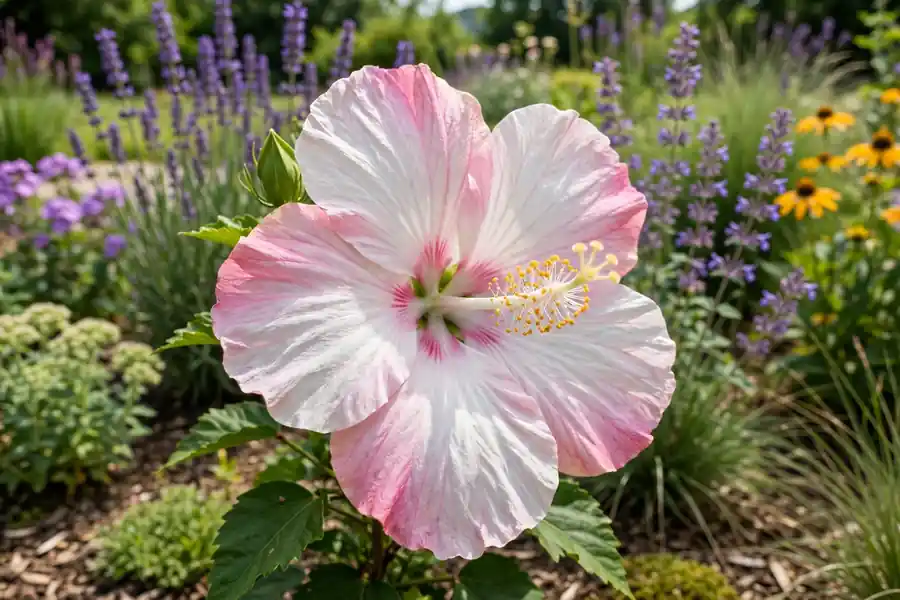
Where does the hibiscus flower come from, and which countries claim it?
Hibiscus species grow across tropical and warm regions of Asia, the Pacific, Africa and the Americas. The garden hibiscus has been moved around so widely that you will find it in nearly every warm country.
A few well-documented national and state symbols:
- Malaysia: the red tropical hibiscus (Bunga Raya) is the national flower.
- South Korea: the rose of Sharon (Hibiscus syriacus) is the national flower, and it appears in national symbols.
- Hawaii: the yellow hibiscus is the state flower. It refers to a native Hawaiian species, not the common garden hibiscus.
Other countries and territories also use hibiscus in their emblems, but sources disagree on the exact species and on which are official, so check a reliable government source before citing one.
Two common mix-ups:
- Jamaica: "flor de Jamaica" is the Spanish name for dried roselle calyces, used for tea and drinks. It does not mean hibiscus is Jamaica's national flower, which is a different plant.
- Puerto Rico: the flor de maga, the island's national flower, looks much like a hibiscus but belongs to a different genus.
Hibiscus is not an official birth flower for any month in the most common birth flower lists, although a few unofficial lists include it.
What does the hibiscus flower mean?
The hibiscus is most often linked to delicate beauty, because each bloom opens beautifully and fades within a day or two. It is also tied to hospitality, warmth and love, thanks to its role in tropical welcomes and island culture.
Meaning by color, as flower lore usually tells it:
| Color | Common meaning |
|---|---|
| Red | Passion, love and courage |
| Pink | Gentleness, friendship and affection |
| White | Purity, calm and new beginnings |
| Yellow | Joy, optimism and friendship |
| Orange | Enthusiasm and warmth |
| Purple | Admiration and something unusual or rare |
These meanings come from popular flower language, not from one authoritative tradition, and different guides vary. Pick the one that fits the moment rather than treating it as fixed.
Cultural meanings:
- In Hawaiian culture, the hibiscus is associated with welcome and hospitality, and it is often worn as a hair flower. A popular saying holds that the side you wear it on signals whether you are single or taken, but the details are told different ways, so treat it as a custom, not a rule.
- In Malaysia, the red flower is a national emblem, and its five petals are often linked to the country's national principles.
- In Hindu tradition, red hibiscus is commonly offered in worship, especially to the goddess Kali.
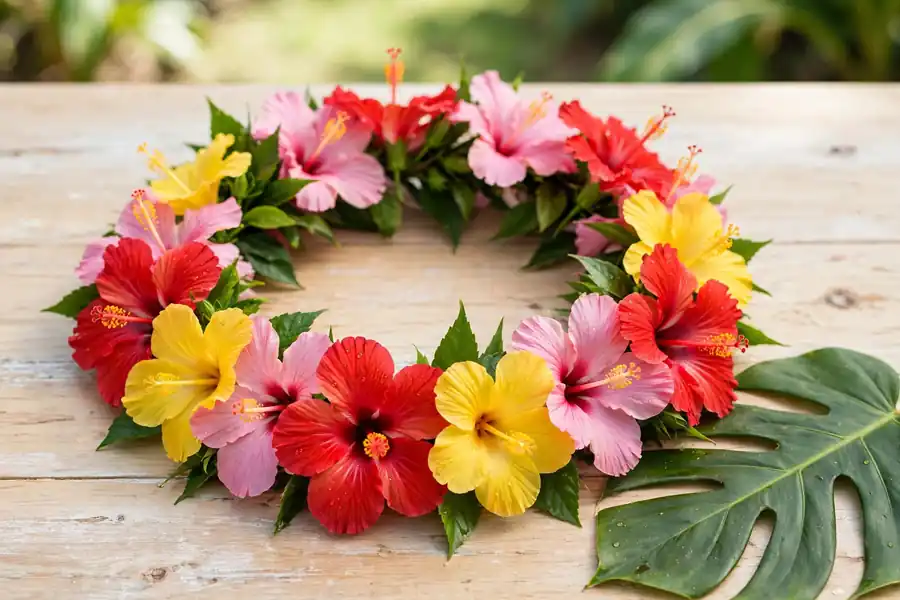
Spiritual meaning: People often describe hibiscus as a symbol of living in the moment, because the bloom lasts so briefly. That is a modern reading, not a formal doctrine.
What does a hibiscus flower tattoo mean?
A hibiscus tattoo usually stands for beauty, femininity, island life and living fully in the moment. It is also a common choice for anyone with Hawaiian, Polynesian, Pacific Islander or Caribbean ties, or a memory of a tropical place.
Color changes the message in the same way as the flower meanings above: red for passion, pink for tenderness, yellow for joy and white for calm. A hummingbird beside a hibiscus is a popular pairing, since the birds feed on the flowers. Small hibiscus tattoos on the wrist, ankle or behind the ear are common, and fine-line or watercolor styles both work well.
If the flower connects to a specific culture, take time to learn what the design means to the people who use it, and choose an artist who understands that style.
Is the hibiscus flower edible?
Some hibiscus flowers are edible, but not every plant sold as a hibiscus is a safe choice to eat.
- Roselle (Hibiscus sabdariffa) is the most widely eaten. The red calyces are used for tea, cold drinks, jams and sauces. In Mexico and the Caribbean, the drink made from them is called agua de Jamaica or sorrel.
- Tropical hibiscus (Hibiscus rosa-sinensis) petals are eaten in some cuisines, as a garnish, in salads or steeped in drinks. They have a mild, slightly tangy, somewhat mucilaginous taste.
- Hardy hibiscus and rose of Sharon flowers are also commonly described as edible, though the ASPCA lists rose of Sharon as toxic to pets, so keep it away from dogs, cats and horses.
Food safety rules:
- Eat only flowers you have grown yourself or that you know were not sprayed.
- Never eat petals from a nursery plant, florist bouquet or garden bed unless you know they were not treated with pesticides. Many garden-center plants are treated with systemic products that are not food safe.
- Wash the flowers and remove the stamens, which can be bitter or gritty.
- If you have allergies, a medical condition or take regular medicines, start with a small amount and ask a doctor first.
Can chickens eat hibiscus? Hibiscus flowers and leaves are commonly fed to backyard chickens in small amounts and are generally considered safe. They should be a treat, not a main food, and only from unsprayed plants.
Which hibiscus is used for tea?
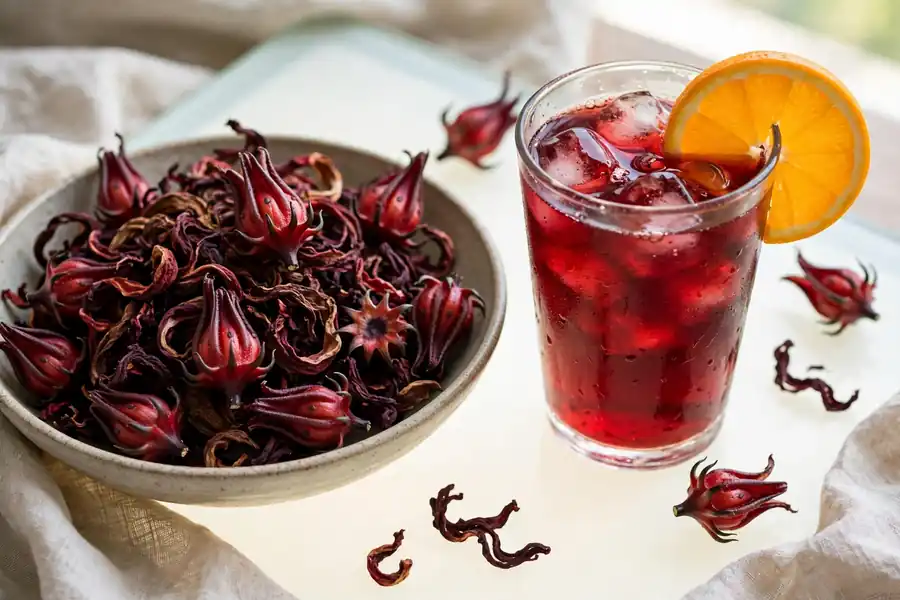
Hibiscus tea comes from roselle (Hibiscus sabdariffa). The part you steep is the dried red calyx, not the colorful petal of a garden hibiscus. When a package says "dried hibiscus flowers," "flor de Jamaica" or "hibiscus petals," it nearly always holds dried roselle calyces. Garden hibiscus flowers will not give you the same tart, ruby tea.
How do you make hibiscus tea?
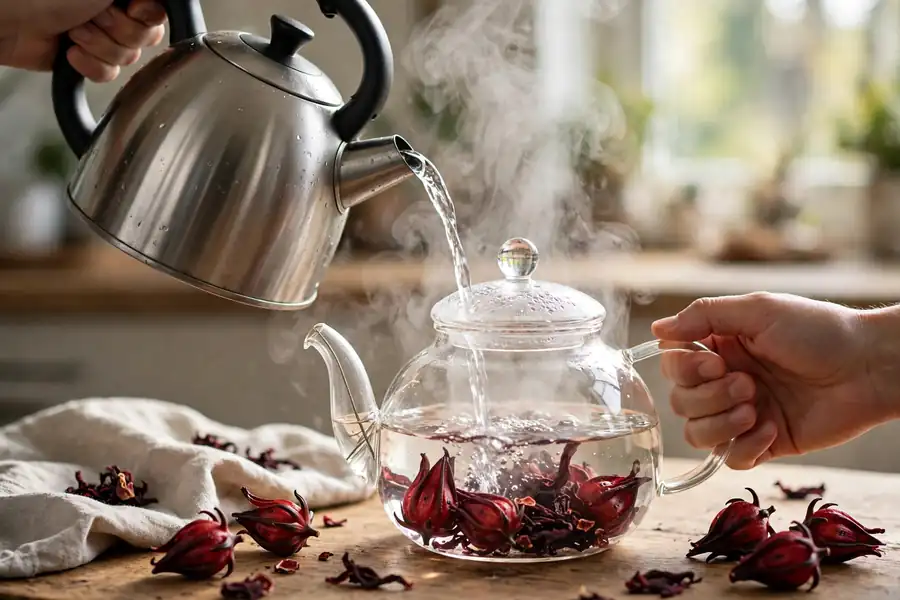
- Use about 1 to 2 tablespoons of dried calyces for every 2 cups of water. Use less for a lighter flavor.
- Bring the water to a boil, pour it over the calyces, and steep for 5 to 10 minutes. Some recipes simmer them gently for a few minutes for a stronger drink.
- Strain, then sweeten to taste. Honey, sugar, orange, ginger, mint and cinnamon all pair well.
- Serve hot, or chill it and serve over ice.
The tea tastes tart and cranberry-like, with a deep red color. For a cold drink, use more calyces and plenty of ice, or make a concentrate and dilute it.
How do you make hibiscus water? Soak a spoonful of dried calyces in cold water for several hours in the fridge for a milder, lightly tart drink.
Where can you buy hibiscus tea or dried hibiscus flowers? Grocery stores, health food stores, Latin American markets and online shops sell dried roselle calyces and tea bags. Look for whole, deep red calyces with a clean smell, and buy food-grade product rather than craft flowers.
Dried hibiscus powder and extract are made from the same plant. The powder is used in smoothies, baking and natural coloring. Extracts are sold as supplements, and quality varies, so choose reputable brands and read the label.
What are the benefits of hibiscus flower and tea?
Hibiscus tea has a good reputation, and some of it is backed by early research, but it is not a cure for anything.
| Claim | What research suggests |
|---|---|
| Lower blood pressure | The best-supported benefit. Several small trials found modest drops in people with mild high blood pressure who drank it daily, but studies are small and short |
| Cholesterol | Results are mixed. Some trials show little effect |
| Blood sugar | Early signs of a mild effect, not strong enough to rely on |
| Antioxidants | The red pigments (anthocyanins) are antioxidants, but this does not guarantee a health effect in your body |
| Weight loss | Evidence is weak. The tea is low in calories, which helps if it replaces sugary drinks |
| Hydration and taste | A simple, caffeine-free alternative to soda or juice |
Hibiscus tea is a pleasant, caffeine-free drink with some promising early research. Treat it as part of a normal healthy diet, not as medicine.
Hibiscus flower for hair. Hibiscus is popular in hair oils, rinses and masks, especially in South Asian hair care. It is used to condition and add shine. Research on growing hair or preventing hair loss is limited, so expect a conditioning effect rather than a guaranteed result. To make hibiscus oil, steep dried petals and leaves in a carrier oil such as coconut oil for a few weeks in a sealed jar, strain, and patch test on your skin before use.
What are the side effects of hibiscus tea?
- It can lower blood pressure. If you already have low blood pressure or take medicine for high blood pressure, check with your doctor first.
- It may lower blood sugar, so people on diabetes medicines should ask their care team.
- Pregnancy and breastfeeding: hibiscus is usually advised against in medicinal amounts during pregnancy because the safety evidence is limited and animal studies are mixed. Ask your doctor.
- Medication interactions: it may interact with some medicines, including certain blood pressure, diabetes and pain relievers. Ask a pharmacist.
- Stomach upset can happen if you drink a lot.
- Color: the deep red pigments can tint your urine or stool a little in some people. If you are worried or notice something unusual, check with a doctor instead of guessing.
Stop drinking it and call your doctor if you notice a rash, swelling or breathing trouble.
How long does a hibiscus flower last?
A single hibiscus flower usually lasts one to two days. Tropical hibiscus blooms often open in the morning and fade by the evening or the next day. Hardy hibiscus and rose of Sharon blooms are similarly short-lived, and some last a bit longer in cool weather.
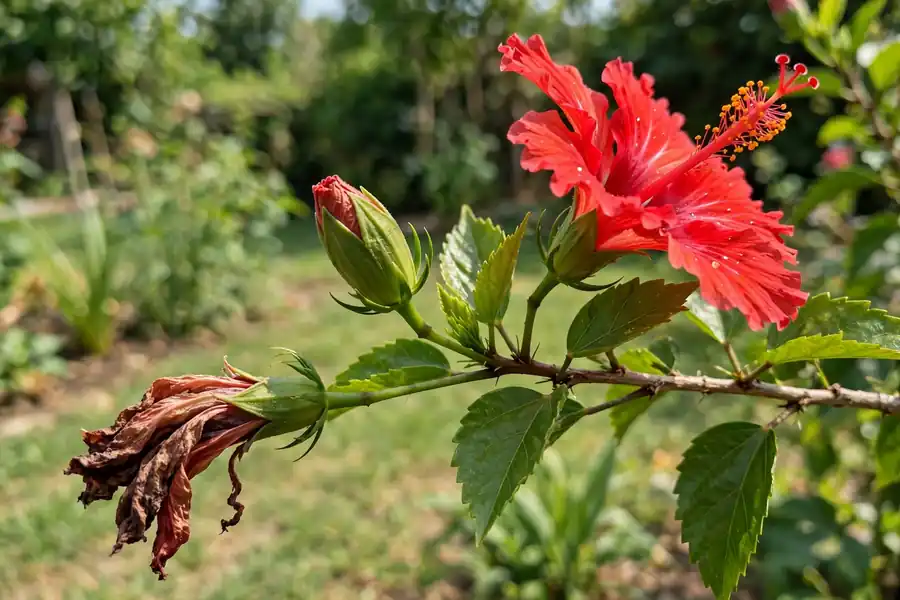
The plant makes up for it by producing many buds. A healthy tropical hibiscus can bloom on and off for months, and a hardy hibiscus often flowers for several weeks in late summer.
What month is the hibiscus flower in bloom? It depends on the type.
- Tropical hibiscus blooms almost all year in warm climates and from late spring through fall in containers.
- Hardy hibiscus and rose of Sharon bloom from mid to late summer, often into early fall.
- Roselle flowers late in the season, then forms the calyces.
Can you keep cut hibiscus flowers? Cut hibiscus wilts quickly, which is why florists use it mostly for short-term arrangements, events and tropical displays. To make the most of a cut bloom, cut it in the morning, stand it in cool water, and keep it out of sun and heat. Floating a bloom in a shallow bowl is a popular way to show it off. For a longer-lasting bouquet, pair a few hibiscus with sturdier tropical stems or with similar-looking flowers such as lilies or anthuriums.
How do you press or dry a hibiscus flower? Lay the flower flat between sheets of parchment paper inside a heavy book for two to three weeks. To dry petals for tea or crafts, spread them on a rack out of direct sun, or use a dehydrator on low heat, until they are brittle. Store them in an airtight jar.
How do you care for a hibiscus plant?
Good flowers start with good growing conditions. The details change a bit by type, but the basics are shared.
| Need | Tropical hibiscus | Hardy hibiscus |
|---|---|---|
| Sun | Full sun, 6 or more hours. Afternoon shade helps in very hot climates | Full sun |
| Water | Keep evenly moist, never soggy or bone dry. Pots may need water daily in summer | Needs plenty of water, especially in summer. Tolerates wet soil |
| Soil | Rich, well-draining mix | Rich, moist soil. Tolerates heavy soils better |
| Feeding | Regular feeding in the growing season with a fertilizer lower in phosphorus and higher in potassium | A balanced fertilizer in spring |
| Temperature | Keep above about 50°F. Move indoors before frost | Hardy to about zone 4 or 5 |
| Pruning | Light pruning in spring to shape. Tip pruning promotes branching | Cut back stems to a few inches after frost or in early spring |
| Pests | Aphids, whiteflies, spider mites, thrips | Japanese beetles, aphids, whiteflies |
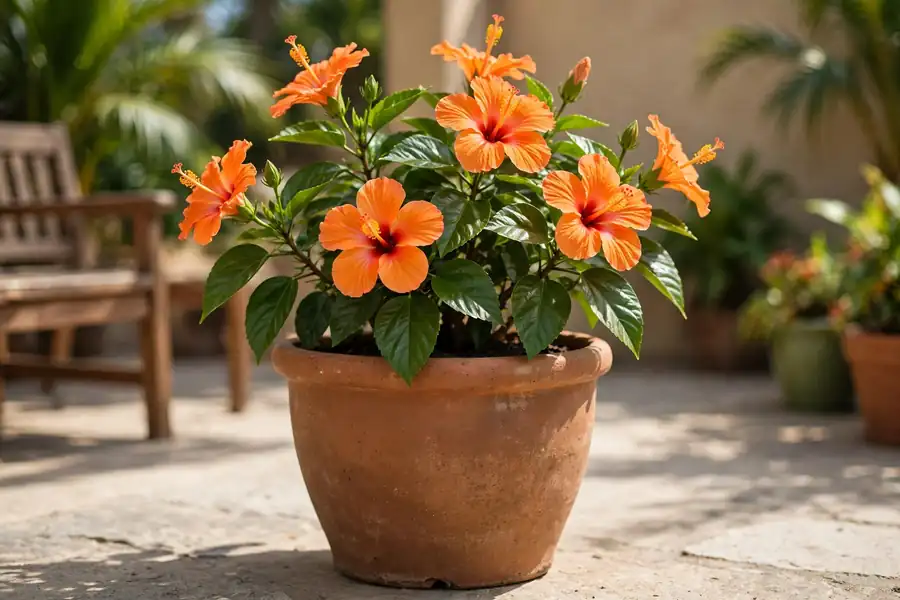
How do you grow a hibiscus plant?
- Choose the right type for your climate. In zones 4 to 9, hardy hibiscus or rose of Sharon is the easiest. In cold areas, grow tropical hibiscus in a pot.
- Plant in a sunny spot with rich soil. For pots, use a container with drainage holes and a quality potting mix.
- Water deeply and often, and mulch outdoors to hold moisture.
- Feed on a regular schedule during the growing season.
- Check the leaves and buds regularly for pests.
Mixing in finished compost at planting time helps, and the compost guide explains how to make your own. Pruning tips for flowering shrubs are similar to the ones in the guide on how to prune roses.
Can you grow a hibiscus from a flower? No. A flower will not root. Grow hibiscus from stem cuttings (tropical types), from seed (hardy types and roselle), or buy a plant. Take a 4 to 6 inch cutting of new growth, remove the lower leaves, and root it in moist, well-draining mix with bright light and warmth.
Can you grow hibiscus from seed? Yes. Hardy hibiscus and roselle grow easily from seed, and hibiscus seeds often sprout faster if you nick or soak the hard seed coat first. Tropical hibiscus is usually propagated from cuttings so that the new plant matches the parent. Seedlings from hybrids are often different from the parent.
Where to buy a hibiscus flower plant: garden centers, nurseries and online plant shops. Spring is the best time to buy, when plants are fresh and ready to establish. Buy the type that fits your zone.
Why is my hibiscus not flowering?
Hibiscus is a heavy bloomer when happy, so a lack of flowers or dropping buds is a sign something is off.
| Problem | Likely cause | Fix |
|---|---|---|
| No buds at all | Too little sun or too much nitrogen | Move to 6 or more hours of direct sun. Use a fertilizer with less nitrogen |
| Buds drop before opening | Water swings, thrips or gall midge, heat, moving the plant | Water evenly. Check buds for pests. Keep the plant steady |
| Yellow, withered buds | Pests inside the bud | Remove affected buds and treat the plant. Tap a bud over white paper to spot thrips |
| Lots of leaves but few flowers | Excess nitrogen (for example lawn fertilizer) | Switch to a bloom-friendly fertilizer |
| Flowers stop in fall | Short days and cooler temperatures | Normal. Bring tropical plants indoors before frost |
| Leaves yellow and drop | Overwatering, underwatering or a cold shock | Adjust watering and keep above 50°F |
| Hardy hibiscus shows no growth in spring | It wakes up late | Wait until the soil is warm |
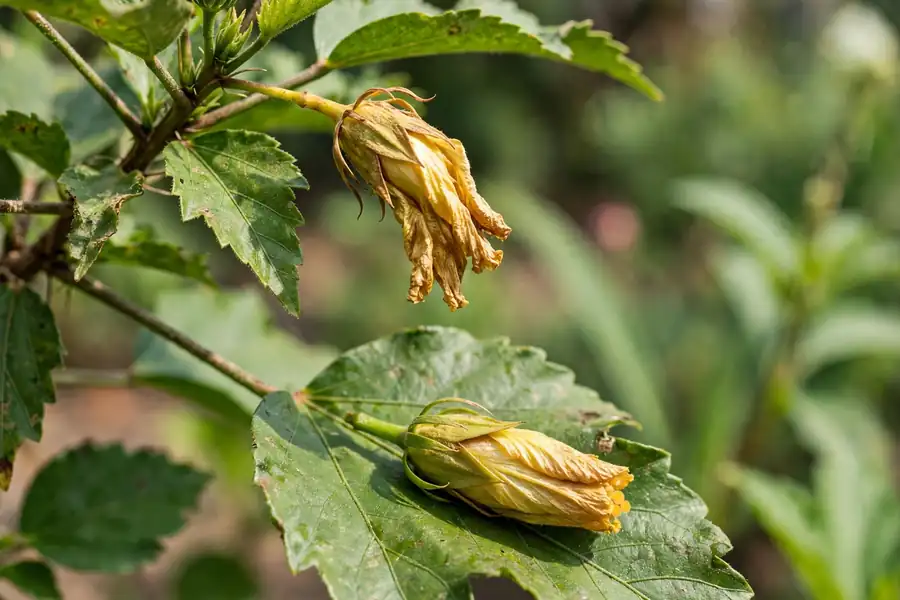
How do you get a hibiscus to flower more? Give it full sun, even moisture, a balanced feeding routine and regular pest checks. Avoid heavy doses of fertilizer, which can cause leafy growth and reduce flowers. A pot that is slightly snug can help tropical hibiscus bloom, but a crowded root ball can also cause stress, so repot when roots circle the bottom.
Do hibiscus flowers attract hummingbirds? Yes. Red and orange tubular flowers are especially attractive to hummingbirds, and bees and butterflies visit them too.
Hibiscus flower look-alikes
Several flowers look similar to hibiscus:
- Rose of Sharon is a true hibiscus relative and often mistaken for a smaller hibiscus.
- Hollyhock, mallow and okra are in the same family and have similar shapes.
- Confederate rose (Hibiscus mutabilis) is a true hibiscus that changes color from white to pink during the day.
- Blue hibiscus (Alyogyne) looks like a hibiscus but is in a different genus.
- Flor de maga is the Puerto Rican national flower. It looks like a hibiscus but is in another genus.
- Hawaiian native yellow hibiscus is a true hibiscus and the state flower.
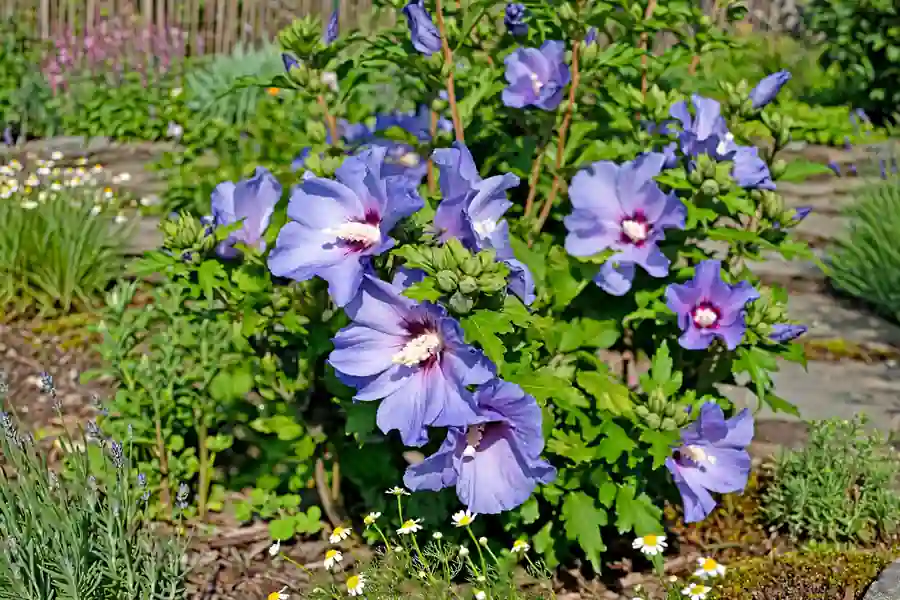
To tell them apart, look at the leaves, the plant shape and whether the flower has the long central column with the stigma at the tip.
Hibiscus flower uses beyond the garden
Hibiscus is used in:
- Cooking and drinks: tea, cold drinks, syrups, jams and flower garnishes.
- Hair and skin care: oils, rinses, masks and powders, usually for conditioning.
- Natural dye and coloring: roselle gives a red-pink color to foods and fabrics.
- Decor and events: corsages, leis, floating bowls and tropical arrangements.
- Crafts: paper, felt, fabric and crochet hibiscus flowers are popular decor projects.
Whatever you use, remember that the edible roselle, ornamental hibiscus and craft flowers are different things.
Is a hibiscus flower safe for pets?
It depends on the type. The ASPCA lists the Chinese hibiscus (Hibiscus rosa-sinensis) as non-toxic to cats and dogs, but rose of Sharon (Hibiscus syriacus) is listed as toxic. Because the common name "hibiscus" covers several plants, check the Latin name on your plant tag before assuming it is safe. Keep any plant away from pets that chew on it, and call your vet if your pet gets sick after eating one.
Quick answers to common questions
What does the hibiscus flower mean?
Delicate beauty, hospitality, love and warmth. Red often means passion, pink means affection, white means purity and yellow means joy. In Malaysia, South Korea and Hawaii it is also a national or state symbol.
How long does a hibiscus flower last?
Usually one to two days per bloom. The plant keeps producing new buds, so it can flower for weeks or months.
Is hibiscus flower edible?
Some are. Roselle (Hibiscus sabdariffa) is the common edible one and makes hibiscus tea. Tropical hibiscus petals are eaten in some cuisines. Only eat flowers that have not been sprayed with pesticides.
What is the difference between tropical and hardy hibiscus?
Tropical hibiscus is an evergreen shrub with glossy leaves that cannot survive frost. Hardy hibiscus is a perennial that dies back in winter and returns each spring in about zones 4 to 9, with larger, matte leaves and huge flowers.
Why is my hibiscus not flowering?
The usual causes are too little sun, too much nitrogen fertilizer, uneven watering, thrips or gall midge, and heat or moving stress. Give it full sun, water evenly and check the buds for pests.
Keep reading: how to prune roses, how to plant lavender, how to compost and more lawn and garden guides.
Is a hibiscus flower worth growing?
Yes. A hibiscus flower gives you some of the biggest, boldest blooms in the garden, attracts hummingbirds and pollinators, and comes in a type for almost every climate. Choose a tropical hibiscus for a potted patio plant, a hardy hibiscus or rose of Sharon for a cold-winter garden, and roselle if you want to grow your own tea. Give it sun, steady water and a watch for pests, and you will be rewarded with a steady supply of short-lived but spectacular flowers.