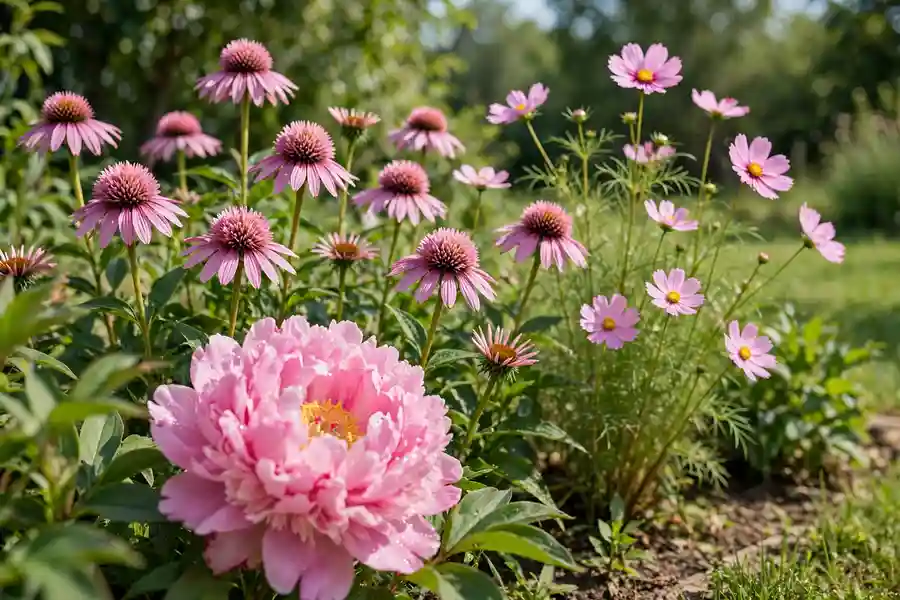
Popular pink flowers include peony, coneflower, phlox, cosmos, zinnia, petunia, tulip, rose, hydrangea, azalea, cherry blossom, redbud, crape myrtle and magnolia. Pick by type and season: perennials come back each year, annuals bloom from spring to frost, and flowering trees and shrubs give the biggest show. Zones and bloom times below are approximate, so check the plant tag.
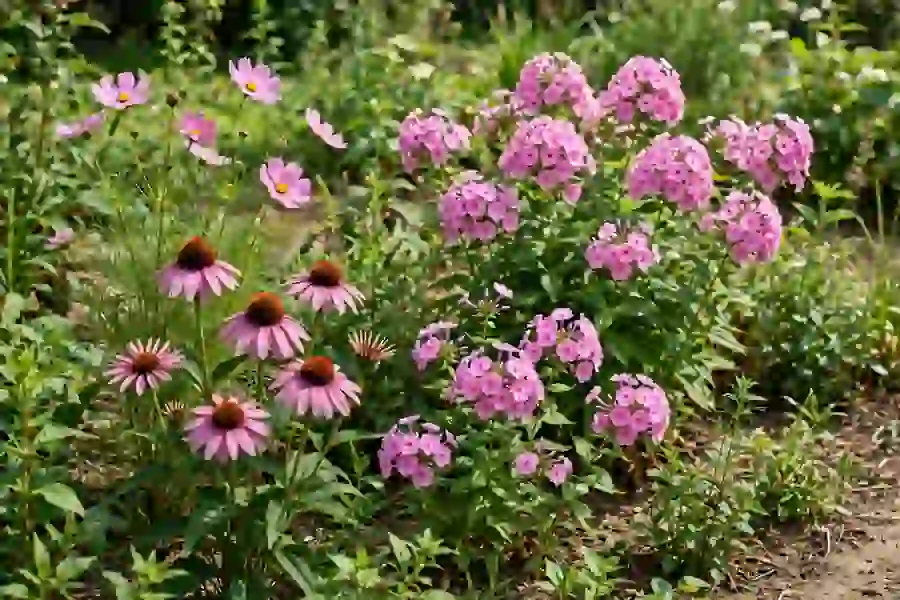
Most popular pink flowers at a glance
| Flower | Type | Bloom | Height | Sun |
|---|---|---|---|---|
| Peony | Perennial | Late spring | 2 to 3 ft | Sun |
| Pink coneflower | Perennial | Summer to fall | 2 to 4 ft | Sun |
| Astilbe | Perennial | Early to midsummer | 2 to 3 ft | Part shade |
| Garden phlox | Perennial | Summer | 2 to 4 ft | Sun |
| Autumn Joy sedum | Perennial | Late summer to fall | 1.5 to 2 ft | Sun |
| Cosmos | Annual | Summer to frost | 2 to 4 ft | Sun |
| Zinnia | Annual | Summer to frost | 1 to 4 ft | Sun |
| Petunia | Annual | Spring to frost | 6 to 12 in | Sun |
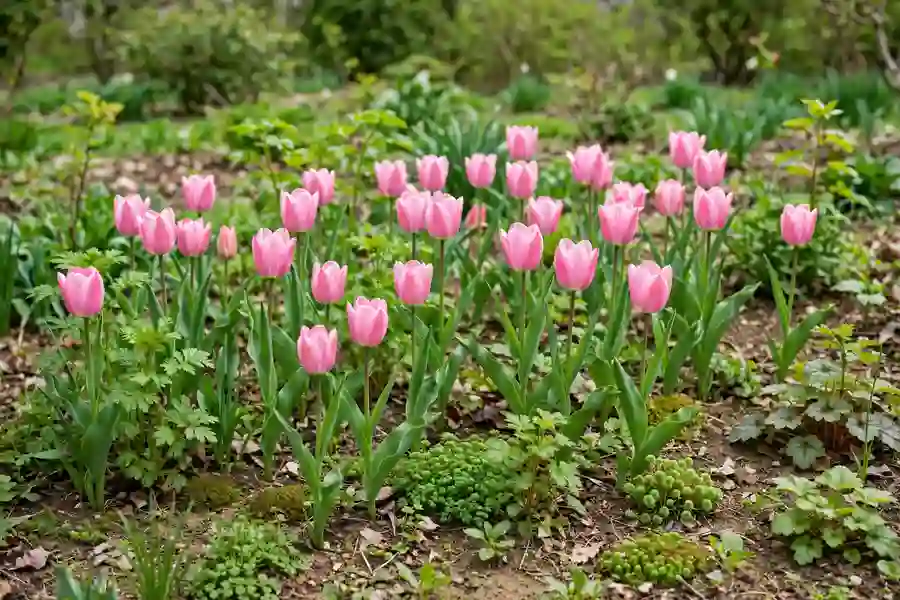
| Tulip | Bulb | Spring | 6 to 24 in | Sun |
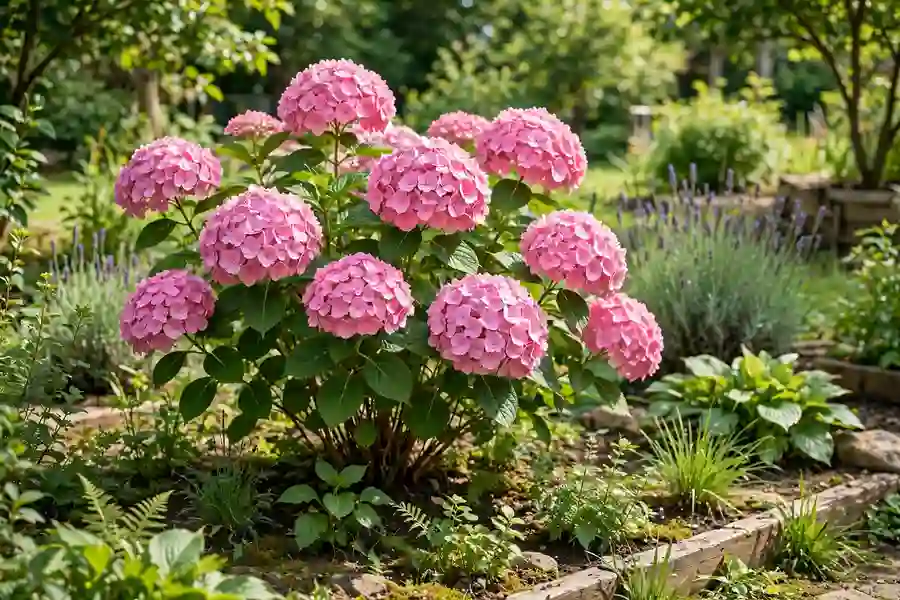
| Hydrangea | Shrub | Summer | 3 to 8 ft | Sun to part shade |
| Azalea | Shrub | Spring | 2 to 6 ft | Part shade |
| Crape myrtle | Shrub or tree | Summer | 6 to 30 ft | Sun |
| Cherry blossom | Tree | Spring | 15 to 30 ft | Sun |
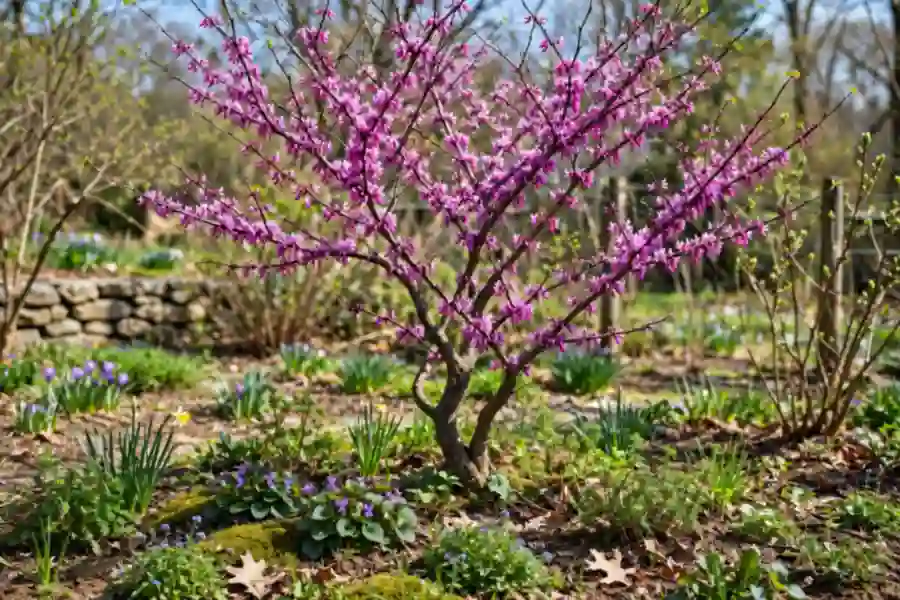
| Redbud | Tree | Early spring | 20 to 30 ft | Sun to part shade |
| Rose | Shrub | Late spring to fall | 2 to 8 ft | Sun |
What are the best pink perennials?
Perennials return every year. Zones are approximate.
| Flower | Zones | Bloom | Height | Notes |
|---|---|---|---|---|
| Peony | 3 to 8 | Late spring | 2 to 3 ft | Fragrant, huge blooms. Needs sun and cold winters |
| Pink coneflower (Echinacea) | 3 to 9 | Summer to fall | 2 to 4 ft | Cone center. Drought tolerant, attracts butterflies |
| Astilbe | 3 to 8 | Early to midsummer | 2 to 3 ft | Fluffy plumes. Best pink for shade and moist soil |
| Garden phlox | 4 to 8 | Summer | 2 to 4 ft | Fragrant. Choose mildew-resistant types |
| Autumn Joy sedum | 3 to 9 | Late summer to fall | 1.5 to 2 ft | Pink buds turn rose then bronze. Dry soil is fine |
| Japanese anemone | 4 to 8 | Late summer to fall | 2 to 4 ft | Part shade. Spreads |
| Dianthus (pinks) | 3 to 9 | Spring to summer | 6 to 18 in | Spicy scent. Edges and containers |
| Hardy geranium (cranesbill) | 4 to 8 | Late spring to summer | 1 to 2 ft | Long bloom, easy |
| Bleeding heart | 3 to 9 | Spring | 2 to 3 ft | Pink hearts in shade. Dies back in summer |
| Joe-Pye weed | 3 to 9 | Late summer | 4 to 7 ft | Tall native. Butterflies love it |
| Swamp milkweed | 3 to 6 and up | Summer | 3 to 5 ft | Rosy pink, monarch host plant, likes moist soil |
| Foxglove | 4 to 9 | Late spring to summer | 2 to 5 ft | Tall bell spikes. Short-lived. Poisonous |
| Pink muhly grass | 6 to 10 | Fall | 2 to 3 ft | Pink clouds of plumes |
| Yarrow | 3 to 9 | Summer | 1.5 to 3 ft | Flat clusters. Tough |
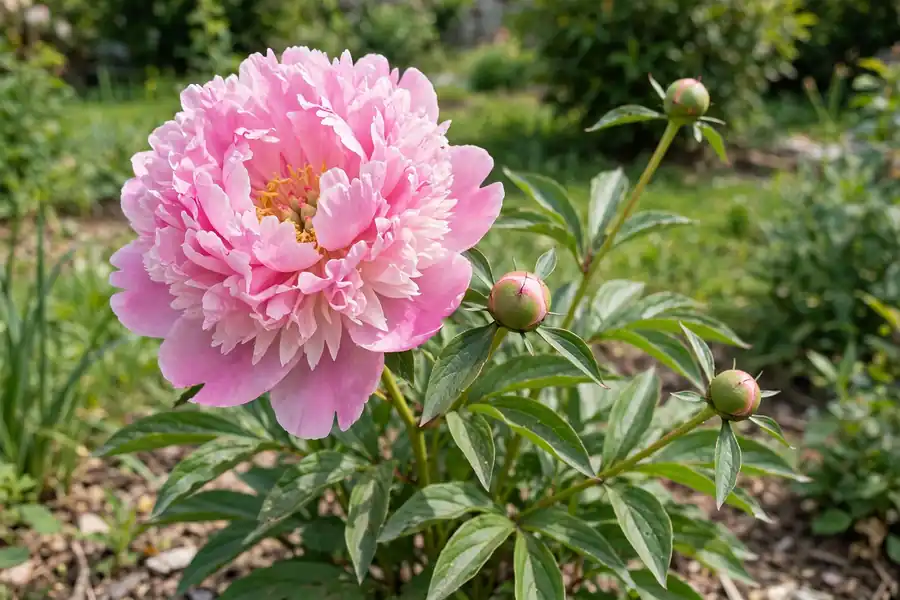
Pink perennials that bloom all summer: hardy geranium, coneflower, dianthus (with deadheading), phlox, and yarrow. Tall pink flowers: foxglove, Joe-Pye weed, phlox, cleome, gladiolus. Full-sun pink perennials: coneflower, sedum, yarrow, peony, phlox. Shade: astilbe, bleeding heart, Japanese anemone, hardy geranium.
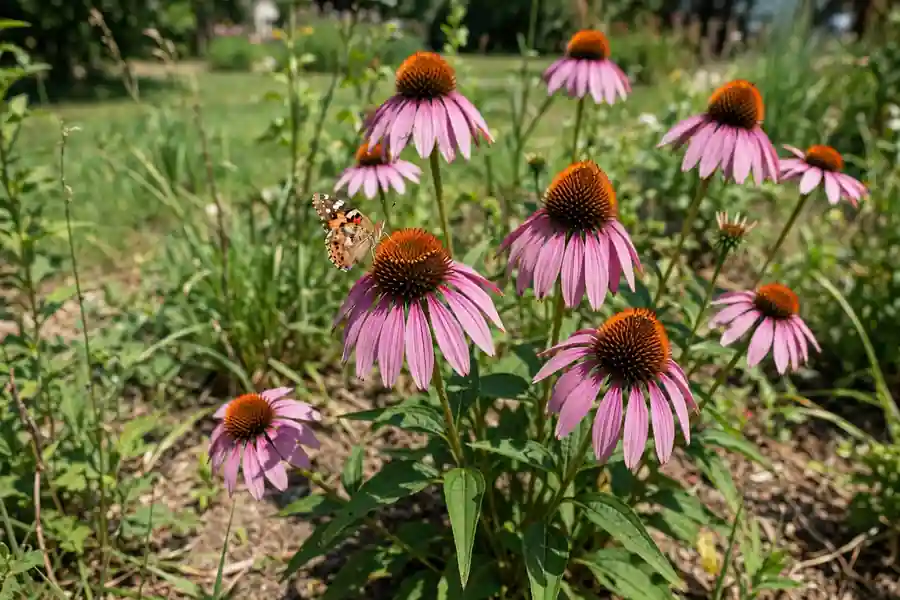
What are the best pink annuals?
Annuals bloom in one season. Plant after frost.
| Flower | Bloom | Height | Notes |
|---|---|---|---|
| Cosmos (pink and white) | Summer to frost | 2 to 4 ft | Easy from seed. Loves poor soil |
| Zinnia | Summer to frost | 1 to 4 ft | Hot pink to pastel. Great for cutting and pollinators |
| Petunia | Spring to frost | 6 to 12 in | Spreading. Good for hanging baskets |
| Impatiens, New Guinea impatiens | Spring to frost | 1 to 2 ft | Shade. Impatiens can get downy mildew |
| Wax begonia | Spring to frost | 6 to 12 in | Sun or shade. Low care |
| Snapdragon | Spring to early summer, fall | 1 to 3 ft | Cool season |
| Geranium (Pelargonium) | Spring to frost | 1 to 2 ft | Pots and baskets |
| Vinca (Catharanthus) | Summer | 6 to 18 in | Heat and drought tolerant. Poisonous |
| Cleome (spider flower) | Summer to frost | 3 to 5 ft | Tall, airy pink spikes |
| Sweet pea | Cool season | Vine, 4 to 6 ft | Fragrant. Seeds are poisonous |
| Gerbera daisy | Summer | 1 to 2 ft | Daisy-like, bold |
| Pentas | Summer to frost | 1 to 3 ft | Butterfly magnet. Heat lover |
| Dahlia | Summer to frost | 1 to 5 ft | Grown from tubers. Dinner-plate to small |
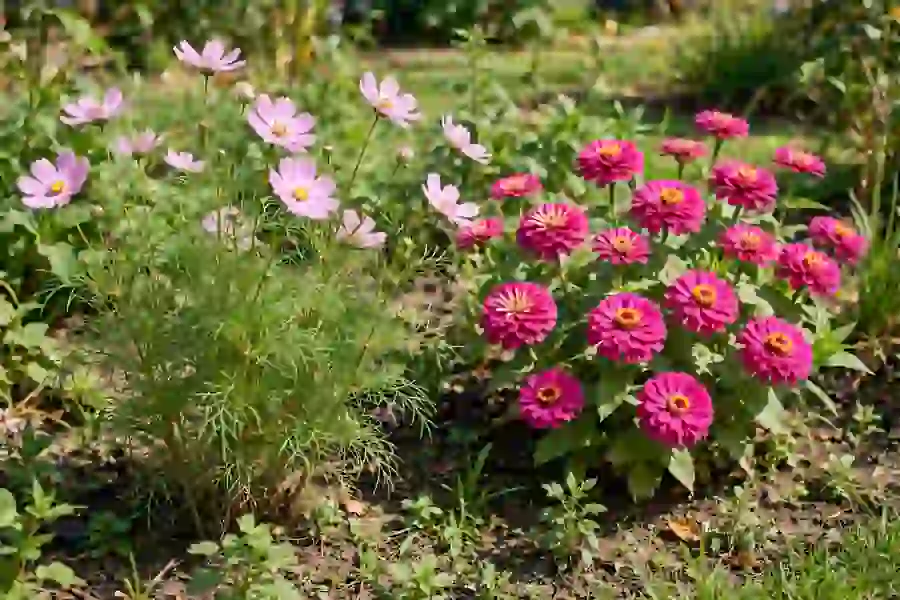
Pink hanging flowers: petunia, calibrachoa, fuchsia, trailing begonia, ivy geranium and verbena. Pink marigolds: true marigolds (Tagetes) are yellow, orange and red. Plants sold as pink marigold are usually calendula (pot marigold) varieties or another flower.
What are the best pink bulbs?
| Flower | Bloom | Notes |
|---|---|---|
| Tulip | Spring | Plant in fall. See our guide on how to plant tulip bulbs |
| Hyacinth | Early spring | Strong fragrance |
| Lily (pink Oriental, Asiatic) | Summer | Toxic to cats. See our lily flower guide |
| Gladiolus | Summer | Tall spikes. Tender, lift in cold zones |
| Alstroemeria | Summer | Long-lasting blooms |
| Amaryllis | Winter indoors | Giant pink trumpets |
| Naked lady (Amaryllis belladonna) | Late summer | Bare stalks with pink trumpets. Bulbs are poisonous |
| Allium | Late spring | Pink-purple globes |
What shrubs have pink flowers?
| Shrub | Zones | Bloom | Notes |
|---|---|---|---|
| Hydrangea (bigleaf) | 5 to 9 | Summer | Pink in alkaline soil, blue in acidic soil. Smooth hydrangea 'Invincibelle' types are pink and hardier |
| Azalea, rhododendron | 4 to 9 | Spring | Acidic soil, part shade. Poisonous |
| Rose | 3 to 10 | Late spring to fall | Pink roses are the most common color. See how to prune roses |
| Spirea (Japanese) | 3 to 8 | Summer | Easy, compact |
| Weigela | 4 to 8 | Late spring | Pink trumpets that attract hummingbirds |
| Camellia | 7 to 9 | Winter to spring | Evergreen. Blooms in cold months |
| Oleander | 8 to 10 | Summer | Heat and drought tolerant. Every part is deadly |
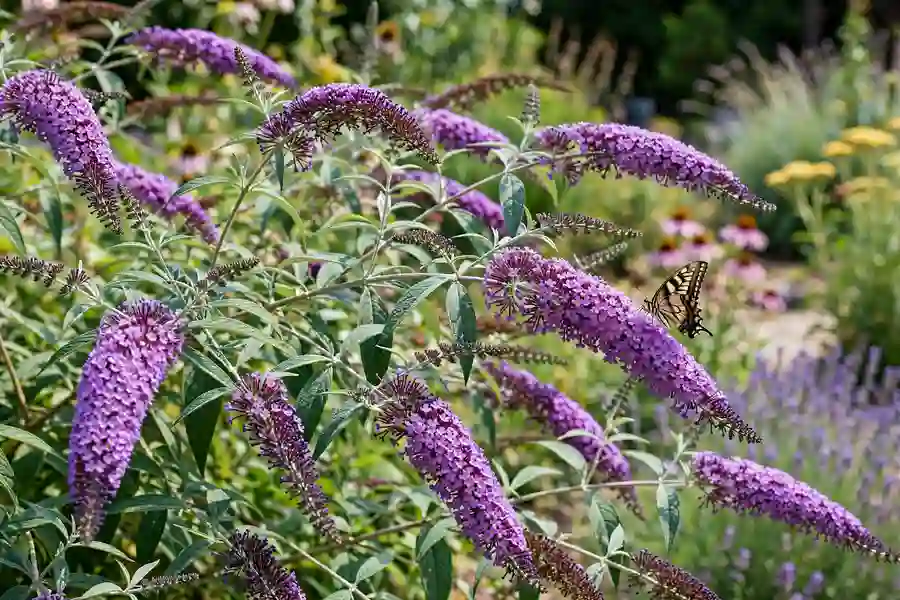
| Butterfly bush (pink types) | 5 to 9 | Summer to frost | See our butterfly bush guide |
| Rose of Sharon, hibiscus | 5 to 9 | Late summer | See our hibiscus guide |
| Lantana | 8 to 11 | Spring to frost | Pink and yellow clusters. Toxic berries |
| Mountain laurel | 5 to 9 | Late spring | Pink buds, native, toxic |
| Evergreen with pink flowers | Varies | Varies | Camellia, oleander, some azaleas and abelias |
Which bush with pink flowers is small? Spirea, dwarf azalea, dwarf butterfly bush and shrub roses. Large pink flowering bushes: hydrangea, oleander and crape myrtle.
What trees have pink flowers?
| Tree | Zones | Bloom | Height | Notes |
|---|---|---|---|---|
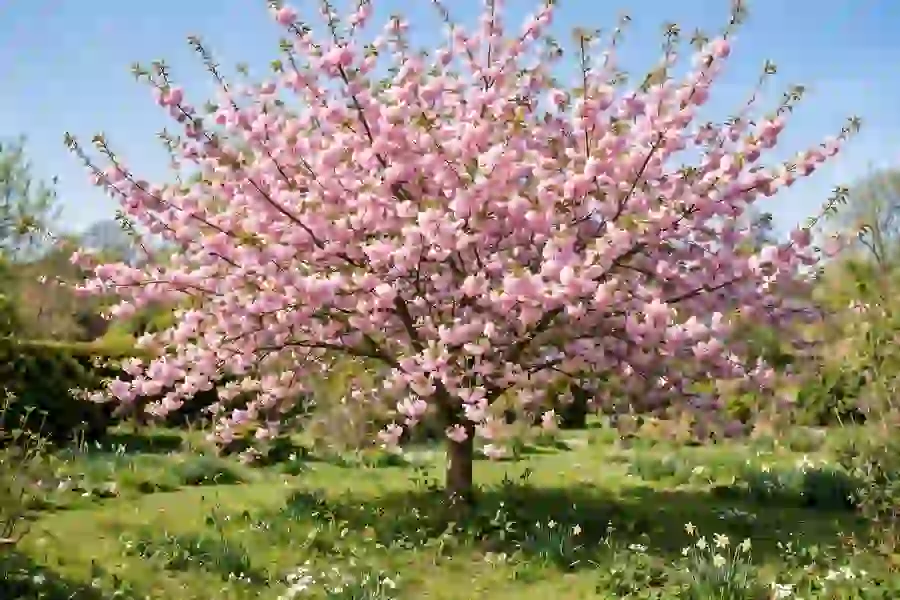
| Cherry blossom (Yoshino, Kwanzan) | 5 to 8 | Spring | 15 to 40 ft | The sakura. Short bloom, 1 to 2 weeks |
| Redbud | 4 to 9 | Early spring | 20 to 30 ft | Magenta-pink flowers on bare branches. Native |
| Pink dogwood | 5 to 9 | Spring | 15 to 25 ft | Pink bracts |
| Crabapple | 4 to 8 | Spring | 10 to 25 ft | Pink buds open white or pink. Needs disease-resistant varieties |
| Saucer magnolia | 4 to 9 | Early spring | 20 to 25 ft | Large pink goblets. See our magnolia tree guide |
| Crape myrtle | 6 or 7 to 9 | Summer | 6 to 30 ft | Long summer bloom, peeling bark |
| Flowering plum, flowering peach | 5 to 8 | Early spring | 10 to 20 ft | Ornamental, not for fruit |
| Silk tree (mimosa) | 6 to 9 | Early summer | 20 to 35 ft | Fluffy pink pompoms. Invasive in parts of the South |
| Desert willow | 7 to 11 | Summer | 15 to 25 ft | Pink trumpets. Dry-climate native |
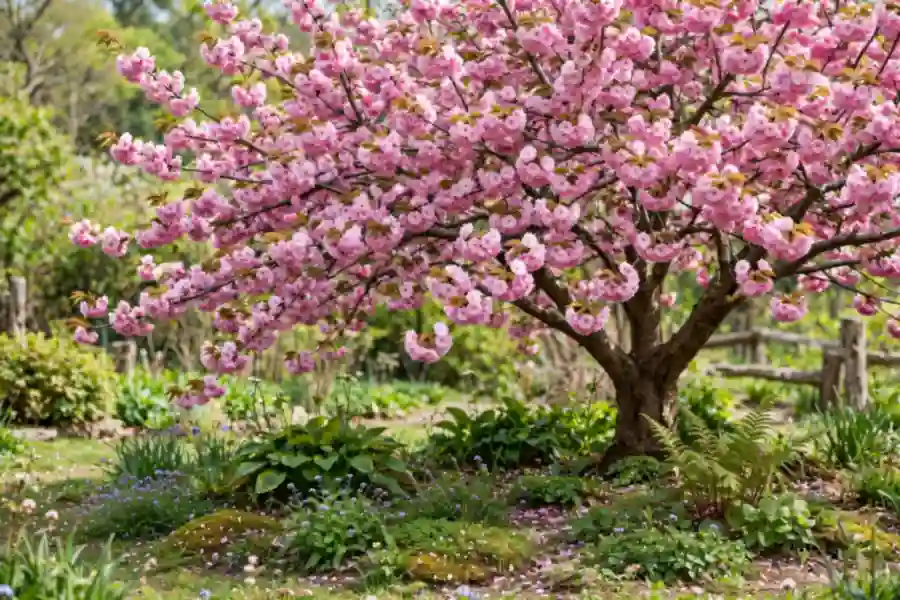
Look for the Latin name: Prunus (cherry), Cercis (redbud), Cornus (dogwood), Malus (crabapple), Lagerstroemia (crape myrtle), Albizia (silk tree).
Which vines and ground covers have pink flowers?
| Plant | Type | Notes |
|---|---|---|
| Clematis | Vine | Many pink varieties. Sun on top, shade at the roots |
| Mandevilla | Tender vine | Pink trumpets, zones 9 to 11, pots elsewhere |
| Bougainvillea | Tropical vine | The color is bracts, not petals. Zones 9 to 11 |
| Climbing rose | Vine | Needs support and pruning |
| Pink morning glory | Annual vine | See our morning glory guide |
| Pink jasmine | Vine | Fragrant. Frost tender |
| Creeping phlox | Ground cover | Spring carpet. Zones 3 to 9 |
| Creeping thyme | Ground cover | Pink-purple, walkable |
| Sedum (stonecrop) | Ground cover | Pink star flowers. Dry soil |
| Dianthus | Low edging | Fragrant pinks |
What indoor plants and succulents have pink flowers?
| Plant | Notes |
|---|---|
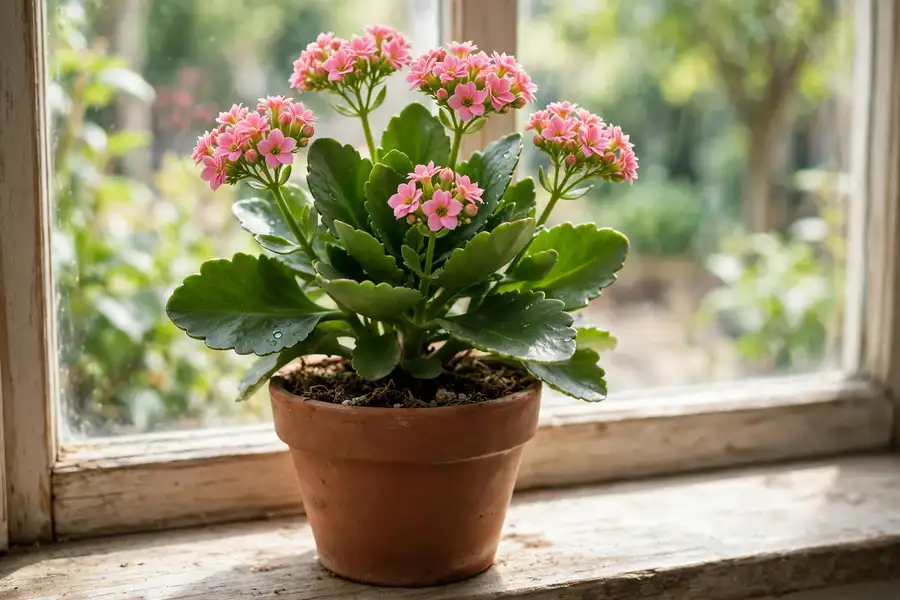
| Kalanchoe | Pink clusters for weeks. Succulent, bright light. Toxic to pets |
| Christmas cactus | Pink blooms in winter after cool, long nights |
| African violet | Blooms year-round in bright indirect light |
| Orchid (Phalaenopsis) | Pink sprays last months |
| Begonia | Pink blooms and decorative leaves |
| Echeveria, sedum and other succulents | Pink or coral flowers on long stems in spring or summer |
| Cactus (Mammillaria, Echinopsis) | Pink flowers on mature plants with enough sun |
| Hibiscus (indoor/patio) | Tropical pink blooms. See our hibiscus guide |
| Cyclamen | Pink winter blooms. Tubers are toxic |
Tropical pink flowers: hibiscus, plumeria (frangipani), bougainvillea, pentas, ginger, anthurium and oleander. Pink Hawaiian flowers: hibiscus, plumeria, pink ginger and orchids. The pink lotus and water lily grow in ponds.
What are the pink wildflowers and weeds?
| Plant | Where | Notes |
|---|---|---|
| Wild pink (Silene caroliniana) | Woods, rocky slopes | Native wildflower, spring |
| Mountain pink | Dry limestone areas | Small pink wildflower |
| Pink evening primrose | Roadsides, lawns | Pretty but spreads aggressively |
| Red clover | Lawns, fields | Looks pink-magenta. A common lawn weed |
| Purple deadnettle, henbit | Lawns, beds, early spring | Pink-purple weeds |
| Bindweed | Fences, beds | Pink to white trumpets. See our morning glory guide for the difference |
| Canada thistle | Fields, edges | Pink-purple thistle. Noxious weed |
| Himalayan balsam | Streambanks | Invasive pink flower |
For control, see our natural weed killer guide.
How do you identify pink flowers by look?
| It looks like | Try |
|---|---|
| Cone center, daisy petals | Pink coneflower |
| Fluffy plumes | Astilbe, silk tree, pink muhly grass |
| Tall spikes | Foxglove, snapdragon, gladiolus, cleome |
| Bell-shaped | Campanula, foxglove, coral bells, hyacinth |
| Round puffs | Allium, hydrangea, sedum |
| Tiny sprays (filler) | Baby's breath, waxflower, astilbe, thrift |
| Large cup | Peony, magnolia, rose |
| Star-shaped, fuzzy | Silk tree, cosmos |
| Pink trumpet | Mandevilla, oleander, hibiscus, petunia, desert willow |
Small pink flowers: creeping phlox, baby's breath, thrift, alyssum, verbena. Big pink flowers: peony, dahlia, hibiscus, magnolia, rhododendron.
What shades of pink are there?
| Shade | Examples |
|---|---|
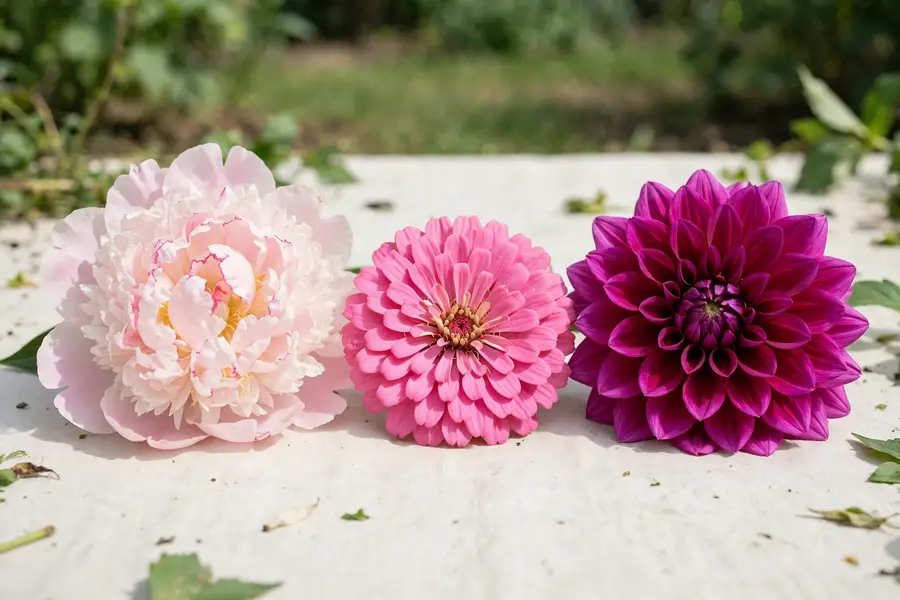
| Light, pale, pastel, baby, blush | Cherry blossom, sweet pea, 'Sarah Bernhardt' peony, soft cosmos, ranunculus |
| Bright, hot, neon, fuchsia | Zinnia, petunia, dianthus, fuchsia, bougainvillea |
| Deep, dark, magenta | Redbud, deep pink dahlia, phlox, rhododendron |
| Coral | Coral bells, coral peonies, coral cosmos |
Pink color pairings:
| With | Examples |
|---|---|
| White | Cosmos, peonies, impatiens, dogwood |
| Purple | Salvia and phlox, coneflower and allium, lavender |
| Yellow | Coneflower and black-eyed Susan, yarrow |
| Blue | Hydrangea, delphinium with roses, forget-me-nots |
| Green | Hellebore, green zinnia, hosta foliage |
| Orange or red | Zinnia mixes, gerbera, snapdragon |
When do pink flowers bloom?
| Season | Pink flowers |
|---|---|
| Winter | Camellia, hellebore, cyclamen, Christmas cactus, amaryllis, kalanchoe |
| Spring | Tulip, cherry, redbud, magnolia, azalea, dogwood, bleeding heart, creeping phlox, peony |
| Summer | Coneflower, phlox, hydrangea, crape myrtle, zinnia, cosmos, petunia, lily, rose |
| Fall | Sedum, mum, Japanese anemone, pink muhly grass, dahlia, naked lady, aster |
Which pink flowers are in Japan?
Cherry blossom (sakura), plum blossom, azalea, camellia, peony, Japanese anemone, red spider lily and the lotus. Spring cherry viewing is the most famous.
What do pink flowers mean?
Pink stands for grace, gratitude, admiration, gentleness and love that is tender, not intense. Lighter pinks read as sweet and innocent, deeper pinks as appreciation and hot pinks as energy. These are traditions and vary by source.
| Flower | Common meaning |
|---|---|
| Pink rose | Gratitude, admiration, grace |
| Pink peony | Romance, prosperity, happy marriage |
| Pink carnation | Remembrance and a mother's love |
| Pink tulip | Care and affection |
| Pink lily | Admiration, prosperity |
| Cherry blossom | Fleeting beauty and renewal |
| Pink hibiscus | Delicate beauty |
Which pink flowers are poisonous?
| Flower | Risk |
|---|---|
| Oleander | Deadly if any part is eaten |
| Foxglove | Heart toxin |
| Azalea, rhododendron, mountain laurel | Toxic to people and pets |
| Naked lady and other bulbs (Amaryllis belladonna) | Bulbs toxic |
| Kalanchoe | Toxic to dogs and cats |
| Pink lilies | Highly toxic to cats |
| Cyclamen | Tubers toxic |
| Sweet pea | Seeds toxic |
| Vinca | Toxic if eaten |
| Hydrangea, lantana | Mildly to moderately toxic |
Call a doctor, vet or poison control (ASPCA: 888-426-4435 for pets) if something is eaten.
Which pink flowers are edible?
Rose petals, dianthus petals, chive blossoms, red clover blossoms, scented geranium petals, borage, tuberous begonia and violas. Eat only flowers you grew yourself or know are untreated and correctly identified. Never eat florist or garden-center flowers, and when in doubt, skip it. Pink hibiscus tea comes from roselle calyces, covered in our hibiscus guide.
Fruit with pink flowers: apple and cherry blossoms open pink-white. Ornamental strawberries such as 'Pink Panda' bear pink flowers, while most strawberries have white ones (see our strawberry guide).
Pink flowers that start with P: peony, petunia, phlox, pentas, poppy, primrose, plumeria, pansy, pelargonium.
Quick answers to common questions
What are the most popular pink flowers?
Roses, peonies, tulips, cherry blossoms, hydrangeas, azaleas, cosmos, zinnias, petunias and coneflowers.
Which trees have pink flowers?
Cherry, redbud, crabapple, pink dogwood, saucer magnolia, crape myrtle, silk tree and desert willow.
Which pink flowers bloom all summer?
Coneflower, hardy geranium, phlox, yarrow, cosmos, zinnia, petunia, pentas and dianthus with deadheading.
What do pink flowers mean?
Grace, gratitude, admiration and gentle love. Light pink means sweetness, deeper pink means appreciation.
Are any pink flowers poisonous?
Yes: oleander, foxglove, azalea, rhododendron, kalanchoe, naked lady bulbs and pink lilies for cats.
Keep reading: lily flower, hibiscus flower, magnolia tree, butterfly bush, how to plant tulip bulbs and more lawn and garden guides.
Which pink flowers should you choose?
Match the plant to your light, season and space. Tulips, cherry and redbud open spring, coneflower, phlox and hydrangea carry summer, and sedum, anemone and muhly grass finish the year. Whatever pink flowers you pick, check the Latin name, mature size and toxicity before planting.