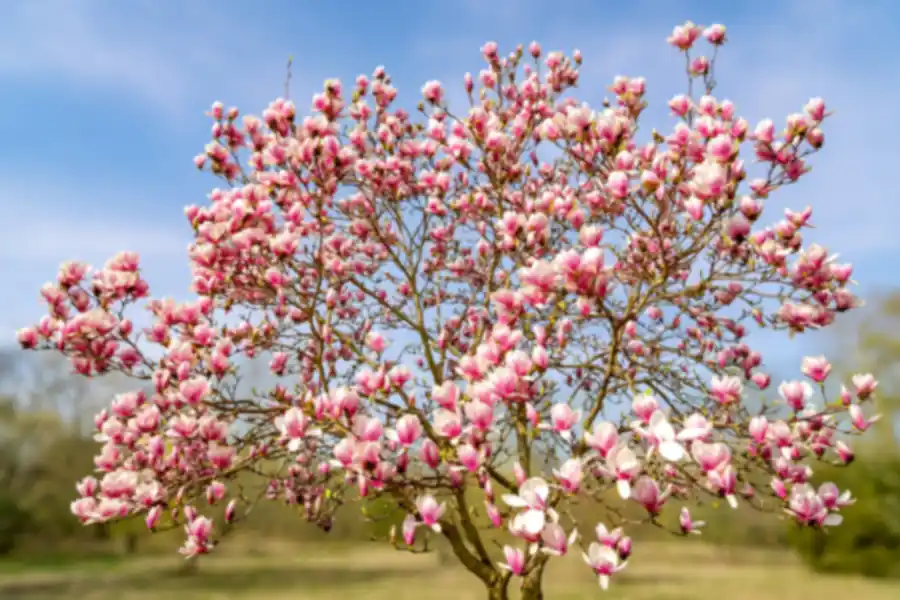
A magnolia tree is a flowering tree or large shrub with big, often fragrant flowers in white, pink, purple or yellow and either glossy evergreen leaves or leaves that drop in fall. The best-known is the southern magnolia, a large evergreen with huge white flowers, but there are small and dwarf types too, such as Little Gem, star magnolia and the pink "Jane" and "Ann." Most magnolias like full sun to light shade, rich, moist, well-drained soil and little pruning. Bloom time runs from early spring to early summer, depending on the type.
Magnolias fit many yards, but only if you pick the right one. A southern magnolia can grow 60 feet or taller and drop leaves all year, while a dwarf magnolia stays under 15 feet. This guide covers what a magnolia tree is, the main types and cultivars, how big and how fast each grows, hardiness zones, planting, care, fertilizer, pruning, propagation, roots, common problems and what magnolias mean.
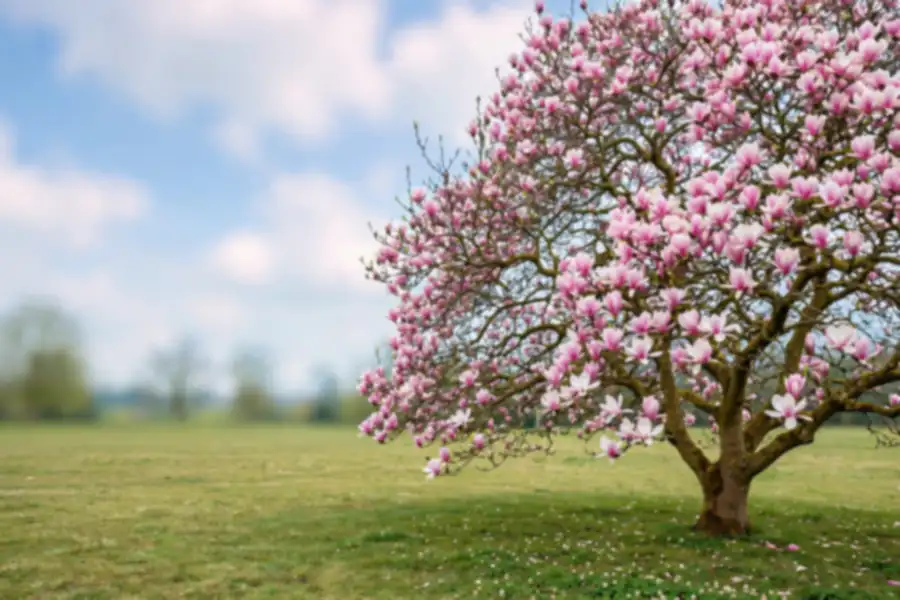
Magnolia tree at a glance
| Question | Short answer |
|---|---|
| Scientific name | Magnolia (about 200 species, plus many hybrids) |
| Type | Evergreen or deciduous trees and large shrubs |
| Flower colors | White, pink, purple, magenta, yellow and bicolor |
| Bloom time | Early spring (star, saucer) to late spring and summer (southern, sweetbay) |
| Size | From 10 feet (dwarfs) to 60 to 80 feet (southern magnolia) |
| Growth rate | Slow to moderate, roughly 1 to 2 feet a year for most types when young |
| Light | Full sun to light shade |
| Soil | Rich, moist, well-drained, slightly acidic |
| Hardiness | Zones 3 to 10 depending on the type. Check the plant tag |
| Roots | Shallow, wide-spreading and fleshy |
| Pruning | Minimal. Right after flowering for spring bloomers |
| Biggest problems | Frost-damaged buds, scale insects, leaf scorch and transplant stress |
What is a magnolia tree?
A magnolia tree is a woody plant in the genus Magnolia, in the magnolia family (Magnoliaceae). There are roughly 200 species, native to eastern North America, Mexico and Central America, the Caribbean, and east and southeast Asia. The genus is named after the French botanist Pierre Magnol. Magnolias are among the oldest flowering plants. Their flowers have thick, waxy petals and are pollinated mostly by beetles, which is thought to reflect their ancient origins.
What does a magnolia tree look like?
- Flowers: large, cup-, saucer-, tulip- or star-shaped, with thick petals. Many are fragrant.
- Leaves: simple, oval and leathery on evergreen types, and broader and thinner on deciduous types. Southern magnolia leaves are glossy dark green on top with a rusty or tan fuzzy underside.
- Fruit: a cone-like seed pod that opens in fall to show bright red or orange seeds.
- Bark: smooth, gray and thin. Thin bark is easily damaged by mowers and string trimmers.
- Shape: upright, pyramidal or rounded, often with low branches.
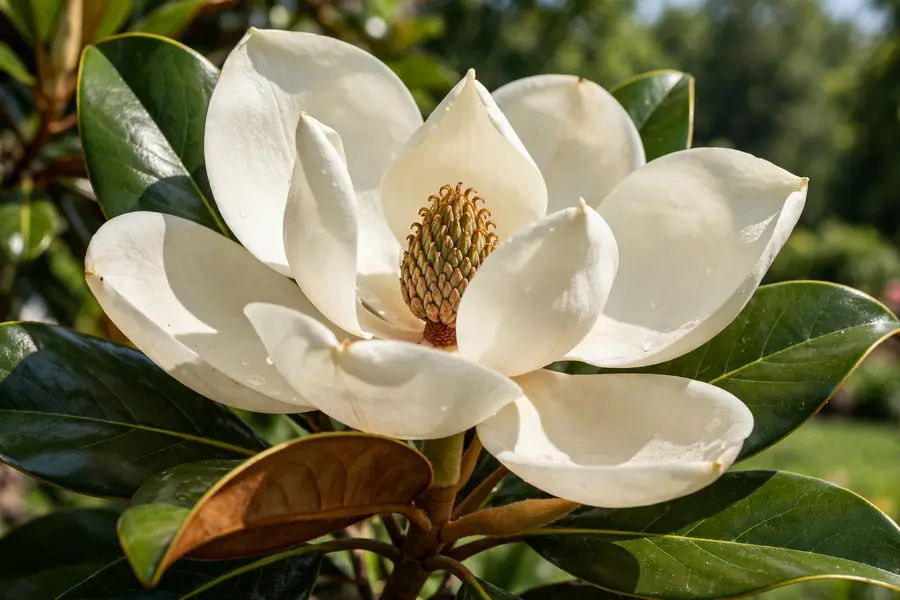
Is a magnolia a tree or a bush? Both. Many magnolias, such as star magnolia, the Little Girl hybrids and sweetbay, grow as multi-stemmed large shrubs or small trees. Others, such as southern magnolia and cucumber tree, are large single-trunk trees. The same plant can be trained either way with pruning.
Evergreen vs deciduous: evergreen magnolias (southern magnolia, Little Gem, sweetbay in mild areas) keep their leaves through winter. Deciduous magnolias (star, saucer, Jane, Ann, cucumber tree) drop their leaves in fall and often flower on bare branches in early spring.
What are the main types of magnolia tree?
| Type | Evergreen? | Mature size | Flowers | Zones (approx.) |
|---|---|---|---|---|
| Southern magnolia (Magnolia grandiflora) | Yes | 60 to 80 feet | Huge white, lemon-scented, 8 to 12 inches | 6 or 7 to 9 |
| Sweetbay magnolia (Magnolia virginiana) | Semi-evergreen to evergreen | 10 to 35 feet, taller in the South | Creamy white, lemon-scented, 2 to 3 inches | 5 to 9 (some sources say 4) |
| Star magnolia (Magnolia stellata) | No | 10 to 15 feet | White, many narrow petals, early spring | 4 to 8 |
| Saucer magnolia (Magnolia x soulangeana) | No | 20 to 25 feet | Large pink, purple and white cups | 4 or 5 to 9 |
| Little Girl hybrids (Jane, Ann, Betty and others) | No | 10 to 15 feet | Tulip-shaped, pink to deep purple-red | About 4 to 8 |
| Cucumber tree (Magnolia acuminata) | No | 50 to 80 feet | Greenish-yellow, hard to see among leaves | About 3 or 4 to 8 |
| Yellow hybrids (Butterflies, Elizabeth, Yellow Bird) | No | 15 to 25 feet | Yellow, fragrant | About 4 to 9 |
| Bigleaf magnolia (Magnolia macrophylla) | No | 30 to 50 feet | Very large white, with leaves up to 2 feet long | About 5 to 8 |
Zone ranges and sizes differ between sources and cultivars, so use these as rough guides and read your plant tag.
Southern magnolia
Southern magnolia is the classic evergreen magnolia of the American South. It grows into a large pyramid-shaped tree with dense, glossy leaves and big white flowers from late spring into summer, often with a few later blooms. It is one of the best shade trees where it has room, but it needs space and drops leaves, flowers and seed pods year round. It is the state tree and flower of Mississippi, and Louisiana also uses the magnolia as its state flower.
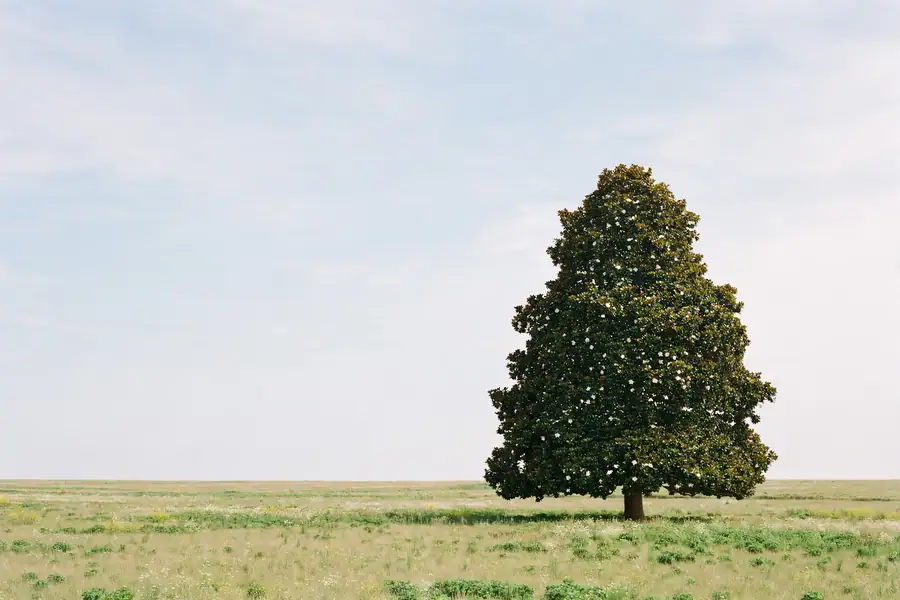
Cold-hardy cultivars, such as Bracken's Brown Beauty, handle colder winters than the species and are often grown in zone 6, with a sheltered spot.
Sweetbay magnolia
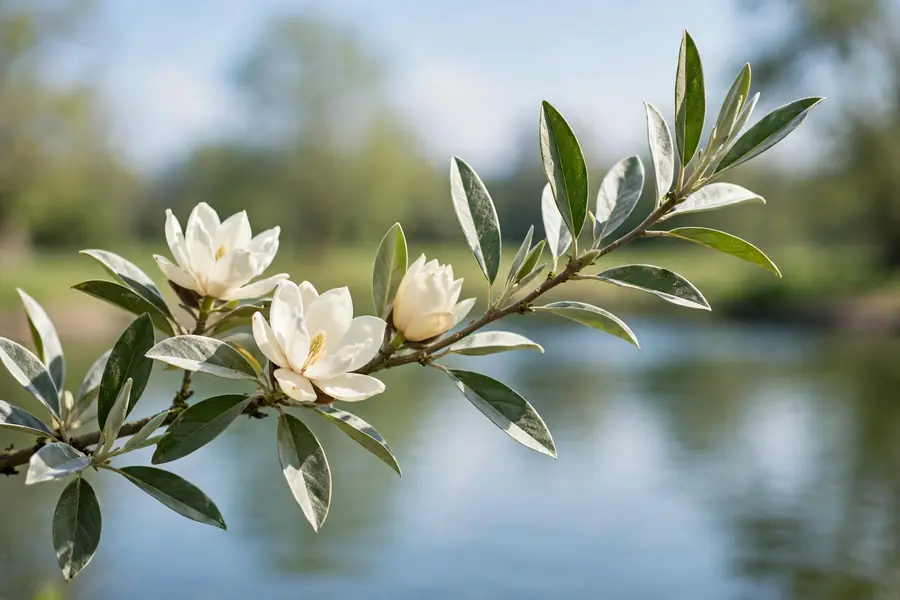
Sweetbay is a graceful native tree or large shrub with silvery-green leaves, creamy lemon-scented flowers and red seed cones. It tolerates wet soil better than most magnolias and is useful in rain gardens and low spots. It is evergreen in the South and loses most leaves in colder climates. It blooms for a long stretch from late spring into summer.
Star magnolia
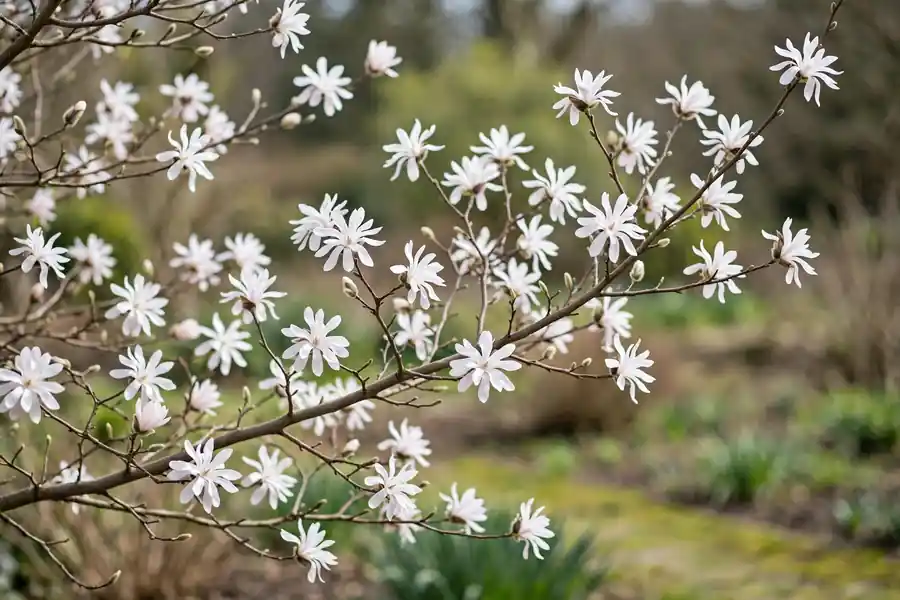
Star magnolia blooms very early, often in March or April, on bare branches. The white flowers have many narrow petals. It grows slowly and stays small, which suits front yards. Its early flowers can be damaged by a late frost. "Royal Star" is a common cultivar.
Saucer magnolia and Japanese magnolia
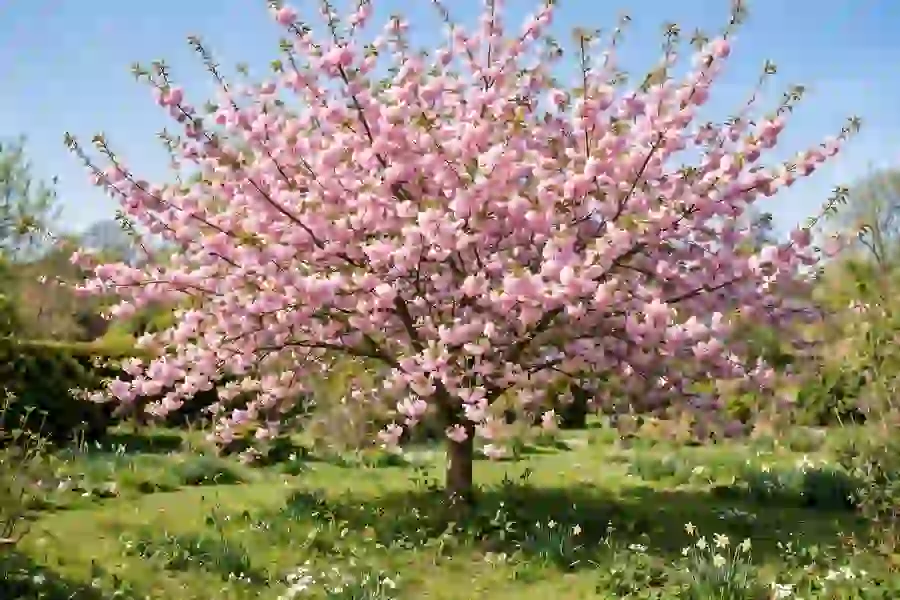
Saucer magnolia is a hybrid with large pink, purple or white goblet-shaped flowers that open in early to mid spring before the leaves. It grows into a wide, multi-stem small tree. "Japanese magnolia" and "Chinese magnolia" are names used loosely for saucer magnolia and related Asian species, such as Magnolia kobus and the white Yulan magnolia, so check the Latin name. Frost can brown the open flowers.
Jane, Ann, Betty and the Little Girl hybrids
The "Little Girl" hybrids, developed at the National Arboretum, include Jane, Ann, Betty, Judy, Susan and others. They are compact, multi-stem shrubs or small trees that bloom later than saucer magnolia, which helps them miss many frosts. Flowers are tulip-shaped and range from pink to deep purple-red.
- Jane: pink-purple outside, white inside, and often blooms again lightly in summer. Often 10 to 15 feet.
- Ann: deep reddish-purple, one of the smallest and earliest of the group.
- Betty: large, deep purple-red outside with a white interior.
- Genie and Black Tulip: very dark, almost black-purple tulip flowers on small trees.
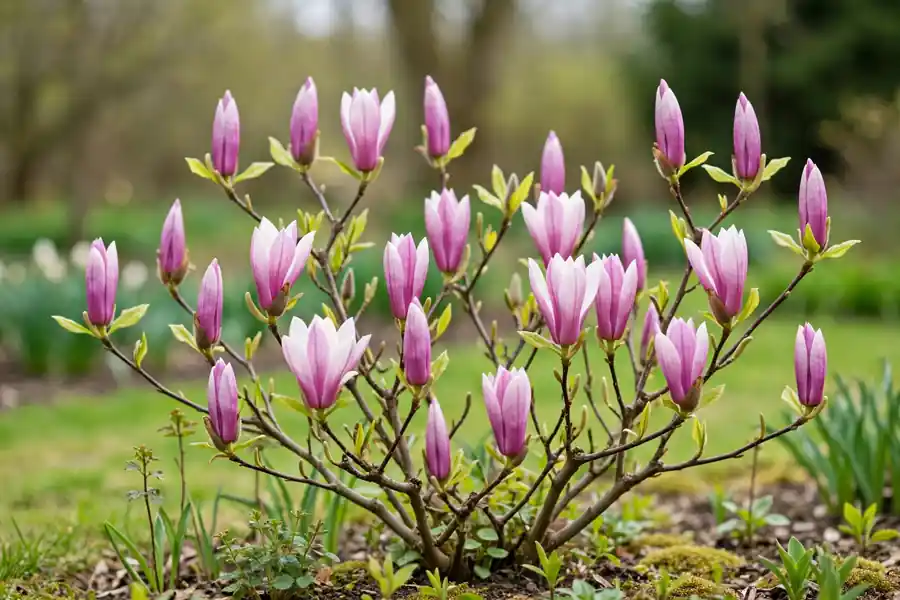
Jane vs Ann: Jane has paler pink-white flowers and is slightly larger. Ann has darker, deep rose-purple flowers and a smaller, more compact size.
Dwarf magnolia trees
If you want a magnolia for a small yard, these are popular:
| Cultivar | Type | Size (approx.) | Notes |
|---|---|---|---|
| Little Gem | Dwarf southern magnolia | 15 to 20 feet, 8 to 10 feet wide | Evergreen, columnar, blooms young and repeats in summer |
| Teddy Bear | Compact southern magnolia | 15 to 20 feet, 10 to 12 feet wide | Evergreen, broader leaves, rounded shape |
| Jane and Ann | Little Girl hybrids | 10 to 15 feet | Deciduous, pink to purple flowers |
| Star magnolia | Species | 10 to 15 feet | Deciduous, early white flowers |
| Genie | Hybrid | About 12 to 15 feet | Deciduous, very dark flowers |
| Sweetbay (compact forms) | Species cultivars | 10 to 20 feet | Tolerates damp soil |
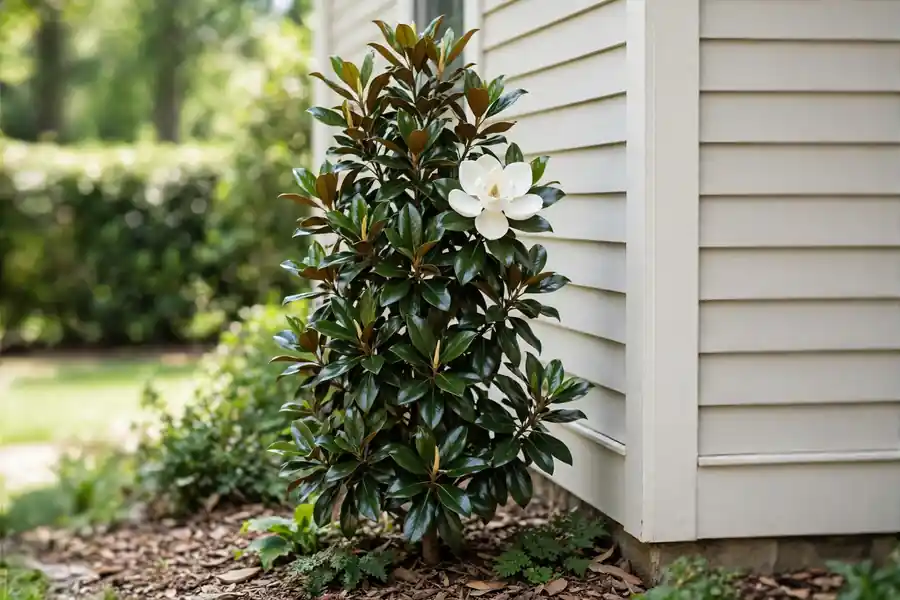
Little Gem vs Teddy Bear: both are compact southern magnolias, with Little Gem taller and narrower and Teddy Bear shorter and more rounded, with larger leaves. Both are evergreen and mostly hardy in zones 7 to 9 (some sources list a bit colder or warmer ranges). They are more tolerant of heat than cold, so in zone 6 they need shelter.
Little Gem pros and cons: pros are the small size, evergreen leaves, early and repeat blooms and a tidy shape. Cons are the slow growth, cold sensitivity in zone 6 and below and the leaf and flower litter. Despite names like "miniature magnolia," a Little Gem can reach 20 feet or more. It is a small tree, not a tiny one.
Star magnolia pros and cons: it stays small, flowers early and is very cold hardy, but the early flowers can be ruined by frost and growth is slow.
Sweetbay pros and cons: pros are wet-soil tolerance, sweet fragrance and native wildlife value. Cons are the smaller flowers and a looser shape.
Yellow, purple, black and other colors
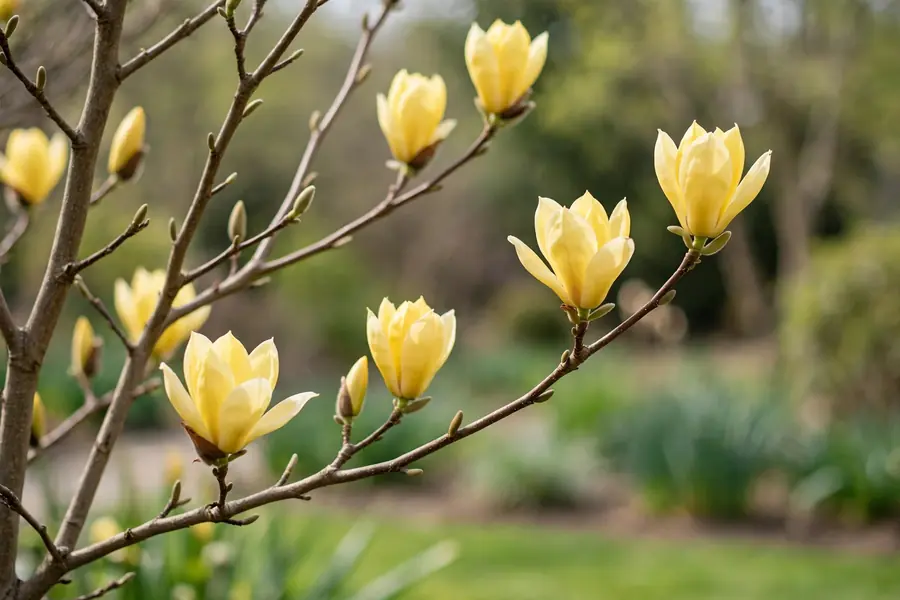
- Yellow magnolias: hybrids such as Butterflies, Elizabeth, Yellow Bird and Daphne have yellow flowers. They are bred from the cucumber tree and are typically hardy to zone 4 or 5 and bloom in mid-spring.
- Purple magnolias: Jane, Ann, Betty, Genie and the lily magnolia (Magnolia liliiflora) have purple-pink flowers.
- Red: "red magnolia" flowers are deep purple-red tones on Little Girl hybrids and some saucer cultivars.
- Black magnolia: the near-black look comes from very dark purple varieties such as Black Tulip.
- Blue magnolia: there is no true blue magnolia. Photos online are edited. The name may refer to the cucumber tree (Magnolia acuminata) or to blue-green leaves.
- White magnolia: southern, sweetbay, star and Yulan magnolias.
- Orange or brown: Bracken's Brown Beauty is named for the brown leaf undersides of a cold-hardy southern magnolia. Orange magnolias are not common, and yellow hybrids with orange tints are the closest.
Cucumber tree
The cucumber tree (Magnolia acuminata) is a large native tree with small greenish-yellow flowers that are easy to miss, and cucumber-shaped green fruit that gives it the name. It is the most cold-hardy magnolia and the parent of many yellow hybrids.
Magnolia vs tulip tree
The tulip tree (Liriodendron tulipifera) is a large native tree in the same family but is not a magnolia. It has tulip-shaped yellow-orange flowers and distinctive four-lobed leaves. "Tulip magnolia" or "tulip tree magnolia" often means a magnolia with tulip-shaped flowers, such as Jane, or the saucer magnolia.
How big does a magnolia tree get?
| Type | Height | Spread |
|---|---|---|
| Southern magnolia | 60 to 80 feet | 30 to 40 feet |
| Little Gem | 15 to 20 feet | 8 to 10 feet |
| Teddy Bear | 15 to 20 feet | 10 to 12 feet |
| Sweetbay | 10 to 35 feet | 10 to 20 feet |
| Star magnolia | 10 to 15 feet | 10 to 15 feet |
| Saucer magnolia | 20 to 25 feet | 20 to 25 feet |
| Jane, Ann, Betty | 10 to 15 feet | 8 to 12 feet |
| Cucumber tree | 50 to 80 feet | 30 to 40 feet |
Always allow for the full-grown size. A little magnolia in a one-gallon pot can become a very large tree.
How fast does a magnolia tree grow? Most grow slowly to moderately, roughly 1 to 2 feet a year when young, and star magnolia is slower. Cucumber tree and some large southern magnolias grow faster, and "Galaxy" and some hybrids are known as vigorous growers. Growth depends on sun, water and soil.
How long does it take a magnolia to bloom? A nursery-grown or grafted tree may bloom within a few years of planting, and Little Gem often blooms very young. A magnolia grown from seed can take 10 years or more to flower.
How long do magnolia trees live? A healthy tree can live for many decades, and large southern magnolias can pass 100 years.
When do magnolia trees bloom?
| Type | Usual bloom time |
|---|---|
| Star magnolia | Early spring (March to April), before leaves |
| Saucer magnolia | Early to mid spring, before leaves |
| Yellow hybrids | Mid-spring |
| Jane, Ann, Betty | Mid to late spring, a few weeks after saucer magnolia |
| Southern magnolia | Late spring into summer, with scattered later blooms |
| Little Gem | Late spring, with repeat flowers into summer or fall |
| Sweetbay | Late spring into summer |
Bloom dates vary with your climate. In warm areas like the Gulf Coast, flowers open weeks earlier than in the North. A late frost can brown the open flowers of early bloomers, which is why late-blooming types such as Jane do better in cold areas.
How do you plant a magnolia tree?
When to plant: early spring or fall is best. Fall planting gives roots time to establish before summer. In cold regions, spring planting is often safer for evergreen types.
Where to plant:
- Full sun to light shade. More sun means more flowers.
- Space for the full-grown size, away from buildings, walkways and utility lines.
- Shelter from strong winter wind, especially for evergreen types and early bloomers.
- Rich, moist, well-drained soil, slightly acidic to neutral.
How to plant:
- Dig a hole 2 to 3 times as wide as the root ball and no deeper than it.
- Set the tree so the top of the root ball sits level with or slightly above the surrounding soil. Planting too deep is a common cause of decline.
- Backfill with the native soil, mixed with a little compost if the soil is poor. The compost guide explains how to make your own.
- Water deeply to settle the soil.
- Spread 2 to 3 inches of mulch in a wide ring, keeping it a few inches away from the trunk.
- Stake only if the tree is top-heavy or in a windy spot, and remove stakes after a year.
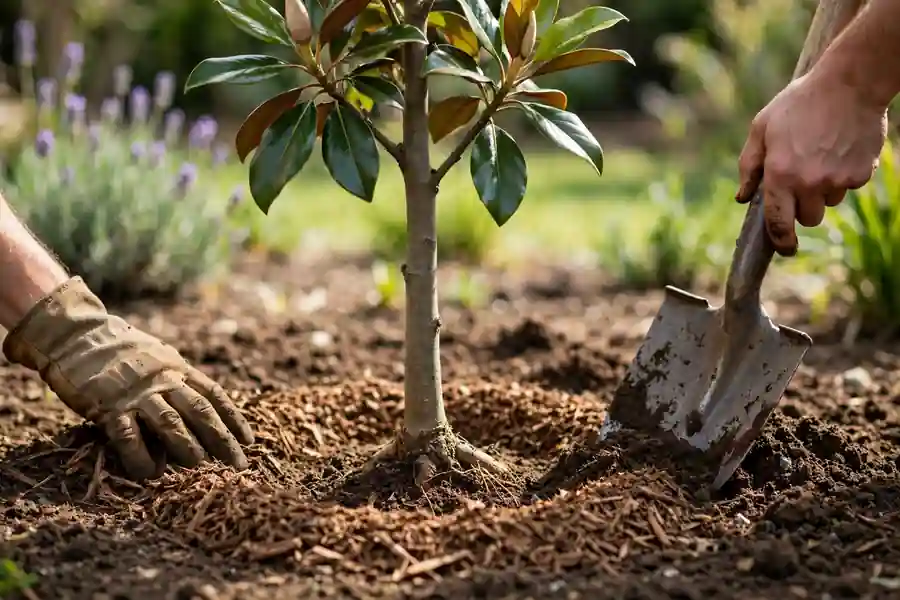
Can you grow a magnolia in a pot? Dwarf types such as Little Gem and Teddy Bear can live in a large container with drainage for several years, but they will do better in the ground. Use a heavy pot and a good potting mix, water consistently, and protect the roots in winter in cold zones.
What to plant under a magnolia tree: magnolia roots are shallow, and dense shade and leaf litter limit what grows. Choose shade-tolerant ground covers and perennials, such as hostas, ferns, liriope, hellebores and pachysandra, and plant them by hand without digging deep. Avoid heavy digging near the trunk.
How do you care for a magnolia tree?
Watering
Water deeply once a week for the first two years, more often in hot, dry weather. Magnolias like consistently moist soil but not soggy. Established trees need water mainly in long dry spells. A thick layer of mulch keeps the shallow roots cool and moist.
Fertilizer
Magnolias don't need much feeding. In spring, apply a slow-release fertilizer made for trees and shrubs, or one for acid-loving plants, following the label. Young trees benefit most. Too much nitrogen gives leafy growth and fewer flowers, and fertilizer too close to the trunk burns roots. If the soil is rich and the tree is healthy, a yearly layer of compost under the canopy may be enough. A soil test shows what the soil needs.
Soil pH
Most magnolias do best in slightly acidic soil, around pH 5.5 to 6.5. In alkaline soil, leaves can turn yellow between the veins, which is iron deficiency.
Mulch
Keep a 2 to 3 inch layer under the tree, out to the dripline if possible. Leave the leaf litter of evergreen types where it falls if you like, because it acts as a mulch, but rake away diseased leaves.
Winter care
In cold zones, protect young or borderline-hardy trees with mulch and shelter from wind. Evergreen leaves can brown in cold, drying wind. Water well before the ground freezes. The look of a magnolia in winter depends on the type: evergreens keep their leaves, and deciduous types show bare branches and fuzzy flower buds.
When and how do you prune a magnolia tree?
Magnolias need little pruning, and heavy cuts heal slowly. The goal is to remove dead, damaged or crossing branches and to shape the tree lightly.
When to prune:
- Spring-flowering deciduous magnolias (star, saucer, Jane, Ann): prune right after they finish flowering, so you don't remove next year's buds.
- Evergreen magnolias (southern, Little Gem): prune lightly after flowering, in late spring or summer, when frost danger has passed.
- Dead or damaged branches: can be removed any time.
Sources differ on exact timing, and some extension advice suggests summer into early winter for some magnolias. If unsure, the safest approach is to prune lightly right after bloom and check local extension advice.
How to prune:
- Use clean, sharp tools and wipe them with rubbing alcohol.
- Remove dead, diseased and crossing branches first.
- Cut just outside the branch collar, the slightly swollen ring where the branch meets the trunk.
- Thin a few crowded branches to open the canopy.
- Don't remove more than about a quarter of the tree in one year.
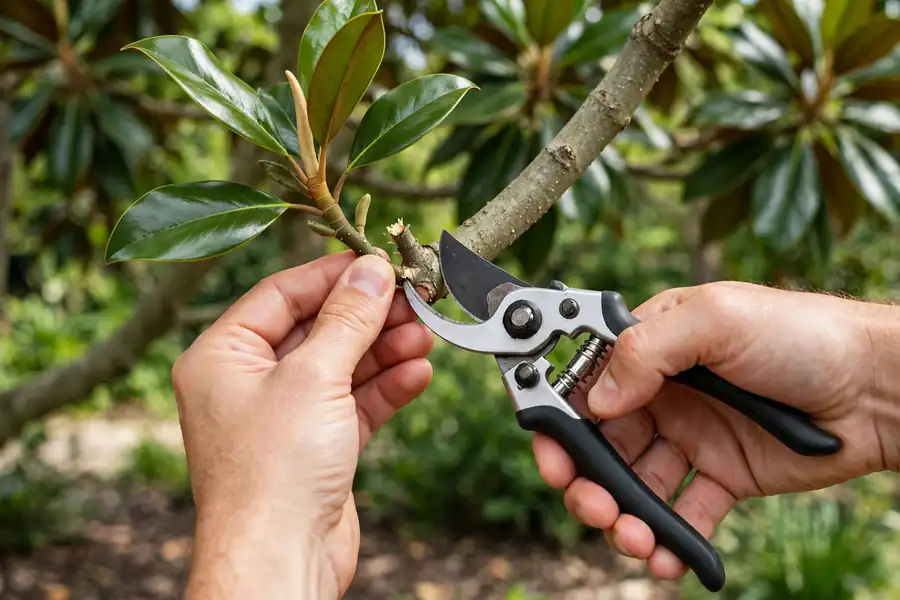
How to trim an overgrown magnolia tree: spread the work over two to three years. Remove a few of the largest problem branches each year instead of cutting the tree back hard, which can ruin flowering and invite disease.
Pruning young trees: low branches can stay for a natural look, or you can remove the lowest ones to make a single trunk or a multi-stem tree. Pruning guides for flowering shrubs, such as how to prune roses, explain the basic cuts.
How do you propagate a magnolia tree?
From cuttings
Semi-hardwood cuttings of some magnolias can root in summer, but it is slow and not always successful, and results vary by type. Many hybrid and cultivar magnolias are grafted or propagated by nurseries, not home gardeners.
- In summer, take 4 to 6 inch cuttings from this year's growth.
- Remove the lower leaves, wound the base lightly and dip it in rooting hormone.
- Plant in a mix of perlite and peat, keep it humid and warm, and wait several weeks to months.
Can you propagate a magnolia by air layering? Yes. Air layering is another practical method for gardeners and is often reliable.
From seed
Magnolia seeds are inside the seed cone and have a red, fleshy coating. To grow them:
- Collect the red seeds in fall when the cones open.
- Remove the red pulp by soaking and gently rubbing the seeds.
- Keep the seeds cool and moist, in a bag with damp sand or peat in the fridge, for at least 60 days and ideally several months. This is called stratification.
- Sow in spring in a deep pot or seed bed.
- Be patient. Seedlings are slow, and hybrid and cultivar trees will not come true from seed.
A tree grown from seed may take 10 years or more to bloom. A nursery-grown plant is far faster.
Are magnolia tree roots invasive?
Magnolia roots are shallow, fleshy and spread wide, often beyond the dripline. They are not aggressive like willow or silver maple roots, but a large tree can lift paving and compete with other plants.
- Plant large magnolias well away from foundations, driveways and septic lines, often 20 feet or more for big types.
- Smaller types need less space.
- Avoid digging or adding soil deeply over the roots, which can harm the tree.
- Roots are sensitive to compaction and root disturbance, so avoid heavy traffic under the canopy.
Why is my magnolia tree not blooming?
| Reason | Fix |
|---|---|
| Young tree | Many trees need several years, and seed-grown trees can take 10 or more |
| Frost damage to buds | Choose a later-blooming type, such as Jane, or a sheltered site |
| Too much shade | Move to more sun, or prune to let in light |
| Too much nitrogen | Cut back on lawn or high-nitrogen fertilizer near the tree |
| Pruning at the wrong time | Prune right after bloom, not in winter or early spring |
| Drought or transplant stress | Water deeply and keep mulch in place |
| Severe winter cold | Choose a hardier type for your zone |
What problems and diseases do magnolia trees get?
| Problem | Signs | What to do |
|---|---|---|
| Magnolia scale | Sticky honeydew, black sooty mold, lumpy scale insects on twigs | Treat in late summer or fall with horticultural oil, as advised locally |
| Leaf spot (fungal or algal) | Brown or black spots on leaves | Rake up leaves, improve airflow, avoid wetting foliage |
| Leaf scorch or browning | Brown edges, especially after drought or cold wind | Water deeply, mulch and shelter |
| Yellow leaves | Yellow between veins in alkaline soil, or overall yellowing from wet soil | Check soil pH and drainage |
| Root rot | Wilting, yellow leaves and dieback in wet soil | Improve drainage and avoid overwatering |
| Canker or wilt | Dying branches, sunken bark | Prune out dead wood and ask a local tree expert |
| Frost-browned flowers | Brown petals after a cold night | Nothing to do. Choose later-blooming types next time |
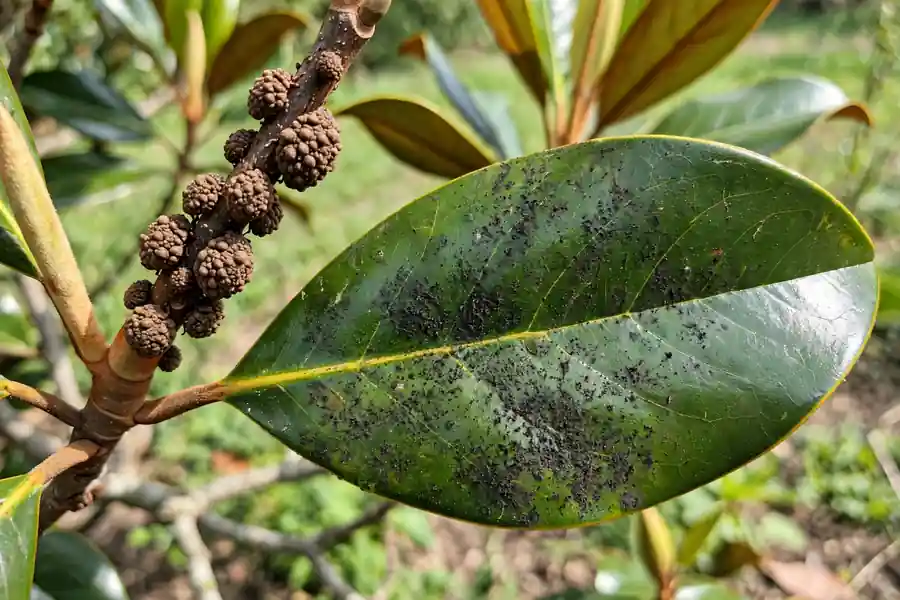
Why are my magnolia leaves turning brown or yellow? Common causes are drought, winter burn, overwatering, alkaline soil, root stress after planting and fungal leaf spot. Southern magnolias also drop older leaves naturally in spring and fall, which is normal.
Magnolia tree diseases: most healthy magnolias have few serious problems. For a tree that is declining, an arborist or local extension office can identify the cause.
What are magnolia seed pods, cones and fruit?
After the flowers fade, magnolias form a woody, cone-like fruit made of many small segments. In fall, the segments split open and show bright red or orange seeds that hang on thin threads. Birds and small animals eat the seeds. The pods are popular for dried decor and crafts. The seeds are not meant for people to eat.
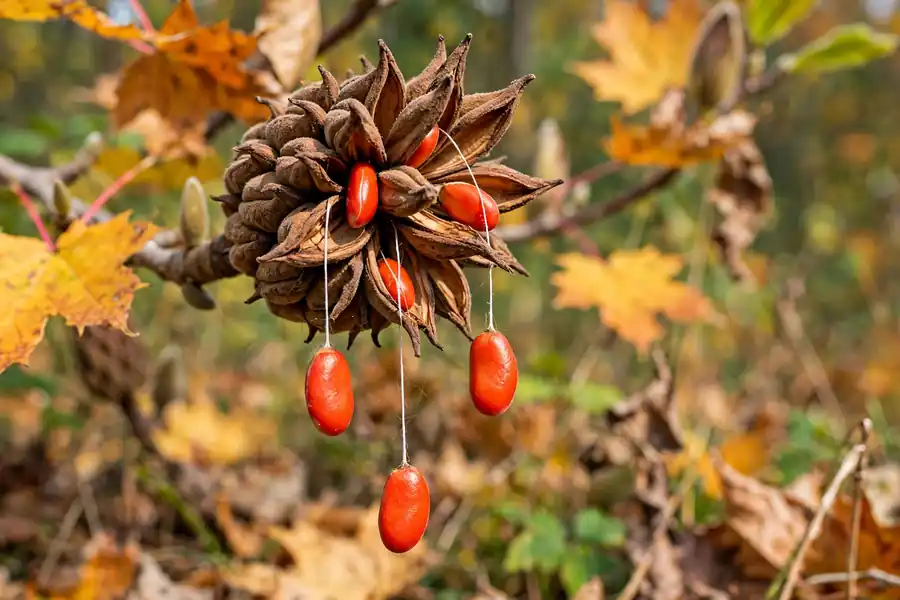
What are magnolia tree cones? They are the same seed pods, often called cones because of their shape.
Are there benefits to a magnolia tree?
A magnolia is mainly grown for beauty: fragrance, big flowers, glossy leaves, shade and year-round structure. It also supports wildlife. Beetles pollinate the flowers, and birds eat the red seeds. Bark from certain magnolia species is used in herbal products, but those claims are not well proven, so talk to a doctor before using any.
Where do magnolia trees grow? Native range and zones
Magnolias grow wild in the southeastern and eastern United States, Mexico, Central America, the Caribbean, China, Japan and the Himalayas. In the US, southern magnolia is native to the Southeast, from North Carolina to Florida and Texas. Sweetbay is native along the Atlantic and Gulf coasts, and cucumber tree is native through much of the East.
What zone is best for magnolias? There is a magnolia for almost every zone from 3 to 10.
- Zones 4 to 5: star magnolia, Little Girl hybrids, saucer magnolia (in sheltered spots), yellow hybrids, cucumber tree and sweetbay.
- Zone 6: the above plus cold-hardy southern magnolia cultivars in a sheltered spot.
- Zones 7 to 9: southern magnolia, Little Gem, Teddy Bear and sweetbay.
- Zone 10: a few types in the warmest areas, with care.
Southern states from Florida to Texas, as well as colder states, all have suitable magnolias. Choose by zone, not by state name. A tree rated for zone 7 may die back in zone 5.
What does a magnolia tree mean?
The magnolia stands for dignity, perseverance, nobility and love of nature. In the American South it is also a symbol of hospitality and grace. In Chinese and Japanese culture it is linked to purity and beauty. White magnolias are often read as purity, and pink ones as youth and sweetness. These meanings are traditions, not facts about the tree.
Quick answers to common questions
What are the main types of magnolia tree?
Southern magnolia (evergreen, large), sweetbay (native, tolerates wet soil), star magnolia (small, early white flowers), saucer magnolia (pink and purple), the Little Girl hybrids such as Jane and Ann, yellow hybrids and the cucumber tree. Little Gem and Teddy Bear are compact southern magnolias.
How big does a magnolia tree get?
From 10 to 15 feet for star magnolia and Jane or Ann, up to 15 to 20 feet for Little Gem and Teddy Bear, and 60 to 80 feet for a full southern magnolia. Always check the mature size on the tag.
When do magnolia trees bloom?
Star and saucer magnolias bloom in early spring before the leaves. Jane, Ann and yellow hybrids follow in mid-spring. Southern magnolia and sweetbay bloom in late spring and summer.
When should you prune a magnolia tree?
Right after it finishes blooming, with light cuts only. Dead or damaged branches can be removed any time. Avoid heavy pruning, which heals slowly.
Why is my magnolia tree not blooming?
Usually because the tree is young, the buds were hit by frost, there is too much shade or too much nitrogen, or it was pruned at the wrong time.
Keep reading: lily flower, hibiscus flower, how to prune roses, how to compost and more lawn and garden guides.
Is a magnolia tree worth planting?
Yes, if you choose the right one and give it room. A magnolia tree delivers fragrant flowers, handsome foliage, shade and decades of beauty with little care. Pick a type that suits your zone and your space, such as a dwarf Little Gem or star magnolia for a small yard and a southern magnolia for a big lot, plant it at the right depth, mulch and water it well in the first years, and prune lightly. A healthy magnolia tree will reward you with spectacular blooms for generations.