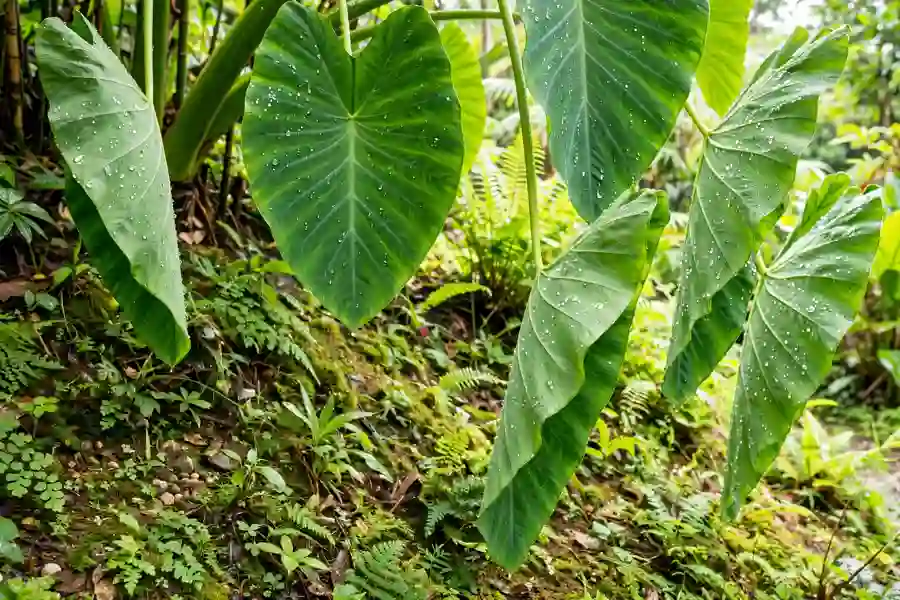
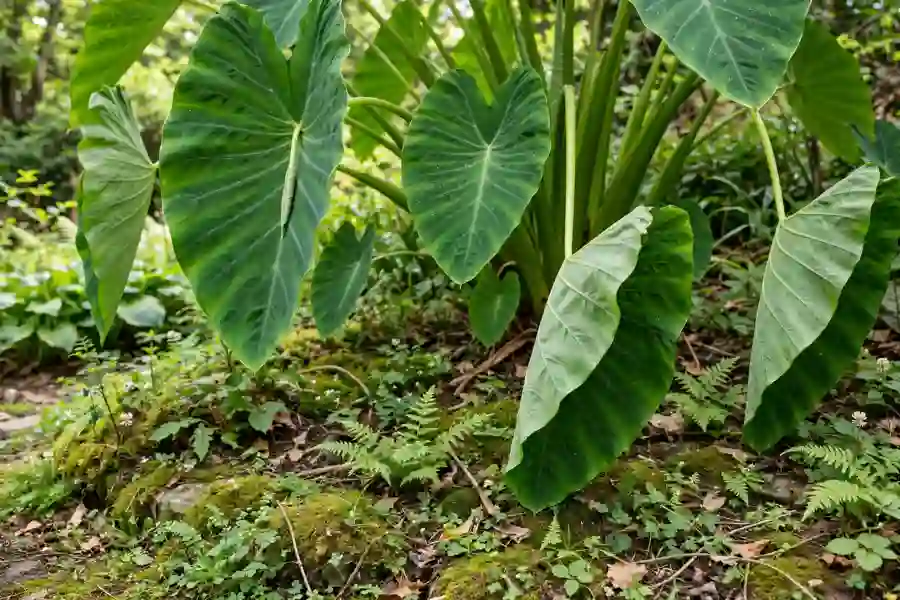
An elephant ear plant is a tropical plant with huge, heart-shaped leaves, grown from a tuber (often called a bulb). The name covers three related genera: Colocasia (leaves point down, loves wet soil), Alocasia (leaves point up, the common indoor type) and Xanthosoma. Outdoors, plant tubers after the last frost in sun to part shade and keep the soil wet. Indoors, give Alocasia bright indirect light, humidity and a draining mix. All parts are toxic to cats, dogs and people if eaten raw.
Elephant ear plant at a glance
| Question | Answer |
|---|---|
| Genera | Colocasia, Alocasia, Xanthosoma (arum family) |
| Other names | Taro, cocoyam, dasheen, malanga, giant taro |
| Grows from | A tuber or corm, often sold as a "bulb" |
| Size | Indoor 1 to 3 ft. Outdoor 3 to 6 ft. Giants 6 to 10 ft or more |
| Hardiness | Tender perennial, about zones 8 to 11. Dug up or potted elsewhere |
| Light | Colocasia: sun to part shade. Alocasia: bright indirect or part shade |
| Water | Colocasia: constantly wet. Alocasia: evenly moist, not soggy |
| Plant | After the last frost, when soil is about 65°F |
| Feeding | Heavy feeder in the growing season |
| Pets and people | Toxic if eaten. Sap irritates skin |
What is an elephant ear plant, and how do you tell the types apart?
| Feature | Colocasia | Alocasia | Xanthosoma |
|---|---|---|---|
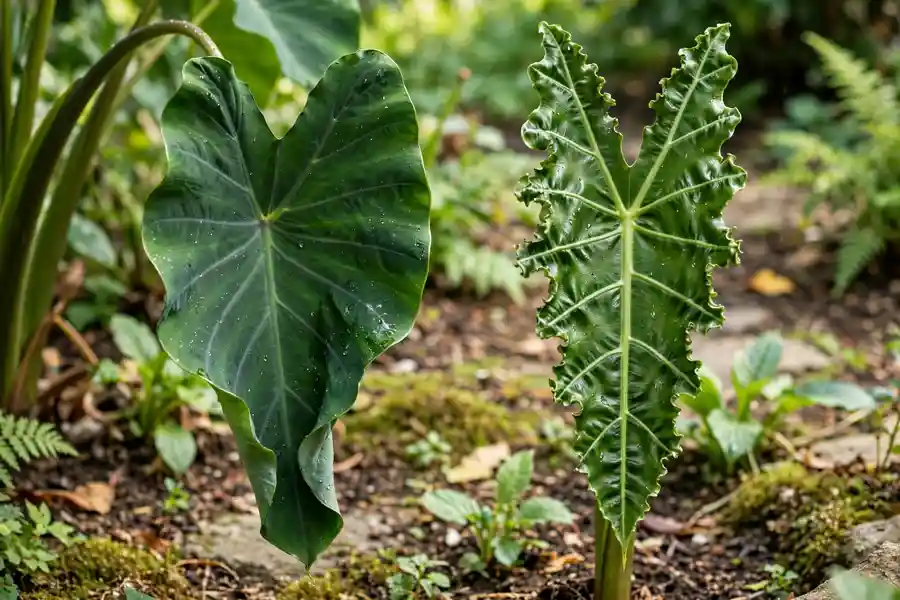
| Leaf direction | Points down, droops | Points up or outward | Points down or out |
| Leaf stalk attaches | Inside the leaf edge (peltate) | At the notch of the leaf edge | At the notch of the leaf edge |
| Leaf shape | Heart or shield | Arrow or shield, often ruffled | Arrow-shaped |
| Where grown | Gardens, ponds, pots | Mostly indoors, also gardens in warm zones | Warm gardens |
| Water | Wet soil | Moist, not soggy | Moist |
| Common name | Taro | Upright elephant ear, giant taro | Malanga, tannia |
Plants also called elephant ear:
| Plant | What it is |
|---|---|
| Caladium | Smaller, shade-loving, heart-shaped leaves in pink, white and red |
| Elephant ear philodendron | A climbing houseplant |
| Elephant bush or elephant jade (Portulacaria afra) | An unrelated succulent. See our jade plant guide for the succulent look-alike |
What are the best elephant ear varieties and colors?
| Variety | Look | Notes |
|---|---|---|
| Colocasia 'Black Magic' | Near-black leaves | Needs sun to keep its color |
| Colocasia 'Black Coral', 'Black Beauty', 'Illustris' | Dark purple-black, some mottled | Dark foliage types |
| Colocasia 'Mojito' | Green with purple speckles | Eye-catching |
| Colocasia 'Thailand Giant' | Huge green leaves | 6 to 10 ft, leaves 3 ft or more |
| Colocasia 'Pink China' | Pink stems | Tolerant of cooler zones |
| Colocasia 'Blue Hawaii' | Blue-green, variegated | Not truly blue |
| Colocasia 'White Lava' | Cream-and-green variegated | Needs bright, indirect light |
| Colocasia 'Coffee Cups' | Upright cup-shaped leaves | Unusual form |
| Colocasia 'Hawaiian Punch' | Red-purple veins and stems | Warm-zone showpiece |
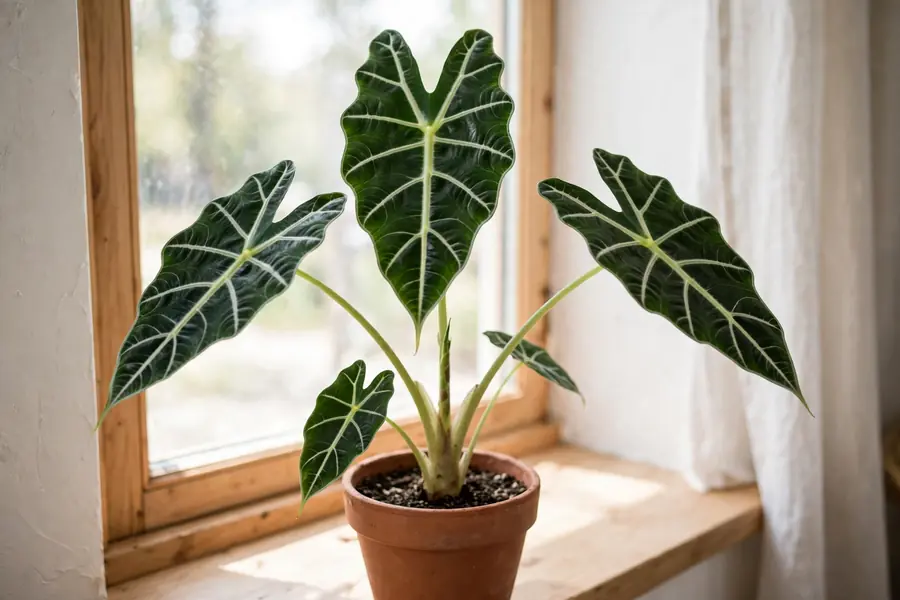
| Alocasia 'Polly' (Amazonica) | Dark leaves with white veins | Popular indoor, 1 to 2 ft |
| Alocasia 'Zebrina' | Zebra-striped stems | Indoor |
| Alocasia 'Black Velvet' | Velvety dark leaves | Small, about 1 ft |
| Alocasia 'Calidora', macrorrhiza | Large, upright leaves | Big indoor or patio plant |
| Alocasia wentii (hardy elephant ear) | Dark green, purple underside | Hardier, about zones 7 or 8 to 10 |
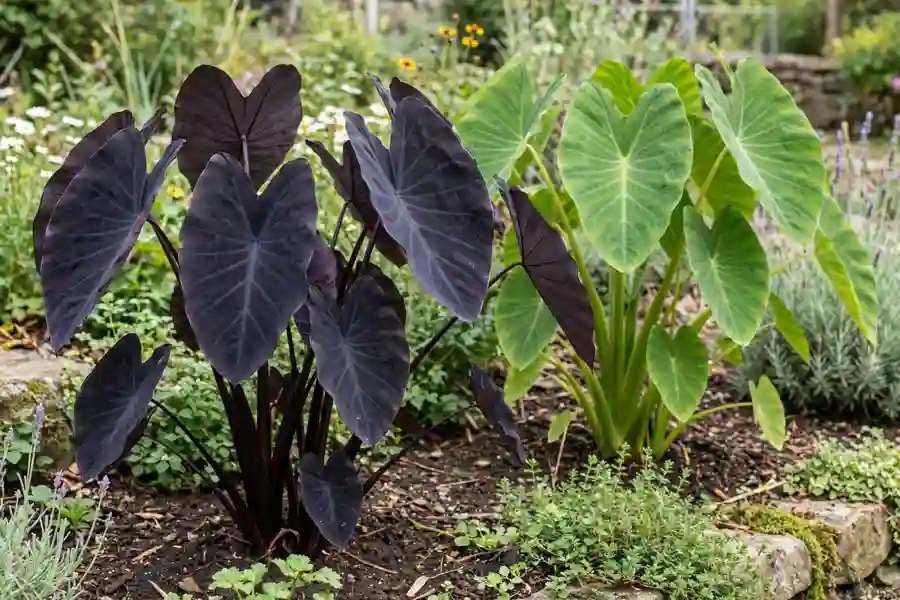
Colors: green, black or dark purple, pink-stemmed, red-veined, variegated and silver-veined. There is no true blue, white or yellow elephant ear. Yellow leaves mean a problem.
Mini, dwarf and baby elephant ears: Alocasia 'Polly', 'Black Velvet' and 'Bambino', and Colocasia 'Black Beauty'. Sizes vary, so check the tag.
When and how do you plant elephant ear bulbs?
When: after the last frost, when the soil is about 65°F and nights stay above 55°F. In cool areas, start tubers in pots indoors 4 to 6 weeks earlier.
How:
- Choose a spot with rich, moist soil, sun to part shade and shelter from wind.
- Mix in compost. The compost guide explains how to make your own.
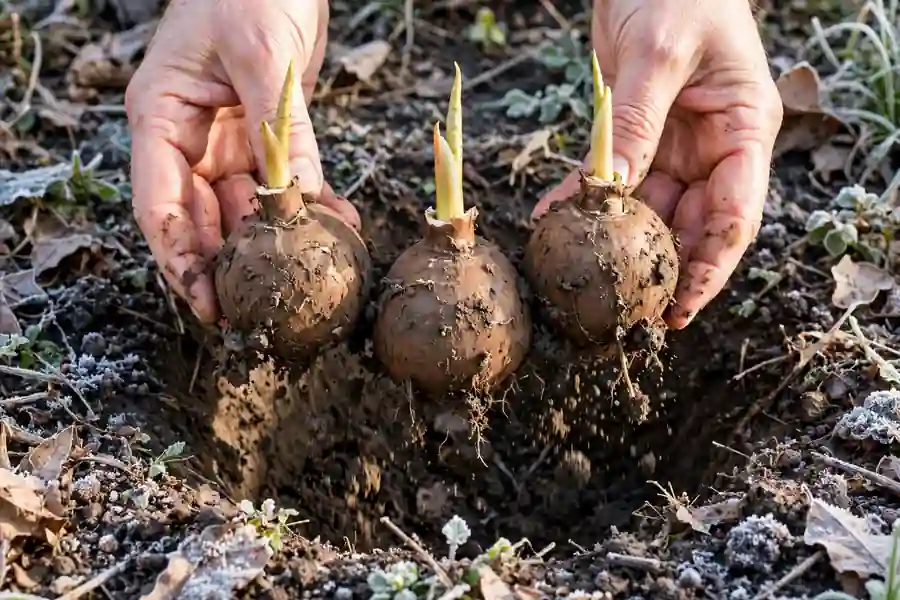
- Plant the tuber 2 to 4 inches deep (4 to 6 inches for big ones).
- Which way up: pointed side, or the side with small buds and rings (the "eye"), faces up. The flatter, rounder side goes down. If you cannot tell, lay it on its side.
- Space 2 to 4 feet apart, wider for giants.
- Water well and keep the soil wet.
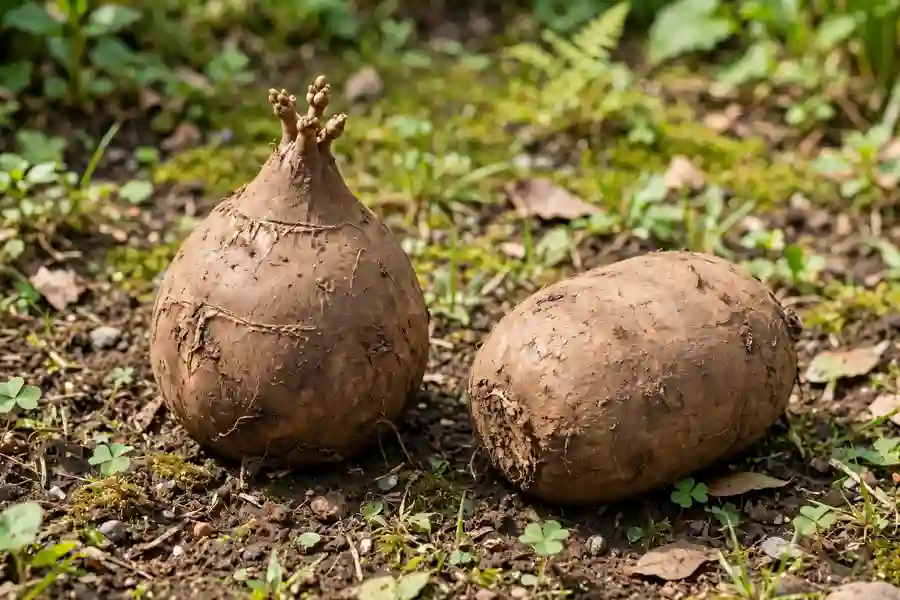
Leaves appear in 2 to 4 weeks in warm soil.
In pots: use a pot 12 to 24 inches wide with drainage, one tuber per pot, in rich potting mix.
How much sun and water do elephant ears need?
| Type | Light | Water |
|---|---|---|
| Colocasia | Full sun to part shade. Morning sun and afternoon shade is best in hot areas. Dark types need more sun | Constantly wet. Can grow in pond margins |
| Alocasia | Bright indirect light or part shade | Moist but well-drained |
| Indoors | Bright indirect light | Let the top 1 to 2 inches dry, then water |
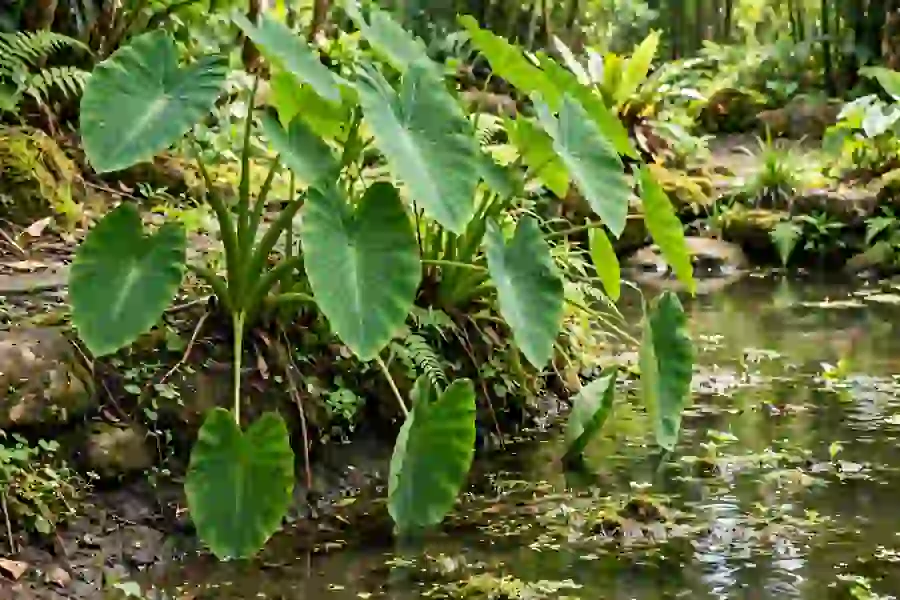
Fertilizer: elephant ears are heavy feeders. Use a balanced or nitrogen-rich fertilizer every 2 to 4 weeks in the growing season, or a slow-release feed. Skip it in winter.
Can elephant ears grow indoors?
Yes, mainly Alocasia and some small Colocasia.
- Light: bright, indirect light.
- Temperature: 65 to 80°F. Keep above 60°F.
- Humidity: 50 percent or more. Use a humidifier or pebble tray. Dry air causes brown edges and spider mites.
- Water: when the top 1 to 2 inches of soil are dry. Never leave it soggy.
- Soil: a chunky aroid mix: potting soil with perlite and bark.
- Repot: every 1 to 2 years in spring.
- Dormancy: Alocasia may drop leaves and rest in winter. Water less, keep it warm and wait for spring.
For similar aroids, see our monstera, peace lily and pothos plant guides.
How do you overwinter elephant ears?
Elephant ears are tender. Leaves collapse at the first frost.
In zones 8 to 11: cut stems back, mulch heavily and leave tubers in the ground.
In colder zones:
- After frost blackens the leaves, cut stems to 2 to 3 inches.
- Dig up the tubers carefully.
- Brush off soil and let them dry for a few days.
- Store them in dry peat, vermiculite or a paper bag at about 50 to 60°F.
- Check monthly for rot.
- Replant after the last frost.
Potted plants: move indoors before frost, reduce water and keep above about 50°F.
Why is my elephant ear plant turning yellow, drooping or damaged?
| Symptom | Cause | Fix |
|---|---|---|
| Yellow leaves | Overwatering, poor drainage, low light, cold, dormancy or natural aging of old leaves | Check roots and soil, adjust water and light |
| Drooping | Thirst, heat, cold, root rot or transplant shock | Check the soil before watering |
| Brown edges and tips | Dry air, fertilizer salts, tap minerals | Raise humidity, flush the soil |
| Holes in leaves | Slugs, snails, caterpillars | Hand-pick, use slug control |
| Webbing, speckles | Spider mites | Wipe leaves, use insecticidal soap |
| Torn leaves | Wind | Shelter the plant |
| Rotting tuber or stem | Overwatering | Cut away rot, repot in fresh mix |
| Water dripping from leaf tips | Guttation, normal on humid nights | None needed |
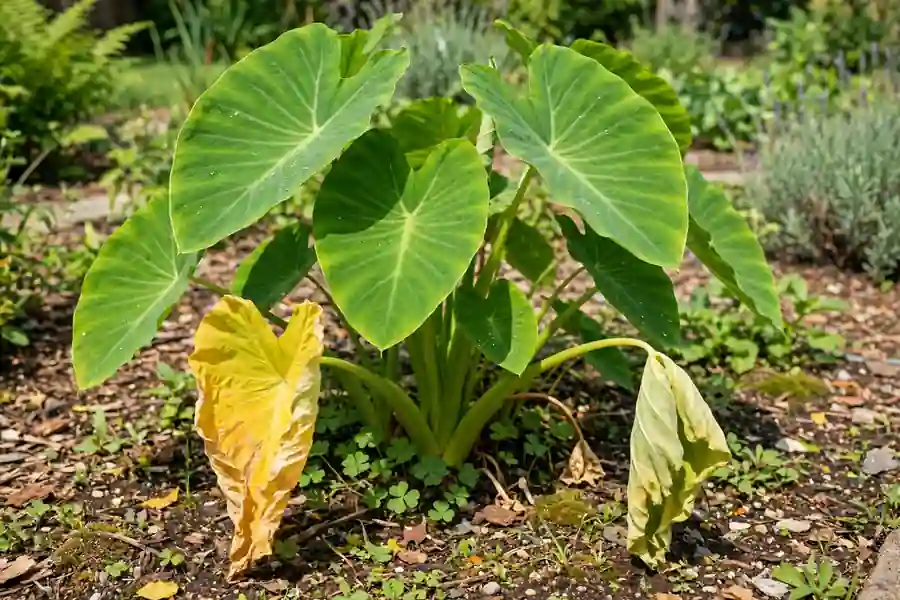
Overwatered vs underwatered: overwatered plants have yellow leaves and soggy, smelly soil. Underwatered plants have drooping, crisp leaves and dry soil.
Does an elephant ear plant flower?
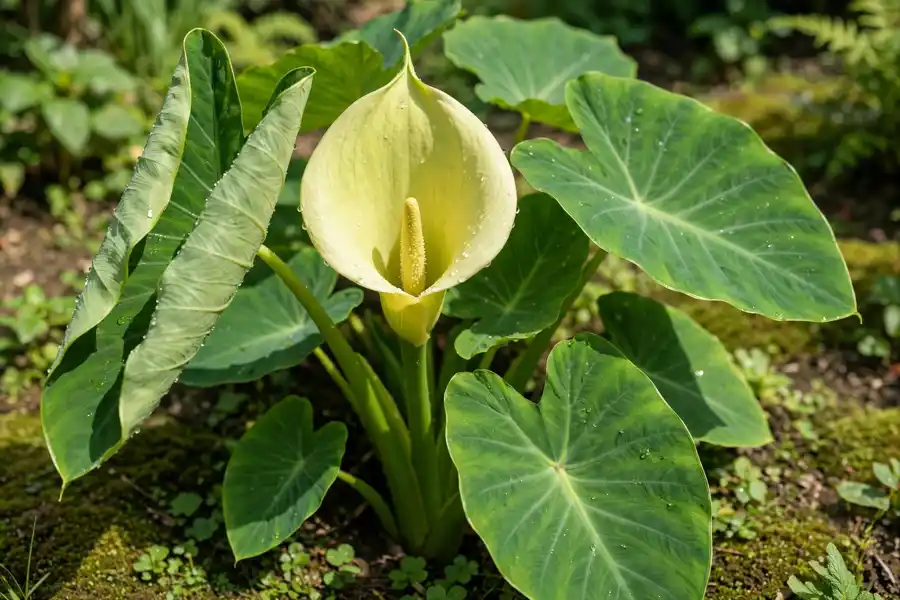
Rarely. It makes a pale, calla-like spathe, mostly on mature outdoor plants in warm climates. It is not showy, and it does not harm the plant.
How do you propagate elephant ears?
- Division: in spring, cut tubers into pieces, each with at least one bud (eye).
- Offsets: pull off small pups that grow beside the parent and pot them.
- Alocasia: divide pups when repotting.
- Seeds: rarely set and not practical.
Is an elephant ear plant poisonous or edible?
Toxic to pets: the ASPCA lists elephant ear (Colocasia) as toxic to dogs, cats and horses. All parts contain calcium oxalate crystals, causing mouth irritation, drooling, vomiting and trouble swallowing. Keep pets away, and call your vet or the ASPCA Animal Poison Control Center at 888-426-4435 (a fee may apply) if one chews it.
Humans: the sap can irritate skin, so wear gloves. Eaten raw, any part burns the mouth.
Edible taro: the food crop taro is a Colocasia, and its corms and leaves are eaten only when thoroughly cooked, which destroys the crystals. Do not eat ornamental elephant ears. If you want to cook taro, buy culinary taro. Malanga (Xanthosoma) is also cooked before eating.
Taro vs elephant ear: taro is a Colocasia grown for food, and "elephant ear" usually means ornamental varieties of the same genera.
Is an elephant ear plant invasive?
Colocasia esculenta (wild taro) spreads in warm, wet climates, and it is considered invasive along waterways in parts of the southern US. Do not plant it near natural streams or wetlands, and never dump tubers outdoors.
How do you use elephant ears in landscaping?
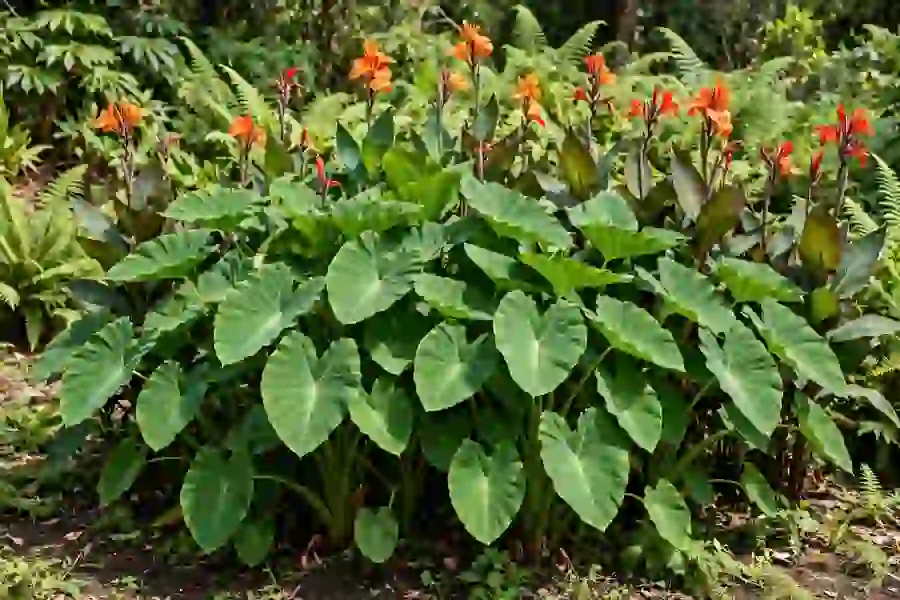
Plant them in groups as a bold tropical backdrop, by water features, in large containers or beside cannas, ferns, bananas and coleus. Shelter them from wind, which shreds leaves.
Quick answers to common questions
What is the difference between Colocasia and Alocasia elephant ears?
Colocasia leaves point down and the stalk attaches inside the leaf. Alocasia leaves point up and the stalk attaches at the notch. Colocasia loves wet soil, Alocasia likes it moist, not soggy.
How do you plant elephant ear bulbs?
After the last frost, 2 to 4 inches deep, pointed side up, 2 to 4 feet apart in rich, moist soil.
Is an elephant ear plant toxic to cats and dogs?
Yes. It causes mouth irritation, drooling and vomiting.
Why are my elephant ear leaves turning yellow or drooping?
Usually overwatering, poor drainage, low light or dormancy. Thirst and cold also cause drooping.
How do you overwinter elephant ears?
Dig the tubers after frost, dry them and store at 50 to 60°F, or keep potted plants indoors.
Keep reading: monstera plant, peace lily care, pothos plant, how to compost and more lawn and garden guides.
Should you grow an elephant ear plant?
Yes, if you can keep it warm and wet. An elephant ear plant gives huge, dramatic leaves fast. Keep it out of reach of pets, feed it well and bring it in or dig it up before frost.